

Key Takeaways
Treat story trouble as a diagnostic, not a verdict on your talent.
Trouble reveals the work. Snyder’s advice begins with a familiar creative crisis: a script stalls, an idea falls flat, or rejection triggers the fear that the writer simply lacks ability. His response is to treat the crisis as a solvable story problem, not a final judgment. His own example is the family movie idea Twinkle, about a widowed Santa searching for love. He hid it, skipped planning, and ignored its obvious logic problems until his manager’s questions exposed how shaky it was.
Start again with evidence. Snyder puts the idea aside, buys fresh paper, and returns to work. Trouble is useful when it makes the writer test assumptions, accept help, and revise. The point is not that every bad idea can be rescued, but that a bad draft is information, not a diagnosis of the person who wrote it.
What's valuable here is the separation of identity from output. When a draft fails, treating the failure as evidence about the draft preserves room for learning; treating it as evidence about the writer invites paralysis. This resembles a scientist revising a hypothesis after an experiment, rather than deciding the experiment has exposed a defective scientist. Optimism is most useful when it supports honest evaluation. Trouble can be productive, but it is not automatically a gift: it becomes one only when the writer examines what went wrong and changes course.
Test the idea aloud before spending months defending it.
Make the premise legible. A pitch is the quickest, most vivid description of a film; a logline is a compact account of its central conflict and stakes. Both force the writer to explain the idea to someone who cannot see the movie in their head. Snyder groups weak concepts into three problems: too plain to feel distinctive, too complicated to follow, or hiding the central twist in the name of preserving surprise.
Reveal the reason to care. An in-flight listing described Juno only as a teenager becoming pregnant, which omitted the choices and relationships that make the story compelling. A fuller version made its central tensions visible. Snyder’s point is not to spoil every turn. It is to show enough of the premise that an audience can recognize the movie being offered.
A concise pitch is a compression test: it reveals whether the idea has a center or merely a collection of appealing scenes. The act of explaining also gives the listener a chance to expose missing logic that the writer has unconsciously filled in. This is useful well beyond film, wherever people must persuade others to invest attention or resources. Still, brevity can flatten unusual stories. A pitch should clarify the dramatic promise, not force every project into a conventional high-concept mold.
Outline in stages, and invite resistance before the draft hardens.
Build before polishing. Snyder’s process moves from a premise to a one-page beat outline, then to a scene-by-scene plan on a board. The Beat Sheet gives a writer a map of major turning points; the Board expands that map into roughly 40 scenes. The goal is to discover structural gaps while the story is still easy to change, not after months of polished pages have made each choice feel precious.
Watch for fear in disguise. Snyder names three common outline failures: Spidering, when side plots pull attention away from the main story; Half-Stepping, when events advance without meaningful consequences; and Blurry Beats, when major turns are too faint to register. In workshops, other writers often spotted these problems more clearly than the author did.
The staged method is a form of low-cost prototyping. A rough outline makes it possible to test whether the parts connect before investing heavily in dialogue, scenes, and polish. Peer feedback adds a second advantage: listeners encounter the story without the writer’s private explanations, so confusion becomes visible. But an outline is a hypothesis, not a contract. If its neatness suppresses discovery or character complexity, the plan should be revised rather than obeyed.
Make the hero’s transformation the destination of every major plot turn.
Change gives events meaning. Snyder describes a strong story as a passage through three contrasting worlds: the hero’s familiar starting point, an upside-down environment that tests old assumptions, and a final world combining what the hero has learned with what was worth keeping. The midpoint raises the stakes and makes retreat difficult; the later crisis strips away the hero’s old answers, while the ending tests whether a new way of acting has taken hold.
Connect plot to need. The A Story is the visible pursuit, such as solving a case or winning a contest. The B Story, often carried by a friend, mentor, or love interest, helps the hero confront a deeper need. Snyder’s Five-Point Finale frames the ending as a final test: the hero gathers help, attempts a plan, encounters a reversal, finds an unexpected resource, and acts on the lesson.
This model explains why spectacle alone often feels weightless: events matter when they pressure a character’s beliefs and choices. The contrast between familiar and unfamiliar worlds is especially useful because it externalizes inner change. A mentor or relationship can make an abstract lesson observable through conflict. The caution is that transformation need not mean moral improvement or a tidy synthesis. Some stories are about discovering limits, accepting loss, or becoming more compromised, and their structure must honor that truth.
Keep one clear hero, one central problem, and two connected goals.
Straighten the story spine. The Story Spine is the sequence of changes that lets an audience track a hero from the beginning to the end. Snyder’s diagnostic questions are: Who is the hero? What is the problem? How does the story begin and end? What does the hero want, and what does the hero need? What is the story about? Any scene that does not serve this central movement deserves scrutiny.
Choose the right perspective. In early versions of Granny, the father answered the door when a dangerous stranger arrived. Snyder argued that a teenage girl should be the lead because she better matched the likely audience and the story’s danger. The tangible goal drives the plot; the spiritual goal gives it meaning. A strong beginning and ending show a substantial difference in the hero and the world.
The spine metaphor offers a practical defense against attractive detours. It asks not whether a scene is clever, but whether it changes the hero’s situation or understanding. The distinction between a concrete goal and an inner need also helps prevent theme from becoming a speech pasted onto the plot. Audience fit can be a useful design question, as the Granny revision shows, but it should not become a rigid market formula that excludes surprising protagonists.
Hear notes as evidence of friction, then decide what actually needs fixing.
Separate the reaction from the remedy. A reader’s note may describe a symptom rather than its cause. A request for a scene to be funnier, for example, may mean that its central beat is not landing. A problem identified on one page may have started several pages earlier. Snyder recommends asking for clarification, looking for the underlying concern, and avoiding reflexive defense of every line.
Use disagreement constructively. In a writers group, people can test ideas without the pressure of a studio decision. Snyder’s group used shared story questions to focus discussion on the project rather than the writer’s worth. His advice to executives is similarly practical: discuss broad reactions face to face before sending detailed written notes. Writers should be open to sweeping changes, while checking that contradictory requests have a coherent goal.
A note is best treated as noisy data. It reflects a reader’s experience, but the proposed fix may be incomplete or shaped by that reader’s preferences. This distinction lets writers stay receptive without surrendering judgment. Group critique can reduce the isolation that makes feedback feel personal, particularly when discussion centers on observable story effects. The model also depends on trust and clear authority: in commercial work, the person paying may ultimately choose a direction the writer considers weaker.
Build a career on finished work, not on waiting for representation.
Make the writing the first asset. Snyder argues that an agent can help sell a strong, finished project, but cannot replace the work that makes a project worth selling. New writer Ben Frahm queried more than 100 agents, managers, and production companies, received a handful of replies, and kept revising Dr. Sensitive with a manager before Universal bought it. His agent joined the process when there was real interest to negotiate.
Know the business roles. Agents, managers, and lawyers can offer access, development help, and deal protection, but their incentives differ. Snyder warns writers to research representatives and avoid arrangements that create conflicts, such as a manager collecting both a management fee and a producer fee on the same project. The recurring career task is to keep writing, pitching, and developing work suited to one’s strengths.
The advice shifts attention from gatekeepers to controllable assets: completed work, revision skill, and a clear sense of what the writer offers. That is a healthier response to an industry built on uncertain access. Representation still matters, and a capable advocate can improve both opportunity and terms, but pursuing one before the material is ready can become productive-looking procrastination. The book’s career anecdotes are motivating, though individual success stories cannot establish how likely any particular path is.
Treat rejection and rewrites as recurring conditions, not career-ending exceptions.
Expect work to change hands. A sale is a beginning, not a guarantee that the original writer controls the finished film. Snyder recounts drafts being extensively revised, including 20 to 30 versions of Blank Check before production. His practical advice is to stay professional, make bold alternatives when appropriate, and choose which disagreements are worth pursuing. A failed project or harsh review does not, by itself, prove that the writer has no future.
Adapt without losing direction. Snyder describes career pivots such as specializing in a genre, collaborating with a younger writer, taking development work, producing, or working outside Los Angeles. He also recommends clear long-term plans and attention to the particular service a writer can offer. These options broaden the route forward without pretending that luck, shifting industry decisions, or other people’s choices can be controlled.
This is a useful model of resilience because it does not promise that persistence guarantees a sale. It distinguishes persistence from stubborn attachment to one project: the writer can keep pursuing the vocation while changing the tactic, format, or professional role. That distinction resembles portfolio thinking, where a single outcome is uncertain but continued investment in skills and relationships creates more chances. The challenge is to avoid treating every setback as a test of character; sometimes a project simply ends, and the sensible response is to redirect effort.
Turn ambition into daily practice through discipline, focus, and positive energy.
Make belief operational. In 1989, after years of limited success and his father’s death, Snyder moved to Santa Barbara and began tracking his writing in a notebook. He set goals, established work hours, and chose family comedy as a specialty instead of scattering effort across formats. The routine gave him pages to write, contacts to pursue, and a clearer reason for potential employers to hire him.
Let optimism support action. Within months, he sold a script for $300,000 against a $500,000 purchase price, then built on that progress with later sales and a studio deal. Snyder credits discipline, focus, and positive energy. The story’s practical lesson is not that writing goals magically produce results. It is that confidence becomes useful when it changes what a person does each day, while setbacks remain part of the process.
The notebook, work schedule, and chosen specialty turn an abstract mindset into visible behavior. This is the strongest part of Snyder’s success story: optimism is paired with output, market awareness, and sustained effort rather than used as a substitute for them. The causal account should be read carefully, since a compelling personal history cannot separate preparation from timing, talent, or luck. Still, rituals can help make long-term aims actionable, especially when progress is otherwise too slow to feel real.
Analysis
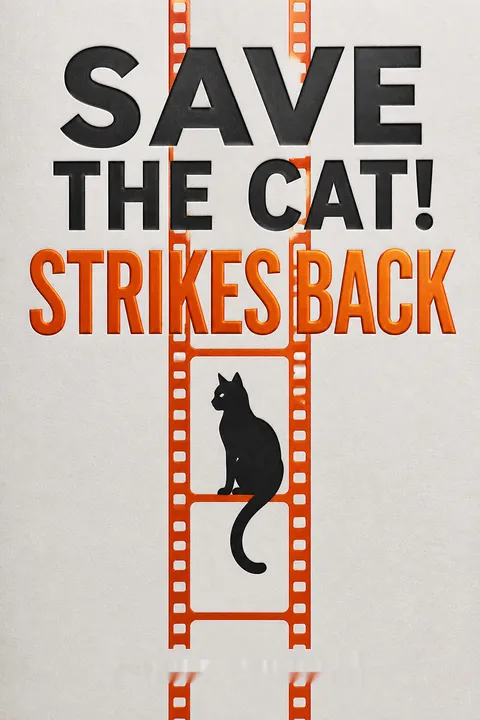
Save the Cat! Strikes Back is both a screenwriting manual and an account of how a working writer learns to absorb professional uncertainty. Its structure mirrors its subject: Snyder moves from a flawed idea, through workshop critique and structural diagnosis, into the business of selling, rewriting, and sustaining a career. The memoir of his own stalled years gives the technical advice an emotional engine. He is not simply teaching plot mechanics; he is arguing that creative work requires repeated encounters with resistance, followed by deliberate revision.
The book’s most durable contribution is its insistence that story structure is a diagnostic tool. A beat map, scene board, or set of questions can expose what a writer has not yet made clear: the protagonist’s problem, the stakes, the transformation, or the relation between plot and theme. This is more useful than treating structure as a recipe. The same framework can constrain writers if its page targets and familiar turns are mistaken for universal laws. Snyder’s strongest position is therefore not that every film must look alike, but that every story must make its own logic legible.
The career advice similarly balances agency and contingency. Writers can improve material, develop a specialty, seek collaborators, and respond professionally to notes. They cannot control whether a studio changes course, whether a market is receptive, or whether a particular representative opens a door. Snyder’s upbeat anecdotes make persistence vivid, but they can blur the role of luck and survivorship. Read critically, the book offers neither a guarantee nor a formula for success. It offers a toolkit for making creative decisions visible, testing them with other people, and continuing to work without confusing a difficult draft, or a difficult season, with proof that the work should stop.
Review Summary
Save the Cat! Strikes Back receives mostly positive reviews, with readers praising its expansion on concepts from the first book and valuable insights into screenwriting. Many find it helpful for story structure and troubleshooting, though some note it's more focused on the film industry. The book's advice on discipline and positive energy is particularly appreciated. While some reviewers feel it's not as strong as the original, most agree it's a useful resource for writers, especially those interested in screenwriting.
People Also Read







Glossary
Blake Snyder Beat Sheet
Story turning-point mapA 15-part outline Snyder uses to locate the major turns in a screenplay, from its opening image to its ending. Each part has a suggested place in an approximately 110-page script. The Beat Sheet helps writers test whether the premise develops into a complete dramatic arc before they draft every scene.
The Board
Scene-by-scene story planA visual planning surface, often a corkboard with index cards, used to expand the Beat Sheet into roughly 40 key scenes. The cards are organized across the story’s major sections so writers can see pacing, gaps, and repetition. Snyder also uses the board to track each scene’s emotional shift and conflict.
Transformation Machine
Map of character changeSnyder’s model of a story as a process that changes its hero. The protagonist moves from a familiar starting world into a contrasting environment that tests old beliefs, then reaches an ending shaped by what has been learned. Plot turns matter because they pressure that change, not simply because events happen.
Story Spine
Track of the hero’s changeThe line of character development that an audience follows from a story’s beginning to its end. To find it, Snyder asks writers to identify the hero, the hero’s problem, the contrast between the opening and ending, the concrete and inner goals, and the story’s theme. Scenes that do not support this line may be distractions.
Five-Point Finale
Final test for the heroSnyder’s framework for shaping a story’s ending as a test of whether the hero has changed. The hero assembles allies and a plan, makes an initial attempt, encounters an unexpected reversal, finds a resource or insight conventional planning could not supply, and acts on that discovery. The setting may involve attack, defense, or escape.
Shard of Glass
Hidden character flawA damaging blind spot, past wrong, or unresolved flaw that the hero carries without fully recognizing it. The central story forces the hero to confront this weakness and deal with its consequences. Snyder uses the term to distinguish the personal problem beneath the external plot from the obstacles that merely delay the hero’s immediate goal.
Double Bump
Second push into actionA technique for stories in which one initiating event is not enough to move the protagonist into the main adventure. A second catalyst supplies the additional pressure needed to make the hero act. Snyder points to Luke Skywalker receiving a message from Leia and then discovering that his aunt and uncle have been killed as an example.
Spidering, Half-Stepping, and Blurry Beats
Three outline failure patternsSnyder’s labels for common problems in story development. Spidering is the drift into side plots that distract from the protagonist. Half-Stepping means advancing the plot in small, low-consequence increments. Blurry Beats are major turns that occur too weakly or vaguely for the audience to recognize. All three can reflect reluctance to commit to the premise.
FAQ
What's "Save the Cat! Strikes Back" about?
- Screenwriting Guidance: "Save the Cat! Strikes Back" by Blake Snyder is a guide for screenwriters, offering strategies to overcome common writing challenges and improve storytelling.
- Practical Advice: The book provides practical advice on structuring stories, developing characters, and crafting compelling narratives using Snyder's signature methods.
- Personal Insights: It includes personal anecdotes and insights from Snyder's career, illustrating the application of his techniques in real-world scenarios.
- Inspiration and Motivation: The book aims to inspire writers to persist through difficulties and embrace the creative process with discipline and positive energy.
Why should I read "Save the Cat! Strikes Back"?
- Proven Techniques: The book offers proven techniques for screenwriting that have been used successfully by industry professionals.
- Comprehensive Approach: It covers a wide range of topics, from idea generation to selling scripts, making it a comprehensive resource for writers at any stage.
- Encouragement and Support: Snyder's conversational style provides encouragement and support, making the book an uplifting read for writers facing creative blocks.
- Legacy of Blake Snyder: Reading the book allows you to learn from Snyder's legacy and his contributions to the art of storytelling.
What are the key takeaways of "Save the Cat! Strikes Back"?
- Story Structure: Understanding and applying the Blake Snyder Beat Sheet (BS2) to create well-structured stories.
- Character Development: The importance of creating flawed protagonists who undergo significant transformations.
- Pitching and Selling: Strategies for effectively pitching and selling scripts in the competitive film industry.
- Resilience and Positivity: Emphasizing discipline, focus, and positive energy as essential traits for successful writing careers.
How does Blake Snyder's Beat Sheet work?
- 15 Beats: The Beat Sheet consists of 15 key beats that guide the structure of a screenplay, from the Opening Image to the Final Image.
- Page-Specific Beats: Each beat corresponds to specific pages in a typical 110-page script, ensuring a well-paced narrative.
- Transformation Focus: The beats emphasize the protagonist's transformation, highlighting moments of conflict and resolution.
- Universal Application: The Beat Sheet can be applied to various genres and story types, making it a versatile tool for writers.
What is the "Transformation Machine" in "Save the Cat! Strikes Back"?
- Three Worlds: The Transformation Machine involves three worlds: Thesis (the hero's starting point), Antithesis (the upside-down world), and Synthesis (the new, transformed world).
- Hero's Journey: It tracks the hero's journey through these worlds, emphasizing the change and growth they undergo.
- Midpoint Importance: The Midpoint is a crucial part of the Transformation Machine, marking a no-turning-back point for the hero.
- Storytelling Principle: This concept underscores the universal storytelling principle of transformation and change.
What is the "Five-Point Finale" in Blake Snyder's method?
- Final Exam: The Five-Point Finale is the "Final Exam" for the hero, testing whether they have learned their lesson.
- Storming the Castle: It involves "Storming the Castle," where the hero gathers allies and tools to face the final challenge.
- High Tower Surprise: The hero encounters a "High Tower Surprise," a twist that complicates their plan.
- Dig Deep Down: The hero must "Dig Deep Down" to find inner strength and execute a new plan, leading to victory.
How does "Save the Cat! Strikes Back" address rewriting?
- Collaborative Process: The book emphasizes the collaborative nature of rewriting, involving feedback from producers and executives.
- Handling Notes: It provides strategies for handling notes and suggestions from others while maintaining the integrity of the story.
- Iterative Improvement: Rewriting is seen as an opportunity for iterative improvement, refining the script to its best version.
- Professional Attitude: Writers are encouraged to approach rewrites with a professional attitude, embracing changes as part of the creative process.
What is the role of "Discipline, Focus, and Positive Energy" in writing according to Blake Snyder?
- Daily Practice: Discipline involves maintaining a daily writing practice, setting goals, and adhering to deadlines.
- Clear Objectives: Focus requires having clear objectives and a defined writing niche or specialty.
- Optimistic Outlook: Positive energy is about maintaining an optimistic outlook, even in the face of rejection or setbacks.
- Personal Growth: These traits contribute to personal growth and resilience, essential for a successful writing career.
What are some of the best quotes from "Save the Cat! Strikes Back" and what do they mean?
- "Trouble is good." This quote emphasizes that challenges and obstacles are opportunities for growth and improvement in storytelling.
- "Every story is 'The Caterpillar and the Butterfly.'" It highlights the universal theme of transformation and change in storytelling.
- "Write. Sell. Repeat." This mantra encourages writers to continuously create, market, and refine their work for sustained success.
- "Discipline, Focus, and Positive Energy." These are the key traits Snyder advocates for writers to cultivate in their creative pursuits.
How does Blake Snyder suggest handling feedback and criticism?
- Open Mindset: Approach feedback with an open mindset, viewing it as an opportunity for growth rather than a personal attack.
- Clarify Notes: Seek clarification on notes and suggestions to ensure a clear understanding of the feedback.
- Collaborative Spirit: Embrace a collaborative spirit, recognizing that filmmaking is a team effort involving multiple perspectives.
- Iterative Process: Treat feedback as part of the iterative process of rewriting, refining the script to achieve its full potential.
What is the significance of the "Save the Cat!" moment in storytelling?
- Hero's Likability: The "Save the Cat!" moment is a scene where the hero does something likable, making the audience root for them.
- Character Introduction: It serves as an effective character introduction, establishing the hero's core traits and motivations.
- Audience Connection: This moment creates an emotional connection between the audience and the hero, enhancing engagement.
- Storytelling Tool: It is a powerful storytelling tool that can be adapted to various genres and story types to build empathy.
How can "Save the Cat! Strikes Back" help new screenwriters?
- Comprehensive Guide: The book serves as a comprehensive guide, covering all aspects of screenwriting from concept to sale.
- Practical Tools: It provides practical tools like the Beat Sheet and Transformation Machine to structure and enhance stories.
- Inspiration and Motivation: Snyder's personal anecdotes and motivational advice inspire new writers to persevere through challenges.
- Industry Insights: The book offers valuable insights into the film industry, helping new writers navigate the path to success.
About the Author

Download PDF
Download EPUB
.epub digital book format is ideal for reading ebooks on phones, tablets, and e-readers.








