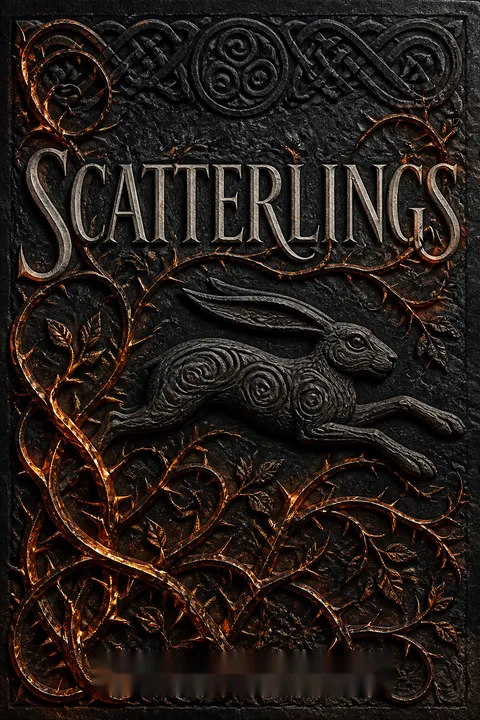


Plot Summary
Prologue
The narrator1 glimpses a hare near his shepherd’s hut, bold in the rain and gone again by spring. Its brief presence draws him into a habit of praise: he gathers distant names for the hare and local names whispered across Dartmoor, then offers the animal a story.
This opening establishes the book’s method. A creature is not merely an image for human feeling; attention to it begins a relationship with a particular place. The hare’s departure also shadows the narrator’s1 wider concern: wild encounters are temporary, and remembering them takes more than looking.
The hare introduces the book’s central tension in miniature. The narrator cannot possess or explain the animal; he can only attend, name, and remember. His list of names does not flatten the hare into a single symbol, but suggests that stories gather different kinds of knowledge around a living being. The opening also makes disappearance productive: the hare leaves, but its absence becomes a reason to keep looking and telling. Rather than presenting folklore as a collection of quaint beliefs, Shaw frames it as a practice of attention that can renew a person’s connection to local ground.
The Hill Claims Him
A phone call tells Martin Shaw1 that his father2 is seriously ill, with months of treatment and no certain outcome ahead. Shaw1 turns to walking because staying indoors with his fear feels unbearable; the lanes also recall the walks where father2 and son1 had their most important conversations.
Years earlier, on a four-day fast in Wales, Shaw1 had undergone a frightening, overwhelming experience that made him feel claimed by the land. During a sweat-lodge gathering, a Native American medicine man3 urged him to speak stories to the weather and to learn from the place where he was born.
Shaw1 had once longed to apprentice across the ocean, but he decided his work belonged in Britain. His father’s2 illness now gives that work its immediate purpose: he begins tracing Dartmoor’s stories on foot.
The illness does not simply motivate a therapeutic walk. It exposes the inadequacy of a private, self-contained response to grief, so Shaw seeks a larger frame in the terrain and its inherited stories. His choice to remain in Devon also distinguishes apprenticeship from appropriation: he refuses to reproduce another culture’s path when his own landscape is demanding attention. The medicine man’s instruction is important because it turns storytelling from performance into responsibility. Shaw must speak with the weather and land, not merely extract a lesson from them. His grief begins a practice that asks him to surrender some control over what the experience will mean.
Brutus Crosses the Dart
In Shaw’s1 retelling, Brutus8 leaves Italy after a prophecy links him to the deaths of both parents. On a deserted island, he sacrifices a white deer and receives a vision of a rich western land. He sails there with Trojan followers, lands by the Dart, and claims the country despite its giant inhabitants.
The Trojans drive the giants inland; their champion Corineus10 wrestles Goemagog9 off a coastal cliff, and the giant’s9 blood stains Devon’s cliffs red. Shaw1 then swims across the Dart estuary, where he imagines Brutus’s8 ship arriving beneath the river’s surface, and visits the Brutus Stone in Totnes.
The crowded town unsettles the charged landscape he has just crossed. He recognizes that the founding legend joins settlement to conquest, and asks what the triumphant version leaves out.
Brutus’s founding story makes origin morally unstable: the new kingdom begins with a vision, but its arrival displaces earlier inhabitants. Shaw’s attention to the giants resists the usual habit of treating defeated figures as scenery for a hero’s achievement. His swim makes the legend bodily rather than merely antiquarian, while the Brutus Stone’s ordinary, even neglected presence complicates the idea that history remains sacred by itself. The episode asks whether belonging can be built through attention rather than possession. By making the founder an immigrant and conqueror, the myth also unsettles claims of cultural purity and exposes the violence hidden inside national beginnings.
Raven Takes the Rope
On a snow-covered moor, Shaw1 sets out without a map to reach Chaw Gully and tell Raven11 a story. Roe-deer tracks lead him to a stream, but Raven11 crosses the sky and draws him east; Dartmoor pony tracks eventually guide him to the gorge. He slides down a frozen bank of brambles into a sheltered hollow, where the wind abruptly falls silent.
There he tells of miners who hear the Knockers beneath the rock and of a careless boy who descends into the gully. In the tale, Raven11 cuts the boy’s rope, and the boy dies after disturbing a place the miners treat with fear and offerings. Shaw1 climbs out, follows the pony tracks home, and dreams of weather and dark-winged faces.
The journey makes uncertainty part of the lesson: Shaw gives up the map, follows animal signs, and risks losing his way before the landscape offers a sheltered place to speak. Raven’s folklore is not a simple emblem of wisdom or menace. It brings both illumination and a hard limit, judging human intrusion into the mine. The boy’s death gives the story an ethical edge that modern resource language often erases: extraction is not only an economic act but a relationship with consequences. Shaw’s return does not resolve the gully’s mystery. Instead, the changed weather and his dreams carry the encounter back into ordinary life.
The Yurt Loses Its Roof
While Shaw1 prepares a small group for wilderness work on Dartmoor, a bungee hook tears Jonny Bloor’s lip as the group erects their yurt. That night, wind silently rips off the roof while Shaw1 is telling a story.
Jonny leads the others after the runaway canvas, and together they haul it back before it reaches a stream. The storm then drops, leaving the group to continue their work beneath the stars. After days of stories, fasting, and sweat-lodge ceremony, the trainees climb to a cliff above winter water carrying flowers, food, drink, and poems.
They make offerings to the sea deity Manannán mac Lir, then jump from the cliff together. Shaw1 later returns to study, understanding the ordeal as preparation rather than a credential or a private triumph.
The roof’s sudden flight makes the group’s shelter visibly provisional. They cannot preserve their carefully built enclosure without responding together to weather, and the recovery of the canvas becomes an unscripted part of their training. The cliff ritual extends the same lesson: the participants give before they leap, placing themselves in relation to forces they cannot command. Shaw’s emphasis on preparation matters because it resists the fantasy that revelation can be obtained cheaply or safely on demand. The episode also complicates wilderness practice: ritual is not a dramatic escape from society, but a disciplined passage that must eventually return its participants to work, study, and community.
The River Sings Back
Years after his first training group, Shaw1 camps beside the River Dart while a new group completes a four-day fast. One morning he hears a complex choir nearby and climbs through the bracken, expecting to find the fasters singing together. The valley is empty.
He realizes the layered voices are coming from the river itself, whose water changes pitch as it moves over stone. Shaw1 joins in, and days later the fasters emerge from their separate vigil spots, each believing the others had sung to them.
He tells them the river was the source, and the group falls quiet at the recognition that the sound belonged to that particular bend of water. The experience leads Shaw1 into a wider account of oral memory, spoken language, and place-shaped storytelling.
The river’s apparent choir overturns the assumption that meaningful speech belongs exclusively to human speakers. The fasters’ separate impressions are not dismissed as mistakes; together, they reveal a shared encounter with a particular landscape. This is the book’s strongest example of Shaw’s claim that a place can participate in story rather than merely host it. His reflections on oral tradition follow from that experience: speech has force because it is heard, remembered, and renewed among listeners. The scene also avoids a simple rejection of literacy. Shaw treats writing as powerful but incomplete, and asks how written work might direct attention back toward voices and places it cannot contain.
Lynhur Misreads the Stones
In the Grey Wethers tale, a peat worker named Lynhur12 hears how Zorac lost his flock after withholding an offering from the sun god Belus. Lynhur12 remembers the promised chance to shear the stones’ sheep and turn their fleece to gold.
He steals shears from Zorac’s grave, collects water from an ancient basin, and dips the blades in the River Teign at midnight. When golden hair rises from the water, he grabs only a short length. At Midsummer, he manages to shear one sheep but loses it before dawn and fails to use the water.
The enchanted flock closes around him, and he is found crushed beneath a stone. On his own walk, Shaw1 follows a hawk through the pine forest to the circles, where modern offerings and bright winter sun make him confront his own reluctance to accept success.
Lynhur’s error is not simply greed. He hears the story accurately enough to remember its instructions, but treats them as a recipe for gain rather than a warning about reciprocity and attention. His partial success makes the failure sharper: he obtains the tools and the vision, yet impatience leaves him unable to complete the exchange. Shaw’s encounter with the circles turns the tale toward his own habits, especially his suspicion of brightness and achievement. The chapter links ritual precision with ethical perception. A person may know the steps and still misunderstand the relationship those steps are meant to maintain.
A Story Finds Shelter
On Haldon Hill, Shaw1 prepares a shelter and offerings for a story he believes has travelled from Ireland into Devon. In the tale, a successful storyteller finds that no stories will come to him.
A ragged stranger wins his possessions, his horses, and even his wife at dice; the teller then wagers himself and loses. The stranger turns him into a hare and takes him to perform as a fool for another chief. There, the stranger’s dazzling tricks earn gold, after which he restores the teller and returns his belongings.
He reveals himself as a neglected western god who came to give the storyteller a tale fit for a chief. Shaw1 performs the story with gifts of shelter, firewood, drink, and speech, then listens for how the local stream and trees answer it.
The tale makes storytelling a form of service rather than a possession. The teller’s skill fails when stories desert him, and he must undergo humiliation before he can receive a new one. The god does not merely rescue his career; he teaches him that the story’s source exceeds the teller’s control. Shaw’s careful welcome for a migrating tale gives this idea a practical form. He neither claims the story as universally portable nor forbids it from travelling. Instead, he treats its arrival as a relationship that needs shelter, attention, and a willingness to be changed by its new ground.
Elfrida Chooses the King
King Edgar sends his courtier Ethelwold14 west to assess Elfrida,13 a noblewoman whose beauty and independence unsettle him as soon as they meet. Ethelwold14 conceals her beauty from the king and marries her himself, then keeps her hidden at his castle.
Rumors eventually reach Edgar, who arranges a hunt in Devon. Ethelwold14 admits the deception and asks Elfrida13 to disguise herself. Instead, she rides out dressed in her finest clothes and meets the king openly. Edgar falls in love with her, and they marry; their son Ethelred later becomes king.
Shaw1 visits Tavistock searching for the abbey associated with Elfrida’s13 family, but finds its remains dispersed among streets, businesses, and traffic. The town’s generous strangers make the broken historical landscape feel unexpectedly alive.
Elfrida’s beauty initially makes her an object passed between male plans: the king sends a courtier to inspect her, and the courtier lies to keep her for himself. Her choice to present herself openly changes the arrangement. In Shaw’s reading, the decisive act is not simply a romantic victory but a refusal to remain hidden inside another person’s ambition. His walk through Tavistock mirrors the story’s resistance to tidy ownership: the abbey is not preserved as a single monument but scattered through a living town. The chapter asks how sovereignty can be recognized without turning a person or a place into property.
America Sends Him Home
During a long American teaching tour, Shaw1 falls ill, teaches to sparse audiences, and grows painfully homesick. In Santa Fe, an Indigenous man blesses him with smoke and sings a Christian hymn, an encounter Shaw1 remembers as an unexpected meeting between traditions.
Later, as his van travels through forest, Shaw1 decides he will stop telling stories. A bird strikes the closed window and dies in his hands. He buries it with prayers, then notices a nearby house sign bearing his own name.
At the end of the tour, in a bookstore, a small volume of Devon folktales keeps falling from a shelf as he reaches for another book. Its cover shows the forge where his father2 played as a child. Shaw1 takes these coincidences as a summons to return to local work, not as a reason to reject travel.
The tour tests Shaw’s belief that stories matter even when human audiences are small. The bird’s death arrives at the precise moment he resolves to quit, but the episode does not prove that the landscape rewards him. Instead, it interrupts his self-pity with an irreversible life in his hands. The Devon book then makes return feel less like retreat than renewed obligation. The Santa Fe encounter likewise resists a purity test: a song crossing religious and cultural lines can carry force without becoming a claim of ownership. Shaw’s answer is neither isolation nor endless travel, but an exchange between local depth and stories that move.
Morada Pays for Sight
During a storm, the midwife Morada15 accepts gold to help a faerie woman give birth. Her mounted guide blindfolds her and carries her across the moor to a cave that opens into a lavish hidden hall. After the delivery, Morada15 rubs ointment on the infant’s eyes and secretly puts some on one of her own.
The new sight makes ordinary Ashburton shimmer with impossible detail, until the faerie rider finds her in the market and removes the eye that can see him. Shaw1 walks the story’s route through rain and cold, then finds an unlocked chapel with a stove, kindling, and books on Aboriginal songlines and Robin Hood. That unexpected welcome steadies him before the tale leaves the map and enters the realm of faerie.
Morada’s curiosity gives her access to a world the story treats as real, but sight arrives with obligations she does not understand. The eye is both perception and a relationship, not a private enhancement she can keep without consequence. Shaw’s reading links the punishment to the failure of a community to receive visionary experience and give it useful expression. His visit to the chapel supplies a counter-image: an open door, a warmable room, and unexpected books offer a modest form of welcome. The story’s loss is therefore not only individual. It raises the question of what happens when a culture has no place for people changed by what they have seen.
Sally Waits Through Winter
Sally Applegarth16 refuses the marriage her parents prefer and visits her grandmother for help in discovering her true love. Her grandmother recommends planting yarrow on a dead relative’s grave, waiting for it to grow, and placing the first sprig beneath Sally’s16 pillow. Impatient, Sally16 instead calls on the new moon for a vision.
She glimpses an uncertain figure on a hay cart, then waits until Midsummer to pick a rose blindfolded and press it in an old book. At Christmas, she wears the preserved flower to church. Will Tremayne,17 the farmer’s son she had seen on the cart, recognizes it and asks to wear it. Shaw1 walks the story’s woods and churchyard, where the gravestone of a couple who lost three children draws his offerings and prayers.
Sally’s impatience does not cancel the older forms of knowledge; it produces a muddled answer that she must learn to live with. The pressed rose becomes a material memory that survives the change from summer to winter, allowing recognition to arrive through time rather than instant certainty. Shaw’s discovery of the bereaved family’s gravestone prevents the love story from becoming a sealed, sentimental fable. His walk places courtship beside loss, inheritance, and the ordinary work of remembrance. The chapter’s emotional claim is not that patience guarantees happiness, but that love becomes meaningful through duration, vulnerability, and attention to lives beyond the couple.
The Wild Man's Hall
Shaw1 frames an imagined visit to Henry Hastings,22 a West Country wild man whose life in the woods unsettles the comforts of village society. The guest enters a hollow oak, then Hastings’s22 crowded hall, where hunting birds, dogs, pelts, rich food, and rough hospitality ignore the usual division between house and forest.
Hastings22 tells stories with a force that makes the visitor reluctant to return to ordinary life. The scene grows from accounts of wild men and women who lived near medieval settlements, at once feared, blamed, and imagined as keepers of a freer knowledge.
Shaw1 sets Hastings22 beside Frederick William Symes,7 the Dartmoor recluse remembered as Moo Roa Man,7 and asks why communities both need and marginalize people who live beyond their rules.
The wild man serves as a social mirror, not a simple ideal of freedom. Villagers project forbidden appetites onto him, yet also rely on him to represent forms of life their institutions cannot accommodate. Shaw’s hall intensifies that contradiction: it is abundant and hospitable, but not sanitized for a visitor’s comfort. By placing historical recluse Frederick Symes beside the imagined Hastings, Shaw asks how much of wildness is lived and how much is a community’s fantasy about what it has suppressed. The chapter’s argument is strongest when it keeps both possibilities in view. The outsider may preserve neglected knowledge, but romanticizing him can obscure the costs of isolation.
Winstanley Digs Common Ground
The English Civil War ruins Gerrard Winstanley’s18 cloth business and leaves him confronting poverty and the threat of eviction in Cobham. After working as a cowherd, he turns his biblical convictions into a political demand: land and its produce should be held in common.
In 1649 he and fellow Diggers begin cultivating common ground across several counties and distribute the crops without payment. Landowners hire men to destroy their homes, tools, and harvest. Winstanley18 answers with another pamphlet, arguing for shared stores and the abolition of wages and private landholding.
Shaw1 places the Diggers among other radical religious and political groups whose visions were defeated but not erased. Their failed settlement becomes a remembered challenge to the assumption that property is the natural basis of social order.
Winstanley’s political imagination grows directly from material precarity: he has lost a livelihood, sees poor neighbors facing eviction, and converts biblical language into a practical arrangement for food and land. The destruction of the Diggers’ settlement shows how quickly generosity becomes threatening when it challenges ownership. Shaw refuses to treat the defeat as proof that the experiment was naïve or irrelevant. Its afterlife matters because it supplies a language for later demands for equality and shared provision. The chapter also connects political dissent to the book’s broader concern with liminal culture: visions at the edge of accepted order can expose the moral assumptions that the center presents as inevitable.
The Roads Reject the Roma
When Roma travelers arrive in England, their distinctive clothing, language, fortune-telling, and mobile way of life draw both fascination and suspicion. Authorities make that suspicion violent: Edward VI orders Gypsies branded and enslaved, while children are taken into service.
Later, fairs give Roma musicians and performers a place in public life, but poverty and prejudice narrow that welcome. Shaw1 contrasts these histories with his own encounters among later traveling communities, whose encampments could bring music and companionship but also conflict with settled neighbors.
He argues that rejecting mobile people does not preserve an ideal of wildness; it can force that wildness into harsher forms. The chapter asks how a village might make room for difference without pretending that every conflict is either romantic freedom or criminal disorder.
The chapter treats marginality as an interaction, not an inherent trait. Roma life is made into spectacle when settled people want an image of freedom, then punished when travelers occupy space and make practical demands. Shaw’s account of contemporary encampments complicates nostalgia by acknowledging real friction and harm. That candor matters: romanticizing travelers would repeat the same reduction as condemning them wholesale. His sharper claim is causal. When a society offers no legitimate channel for difference, the rejected form can become more antagonistic, confirming the fears that helped produce its exclusion. The challenge is to build institutions capable of negotiation rather than turning every frontier into a battle line.
Two Boys Face the Mountain
Of the troubled teenagers invited to a wilderness fast in Snowdonia, only Jeff,19 a carjacker, and Paul,20 a petty thief, arrive. They bring drugs but no food, tent, or spare clothes, and fear the unfamiliar mountains around their camp.
After preparation, the boys spend several days alone without food or clocks, returning at sunrise exhausted, tearful, and newly able to meet their mentors’ eyes. Jeff19 later carves an elaborate spear and considers carpentry; Paul20 becomes an Outward Bound instructor. Years afterward, Shaw1 tells an initiatory story to inmates in a maximum-security prison.
The men respond with close attention, then grieve that they never had such a passage when they were young. Shaw1 sees their criminal histories differently: beneath the violence lies a hunger for ordeal, recognition, and a place in a community.
The fast does not erase the boys’ histories or make wilderness a convenient cure. It gives their fear, aggression, and endurance a structured passage witnessed by adults who do not pretend to be the source of the teaching. Jeff’s carved spear is especially revealing: a former fixation on weaponry becomes patient craft, while Paul’s later work carries the experience into service. The prison session reverses the usual division between troubled youth and hardened adults. Inmates recognize that destructive behavior may contain an unmet demand for initiation, though recognition alone cannot undo its consequences. Shaw’s account argues for meaningful rites of passage while refusing the fantasy that every participant will be transformed in the same way.
Wassail Wakes the Orchard
On Twelfth Night, Shaw1 takes his young daughter Dulcie to a local orchard wassail. Children carry holly crowns and bang pans while the Grimspound dancers, dressed in black and carrying fire-tipped staffs, lead the gathering.
Shaw1 tells a winter story about a boy who watches his father and other villagers sing to the apple trees, pour cider around their roots, and return to a feast. The real group moves from tree to tree, offering cider and songs. At the youngest sapling, the wassailers make a fierce noise and fire a shotgun into the sky to drive away harm.
After an initial misfire, the gun sounds, and the crowd finishes blessing the orchard before sharing food, music, and drink. Shaw1 recognizes a living tradition made through participation and invention, not exact imitation.
The orchard ritual gathers the book’s separate strands into a public act: a child watches, a story carries inherited images, adults feed the trees, and a community makes noise on behalf of vulnerable growth. The misfiring gun briefly exposes how much the group has invested in the rite, while its eventual blast restores the rhythm without proving any supernatural guarantee. The Grimspound dancers embody Shaw’s case for tradition as living practice: they alter the form so that people can enter it sincerely. The orchard is not rescued by a single idea or expert. Its care depends on a repeated, shared gesture that links human festivity with the conditions of future fruit.
Epilogue
After the book’s work is complete, Shaw1 returns to a small shrine beside a Dartmoor stream. He finds the antlers that have accompanied his ceremonies for years and understands that his task is to return them.
He places coins, prays, and leaves the antlers where someone else may discover them. The exchange closes a long apprenticeship without claiming ownership of what it gave him. The shrine remains, the stream continues, and the object passes out of his keeping.
Returning the antlers completes the book’s movement from acquisition toward reciprocity. They began as a powerful object in Shaw’s private practice, but their final significance depends on his willingness to give them up. This is not a rejection of personal meaning; it is an acknowledgment that meaning cannot be possessed indefinitely without becoming hoarding. The antlers’ possible discovery by another person leaves the story open to future contact. The ending therefore resolves the narrator’s immediate obligation while preserving the land’s independence from him. He can leave, but the shrine and its meanings do not belong to him alone.
Analysis
Scatterlings is organized less like a conventional novel than like a memoir braided with folktales, cultural history, and field notes. Its through-line is Martin Shaw’s1 effort to answer his father’s2 illness and his own earlier wilderness experiences by becoming more deeply responsible to Dartmoor. The book’s plot therefore advances through acts of attention: Shaw1 walks to a river, tells a story to stones, prepares a group for a fast, or revisits a place changed by roads and settlement. Each encounter tests whether he is listening or merely using landscape as material for personal meaning.
The folktales repeatedly dramatize failed reciprocity. Lynhur12 wants wealth without understanding the terms of the Grey Wethers; Morada15 seeks extraordinary sight without knowing its obligations; Ethelwold14 keeps for himself what he was sent to convey. Against them stand practices of offering, waiting, service, and shared ritual. These are not presented as simple moral lessons. The tales’ supernatural consequences make visible a relational world in which human wishes are only part of the action. Shaw1 asks readers to consider what gets lost when land becomes resource, story becomes detachable content, and initiation becomes a product promised without hardship or communal return.
The book is also self-critical about its own premise. Shaw1 values local knowledge but accepts that stories migrate; he honors oral transmission while writing a book; he admires wilderness yet acknowledges that human communities can be violent, prejudiced, and difficult. That friction gives the project more substance than a simple call to return to an imagined past. Its ethical ideal is not purity or retreat, but a practice of belonging that includes obligation and exchange. The closing wassail makes that ideal communal: children, adults, dancers, food, music, and trees participate in a tradition altered by the people who keep it alive. The final return of Shaw’s1 antlers then makes the argument personal. A meaningful encounter does not end in possession. It should leave something available to others.
Review Summary
Scatterlings receives an overall 4.64/5 rating, with readers praising Shaw's gorgeous prose and skillful treatment of Devon folktales rooted in landscape. Reviewers appreciate his mature storytelling approach, rich metaphors, and profound exploration of place-based narratives. Some find it deeply moving and transformative, touching on mythic wisdom and human connection to land. Critics note the book's meandering structure, occasionally preachy tone about rootedness, and dense, overly clever writing. Several recommend slow reading to absorb its richness, calling it a masterclass in storytelling that challenges anthropocentric worldviews.
People Also Read

Characters
Martin Shaw
The Dartmoor-bound tellerShaw is the memoirist, mythteller, and walker whose father’s2 illness turns long-standing spiritual questions into a local undertaking. A childhood in Devon, years of wilderness practice, and encounters with stories from many cultures shape his work, but he resists treating any tradition as a portable technique. He is intellectually curious and often self-questioning, willing to record fear, arrogance, loneliness, and doubt alongside moments he regards as visionary. His central motivation is to become answerable to the land that formed him and to find a form of storytelling that can carry experience back into community. The book traces his effort to balance local loyalty with the movement of stories across borders.
Shaw's father
The walking preacher fatherShaw’s1 father is a Methodist preacher whose work takes him through rural Devon congregations. His son1 remembers the walks where their most meaningful conversations happened, and later admires his willingness to serve small churches without demanding a large audience or reward. His example links storytelling to clear communication, repeated labor, and responsibility to ordinary people.
The medicine man
The ceremonial mentorA Native American ceremony leader, the medicine man models a relationship with weather and story that Shaw1 has never witnessed before. He tells Shaw1 to speak to the beings around the sweat-lodge fire and urges him to learn from his own place rather than copy another people’s path. His role is brief but catalytic: he gives Shaw1 a demanding vocation instead of a set of easy instructions.
Cara
The companion and witnessCara accompanies Shaw1 on walks and shares important parts of his life on Dartmoor. She helps gather ochre from the coast for children’s art and appears in the memory of their years near Berry Pomeroy. Her presence keeps Shaw’s1 work connected to family, friendship, and practical acts of making, rather than allowing it to become a solitary spiritual enterprise.
David Stevenson
The wilderness rites mentorA colleague in wilderness rites of passage, David helps Shaw1 prepare young people for extended fasts in the mountains. He brings experience of poverty on Native American reservations and works alongside Shaw1 to make the practices serious rather than theatrical. His role emphasizes preparation, safety, and the limits of what adult guides can claim credit for.
David Abram
The ecological interlocutorAbram writes the foreword and recounts his initial objection to Shaw1 publishing Dartmoor’s local tales. He worries that print can detach stories from the places that hold their knowledge, yet becomes intrigued by Shaw’s1 account of migration and exchange. His perspective gives the book a productive countervoice: the stories need their home ground, but they also have histories of travel.
Frederick William Symes
The moorland recluse tellerKnown locally as Moo Roa Man, Symes was a retired schoolteacher and preacher who chose a rough, isolated life on Dartmoor. He remained hungry for company, writing letters to himself to prompt visits and sharing stories in local pubs. Shaw1 presents him as a person who complicates the line between civilized resident and wild outsider.
Brutus
The Trojan island founderIn the founding legend Shaw1 retells, Brutus is a young Trojan marked by prophecy and family tragedy. His focused, grieving nature drives him away from the court and toward an unknown western island. He is both a visionary leader and a conqueror, making him a complicated figure through whom the book examines beginnings, migration, and the cost of claiming a home.
Goemagog
The displaced giantGoemagog is the champion of the giants who resist Brutus’s8 settlement. His strength and attachment to the island give the conflict a perspective beyond the newcomers’ victory. He represents the people and powers pushed to the margins when a founding story is told only from the conqueror’s side.
Corineus
Brutus's champion wrestlerCorineus is Brutus’s8 strongest warrior and the man chosen to meet Goemagog9 in combat. His skill and physical courage make him central to the legend’s decisive contest. Through him, the story turns military victory into an origin for the landscape’s place names and bloody imagery.
Raven
The gully's watchful judgeRaven is at once an old guide, a bringer of light, and a severe guardian of Chaw Gully. The bird watches miners and trespassers, carrying knowledge that is not reducible to a human moral symbol. Shaw’s1 encounter with Raven links animal intelligence to place, memory, and the dangers of treating the underworld as a storehouse.
Lynhur
The heedless treasure seekerA stranger to Dartmoor, Lynhur hears a local account of the Grey Wethers and becomes absorbed by its promise of gold. His attention is practical and opportunistic, making him a contrast to the people who transmit the story as a warning. He illustrates how a listener’s desire can distort what a tale is asking of them.
Elfrida
The western noblewomanElfrida is a noblewoman from Devon whose beauty, composure, and self-possession attract the attention of both a courtier and a king. She is not merely a prize in Shaw’s1 reading: her decisions reveal a capacity to act when others attempt to conceal or control her. Her story lets the book explore sovereignty, desire, and the difference between being chosen and choosing.
Ethelwold
The self-serving courtierEthelwold is King Edgar’s courtier, sent west to assess Elfrida13. His attraction to her disrupts the duty entrusted to him, and he conceals what he has learned from his king. He embodies the temptation to keep a gift for oneself rather than carry it faithfully into a wider relationship.
Morada
The village midwifeMorada is an experienced midwife who accepts a nighttime request from a mysterious rider because she knows how to deliver a child and needs the payment. Her practical competence brings her into contact with an unfamiliar world, while curiosity tempts her beyond the task she was given. She is a figure through whom the book considers the price and responsibility of unusual perception.
Sally Applegarth
The impatient young loverSally is a young woman who refuses a marriage arranged for money and seeks guidance about love. She listens to her grandmother’s folk knowledge but also tries her own moon ritual when the recommended wait feels too long. Her spirited impatience and willingness to combine inherited custom with personal action make her a bridge between generations.
Will Tremayne
The quiet farmer's sonWill is the farmer’s son Sally16 glimpses on a hay cart and later encounters at church. He is bashful rather than grand, fitting the story’s preference for affection that grows through ordinary community life. His connection to Sally’s16 rose gives the folk tale its tangible link between seasonal memory and courtship.
Gerrard Winstanley
The Digger reformerWinstanley is a former clothier whose business collapses during the English Civil War. His experience of poverty and threatened eviction leads him to argue that land and its produce should be held in common. Shaw1 presents him as a practical religious radical, someone whose visions take the form of shared cultivation and material provision.
Jeff
The young carjackerJeff is one of two troubled teenagers who agrees to a wilderness fast after nearly all the invited group withdraws. Guarded and accustomed to violence, he arrives without adequate equipment and distrusts the experience. His story allows Shaw1 to examine how discipline, ordeal, and adult witnessing might redirect aggression toward craft and purpose.
Paul
The young petty thiefPaul joins Jeff19 on the mountain after leaving a drug house to attend the fast. He begins with little trust in the adults or the unfamiliar landscape, but takes part in the same demanding vigil. His presence shows how a young person’s apparent indifference can conceal a desire for a meaningful passage into adulthood.
Danny Deardorff
The traveling storytellerDeardorff is Shaw’s1 colleague during the American teaching tour, a musician, ritualist, and storyteller whose presence sustains their work through illness and sparse audiences. Shaw1 admires his teaching even as homesickness and travel strain both men. Their partnership embodies the book’s tension between carrying stories abroad and remaining answerable to home.
Henry Hastings
The imagined wild lordHastings appears in Shaw’s1 evocation of the historical West Country wild man. He is presented as a forceful host whose woodland hall mixes hunting animals, abundant food, and storytelling without conforming to polite domestic rules. The chapter uses him as a lens on how communities imagine, fear, and depend on outsiders.
Plot Devices
The wilderness vigil
Initiation beyond comfortA participant spends days alone in a wild place, fasting and relinquishing ordinary markers such as clocks and familiar shelter. Shaw1 treats the vigil as a demanding practice, not a quick wellness exercise. It gives grief, anger, and uncertainty a setting beyond private thought, while the return to community matters as much as the time alone. The device shapes Shaw’s1 own early transformation and later work with young people.
Walking the story ground
Landscape as living memoryShaw1 follows the routes, streams, stones, and animal tracks associated with a local tale, often without relying on a map. Physical effort changes how he receives the story: a river crossing, a wrong turn, or a cold descent becomes part of its meaning. Walking also gives the reader a concrete sense of Dartmoor as a place shaped by weather, work, memory, and human settlement, rather than a generic backdrop.
Offerings and libations
Reciprocity made visibleShaw1 leaves coins, food, drink, flowers, or other small gifts at places where he tells stories. These actions acknowledge that he is not simply taking images or inspiration from the landscape. In the chapters on Brutus8, the Grey Wethers, and the orchard wassail, offerings mark different relationships: remembrance, caution, and communal care. The device turns an abstract ethic of reciprocity into an observable practice.
Retold local folktales
Memory with consequencesStories of founders, giants, midwives, lovers, strangers, and shape-shifters carry practical and moral knowledge through vivid action. Their characters make choices that expose how they listen, whom they serve, and what they believe they can take. Shaw1 pairs each telling with a walk or reflection, so the folktales remain connected to their places without being reduced to allegory. Their recurring warnings about greed, neglect, and failed reciprocity give the book its narrative backbone.
Migrating stories
Travel without cultural ownershipSome tales travel across regions and cultures, acquiring new meanings as they settle in unfamiliar ground. Shaw’s1 tale of the wandering storyteller gives this movement a narrative form, while his American tour makes it personal. The device keeps the book from treating local belonging as racial purity or folklore as free material for anyone to use. A story may travel, but its arrival still calls for attention, learning, and a respectful relationship with the place that receives it.
Download PDF
Download EPUB
.epub digital book format is ideal for reading ebooks on phones, tablets, and e-readers.








