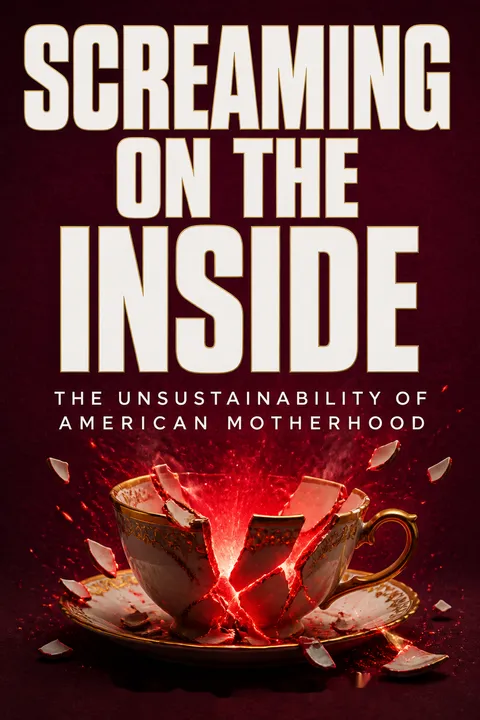


Key Takeaways
Reject the mothering ideal that changes its costume but demands self-erasure
The standard keeps shifting. American motherhood has never had one timeless definition. Colonial mothers were expected to guide children toward salvation; after the Revolution, wealthy white women were cast as civic educators raising virtuous citizens. By the twentieth century, medical experts claimed mothers needed scientific instruction, and by the late twentieth century the supermom was expected to excel at both paid work and intensive care of children. Each era changed the rules while retaining the demand for maternal self-denial.
The ideal was never universal. Its celebrated domesticity largely centered on white, middle-class women. Enslaved Black mothers were separated from children and denied the rights and recognition granted to white mothers. The history reveals how praise for motherhood could coexist with exclusion, exploitation, and blame.
The historical sequence makes the ideal look less like a natural truth and more like a social tool, adapted to changing economic and political needs. That perspective helps explain why individual mothers can feel they are failing even when they follow the rules: the rules themselves keep changing. The racial contrast is essential, not an optional addition. Still, a sweeping national story can obscure regional and class differences, and the book acknowledges that motherhood was never experienced uniformly. Its strongest point is not that every era was identical, but that self-sacrifice repeatedly served as the price of social approval.
Treat pregnancy complications as health needs, not evidence of maternal failure
Pregnancy is not a performance. Grose describes severe vomiting, anxiety, depression, and leaving a new job during her first pregnancy. She believed she had failed before her child was born, although her symptoms were medical problems, not proof of deficient love or character. The book estimates that 7 to 20 percent of women experience anxiety or depression around pregnancy, while hyperemesis, extreme vomiting that can cause substantial weight loss, affects up to 3 percent.
Support changes the experience. In Norway, three-quarters of pregnant women in one study took at least a week of sick leave, with a median leave of eight weeks. Lockdown research also found fewer premature births in several countries, especially among women able to stay home. These findings are preliminary, but they challenge the assumption that an ideal worker's schedule is harmless during pregnancy.
This reframing matters because guilt can make a treatable condition harder to disclose. It also exposes a common reasoning error: treating a mother's distress as a private attitude problem when her illness, job insecurity, and lack of leave interact. The pregnancy examples support a broader principle in health care: decisions should compare the risks of treatment with the risks of untreated illness, rather than treating medication or rest as moral weakness. The lockdown findings are suggestive, not proof that working causes premature birth. Their value is in asking why protection and rest are available only under extraordinary circumstances.
Choose infant care for the mother-child pair, not a purity test
Care has two recipients. Grose calls the expectation that mothers optimize every part of a child's life, beginning before birth, total motherhood. Breastfeeding became one test of whether she was a good mother: painful latching, pumping through the night, and rising anxiety did not feel sustainable, so she stopped after two weeks. She argues that a child's well-being cannot be separated from the parent's health and agency.
Evidence needs context. A randomized breastfeeding-promotion study following more than 13,000 children in Belarus found no significant cognitive advantage at age sixteen for the intervention group. That does not mean breast milk has no benefits, or that every family's circumstances are the same. The book also notes that low-income mothers face practical barriers to nursing, including limited leave, time, and suitable places to pump.
The useful shift is from ranking mothers to assessing the whole caregiving situation. A feeding choice can affect nutrition, sleep, pain, mental health, finances, and family participation at once. That makes a single metric, such as breastfeeding duration, a poor proxy for good care. The study cited here is unusually strong for this research area, but it tests a particular intervention and outcome, not every possible benefit of breastfeeding. Evidence should inform decisions without being turned into a verdict on a parent's character.
Keep motherhood from swallowing every other part of your identity
Identity can widen. Many women Grose interviewed felt guilty whether they worked, stayed home, struggled with postpartum depression, or failed to match the ideals of their communities. One mother left a career after severe depression and anxiety; another felt pressure in a religious community that treated motherhood as a woman's defining calling. These accounts show how a major identity change can become an identity takeover.
Support should fit real people. Some mother groups offered vital help with miscarriage, high-risk pregnancy, or a newborn in intensive care. Others enforced narrow norms about natural birth, nursing, or baby-wearing. Grose found that friendships built around shared interests beyond children gave her room to be a full person. One mother also had to repeatedly tell her children's dentist to contact her husband, who handled those appointments.
This section links identity to the social environment: people do not simply decide who they are in private, they are continually recognized or reduced by others. A supportive group can make room for multiple roles; a judgmental one can turn a practical choice into a loyalty test. The example of the dentist is small but revealing, because routine systems often reproduce assumptions without anyone explicitly endorsing them. Individual boundaries matter, but they cannot replace institutional habits that keep assigning mothers the default responsibility.
Make employers share the cost of care instead of penalizing mothers
Two jobs collide. Legal scholar Joan Williams's term ideal worker describes the employee expected to work full time, overtime, and with few interruptions for family or health. The ideal mother is expected to provide intensive care. Mothers are asked to satisfy both standards, even though their demands conflict. Grose recounts being an executive who could work flexibly, yet was also expected to smooth over her male CEO's missed emails and miscommunications.
The penalty is measurable. The book reports that mothers earn an estimated 5 to 7 percent less per child. In hiring experiments, mothers were less likely to receive callbacks and could be offered lower salaries than equally qualified women without children. Low-wage workers face added instability: just-in-time scheduling can give them a week's notice or less, making reliable childcare difficult to arrange.
The ideal-worker model treats care as an exception instead of a normal feature of human life. That design shifts the cost of keeping workplaces uninterrupted onto families, especially mothers, and then labels their predictable constraints as weaker commitment. The hiring findings show that bias can operate before a mother has made any request for flexibility. Yet policies should not assume all caregivers have the same needs: predictable schedules, paid leave, and flexibility solve different problems. A workplace can offer benefits on paper and still punish employees who use them, so leadership behavior and promotion practices matter too.
Treat the perfect-mom feed as advertising, not evidence of normal life
Images have incentives. Early parenting blogs often made room for awkward, conflicted stories. As social platforms and sponsorships grew, polished images became more commercially useful. Grose describes an influencer economy in which mothers may be paid for displaying domestic life, while the actual care work behind the image remains unpaid. The result is not simply a prettier picture: it can make one narrow, often affluent version of motherhood seem ordinary.
Advice needs scrutiny. Online parenting information is abundant, unevenly reliable, and often packaged as expertise. Grose describes influencers using research about severely neglected Romanian orphans to imply that sleep training harms children, despite the very different circumstances. A practical response is to mute accounts that reliably provoke shame and seek advice from a few trusted people whose judgment and values are sound.
The platform changes what becomes visible. Images that are attractive, repeatable, and easy to sponsor can outcompete the messy realities that would help parents calibrate expectations. This is a problem of incentives as much as individual vanity: creators may need to perform a marketable life to earn income. At the same time, online communities can offer real information and connection, especially to people isolated from local support. The goal is not to dismiss digital spaces, but to distinguish a useful community from a sales channel dressed up as a parenting authority.
When care systems collapse, households revert to gender roles already built in
Crisis exposed the defaults. When schools and childcare closed during COVID-19, families suddenly had to combine paid work, teaching, and care at home. In 2020, parents with school-age children spent an average of 1.6 more hours a day providing childcare while doing other tasks than they had the year before. Mothers spent more than seven hours a day caring for children, compared with fewer than five for fathers.
The burden was unequal. Early in the pandemic, fathers had a lower layoff rate than mothers and child-free workers, a pattern researchers called the fatherhood premium. Mothers also left or reduced paid work as schools closed, often without affordable alternatives. Grose's own family managed better after moving in with her retired parents, showing how additional adults can absorb a crisis that a two-parent household cannot easily contain.
The pandemic functioned as a stress test: when formal care disappeared, households did not distribute the new workload from scratch. They leaned on existing gender expectations, which made mothers the default backup system. This helps explain why remote work alone did not solve the problem. A laptop at home can increase flexibility, but it cannot create uninterrupted time while children need supervision. The comparisons are averages and conceal differences in occupation, income, race, and family structure. Their force lies in showing that a supposedly private household response was patterned across society.
Build a village and public infrastructure, because goodwill cannot replace care
Care is shared work. Grose argues that families need help from relatives, friends, neighbors, employers, and government. Her family found practical support in living with grandparents; other mothers in the book organized a children's march, fought for an accessible playground, or created evidence-based pregnancy guidance. Community action can begin locally, but it does not remove the need for reliable public services.
Policies have broad support. In polling cited by the book, 80 percent of voters supported more federal funding to expand childcare places, and more than 80 percent supported paid family leave. Yet only one in seven children eligible for childcare subsidies received them before the pandemic. The book's proposals include paid leave for caregiving, affordable childcare, predictable schedules, and genuine flexibility at work. No single policy can meet every family's needs.
The village idea becomes more useful when it includes infrastructure rather than nostalgia. Relatives and neighbors can offer intimacy and responsiveness, but they cannot reliably replace trained childcare, paid leave, or safe working conditions. The policy figures also challenge the idea that support for families is politically impossible, although popularity alone does not guarantee legislation or good implementation. Community action has a second value: it can turn isolated strain into shared knowledge and influence. Durable support requires both informal relationships and institutions that do not vanish when a family hits a hard week.
Make room for maternal ambivalence before guilt turns it into silence
Mixed feelings are human. In the conclusion, Grose realizes she reflexively tried to reassure a pregnant friend who felt uncertain about another baby. She had spent years questioning impossible ideals, yet still reached for automatic positivity. Psychotherapist Rozsika Parker's account of maternal ambivalence describes contradictory feelings toward the same person existing together, rather than indifference or lack of love.
Honesty has a history. Mothers' diaries from the nineteenth century recorded fear, frustration, and exhaustion alongside delight in children's discoveries. The book's closing advice is not to force a cheerful interpretation, but to listen to one's own feelings and to other mothers without judgment. That honesty can reduce the extra burden of feeling guilty for feeling bad, and can help reveal what support or change is actually needed.
Ambivalence is a better model of attachment than the demand for uninterrupted bliss. It allows love and irritation, devotion and the need for distance, to coexist without treating one feeling as proof that the other is false. Listening rather than immediately reassuring also changes the social task: the goal is not to tidy a person's emotions but to understand what they are saying. Acceptance should not be mistaken for resignation, however. Persistent distress may call for professional care or material help, not merely a more forgiving attitude.
Analysis
The book's central argument is that American motherhood is not simply exhausting because children require care. It is exhausting because care is organized around contradictory ideals, then assigned primarily to individual mothers. Grose connects private feelings of failure to a historical sequence: mothers are first made responsible for producing moral citizens, then instructed by experts, then expected to combine intensive parenting with an uninterrupted career. Her personal story gives that history bodily weight. Severe pregnancy illness and the loss of work are not abstract policy failures; they are the cost of living inside systems that treat care as a private inconvenience.
The account is especially persuasive when it shows how ideals are distributed unequally. White middle-class motherhood has often been praised as a domestic vocation, while Black mothers have faced exclusion from that protection and stereotypes that deny their need for help. The book also resists a simplistic solution in which mothers merely reject judgment. Personal boundaries and honest relationships matter, but they cannot compensate for absent leave, unaffordable childcare, unstable work schedules, or unequal hiring.
Its most productive distinction is between individual choice and the conditions that shape choice. Breastfeeding, employment, and family arrangements can be described as personal decisions while being constrained by money, health, culture, and available care. That distinction invites better questions: Who bears the costs, who gets judged, and what options are genuinely available?
The book is less a universal manual than a reported social diagnosis. Its interviews and historical examples illuminate patterns, but do not establish that every mother experiences them in the same way. Nor does a supportive policy automatically create a fair workplace or a close community. The argument is strongest as a demand for plural solutions: material support, shared caregiving, trustworthy information, and a culture that can tolerate mixed feelings. Mothers need not earn assistance by appearing cheerful, selfless, or perfectly competent.
Review Summary
Screaming on the Inside received mixed reviews. Many readers found it relatable and appreciated its historical context and research on motherhood challenges. However, some criticized the author's judgmental tone, particularly regarding social media influencers. The book was praised for addressing unsustainable expectations placed on mothers but criticized for lacking diversity and solutions. Some felt it was too focused on white, upper-middle-class experiences. Overall, readers found it thought-provoking but divisive, with some feeling validated and others feeling attacked or misrepresented.
People Also Read









Glossary
Scientific motherhood
Expert-directed child-rearingA belief that mothers need medical and scientific experts to raise children properly. The term describes a contradiction: mothers remain responsible for family well-being while being told they are not competent to make decisions without professional instruction. The book traces this approach through the growth of parenting manuals, prenatal guidance, and medical authority.
Republican mother
Mother as civic educatorAn ideal that developed after the American Revolution, assigning mothers the task of raising virtuous citizens for the new republic. It gave some white women a form of influence through their sons' political character, while excluding women from formal political power and resting on a narrow definition of citizenship.
Extensive mothering
Shared, household-based careA description of colonial-era mothering in which childcare was less exclusively centered on an individual mother. Relatives, neighbors, friends, and fathers often participated because work and family life took place within or near the household. The term contrasts with later expectations of constant, highly individualized maternal attention.
Intensive motherhood
High-investment child-rearingA demanding model of parenting, especially associated with middle-class expectations, in which mothers devote substantial time, money, attention, and expertise to optimizing children's development. The book connects it to practices such as carefully selecting food, activities, and educational opportunities, whether or not a mother also works for pay.
Total motherhood
Optimization as moral dutyA moral expectation that mothers should optimize nearly every aspect of a child's life, beginning during pregnancy, and should put the child's interests ahead of their own when the two appear to conflict. The concept helps explain why ordinary decisions, such as infant feeding, can become tests of maternal worth.
Ideal worker
Worker without care dutiesA workplace norm, associated in the book with legal scholar Joan Williams, that treats the best employees as available for full-time and overtime work with little interruption for pregnancy, illness, or caregiving. Jobs built around this norm disadvantage caregivers and can push them away from authority, advancement, and stable employment.
Motherhood penalty
Career costs of motherhoodThe disadvantages mothers face in hiring, pay, and perceptions of competence or commitment compared with otherwise similar workers. The book describes research finding lower wages for mothers and poorer hiring outcomes. The term distinguishes these penalties from the benefits sometimes associated with fatherhood in employers' evaluations.
Emotional labor
Managing feelings for workSociologist Arlie Russell Hochschild's term for managing and producing emotions as part of paid employment. In the book's workplace examples, women are often expected to smooth conflict, remain pleasant, and attend to colleagues' emotional needs. The concept is narrower than casual uses of the phrase to describe any difficult or unpaid task.
radical flexibility
Control over work timeA workplace approach that gives employees meaningful control over when they work and take time away, beyond a standard leave allowance. It can include adjustable hours or recurring time off for caregiving. The concept responds to the fact that family needs are often unpredictable and do not fit neatly into fixed work schedules.
Exhibitor Economy
Care performed for displayMeg Conley's phrase for an influencer economy in which mothers can earn money by presenting a marketable image of domestic life. Sponsored work may require staging children, homes, or products for an audience, while the everyday labor of caregiving itself remains unpaid. The term highlights the difference between displaying care and being compensated for care.
Hardship Chain Reaction
Hardship spreading through familiesA term used in the Rapid-EC research discussed in the book for the way financial strain can ripple through family life. When caregivers cannot meet basic needs, economic pressure can intensify adult stress and contribute to children's emotional distress. The research also found that emotional support can interrupt this progression.
Download PDF
Download EPUB
.epub digital book format is ideal for reading ebooks on phones, tablets, and e-readers.








