

Key Takeaways
Treat maternal overwhelm as evidence about the system, not a personal defect
An alarm, not a flaw. Montei uses “touched out” for the intense aversion to further physical contact that some caregivers feel after a day of children climbing, grabbing, and needing comfort. She first searched parenting forums for the phrase, then recognized that her own reaction carried more than ordinary sensory fatigue: touch could revive memories of sexual violation while also reflecting her lack of privacy and support.
The conditions matter. During pandemic lockdown, childcare and school disappeared, while mothers were still expected to manage children, work, and home life. Calling the resulting distress normal can reduce shame, but it can also disguise the burden that produced it. The phrase names an experience, not a diagnosis, and mothers do not all experience it in the same way.
What's striking is how a bodily limit becomes evidence about the arrangement around a caregiver. Stress research often describes cumulative strain as allostatic load, the wear produced when demands repeatedly exceed recovery. That lens makes the body's protest intelligible without treating every aversion as proof of trauma or bad parenting. The distinction matters: structural explanations should widen support, not erase individual differences or the possibility of clinical help. A useful question is not simply whether the reaction is normal, but what demands and missing resources make it predictable.
A body remembers the scripts that taught it to yield
Desire can be trained. Montei recalls teenage and adult encounters in which she wanted attention but often did not know how to ask for what felt good, or how to stop what did not. Alcohol blurred her memory and made her feel temporarily in control, yet she later questioned whether she had consented to sex while unconscious or barely aware. For years, she blamed herself for these experiences rather than recognizing how a culture centered on male pleasure shaped her expectations.
Motherhood reopened the record. Caring for children involved constant touch, while sexual attention from her husband could feel like another demand on a body already claimed by others. The connection is not that parenting and assault are identical. It is that both made her reconsider who gets to define her body's limits, and whether her own discomfort counts as knowledge.
The account exposes a gap between formal consent and the conditions that make refusal feel possible. Trauma-informed practice emphasizes choice, predictability, and control because people may comply, freeze, or dissociate rather than clearly resist. That perspective helps explain why later reinterpretation can be clarifying without pretending every ambiguous encounter has one easy label. It also prevents a damaging shortcut: treating uncertainty as evidence that harm did not occur. The book's embodied approach is especially useful because it treats memory and sensation as part of how people make sense of their histories.
Childbirth stories can disguise ideology as biology
Pain has a politics. Before labor, Montei tried to choose between medical birth stories that depicted women as helpless and natural-birth narratives promising calm, nearly painless delivery. Neither gave her a neutral account. Grantly Dick-Read's popular theory linked fear to tension and pain, while also drawing on racist depictions of supposedly primitive women who felt less pain. Earlier, twilight sleep used drugs to make labor less memorable, but women could still be restrained, cut, and mistreated while unable to recall events clearly.
Her labor resisted the script. After a long labor, Montei accepted synthetic Pitocin to intensify contractions and gave birth in a hospital. The experience mattered deeply, but it did not prove that pain ennobles mothers or that one birth method is morally superior. Stories can help people interpret birth, yet they can also turn suffering into an expected feminine destiny.
Birth narratives resemble what narrative medicine studies: stories can help patients organize frightening experiences and communicate needs. But a story becomes coercive when it is treated as a universal template, whether it celebrates natural birth or medical technology. The strongest reading here preserves both bodily agency and the value of interventions chosen for safety or comfort. It also shows why race cannot be an afterthought in discussions of pain: supposedly neutral theories have often relied on racial hierarchies. Meaning may support recovery, but it should not be a prerequisite for believing someone's account.
Unpaid care is work that props up everyone else's work
The home has a hidden shift. After returning to teaching, Montei arranged her day around nursing, naps, laundry, and her husband's work schedule. She tried to optimize every hour, yet could not complete paid work without childcare or afford childcare without paid work. That pressure illustrates intensive parenting, a model of childrearing that is child-focused, guided by expert advice, emotionally demanding, and labor-intensive.
The costs are transferred. The book cites estimates that center-based childcare consumed about one-third of family income and that women's unpaid labor was worth roughly $10.9 trillion. It also notes that early childhood educators are overwhelmingly women, with many workers underpaid. Care sustains workers, children, and the future workforce, even while being treated as private family business rather than essential social infrastructure.
This is a clear case of social reproduction: the often-invisible work that sustains people and makes paid economic activity possible. The language of productivity obscures that dependency by counting market output while treating cooking, cleaning, and caregiving as background. The book's economic argument is strongest when it distinguishes love from the labor conditions attached to love. Its figures are estimates rather than a full accounting of every household, but the larger point stands: when care is underfunded, costs do not vanish. They are shifted onto families and low-paid workers.
Refusal can be the first step toward recovering desire
No can be informative. In marriage, Montei sometimes scheduled sex to reassure her husband, even while feeling exhausted and touched out. She initially treated her declining desire as a personal defect, a sign that she was failing at marriage. But refusing unwanted touch also expressed a need to reclaim bodily control after years of accommodating men and, now, the relentless physical demands of care.
Sobriety changed the terms. During lockdown, drinking helped her feel briefly removed from domestic life. She eventually stopped, and her husband stopped with her in solidarity. They had sex sober once, but she continued to keep her body to herself for a time. Her refusal was not a rejection of love or a universal prescription for relationships. It was a boundary that made room to ask what she wanted, rather than automatically meeting another person's expectations.
Refusal is often treated as a failure of intimacy, but it can also be information about safety, fatigue, or unequal obligation. Self-determination theory, a psychological account of motivation, distinguishes freely chosen action from compliance driven by pressure; that distinction helps explain why obligatory sex may diminish desire rather than restore it. Still, refusal does not automatically resolve the conditions that made it necessary. Partners and institutions must respond by sharing care and respecting limits, not by making the person who says no responsible for repairing everyone's comfort.
Consent must account for pressure, uncertainty, and unequal power
A clear yes is not the whole story. Montei describes encounters in which she flirted, drank, or invited someone over, then found it difficult to stop sexual advances. She had learned to treat those earlier choices as promises, even when she felt sick or tried to withdraw. Her point is not that consent is meaningless, but that simple formulas can miss coercion, fear, impaired awareness, and the pressure to be agreeable.
Power shapes the exchange. As a teenager, she was never taught to center her own pleasure or boundaries. Later, a gynecological exam included an additional clinician without her permission. These experiences show how institutions and intimate partners can make bodily access seem routine. Consent is more than a single question at the start; it requires attention to changing wishes and to whether someone can safely refuse.
Consent frameworks are valuable because they give people shared language and a standard for conduct. Their limits appear when organizations treat consent as a box checked once, rather than an ongoing relationship shaped by dependence, authority, and risk. Healthcare offers a telling example: a procedure can be clinically routine and still require clear permission and explanation. A richer ethic combines explicit agreement with active attention to hesitation and power. That approach should not demand perfect self-knowledge from the person with less power, or make that person responsible for preventing another's misconduct.
Teach children boundaries through reciprocal care, not perfect scripts
Care can include limits. Montei wanted her daughter to learn that bodies belong to the people living in them. She began naming her own limits when her daughter pulled at her breast or climbed over her, rather than silently accepting every touch. At bedtime, her younger child learned to seek her gaze and permission before touching her body. These moments made consent part of everyday affection, not just a warning about danger.
No script guarantees safety. Montei also struggled when a doctor needed to examine her injured daughter's leg. The child was frightened, but the examination was medically necessary. The mother could explain what was happening and comfort her without pretending the child had full control. She also learned that telling a girl to speak up cannot prevent violence, and can unfairly blame her when others cross a boundary. Attachment Parenting, which she had embraced, risked making maternal availability seem limitless.
The section connects ethical development to repeated ordinary interactions. Children learn that other people have inner lives not only through rules, but when caregivers acknowledge their distress, explain necessary actions, and repair moments of impatience. Developmental research supports the importance of responsive caregiving, though no parent can maintain perfect calm or prevent every injury. That is precisely why perfection is the wrong standard. A durable lesson is that boundaries deserve respect, while care sometimes involves difficult decisions and honest explanation.
Don't let motherhood's structural failures become your next shopping list
A product can disguise a policy failure. In California, Montei scrolled through advice about home organization, child development, and ways to make money while staying home. Other mothers she encountered promoted essential oils, clothing, and wellness products through multi-level marketing businesses. These communities offered income, identity, and companionship, but also framed maternal exhaustion as a problem each woman could solve through better habits, purchases, or entrepreneurial hustle.
The blame stays private. The promise of a fresh start can be compelling when childcare is costly and care work is isolating. Yet individual fixes cannot replace paid leave, affordable childcare, or reliable public services. Montei's account does not dismiss every product or peer network. It asks readers to notice when a market is profiting from conditions that public policy has left unresolved, and when the proposed solution makes mothers work even harder.
Consumer markets often convert institutional problems into personalized demand: the stressed person becomes a customer for the cure. The same mechanism appears in wellness culture, where structural exhaustion is recast as a failure of routines or mindset. Community and small businesses can offer real connection, so critique should not mock the people drawn to them. The sharper question is who captures value and who bears risk. When a remedy depends on unpaid promotion or constant self-branding, it may reproduce the workload it claims to relieve.
Replace the isolated family with shared, publicly supported care
Care cannot stay private. Montei's ability to write and regain space depended on her sister, daycare workers, teachers, grandparents, and friends. Their help revealed that autonomy was not something she could produce through better planning alone. The book argues for paid leave, affordable childcare, flexible work, and social services that make care a shared responsibility rather than a private burden assigned mainly to mothers.
Sharing must be fair. Outsourcing childcare can free some parents while leaving workers, often women of color, underpaid and overburdened. The goal is not simply to move care from one household to another. It is to improve the conditions of care, bring men into primary caregiving, and recognize care as valuable work. Community support gave Montei room to rest and create, but its benefits rested partly on labor that society still undervalues.
The argument is for infrastructure, not merely personal generosity. Public provision can make care less dependent on family wealth, while good wages and working conditions protect caregivers from becoming a hidden subsidy for everyone else. This also expands the meaning of family: responsibility need not stop at the household door. A real test of any care policy is whether it improves autonomy for both the person receiving care and the person providing it. Otherwise, an apparent solution may only transfer the burden to someone with less bargaining power.
Practice change as shared making, not a polished personal reset
Becoming a parent takes time. The book uses matrescence for the extended process of adapting to motherhood, including changes in identity, body, and relationships. It is not a neat transformation completed at birth. Montei's own path included anger, sobriety, returning to writing, and learning to accept care from others.
Small creations can open worlds. At her sister's daycare, children made art from scraps and ordinary household objects. They were not pushed toward identical, polished products; adults asked them to explain what they had made. That practice valued discovery over output. Montei connects this kind of patient, shared creativity to social change: neither parenting nor political transformation can be optimized into a quick fix. New possibilities take time, support, and room for people to make meaning together.
The ending resists the familiar self-improvement plot in which a crisis becomes a marketable reinvention. Its alternative is process-oriented: people make new meanings through relationships, repetition, and imperfect experiments. That view resonates with arts education, where open-ended materials can strengthen agency by letting children direct the work. It also offers a useful political caution. Creativity alone cannot replace policy or redistribute labor, but it can help people imagine arrangements beyond inherited scripts. The measure of progress is not a flawless result, but a wider capacity to participate.
Analysis
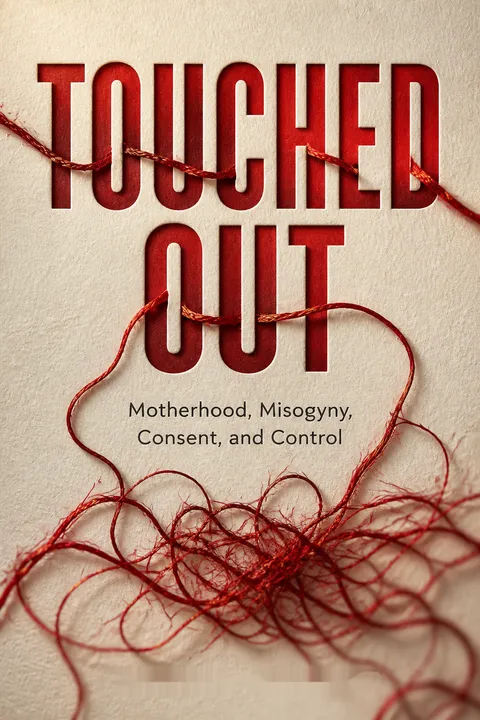
Touched Out is a memoir that uses the body as a bridge between private experience and political economy. Montei's central move is to connect experiences often kept in separate categories: unwanted sex, childbirth, breastfeeding, housework, and parental touch. Each becomes legible as a negotiation over whose needs matter and who is expected to yield. The result is not simply a critique of motherhood, but a distinction between caring for children and the social institution that assigns care to women while denying it resources and status.
The book is especially persuasive when material constraints become concrete. A parent cannot earn enough to pay for childcare without childcare; work schedules and gender expectations convert that bind into apparent personal choice. The memoir's sensory details make the argument memorable because structural pressure is shown as fatigue, aversion, anger, and self-doubt, rather than left at the level of policy language. Its proposed alternative is likewise practical: shared care, paid support, and mutual attention to bodily limits.
The analysis has a productive tension. Montei argues that bodies carry histories of power, yet resists reducing every intimate experience to politics. The tenderness of nursing, bedtime touch, and shared art remains real, even when care is shaped by unequal conditions. That tension prevents a simple opposition between liberation and family love. At the same time, her experience is explicitly situated in whiteness, education, and access to some support. The book acknowledges that it cannot represent Black, queer, trans, or nonbinary caregivers fully. That limit matters because care's burdens and reproductive control are racialized and differently enforced. The account is best read as a powerful case study, not a universal template. Its broader invitation is to treat distress as information, investigate the conditions that produce it, and build forms of care that do not depend on anyone disappearing.
Review Summary
Readers praise Touched Out as a powerful, necessary exploration of motherhood, consent, and women's exploitation. Many felt deeply validated by Montei's honest portrayal of maternal struggles and societal pressures. The book's blend of personal narrative and feminist theory resonated strongly, though some found it emotionally challenging. Reviewers appreciated Montei's connections between rape culture, patriarchy, and motherhood. While a few wished for more resolution or practical advice, most found the book insightful, thought-provoking, and essential reading for understanding women's experiences in modern society.
People Also Read








Glossary
touched out
overwhelmed by ongoing touchA phrase for the physical and emotional overload that can arise when a caregiver receives frequent, sustained touch from children or other family members. It may involve irritation, a desire for distance, or aversion to further contact. In the book, the feeling is treated as a real bodily limit shaped by caregiving conditions, not as proof that a parent lacks love.
institution of motherhood
social rules governing motherhoodThe cultural, economic, political, and legal structures that define what mothers are expected to do and what they are allowed to want. The term distinguishes those rules from the lived experience of caring for a child. The institution often portrays women's sacrifice and primary caregiving as natural, obscuring the social choices and power relations behind them.
matrescence
the transition into motherhoodA term for the extended process of becoming a mother, including changes in identity, relationships, body, and sense of self. It challenges the idea that motherhood begins and is completed at childbirth. In the book, matrescence emphasizes that adjustment can take years and that learning to care for a child is entangled with learning to care for oneself.
intensive parenting
high-investment childrearing modelA model of parenting that centers the child, relies heavily on expert guidance, demands substantial emotional involvement, and requires significant time and money. It can turn ordinary caregiving into a continual project of optimization. Montei's experience shows how this ideal compounds paid work and housework, while encouraging parents to interpret structural shortages as personal failures.
Attachment Parenting
high-responsiveness parenting philosophyA parenting philosophy that emphasizes close physical and emotional responsiveness between child and caregiver. Popular versions encourage practices such as breastfeeding, babywearing, and bed-sharing. Montei initially found its focus on connection meaningful, but came to question how it can position the mother as the indispensable primary caregiver and leave little room for other caregivers or family structures.
twilight sleep
drug-induced labor amnesiaA childbirth practice using scopolamine and morphine to reduce pain and produce amnesia. It became popular in the United States in the early twentieth century. Although it promised relief and an unremembered birth, women could remain physically distressed and vulnerable to restraint or medical procedures they could not later recall clearly.
sportscasting
narrating a child's actionsA technique associated with infant-care educator Magda Gerber in which a caregiver calmly describes a child's actions, interactions, or feelings. The aim is to give the child language for experience without immediately imposing moral judgment. Montei initially valued its restraint, then questioned whether truly neutral narration is possible because words also shape how children understand the world.
maintenance work
labor sustaining daily lifeThe recurring work required to keep people, households, and shared institutions functioning, including cleaning, cooking, and care. Artist Mierle Laderman Ukeles used the term to make routine labor visible as a subject of art and politics. The work is indispensable, but its repetition and association with women have often led it to be undervalued or left unpaid.
Download PDF
Download EPUB
.epub digital book format is ideal for reading ebooks on phones, tablets, and e-readers.








