


Plot Summary
A Compass for Bennett
In 1714, Benedicta Leighton, called Bennett,1 is being dressed for a meeting with the wealthy Marquess of Grisdale,12 whom her mother5 hopes to marry her off to. Bennett1 wants the sea, not a life arranged by rank, and slips away when the hounds announce her father,4 pirate captain Edric Sharp.4
She reaches him at a hidden beach, attacks his new quartermaster6 Charles Vane6 before learning he is an ally, and begs to sail with Edric.4 He refuses to take a child into his dangerous life, but gives her a jade pendant, a coded compass leading to his treasure, and a Spanish galleon named Jade to inherit when she is older. He promises to return for Bennett1 and her mother5 that night.
Bennett’s first act of agency is also an act of attachment: she escapes the marriage market not to be alone, but to reach the father who recognizes her unruly nature. Edric gives her tools for a future while refusing to give her immediate freedom, a contradiction that makes his love protective and limiting at once. The compass turns inheritance into a delayed form of trust. Its hidden mechanism also gives Bennett a problem she can carry forward, while the ship makes her desired identity materially possible. Her dream begins as a child’s choice, but the story immediately places a price on it.
Grisdale's Last Bargain
Edric4 learns that Grisdale12 intends to marry Bennett1 and sends her back toward the estate, planning to retrieve both her and Lady Abigail.5 Before he can return, British soldiers raid the beach and carry him off. Grisdale12 finds Bennett1 nearby, strikes her, binds her, and tries to assault her. She reaches the dagger Edric4 hid in her sleeve and kills him.
Abigail5 arrives, understands what happened, and protects her daughter,1 revealing that she has always known Edric4 was Bennett’s father4 and still loves him. But Bennett1 reaches Charleston too late: the soldiers have hanged Edric.4 Abigail5 sees his body, climbs the cliff, and leaps to her death. Charles Vane6 finds Bennett1 beside her and carries her and her parents’ bodies out to sea.
Bennett’s first killing is not a triumphant passage into adulthood. It is an act of survival followed by an irreversible cascade of losses. Abigail’s sudden solidarity repairs their relationship at the precise moment when there is no time to build a new one. Her death echoes the social exile that shaped her life, but the story does not reduce her to passivity: she chooses her own law when the law of men fails her daughter. Bennett’s grief becomes the emotional origin of her hard independence, while the rescue by Charles gives her a route forward that is also an escape from mourning.
Vane's Gallows, Priest's Return
Seven years later, Bennett1 commands Jade and arrives in Port Royal too late to save Charles Vane6 from the gallows. Her quartermaster,7 Reynolds Farrell,7 urges her to leave before the governor’s men recognize her. Bennett1 is still grieving Vane,6 but she has built a life at sea and guards her father’s4 unopened compass.
In a crowded tavern, she senses the pirate Priest Farrell,2 the man she has avoided for two years. He has stolen the compass and waits on the pier with it in hand. When Bennett1 refuses to leave without the heirloom, Priest2 calls her his wife. Reynolds7 draws steel, but Bennett’s1 old attachment to Priest2 keeps her from simply escaping or killing him.
The gallows compress Bennett’s past and present into one image: the death of Vane renews her fear that every beloved seafarer will eventually be taken by the state. Her composure is a practiced survival strategy, not proof that grief has diminished. Priest’s reappearance exploits that vulnerability, but the stolen compass gives their reunion a concrete conflict rather than letting it remain only an emotional confrontation. Bennett’s insistence on recovering it shows how she protects memory through objects. The wife revelation also reframes the chase: this is not a stranger pursuing a pirate captain, but an estranged spouse who knows precisely where her defenses are weakest.
Two Years of Silence
Bennett1 recalls meeting Priest2 three years earlier, when he joined her crew and turned a brief seduction into an intense relationship. He insisted on commitment, and they secretly married aboard Jade, hiding the union because exposure would endanger them both.
A year later in Nassau, Priest2 left their room and returned with a letter from a lover3 who ended their relationship. Bennett1 found it in his clothes and understood that Priest2 had loved someone else3 while married to her.
She left him and sailed away before he sobered enough to follow. Now, on the pier, he claims he has searched for her ever since and has not been with another woman. Bennett1 refuses to accept his explanation, but the stolen compass forces her to bring him aboard Jade.
The letter turns an absence of knowledge into a wound Bennett has been forced to narrate for herself. Because she never learns the writer’s identity, she fills the gap with a rival who seems to embody everything she fears she is not. The secret marriage intensifies the injury: their private bond was real, yet the rules meant to protect it also prevented public recognition or recourse. Her choice to leave preserves self-respect but also freezes the marriage in the moment of betrayal. The present reunion asks whether love can be reconsidered without pretending that the original harm was small.
The Compass Goes Missing
Priest2 refuses to surrender the compass, so Bennett1 lets him believe she will return to him, then strikes him with a rum bottle and orders Reynolds7 to search him. They find no compass, only extensive burn scars on Priest’s2 leg.
Bennett1 cannot ignore the evidence of suffering, but she still chains him in Jade’s bilge and searches the ship. Their arguments expose how well Priest2 remembers her childhood, her nightmares, and her hope that the compass might contain a personal message from Edric.4
When he withholds both the compass and the name of his former lover,3 Bennett1 uses his severe allergy to oranges to make his hands blister and force a truce. Priest2 then reveals that the compass requires a hidden jade key and spoken instructions, giving Bennett1 a new lead.
Bennett’s methods mirror the coercive world she inhabits: she does not rely on trust when leverage can keep her alive. Yet Priest’s scars complicate the image of him as merely a manipulator, making his vulnerability visible before he chooses to explain it. The compass carries two kinds of value for Bennett, financial inheritance and the imagined possibility of a final message from her father. Priest understands that distinction, which is why his refusal feels intimate as well as strategic. Their temporary truce is not reconciliation; it is a negotiated pause in which affection, resentment, and control remain entangled.
Jobah's Slave Ship
While Bennett1 is still trying to manage Priest,2 her lookout spots a British slave ship. Years earlier, Bennett1 attacked a similar vessel without understanding what its cargo hold contained. Jobah,8 an African pilot who escaped that ship and chose to remain with her, taught her what the trade does to its captives. Bennett1 orders Jade to attack.
The vessel surrenders quickly, but its hold is empty because it has already delivered its prisoners. Bennett’s crew kills the slave traders and rescues two starving men, whom the surgeon Ipswich13 treats. Jobah8 confirms they saved the two survivors they could reach. As Jade sails on, the crew spots a heavily armed Royal Navy ship of the line closing in behind them.
The failed rescue makes Bennett confront the limits of individual intervention: destroying one ship cannot undo the people it has already delivered. Jobah is not simply a symbol of the cause; his firsthand knowledge changes Bennett’s understanding and turns a past mistake into sustained action. Her decision to attack is morally motivated, yet she continues to weigh risk to her crew rather than claiming heroic purity. That tension matters because the book defines justice through imperfect choices made at sea, where waiting for a clean solution often means allowing another shipload of people to disappear.
Cutler's White Flag
The approaching warship, HMS Blitz, carries one hundred guns and is commanded by Commodore Ashley Cutler.3 He identifies Bennett1 as Edric Sharp’s4 daughter and demands her surrender. Knowing Jade cannot defeat the larger vessel, Bennett1 orders a white flag, then privately tells Reynolds7 and Jobah8 to fake a mutiny.
They push her overboard so Blitz will rescue its valuable prisoner while Jade escapes. The ruse works. Ashley’s3 men haul Bennett1 aboard, and she wakes under arrest.
Below deck, she is placed among captured pirates, where Madwulf MacNally’s9 crew tries to overpower her. Ashley3 intervenes before they can assault her, then moves her into his private quarters, making himself the barrier between her and the prisoners while insisting she will still stand trial.
Bennett’s surrender is not submission but command exercised through misdirection. She accepts personal danger because the crew’s survival depends on her being the prize that distracts Ashley from Jade. The staged mutiny asks her people to perform betrayal in order to enact loyalty, a useful expression of the book’s interest in how appearances govern power. Ashley’s rescue is morally compromised: he protects Bennett from immediate violence while preserving his authority to imprison and condemn her. Their relationship begins inside this contradiction, where care and domination cannot yet be separated.
Cutler's Dangerous Shelter
Ashley3 keeps Bennett1 in his quarters and imposes strict rules, but their hostility gives way to fascination. He orders her to sew clothing from his own garments, and her defiance draws him into conversation about her family and life at sea.
Ashley3 is both severe and unexpectedly attentive: he has her injured foot treated, comforts her during a storm, and listens as she describes losing her parents. Bennett1 tries to use attraction as an escape strategy, while Ashley3 admits he is engaged to a woman in England and remains determined to deliver Bennett1 there.
Their intimacy finally becomes physical, but he breaks it off abruptly, then later admits that he wants her. When Admiral John Dycker10 arrives, Ashley3 agrees to transfer Bennett1 to his ship while he pursues Priest.2
Ashley’s tenderness is compelling precisely because it does not cancel the danger he poses. Bennett must interpret gestures from a man who controls her food, movement, and legal fate, so desire grows under conditions that make consent and strategy difficult to disentangle. Her plan to win him is initially an effort to survive, but emotional need begins to exceed her calculations. Ashley’s promise of a trial offers a respectable vocabulary for an outcome he knows may be execution. His transfer of Bennett to Dycker reveals the limit of private affection when institutional duty still has the stronger claim on him.
Dycker's Floating Prison
On Dycker’s10 flagship, Bennett1 is stripped, shackled, and confined with three African women who have been abused; one is still alive when she is brought in, but the officers drown her. For two weeks, the admiral’s10 men repeatedly rape and isolate Bennett.1
Ashley,3 meanwhile, searches Nassau for Priest,2 hoping he can help stage a rescue, then returns when he cannot find him. He discovers Dycker10 assaulting Bennett1 and kills the admiral10 and the officers involved.
A surviving soldier finds Ashley3 beside the bodies, but Bennett1 kills the man before he can raise an alarm. Before they can escape, Madwulf’s9 pirates attack the flagship using HMS Blitz, which they seized after escaping custody. The ship is destroyed, and Bennett1 and Ashley3 wash ashore together.
The violence aboard Dycker’s ship exposes the gap between the Navy’s language of order and its actual practices. Bennett’s captivity is not an isolated lapse; the dead women and the officers’ repeated actions reveal a system that treats some bodies as disposable. Ashley’s return comes too late to prevent the harm, and his killing of the perpetrators cannot restore what was taken. Bennett’s rescue of Ashley from the surviving soldier marks a shift from being protected to protecting him. The sinking flagship then strips both characters of rank, uniform, and institutional shelter.
Madwulf's Second Capture
On Eleuthera, Madwulf’s9 men capture Bennett1 and Ashley3 and take them to the village they are pillaging. Priest2 arrives with Madwulf,9 having freed the pirates from HMS Blitz in exchange for help finding Bennett.1 He pretends to hate her and claims she killed his father, then feeds and examines her while hiding his concern.
When Madwulf9 threatens to assault Bennett1 and kill Ashley,3 Priest2 proposes a wager: he must bring her to orgasm before a ten-minute hourglass empties. He succeeds, buying the right to take her away. Instead, he stages a humiliating attack, passes Ashley3 a knife, and uses Bennett’s citrus allergy trick to make his groin appear infected. Madwulf’s9 men flee the supposed disease, giving the three a chance to fight back.
Priest’s performance turns sexual humiliation into camouflage, a tactic that gives the captors what they expect to see while concealing the lovers’ alliance. The scene depends on Bennett’s trust in him, but it also places her body inside a spectacle controlled by armed men. Ashley’s silent participation matters: he reads Priest’s intentions and acts without demanding an explanation. The orange trick, first used by Bennett as leverage, becomes a shared strategy that links the three characters. Their survival here depends less on force than on coordinated interpretation of what an audience believes.
Eight Bells to Open
Madwulf9 recaptures Bennett1 after she uses the confusion to protect Ashley3 and Priest.2 She bargains with her father’s compass, promising to open it if Madwulf9 spares the two men and takes her away. Chained aboard Blitz, she endures daily beatings as Madwulf9 demands the combination. Bennett1 remembers Priest’s2 clue about the compass maker’s instructions and searches her memories for a song Edric4 taught her.
At eight bells, the lyrics finally reveal the sequence: she turns the casing, presses the needle’s pin, and uses the jade pendant as a key. The compass opens to two tiny scrolls. Madwulf9 takes them before Bennett1 can read her father’s4 letter, then tears the letter apart and throws it into the sea.
The compass’s mechanism makes memory a form of bodily labor: Bennett must retrieve her father’s teaching while pain and exhaustion dismantle her concentration. The song was always present, but its meaning becomes legible only when she has the clue Priest supplied and the urgency Madwulf imposes. Opening the compass gives her access to inheritance, yet the immediate theft of the letter separates material treasure from emotional consolation. Madwulf’s destruction of the message is a deliberate attack on Bennett’s hope of hearing Edric’s voice again, not merely a tactic to secure the map.
Jade Breaks Through Fog
Madwulf9 leaves Bennett1 injured and tied to Blitz’s mast as his crew celebrates with the stolen treasure map. Bennett1 is losing her hearing, has a broken arm and ribs, and can barely remain conscious when Jade emerges through the fog. Reynolds7 and Jobah8 lead Bennett’s crew across the ships and overwhelm Madwulf’s9 distracted pirates.
Priest2 and Ashley3 reach Bennett1 through the fighting, cut her down, and carry her to Jade. The ship’s surgeon13 and Lieutenant Flemming14 treat her injuries, while Priest2 and Ashley3 wash and feed her. Bennett’s1 infection sends her into a fever and weeks of delirium. She survives, but wakes at Ashley’s3 English manor with her arm healed and her hearing still absent.
The rescue reverses the terms of Bennett’s earlier abandonment: the crew she sent away returns for her, even though doing so risks another battle with a superior ship. Her physical helplessness does not erase her captaincy; the people she trained and trusted carry out the rescue in her name. Care after violence becomes collective work, distributed among Priest, Ashley, Jobah, Reynolds, and the surgeons. Yet recovery is not a clean return to the self she was. Deafness, fever, and dependence expose the cost of survival and make healing a new conflict rather than a simple reward.
Two Men, One Letter
As Bennett1 regains strength at Ashley’s3 manor, Priest2 tells her that he and Ashley3 have known each other since childhood. Ashley3 was the noble heir; Priest2 was first a servant in his household, then his closest friend and secret lover. In Nassau, Ashley3 ended their relationship in a letter, the same letter Bennett1 found after Priest2 left their bed.
The lover Bennett1 imagined as a woman was Ashley.3 Priest2 had kept the truth secret because he had promised Ashley,3 while Ashley’s3 rank and engagement made discovery dangerous. Bennett1 realizes she was not competing with an unknown woman, but she remains hurt that both men kept the relationship from her. She asks them to explain their shared history before she can decide where she belongs.
The revelation does not erase the betrayal; it changes its shape. Bennett’s imagined rival disappears, but the more difficult reality is that the two men possess a history formed before her, protected by class, secrecy, and the threat of execution. Their silence had reasons, yet it also deprived her of informed choice within her marriage. The scene asks whether intimacy can expand to include a third person without turning her into an accessory to an existing bond. Bennett’s jealousy is therefore not simple possessiveness. It is a fear of being excluded from the very people she loves.
Love Refuses the Betrothal
Priest2 explains that he has remained faithful to Bennett1 since their separation and that his relationship with Ashley3 was never a casual series of affairs. Ashley3 admits he still faces an arranged marriage, a naval career, and family obligations.
He leaves for London to settle the consequences of abandoning Dycker’s10 ship and avoiding the arrest of Bennett1 and Priest.2 Before he goes, Bennett1 and Priest2 demand that he stop treating love as a private indulgence he can conceal behind a respectable marriage. They return to Jade without him.
On the morning of Ashley’s3 wedding, the ship weighs anchor, but Ashley3 appears aboard before dawn. He has ended the engagement, sold most of his properties, and chosen a life with Bennett1 and Priest,2 while keeping one English manor as their second home.
Ashley’s choice is not framed as a painless escape from social duty. He gives up rank, career, property, and the future his family arranged, accepting that the law may still threaten all three. Bennett and Priest refuse to let his fear masquerade as selflessness, but they also acknowledge what he stands to lose. Their solution is not a conventional rescue into respectability; it is a negotiated household built around travel, shared authority, and acknowledged commitment. The wedding deadline converts an abstract conflict between duty and desire into an observable decision.
Madwulf's Last Debt
Back aboard Jade, Bennett1 learns that Priest2 and Ashley3 have kept Madwulf9 alive in the bilge while she recovered. They had hidden that fact so she would not be distracted by revenge during her illness. Madwulf9 is chained, mutilated, and unable to speak, but he can still see Bennett.1
She takes a knife and tells him what he failed to learn: she misled him about the treasure’s location, and the map remains beyond his reach. Then she tortures him until he dies, avenging the letter he destroyed and the suffering he inflicted on her and the women aboard Dycker’s10 ship. Her crew carries the remains away. Bennett1 sleeps afterward with Priest2 and Ashley,3 no longer forced to choose between loving them.
The revenge is deliberately unsettling: Bennett’s justice is not delivered by a court, because the institutions that might judge Madwulf also enabled his violence. She chooses the terms and duration of punishment herself, reclaiming agency through an act that also risks reproducing the cruelty she condemns. Priest and Ashley have preserved Madwulf for her, but they withheld that choice until she was strong enough to make it. The scene does not present violence as healing in a simple sense. It marks Bennett’s refusal to let her enemy decide whether she gets to confront him.
Oak Island's Buried Fortune
Using the map from Edric’s compass, Jade sails north to Oak Island. Bennett1 and her crew spend weeks digging through layers of earth before breaking into a hidden chamber packed with coins, jewels, and pearls. The treasure is divided into portable wealth, enough to reward the crew and give them choices beyond piracy.
Beneath the sacks, Ashley3 finds a protected portrait of Edric4 and Abigail5 together, painted while Abigail5 was pregnant with Bennett.1 For the first time, Bennett1 sees her parents as a couple rather than as separate memories shaped by loss. She cries in front of the crew, who quietly let her grieve. The treasure gives her wealth, but the portrait gives her an image of the family she once wished she could have known.
The discovery resolves the compass plot materially and emotionally, but not in the same way. Gold can be divided among the crew, converting Edric’s private hoard into shared security. The portrait cannot be divided; it is a singular record that allows Bennett to imagine her parents’ happiness without mistaking it for a life they could have sustained. Her grief is not cured by proof of their love. It changes from an unanswered hunger into a memory she can hold. The crew’s silence recognizes that leadership does not require Bennett to conceal every private feeling.
Jade Attacks the Slave Route
With the treasure secured, the crew asks what comes next. Bennett1 still wants danger and prizes, but Ashley3 argues against raiding the king’s ships and proposes a new target: the slave trade feeding the sugar plantations of St. Christopher. Using Ashley’s3 naval expertise, Jade’s crew prepares for months, adds weapons, and studies the shipping routes.
In March 1722, they attack a slave ship without firing into its hold. Bennett1 orders her gunners to disable the sails, then brings Jade alongside so the crew can board and free the captives. The traders fight back, but Bennett,1 Priest,2 Ashley,3 Jobah,8 and the crew defeat them. Afterward, they turn toward St. Christopher, intending to free the people forced to work in its cane fields.
The final campaign redirects the crew’s appetite for danger rather than asking them to become respectable or harmless. Their wealth removes the practical need to raid for retirement money, while Ashley’s naval experience gives their new purpose tactical form. Bennett’s leadership now includes a clear distinction between targets: she will attack the people profiting from slavery, not the captives or the vulnerable communities around them. The ending does not claim that one pirate crew can dismantle an entire system. It gives the trio a continuing project whose danger is chosen in response to a specific injustice.
Analysis
Sea of Ruin makes freedom concrete: Bennett1 wants trousers, a ship, command, and the right to choose whom she loves. Each desired freedom collides with a different structure of coercion. Her mother’s5 marriage market turns lineage into currency; the Navy’s hierarchy shields powerful men; piracy offers self-rule while exposing captives to violence; and romantic devotion can slide into possession. Bennett’s1 strength is never in doubt, but strength alone cannot prevent grief, assault, or betrayal. Her development lies in learning to receive care without surrendering authority and to make choices with others rather than for them.
The three central relationships resist tidy moral sorting. Priest’s2 infidelity is real, yet the secret lover3 is Ashley,3 his lifelong friend,3 whose class and military position make honesty dangerous. Ashley’s3 attraction to Bennett1 grows within captivity, where kindness does not erase the power he holds over her. Their eventual union matters because it requires more than desire: each man must acknowledge Bennett’s1 agency, and Ashley3 must give up a life organized around rank and public approval. The arrangement is not presented as a universal solution, but as a difficult form of intimacy built through disclosure, negotiation, and mutual responsibility.
The plot’s symbols also carry practical consequences. Edric’s compass turns a childhood song into a code that can keep Bennett1 alive; Jade makes her independence collective rather than solitary; and the treasure grants the crew a choice about what to do with wealth. The final campaign against slave traders refuses a simple redemption story. Bennett1 and her companions remain pirates, but they direct their violence toward people and institutions that profit from enslavement. The book’s argument is not that love makes its characters innocent. It is that love can give them a reason to choose, together, what their power is for.
Review Summary
People Also Read










Characters
Benedicta Leighton, called Bennett
Pirate captain and daughterBennett is the illegitimate daughter of Lady Abigail Leighton5 and the pirate captain Edric Sharp4. Raised among servants and aristocratic expectations, she wants the sea, practical freedom, and the authority to command her own ship. She is quick to act, stubborn under pressure, and more emotionally perceptive than her rough manner suggests. Her fierce independence protects her from social rules that would make her property, but it also makes asking for care feel like a surrender. Bennett’s central conflict is not whether she can be strong; she already is. It is whether she can accept dependence and intimacy without giving up her right to choose.
Priest Farrell
Bennett's estranged husbandPriest is a Welsh pirate known for his sexual charisma, quick intelligence, and capacity for frightening violence. His mother’s poverty and his own rise through service work have made him suspicious of status, while his loyalty to chosen family gives him a tenderness he rarely shows strangers. He loves Bennett1 intensely and is bound by a long, complicated friendship with Ashley3. Priest’s possessiveness can become controlling, and his habit of keeping secrets in the name of protection damages the people he wants to keep close. Beneath his swagger is a man who has learned to survive through performance, improvisation, and fierce devotion.
Ashley Cutler
Navy commodore and noble heirAshley is a skilled Royal Navy commodore, the son of a viscount, and a man raised to treat duty as the architecture of a life. He is disciplined, observant, and outwardly difficult to read, but he possesses a private appetite for intimacy and control that conflicts with his public role. His history with Priest2 predates his career, and his attachment to Bennett1 unsettles the social categories he has spent years obeying. Ashley’s restraint is not emotional emptiness; it is a learned defense that can make his care feel indistinguishable from command. He is drawn to people who challenge his assumptions and refuse to be managed into silence.
Edric Sharp
Pirate father and mentorEdric is a notorious Irish pirate captain and Bennett’s1 devoted father. He teaches her to fight, shares stories of the sea, and gives her tools for a future he cannot yet allow her to enter. His love for Abigail5 remains steadfast despite their separation, and his refusal to force her into his dangerous life reveals a protective streak beneath his reputation. Edric’s identity is tied to movement and risk, but his most enduring legacy is intimate: he gives Bennett1 a ship, a coded compass, and a standard for the love she should expect.
Lady Abigail Leighton
Exiled countess and motherAbigail is the daughter of an earl who loses family support and social standing after loving a common seaman. She tries to secure a future through the only currency her world respects, status and a suitable marriage for her daughter1. Her formality can feel cold to Bennett1, but it grows from grief, shame, and the constant fear of losing the fragile shelter they depend on. Abigail is not simply an emblem of aristocratic constraint: she has crossed an ocean alone and carries a fierce moral conviction beneath her composure. Her relationship with Bennett1 is shaped by love that neither woman knows how to express easily.
Charles Vane
Quartermaster turned captainCharles is Edric’s4 sharp-tongued quartermaster when Bennett1 first meets him, later becoming her mentor and close friend. He respects her courage and treats her as a capable seafarer rather than a sheltered girl, though his humor often masks concern. Their bond is built through shared work, danger, and years of reunion after separation. Charles offers Bennett1 an example of loyalty that is not based on possession, and his place in her life connects her childhood with the command she eventually claims.
Reynolds Farrell
Bennett's trusted quartermasterReynolds is Bennett’s1 quartermaster, second in command, and one of her closest friends. He is observant, disciplined, and protective, often noticing danger before she does. His loyalty is complicated by his family connection to Priest2, whom he alternately resents and defends. Reynolds does not confuse friendship with obedience: he will challenge Bennett1 when he thinks she is taking needless risks, but he also carries out difficult orders when she gives them. His practical competence helps turn her bold plans into actions a crew can survive.
Jobah
Pilot and freedom advocateJobah is an African pilot and a trusted member of Bennett’s crew. He once survived the slave trade and chooses to remain with Jade after escaping, bringing knowledge no one else aboard can provide. His quiet manner should not be mistaken for passivity: he is an expert navigator, a steady presence in a crisis, and a clear-eyed judge of what Bennett’s1 leadership requires. He supports her without flattering her, reminding her that saving even a few lives matters when a whole system cannot be stopped at once.
Madwulf MacNally
Ruthless Scottish pirateMadwulf is a red-haired Scottish pirate captain whose intelligence makes him more dangerous than his appetite for violence alone would suggest. He understands that power depends on a crew’s willingness to follow, and he is adept at exploiting their greed and grievances. His contempt for Bennett1 is sharpened by their first encounter, when she humiliates him rather than submitting to his threats. Madwulf treats people as leverage, especially when their relationships create vulnerabilities. He represents the kind of pirate authority Bennett1 rejects: rule maintained through fear and the deliberate abuse of those with less power.
John Dycker
Admiral with hidden crueltyJohn Dycker is a senior Royal Navy admiral whose polished authority conceals a predatory private life. He believes rank will protect him from consequences and expects subordinates to preserve the Navy’s appearance rather than question its conduct. His polished manners and public status contrast with the violence he inflicts in secret. Dycker’s role reveals that respectability and virtue are not the same thing, especially in an institution that can punish pirates while shielding its own powerful men.
Arabella Cutler
Ashley's beloved sisterArabella is Ashley’s3 older sister, remembered as spirited, persistent, and unwilling to accept the life her family expects without question. Her affection for Priest2 and her closeness to Ashley3 shape both men’s early understanding of loyalty and desire. Arabella’s story is marked by the narrow choices available to women of her rank, who may possess wealth and manners yet remain constrained by marriage and reputation. She is important less as a plot operator than as a shared memory that reveals the gentler history beneath Ashley3 and Priest’s2 guarded adult selves.
Lord Grisdale
Bennett's predatory suitorGrisdale is a wealthy, much older English marquess whom Abigail5 sees as a route back into society. He treats his rank and money as entitlements and regards a young woman’s future as something he can purchase. His polished appearance hides a willingness to use force when Bennett1 resists him. He represents the respectable marriage market at its most predatory.
Ipswich
Jade's irascible surgeonIpswich is Jade’s elderly surgeon, abrasive in manner and dependable in practice. He resents being ordered about, particularly by Bennett1, but he remains with the crew and treats people who would otherwise be left to die. His gruffness is not kindness in disguise so much as a habit that coexists with real professional commitment.
Lieutenant Flemming
Navy surgeon and healerFlemming is the ship’s surgeon aboard HMS Blitz, a quiet and competent man who treats Bennett’s1 injuries without turning her into a spectacle. His careful conduct contrasts with the brutality of other officers on the ship. He offers practical care even within an institution whose hierarchy does not protect every captive equally.
D'Arcy
Jade's eager cabin boyD’Arcy is a young cabin boy aboard Jade, eager to please and quick to answer Bennett’s1 orders. His presence recalls the stable boy and servant children who helped Bennett1 long before she became a captain. He is one of the crew members whose loyalty gives her command a human, everyday foundation.
Plot Devices
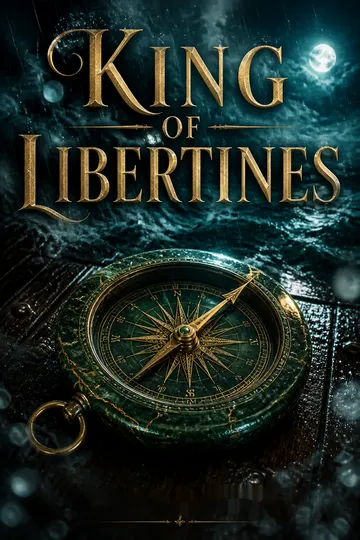
Edric's coded compass
Inheritance hidden in plain sightEdric4 gives Bennett1 a gold compass and jade pendant, explaining that the instrument contains a map to his hidden fortune. Its lock requires the pendant as a physical key and a sequence preserved in a song he taught her. The compass keeps Bennett1 connected to her father4, gives Madwulf9 leverage over her, and turns memory into a practical survival skill. Inside, the map points to Oak Island, while a separate letter offers the personal message Bennett1 hopes to find. The map can be recovered and used; the letter is destroyed before she can read it.
Jade and her crew
A home that can fightJade is the Spanish galleon Edric4 captures and bequeaths to Bennett1. She is both a literal home and the instrument through which Bennett1 earns authority. Her crew’s Articles establish a form of shared rule, so the captain must lead without assuming unquestioned obedience. The ship’s size, guns, and experienced sailors enable raids, rescues, and ultimately the attack on slave traders. Jade’s survival also keeps Bennett’s chosen family intact when she must leave her behind as a captive.
The orange allergy
A strange weakness becomes leveragePriest2 reacts severely to orange juice on his skin, developing painful blisters that make it dangerous for him to touch his face or groin. Bennett1 first uses the allergy to force a pause in their conflict and extract information about the compass. Later, she and Ashley3 use it to make Priest2 appear infected with syphilis in front of Madwulf’s crew9. Because the pirates fear contagion, the deception keeps them from assaulting Bennett1 and disrupts their control of the room. The same vulnerability also links the present escape to an old ruse involving Ashley’s sister11.
The Nassau letter
A betrayal with a hidden authorBennett1 finds a letter in Priest’s2 clothes after he spends the night away from her in Nassau. It records a lover’s3 decision to end their relationship and confirms that Priest2 loved someone else3. Because the writer is unnamed, Bennett1 imagines a titled woman and builds her sense of rejection around that figure. The later revelation that Ashley3 wrote the letter changes the meaning of Priest’s2 betrayal without erasing the secrecy or harm. The letter is the emotional hinge connecting the old marriage to the new relationship among all three characters.
The crew's Articles
Democracy aboard a pirate shipBennett’s crew governs itself through Articles and popular votes. The code limits her ability to make every major decision alone, while giving the crew a stake in its shared purpose. It protects Priest2 from attack aboard Jade, shapes how Bennett1 maintains authority, and later provides a way to decide whether the crew will redirect its wealth toward fighting the slave trade. The Articles contrast with the Navy’s strict hierarchy, but they do not make the pirates automatically just: their choices still depend on the captain’s judgment and the values the crew chooses to uphold.
Sea of Ruin Series

About the Author
Other books by Pam Godwin







Download PDF
Download EPUB
.epub digital book format is ideal for reading ebooks on phones, tablets, and e-readers.








