

Plot Summary
Ink Over Burned Skin
After a show in St. Louis, Jay Mayard, singer and guitarist for the struggling band The Burn, flees a sexual encounter when a woman’s touch triggers memories he cannot control. He has used drugs and casual sex to silence those memories, but tonight he wants something lasting, so he enters Kilroy Tattoo.
Charlee, the white-blonde artist closing the shop, refuses to hide the old burn scars covering his back beneath a black sheet of ink. She begins a design that frames the damage with flames and the suggestion of steel beneath it. Jay cannot yet accept her interpretation, but he stays for an hour, drawn to her refusal to pity him and to the first hint that his scars might mean survival rather than shame.
The opening makes bodily contact the story’s immediate danger: Jay can endure a tattoo needle but recoils from a lover’s hand. Charlee’s proposal to build art around his scars does not cure him; it offers a different way to look at what happened. The distinction matters. She neither erases the injury nor claims it as beautiful on his behalf. Her design gives him an image of strength he has not yet learned to inhabit, and the unfinished tattoo becomes a material record of a possibility he cannot simply think himself into.
The Names She Hid
Charlee leaves the shop for the police station, where her boyfriend, detective Noah Winslow, is waiting. She has spent a year refusing his marriage proposals, afraid that the man hunting her will find them together.
Before she reaches Noah, his brother Nathan, a former Marine who runs a private security firm, reveals that an undercover client’s photograph led him to her real identity: Charlee Grosky. He knows she escaped a powerful abuser and warns that the man may still be searching.
Charlee fears that telling Noah will endanger him, but Nathan offers protection without forcing her choice. Noah has stopped proposing, yet his note inviting her to dance at their wedding has already broken through her defenses. She goes to meet him, still withholding the truth.
Charlee’s alias is more than a disguise: it is a boundary she uses to regulate intimacy. Each invented name allows her to begin again without revealing the history that makes attachment feel dangerous. Nathan’s discovery destabilizes that arrangement because he sees both the risk and the person beneath it. Noah’s proposal reaches her through ordinary tenderness, not pressure, which clarifies why she wants him and why she fears accepting him. The impending danger is therefore relational as well as physical. The people who could make a home with her are also the people her captor can use as leverage.
The Shop Goes Dark
Back at Kilroy Tattoo, Charlee tries to answer Noah’s devotion with a dance, but a familiar gunman enters before they can leave together. He shoots Noah in the stomach. Charlee throws herself over him and searches for his phone, trying to call for help, but the gunman kicks her unconscious before she can reach it.
Roy Oxford’s men carry her away in a locked, tinted SUV and drug her for the flight to San Francisco. She does not know whether Noah has survived. At Roy’s penthouse, she wakes naked and shackled in the stockroom, where Roy treats her escape as a debt to be repaid. Her brief return to love ends in captivity, and the uncertainty about Noah becomes another instrument of Roy’s control.
The attack converts Charlee’s private fear into a concrete cost: the moment she tries to build a future with Noah, Roy’s violence reaches their workplace and destroys their shared safety. Her effort to protect Noah is instinctive, but it cannot stop the bullet or secure help. The unanswered question of his survival prolongs the assault beyond the shop. Roy controls not only Charlee’s body but also the information she needs to grieve. The scene establishes the novel’s central contrast between chosen intimacy and imposed possession, while making clear that love alone cannot protect people from a system built on surveillance and force.
Steel Beneath the Burns
While Roy confines and abuses Charlee, Jay returns to the bar and destroys the heroin, cigarettes, and condoms he had been using to numb himself. He finally looks at the tattoo Charlee began: flames and simulated torn skin reveal steel beneath his real scars. The image moves him to tears and gives him a reason to imagine healing without surrendering his agency.
On the road with The Burn, he writes Huntress and waits for Charlee to answer his calls, believing she is busy rather than in danger. In Roy’s penthouse, she survives by building a mental shield and drawing the tattoo from memory in a sketchbook. When Roy permits her one song, Jay’s voice reaches her through Huntress, turning his art into a thread she can hold onto.
The parallel movement gives the tattoo two distinct functions. For Jay, it is an invitation to face his body without reducing himself to its injuries. For Charlee, the drawing and song become portable evidence that someone saw her without claiming ownership of her. Neither object substitutes for safety or treatment, but each helps preserve a self that abuse tries to overwrite. Their connection develops through art before they can build a relationship through touch. That separation is important: the bond begins not with rescue or sexual access, but with recognition and a shared effort to make survival legible.
The Undercover Dinner
Roy summons Charlee to dinner with his security staff, where she recognizes Nathan beneath his disguise as Matthew, an undercover operative. Nathan cannot acknowledge her without exposing his mission. When a guard touches Charlee during Roy’s coerced display, Roy has him maimed with a cleaver, then orders Charlee punished. Later, after Roy leaves, she tries to strangle him with her ankle chain.
He beats her badly and abandons her when he departs on his plane. Nathan uses that opening to carry her from the penthouse by helicopter with a Marine team. Charlee asks whether Noah is alive; Nathan confirms that Noah died within minutes of being shot. She escapes Roy a second time, but grief and guilt travel with her into three years of hiding.
Nathan’s silence at dinner is a tactical choice, not indifference, and Charlee has to endure the emotional cost of his cover while knowing that an exposed rescue could destroy both their chances. Roy’s violence also makes his rules plain: even a guard’s accidental touch becomes a pretext for punishment and public intimidation. Charlee’s attempt to strangle him is a small seizure of agency that nearly costs her life. Nathan’s eventual rescue secures her body, but the news about Noah shows that escape cannot restore what violence has already taken. Survival here begins as a practical achievement, not an emotional resolution.
The Girl Declared Dead
Three years later, Charlee and Nathan are living under aliases in New York, still gathering evidence against Roy. Jay, now a famous but withdrawn rock star, arrives at her abandoned tattoo shop and learns that its owner, Sarah Teves, was reported murdered.
Nathan had taken Jay’s calls and falsely confirmed her death to keep him from becoming a target. Charlee reaches Jay through his bandmate Laz, then finds him unconscious after drinking, taking cocaine, and bringing women to his suite.
When Jay wakes and sees her beside Nathan, he mistakes Nathan for her husband and attacks him. Laz explains that Jay has spent three years grieving her. The truth about Noah and Nathan’s lie finally reaches him, forcing the reunion to begin in anger as well as longing.
The reunion exposes how protective lies can reproduce the isolation they are meant to prevent. Nathan’s false report may have kept Jay away from Roy’s reach, but it also deprived him of the chance to understand why Charlee vanished. Jay’s grief has become inseparable from the story he was given, so her return first appears impossible and then threatening. Charlee, meanwhile, encounters the celebrity life she has only followed from hiding, including Jay’s self-destructive habits. The scene refuses a simple reunion fantasy: each person arrives carrying an injury the others helped create, even when their motives were care or survival.
Hands Across the Boundary
After Jay learns that Roy Oxford is the man who enslaved Charlee, the two begin rebuilding contact around explicit limits. Jay explains that touch can send him into a flashback, while Charlee tells him she hires professional dominants for carefully negotiated scenes that let her control sensations associated with abuse.
She admits that Roy took her at sixteen and conditioned her body to respond to pain, a response she struggles to separate from consent. Jay does not dismiss her practice, though it frightens him.
In a parked SUV, they test closeness with Charlee straddling him while keeping her hands away from his body. The experiment succeeds long enough to make mutual trust imaginable, but their conversation is interrupted by an armed attacker near Charlee’s apartment.
The scene distinguishes consent from bodily response without pretending the distinction is emotionally easy. Charlee can experience arousal without wanting what was done to her, and negotiated scenes give her control over conditions that once belonged entirely to Roy. Jay’s touch boundary is also treated as a real limit rather than a challenge she should overcome for romance. Their experiment works because they set terms and attend to each other’s reactions. This does not erase either trauma; it creates a small, testable experience in which closeness need not mean coercion.
A Bullet at the Door
A gunman corners Charlee in the alley behind her New York apartment, but she draws her own pistol and shoots him as Jay and the guards reach her. The bullet grazes her ear. The team discovers that the police cannot be trusted, so Jay uses the paparazzi as a protective crowd while they evacuate.
Roy appears in the parking lot and threatens Nathan, drawing Charlee into a direct confrontation. She shoots Roy in the chest, but his tactical vest stops the bullet. Jay’s team holds Roy’s armed men and corrupt officers at gunpoint.
Jay bluffs that cameras in the SUVs are streaming the standoff to his staff; Tony reinforces the claim by describing Charlee’s actions as self-defense. Roy orders his men to stand down, and the group leaves together, no longer hiding in the same way.
Charlee’s shot is both defensive action and a shift in her position: she is no longer only the person being moved between captors and rescuers. Yet the escape depends on a carefully staged public setting, not on the police or courts functioning reliably. Jay’s celebrity, usually a source of exposure and anxiety, becomes a temporary shield because Roy cannot act freely while witnesses watch. The bluff about recordings is fragile, but it buys them a choice Roy has repeatedly denied them: to walk away. Their new visibility is not freedom by itself; it is leverage they can use to stop being isolated.
The Band Becomes Bait
In Los Angeles, Jay brings Charlee and Nathan into The Burn’s guarded estate, where the band learns why Roy is pursuing her. A spotter inside Roy’s security operation reports that Roy has killed a young woman in the penthouse stockroom.
Roy then compromises the estate’s network with remote-access software, taking control of lights, cameras, and doors while taunting Charlee over the system. Jay and the others disable the automation and relocate to a guard’s warehouse. With Roy’s reach confirmed, the band weighs canceling its tour.
Charlee argues that public performances and additional guards will make an attack harder, not easier. The band agrees to keep the dates, and Jay’s security team prepares an expanded motorcade, turning the tour’s visibility into a deliberate defense.
The attack on the estate makes technological safety feel as conditional as physical security. Cameras and automated locks, meant to keep danger outside, become tools Roy can use to observe and confine Charlee. The band’s response is not to trust the system more but to change its strategy: they use crowds, schedules, and a larger protective perimeter as counterweights. Charlee’s insistence that the tour continue also marks a return of her agency. She is no longer asking only how to flee; she is helping decide where and how the people around her will live.
A Manufactured Scandal
As The Burn prepares to tour, Roy’s company acquires the band’s label and circulates a claim that Jay had sex with Sylvia Windsor before she turned eighteen. The allegation threatens statutory-rape charges and gives the label an excuse to halt album distribution.
Jay admits Sylvia once propositioned him at a promotional event, but Charlee believes he turned her down and recognizes Roy’s method of using scandal to damage people he cannot control directly.
The band’s lawyer and manager, Faye, prepares a public defense; the tour remains sold out, and the musicians decide they would rather keep playing than let Roy dismantle their work. On the bus, Jay also shows Charlee a hidden storage hatch he had installed for a firearm and emergency access, an escape route whose importance neither of them yet understands.
The false accusation extends Roy’s coercion into public reputation and employment. He does not need to prove Jay guilty if he can make distributors, executives, and fans react to the suspicion. The band’s answer is collective rather than heroic: Faye builds the legal response, the musicians refuse to abandon their work, and security planning becomes part of daily life. The hatch is a particularly revealing detail. Jay builds a concealed route because he expects danger, yet its hidden purpose will later become a resource Charlee can use independently. A survival measure meant for him becomes available to her.
The Wrong Bed
Roy arranges to separate the couple during a concert. Charlee eats egg salad that has been poisoned and becomes violently ill; Jay drinks water laced with a drug that leaves him sexually disinhibited and unable to remember his actions.
While Charlee recovers at the hotel, Jay is taken to tour manager Ella’s room, where she performs oral sex on him. Charlee arrives, sees him responding, and punches Ella before leaving with Nathan. She interprets the scene as a betrayal and retreats into the controlled BDSM sessions she had used before meeting Jay.
Jay wakes to discover what happened, learns Ella was paid by Roy, and realizes the drugging and poisoned meal were designed to make Charlee witness an apparent affair. He finds her with a professional dominant and asks for a chance to explain.
Roy’s scheme is effective because it exploits the couple’s existing vulnerabilities rather than inventing new ones. Jay’s history of drug use makes Charlee doubt his account, while her history of captivity makes the sexual scene feel like another moment in which someone else controls her reality. Ella’s presence turns a chemical attack into emotional evidence. Charlee’s departure is not a failure of love; it is a response to what she can actually see. The episode also shows why trust cannot rest on intention alone. Jay must account for the danger his own habits create, even when Roy deliberately weaponizes them.
A Lesson in Power
Jay tracks Charlee to a private dungeon, where she is bound for a negotiated scene with Master Conrad. Nathan gives Jay her contract, showing that she has excluded sexual activity and chosen pain within clear limits. Jay asks to enter instead of demanding that she leave.
Conrad explains how consensual dominance differs from abuse, then teaches Jay to use a whip safely. Jay accepts the lesson, removes his clothes except for a shirt, and joins Charlee in the scene.
Conrad strikes her while Jay holds her and follows her cues; the experience allows them to have sex without Jay taking control away from her. Charlee uses her safe word only to signal completion, not to escape. She forgives Jay after hearing that Roy engineered the apparent betrayal, and they return to the tour together.
The scene’s ethical hinge is not pain itself but who controls its meaning and limits. Roy imposed access and called it care; Conrad and Jay work within a negotiated structure that Charlee can stop. Jay’s willingness to learn from another man is a meaningful restraint on his possessiveness. He does not treat love as permission to decide what her recovery should look like. The scene also gives him a practical way to meet her desire without imitating Roy’s entitlement. It remains a difficult arrangement, but its explicit consent makes the power exchange fundamentally different from the violence it recalls.
The Bus Becomes a Trap
On the road, Charlee and Jay grow closer as Jay begins telling her about his childhood in Canada. His parents died in a plane crash when he was six, and his aunt Elena later locked him in a dark shed and forced him into a heated roasting oven, leaving the burns on his back. Charlee listens while finishing the tattoo, and Jay’s disclosure helps both of them reach a new intimacy.
Their fragile safety breaks when Roy’s men disable the convoy vehicles with heavy gunfire. Colson, a bodyguard bought with promises to pay for his children’s education and quiet his ex-wife, uses a phosphorus grenade to fill the bus with smoke. He injects Charlee with an anesthetic and drives away in the one bus whose engine was spared.
Jay’s revelation reframes his scars as the evidence of prolonged childhood abuse, not an accident or a private defect. Charlee’s presence lets him name the memory without being required to turn it into a lesson immediately. The convoy attack then tests the trust they have built in the most literal way: the person assigned to protect them has been purchased. Colson’s betrayal reveals that security is only as reliable as the human relationships behind it. Even so, the bus contains a concealed hatch Jay installed for emergencies, a small act of foresight that becomes crucial when the people around Charlee fail her.
The Fire They Saw
Charlee wakes bound inside the bus in a hangar, where Roy explains that Colson staged the smoke and kidnapping while the others searched for her elsewhere. Roy intends to fly her to Italy and uses the threat against Jay to force a kiss.
Charlee pretends to cooperate, then knocks Roy down the bus stairs and seals the doors with the manual crank. She calls Jay, learns the team is searching, and refuses to hide in the storage hatch without acting. She sets fire to blankets and spreads lighter fluid through the bus, making Roy believe she has died inside.
While Roy panics outside, Charlee escapes through the custom hatch wearing a gas mask and thermal goggles, then hides in a nearby shed. The authorities find a burned body, and Roy and Jay both accept her death.
Charlee’s plan turns the symbols of captivity against Roy: the bus he uses to isolate her becomes a fire he cannot control, while Jay’s hidden hatch supplies a route out. Her decision is not risk-free or triumphant in the moment. She knows Jay will see the blaze and believe she is dead, but she judges that Roy’s certainty is the only way to end his pursuit. The deception exacts a real cost from everyone involved, especially Jay. The scene complicates the language of sacrifice: Charlee acts for survival and freedom, but she cannot protect the people she loves from the pain her escape requires.
The Song Without Her
Jay spends a week withdrawn and unable to eat, until Laz tells him that Roy has been released because the evidence cannot hold him. Jay chooses to play the next show in St. Louis, where he first met Charlee. Before the performance, he refuses a roadie’s offer of drugs.
He walks into the light without a shirt and sings a song about losing her, then turns his scarred back toward the stadium so the audience can see the tattoo she designed. Two days later, he visits Roy’s penthouse wearing a wire, hoping to obtain a confession.
Roy acknowledges that Charlee was the valuable person Jay tattooed, but denies the accusations and offers Jay and Nathan a share of his empire. Then Roy kills himself with a revolver, ending the immediate threat but not delivering a legal confession.
The St. Louis performance converts a private act of shame into public witness. Jay exposes the scars without pretending that visibility has healed them, and he performs without drugs because he chooses to endure the crowd rather than numb himself. His visit to Roy seeks evidence, not vengeance, but Roy refuses the clean resolution of an admission. The suicide stops the captor from acting again while leaving the institutions that enabled him largely intact. Jay’s grief therefore cannot be solved by the antagonist’s death; the act that matters most is his decision to return to music and to the place where the story began.
The Living Returns
Jay travels to the remote cabin he built on his inherited land, intending to mourn there. Nathan and Tony are already waiting when the sound of Jay’s dirt bike rises from the woods. Charlee rides into view and launches herself at Jay before he can understand what he is seeing. She explains that she escaped the burning bus through its hatch and hid until Roy was arrested and then killed himself.
Nathan helped create the false death by placing a charred body where Roy and Jay would find it, but he learned Charlee was alive only after she got away. Jay is furious that both Nathan and Charlee kept him outside the plan, yet he cannot remain angry with her. At the cabin, they reunite, make love, and choose to rebuild their life together.
The reunion restores the central relationship, but it does not erase the moral cost of the deception. Jay’s anger is justified: he endured a week of grief because Charlee and Nathan believed his ignorance was necessary. Charlee’s explanation, however, shows that she did not treat his pain casually; she believed Roy could read Jay’s reactions and discover the plan. Their reconciliation depends on acknowledging both realities rather than declaring that love makes the lie harmless. The Canadian cabin offers a future grounded in chosen place, work, and privacy, a counterimage to Roy’s monitored tower and the forced movement of the road.
A Yes in Ink
Six months later, Charlee runs a tattoo shop near the lake while Jay writes and records music at their Canadian home. The Burn joins rehearsals remotely, and the couple uses Roy’s inherited money to support charity and compensate the family of the murdered guard and his niece.
Jay has proposed, but Charlee has delayed answering while preparing her own response. In their private dungeon, he restrains her and searches for the tattoo she has made on herself. Finding nothing, he gives up and produces a ring engraved with the flames from his back.
Charlee’s answer is already written in ink on her ring finger: yes. The ending brings their recurring symbols together, not as proof that trauma has vanished, but as a chosen commitment made in a home neither is forced to leave.
The final scene settles the book’s central question of ownership by reversing its terms. Roy used wealth, surveillance, and captivity to claim Charlee; Jay’s ring follows a proposal she has the freedom to accept or refuse. Her answer is self-authored before he discovers it, preserving her agency inside their erotic power play. The tattoo motif also completes its movement from cover-up to recognition, then to a shared design marking a future. Their life is not presented as ordinary or untouched by trauma. It is a life built through explicit choice, creative work, mutual care, and the ability to remain.
Analysis
Beneath the Burn repeatedly asks who gets to interpret pain. Roy calls possession care, treats Charlee’s body as an asset, and uses money, surveillance, and compromised institutions to make that claim appear legitimate. The novel counters him with negotiated limits, but it does not present those limits as a simple cure. Charlee’s erotic response to pain is shaped by what was forced on her, and the story’s most careful distinction is between a body reacting and a person consenting. Her BDSM scenes matter because she can set terms, choose a partner, and stop the encounter, not because suffering itself becomes redemptive.
Jay’s parallel story makes the body a contested archive. His scars record abuse he cannot initially name; Charlee’s tattoo does not erase them but changes what they can mean. His recovery is likewise not a single breakthrough. He destroys drugs, relapses under pressure, hides behind the stage, and then gradually chooses disclosure, sobriety, and contact. Charlee inspires him, but she cannot do the work in his place. Their strongest moments occur when each respects the other’s boundaries and accepts that love does not confer ownership.
The plot’s recurring technologies of concealment and display sharpen this conflict. Aliases keep Charlee alive but prevent intimacy. Cameras can expose Roy’s operations, yet his hacked systems turn observation into confinement. Celebrity crowds sometimes protect the couple and sometimes endanger them. The novel treats visibility as a resource that must be used strategically, not as justice by itself. Roy’s suicide ends his immediate power, but not through a confession or a clean courtroom victory. Charlee and Jay instead build a life outside his reach, in a chosen landscape where the scars remain visible and the future is no longer dictated by the person who inflicted them.
Review Summary
People Also Read








Characters
Charlee Grosky
Fugitive tattoo artistCharlee is a skilled tattooist who survives by changing names, appearance, and location. Her sharp humor and practical alertness conceal a history that makes trust feel dangerous, particularly when someone else controls her body or choices. She wants more than escape: before her life is interrupted, she dreams of making art and helping others create it. Her interest in consensual BDSM reflects a complicated effort to reclaim control over sensations once imposed on her, not a simple wish to repeat abuse. Charlee is perceptive about other people’s pain, sometimes more readily than her own. Her challenge is to distinguish survival from permanent self-erasure and to let intimacy become something she can actively choose.
Jay Mayard
Scarred rock singerJay is the singer and guitarist of The Burn, a gifted musician whose success contrasts with his retreat from crowds and physical contact. He uses drugs, casual sex, and isolation to manage memories he has never fully faced. His scars are visible, but his childhood abuse has remained hidden even from his closest friends. Jay longs for connection while fearing that touch will trigger a loss of control. Charlee’s tattoo design gives him a way to imagine his body as more than damage, but his growth depends on choices he makes himself: becoming sober, speaking about his past, and learning to respect another person’s limits. His music is both refuge and a means of reaching beyond it.
Nathan Winslow
Marine turned protectorNathan is Noah’s older brother, a former Marine and private investigator who organizes his life around responsibility. His loyalty to Noah shapes his commitment to Charlee, whom he protects with the skills and vigilance of someone trained to anticipate threats. That devotion has a cost: Nathan can confuse protection with control and postpone his own future while trying to repay a debt no one has asked him to carry. He is pragmatic where Charlee is impulsive, and his caution often keeps her alive even when it frustrates her. Beneath his disciplined exterior is a man capable of humor, grief, and deep affection, particularly toward people who make him feel safe enough to set his guard down.
Noah Winslow
Charlee’s devoted detectiveNoah is a St. Louis detective, Nathan’s younger brother, and Charlee’s loving partner. He approaches her with patience and commitment, proposing marriage because he wants to build an open future with her. His warmth contrasts with the coercion she has known, though he does not fully understand the danger she is hiding from him. Noah’s presence matters to both Charlee and Nathan: he offers Charlee a model of tenderness and gives Nathan the brotherly bond that defines his sense of duty.
Roy Oxford
Billionaire captorRoy is the powerful head of Oxford Industries, an outwardly polished businessman whose wealth reaches into defense technology, security, and political influence. He treats access to people as a right and mistakes control for intimacy. His obsession with Charlee is framed in the language of care, but his behavior is possessive and violent. Roy’s public image depends on charm, philanthropy, and carefully managed appearances, while his private world is built around surveillance and obedience. He is most dangerous when he makes domination sound reasonable, and he uses institutions, employees, and money to make his personal desires difficult to challenge.
Laz Bromwell
Guitarist and confidantLaz is The Burn’s lead guitarist and Jay’s oldest friend. A teasing, irreverent presence, he can puncture Jay’s self-seriousness without mistaking humor for a cure. He watches Jay’s drug use and isolation closely, even when his concern comes wrapped in crude jokes. Laz also helps Charlee reach Jay and makes room for her among the band. His loyalty is practical: he intervenes during crises, challenges Jay when necessary, and keeps the group’s shared history alive.
Rio Ketch
Band’s steady drummerRio is The Burn’s drummer, physically imposing and usually playful. His appetite, blunt jokes, and theatrical demands make him an easy source of levity, but his size also gives him a protective presence when the band is threatened. Rio cares about Jay without treating him as fragile, and his willingness to challenge him reflects a friendship built over years rather than celebrity. He helps make the band feel like a family with its own rituals and rough affection.
Wil Sima
The Burn’s bassistWil is the band’s young, lanky bassist, an easygoing jokester who often punctures tense moments with an absurd observation. His playful manner does not make him careless about danger; he supports the band’s decisions and stays close when Jay struggles. Wil’s willingness to include Charlee in the group helps turn the band’s home and tour into a community rather than merely a workplace.
Maryanna Tony
Marine security chiefTony is a retired Marine who leads The Burn’s protective detail. Precise, alert, and unsentimental, she thinks in routes, formations, and contingencies. Her professionalism makes her a dependable counterweight to Jay’s impulsiveness and Charlee’s willingness to take risks. She respects the people she protects without confusing affection with duty, and her rapport with Nathan allows her to understand the burdens he carries. Tony’s firmness is not coldness; it is how she keeps others alive.
Faye
Manager and legal strategistFaye manages The Burn’s contracts, personnel, household, and public challenges. Warm and capable, she can move from feeding the band to directing a legal response without losing her authority. Her experience gives the musicians practical support when Roy attacks their reputation and business. Faye is one of the adults who makes the band’s chaotic household function, and her loyalty is expressed through organization, advocacy, and direct action.
Salvador
Roy’s chief enforcerSalvador is Roy’s trusted security chief, a disciplined enforcer who manages the guards and carries out Roy’s orders. His calm efficiency makes him more threatening than a volatile subordinate: he helps turn Roy’s private commands into an organized system. Salvador’s role shows how abuse can be sustained not only by a single powerful person but also by employees who enforce the rules around him.
Colson
Tour security guardColson is one of the guards assigned to protect The Burn and Charlee on tour. His position places him inside the group’s routines and makes him part of the human infrastructure on which their safety depends. He is a capable, experienced employee with family and financial pressures beyond the job. His story raises the uncomfortable question of how much trust a security team can place in someone whose loyalty is being tested by outside leverage.
Ella Naas
Tour managerElla is a new tour manager whose friendly manner and southern charm help her move easily among musicians, road crew, and security staff. She is responsible for the practical rhythm of the tour, from schedules to venues. In a world where access to the band is valuable, her position makes her a potential point of vulnerability as well as an organizer. Her character underscores how ordinary professional contact can be exploited by people with money and influence.
Henry Munt
Rival seeking evidenceHenry Munt is a businessman who has lost his company to Roy and wants to build a case against him. He funds Nathan’s undercover work and relies on a long-embedded source within Roy’s security organization. Henry is motivated by revenge as well as the possibility of justice, which makes him useful but not uncomplicated. His resources offer a route toward accountability, though Roy’s reach limits what those resources can accomplish.
Maurice Crane
Winslow investigations partnerCrane works with Nathan’s private investigation firm and helps manage information connected to Charlee’s disappearance. Good-humored and observant, he is part of the trusted circle that supports Nathan’s work. His presence links the police and private-security worlds without making either one fully reliable.
Master Conrad
Professional dungeon guideConrad is a professional dominant who runs a private dungeon and insists on written limits and clear consent. His authority is deliberate rather than theatrical, and he expects clients to understand the roles they are entering. Conrad provides Charlee a controlled setting for her BDSM practice and gives Jay practical instruction in safe power exchange. He functions as a contrast to Roy: both may direct a scene, but only one respects negotiated boundaries.
Craig Grosky
Charlee’s gambling fatherCraig is Charlee’s father, an unreliable gambler whose debts shape the dangers that follow her. He is selfish and often absent, yet Charlee’s childhood dependence on him makes his choices especially consequential. His failures leave her with no stable family protection and help explain why she learned to rely on aliases, quick judgment, and self-sufficiency.
Alan Patera
Oxford Industries aideAlan is Roy’s executive assistant, a polished intermediary who carries messages and formal business correspondence. He represents the respectable administrative face of Oxford Industries, where threats and coercion can be made to look like employment offers and corporate procedure.
Sylvia Windsor
Record executive’s daughterSylvia is the daughter of a record executive whose brief contact with Jay becomes a possible source of public scandal. She occupies a world of celebrity events and inherited influence, where personal choices can be turned into corporate weapons. Her role shows how reputations can be manipulated through accusation even when the people involved know the public story is false.
Felica
Familiar rock groupieFelica is one of the women who has been sexually involved with Jay. Confident and provocative, she understands the band’s party culture and speaks bluntly about its casual arrangements. Her presence forces Charlee to confront jealousy and the difference between Jay’s past encounters and the intimacy he is trying to build with her.
Thomas
Canadian property caretakerThomas maintains Jay’s remote Canadian property and lives in its guesthouse. Quiet and accustomed to solitude, he knows the land and its practical rhythms. His presence makes the cabin a lived-in place rather than a fantasy refuge, and his familiarity with the property offers Jay and Charlee a foothold there.
Plot Devices
The Flames and Steel Tattoo
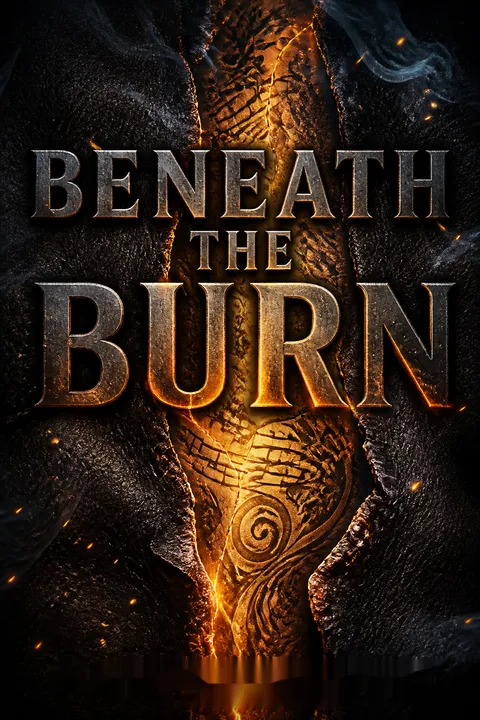
Scars turned into artCharlee begins a design around Jay’s burn scars rather than covering them. Flames and exposed steel suggest that damage and endurance can occupy the same body. The unfinished tattoo gives the characters a recurring reason to return to one another: Jay wants to understand the image, while Charlee carries and redraws it during captivity. Completing it requires Jay to tolerate touch and show his back, making the artwork both a symbol and a practical test of vulnerability. Its final role is not to erase the past but to let Jay display it on his own terms.
Aliases and False Records
Identity used as protectionCharlee uses names such as Sarah Teves to evade Roy and build a life without exposing her history. Her changing appearance and documents make it harder to trace her, but the disguise also keeps people she loves from knowing who she is. Nathan uses police connections and investigative access to protect that identity, while Roy’s resources threaten to uncover it. False reports and a fabricated death later extend the same strategy. The device makes concealment both a lifeline and a source of painful isolation.
Safe Words and Contracts
Power made negotiableCharlee’s BDSM scenes are arranged through contracts that specify limits, safety rules, and the right to stop. The practice revisits sensations associated with her abuse, but gives her control over who participates and when the scene ends. Jay initially fears the role, then learns from professional dominants how to act without turning his love into another form of control. The device is central to the novel’s distinction between coerced violence and consensual power exchange. It does not make trauma disappear; it gives Charlee a structured way to explore what she wants.
Fame as a Shield
Visibility complicates captureJay’s celebrity initially intensifies his anxiety about crowds and touch, but public attention can also make Roy’s covert violence harder to carry out. The paparazzi and fans create a visible perimeter around the band, and the tour’s schedule becomes a moving barrier supported by guards. The protection is imperfect: crowds can overwhelm security, and Roy can weaponize media narratives against Jay. The device keeps visibility morally ambiguous. Public exposure offers leverage, not immunity, and the characters must learn when to use it and when it puts them at risk.
The Bus Escape Hatch
Hidden route through fireJay has a custom hatch installed beneath a tour bus bunk as an emergency exit and secure place to store a firearm. The feature reflects his persistent expectation of danger, but he does not anticipate that Charlee will need it. During Roy’s attack, the hatch gives her a route out of the burning bus after she has convinced Roy and Jay that she died inside. Its practical function becomes a turning point in the climax, joining Jay’s defensive planning to Charlee’s independent action.
About the Author
Other books by Pam Godwin





Download PDF
Download EPUB
.epub digital book format is ideal for reading ebooks on phones, tablets, and e-readers.








