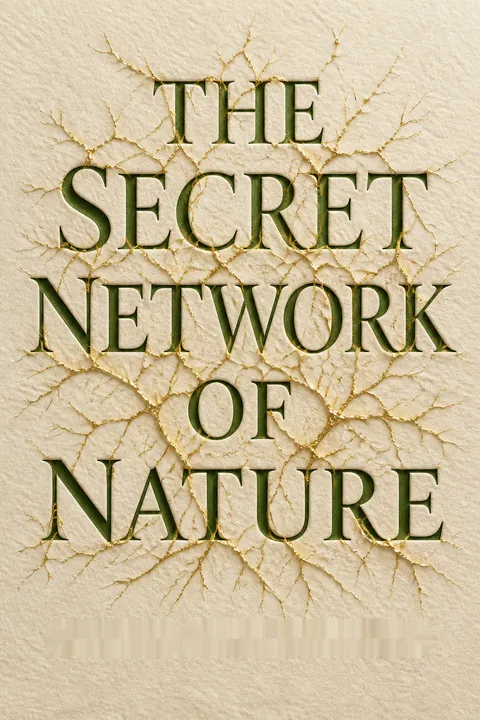


Key Takeaways
Treat nature as a network, not a collection of separate species.
Connections matter more than labels. Wohlleben begins with a childhood memory of dismantling his grandfather’s clock and failing to put every gear back. Nature, he argues, is even less like a machine: its living parts connect through overlapping relationships that are difficult to see, much less predict. A fish can affect an elk through a bear; a tree can affect groundwater through its canopy and roots. The practical lesson is to trace indirect effects before changing a habitat. Removing or adding one species may alter food, shelter, water, and competition for many others.
Small interventions travel. The book’s examples range from wolves changing riverbank vegetation to artificial lights confusing insects and turtles. The links are not always obvious, and scientists sometimes disagree about which causes matter most. That uncertainty is not a reason to give up. It is a reason to treat large, poorly understood ecosystems with care.
What's striking is the shift from asking what a species does to asking what relationships it sustains. That is a useful corrective to policies that count animals or trees while overlooking connections such as prey, soil, and water. The network metaphor also has limits: it can make every link sound equally important, when some relationships are stronger or better established than others. Good environmental judgment therefore needs both humility and evidence, not a vague assumption that everything affects everything in the same way.
Restore predators, but resist tidy stories about what they repair.
One predator reshapes a landscape. Yellowstone eliminated its wolves by 1926. Elk then increased and heavily browsed riverbanks, leaving fewer young willows and poplars. Beavers lost food and declined, and bare banks eroded. After wolves were reintroduced in 1995, elk numbers and behavior changed, trees returned, and beaver ponds provided habitat for other species. This kind of food-chain effect is called a trophic cascade: a change near the top of a food web that affects organisms farther down it.
The mechanism is debated. Wolves may have reduced elk numbers, changed where elk fed, or both. Rainfall also improved around the time of the reintroduction. Wohlleben presents the recovery as evidence for restoring predators, while acknowledging that researchers dispute the precise causes. The lesson is not that wolves fix everything, but that their removal can set off effects far beyond their prey.
The Yellowstone story makes a powerful case for restoring ecological roles, not simply protecting individual animals. It also models an important scientific virtue: distinguishing an observed recovery from certainty about its mechanism. This matters because restoration plans are often judged by visible outcomes, such as more trees, while several interacting causes may be responsible. The predator can be essential without being the sole explanation. A strong conservation argument gains credibility, rather than losing it, when it names the uncertainty.
Follow nutrients across boundaries: salmon can fertilize forests.
Fish carry the ocean inland. Salmon spend years feeding at sea, then swim upstream to spawn and die. Bears catch them, eat part of the fish, and leave remains or droppings across the forest. That transfers marine nutrients into soil and plants. Researchers traced nitrogen-15, an isotope associated with the ocean in the Pacific Northwest, into nearby vegetation. In some places, up to 70 percent of plant nitrogen came from salmon, and Sitka spruce grew as much as three times faster with this input.
The cycle runs both ways. Leaves also wash into streams, where compounds released from them can support plankton and, in turn, marine food webs. Human nitrogen pollution disrupts this balance: Wohlleben cites about 220 million tonnes of reactive nitrogen entering the environment annually from human activity. A nutrient can sustain life at one level and overwhelm ecosystems when supplied in excess.
The salmon example turns a familiar migration into a lesson in material accounting: ecosystems move not only energy, but elements, across boundaries. That perspective can sharpen conservation priorities, since protecting a river may also protect forests and coastal food webs. It also guards against treating fertilizer as an uncomplicated benefit. The ecological effect depends on dose, timing, and where nutrients end up. Natural transfers are embedded in relationships; industrial inputs can bypass those relationships and accumulate where they cause harm.
Protect forests as water infrastructure, not merely as timber.
A forest slows the rain. Tree crowns intercept rainfall, while moss, leaf litter, and porous soil absorb it and release it gradually. This limits runoff and erosion. The book estimates that cultivated fields in central Europe lose about 200 tonnes of soil per square kilometre each year on average. Heavy rain can strip soil far faster from exposed ground, while forests help retain the soil and recharge groundwater. Their value is not just the wood above ground, but the water and fertile earth they help keep in place.
The underground has residents. Groundwater is also a habitat for small crustaceans, bacteria, and other organisms, many poorly studied. Some may even pass through water pipes into household water. Forest roots and soil protect this hidden system, while soil compaction, pollution, and intensive extraction can disrupt it. The book’s point is that damage to a forest can reach below the visible landscape.
Calling forests infrastructure makes an often invisible public benefit easier to recognize. Unlike a built reservoir, a forest performs many functions at once: it slows water, limits soil loss, and supports underground life. The analogy should not imply that every forest provides identical services or that trees always increase groundwater; the book itself notes that trees also consume substantial water. The useful question is therefore not simply whether trees use water, but how forest structure affects storage, runoff, and the surrounding watershed.
Stop calling species good or bad before tracing their full effects.
Nature resists simple verdicts. Red wood ants eat insect pests, but they also protect aphids because the aphids provide sugary honeydew. Aphids drain trees, yet ants can reduce attacks by other leaf-eating insects. In one study described by Wohlleben, birch trees with ants lost six times less leaf material than birches without them. Whether the ants help the forest overall depends on the combined effects, not one convenient label.
Even notorious beetles have a role. Bark beetles often attack weakened trees, and their galleries and dead wood feed other species. Large outbreaks can devastate forests, but the book links those outbreaks partly to human-created conditions, including extensive plantations of vulnerable trees. Seeing a beetle as a warning about forest health may be more useful than treating it as the root cause. The same species can be destructive in one setting and part of renewal in another.
This section exposes a common error in environmental management: defining success as removing the organism most visible in a conflict. The ants and beetles show why an intervention can help one species while harming another. A systems perspective asks what changes across the whole community, and over what time span. Still, complexity should not become an excuse for paralysis. Where evidence is strong, managers can act while monitoring consequences, rather than waiting for a perfect accounting of every interaction.
Do not feed wildlife into a population boom.
Extra food rewrites scarcity. In central Europe, hunters have supplied deer and wild boar with food, often to maintain animals for hunting. Wohlleben reports that roe deer are now far more numerous in German forests than in earlier times, while feeding can intensify competition, parasites, and browsing damage. One estimate he cites puts the amount of feed at 12.5 kilograms for each kilogram of game harvested. Food that appears charitable can therefore support unnaturally large populations and make winter scarcity less effective as a natural limit.
The consequences spread. Wild boar eat earthworms, which can carry lungworm larvae. The parasites weaken the pigs and may increase mortality, especially among young animals. Meanwhile, abundant boar consume acorns and beech nuts, reducing the seeds available to grow new trees. These linked effects show why feeding one favored animal is not a neutral act. It changes the conditions for predators, parasites, plants, and other animals.
The example resembles a broader ecological problem: a reliable food subsidy can change where animals gather, how many survive, and how easily disease spreads. The book usefully asks who benefits from the intervention, since feeding described as compassion may also serve hunting interests. Its account is strongest as a warning about scale and incentive, rather than as a claim that every supplemental feeding program has identical effects. The relevant test is whether the intervention serves a clear ecological need or simply sustains a preferred population.
Treat darkness as habitat, and aim outdoor lights only where needed.
Artificial moons confuse wildlife. Moths navigate using the moon as a stable point of reference. A nearby lamp can mislead them into circling until they tire or collide with it, while bats gather around lamps to catch the insects. On beaches, lights can also lead newly hatched sea turtles away from the ocean, where they face exhaustion or predators. Light therefore changes more than human visibility: it changes the behavior and survival of nocturnal species.
Small choices reduce the disturbance. Wohlleben recommends shielding outdoor lights so they point downward, using motion sensors, and switching lights off when they are unnecessary. He also links nighttime light to human sleep rhythms, which respond to light exposure. A dark sky is not empty space. It is part of the habitat in which animals find food, orient themselves, and avoid predators.
Light pollution is unusually actionable because its causes are familiar and its remedies can be local. The larger principle is that infrastructure has ecological effects even when it occupies little physical space. A lamp can create a behavioral trap without destroying a nest or clearing land. The strongest response is not necessarily darkness everywhere, but targeted illumination: provide light for a specific human task while limiting spill into surrounding habitat. That design principle applies beyond lighting whenever convenience can be achieved with less ecological reach.
Conserve ecological processes, not only photogenic species.
A rescue can displace others. Wohlleben questions efforts to create sunny clearings for capercaillie and hazel grouse in places where dense deciduous forest was historically native. These birds can benefit from landscapes altered by people, but clearing trees for them may damage species adapted to mature woodland. The book argues for special intervention when a species faces global extinction, while warning against changing an ecosystem merely to preserve a locally favored or aesthetically appealing landscape.
The baseline is contested. The megaherbivore theory proposes that large grazing animals once kept much of central Europe open. Wohlleben challenges its use to justify heavy browsing and forest clearing, pointing to native trees’ limited defenses against large herbivores. He favors large protected areas where natural processes can unfold. That does not mean every human-shaped landscape is worthless. It means conservation should make its goals explicit and account for what an intervention displaces.
The hard question here is what counts as nature worth preserving. A historic landscape may support species that have become rare, while a less managed forest may protect older ecological relationships. Neither choice is neutral, and the most suitable baseline can vary by place. The book’s case for restraint is strongest in large protected areas, where natural processes can be observed without constant management. In inhabited landscapes, conservation may need to balance ecological history with present-day responsibilities and species at risk.
Give forests room to adapt before climate outruns them.
Trees move on a slow clock. Seeds may travel with wind or animals, but a tree must sprout, mature, and reproduce before its range shifts. Wohlleben estimates that trees advance north at roughly 400 metres a year on average. Roads, fields, and rigidly managed forest boundaries can interrupt this movement. He argues for connected protected areas that let species spread through the landscape rather than being confined to designated parcels.
Forest structure matters now. Mature forests can buffer local temperature and humidity, while logging opens the canopy and exposes soil and remaining trees to sharper changes. The book also describes research suggesting that conifer terpenes help particles form clouds, though the proposed climate effect is not presented as settled fact. Its practical emphasis is clearer: reduce human pressures, protect forest continuity, and slow climate change so long-lived trees have time to respond.
The slow movement of trees makes climate adaptation a spatial problem as much as a temperature problem. A species cannot track a changing climate if suitable habitat is fragmented or removed at every boundary. Connected reserves can preserve options without requiring managers to predict precisely which species will thrive where. The book’s account of forests influencing clouds is intriguing, but such mechanisms warrant cautious interpretation. The more robust argument does not depend on them: intact forests offer more continuity and resilience than heavily simplified stands.
Medical care changes selection, but it does not stop human evolution.
Evolution continues under new pressures. Sickle-cell traits illustrate how a genetic condition can also help protect people against malaria. In regions where malaria is common, that protection can influence which traits persist. Wohlleben uses this example to reject the idea that medicine has switched evolution off. Modern medicine changes the pressures people face, but does not remove all disease, environmental stress, or biological change.
Human history is entangled with other species. The book also notes that people of European and Asian ancestry carry an estimated 1.5 to 4 percent Neanderthal genetic heritage, evidence of interbreeding between human groups once considered separate. This complicates the notion that humans stand outside nature or represent evolution’s finished product. Human health, ancestry, and survival remain part of biological processes, even when technology changes their course.
This perspective is a useful antidote to the idea that human technology creates an escape hatch from biology. Medicine changes the environment in which selection operates, just as agriculture and migration change ecological conditions. The Neanderthal example also challenges rigid boundaries between species and human groups. Claims about particular genetic traits should be handled carefully, since ancestry does not determine a person’s character or destiny. The broader lesson is more secure: humans are biological participants, not observers standing outside the natural world.
Let affection motivate conservation, then check what feeding changes.
Personal contact can change attitudes. Wohlleben describes a crow that left small objects near the place where he put out food. He had mistaken the objects for debris until a similar story about a girl receiving gifts from crows helped him recognize them as possible offerings. Experiences like this can make animals feel like fellow beings rather than abstract populations, strengthening the emotional motivation to protect them.
Kindness still changes ecosystems. Winter feeding can help people observe birds, but it may also alter survival and migration. The book describes blackcaps that began wintering in Britain, where bird feeders offered food; over time, the two migrating groups developed differences in beak and wing shape and rarely interbred. The point is not that feeding is always wrong. It is that empathy is most useful when paired with attention to its ecological consequences.
The tension between affection and ecological restraint is one of the book’s most human insights. Emotional connection can make distant conservation concerns feel immediate, but good intentions do not guarantee harmless outcomes. The crow story suggests that attention itself can deepen care, while the blackcap example shows that repeated intervention can influence animal behavior. A mature conservation ethic holds both truths together: relationships with animals matter, and those relationships deserve informed boundaries.
Analysis
Wohlleben’s central achievement is to make ecological interdependence memorable without reducing it to a single doctrine. The examples are vivid because each begins with an ordinary question and then uncovers an unexpected route of influence: fish feed forests, artificial light changes predator-prey encounters, and hunting practices reshape the regeneration of trees. Together, these stories make a strong case for treating interventions as experiments with uncertain, distributed consequences.
The book is most persuasive when it distinguishes a clear pattern from a disputed explanation. Yellowstone’s recovery, for instance, supports the importance of predators, but the precise roles of wolf numbers, elk behavior, beavers, and rainfall remain contested. That distinction matters. Readers can accept the value of restoring ecological relationships without treating a popular account of cause and effect as complete proof.
A productive tension runs through the book’s call to leave nature alone. Nonintervention is not always neutral: climate change, fragmentation, pollution, and past species loss already shape the conditions in which ecosystems operate. Nor is there one uncontested historical baseline. A forest that is native to a region may conflict with a conservation goal for a globally threatened species that now depends on a human-shaped landscape. The book recognizes this tension, especially in its discussion of grouse and red kites, but often favors restraint as the safest default.
That preference is valuable as a warning against managerial overconfidence, yet restraint works best as a decision rule rather than a universal answer. Protecting large areas from exploitation, limiting avoidable disturbance, and monitoring outcomes can coexist with carefully justified interventions. The deeper lesson is epistemic as well as ecological: uncertainty should narrow the scale of risky action and improve observation, not become a reason to ignore either human responsibility or urgent harm. Nature’s network is not a clock waiting for a mechanic. It is a living system whose history includes both recovery and irreversible loss.
Review Summary
The Secret Wisdom of Nature explores interconnected ecosystems and human impact on the environment. Readers appreciate Wohlleben's accessible writing style and fascinating examples, though some find his anthropomorphizing of nature excessive. The book emphasizes leaving nature alone and questions human interventions. Many consider it thought-provoking and enjoyable, praising its ability to inspire curiosity about the natural world. However, some criticize the lack of scientific rigor and oversimplification of complex ecological relationships. Overall, it's viewed as an engaging read for nature enthusiasts.
People Also Read


Glossary
Trophic cascade
Food-web effects spreading downwardA trophic cascade occurs when a change in a higher level of a food web affects organisms at lower levels. In the book’s Yellowstone example, wolves influence elk numbers and behavior, which affects riverbank plants, beavers, and other species. The term describes a chain of ecological effects, though the exact causal pathway can be difficult to establish.
wood-wide web
Fungal links between plantsThe wood-wide web is Wohlleben’s name for underground fungal networks that connect plant roots. Fungal filaments can help trees exchange resources, receive nutrients, and transmit signals. The book compares these connections to a communications network, while noting that fungi receive carbohydrates from the plants they associate with. The metaphor describes ecological connections, not a literal internet.
mast years
Years of heavy seed productionMast years are occasional years when trees such as beeches and oaks produce unusually large crops of seeds. Wohlleben describes these abundant crops as part of a strategy that prevents animals from relying on a steady annual supply. The resulting feast can increase the number of seed-eating animals, while low-crop years reduce the food available to them.
megaherbivore theory
Large grazers shaped open landscapesThe megaherbivore theory proposes that large grazing animals once maintained extensive open areas in landscapes now dominated by forest. Wohlleben discusses evidence such as pollen and the presence of herd animals, but questions whether grazing was extensive enough to prevent forests from spreading. He also warns that the theory can be used to justify heavy browsing or clearing in modern forests.
FAQ
What's "The Secret Network of Nature" about?
- Interconnectedness of Nature: The book explores the intricate connections between various elements of nature, such as animals, plants, rivers, and weather systems.
- Impact of Changes: It highlights how small changes in one part of an ecosystem can lead to significant effects elsewhere, demonstrating the delicate balance of nature.
- Surprising Relationships: The author, Peter Wohlleben, reveals unexpected partnerships in nature, like how wolves can influence river courses or how earthworms guide wild boars.
- Nature's Complexity: The book emphasizes that nature is more complex than a clockwork mechanism, with everything interconnected in ways we may never fully understand.
Why should I read "The Secret Network of Nature"?
- Insightful Observations: Peter Wohlleben provides a unique perspective on the natural world, offering insights that challenge conventional understanding.
- Environmental Awareness: The book raises awareness about the impact of human actions on ecosystems and the importance of preserving natural balances.
- Fascinating Stories: It includes engaging stories and examples that illustrate the surprising ways in which different species interact.
- Scientific and Accessible: Wohlleben combines scientific research with accessible language, making complex ecological concepts understandable to a broad audience.
What are the key takeaways of "The Secret Network of Nature"?
- Nature's Balance: The natural world is a finely balanced system where every element plays a crucial role.
- Human Impact: Human interventions, even small ones, can have far-reaching and often unpredictable consequences on ecosystems.
- Interconnected Ecosystems: Understanding the connections between species and their environments is essential for effective conservation efforts.
- Respect for Nature: The book advocates for a hands-off approach to nature, suggesting that we should interfere only when absolutely necessary.
How does Peter Wohlleben explain the role of wolves in ecosystems?
- Wolves and Rivers: Wohlleben describes how the reintroduction of wolves in Yellowstone National Park led to changes in river courses due to altered elk behavior.
- Trophic Cascade: This phenomenon, known as a trophic cascade, shows how predators can indirectly affect plant and animal populations throughout an ecosystem.
- Fear Factor: The presence of wolves changes the behavior of prey animals, which in turn affects vegetation growth and the overall landscape.
- Ecosystem Health: The example illustrates the importance of predators in maintaining the health and balance of ecosystems.
What surprising connections does "The Secret Network of Nature" reveal?
- Salmon and Trees: The book explains how salmon contribute nutrients to forest ecosystems, enhancing tree growth through their life cycle.
- Ants and Plants: Ants play a role in seed dispersal for certain plants, acting as nature's gardeners by spreading seeds far from the parent plant.
- Earthworms and Wild Boar: Earthworms indirectly control wild boar populations by hosting lungworm larvae, which can affect boar health.
- Climate Influence: Trees can influence local climates by creating clouds through the release of terpenes, affecting weather patterns.
How does Peter Wohlleben address human interventions in nature?
- Unintended Consequences: Wohlleben discusses how human actions, such as hunting or forestry practices, can disrupt natural balances and lead to unforeseen outcomes.
- Conservation Challenges: He highlights the complexity of conservation efforts, where helping one species might inadvertently harm another.
- Hands-off Approach: The author advocates for minimal interference in natural processes, suggesting that nature often knows best how to maintain its own balance.
- Learning from Nature: Wohlleben encourages learning from natural systems to inform sustainable practices and policies.
What role do trees play in climate regulation according to "The Secret Network of Nature"?
- Cloud Formation: Trees release terpenes that help form clouds, which can cool the air and influence local weather patterns.
- Temperature Regulation: Forests can moderate temperatures by providing shade and releasing moisture, creating a microclimate that supports diverse life.
- Carbon Storage: Trees store carbon, playing a crucial role in mitigating climate change by absorbing carbon dioxide from the atmosphere.
- Ecosystem Engineers: By shaping their environment, trees support a wide range of species and contribute to the overall health of ecosystems.
What are some of the best quotes from "The Secret Network of Nature" and what do they mean?
- "Nature is like a giant clockwork mechanism." This quote emphasizes the interconnectedness and complexity of natural systems, where every part has a role.
- "Even small interventions in nature can have huge consequences." It highlights the potential impact of human actions on ecosystems, urging caution and respect.
- "The more light you shed on relationships between species, the more fascinating facts you discover." This encourages curiosity and exploration of the natural world to uncover its hidden wonders.
- "It's important for us to realize that even small interventions in nature can have huge consequences." This serves as a reminder of the responsibility humans have in preserving ecological balance.
How does "The Secret Network of Nature" address the concept of biodiversity?
- Biodiversity's Importance: The book underscores the critical role of biodiversity in maintaining ecosystem health and resilience.
- Species Interdependence: Wohlleben illustrates how the loss of one species can affect many others, highlighting the interconnectedness of life.
- Conservation Efforts: The author discusses the challenges and complexities of conserving biodiversity in the face of human development and climate change.
- Natural Balance: Biodiversity is presented as a key component of nature's balance, with each species contributing to the overall stability of ecosystems.
What does Peter Wohlleben suggest about the future of conservation?
- Rethinking Conservation: Wohlleben suggests that conservation efforts should focus on understanding and preserving natural connections rather than isolated species.
- Adaptive Management: He advocates for adaptive management strategies that consider the dynamic nature of ecosystems and the need for flexibility.
- Community Involvement: The book emphasizes the importance of involving local communities in conservation efforts to ensure sustainable outcomes.
- Long-term Perspective: Wohlleben encourages a long-term perspective in conservation, recognizing that ecological processes often unfold over extended timescales.
How does "The Secret Network of Nature" explore the relationship between humans and nature?
- Human-Nature Connection: The book explores the deep connections between humans and the natural world, emphasizing our reliance on healthy ecosystems.
- Impact Awareness: Wohlleben raises awareness of the impact human activities have on nature, urging readers to consider the consequences of their actions.
- Cultural Perspectives: The author discusses how cultural attitudes towards nature can shape conservation efforts and environmental policies.
- Respect and Responsibility: The book calls for a respectful and responsible approach to interacting with nature, recognizing our role as stewards of the environment.
What lessons can be learned from "The Secret Network of Nature" about ecosystem management?
- Holistic Approach: Ecosystem management should consider the entire system, recognizing the interconnectedness of species and their environments.
- Adaptive Strategies: Management strategies should be flexible and adaptive, allowing for changes in response to new information and conditions.
- Collaboration and Communication: Effective management requires collaboration among scientists, policymakers, and local communities to share knowledge and resources.
- Learning from Nature: Observing and learning from natural processes can inform more sustainable and effective management practices.
The Mysteries of Nature Series
About the Author
Download PDF
Download EPUB
.epub digital book format is ideal for reading ebooks on phones, tablets, and e-readers.








