

Plot Summary
The Park Blanket Fractures
At a summer movie night, Lexie Delaney sits between her friends, trying to ignore Isaac and Ethan snapping at each other and Asher avoiding her after their kiss. When she walks Hades away from the group, she runs into Eric, then returns to find Asher waiting with her blanket. He admits he may need to spend less time with everyone.
Lexie refuses to let him break up the close-knit group and drives away before he can change her mind. Her fear of losing the boys is already shaping what she will say and what she will hide. Before dawn, a familiar ghost appears at Lexie’s window with news that could change everything.
The gathering makes the romance inseparable from the group’s existing loyalties. Lexie is not choosing among strangers; every possible intimacy threatens a friendship that functions as her chosen family. Her decision to leave rather than argue with Asher shows how self-protection can resemble self-erasure. The twins’ unexplained hostility adds another pressure: the group’s ordinary rituals still hold, but their ease has begun to fracture. The scene’s emotional movement is from irritation to panic, then to a practical escape. That unstable balance gives Claire’s news its force.
Claire Brings a Southern Lead
Claire, Lexie’s ghostly aunt, returns after months away and reports that she has found a living Necromancer in New Orleans who is willing to meet. Lexie starts packing before she remembers to tell Rory, her guardian, or even find her phone. Rory agrees to fund the trip, and Miles organizes the group’s flight so Lexie will not travel alone.
As they prepare to leave, Lexie stops at the cemetery to help the waiting dead cross over. Prudence tells her that Joy and other souls have vanished, including ghosts who were not ready to move on. Lexie postpones investigating until she returns, but the missing dead make the journey feel less like a personal quest and more like an emergency.
The lead answers a long-standing need for knowledge, but the missing ghosts prevent that hope from remaining uncomplicated. Lexie’s frantic packing dramatizes how urgently she wants an explanation for a life spent managing dangerous abilities without instruction. Rory’s insistence on money, a companion, and basic planning supplies a counterweight to her impulsiveness: care here means slowing her down without denying her agency. The cemetery report quietly widens the book’s conflict. What begins as a search for personal answers is already embedded in a supernatural crisis whose effects are spreading beyond Lexie.
The Quarter's Dead Won't Rest
In New Orleans, Lexie’s friends see the dead for the first time, and the crowded streets overwhelm her with spirits who have no local Necromancer to guide them. She promises the ghosts she will work at St. Louis Cemetery, then meets Louis, the experienced Necromancer Claire found.
Louis gives her basic notes but urges her to leave: the Witches Council is pressuring local magic users to join, and the dead are gathering energy, rotting, and possessing the living. Lexie refuses to abandon the only person who can teach her. The meeting also triggers an uncanny physical sensation between Louis and Lexie, which he cannot immediately explain. The group stays, accepting a danger they barely understand.
The city turns Lexie’s private burden into visible public disorder. In her Montana home, she can cross the dead one by one; here, their numbers make her ability look inadequate to the scale of need. Louis’s warning offers knowledge without comfort, and Lexie’s refusal is both brave and impulsive: she has finally found an expert and cannot bear to retreat into ignorance. The first encounter also establishes that expertise has limits. Louis understands the danger but does not yet know why the dead are changing, so the story’s authority remains provisional rather than all-knowing.
Death Is Their Ancestor
At Tulane, Louis explains that Necromancers descend from Reapers, whose lineage begins with Death and the witch Lilith. Their human bodies cannot safely withstand the power they channel, which helps explain why Lexie’s family dies so young. The Witches Council fears that power and has made Necromancers who cooperate with it disappear.
The revelation leaves Lexie stunned, while Zeke reacts by wanting to take everyone home. A pair of men begins following the group, and the friends evade one by staring him down in a restaurant. Their relief does not last: Miles and others reveal that Lexie has been struggling to read close-up since her concussion. Miles arranges an eye examination, forcing her to face how much she has concealed.
Louis’s family history turns Lexie’s mortality from a pattern into a structure: her danger is not bad luck but the cost of a body carrying incompatible levels of power. The Council’s interest is therefore not merely prejudice; it is a political response to a group it cannot safely absorb or control. At the same time, the discovery of Lexie’s vision problem brings the supernatural stakes back to the body. She hides impairment because she fears being seen as broken, while Miles treats care as practical intervention. Their tension shows that intimacy can require disclosure, not just comfort.
A Family Under Strain
The hotel suite gives the friends shelter, but not much peace. Miles learns that his estranged father controls the hotel and has used the reservation to force contact. Isaac admits that he does not remember what the demon said while possessing him, and Asher helps him understand that guilt is not the same as responsibility.
Ethan’s worsening back pain feeds his resentment that Isaac has withdrawn from him, while Isaac fears what he might have said under possession. Zeke locks Lexie’s balcony doors while she sleeps, believing he is protecting her; she calls him out for violating her privacy. Rory also tells Lexie that her mother’s trial is moving forward and her mother plans to use Lexie’s medical records and ghost-seeing as ammunition.
The group’s protective habits are shown as double-edged. Miles’s money creates safety but also exposes him to his father’s control; Zeke’s vigilance protects Lexie while crossing a boundary she has every right to defend. Isaac and Ethan’s conflict is rooted in grief and disability, not simple temper, and each mistakes silence for rejection. Lexie’s mother’s trial adds a human danger that cannot be answered with salt or magic. Across these threads, the characters are learning that love does not automatically produce good care: it must be negotiated, and fear can make even loyal people behave in ways that damage trust.
Louis Opens His House
Before meeting Louis, Lexie crosses several ghost children who Claire has gathered at Louis Armstrong Park, then rides a packed bus with Zeke, whose panic she steadies in turn. At Louis’s home, his wives, Uma and Savannah, and their children show that a Necromancer can build a family life.
Louis and Uma explain that the Veil has been deliberately shut, leaving Lexie as the only person in their circle able to move the dead onward. A ward tattoo made by Evelyn has stopped the bleeding and brain damage that once threatened Lexie. Louis’s own link is failing, and the ghosts are possessing people. Lexie shares her salt-and-holy-water kits, giving the household a practical defense.
Louis’s domestic life challenges the fatalism built into Lexie’s family history. His children are not proof that the danger has vanished; rather, their protected routines show that risk can be managed through knowledge, community, and deliberate boundaries. The closed Veil explains why the dead are accumulating, while Lexie’s ward reveals that survival can depend on collaboration beyond her bloodline. The exchange of techniques is important: she arrives expecting to be a novice, yet her improvised kits already solve a problem Louis’s household faces. Learning does not flow in one direction. Lexie’s value is not limited to what she can receive.
The Council Finds Lexie
A Council follower tracks Lexie and Miles through the city, then approaches them in a mall with detailed knowledge of Lexie’s age, address, and Necromancer identity. He presents joining the Council as inevitable, but Lexie refuses and points out that the Council has no Necromancers to teach her.
Earlier, Asher asks her to date him; when she admits that she also has feelings for Zeke, he walks away hurt. Lexie begins to understand how far her hidden attachments have spread. Meanwhile, the friends discover that her blurred vision needs reading glasses, and Isaac talks with Asher about guilt and the damage left by his possession. The personal and political pressure now arrive together.
The Council’s knowledge converts an abstract threat into surveillance, while its recruiter’s confidence exposes the coercive logic beneath its offer of protection. Lexie’s refusal matters, but so does her lack of a safe alternative: the Council is the institution claiming jurisdiction over a power it cannot understand. Her romantic entanglements mirror that problem of imposed categories. Asher wants a clear answer, but Lexie cannot honestly provide one without naming the other bonds she has hidden. The scene pairs political coercion with intimate avoidance, suggesting that both crises worsen when someone else insists on defining the available choices.
A Birthday Becomes a Muster
As the number of mysteriously ill New Orleans residents climbs, Lexie calls Evelyn, one of her gargoyle allies, who confirms that the Council may be stopped only under narrow treaty conditions. Lexie then uses her will to pull dozens of ghosts from the streets and send them through the Veil.
For Zeke’s birthday, she gives him an album of photographs of his late mother, and his guarded gratitude briefly draws them close. That afternoon, supernatural leaders meet to discuss the Council’s attacks. Lexie explains that the gargoyles can offer sanctuary to those who request it, but the leaders remain divided over resistance. The meeting ends with a direct confrontation approaching, not a settled plan.
The title of the day binds private tenderness to public mobilization. Lexie’s gift gives Zeke a way to remember his mother that is not reducible to trauma, while her mass crossing of ghosts demonstrates the extraordinary labor created by the closed Veil. Neither action resolves the larger crisis. The treaty offers a narrow legal opening, but the leaders’ disagreement reveals how institutions can be paralyzed by the fear of escalation even when escalation is already underway. Lexie’s position is unusual: she is young and politically unaffiliated, yet her practical knowledge makes her indispensable to adults who are still debating what the evidence means.
Jadis Names Her Price
At a public meeting, Council representative Jadis proposes that the local supernaturals surrender Lexie in exchange for control of New Orleans. Lexie rejects the bargain and warns that the Council would continue targeting them. Soon afterward, a ghost possesses Louis and Lexie drags it into the Veil, forcing it out of him before he can die.
At Louis’s home, his wife Savannah confirms the danger to their son Juan and his sisters. Lexie contacts Evelyn, who agrees that Louis may receive her protective ward as well. Louis recovers, but the city’s danger has entered his family’s house. The supernatural leaders have proof that the Council is willing to endanger civilians, yet they still lack a unified defense.
Jadis’s offer makes the Council’s strategy explicit: it treats a person as a transferable resource and calls coercion political order. Lexie’s refusal is not only defiance; it recognizes that compliance would not protect the group, because the Council’s violence is structural rather than a temporary misunderstanding. Her rescue of Louis demonstrates the cost of being the only active bridge to the Veil. She can intervene where others cannot, but each intervention draws her deeper into a conflict that began before she arrived. The danger at Louis’s home also shifts the stakes from an abstract population to children she has met and begun to care about.
Five Kisses, One Confession
After a night of dancing with Miles, Lexie kisses him and breaks down when she realizes she has hidden the same feelings for all five friends. She tells Miles that she has kissed him, Zeke, Asher, Isaac, and Ethan. When they return to the hotel, she calls a family meeting and confesses everything.
The boys react with anger and jealousy; Zeke and Asher square off, Ethan and Isaac attack each other, and Miles tries to separate them. Lexie leaves rather than watch the group tear itself apart. Miles later finds her by the pool and insists that the others’ hurt does not mean they will abandon her. Zeke cannot yet talk to her, and she spends the night believing she has ruined their family.
The confession is a moral turning point because Lexie stops managing the others’ reactions through concealment. Her honesty does not instantly heal them; instead, it exposes the injuries that secrecy had been postponing. Each boy responds from a different vulnerability: jealousy, a history of self-blame, fear of losing a friend, or difficulty speaking plainly. Miles’s intervention matters because he refuses to equate anger with abandonment, but Lexie cannot yet trust that distinction. The scene resists the comforting fiction that truth is painless. It gives the group a chance to repair, while making clear that repair requires each person to take responsibility for how he responds.
The Patients Disappear
The next morning, Lexie and the friends help Louis and Willow trace the civilians injured by the Council. Every patient has vanished from the hospitals, and the records point to a closed facility. At a psychiatric hospital, they find David, whose memories and speech have been shattered. Uma attempts a spell to recover what he knows, but a hidden self-destruct spell kills him.
Lexie brings David into the Veil, where he barely recognizes his mother before she guides him through a door to the afterlife. The group realizes the Council is erasing witnesses and damaging minds, not merely causing illness. Before they can act on that discovery, Ethan is captured and phones Lexie from the place where he is being tortured.
The hospital investigation transforms rumor into evidence of an organized disappearance. David’s death is especially disturbing because the attempt to recover information triggers the mechanism that destroys him, making knowledge itself dangerous. Lexie’s work in the Veil offers one small mercy, but the scene denies any fantasy that her power can restore what the Council has taken from the living. Her role is witness and guide, not cure. Ethan’s abduction immediately personalizes the investigation, forcing the group to confront the difference between understanding a system and being able to stop it before it reaches someone they love.
Ethan Vanishes Into Pain
Ethan’s call ends with a scream, leaving the group certain that the Council has him. Lexie refuses to let the supernatural leaders treat his rescue as secondary to the larger conflict. She persuades vampires and shapeshifters to help search, offering a controlled blood donation to the vampire leader if Ethan is found alive and survives.
While the searchers scour the city, Lexie grips one of Ethan’s shirts and fights the impulse to run out alone. The others make protective devices for the group, but no one can locate Ethan through his phone. With the search stalled and the Council specifically seeking Lexie, she proposes using herself as bait, turning the enemy’s interest in her into their best remaining lead.
Ethan’s abduction strips away the distance between political strategy and bodily harm. Lexie’s ultimatum forces the leaders to recognize that a coalition which protects populations but abandons one captive has already reproduced the Council’s calculus of expendability. Her bargain with Samuel is similarly pragmatic: she accepts a limited personal cost to mobilize a group that has its own interests. Yet the chapter’s emotional center is restraint. Lexie wants to act immediately, but the others’ search requires patience. When patience fails, she chooses risk herself rather than allow the alliance to keep treating her friends as collateral.
Lexie Becomes the Bait
Lexie walks through the city appearing alone while her friends shadow her. When a Council warlock follows, Zeke pins him in an alley, but the man refuses to answer. Lexie takes him into the Veil and shows him the abyss, making clear that she can leave him there. He gives up the location of a group at an abandoned amusement park.
The friends rush there and recover Ethan, unconscious and dangerously ill. His heart briefly stops in the clinic, but the doctors revive him. Asher, Miles, Zeke, and Lexie stay beside him until he wakes. His first exchanges with Isaac are apologies on both sides, opening a path toward repairing the brothers’ relationship after weeks of anger.
Lexie’s threat in the Veil marks a change in how she uses her power. She has previously crossed souls as a service or necessity; here, she uses the terror of annihilation to extract information. The method works, but it leaves a moral cost that the story does not erase. Ethan’s recovery arrives through collective effort, not a single heroic act: friends track, doctors stabilize, and allies create the conditions for rescue. His reconciliation with Isaac makes survival relational as well as physical. The brothers can begin speaking about grief only because Ethan is alive to answer, and because Isaac’s guilt no longer has to remain an imagined conversation.
Children Lost in Smoke
While Ethan recovers, the Council attacks Louis’s home, targeting his son Juan; Uma intervenes, and the family seeks protection with the gargoyles. The Council also burns the vampire compound and strikes the shapeshifters. At the wolf pack’s settlement, Asher and the others help treat the wounded, then join a search for children who fled into the woods.
They find twenty-five young werewolves sheltering in a cave and guide them back to their families, carrying exhausted pups along the way. These attacks destroy the idea that the Council’s violence is limited to Lexie or a few political opponents. The safehouse fills with displaced people, while the group’s personal crisis is forced to coexist with a widening war.
The attacks establish that the Council’s power is not only coercive but logistical: it can strike homes, force families into flight, and turn communities into emergency shelters. The search for the children gives the young men a concrete task in a conflict that often exceeds their abilities. Asher’s medical work and the group’s careful escort of the pups show care in its least glamorous form: triage, patience, and carrying someone smaller than oneself. The safehouse becomes a provisional community, but also a fragile target. Protection is no longer something the protagonists can secure for themselves alone.
Twenty-Two Files of Horror
The allies raid the Council’s base and find hospital patients subjected to experiments that forcibly opened their latent magical channels, leaving many with severe brain damage. Twenty-two people are dead.
Luca, the sole surviving member of an Italian Necromancer family, explains that the Council killed his relatives while demanding that his father create a link to the Veil. Lexie recognizes that her own link is the knowledge the Council wants, but Luca reminds her that the perpetrators chose their actions.
She moves the dead victims onward, despite their damaged minds, and the group gathers files documenting the experiments. The evidence confirms that the Council is trying to manufacture controllable magic users, and that its campaign reaches far beyond New Orleans.
The laboratory turns the Council’s rhetoric of recruitment into its material truth: it wants bodies that can be altered, studied, and commanded. The victims’ injuries make the political language of magic painfully physical. Luca’s accusation briefly gives Lexie a personal explanation for the massacre, but his later distinction between influence and responsibility prevents the story from reducing causation to guilt. Lexie may have unknowingly set events in motion by cutting ties with a witch, yet the Council chose to abduct and torture. Her work crossing the victims makes mourning active, while the files convert private horror into evidence that can support resistance.
The Dead Pull Back
At the cemetery, Louis raises a corpse so Lexie can see the difference between an empty reanimated body and a body carrying its former soul. The encounter awakens in Lexie a disturbing urge to control the dead. Louis explains that the power can become addictive and that relationships with the living help keep a Necromancer anchored. Lexie is frightened by what she felt.
Later, Miles proposes that she could date all five friends openly rather than choose one, but Lexie rejects the idea as a sacrifice they might regret. The group has not settled how to handle their feelings, and before they can decide, the safehouse is attacked. The lesson about anchors becomes immediate as the building begins to collapse around them.
Louis makes the danger intimate rather than theoretical: Lexie discovers that temptation can arrive as fascination, not as a conscious plan to harm anyone. His account of anchors reframes relationships as a practical safeguard, but it also risks making loved ones sound like treatment for a supernatural condition. The proposed shared relationship is therefore ethically complicated. It could acknowledge the affection already present, yet Lexie fears the boys would agree out of obligation rather than desire. Her refusal preserves their freedom to choose, even as the attack removes the time they need to make that choice carefully.
Fire Takes the Safehouse
Explosions tear through the safehouse while Lexie and Asher sleep. They find Louis crushed under debris, and he uses his last strength to make Lexie promise she will look after Juan. Smoke blocks the stairs, but the voices of Lexie’s dead father and Asher’s dead mother guide them upward to a fire escape.
Outside, an unidentified figure carries Lexie away from the ladder as the fighting rages; the group later learns that this figure killed attackers and disappeared. Louis and many others die in the collapse. Once clear of the building, Lexie and Asher join the others, shaken but alive. The promise to protect Juan and the unexplained rescue remain unresolved as the survivors prepare to flee.
The fire destroys the safehouse’s promise of secure refuge and leaves the characters with obligations they cannot complete through strength alone. Louis’s final concern is Juan, not his own legacy, making his death a transfer of care rather than a tidy resolution. The dead parents’ voices reverse the usual pattern of haunting: the dead do not trap the living but help them find a way out. The unknown rescuer complicates the escape, introducing a force that protects Lexie without revealing its motives. Survival here is real, but it is not the same as safety or understanding.
Epilogue
Miles gets the plane airborne before Council vehicles reach the hangar. On board, the group learns that New Orleans’s surviving supernaturals are scattering, with some heading toward Montana, and that the attack’s consequences may spread far beyond the city. Back home, the friends take a week apart to think about Lexie and the possibility of a relationship involving all five of them.
Zeke and Asher struggle with jealousy and fear; Ethan recognizes how quickly he retreats when love becomes frightening; Isaac keeps speaking with Lexie but avoids the question between them. Miles revisits the shared relationship idea, and he and Lexie kiss. Their future remains undecided, while the Council and the unidentified rescuer remain threats.
The departure offers no victory parade. The plane carries survivors away from immediate danger, but the Council’s reach and the unexplained figure who rescued Lexie leave the larger conflict open. The postscript’s week apart is an emotional counterpoint to the emergency: the boys must consider what they want when fear and adrenaline are no longer making decisions for them. Their hesitation is not simply romantic indecision; each has learned to manage pain by withdrawing, joking, or controlling risk. Miles’s renewed proposal reframes the choice as an honest arrangement rather than a secret. The book ends with possibility, not agreement, preserving both the group’s bond and its unresolved tensions.
Analysis
The novel’s central conflict is about who gets to define a person’s power and what obligations follow from possessing it. The Witches Council calls its campaign unification, but its methods, surveillance, forced recruitment, and human experimentation, reveal a project of control. Lexie’s Necromancy appears at first to be a private inheritance she must survive; the closed Veil makes it a public responsibility, while the Council’s pursuit makes her body a political target. The distinction between service and ownership becomes crucial. Lexie can choose to guide souls and help allies, but she resists being treated as a resource that institutions or friends may claim.
The book gives care a practical grammar. Miles arranges medical treatment, Asher cooks and tends injuries, Zeke watches for threats, Isaac learns to speak about guilt, and Ethan returns to the brother he has missed. These acts do not erase conflict. In fact, the novel insists that protectiveness can become intrusion, and silence can injure as surely as an argument. The group’s fight after Lexie’s confession is painful because affection alone cannot substitute for consent, honesty, and emotional accountability. Their eventual willingness to consider an unconventional relationship remains a question, not a solution handed down by the plot.
Necromancy also links power to appetite. Lexie can cross souls, but Louis’s demonstration reveals the seductive possibility of controlling the dead for pleasure. The living relationships that anchor her are therefore not merely sentimental safeguards. They are a counterpractice: reminders that other people are subjects with choices, not bodies to command. The Council’s experiments represent the opposite logic, converting human beings into instruments. Against that violence, the book proposes community as both refuge and responsibility. Yet the ending refuses easy reassurance. Louis is lost, the Council remains active, and the unknown rescuer complicates the survivors’ escape. Love can help them endure what comes next, but it cannot make danger disappear.
Review Summary
Characters
Lexie Delaney
The living bridgeLexie is a seventeen-year-old Necromancer who can see ghosts and guide souls toward the Veil. Her humor and practical courage often appear alongside impulsiveness; she rushes toward answers and danger, then struggles to tell the people closest to her when she is frightened or hurt. After a childhood shaped by family loss and the threat of her mother, she is especially alert to signs that people may leave. Her friends offer safety, but she worries that needing them will make her a burden. Lexie’s central psychological tension is between fierce independence and a deep wish to belong without having to choose which parts of herself, or which loved ones, to give up.
Zeke
The watchful protectorZeke is Lexie’s towering, guarded friend, a motorcycle mechanic whose bluntness and protective instincts can become controlling when he is afraid. He has struggled to manage anger and carries unresolved grief and trauma, which surface as sleeplessness and vigilance. With Lexie, his gruff manner softens into dependable tenderness, but he does not easily explain what he needs. His conflict between protection and respect is central to his relationships: he wants to keep the group safe without repeating the possessive behavior he distrusts in himself. Animals and younger children often respond to his gentler side before he can bring himself to show it openly.
Miles
The careful problem-solverMiles is a champion swimmer, a close friend of Lexie, and the group’s planner. He notices small changes others miss and turns worry into concrete action, from arranging travel to securing medical care. His wealthy, emotionally distant father has shaped a habit of showing affection through money and practical help. Miles is thoughtful and calm, but can overthink until a decision feels safer than it is. He often helps the others name what they are feeling, while remaining less direct about his own desires. His connection with Lexie is built on patience, attention, and a quiet wish to be useful without reducing care to what he can buy or arrange.
Asher
The steady-hearted cookAsher is a warm, observant friend who cooks for the group and uses small acts of service to keep people connected. He is close to Lexie and the boys, yet he tends to hide difficult feelings behind work, especially when he fears damaging old friendships. His affection for Lexie makes him more vulnerable than his easy confidence suggests. Asher is also attentive to pain, both physical and emotional, and often recognizes when someone needs help before they ask. His interest in food and cooking gives him a future beyond the group’s supernatural troubles, while his loyalty makes it hard for him to decide when stepping back is care and when it is simply avoidance.
Isaac
The restless jokesterIsaac is Ethan’s identical twin, recognizable by his vivid blue hair, quick humor, and appetite for risk. He uses jokes and stunts to cover grief and self-doubt, especially the lasting pain of losing his sister Sophie in a car accident. A demon’s possession leaves him uncertain about his own judgment and fearful of what he may have said or done. Isaac’s loyalty is fierce, but his habit of blaming himself can make him withdraw from the people who want to help. Lexie gives him room to speak honestly, while his bond with Ethan forces him to confront how years of avoiding difficult conversations have hurt them both.
Ethan
The guarded musicianEthan is Isaac’s twin, a musician with a smoky voice, a sharp temper, and a protective streak he rarely explains. His injuries and chronic back pain have changed how he sees himself, while grief and a past period of depression have made him wary of feeling helpless. He often keeps conversations light, which helps him stay connected but prevents others from seeing when he is struggling. Ethan’s relationship with Isaac carries years of love, resentment, and misread silence. He is drawn to Lexie’s honesty and warmth, yet his first instinct when faced with emotional risk is often to step aside or turn his feelings into a joke.
Claire
The wandering ghost auntClaire is Lexie’s aunt and a ghost who has remained close to her in the living world. Cheerful, mischievous, and easily delighted by games and cartoons, she brings levity to frightening moments. Her long absences can hurt Lexie, who wants reassurance that people she loves will not simply disappear. Claire also understands the loneliness of the dead and pays attention to spirits who have no one to guide them. She helps Lexie connect with Louis and later considers traveling to direct other ghosts toward help. Her playfulness does not erase her empathy; it is one way she keeps herself and Lexie from being defined entirely by grief.
Louis
The seasoned NecromancerLouis is an experienced New Orleans Necromancer, a professor, and a father in a large family. Unlike Lexie, he grew up with inherited records and practical knowledge about his abilities. He is cautious around strangers and wary of the Witches Council, but his household shows that Necromancy can coexist with ordinary care and family life. Louis knows more than Lexie about the Veil and the dangers of raising the dead, though his expertise cannot make him immune to the growing crisis. His relationship with his wives and children gives him a grounded, domestic presence within a conflict that often makes supernatural communities seem abstract.
Rory
Lexie's practical guardianRory is Lexie’s guardian and a steady adult presence in her life. He supports her search for answers but insists that she plan for money, travel, and safety rather than acting on impulse. He cares enough to challenge her evasions, particularly when her mother’s trial and the dangers in New Orleans require difficult decisions. His concern can sound stern, but it is rooted in a responsibility Lexie has not always learned to share.
Tara
The wary cousinTara is Lexie’s cousin, who lives in Rory’s household. She reacts sharply when Lexie announces the New Orleans trip, reflecting strained family ties and a relationship that has not yet become easy or trusting.
Uma
The independent witchUma is one of Louis’s wives and a powerful local witch raised outside the Witches Council’s control. She is decisive, intellectually curious, and willing to take risks when she believes someone needs help. Her disagreements with Louis come from concern for their family as well as conviction that local magic users must not surrender their autonomy.
Savannah
The welcoming matriarchSavannah is one of Louis’s wives and the warm center of his busy household. She manages the practical needs of the children while remaining alert to the dangers they face as young Necromancers. Her hospitality makes room for Lexie and her friends, even as the threat outside her home grows harder to ignore.
Juan
The young NecromancerJuan is Louis and Savannah’s teenage son, a Necromancer who knows more about his inheritance than Lexie did at his age. Suspicious, sharp-tongued, and protective of his sisters, he is still a boy navigating school, family, and abilities that can make ordinary life dangerous.
Luca
The Italian survivorLuca is a young Italian Necromancer who arrives in New Orleans after losing his family. Reserved and wary, he carries firsthand knowledge of the Council’s interest in Necromancers and their connection to the Veil. His anger is understandable, but he can distinguish between the people responsible for violence and someone who did not intend to set it in motion.
Evelyn
The protective gargoyle allyEvelyn is a powerful ally who created the ward that protects Lexie from the physical damage of crossing the dead. She is resourceful, politically informed, and willing to work within treaty rules when those rules can shield vulnerable people. Her concern for others persists even during a major family event of her own.
Atticus
Evelyn's fierce partnerAtticus is Evelyn’s partner, protective and quick to anger when she is in danger. His fierce devotion can make him impatient with outside crises, even when Evelyn chooses to hear them out.
Zahur
Lexie's demanding trainerZahur trains Lexie in the Veil, pushing her to build endurance and defend herself against supernatural threats. His strictness is practical rather than cruel: he wants her to survive encounters that may not give her time to summon help.
Willow Tibbons
The free-witch leaderWillow leads New Orleans’s free witches and resists the Witches Council’s claim to authority. She is experienced and politically cautious, preferring a united front and negotiated action. Her caution sometimes clashes with Lexie’s urgency, but both are trying to protect people the Council is willing to endanger.
Bella
The shapeshifter organizerBella represents the city’s smaller shapeshifter groups and speaks bluntly when leaders hesitate. Practical and alert to the limits of her people’s numbers, she favors preparations that help them survive rather than relying on promises of mercy.
Samuel
The calculating vampire masterSamuel leads New Orleans’s vampire house. He is charming, politically experienced, and careful about what he risks for others. His negotiations with Lexie reveal a willingness to cooperate when the terms are clear, but also a persistent interest in her unusual power.
Hallis
The wary wolf leaderHallis leads the local werewolf pack. He is proud of its strength and initially doubts that the Council’s conflict concerns his people. His responsibility to the pack requires him to assess danger without assuming that every wider threat has already reached them.
Jadis
The Council's recruiterJadis is a polished and intimidating representative of the Witches Council. She presents coercion as protection and treats other people’s choices as obstacles to be managed. Her calmness makes her threats more unsettling, because she speaks as though the Council’s power has already settled the question.
Serena
The unhelpful witchSerena is a witch Lexie once hoped would teach her. Instead, she gives Lexie evasions and a warning, leaving Lexie uncertain about whether Serena serves the Council or simply refuses involvement.
Lisa
Lexie's estranged motherLisa is Lexie’s mother, whose abuse led to her arrest and whose coming trial forces Lexie to confront the possibility of testifying. She has used Lexie’s vulnerability against her, leaving their relationship marked by fear, mistrust, and unresolved harm.
Hades
The loyal giant dogHades is Lexie’s enormous, affectionate dog and a steady presence in her home. His size helps protect her, while his easy warmth offers comfort that does not demand explanations.
Plot Devices
The Veil
Gateway for the deadThe Veil is the realm through which souls pass after death. Lexie can enter it, seize ghosts with her will, and guide them to the next stage of their existence. Because the Veil has been deliberately shut, the dead cannot cross on their own, and the stored energy is making them stronger, unstable, and increasingly prone to possession. Lexie’s access becomes essential to both local spirits and a wider supernatural balance. It is also dangerous: using herself as a gateway once threatens her health, while the damaged souls at the Council’s facility show that crossing cannot always repair what has been done to them.
The Ward Tattoo
Protection from Necromantic strainEvelyn creates a protective ward tattoo for Lexie after repeated use of her abilities begins causing nosebleeds, ear bleeding, exhaustion, and brain damage. The tattoo lets Lexie continue working with the Veil without suffering the same immediate physical deterioration. Its design is personal and cannot simply be copied, so Lexie must ask Evelyn before another Necromancer can receive one. The ward changes the practical limits of Lexie’s work, but it does not remove the emotional or moral risks of her power.
The Lexie Kits
Fast exorcism in the streetMiles helps Lexie assemble small kits containing salt, salted holy water, and nausea medicine. Pouring salt or holy water into the mouth of a possessed person forces the ghost out, allowing the living person to regain control without requiring a full fight. The kits turn Lexie’s hard-won experience into a portable tool her friends and Louis’s household can use. They matter most in crowded public places, where a ghost can take over a body before Lexie has time to reach the Veil.
Council Treaties
Limits on supernatural interventionTreaties between the Witches Council and the gargoyles restrict when the gargoyles may intervene. The Council exploits those rules, harming civilians while keeping deaths and technical definitions just short of the conditions that permit intervention. Evelyn identifies a narrow route to protection: people can request sanctuary, and gargoyles can then defend them without violating the treaty. The rules are not neutral in practice. Their loopholes allow the Council to maintain the appearance of order while using violence to force other supernatural groups into submission.
Living Anchors
Relationships resist the dead's pullLouis explains that a Necromancer’s growing power can create a dangerous fascination with raising and controlling the dead. Strong relationships with living people help keep a Necromancer connected to ordinary life and resist that pull. The idea reframes Lexie’s friendships and romantic attachments as more than emotional comfort, while raising a difficult question: relationships must be real and freely chosen, not imposed as treatment. Miles’s suggestion that Lexie might date all five friends grows from this idea, but Lexie worries that the others could agree out of fear for her rather than genuine desire.
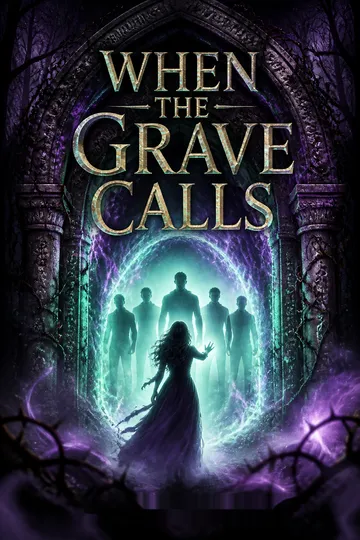
The Veil Diaries Series

About the Author

Download PDF
Download EPUB
.epub digital book format is ideal for reading ebooks on phones, tablets, and e-readers.








