

Key Takeaways
Treat empowerment as a call to lead your success, not wait for rescue.
The workplace bargain changed. The book opens with a shift: job security and close supervision are less dependable, while organizations expect people to solve problems and take initiative. Managers may oversee dozens of people, sometimes remotely, and cannot provide constant instructions. Yet empowerment can feel like abandonment when someone is given responsibility without knowing how to succeed.
Steve, a newly promoted advertising executive, discovers this the hard way. After a bank president rejects his campaign, Steve blames his boss, his creative team, and the client, then prepares to resign. Cayla reframes empowerment as an opportunity that requires self-leadership: taking responsibility for success, including identifying what help is missing and pursuing it. That is not the same as accepting blame for every failure.
The book’s strongest distinction is between agency and isolation. Giving someone discretion without training, feedback, or access to decision-makers is not meaningful empowerment; it is a transfer of risk. At the same time, waiting for a manager to notice every unmet need makes initiative impossible. The useful middle ground is shared responsibility: the worker names what is needed, while the organization remains accountable for providing reasonable support. This framing respects both sides of the employment relationship, though the parable’s emphasis on personal responsibility can be misused if leaders apply it to excuse poor management.
Challenge old beliefs before they become invisible limits on today's choices.
Past failure can masquerade as fact. Cayla calls a belief formed by earlier experience that restricts present or future action an assumed constraint. Her elephant metaphor describes an animal trained when young not to pull against a tether, even after it grows strong enough to escape. Steve recognizes the same pattern in himself: he assumes his boss has abandoned him, his client is unreasonable, and he cannot succeed as an account executive.
Cayla tests the idea with a business-card puzzle: cut a continuous opening large enough to pass a head through. Several colleagues assume it cannot be done or that they are not the kind of people who solve puzzles. The art director finds a method by folding and cutting the card. The point is not that every obstacle is imaginary, but that an untested belief should not be mistaken for proof.
This is a practical form of hypothesis testing. Instead of debating whether a belief feels true, a person can ask what observation would confirm or disconfirm it, then run a small experiment. Steve’s mistaken reading of his colleagues shows how assumptions can spread: his frustration had shaped the team’s attitude toward the client. The puzzle makes the mechanism memorable, although clever puzzles are not evidence that every workplace barrier can be overcome. Some limits are real, including inadequate authority, resources, or fair treatment. Testing assumptions helps separate those barriers from habits of thought.
Build influence from expertise, relationships, service, and credibility, not rank alone.
Power has several sources. At Hal’s Harley-Davidson shop, Steve meets employees who influence outcomes without holding the highest title. The book identifies five points of power: knowledge power, personal power, relationship power, task power, and position power. A parts manager earns credibility through deep product knowledge. Mechanics combine technical expertise with the ability to reassure customers. A salesperson draws on a network of trusted contacts. The bookkeeper understands the central tasks that keep the business functioning, while the owner has formal authority.
Steve realizes that he already has task power as the account executive, but lacks the knowledge he needs to guide a new campaign. Recognizing power does not mean exploiting it. It means seeing what resources and influence are available, then using them to help the work and the people affected by it.
This framework broadens the usual picture of influence, which often equates power with seniority. It also makes power concrete: expertise can answer a question, relationships can open a door, and task knowledge can expose what is actually at stake. That is useful for people who feel powerless because they lack a formal title. The ethical test is important, however. A relationship or family connection can enable useful access, but it can also become favoritism. The framework works best when influence is judged by whether it improves the work fairly, not simply by whether it gets a desired result.
Diagnose your skill and confidence for each goal, not your whole job.
Development depends on the task. The Development Continuum describes four common stages of learning a goal or skill. At D1, the Enthusiastic Beginner has low competence and high commitment. At D2, the Disillusioned Learner has low to some competence and low commitment. At D3, the Capable But Cautious Performer has moderate to high competence and variable commitment. At D4, the High Achiever has high competence and high commitment.
Steve used to prepare budgets and schedules well when his boss supplied the client strategy. As an account executive, he must now develop that strategy and gain the client’s agreement. The familiar word budget hides a new task, so his past D4 ability does not make him D4 at this different goal. Discouragement can also cause regression: a person who once performed confidently may become cautious when circumstances change.
The goal-specific lens avoids turning temporary difficulty into a judgment about identity. A person can be skilled at presenting a proposal and inexperienced at negotiating its underlying strategy. That distinction makes it easier to seek targeted help instead of concluding, vaguely, that one is bad at the job. The model also treats motivation and confidence as changeable, not fixed personality traits. Its stages are best used as a practical diagnosis rather than a precise measurement: people may feel competent in one part of a task and uncertain in another, so careful definition of the goal matters.
Ask for direction and support that fit your current learning stage.
The right help changes. The book pairs each development level with a leadership style. D1 learners need S1, Directing: clear guidance, with relatively little emotional support. D2 learners need S2, Coaching: both detailed direction and substantial encouragement. D3 performers need S3, Supporting: less instruction, but continued listening and confidence-building. D4 achievers need S4, Delegating: little direction or support because they can manage the task themselves.
Steve is at D2 on key parts of the bank account, so he needs both guidance and reassurance. He had assumed that a capable employee should be left alone, and that his manager would know when to intervene. The model replaces those guesses with a specific request. It also lets Steve identify what he needs from people besides his boss, such as colleagues with relevant expertise.
The model’s central strength is its rejection of one-size-fits-all management. Newcomers can need explicit structure, while experienced workers may find the same oversight frustrating. The coaching category is especially useful because it recognizes that instruction alone may not restore confidence after a setback. Still, the styles should be treated as adjustable responses, not labels for people. A supportive conversation can reveal that someone needs less direction than expected, and a high performer facing a novel assignment may need more. The quality of the diagnosis depends on listening, not merely assigning a stage.
Say what you need plainly, then draw help from more than your boss.
Clear requests make collaboration possible. Cayla teaches Steve to state needs directly, using the simple phrase “I need,” rather than disguising a request as a question such as whether someone is busy. A direct request can specify the help, its purpose, and a practical time. Steve uses this approach with a café server, then with his boss, Rhonda, when he needs feedback and a plan for the client meeting.
Self-leadership does not mean doing everything alone. Steve can seek direction from Rhonda, creative insight from his team, and perspective from Blair. Blair shows the same principle when she asks Steve to run alongside her in a 10K race: she names the coaching she needs instead of hoping he will infer it. Collaboration is an active skill, not a reward for being self-sufficient.
Direct requests reduce the guesswork that often makes workplace coordination inefficient. They also make refusal or negotiation more honest: a colleague can respond to a specific need rather than interpret an indirect hint. The book’s emphasis on asking for help counters the fiction that autonomy means independence from other people. Yet the phrase itself is not magic. A request succeeds only when the recipient has capacity, relevant knowledge, and enough trust to respond. If someone repeatedly asks clearly and is ignored, the problem may not be their communication style; it may be the organization’s willingness to support the work.
Treat the client as a learner, not an obstacle to creative work.
The customer may need guidance too. Steve assumes United Bank should arrive with a clear advertising strategy. Rhonda points out that the bank has never run a full campaign and its executives are not advertising specialists. They are beginners in the process, so expecting them to supply a finished strategy is like asking Steve to learn a new skill without instruction.
Rhonda identifies the mistake in Steve’s proposal: he let budgets and production schedules drive the campaign before the strategy was settled. The sequence should be strategy first, then creative work, then budgets and schedules. Once Steve understands the client’s learning needs, he can guide the bank through decisions, give the creative team a real brief, and rebuild trust. The client’s difficulty becomes a problem to structure, not a reason to dismiss them.
This insight turns client service into a form of teaching. When customers lack domain knowledge, silence or indecision may signal uncertainty rather than hostility. A professional can make the process legible by clarifying choices, explaining tradeoffs, and guiding decisions in sequence. That approach also protects creative work from being produced in a vacuum. The caution is that not every client needs instruction, and expertise should not become paternalism. Good guidance invites informed participation; it does not treat the client as incapable of judgment or use professional jargon to take control.
A promotion resets the learning curve, even when old tasks feel easy.
Experience does not transfer automatically. After Steve helps rescue the bank campaign, it wins an award, and Rhonda offers him a role leading new business development. Steve does not mistake the promotion for proof that he will immediately excel. He recognizes that the new position is unfamiliar, with many goals at D1, even though he has reached D4 on other tasks.
That distinction helps him approach the opportunity without pretending to know everything or retreating from the challenge. He can identify which parts of the role require instruction, which require confidence, and which he can handle independently. The book’s model therefore applies not only when someone is failing. It also helps a strong performer enter a new role with realistic expectations and a plan to gather the right support.
Career transitions often reward people for competence in one role and then expose them to different demands in the next. Treating a promotion as a fresh learning curve makes it easier to admit uncertainty without undermining legitimate confidence. It also gives managers a clearer basis for onboarding: support should follow the actual work, not a generic assumption that seniority means readiness. The model usefully separates status from skill. Its limitation is that real roles are mixed: a new leader may be an expert in client relationships and a beginner in staffing, budgeting, or strategy at the same time.
Pass self-leadership onward by helping others reclaim their own agency.
The mentor’s work is to make herself less necessary. Cayla explains that she learned from the One Minute Manager and was asked to pass the lessons on. She helps Steve challenge assumptions, notice his strengths, and find support rather than simply solving his client crisis for him. When Steve succeeds, she turns her attention to other people who need guidance.
The story ends with Steve seeing a forlorn woman alone in the café, much as he had been when he first met Cayla. He understands that the best way to thank his mentor is to offer another person the tools he received. The campaign’s success matters, but the deeper outcome is that Steve can now help others learn to lead themselves.
This ending frames leadership as capability-building rather than permanent dependence. A useful mentor does more than provide answers; the mentor helps someone diagnose a problem, use available resources, and make decisions with increasing independence. That pattern can multiply practical knowledge through a team. It also leaves a useful question: when does help become over-involvement? The book’s answer is implicit in Cayla’s departure. Support is successful when the learner gains agency, not when the mentor remains indispensable. The approach still depends on access to time and willing mentors, resources workplaces should recognize rather than assume.
Analysis
This book is a workplace parable organized around a practical sequence: Steve stops treating disappointment as proof that others have failed him, tests his assumptions, identifies the influence he already has, diagnoses his needs by task, and recruits support. The recurring magic tricks give abstract ideas physical form. A business card that seems too small to pass over a head makes a limiting belief visible; rubber bands turn the awkward slide from early enthusiasm to discouragement into a learning moment. These devices make the ideas easy to recall, even when the reader has not memorized the model’s terminology.
The most useful contribution is the shift from judging a person globally to diagnosing a person-task relationship. Steve is not simply competent or incompetent. His experience with budgets does not prepare him to build a client strategy from scratch, and his promotion creates new areas of beginner-level work. This distinction protects confidence while making the need for help concrete. The five points of power similarly expand the reader’s understanding of influence beyond formal rank.
The book’s optimism has a necessary boundary. Self-leadership is not a substitute for fair management, adequate training, or organizational accountability. Steve’s early failures partly reflect a mismatch between responsibility and the preparation he received. The model becomes most credible when the employee takes initiative and the manager responds with the direction or support the work requires. Without that response, personal responsibility can become a polite label for carrying systemic problems alone.
The narrative also presents a pragmatic account of collaboration. The client, creative team, manager, partner, and mentor each hold different knowledge or influence. Success comes not from one heroic individual, but from making those resources available at the right point in the work. Readers can use the book’s central question broadly: What is the goal, what can be done independently, and what specific help would make progress possible? That question turns empowerment from a slogan into a repeatable practice.
Review Summary
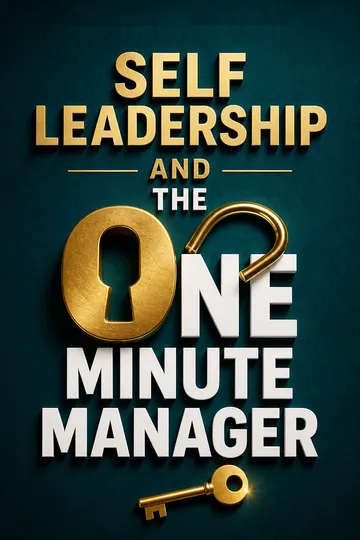
Self Leadership and the One Minute Manager receives mostly positive reviews, with readers praising its concise, engaging format and practical advice on self-leadership. Many appreciate the book's focus on challenging assumed constraints, recognizing personal power, and collaborating for success. The development continuum model and leadership styles are highlighted as valuable tools. Some readers find the storytelling approach helpful, while others consider it overly simplistic. Overall, reviewers recommend it as a quick, insightful read for both new and experienced leaders seeking to improve their self-leadership skills.
People Also Read



Glossary
Situational Self Leadership
Self-guidance matched to needsA method for taking initiative when another person holds formal authority. It asks individuals to recognize their assumptions and sources of influence, assess what a specific goal requires, and seek appropriate direction and support. The approach treats self-leadership as active collaboration, not as doing everything alone.
Assumed Constraint
A belief that limits actionA belief based on past experience that restricts what someone considers possible now or in the future. In the story, Steve assumes his boss has abandoned him and that the client cannot be guided. Challenging an assumed constraint means testing the belief rather than accepting it as a fact.
Elephant thinking
Past limits mistaken for presentThe book’s metaphor for continuing to obey a limit learned earlier, even after circumstances or abilities have changed. It refers to the trained elephant that no longer tries to escape a tether it could now break. The concept illustrates how old experiences can shape current expectations.
Points of Power
Five sources of influenceThe book identifies knowledge power, personal power, relationship power, task power, and position power. These sources come from expertise, interpersonal strengths, useful connections, responsibility for important work, and formal authority. A person can draw on several points of power without holding the highest rank.
Development Continuum
Four stages of learningA model describing how competence and commitment tend to change as someone pursues a particular goal or learns a skill. Its four levels range from an enthusiastic but inexperienced beginner, through disillusionment and cautious performance, to a capable, committed achiever. The model is applied to goals, not to a person’s overall worth.
Needs Model
Match help to developmentA guide that connects each development level to the type of leadership support that helps most. Beginners need clear direction; disillusioned learners need both direction and encouragement; capable but cautious performers need support with less instruction; high achievers can be trusted with greater independence.
Situational Leadership Styles
Four responses to learner needsThe book labels four leadership responses S1 through S4: Directing, Coaching, Supporting, and Delegating. They vary in the amount of direction and support provided. The appropriate style depends on a person’s competence and commitment for a specific goal, rather than their job title or a fixed personality type.
Collaborate for Success
Recruit help to reach goalsOne of the book’s three self-leadership practices. It means recognizing what direction, feedback, or support a goal requires, then identifying people and resources that can provide it. The practice includes stating needs clearly and seeking help from colleagues, mentors, friends, or managers rather than relying on a single authority figure.
FAQ
What's "Self Leadership and the One Minute Manager" about?
- Overview: "Self Leadership and the One Minute Manager" by Ken Blanchard, Susan Fowler, and Laurence Hawkins focuses on increasing personal effectiveness through situational self-leadership.
- Main Theme: The book emphasizes the importance of taking initiative and responsibility for one's own success in the workplace.
- Story Format: It uses a parable about a character named Steve, who learns self-leadership principles from a mentor named Cayla.
- Core Message: The book teaches that empowerment is something given, but self-leadership is what you do to make it work.
Why should I read "Self Leadership and the One Minute Manager"?
- Practical Guidance: It provides actionable strategies for improving personal and professional effectiveness.
- Empowerment Focus: The book emphasizes self-empowerment and taking control of one's career and life.
- Engaging Story: The narrative format makes complex concepts accessible and relatable.
- Proven Techniques: It builds on the successful One Minute Manager series, known for its practical management advice.
What are the key takeaways of "Self Leadership and the One Minute Manager"?
- Challenge Assumed Constraints: Recognize and overcome limiting beliefs based on past experiences.
- Celebrate Points of Power: Identify and leverage your strengths and resources.
- Collaborate for Success: Seek the direction and support needed to achieve goals.
- Development Continuum: Understand the stages of learning and the corresponding leadership styles required.
What is Situational Self Leadership as described in the book?
- Definition: Situational Self Leadership is the ability to take initiative and responsibility for one's own success, adapting to different situations.
- Three Tricks: It involves challenging assumed constraints, celebrating points of power, and collaborating for success.
- Development Levels: It includes diagnosing one's development level and seeking appropriate direction and support.
- Empowerment: It emphasizes that self-leadership is essential for making empowerment effective.
How does the book define "assumed constraints"?
- Definition: Assumed constraints are beliefs based on past experiences that limit current and future actions.
- Elephant Thinking: The book uses the metaphor of an elephant trained to believe it cannot break free, even when it can.
- Impact: These constraints can prevent individuals from taking initiative and achieving their potential.
- Overcoming: The book encourages challenging these constraints to unlock personal and professional growth.
What are the "points of power" mentioned in the book?
- Types of Power: The book identifies five types of power: knowledge, personal, relationship, task, and position power.
- Leverage Strengths: It encourages individuals to recognize and utilize their unique strengths and resources.
- Balance: Effective self-leadership involves balancing different types of power to achieve goals.
- Empowerment: Understanding and celebrating points of power is crucial for self-empowerment and success.
How does the book suggest collaborating for success?
- Seek Support: It emphasizes the importance of seeking direction and support from others to achieve goals.
- Use "I Need": The book highlights the power of using the phrase "I need" to communicate needs effectively.
- Leadership Styles: It discusses matching leadership styles to development levels for effective collaboration.
- Network: Building a network of collaborators can provide the necessary resources and support.
What is the Development Continuum in "Self Leadership and the One Minute Manager"?
- Four Stages: The Development Continuum includes four stages: Enthusiastic Beginner, Disillusioned Learner, Capable But Cautious Performer, and High Achiever.
- Competence and Commitment: Each stage is characterized by different levels of competence and commitment.
- Leadership Styles: The book matches each stage with a corresponding leadership style: Directing, Coaching, Supporting, and Delegating.
- Progression: Understanding this continuum helps individuals and leaders provide the right support and direction.
What role does the character Steve play in the book?
- Protagonist: Steve is a rising ad executive who becomes immobilized by new responsibilities.
- Learning Journey: He learns self-leadership principles from Cayla, a mentor who uses magic as a metaphor.
- Transformation: Through the story, Steve transforms from a victim mindset to a self-leader.
- Relatable: His journey illustrates the challenges and solutions in applying self-leadership concepts.
What are some of the best quotes from "Self Leadership and the One Minute Manager" and what do they mean?
- "Empowerment Is Something Someone Gives You. Self Leadership Is What You Do To Make It Work." This quote emphasizes the active role individuals must take in their empowerment.
- "Challenge Assumed Constraints!" It encourages readers to question and overcome limiting beliefs.
- "Celebrate Your Points of Power." This quote highlights the importance of recognizing and leveraging one's strengths.
- "Collaborate for Success!" It underscores the value of seeking support and working with others to achieve goals.
How does the book address the concept of empowerment?
- Empowerment vs. Self-Leadership: The book distinguishes between being given empowerment and actively practicing self-leadership.
- Active Role: It stresses that individuals must take initiative to make empowerment effective.
- Responsibility: Self-leadership involves taking responsibility for one's own success and development.
- Practical Steps: The book provides practical steps to enhance empowerment through self-leadership techniques.
How can the lessons from "Self Leadership and the One Minute Manager" be applied in real life?
- Workplace Application: Use the development continuum to assess and improve your skills and seek appropriate support.
- Personal Growth: Challenge assumed constraints to unlock personal potential and growth.
- Effective Communication: Use the "I need" phrase to communicate needs and collaborate effectively.
- Leadership Development: Apply the principles to become a more effective leader and empower others.
About the Author
Other books by Kenneth H. Blanchard



Download PDF
Download EPUB
.epub digital book format is ideal for reading ebooks on phones, tablets, and e-readers.








