


Key Takeaways
Treat every act of influence as a choice to serve, not extract.
Influence is leadership. The authors define leadership broadly: whenever someone shapes another person’s thinking, behavior, or development, that person is leading. This includes a parent guiding a child, a colleague confronting a moral lapse, and an executive making decisions that affect employees. A title is not required, and influence can help or harm. The decisive question is whether it serves others or serves the leader’s own status, comfort, or control.
Service is the model. Jesus’ example, including washing his disciples’ feet, makes service the purpose of influence rather than a soft leadership style. The book distinguishes lasting life relationships, such as family and friendship, from organizational roles that can change with performance and circumstances. Both call for service, though their obligations and forms of accountability differ.
What's distinctive is the refusal to reserve leadership for people with formal authority. It makes everyday conduct part of the leadership question: silence, encouragement, and the way a person handles power all shape others. The Christian premise is explicit, not merely decorative: Jesus is presented as the model and servant leadership as a calling. Readers outside that faith may not share the theological foundation, but they can still test the practical ethic. Serving people does not mean granting every preference; it means using influence for their good rather than treating them as instruments.
Notice when pride or fear is using leadership to protect your ego.
Spot the hidden motive. The book calls the self-protective ego “EGO,” meaning “Edging God Out.” It describes leaders who ground their worth in performance, possessions, position, or other people’s approval. When those sources feel threatened, pride can show up as control and credit-taking, while fear can show up as avoidance, micromanagement, or a reluctance to speak honestly.
Look for behavior. The authors contrast driven leaders, who cling to relationships and roles as possessions, with called leaders, who regard their influence as entrusted for a time. Three useful tests are how a leader responds to difficult feedback, whether they develop people who could succeed them, and whether they behave as though leadership exists to serve themselves. A servant leader can treat criticism as information and succession as part of the work.
The strength of this lens is that it connects inner insecurity to observable leadership habits. A leader need not announce selfish motives for them to appear in hoarded information, defensive reactions, or blocked succession. The approach also offers a useful diagnostic distinction: confidence is not the same as dominance, and humility is not the same as self-erasure. Its limit is that the diagnosis can become too spiritualized if every disagreement is labelled pride or fear. Specific examples, candid feedback, and attention to organizational incentives help keep self-examination honest rather than accusatory.
Name the destination, then make leaders serve the people doing the work.
Direction comes first. A compelling vision has three parts: purpose, a picture of the future, and values that guide choices. The book recommends keeping values few and ranking them, so people know what takes priority when principles conflict. Goals then turn that direction into near-term work. Leaders must explain what success looks like and check that others understand it, rather than assuming a vague instruction was clear.
Implementation serves people. After setting direction, a leader’s role shifts toward supporting the people who carry it out. The authors illustrate this with an airport story: one airline employee used judgment to help Ken Blanchard travel after he lacked standard identification, while another airline passed the decision up its hierarchy. The contrast is between empowered service and rule-following that leaves the customer stranded.
This two-part view avoids a common false choice between leadership as grand vision and management as lesser execution. Direction without support becomes a speech; support without direction can scatter effort. The proposed shift in hierarchy is best understood as changing who receives attention, not abolishing responsibility: frontline workers need authority and resources, while leaders remain accountable for purpose and standards. The airport anecdote makes the idea memorable, but discretion works best when boundaries are clear. Empowerment without training or ethical limits can produce inconsistency rather than better service.
Coach for the learner’s stage, not the leader’s convenience.
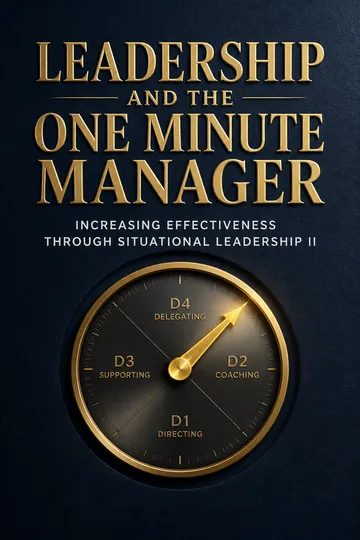
Match support to skill. The book describes four stages in learning a task. A novice needs basic orientation and clear instructions. An apprentice needs practice, correction, and encouragement through early setbacks. A journeyman can work independently but may need renewed confidence or purpose. A master/teacher can perform well and help train others. People can occupy different stages for different tasks, so a single management style will not fit every person or assignment.
Coach throughout. Performance coaching includes planning goals, giving day-to-day guidance, and evaluating results. The authors argue that leaders often overemphasize the final evaluation and neglect ongoing coaching. Jesus’ training of the disciples offers the central example: he taught, sent them to try the work, addressed failures, and eventually entrusted them with the mission. Delegation should transfer responsibility without abandoning the learner.
This framework makes development more precise: apparent motivation problems may come from unclear instructions, discouragement, or a loss of confidence, and each calls for a different response. It also shifts the leader’s question from “Why can’t this person do it?” to “What support does this task currently require?” The caution is that stages should be treated as task-specific snapshots, not permanent labels for people. A skilled employee can be a novice with a new tool, and excessive coaching can become control. Good diagnosis includes listening to the learner, not only judging performance from above.
Align heart, head, hands, and habits so service survives scrutiny.
Connect inner and outer leadership. The book’s four domains are heart, head, hands, and habits. The heart concerns motivation: serving others or advancing oneself. The head concerns beliefs about leadership and the leader’s responsibility. The hands are visible actions, including setting expectations, observing work, praising progress, and redirecting mistakes. Habits are the practices that renew a leader’s commitment to service.
Check for alignment. A leader may speak about service while acting to preserve status, or may intend well but fail to clarify goals and coach people. The authors argue that trust and effectiveness depend on these domains working together. Their practical self-assessment asks leaders to review recent decisions, identify one area to improve, set a specific action, and share the plan with an accountability partner.
The framework is useful because it resists reducing leadership to either good intentions or polished behavior. Motives shape decisions, beliefs shape methods, actions shape other people’s experience, and repeated practices sustain or weaken the pattern. The domains also offer a practical review: a gap between stated values and observed behavior is a signal to investigate. Still, outward consistency cannot prove inward sincerity, and spiritual routines alone do not make someone trustworthy. The framework is strongest when reflection is paired with feedback from people affected by the leader’s choices.
Protect solitude, prayer, Scripture, love, and community from the daily rush.
Renew your direction. The authors identify five habits that help leaders resist distraction and self-interest: solitude, prayer, studying and applying Scripture, trusting God’s unconditional love, and maintaining supportive relationships. Jesus’ withdrawals from crowds provide their example. After people wanted to make him king, he went away alone; before an important choice, he also sought time apart. Solitude is presented as space to reconsider priorities, not simply as a pause from work.
Make renewal concrete. Prayer is framed as regular conversation with God, not merely an emergency request. For those who want a structure, the book offers ACTS: adoration, confession, thanksgiving, and supplication. Scripture can be heard, read, studied, memorized, and meditated on. Trusted friends provide another check against isolation, offering honest feedback and encouragement.
The habits form a coherent counterweight to the book’s account of ego: quiet interrupts reactivity, prayer redirects attention, Scripture supplies a moral vocabulary, and trusted relationships expose blind spots. The practices are presented as explicitly Christian disciplines, and their meaning depends on that context. The broader lesson is not that every leader needs the same ritual, but that leadership requires regular ways to step outside immediate demands and examine motives. Solitude should not become withdrawal from accountability, and community should not become an echo chamber that protects a leader from difficult truths.
Correct mistakes to restore people, not to secure your own superiority.
Separate correction from condemnation. The book distinguishes discernment, which identifies a problem to help someone improve, from judgment aimed at condemning the person. Servant leaders still set standards and address poor performance; they do so with the goal of helping people grow. Jesus’ response to the disciples’ failures is offered as a model of truthful correction that does not cancel care for them.
Practice forgiveness and grace. Forgiveness means releasing the demand for repayment or an apology as the price of moving forward. Grace means accepting another person’s dignity and limitations while seeking their well-being. The authors apply these ideas to both followers’ mistakes and leaders’ own failures. A leader who can admit an error, apologize, and redirect behavior is less likely to let pride turn correction into punishment.
This is a valuable distinction because compassion and accountability are often treated as opposites. A leader can name harm clearly while refusing to make humiliation the method of correction. That combination supports learning and preserves the possibility of trust. Forgiveness, however, should not be confused with denying harm, restoring access automatically, or abandoning consequences. The book emphasizes restoration, but practical judgment must also consider safety, repeated behavior, and the needs of those affected. Grace is most credible when it is paired with honesty and appropriate boundaries.
Measure your season by successors strengthened, not titles accumulated.
Treat authority as temporary. The authors describe leadership as a season of influence and stewardship. Jesus spent years preparing his disciples to carry on the work, rather than keeping knowledge and responsibility concentrated in himself. Preparing successors is therefore not a threat to a leader’s importance; it is evidence that the leader has invested in people beyond immediate results.
Make the practice measurable. The book recommends seeking feedback, sharing knowledge, and preparing others to take responsibility. Its final tools turn reflection into action: assess leadership across heart, head, hands, and habits, choose one area for the next two weeks, and tell an accountability partner what will be done. The closing measure is not a title or a personal accomplishment alone, but the capability and character developed in people who have been influenced.
Succession makes service visible over time. A leader who develops capable replacements gives up some control in the present so that the work and the people can outlast that leader’s role. The short action cycle also helps prevent an inspiring ideal from remaining only an intention. Yet succession is not the sole measure of leadership: teams can inherit harmful structures, and some contributions are difficult to attribute to one person. A fuller assessment asks whether people became more capable, whether the mission remained sound, and whether the organization can continue without dependence on a single leader.
Analysis
The book’s organizing claim is that leadership is not primarily a position or technique. It is the moral use of influence, grounded in a Christian relationship with Jesus and expressed through service. Its structure follows a path from inner motivation to leadership beliefs, visible behavior, sustaining practices, and a final set of tools for reflection. That sequence matters: it explains why the authors do not treat better leadership as a matter of adopting a friendlier style while leaving self-interest untouched.
The most useful practical synthesis is the movement from vision to service. Leaders retain responsibility for purpose, future direction, and values, then support the people carrying those commitments into daily work. The coaching stages add needed specificity: support should change with a person’s competence and confidence on a particular task. Together, these ideas resist both command-and-control leadership and the mistaken belief that serving means avoiding standards.
The book’s theological foundation is also its boundary. It presents Jesus not simply as an inspiring case study but as the authoritative model, and it locates security and humility in faith. Readers who do not share that faith may find the behavioral practices persuasive without accepting the source of their authority. That distinction should be acknowledged rather than blurred. The model also depends on interpreting service wisely. Without honest feedback, clear values, and safeguards against misuse of authority, a leader could call compliance or self-sacrifice service.
Its enduring contribution is the insistence that leadership credibility is tested in ordinary interactions: how a person receives criticism, delegates, corrects errors, shares power, and equips others. The book’s questions and assessments make the aspiration observable, though they cannot guarantee transformation. The reader must repeatedly compare intention with impact, especially by listening to the people affected. In that sense, the book is less a formula for perfect leaders than a discipline of returning influence to its proper purpose: helping people and shared work flourish.
Review Summary
Lead Like Jesus receives mixed reviews, with an average rating of 4.07 out of 5. Many readers appreciate its practical insights on servant leadership, drawing parallels between Jesus' teachings and modern leadership challenges. The book is praised for its actionable strategies and transformative approach. However, some critics find it overly simplistic, repetitive, and too focused on Christian concepts. Readers value the book's emphasis on humility, integrity, and putting others first in leadership roles, though some feel it could have been more concise and less religiously oriented.
People Also Read










Glossary
EGO
Self-interest edging out GodThe book uses EGO as an acronym for “Edging God Out.” It describes the self-focused motives that arise when a leader treats status, performance, possessions, control, or others’ approval as the foundation of personal worth and security. The authors associate this pattern with pride and fear, which can distort decisions and damage trust.
Exalting God Only
Making God the central authorityThe authors’ counterpoint to Edging God Out. It means orienting worship, security, self-worth, and judgment around God rather than unstable sources such as status, performance, or public approval. In their framework, this shift supports humility and confidence, allowing leaders to serve without making influence a means of self-protection.
Heart, Head, Hands, and Habits
Four domains of leadershipThe book’s framework for examining leadership as a connected whole. Heart refers to motivation, head to beliefs about leadership, hands to observable behavior, and habits to practices that renew a leader’s commitment. The authors argue that these domains should align: good intentions without sound actions are insufficient, and effective behavior requires ongoing renewal.
Visionary and Implementation Roles
Direction-setting and serviceThe two complementary responsibilities the authors assign to servant leaders. The visionary role establishes purpose, a picture of the desired future, and guiding values. The implementation role supports people as they act on that direction, by providing resources, coaching, and appropriate authority. The leader sets direction, then serves those responsible for carrying it out.
Novice, Apprentice, Journeyman, Master/Teacher
Four stages of learningA task-specific progression used to describe how people develop competence and confidence. Novices need orientation and direct instruction. Apprentices need practice, correction, and encouragement. Journeymen can work independently but may need support or renewed purpose. Master/teachers can perform skillfully and teach others. A person may occupy different stages for different tasks.
ACTS Method of Prayer
Four-part prayer structureA prayer framework offered for readers who want a starting structure. ACTS stands for adoration, confession, thanksgiving, and supplication. It moves from acknowledging God’s character, to admitting shortcomings, expressing gratitude, and bringing requests. The authors stress that prayer is conversation with God, not merely a technique or a list of requests.
Situational Leadership® II
Adapt leadership to developmentA leadership approach associated with Ken Blanchard and colleagues that adapts a leader’s direction and support to a person’s development on a particular task. The book connects this approach to Jesus’ preparation of his disciples, arguing that learners need different kinds of guidance as they move from beginning a task toward independent performance and teaching others.
EGO Anonymous
Peer reflection on self-interestA voluntary group exercise described in the book in which leaders acknowledge how pride or fear has interfered with serving others. Participants share specific leadership situations in a supportive setting, then the authors connect this admission to a twelve-step process involving honest self-inventory, accountability, amends, spiritual practices, and renewed service.
FAQ
What's "Lead Like Jesus Repack" about?
- Focus on Servant Leadership: The book emphasizes the concept of servant leadership, using Jesus as the ultimate role model for leading by serving others rather than seeking to be served.
- Two Leadership Roles: It discusses the dual roles of leadership: the visionary role, which involves setting direction, and the implementation role, which focuses on serving and empowering others to achieve the vision.
- Transformational Journey: The book outlines a transformational journey that begins with personal leadership and extends to leading others, teams, and organizations.
- Integration of Faith and Leadership: It integrates faith with leadership principles, encouraging leaders to align their actions with the teachings and example of Jesus.
Why should I read "Lead Like Jesus Repack"?
- Unique Leadership Model: It offers a unique perspective on leadership by focusing on Jesus as the greatest leadership role model, providing timeless principles applicable in various contexts.
- Practical Guidance: The book provides practical tools and strategies for implementing servant leadership in personal and professional settings.
- Spiritual Growth: Reading the book can enhance spiritual growth by encouraging readers to align their leadership style with their faith and values.
- Positive Impact: It aims to transform not only the reader's leadership approach but also the lives of those they influence, promoting a culture of service and humility.
What are the key takeaways of "Lead Like Jesus Repack"?
- Servant Leadership Mandate: Jesus' leadership model is about serving others, not seeking power or recognition, and this is a mandate for all who follow Him.
- Four Leadership Domains: Effective leadership involves aligning the heart (motivation), head (beliefs), hands (actions), and habits (daily practices).
- Importance of Vision: A compelling vision, including purpose, picture of the future, and values, is crucial for guiding and motivating others.
- Role of Habits: Developing habits of solitude, prayer, scripture study, accepting God's love, and supportive relationships are essential for sustaining servant leadership.
How does "Lead Like Jesus Repack" define servant leadership?
- Service Over Self-Interest: Servant leadership is defined as prioritizing the needs and growth of others over personal gain or self-interest.
- Two-Part Role: It involves both setting a clear vision and serving others to help them achieve that vision.
- Heart of a Servant Leader: A servant leader's heart is motivated by humility and a desire to serve, rather than pride or fear.
- Jesus as the Model: Jesus exemplified servant leadership by serving His disciples and others, even to the point of sacrificing His life.
What are the four leadership domains in "Lead Like Jesus Repack"?
- Heart: This domain focuses on the leader's motivation and intent, emphasizing the importance of serving others rather than self-interest.
- Head: It involves the leader's beliefs and perspectives about leadership, including having a clear vision and values.
- Hands: This domain covers the leader's actions and behaviors, ensuring they align with servant leadership principles.
- Habits: It includes the leader's daily practices that support and sustain their leadership, such as prayer, solitude, and scripture study.
What practical advice does "Lead Like Jesus Repack" offer for implementing servant leadership?
- Performance Coaching: Act as a performance coach by setting clear goals, providing day-to-day coaching, and evaluating performance.
- Vision and Values: Develop a compelling vision with clear values to guide decision-making and behavior.
- Empowerment: Turn the traditional hierarchy upside down to empower frontline people to serve customers effectively.
- Feedback and Growth: Encourage feedback and focus on the growth and development of others as a key leadership goal.
How does "Lead Like Jesus Repack" suggest overcoming ego in leadership?
- Edging God Out (EGO): Recognize and address the tendency to edge God out through pride and fear, which can hinder effective leadership.
- Exalting God Only: Replace ego-driven motives with humility and God-grounded confidence by exalting God in all leadership decisions.
- Daily Practices: Engage in daily practices like prayer and solitude to keep ego in check and align with servant leadership principles.
- Feedback as a Gift: View feedback as a valuable gift rather than a threat, using it to improve and serve others better.
What are the spiritual benefits of leading like Jesus, according to "Lead Like Jesus Repack"?
- Alignment with God's Will: Leading like Jesus aligns leadership actions with God's will and commandments, honoring Him in all decisions.
- Love in Action: It puts the love of Jesus into action by prioritizing the well-being and growth of others.
- Modeling Jesus: Servant leadership models Jesus to others, serving as a witness to His teachings and example.
- Eternal Perspective: It brings an eternal perspective to leadership decisions, focusing on long-term impact and relationships.
What are the practical benefits of leading like Jesus, as outlined in "Lead Like Jesus Repack"?
- Improved Service: Organizations led by servant leaders are more likely to provide better service to customers and colleagues.
- Better Leadership: Servant leadership reduces the likelihood of ineffective or unethical leadership by promoting humility and integrity.
- Success and Significance: It closes the gap between success and significance, fostering environments where both are achieved.
- Positive Culture: Servant leadership creates a positive organizational culture that values people and results equally.
What are the leadership legacy reasons for leading like Jesus, according to "Lead Like Jesus Repack"?
- Lasting Impact: Leading like Jesus leaves a lasting impact on others by modeling servant leadership and prioritizing their growth.
- Positive Relationships: It fosters positive relationships built on trust, respect, and mutual service.
- Eternal Significance: The legacy of leading like Jesus extends beyond earthly achievements to eternal significance in God's kingdom.
- Inspiration for Others: It inspires others to adopt servant leadership principles, creating a ripple effect of positive change.
What are the best quotes from "Lead Like Jesus Repack" and what do they mean?
- "I came to serve, not to be served." This quote from Jesus encapsulates the essence of servant leadership, emphasizing service over self-interest.
- "Not so with you." Jesus' mandate to His disciples to lead differently from worldly leaders, focusing on serving others.
- "Trust in the LORD with all your heart." A reminder to rely on God's guidance and wisdom in all leadership decisions.
- "Seek first the kingdom of God." Encourages leaders to prioritize God's kingdom and righteousness in their leadership approach.
How can I start applying the principles from "Lead Like Jesus Repack" in my life?
- Self-Reflection: Begin with self-reflection to understand your current leadership motivations and areas for growth.
- Set a Vision: Develop a clear vision and values for your leadership, whether in personal or professional contexts.
- Daily Habits: Incorporate daily habits of prayer, solitude, and scripture study to align your actions with servant leadership principles.
- Seek Feedback: Encourage feedback from others to continuously improve and serve more effectively.
About the Author
Other books by Kenneth H. Blanchard








Download PDF
Download EPUB
.epub digital book format is ideal for reading ebooks on phones, tablets, and e-readers.








