

Key Takeaways
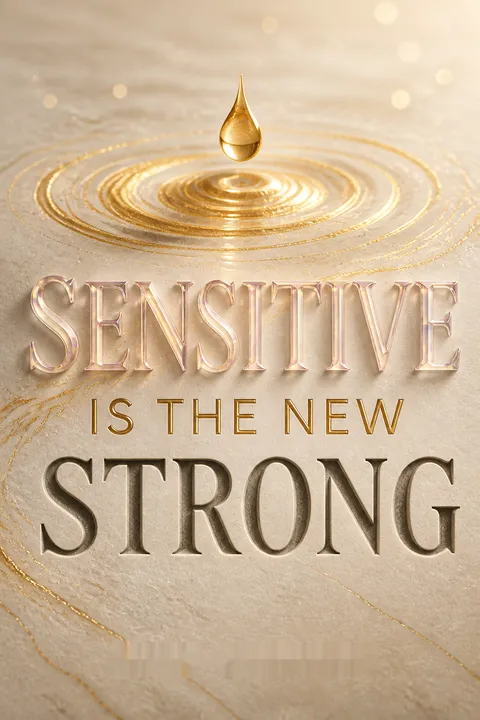
Treat sensitivity as a strength to train, not a defect to hide.
A second chance changed the frame. Moorjani opens with her account of a near-death experience during a coma caused by advanced Hodgkin’s lymphoma. She says the experience brought clarity about self-acceptance and her connection to others. After recovering, she became a public speaker, but found herself overwhelmed by requests for help and by the emotional impact of other people’s suffering. A shaman she met in Costa Rica urged her to stop treating other people’s distress as her responsibility to absorb or solve.
Sensitivity needs skill. The book’s central argument is that empathy, intuition, and deep feeling need not be weaknesses. They become costly when someone hides their needs, seeks approval, or tries to rescue everyone. The goal is not to become less caring, but to stay connected to oneself while caring for others.
The strongest part of this opening is its reversal of shame: a trait that has been mocked can become a source of information and connection. That framing resembles strengths-based approaches in psychology, which ask how a disposition can be used well rather than erased. The distinction matters: sensitivity can support careful listening, but it does not automatically make someone accurate about another person’s feelings or needs. Moorjani’s experience gives the book emotional force, while remaining a personal spiritual account, not evidence that every sensitive person shares her metaphysical interpretation.
Name your sensitivity accurately before turning it into an identity.
A spectrum, not a test result. Moorjani distinguishes highly sensitive people, or HSPs, from empaths. Drawing on Elaine Aron, she reports that 15 to 20 percent of people may be highly sensitive, with empaths described as a smaller group who also absorb surrounding emotional or physical states. Her own online quiz score helped her find language for her experiences, but it was not a scientific diagnosis. She also reports that 80 to 90 percent of some audiences identified as empaths, a self-selected group rather than a population estimate.
Look for patterns. The book’s examples include feeling drained in crowds, struggling to say no, sensing others’ moods, and needing solitude to recover. These patterns can be useful prompts for reflection. They do not, by themselves, establish that someone literally takes in other people’s energy.
A label can reduce isolation by giving people a shared vocabulary, but it can also turn a flexible pattern into a fixed identity. The useful question is less whether a person qualifies as an empath and more what situations reliably overwhelm them, and what responses restore balance. Emotional contagion, sensory sensitivity, social vigilance, and stress are ordinary psychological explanations worth considering alongside spiritual ones. The author’s quiz is best used as a conversation starter, not as a clinical instrument or proof of paranormal perception.
Lower the noise before trying to hear your own needs.
Reduce the incoming stream. Moorjani argues that constant news, social media, crowds, noise, and emotionally demanding relationships can crowd out self-awareness. She recommends regular periods away from screens, quieter breaks during the day, and time in nature. One reader who worked around distressing crime stories realized that the daily exposure was wearing her down. Quiet breaks and a move to a different department made the work more manageable.
Create room, not a fortress. The book’s approach is not to shut out the world with rigid barriers. It offers grounding and visualization exercises to help readers feel more centered, alongside practical steps such as limiting media and leaving draining situations when possible. The aim is to meet other people with care without making every outside emotion one’s own.
This advice translates well into attention management. A steady stream of alerts and distressing stories can keep attention oriented outward, leaving less room to notice fatigue, preferences, or the need for rest. The practical value of an unplugged interval does not depend on believing in an energy field. At the same time, withdrawing from difficult information is not always a solution: caregivers, organizers, and citizens may have real responsibilities. The more sustainable goal is deliberate exposure, with recovery time, rather than either constant immersion or complete avoidance.
Strengthen self-respect as carefully as empathy.
Two capacities must cooperate. Moorjani uses a two-dial analogy: one dial represents conscious awareness of others, and the other represents ego as self-worth and a distinct sense of self. She argues that empathy without enough self-respect can become self-erasure. A healthy ego, in this account, is not arrogance or indifference. It helps a person recognize their own needs and limits while remaining aware of other people.
Care includes the caregiver. Moorjani recalls feeling guilty for enjoying ordinary life while her friend Soni was ill, and says she neglected her own needs. She later saw self-care as necessary to being present for others. The book suggests identifying activities that restore energy, accepting compliments and gifts without immediately repaying them, and asking what one would choose if other people’s approval were not at stake.
The two-dial metaphor gives readers a memorable way to see why compassion can become unbalanced. In psychological terms, perspective-taking is more useful when paired with a stable sense of agency: understanding another person does not require surrendering one’s preferences. This is especially relevant in caregiving, where exhaustion can diminish the quality of support. The metaphor is not a validated measurement tool, and the word ego means different things across therapeutic and spiritual traditions. Its practical distinction between self-respect and selfishness remains valuable.
Let spiritual teaching deepen your agency, never replace it.
A guru’s verdict left a mark. In her twenties, Moorjani sought advice from a revered Indian spiritual teacher about why she had not married. He described her independence and refusal to conform as flaws, and warned that she was not on the path to spiritual liberation. She says she spent years trying to become more spiritually worthy, while doubting her own judgment. Her account challenges teachings that turn service, forgiveness, humility, or renunciation into demands for endless self-denial.
Self-love is not submission. Moorjani argues that a teacher should help people trust their own judgment, not build dependence on the teacher. She also distinguishes caring for someone from allowing that person to keep hurting or exploiting you. Her suggested response to harm is to acknowledge the hurt, care for oneself, and set boundaries without forcing premature forgiveness.
The account highlights an important power imbalance: spiritual authority can offer meaning, but it can also make social conformity sound like moral truth. A useful test for any teaching is whether it increases a person’s capacity to deliberate and act, or makes obedience the price of belonging. The book’s emphasis on self-trust is strongest when paired with reflection, evidence, and dialogue with trusted people. Inner conviction deserves respect, but it is not automatically correct simply because it feels spiritual.
Say no early, before kindness hardens into resentment.
Silence can magnify conflict. Moorjani describes repeatedly helping a friend with childcare, despite growing resentful that the arrangement had become expected. She avoided an honest conversation until anger erupted, then felt guilty and resumed overgiving. In another example, a colleague named Loraine worked long hours to win her boss’s approval. After she finally told him the arrangement was unsustainable, he acknowledged that he had been taking advantage of her willingness to help.
Make the refusal clear and kind. The book suggests pausing before answering a request, naming limited capacity, or saying that now is not a good time. It also asks readers to distinguish a freely chosen act of care from an act driven by fear of disapproval. A direct no may create short-term discomfort, but avoiding it can produce longer-lasting resentment and confusion.
This is a strong account of how conflict avoidance can create the very rupture it seeks to prevent. Assertiveness is not aggression: it communicates one’s own limits without attempting to control another person. That distinction is particularly useful for people who have learned to interpret any disagreement as cruelty. The book’s examples also point to a broader relational principle: other people cannot make informed choices about an arrangement if its costs remain hidden. Some relationships do respond poorly to boundaries, so a calm conversation is not a guarantee of safety or fairness.
Care for your health without mistaking stress theories for medical proof.
The body deserves support, not blame. Moorjani recounts becoming intensely fearful of cancer after people close to her were diagnosed. She describes researching possible causes, changing her diet, and taking many supplements, then developing lymphoma herself. She interprets her illness partly through self-neglect and emotional strain. That is her personal account, not proof that absorbing others’ emotions caused her cancer or that changing one’s mindset can cure disease.
Use self-care alongside treatment. Her practical suggestions include reviewing unwanted obligations, allowing oneself to receive help, finding sources of joy, and discussing treatment choices with clinicians who take one’s concerns seriously. These steps may improve quality of life and make care feel more manageable. They should not replace medical assessment or delay treatment. The book’s emphasis on choosing supportive practitioners is most useful when it means informed collaboration, not rejecting evidence-based care.
The distinction between supportive self-care and claims about disease causation is essential here. Stress, isolation, and overload can affect well-being, sleep, and the ability to manage treatment, but the text does not establish that emotional absorption caused Moorjani’s cancer or that life-force practices treat it. Advice to place treatment decisions after spiritual or lifestyle steps could be dangerous if read as a reason to wait. A safer reading keeps emotional support and medical care in parallel, with qualified clinicians addressing diagnosis and treatment.
Accept fair payment for meaningful work instead of worshipping self-sacrifice.
Free service became unsustainable. After recovering, Moorjani began offering support and teaching without charge. She describes feeling overwhelmed by requests, struggling financially, and fearing judgment after a reader accused her of exploiting people by charging for an event. A later conversation helped her reconsider the assumption that heart-centered work must be unpaid. She accepted a paid speaking engagement, and her work soon reached a larger audience through a publisher.
Receiving can support service. Moorjani argues that charging fairly can help people sustain the work they value, and that guilt about money can leave caring people dependent on jobs that drain them. She asks readers to identify what energizes them, value their contribution, and make room for their own needs when income arrives. The point is not that money will automatically follow purpose, but that self-sacrifice is not the only ethical way to serve.
The book usefully challenges a double standard in which profit-driven work is treated as normal while care work is expected to be free. Compensation can support skilled labor, continuity, and independence. Yet the author’s story of opportunity should not be mistaken for a reliable formula linking purpose to financial success. Ethical practice also requires transparent pricing, clear claims, and attention to clients’ vulnerability. A sustainable livelihood is a reasonable aim, but it still depends on practical conditions, not only self-worth or spiritual openness.
Treat intuition as a signal to examine, not proof to obey.
Old beliefs can color the present. Moorjani calls learned assumptions about oneself and the world filters. Bullying and racial discrimination, she says, contributed to her belief that she was inferior. As an adult, she interpreted a speaker’s distant manner as rejection, then discovered he was simply surprised and shy. The episode helped her see how a past expectation can shape the meaning assigned to an ambiguous encounter.
Make room for more than one explanation. Moorjani encourages readers to pause when fear, shame, or bodily tension appears, and ask whether an old belief is influencing the interpretation. She also describes an inner mystic, her term for an internal source of spiritual guidance. A practical version of the exercise is to notice the intuition, consider alternative explanations, and check what can be checked before acting.
This is one of the book’s most psychologically useful ideas when separated from its supernatural claims. Prior experience does shape interpretation, especially in ambiguous social situations, and a pause can prevent a familiar fear from masquerading as certainty. The crucial safeguard is to treat intuition as a hypothesis rather than an oracle. Positive inner messages can be comforting, but comfort alone does not establish accuracy. Checking evidence and inviting another perspective preserve self-trust without surrendering critical judgment.
Make room for sensitive leaders without demanding they imitate the loudest.
A social script nearly decided her life. Moorjani grew up amid strong expectations that she would marry within her community, defer to men, and put domestic roles ahead of her own ambitions. She agreed to an arranged marriage, then fled just before the wedding after realizing she did not want that life. She presents the decision as both painful and freeing, and argues that learned gender roles can make people mistake conformity for virtue.
Sensitivity belongs in public life. The book urges readers to bring empathy, listening, and care into leadership rather than treating aggression as the only form of strength. It also asks men to resist the idea that emotional sensitivity makes them weak, and women to resist shrinking themselves to remain acceptable. The practical point is not that every sensitive person must become a public leader, but that they need not hide their judgment or abilities.
The book’s challenge to toughness-as-leadership is timely: attention to relationships, consequences, and dissent can improve decisions, especially where power tends to reward certainty and speed. The runaway-bride story makes clear that personal agency can carry social costs, particularly under restrictive gender norms. Sensitivity alone, however, does not guarantee good leadership; it must be joined to competence, accountability, and the ability to make difficult choices. The aim is not to replace one narrow leadership ideal with another, but to widen who is allowed to lead and how.
Analysis
Sensitive Is the New Strong is part memoir, part spiritual guide, and part practical argument for people who habitually prioritize others. Its narrative engine is Moorjani’s reported near-death experience: she describes returning from a coma with a radically altered sense of self, then struggles to carry that insight into ordinary relationships, work, health decisions, and money. The structure follows that movement from self-recognition to action in the world.
The book’s most transferable contribution is not its metaphysical account of consciousness, but its recurring behavioral question: does this choice express care, or fear of disapproval? That question links the chapters on self-worth, saying no, money, relationships, and leadership. The ego metaphor gives readers permission to maintain a self while remaining compassionate. The advice to notice overload, pause before agreeing, and make room for recovery is concrete and often humane.
The text also asks readers to accept claims that exceed its evidence. Moorjani’s personal account of cancer recovery is powerful as testimony, but cannot establish that emotional absorption caused her illness, that a near-death experience caused remission, or that visualization and positive states can heal serious disease. Its language of intuition and energy may help some readers describe subjective experience, yet those experiences need not demonstrate paranormal perception. Similarly, the claim that the world reflects inner beliefs can encourage agency, but can become harmful if it implies that people create their own illness, abuse, or poverty.
A careful reading separates useful practices from explanatory certainty. Self-care, boundaries, supportive relationships, fair compensation, and scrutiny of inherited beliefs can stand on their own without requiring belief in an unseen realm. The book is most persuasive when it helps readers stop confusing self-erasure with kindness. It is least safe when spiritual interpretation risks displacing medical evidence or making suffering appear self-created. Its lasting invitation is to be caring without disappearing, and open-minded without abandoning discernment.
Review Summary
Sensitive Is the New Strong receives mixed reviews. Many praise its empowering message for empaths and sensitive people, offering practical advice and validation. Readers appreciate Moorjani's personal insights and meditations. However, some criticize the book's New Age elements, lack of scientific basis, and potential for misinterpretation regarding health advice. The writing style and repetitiveness are also mentioned as drawbacks. Overall, the book resonates strongly with self-identified empaths but may not appeal to skeptics or those seeking a more rational approach.
People Also Read





Glossary
Empath
absorbs others’ emotional statesMoorjani uses empath for a person who feels others’ emotions intensely and may experience surrounding emotional or physical states as if they were their own. She connects this sensitivity with intuition, compassion, and a tendency to overhelp. The book’s use is a spiritual and self-help description, not a clinical diagnosis.
Highly Sensitive Person
highly responsive nervous systemA term associated in the book with psychologist Elaine Aron, describing people who process sensory and emotional input deeply. Moorjani distinguishes highly sensitive people from empaths by saying that empaths experience a more intense form of sensitivity and absorb others’ energies. The distinction is presented as the author’s framework, not a diagnostic test.
six-sensory being
person guided by intuitionMoorjani’s term for a person who uses intuition or other forms of inner knowing beyond the five conventional senses. She argues that people may suppress this capacity to fit social expectations. The idea is central to her spiritual worldview, though the book’s examples do not establish that intuition is a separate, objectively measurable sense.
inner mystic
inner source of guidanceMoorjani’s name for an internal guide or intuitive connection that a person may call the higher self, God, or another spiritual presence. She encourages quiet reflection to notice this guidance and distinguish it from fear-based thoughts. The term describes a spiritual interpretation of inner experience, not an independently verified external voice.
web of consciousness
shared field of connectionMoorjani’s metaphor for an underlying connection among people and living beings through consciousness or energy. She relates it to her near-death experience and to stories about animals, children, and people sensing events at a distance. It expresses the book’s view of interconnectedness, rather than a demonstrated scientific mechanism.
energetic seniority
authority over personal energyMoorjani’s phrase for retaining a sense of ownership over one’s moods, needs, and personal limits rather than automatically mirroring other people. Losing energetic seniority means letting another person’s distress or approval dominate one’s own emotional state. The practical idea is emotional differentiation, expressed through the book’s energy-based vocabulary.
filters
learned lenses on experienceMoorjani’s term for beliefs and expectations, often shaped by childhood experiences, that influence how a person interprets present events. For example, someone who expects rejection may read an ambiguous interaction as proof of dislike. Identifying a filter means noticing that an interpretation may reflect past conditioning rather than the full evidence available now.
marinade
surrounding cultural conditioningMoorjani’s metaphor for the beliefs, norms, and assumptions absorbed from one’s family and culture. A person may mistake these inherited ideas for unquestionable truth because they have shaped everyday life from an early age. A transformative experience, in her account, can make those assumptions visible and open to reconsideration.
Wu Wei
gentle action without forceA Taoist term that Moorjani interprets as action through inaction or gentleness overcoming force. She uses it for responses that avoid needless confrontation while still changing a situation. Her childhood example is offering cookies to school bullies who had been taking hers, a gesture that altered their behavior without a physical fight.
life force energy
vitality and spiritual energyMoorjani uses life force energy, also called prana or shakti in the book, for the vitality she believes flows through people and can be strengthened or depleted. She associates it with emotional well-being, purpose, and spiritual connection. The term functions as a spiritual framework and should not be confused with a medical measurement or treatment.
FAQ
1. What is "Sensitive Is the New Strong" by Anita Moorjani about?
- Empaths in a Harsh World: The book explores the unique challenges and strengths of empaths—highly sensitive people who deeply feel and absorb the emotions and energies of others—in today’s often aggressive and overwhelming society.
- Personal Journey and Near-Death Experience: Anita Moorjani shares her own story, including her near-death experience (NDE) and how it awakened her to her empathic gifts and the importance of self-love and authenticity.
- Guide for Empaths: The book serves as a practical and spiritual guide for empaths to embrace their sensitivity as a superpower, rather than a weakness, and to thrive without losing themselves.
- Tools and Exercises: It offers actionable tools, meditations, and exercises to help empaths protect their energy, develop healthy boundaries, and step into leadership roles.
2. Why should I read "Sensitive Is the New Strong" by Anita Moorjani?
- Empowerment for Sensitive People: If you identify as an empath or highly sensitive person, the book provides validation, understanding, and practical advice for navigating a world that often undervalues sensitivity.
- Unique Perspective: Moorjani’s near-death experience gives her a rare and profound perspective on life, self-worth, and the interconnectedness of all beings.
- Practical Tools: The book is filled with exercises, meditations, and real-life stories to help readers develop self-love, set boundaries, and harness their intuitive gifts.
- Cultural and Spiritual Insights: It addresses cultural conditioning, gender norms, and spiritual misconceptions that often hold empaths back, making it relevant for a wide audience.
3. What are the key takeaways from "Sensitive Is the New Strong"?
- Sensitivity is a Strength: Empathy and sensitivity are not weaknesses but powerful gifts that can lead to healing, leadership, and positive change.
- Self-Love is Essential: True transformation for empaths begins with self-acceptance, self-care, and valuing one’s own needs as much as others’.
- Boundaries and Energy Management: Learning to say “no,” set boundaries, and protect one’s energy is crucial for empaths to avoid burnout and illness.
- Authenticity and Leadership: Empaths are called to step into their power, speak their truth, and take on leadership roles to help shift the world toward greater compassion.
4. How does Anita Moorjani define an empath in "Sensitive Is the New Strong"?
- Deep Sensitivity: An empath is someone who feels and absorbs the emotions, energies, and even physical symptoms of others, often more intensely than the average person.
- Blurred Boundaries: Empaths often struggle to distinguish their own feelings from those of others, leading to people-pleasing and doormat tendencies.
- Intuitive and Spiritual Connection: Empaths typically have a strong intuition and a natural connection to the “sixth sense” or spiritual realm.
- Healing and Creativity: Many empaths are drawn to healing professions, creative pursuits, and are highly compassionate, visionary, and service-oriented.
5. What are the main challenges empaths face, according to "Sensitive Is the New Strong"?
- Sensory Overload: Empaths are easily overwhelmed by crowds, noise, negativity, and the constant influx of information in the modern world.
- People-Pleasing and Doormat Syndrome: Difficulty saying “no,” fear of criticism, and addiction to approval often lead empaths to neglect their own needs.
- Absorbing Others’ Pain: Empaths can take on the emotional and physical pain of others, sometimes leading to exhaustion or illness.
- Struggles with Boundaries and Self-Worth: Many empaths have trouble setting boundaries, receiving help, and valuing themselves, which can result in financial, relational, and health issues.
6. What practical tools and advice does Anita Moorjani offer empaths in "Sensitive Is the New Strong"?
- Unplugging and Grounding: Regularly disconnecting from technology and practicing grounding exercises to reduce sensory overload and reconnect with oneself.
- Energy Protection Techniques: Visualizations, aura-strengthening exercises, and the use of crystals or smudging to maintain energetic boundaries.
- Embracing the Ego: Turning up the “ego dial” to develop healthy self-esteem, assertiveness, and the ability to differentiate one’s own needs from others’.
- Meditations and Journaling: Guided meditations and reflective journaling to strengthen intuition, self-love, and connection to the “inner mystic.”
7. How does "Sensitive Is the New Strong" address the relationship between self-love and spirituality for empaths?
- Self-Love as Spiritual Foundation: Moorjani emphasizes that loving oneself is not selfish but the foundation for true spiritual growth and service to others.
- Challenging Spiritual Dogma: The book critiques spiritual teachings that encourage self-sacrifice and ego suppression, arguing that these can keep empaths stuck in doormat-hood.
- Authenticity Over Perfection: Being spiritual means being authentic, not perfect; self-acceptance and honoring one’s own needs are seen as spiritual acts.
- Releasing Guilt and Embracing Worthiness: Empaths are encouraged to let go of guilt for prioritizing themselves and to see their own divinity and worth.
8. What is the significance of Anita Moorjani’s near-death experience (NDE) in "Sensitive Is the New Strong"?
- Awakening to True Self: The NDE revealed to Moorjani the importance of self-love, authenticity, and the interconnectedness of all beings.
- Healing and Transformation: Her miraculous recovery from cancer after the NDE serves as a testament to the power of embracing one’s true nature and letting go of fear.
- Spiritual Insights: The experience provided her with direct knowledge of the “web of consciousness” and the reality of life beyond the physical body.
- Guidance for Empaths: Moorjani’s NDE informs her advice to empaths, showing that embracing sensitivity and intuition can lead to profound healing and purpose.
9. How does "Sensitive Is the New Strong" help empaths deal with criticism, boundaries, and saying “no”?
- Understanding Guilt and Approval Addiction: The book explains why empaths are prone to guilt and people-pleasing, and how this undermines their well-being.
- Assertiveness Training: Moorjani provides scripts, gentle language, and mindset shifts to help empaths say “no” without guilt and set healthy boundaries.
- Reframing Conflict: Empaths are encouraged to see conflict as an opportunity for growth and authenticity, rather than something to be avoided at all costs.
- Self-Compassion Practices: The book offers meditations and journaling prompts to help empaths process guilt, accept their needs, and prioritize self-care.
10. What does "Sensitive Is the New Strong" say about money, abundance, and success for empaths?
- Challenging Scarcity Beliefs: Moorjani addresses the common belief among empaths that money is unspiritual or that they don’t deserve abundance.
- Receiving as a Spiritual Act: The book encourages empaths to open their receiving channels, see money as a tool for service, and let go of guilt around abundance.
- Redefining Success: Success is reframed as having high life force energy, joy, and purpose, rather than just financial wealth.
- Practical Steps: Moorjani offers visualization exercises and mindset shifts to help empaths attract abundance and value their work, especially in healing or creative fields.
11. How does "Sensitive Is the New Strong" address gender norms and cultural conditioning for empaths?
- Breaking Free from Gender Roles: The book discusses how traditional gender expectations (for both women and men) can suppress empathic qualities and self-expression.
- Cultural Conditioning: Moorjani shares her own struggles with arranged marriage, family expectations, and cultural beliefs that made her doubt her worth and authenticity.
- Embracing Both Yin and Yang: Readers are encouraged to honor both their “feminine” (empathic, nurturing) and “masculine” (assertive, strong) qualities, regardless of gender.
- Role Models and Leadership: The book calls for more empathic leaders and role models who embrace sensitivity as a strength in all areas of life.
12. What are the best quotes from "Sensitive Is the New Strong" by Anita Moorjani, and what do they mean?
- “I am a soul, not a role.” – Reminds readers to identify with their true essence, not just societal or cultural roles.
- “My sensitivity is my superpower!” – Reframes sensitivity from a liability to a unique strength that can change the world.
- “Love yourself like your life depends on it, because it does!” – Emphasizes that self-love is not optional for empaths; it’s essential for survival and thriving.
- “Being spiritual means being authentic.” – Encourages readers to value authenticity over perfection or self-sacrifice in their spiritual journey.
- “It’s as important to receive as it is to give.” – Highlights the necessity for empaths to balance giving with receiving to maintain their health and energy.
About the Author
Other books by Anita Moorjani

Download PDF
Download EPUB
.epub digital book format is ideal for reading ebooks on phones, tablets, and e-readers.








