

Key Takeaways
Trade vows of self-rescue for grace-powered, specific change.
A vow is not a cure. At eighteen, Harris and six fellow camp counselors signed a long list of promises meant to make them holy. One promise was to avoid masturbation for a year. Within two weeks, Harris had broken it, and the cycle of vows, failure, and shame continued. He concludes that their strategy had three flaws: they set their own standard, relied on willpower, and sought the feeling of being worthy through good behavior.
Start from forgiveness. Harris defines lust as sexual craving for what God forbids, and argues that the Christian standard is not to excuse a little impurity. But purity cannot be earned by keeping rules. Legalism, in his use, means trying to gain God's acceptance through obedience. He presents grace as the basis for change: forgiveness comes through Christ, while the effort to grow in holiness is a response to that forgiveness.
The opening story makes a useful distinction between commitment and capacity. A signed rule can clarify intention, but it cannot by itself change the emotional and situational forces that shape behavior. This aligns with behavior-change research emphasizing concrete plans, environmental supports, and repeated practice over sheer resolve. The theological claim adds a different kind of leverage: failure need not become proof of personal worthlessness. One limitation is that grace can be misunderstood as passivity. Harris avoids that by keeping the standard high while rejecting self-punishment as a source of transformation.
Protect sexual desire by separating its goodness from lust's distortion.
Desire is not the enemy. Harris argues that sexual attraction, a strong sex drive, excitement about sex within marriage, and even an unwanted bodily response are not automatically lust. In his Christian framework, sexuality is part of human creation, not a defect to erase. The moral question is how desire is treated: noticing someone's beauty differs from mentally turning that person into an object for private gratification.
Watch what desire serves. Lust, as Harris describes it, takes sexual desire and strips away reverence for God and regard for another person. He sees it as a craving that wants forbidden satisfaction and keeps demanding more. Shame about having a sex drive can therefore be as misleading as using biology to excuse every choice. The goal is neither denial nor indulgence, but bringing desire under the values of faith, restraint, and respect.
This distinction is valuable because it separates involuntary experience from chosen attention, a difference also central to many approaches to self-regulation. Treating every bodily response as moral failure can intensify shame without improving conduct; treating every impulse as harmless can erase responsibility. Harris's emphasis on the other person's dignity also moves the question beyond private rule-keeping. The account is explicitly theological, however, and its boundaries around acceptable sexual expression depend on that tradition's beliefs about sex and marriage, rather than on a universal ethical consensus.
Map your triggers before temptation turns a small compromise into a routine.
Temptation has a pattern. Harris tells of Andrew, who waited outside a video store because its displays were a recurring temptation. The choice looked unusual, but it matched Andrew's own weak point. Harris calls an individualized map of vulnerabilities a custom-tailored plan: identify the situations that make a particular person's struggle more likely, then decide beforehand how to respond.
Look for the small openings. Harris compares repeated compromises to foods that build up and trigger a migraine. He suggests examining time of day, locations, television, reading, music, internet use, catalogs, and public settings. Someone might avoid aimless late-night browsing, change a route, or arrange a call during a difficult hour. His advice is to start with one specific change rather than be paralyzed by a long list, and to revise the plan as circumstances change.
The practical strength here is the shift from moral generalities to behavioral observation. In contemporary behavior design, cues and context are treated as part of the action, not as background scenery. An advance plan can reduce the number of decisions made when attention is depleted. The metaphor of triggers is useful, though it should not imply that every exposure inevitably produces a lapse. Individual differences matter, and avoiding a cue may be wise in one setting while becoming unnecessarily restrictive in another. The book's test is whether the step addresses a person's actual pattern.
Judge entertainment by what it trains your heart to love.
Stories shape appetite. Harris recounts renting a movie after dismissing concerns about its sexual content. A clerk recognized him as a Christian author, and the film proved crude enough that his family had to skip scenes. His embarrassment exposed a deeper problem: he had worried more about being seen than about what he was choosing to watch.
Look beyond ratings. Harris argues that films and television can make adultery or sexual objectification feel attractive through character, humor, and emotional storytelling, even without explicit images. He urges readers to consider the cumulative effect of a media diet, not just isolated scenes or age ratings. A useful test is whether a work condemns harmful behavior or invites the audience to enjoy it. Discernment, in this account, means acting on an evaluation, including turning something off or choosing not to watch.
The insight resembles research on narrative transportation: stories can influence attitudes by drawing audiences into characters' motives and emotional worlds, rather than presenting a direct argument. That helps explain why a viewer's overall response may matter more than a checklist of explicit content. At the same time, viewers interpret stories differently, and challenging material can expose injustice rather than endorse it. Harris's distinction between portrayal and glamorization is therefore more useful than a blanket rule that any depiction of wrongdoing is harmful. His attention to cumulative exposure is a strong prompt for self-assessment.
Don't make masturbation the scoreboard for your spiritual life.
The act is not the whole issue. Harris acknowledges that the Bible does not specifically name masturbation and that sexual physiology is real. His concern is that, for many people, masturbation is entangled with fantasy or pornography and can express a self-focused view of sex. He argues that sexual intimacy belongs within marriage's larger mutual commitment, not as an isolated pursuit of personal release.
Measure more than a behavior. Harris recalls avoiding masturbation for a period while still engaging in a physically compromising relationship. That experience convinced him the act should not become the sole measure of spiritual progress. He recommends identifying the situations that precede it, redirecting attention, seeking support, and addressing other forms of selfishness too. He also encourages mature people who desire marriage to prepare for it, while warning that marriage itself does not make lust disappear.
This chapter's strongest contribution is its warning against turning one behavior into a total verdict on a person's character. That is a useful antidote to obsessive monitoring and all-or-nothing thinking. Its conclusions about masturbation, however, are theological judgments rather than a settled reading shared by all Christians, and the author's claim that the act is usually inseparable from lust should not be mistaken for a universal clinical fact. Bodily behavior, fantasy, compulsion, and values can vary. Clear distinctions can help a reader examine conduct without converting uncertainty into shame.
Answer lust's promise of pleasure with a stronger source of satisfaction.
A temptation makes an offer. After throwing an explicit catalog into the trash, Harris found himself wanting to retrieve it. He called friends, but the pressure persisted. At lunch, a friend asked whether he was memorizing Scripture that could answer the thoughts justifying the temptation. Harris realized he had entered the struggle without preparing the truths he claimed to trust.
Counter the specific lie. Harris recommends identifying the promise beneath a temptation, such as the idea that a small compromise will satisfy or that God is withholding something good. Then find relevant passages of Scripture, memorize them, and use them in prayer when the urge returns. His point is not that temptation offers no pleasure. Rather, he argues that lasting joy comes from God, so resistance requires a more compelling promise than a bare prohibition.
This is a form of cognitive reappraisal: naming a thought as a claim, then testing it against a competing interpretation. Memorized language can be especially available under stress, when complex reflection is harder. The method is strongest when the text genuinely carries authority for the person using it; otherwise, a memorized verse may feel like another command to suppress emotion. It also helps to pair reflection with an immediate action, such as leaving the room or contacting a trusted person. The chapter's memorable point is that resisting desire often requires redirecting desire, not merely denying it.
Turn private struggle into specific confession and durable community support.
Isolation made the drift easier. Harris describes Trina, a young woman who moved away from a close church community and lost the trusted relationships that had supported her. Feeling lonely and increasingly preoccupied with marriage, she began seeking pornography online, behavior she had never expected of herself. Her story illustrates Harris's claim that private struggle can intensify when no one is close enough to notice or ask.
Make accountability concrete. Harris recommends connection to a local church and a trusted person of the same gender. Effective accountability, in his account, includes specific disclosure, direct questions, follow-up, practical encouragement, and a challenge to change. He warns against vague confession, sympathy without challenge, and treating confession as repentance. He also insists that accountability should recall forgiveness through Christ, so honesty leads to action rather than a spiral of condemnation.
The social design is persuasive: secrecy removes both supportive relationships and the chance for an outside person to notice escalating patterns. Specific check-ins can turn an abstract intention into observable commitments. Yet accountability is only as healthy as the relationship supporting it. Poorly handled disclosure can produce humiliation, coercion, or a breach of privacy. A useful modern reading preserves the book's emphasis on trust and follow-up while adding safeguards: consent, confidentiality, emotional safety, and referral to qualified help when distress or compulsive behavior exceeds what peers can address.
Treat purity as a harvest of repeated choices, not a quick cure.
Small choices accumulate. Harris uses the biblical image of sowing and harvesting: repeated decisions shape the direction of a person's life. Indulging a fantasy or seeking provocative media can reinforce a pattern; prayer, Scripture, service, worship, and honest friendship can strengthen different habits. He calls this sowing to the Spirit, meaning daily choices oriented toward God's values and supported by the Holy Spirit.
Repentance changes direction. The book's Path of Repentance moves from prayer and naming the behavior and its underlying lie, through receiving forgiveness, taking steps to stop, and replacing the behavior with a constructive one. It also includes seeking trusted fellowship and reviewing progress. Harris stresses that no quick fix makes the struggle vanish. Choose one concrete area, practice consistently, and keep going without treating a lapse as proof that change is impossible.
The harvest metaphor captures a key feature of learning: repeated actions strengthen some responses and make alternatives more available. It also counters the fantasy that one dramatic resolution can substitute for routine practice. Still, a spiritual account should not make every setback evidence of inadequate devotion. Compulsive patterns can be influenced by mental health, trauma, or other circumstances that require professional support. The most durable interpretation combines the book's daily practices with compassion, realistic measures of progress, and help proportionate to the problem.
See the opposite sex as neighbors to honor, not tools to use.
Both sexes can objectify. Harris challenges the idea that lust belongs only to men. He reports that women also describe physical desire, pornography, masturbation, and fixation on attractive men. He suggests that men are often drawn toward visual pleasure, while women may more often seek intimacy or a sense of power through sexual appeal. These are presented as tendencies, not rules for every person.
Make respect mutual. Harris asks men and women to support each other's pursuit of holiness through friendship, restraint, and care rather than manipulation. He urges couples not to use sexual escalation as a substitute for commitment, and asks people to consider how their conduct affects others. His discussion of women's clothing places particular emphasis on modesty; the wider principle is that each person should take responsibility for treating others as whole human beings, not instruments of gratification.
The shared-responsibility principle remains valuable: objectification is not a problem confined to one gender, and people can support one another through respectful boundaries. The book's gender model, however, reflects broad generalizations that can obscure substantial variation among individuals and cultures. Its advice about clothing also risks shifting responsibility for a viewer's choices onto the person being viewed. A fairer application keeps the call to consider others while making clear that each observer remains accountable for their own attention and behavior.
Analysis
The book's central argument is not simply that sexual behavior requires stricter rules. It is that rule-based self-rescue tends to produce a loop of resolution, failure, and shame, while lasting change depends on a different account of motive and power. Within Harris's Christian framework, grace establishes acceptance, the Holy Spirit enables transformation, and practical choices become responses to that foundation rather than bids to earn it. The opening story of the failed contract gives this argument its narrative engine, while the later examples translate doctrine into daily decisions about media, privacy, relationships, and community.
The book is strongest when it distinguishes sexual desire from lust, and when it treats temptation as patterned rather than mysterious. Readers are asked to notice cues, identify the promise a temptation makes, reduce exposure to known triggers, and enlist trusted support. These elements have clear parallels with behavioral approaches to self-regulation, even though Harris interprets them through Scripture and worship. His claim that pleasure must be redirected toward a deeper source gives the advice a positive aim, not merely a list of prohibitions.
The limits are also important. The work speaks from a specific conservative Christian theology of sex, marriage, sin, and holiness. It does not establish its moral claims through empirical research, and its generalizations about gender should be treated as historically situated rather than universal. Its emphasis on modesty can also unintentionally transfer responsibility from the person who chooses where to look. Finally, its spiritual practices and peer accountability are not substitutes for clinical care when a behavior is compulsive or tied to significant distress. Read with those boundaries in view, the book offers a coherent model: hold a high ideal, reject shame as a tool of repair, and make change concrete through community and repeated choices.
Review Summary
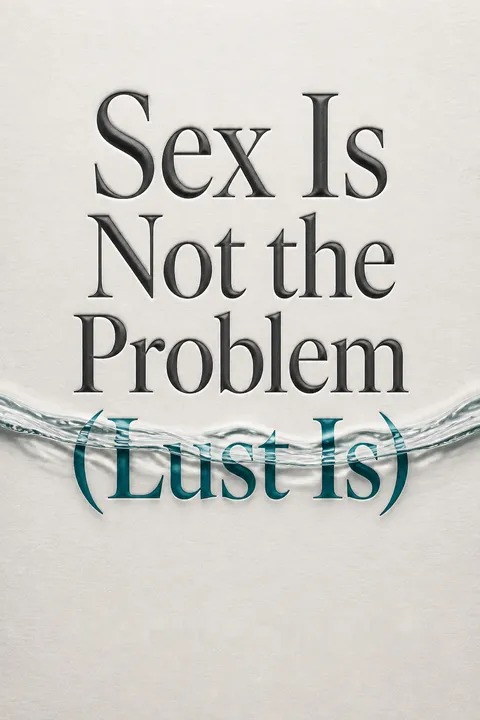
Sex Is Not the Problem (Lust Is) receives mostly positive reviews for its practical, biblical approach to overcoming lust. Readers appreciate Harris's honesty, use of Scripture, and balanced perspective addressing both men and women. Many find the book helpful in understanding lust's root causes and developing strategies to combat it. Some praise its gospel-centered focus and emphasis on God's grace. Critical reviews are few but mention concerns about legalism or disagree with certain theological points. Overall, readers recommend it as an insightful resource for Christians struggling with sexual temptation.
People Also Read









Glossary
Lust
Forbidden sexual cravingHarris uses lust to mean sexual desire directed toward what a person believes God has forbidden. It is not simply attraction, bodily arousal, or the existence of a sex drive. In his account, lust becomes a problem when desire is pursued without regard for God's authority or another person's dignity.
Legalism
Earning acceptance through obedienceLegalism is the attempt to secure God's forgiveness or approval by keeping rules and performing good works. Harris argues that even sound behavioral guidelines become legalistic when they are treated as a way to earn acceptance. He contrasts this with obedience understood as a response to forgiveness already received through faith in Christ.
Justification
A declared righteous standingIn the book's Christian theology, justification is God's act of declaring a person righteous through faith in Jesus. The believer is forgiven and counted as having Christ's righteousness. Harris distinguishes this completed status from the ongoing work of becoming more holy, and says moral effort cannot earn or add to justification.
Sanctification
Ongoing growth in holinessSanctification is the continuing process of becoming more like Christ. Harris describes it as the work of the Holy Spirit, through Scripture and fellowship with other believers, gradually changing a person's desires, thoughts, and actions. It follows justification rather than earning it, and continues throughout a Christian's life.
Custom-tailored plan
Personal map of vulnerabilitiesA custom-tailored plan identifies the particular situations in which a person is most vulnerable to lust and specifies how to respond. Harris recommends examining times, places, media, habits, and emotional circumstances, then taking practical steps to avoid or prepare for those triggers. The plan should be personal, concrete, and revised as circumstances change.
The Path of Repentance
A process for turning from sinThe Path of Repentance is a seven-step framework included in the book's appendix. It begins with prayer and identifying both the behavior and the belief behind it, then turns to the gospel, practical steps to stop, and replacement with righteous actions. It also calls for trusted fellowship and regular review.
Sowing to the Spirit
Practices that nurture holinessSowing to the Spirit describes choices that orient a person toward God and support spiritual growth. Harris includes practices such as reading Scripture, prayer, worship, service, and conversation with fellow believers. He contrasts these repeated investments with choices that reinforce sinful desire, using the biblical image of actions eventually producing a harvest.
FAQ
What's "Sex Is Not the Problem (Lust Is)" about?
- Focus on Lust: The book by Joshua Harris addresses the issue of lust and its impact on sexual purity, emphasizing that lust, not sex, is the real problem.
- God's Design for Sexuality: It explores the idea that God is pro-sex and that sexual desire is a good gift that has been corrupted by lust.
- Practical Guidance: The book provides practical advice and strategies for overcoming lust and living a life of purity.
- Christian Perspective: It is written from a Christian perspective, using biblical teachings to guide readers in their journey toward holiness.
Why should I read "Sex Is Not the Problem (Lust Is)"?
- Understanding Lust: It offers a deep understanding of what lust is and how it differs from healthy sexual desire.
- Practical Solutions: The book provides actionable strategies to combat lust and maintain sexual purity.
- Spiritual Growth: It encourages spiritual growth by aligning one's sexual desires with God's intentions.
- Community Support: The book emphasizes the importance of accountability and community in overcoming lust.
What are the key takeaways of "Sex Is Not the Problem (Lust Is)"?
- Lust vs. Sex: Lust is the distortion of God-given sexual desire, and the book focuses on separating the two.
- Accountability is Crucial: Having accountability partners and being part of a church community are vital in the fight against lust.
- Scripture as a Weapon: Memorizing and meditating on Scripture is essential for combating the lies of lust.
- Holiness is a Process: Achieving purity is a gradual process that requires consistent effort and reliance on God's grace.
How does Joshua Harris define lust in "Sex Is Not the Problem (Lust Is)"?
- Craving the Forbidden: Lust is defined as craving sexually what God has forbidden, going beyond attraction to make desires more important than God.
- Idolatrous Desire: It is an idolatrous desire that seeks satisfaction apart from God, rejecting His rule.
- Insatiable Nature: Lust is insatiable, always wanting more and never being satisfied, leading to a cycle of sin.
- Rebellion Against God: Lust is seen as an act of rebellion against God, highlighting its serious nature.
What practical advice does "Sex Is Not the Problem (Lust Is)" offer for overcoming lust?
- Identify Triggers: Recognize specific situations, times, and places where you are most tempted by lust.
- Custom-Tailored Plan: Develop a personalized plan to avoid these triggers and replace sinful actions with righteous ones.
- Scripture Memorization: Use Scripture to combat the lies of lust, focusing on verses that address specific temptations.
- Accountability and Community: Engage with accountability partners and be active in a church community for support and encouragement.
How does "Sex Is Not the Problem (Lust Is)" suggest using Scripture to combat lust?
- Memorize Key Verses: Commit to memory verses that directly counter the lies of lust, such as Romans 8:6 and Ephesians 5:3.
- Pray Scripture: Use Scripture in prayer to reinforce God's truth and promises in moments of temptation.
- Daily Meditation: Regularly meditate on Scripture to renew your mind and strengthen your resolve against lust.
- Scripture as a Sword: View Scripture as a weapon, the "sword of the Spirit," to actively fight against lustful thoughts.
What role does accountability play in "Sex Is Not the Problem (Lust Is)"?
- Essential for Success: Accountability is presented as crucial for achieving long-term success in overcoming lust.
- Confession and Support: Regular confession to accountability partners provides support and helps maintain focus on purity.
- Structured Relationships: Establish structured accountability relationships with clear expectations and regular check-ins.
- Community Involvement: Being part of a church community offers additional layers of accountability and spiritual growth.
How does "Sex Is Not the Problem (Lust Is)" address the differences between men and women in dealing with lust?
- Common Misconceptions: The book challenges the misconception that only men struggle with lust, acknowledging that women face similar challenges.
- Different Temptations: It highlights that men often seek pleasure while women may be tempted by the power of seduction.
- Complementary Roles: Men and women are encouraged to help each other pursue holiness by understanding and respecting their differences.
- Avoiding Stereotypes: The book emphasizes that both genders need to be vigilant against lust, regardless of how it manifests.
What are the best quotes from "Sex Is Not the Problem (Lust Is)" and what do they mean?
- "Lust is craving sexually what God has forbidden." This quote defines lust as a desire that goes against God's design, emphasizing its sinful nature.
- "The fire of lust’s pleasures must be fought with the fire of God’s pleasures." It suggests that the only way to overcome lust is by finding greater satisfaction in God.
- "Holiness is a harvest." This quote implies that holiness is the result of consistent, intentional actions and choices over time.
- "Lone rangers wind up dead rangers." It highlights the importance of community and accountability in the fight against lust.
How does "Sex Is Not the Problem (Lust Is)" suggest dealing with media temptations?
- Evaluate Media Choices: Be discerning about what you watch, ensuring it aligns with God's standards and doesn't promote sin.
- Avoid Poison Pills: Recognize that even small doses of sinful content can accumulate and affect your spiritual health.
- Thank God for Content: Only engage with media that you can genuinely thank God for, ensuring it doesn't obscure your sense of God.
- Discernment Over Disapproval: True discernment involves actively avoiding evil and holding on to good, not just disapproving of sin.
What is the significance of the title "Sex Is Not the Problem (Lust Is)"?
- Clarifies the Issue: The title emphasizes that the problem is not with sex itself, which is a good gift from God, but with lust, which distorts it.
- Focus on Purity: It redirects the focus from avoiding sex to addressing the root issue of lust and its impact on purity.
- God's Design: The title aligns with the book's message that God's design for sexuality is good and should be embraced without the corruption of lust.
- Encourages Understanding: It encourages readers to understand the difference between healthy sexual desire and sinful lust.
What strategies does "Sex Is Not the Problem (Lust Is)" offer for long-term change?
- Sow to the Spirit: Consistently engage in activities that honor God, such as prayer, Bible study, and fellowship.
- Daily Devotions: Make daily time with God a priority to draw strength and guidance from His presence.
- Holiness as a Process: Recognize that holiness is a gradual process that requires ongoing effort and reliance on God's grace.
- Perseverance in the Fight: Encourage perseverance in the struggle against lust, trusting in God's promises and the power of the gospel.
About the Author
Other books by Joshua Harris


Download PDF
Download EPUB
.epub digital book format is ideal for reading ebooks on phones, tablets, and e-readers.








