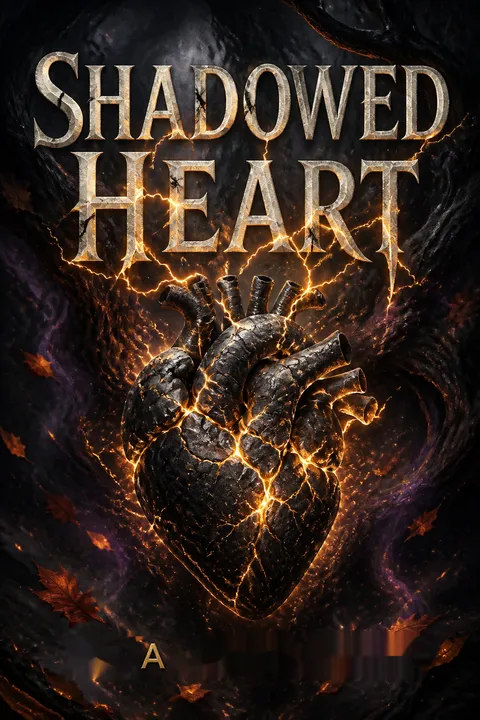


Plot Summary
Prologue
Months after the king’s fall, Kai stands with her returning sister, Cora, but cannot believe she can be healed. She describes the king’s cruelty, including forcing her to watch another woman’s brutalization before Kai was made to collar herself.
Cora offers help, yet Kai sees her own survival as a burden and fears that touching her sister will taint her. She backs toward the castle wall, then throws herself over it. Cora reaches after her, but a gargoyle restrains her as Kai falls toward the river, certain that death will end the pain.
The prologue opens on the aftermath of political liberation and shows that freedom cannot instantly undo private trauma. Kai’s self-condemnation is not simple despair: she believes withdrawing from Cora is an act of protection, so her suicide attempt takes the shape of a sacrifice. The episode also establishes the novel’s central contrast between external rescue and internal recovery. Cora has returned alive and the king is gone, but Kai cannot yet experience either fact as safety. Starting with this rupture gives every later act of care a concrete measure: survival is not the same as wanting to live.
Tower Fall, River Rescue
In the river below the castle, Kaito, a human-made hybrid who can breathe underwater, sees Kai hit the water and dives for her. He pushes air into her lungs, hides her from the gargoyle searching overhead, and carries her to his cabin in the Dead Lands. His magic repairs her worst injuries while she lies unconscious for weeks.
When Kai wakes, her hair has turned orange-streaked and her body feels foreign, but Kaito feeds and tends to her without demanding explanations. She tells him she has no family, hiding the truth about Cora because she fears her sister would suffer if Kai died again. Kaito promises protection, while Kai remains uncertain whether the monster who saved her is safe.
Kaito’s rescue is a decisive interruption of Kai’s chosen ending, but it does not function as a cure. His careful nursing gives her bodily safety before she can imagine emotional safety, and her lie about having no family shows how despair can disguise itself as consideration for others. Kaito’s own history as an experiment also complicates the human and monster divide: the person who saves Kai was made by the same regime that harmed her. Their first bond is not desire but an ethical practice of care, built through food, patience, and the refusal to treat vulnerability as permission.
Beyond the Cabin Door
Nightmares make Kai scream in her sleep, and Kaito learns to soothe her without forcing her to explain what haunts her. As her broken bones mend, he asks her to leave the cabin for the first time. Kai fears the creatures in the forest, but accepts his hand and steps outside. The Dead Lands are not the lifeless waste she expected: dark trees shelter small animals, and Kaito’s hidden garden grows vegetables.
He explains that the fallen barrier between realms has begun restoring the land. Kai helps gather food, then joins him in preparing dinner. The task gives her a modest purpose, while their shared discovery unsettles what she was taught about monsters and the supposedly dead country beyond the wall.
The threshold is both literal and psychological. Kai’s first outdoor steps are small enough to remain credible after severe trauma, and Kaito makes choice, rather than force, the condition of progress. The garden offers a material counterargument to the stories she inherited: the Dead Lands produce food, and the monster beside her cultivates it. By letting Kai contribute to dinner, the scene avoids reducing recovery to passive rescue. She begins to act within a shared life, although the contrast between a living landscape and her own numbness remains unresolved.
The Wolf at the Threshold
A pack of small, fast creatures surrounds Kaito’s cabin, drawn by Kai’s scent. Kaito fights them outside while Kai braces the doorway with a wooden club, striking any creature that reaches her. Weyland, a lone lycan who has followed her scent across the Dead Lands, joins the fight and helps drive the attackers into the woods.
His size and fangs overwhelm Kai; she locks herself inside and hides for days. Kaito and Weyland leave food and water rather than force their way in. Weyland’s singing eventually quiets her nightmares, and he tells her he lost his pack and has wandered alone. Kai recognizes the loneliness beneath his frightening appearance and finally opens the door to meet him properly.
The attack tests whether Kai’s growing trust can survive the return of a familiar threat: a monstrous body appearing suddenly, teeth and claws, violence at the threshold. Her retreat is not a reversal of progress so much as evidence that safety has to be relearned after a trigger. Kaito and Weyland respond by respecting the locked door, allowing Kai control over contact. Weyland’s song gives her a form of comfort that does not require disclosure or touch. His account of losing his pack also changes the emotional geometry: the protectors are not invulnerable rescuers but grieving survivors who know what isolation costs.
Waterfall, First Laughter
Kai begins sharing meals and short walks with Kaito and Weyland, then visits a clear waterfall where their playful tussling makes her laugh for the first time in a long while. The laughter gives her a brief sense of being present rather than trapped in memory. At the waterfall, she admits that she still does not know whether she wants to live and confesses that she has hidden her surviving family from Kaito.
Weyland does not guilt her or press for details; he makes clear that she can choose her pace. Kai takes both monsters’ hands, allowing their companionship without promising recovery. For now, pleasure, food, and trust offer reasons to remain in the world, even though none can erase what the king did.
The novel treats laughter as evidence of contact with the present, not proof that trauma has passed. Kai’s honesty about uncertainty is more consequential than a premature declaration of recovery: she can admit that she may not want life and still accept company. Weyland’s restraint matters because affection could easily become another demand placed on her body. The scene also separates care from cure. The waterfall and shared humor do not resolve the king’s violence; they create a small interval in which Kai can experience pleasure without having to justify it or convert it into a promise.
Death Horse, Human Mercy
A new attack in the forest brings a huge black warhorse creature charging through the fighting, crushing the venomous beasts that threaten Kai and her protectors. Kaito and Weyland mistake the newcomer for an uncontrollable killer and prepare to attack him once the danger passes. Kai steps between them and the warhorse, trusting the intelligence she sees in his red eyes.
The creature spares her and speaks directly to her, though the others hear nothing. At her invitation, he comes to the cabin, where he transforms into a scarred man, names himself Dade, and accepts clothing and stew. Dade explains that he is the last of a war-bred kind, and Kai welcomes him into their fragile household rather than letting fear decide for her.
Kai’s intervention reverses her earlier position as the person protected behind a doorway. She is still afraid, but now she uses attention to distinguish danger from appearance and acts before her protectors can turn fear into violence. Dade’s ability to speak only to her suggests a connection that the others cannot yet interpret; the important fact is that Kai treats his account as worthy of belief. His welcome also enlarges the cabin’s improvised family. Each newcomer bears a history of being made, exiled, or reduced to a monstrous function, so belonging becomes an alternative to the identities imposed on them.
Names for the Darkness
As Dade settles in, Kai tells the three monsters that the king harmed her, though she cannot yet recount the details. Wanting to know the people who protect her, she asks them to show what they can do. Weyland shifts into his wolf form; Kaito reveals that he was the king’s first surviving experiment and demonstrates his control of water; Dade returns to his warhorse shape.
Kai touches each without recoiling. Later, she asks Kaito for a kiss, hoping to feel alive, but the contact brings no desire and leaves her crying with shame. Kaito apologizes for his part, and they agree not to blame each other. Kai chooses an outing with all three instead of retreating into isolation.
The demonstrations let Kai reclaim curiosity about bodies that propaganda taught her to fear, while also asking the monsters to be seen without disguise. Yet the kiss shows that trust and desire do not advance at the same speed. Kai interprets her numb response as personal failure, a common consequence of trauma’s disruption of bodily agency; Kaito’s apology risks reinforcing that guilt until they share responsibility for the painful moment. Their decision to continue together is more important than the kiss itself. Intimacy remains contingent, and the household begins to define closeness through repair after misattunement rather than through flawless understanding.
Rook Opens the Night
During a walk, Kai trips and Weyland catches her, but his grip triggers memories of the king. She collapses into a waking nightmare until a shadow creature emerges and offers her a hand. Rook, the feared boogeyman of the Dead Lands, holds her while she faces fragments of her past rather than pretending they are gone.
Later, he conceals the group as human hunters carry dead monsters and a captured naga through the forest. Kai asks him to intervene; Rook kills the hunters, and Kai unlocks the naga’s cage. The freed creature escapes into the woods. Seeing humans hunt monsters makes Kai worry for Cora, but she cannot yet bring herself to return to the lands she fled.
Rook’s intervention does not erase Kai’s memory; it gives her a witness who can remain present while she encounters it. His shadows are both concealment and a sensory form of shelter, complicating the assumption that darkness must be hostile. The hunters make that moral contrast concrete: human beings carry murdered monsters as trophies, while the feared shadow creature frees a prisoner at Kai’s request. Still, Rook’s lethal response is not uncomplicated heroism. The scene exposes the danger of answering cruelty with violence even as Kai’s choice to open the cage marks her first deliberate act on behalf of strangers.
Weyland’s High Branch
Kai decides she wants to learn how her protectors live rather than remain sheltered from them. Weyland carries her high into a tree, where the rising sun reveals all three realms beyond the forest. She tells him she wants to kiss him, and their careful embrace awakens a glow beneath her skin: lightning-like magic she never knew she possessed.
The revelation sends them back to the cabin, where Rook recognizes it as an awakening but cannot yet explain its limits. Kai’s new power does not replace her fear or settle its source. It does, however, give her a way to experience her body as something other than a record of injury, and the four monsters promise to help her understand it without rushing her.
The tree turns an old symbol of danger, height and falling, into a setting Kai chooses to enter with Weyland’s support. The scene’s magic is inseparable from consent: Kai initiates the kiss, and the power appears in a moment when her body is responding to present desire rather than coercion. Its emergence complicates her inherited category of human, but the narrative does not treat power as instant liberation. Kai still needs interpretation, patience, and safety. Her companions’ promise not to hurry her is a meaningful contrast to the king’s control, particularly because they recognize that a new ability does not cancel old vulnerability.
The Spring Beneath the Castle
When Kai and her companions find hunters displaying a slain monster, she challenges them, then insists on burying the body and laying flowers over its grave. Kaito takes her to an ancient warm spring near Cora’s castle, hoping its old magic may help unlock her power. In the water, Kai’s memories of captivity return, and she begins to drown before Kaito pulls her up.
This time she wants to be rescued. She realizes she no longer wants to die and chooses a future with her monsters. As she kisses Kaito, the lightning returns and arcs between them. Her recovery is no longer only something others hope for; Kai can name what she wants and pursue it.
The burial and spring connect public violence to private recovery. Kai cannot stop every killing, but she can refuse to let a murdered monster disappear without witness. In the spring, darkness and water reproduce the sensory conditions of trauma, yet the decisive difference is her desire to be saved. Her changed response is not a simple triumph over memory; the flashback still occurs. What shifts is her relationship to survival. By choosing Kaito’s hands and then choosing intimacy, Kai experiences agency as an embodied act, not an abstract affirmation.
Merryl’s False Rescue
On a foraging trip with Dade, Kai rides in his warhorse form and enjoys the speed until a large hunting party appears with monster bodies on a pole. Merryl, the man Kai once planned to marry, recognizes her and urges her to return with him. Kai remembers that when the king took her, Merryl made no effort to help.
She refuses him and stays beside Dade, while monsters surge from the forest and force the hunters to retreat. Dade later asks whether she still loves Merryl; Kai admits she once did, but that attachment belongs to the person she was before captivity. She tells Dade she chooses her present family. The hunters’ appearance makes their danger personal and immediate.
Merryl’s reappearance forces Kai to compare the imagined rescuer of her past with the person who actually failed to act. Her refusal is not simply a rejection of romance; it is a reassessment of the story she once told herself about love and protection. Dade’s jealousy briefly risks turning that choice into a demand for reassurance, but Kai speaks for herself and names the difference between past attachment and present commitment. The hunters’ bodies make the political conflict impossible to keep at a distance. Kai’s safety and her new relationships are now exposed to the same violence that once confined her.
Blood at the Cabin
A hunter ambushes the cabin, and Merryl seizes Kai, claiming he can rescue her from the monsters. As she breaks free, another hunter spears Kaito in the stomach. Kai’s grief and anger ignite her lightning, and she pours its power into his fatal wound until it closes, leaving a glowing scar.
With their home exposed and hunters closing in, the group argues over where to hide. Kai ends the debate by deciding to seek Cora, despite the guilt she feels about the last time they met. On the journey, they pass the naga Kai freed and face an arachna fae who tries to consume her power. Dade kills the attacker, and Rook comforts Kai after the attack leaves her shaken.
Kaito’s wound converts Kai’s newly discovered magic from spectacle into responsibility. She heals him because she cannot accept losing the person who first interrupted her despair, and the cost of using power remains visible in her exhaustion. The cabin, once a refuge, can no longer protect them, so Kai must make a choice that carries emotional risk as well as practical necessity. Her decision to approach Cora is a movement toward the relationship she has avoided, not merely a search for a safer fortress. The arachna attack reinforces that the Dead Lands hold dangers beyond human prejudice, keeping the story’s moral categories unstable.
Two Sisters, One Throne
Kai reaches Cora’s black castle with her four monsters and finds her sister alive, ruling beside the minotaur Grimus. Cora embraces Kai rather than blaming her for the suicide attempt, and Kai explains how Kaito, Weyland, Dade, and Rook helped her survive. The sisters reconcile and learn that Merryl leads human parties hunting monsters.
Cora’s other mates, including the gargoyle Razcorr and the naga Nero, help assess the threat. Instead of attacking immediately, the sisters send Merryl a proposal to meet on neutral ground and discuss the killings. Kai supports the attempt because she wants to stop the violence, but she makes clear that she will defend the monsters if Merryl refuses peace.
The reunion resolves the fear that has kept Kai from returning, but it does not erase the pain of their separation. Cora’s welcome allows Kai to revise her belief that she is a burden her sister must save; both women can acknowledge what happened without making either responsible for the king’s choices. Their political response mirrors their personal repair: negotiation is attempted before force, but mercy is not confused with passivity. The expanding cast also shows that the sisters’ authority is relational, sustained by partners and communities rather than by crowns alone. Kai’s willingness to stand beside Cora marks a new form of courage.
Fire Across the Dead Lands
Merryl arrives at the neutral meeting with armed followers, then reveals that more hunters have surrounded the sisters. They set the Dead Lands alight, turning the attempted negotiation into an attack on the recovering realm. Rook and Grimus carry Kai and Cora toward the Shadow Lands while their mates protect the fleeing group.
As monsters follow them through the flames, the sisters join hands and combine their magic to raise a barrier across the old boundary. The wall holds back the fire and leaves the displaced creatures on the Shadow Lands side. They retreat to the Gilded castle, once Kai’s prison, which Cora opens as shelter. Kai must now face the place where the king abused her in order to help the refugees.
The fire destroys the fantasy that political change can be secured by a single conversation. The hunters attack not only the sisters but the recovering ecology that has become Kai’s chosen home. Their shared magic turns the old wall from an instrument of segregation into an emergency defense, a transformation that is powerful but uneasy: protection again depends on a barrier. The move into the Gilded castle brings Kai back to the site of her trauma, yet its function has changed from confinement to refuge. The setting’s reappropriation does not erase its history; it asks whether a place can be made useful without pretending it was never harmful.
The Healer Stops the War
The hunters march on the castle, and both sisters prepare their people for battle. Kai enters the fighting beside Cora, but the sight of dying humans and monsters overwhelms her. She drops her sword and uses her lightning to heal wounded fighters from both sides, including men who reject her help.
When an attacker runs a blade through Cora, Kai pours her power into the wound and repairs her sister’s severed spine. The battle pauses as Cora recovers. Kai calls attention to the bodies covering the field, and Cora orders the monsters to lower their weapons. Their decision gives the human fighters a chance to stop as well, and Merryl’s side begins to disarm. For a moment, the killing appears finished.
The battle forces Kai to confront the possibility that survival may require becoming what she fears. Her refusal to keep killing is not passivity: she acts decisively by healing people whose allegiance is hostile, and by restoring Cora she protects the political future of the alliance. This ethical choice does not make violence disappear; it creates a vulnerable opening in which both sides can stop. Cora’s order matters because authority is used to interrupt the cycle rather than glorify victory. The scene’s tension rests on a genuine cost: Kai’s compassion can save lives, but it also leaves her exposed to those who interpret mercy as weakness.
The King’s Dagger Returns
After the fighters lower their weapons, the scarred hunter urges Merryl to continue the attack. Merryl lunges at Kai with the jeweled dagger once carried by the dead king. Weyland takes the blade in his shoulder, and Kai’s lightning begins healing him as Kaito restrains Merryl with a sword. Kai recognizes the dagger that once belonged to her abuser, takes it, and kills Merryl.
Her power then consumes his body and flows outward to heal the remaining wounded. The battlefield falls silent. Kai and Cora stay to bury the dead, including those who had fought against them, while Kai grieves the man she once loved and the lives lost. The victory ends the immediate war, but it leaves both sisters exhausted and marked by what they had to do.
Merryl’s final attack collapses his claim to be Kai’s protector: he uses the king’s weapon to control and kill her, repeating the violence he once failed to oppose. Kai’s decision to kill him is therefore neither a clean triumph nor a simple return to vengeance; it is an act that stops an imminent threat and leaves grief in its wake. The magic’s outward movement heals others, but it cannot reverse death or absolve Kai of the act. The burial scene refuses a celebratory ending detached from consequences. Political victory becomes meaningful only if the survivors remember the people whom victory could not save.
Two Crowns, New Lands
After the battle, Kai helps restore the wounded and grieves with Cora before the sisters turn toward rebuilding. The old divisions between the Shadow and Gilded Lands begin to soften, while people and monsters work together and the burned Dead Lands slowly recover. Kai and her four mates share a life in the castle, and she accepts Cora’s invitation to rule beside her.
At a public ceremony, Cora crowns Kai, and the two sisters promise to lead together. Their joined rule makes room for both Cora’s force and Kai’s healing instincts. Kai no longer defines herself only by the girl who fell from the tower; she can take responsibility for a future without pretending that the past has vanished.
The resolution gives Kai a public role without treating authority as a magical solution to trauma. Her new position grows from acts already established in the story: healing, listening to the vulnerable, and refusing to let one group’s safety depend on another group’s suffering. Shared rule also answers the novel’s repeated concern with isolation. Cora does not replace Kai’s partners, nor do they substitute for her sister; Kai’s life can hold several attachments at once. The restoration remains unfinished, which keeps the ending from equating a coronation with a repaired society. Leadership here is a continuing obligation to tend what violence has damaged.
Epilogue
Months later, Kai and her mates help the three lands rebuild. Humans begin living and trading alongside monsters, though prejudice has not vanished. Kai visits the place where her childhood home stood and feels no need to return to the parents who failed to protect her. She turns toward the family she has made.
In a later scene, she reads a book she and Kaito created to children in the Shadow Lands, with Cora and their mates nearby. When the children ask what happens next, Kai accepts that the future remains unwritten. For the first time since the tower, she is grateful she survived.
The epilogue measures peace through ordinary acts: rebuilding homes, sharing work, reading to children, and choosing which family bonds to carry forward. Kai’s decision not to seek out her parents does not require a final confrontation or forgiveness; distance is presented as a legitimate boundary. The book she reads, co-created with Kaito, turns private survival into a story children can inherit, while her refusal to dictate what comes next protects the future from becoming another imposed script. Hope is not represented as certainty that prejudice is gone. It is Kai’s willingness to remain alive amid unfinished work.
Analysis
Shadowed Heart builds its fantasy conflict around a question that is both intimate and political: who gets to decide what counts as monstrous? The king’s violence occurs behind the Gilded Lands’ polished order, while the beings labeled monsters repeatedly demonstrate care, restraint, and grief. This contrast does not make every monster virtuous or every human irredeemable. Human hunters commit atrocities, some later accept help, and others refuse it. The book’s moral argument depends on actions rather than species.
Kai’s recovery is presented as a sequence of choices under pressure, not as a transformation from damaged to whole through romance alone. Kaito gives her practical care; Weyland offers patient companionship; Dade shares the loneliness of surviving a destroyed people; Rook helps her confront memories without pretending darkness can be wished away. Their affection matters because they ask for consent and accept hesitation. Intimacy becomes evidence of reclaimed agency, but Kai’s healing also includes her own decisions, from stepping outside to freeing a captive and choosing to face Cora.
The sisters’ parallel roles translate that personal arc into politics. Cora can wield authority and force; Kai’s defining power is restoration. Their alliance suggests that governing requires both protection and mercy, yet the battle tests whether mercy can survive organized hatred. Kai’s refusal to abandon healing, even when threatened, interrupts the enemy’s logic, while the deaths and graves prevent the story from treating compassion as effortless or costless.
Finally, the landscapes register political history. The wall embodies a system that separates and impoverishes; its destruction permits renewal, while its temporary recreation protects those fleeing fire. The damaged Dead Lands recover slowly, as do the characters. The ending’s optimism is therefore provisional. The sisters inherit a society that still needs work, and Kai’s gratitude for living rests not on perfect safety but on relationships, responsibilities, and a future she can help shape.
Review Summary
Shadowed Heart is a highly-rated paranormal romance novel featuring Kai, a traumatized woman saved by monsters who help her heal. Readers praise the emotional journey, character development, and steamy scenes. The book explores themes of trauma, recovery, and found family. Many reviewers recommend reading the first book in the series for context. The slow-burn romance and unique monster characters are particularly appreciated. While some found the relationships underdeveloped, most readers were captivated by the immersive world-building and powerful storytelling.
Characters
Kai Black
The reluctant survivorKai is an older sister from the Shadow Lands whose life is shaped by family neglect, captivity, and the aftermath of sexual violence. She initially mistakes self-erasure for protection, keeping her survival secret so Cora will not have to grieve her again. Her attention to others remains intact even when she cannot imagine a future for herself, and that care gradually becomes a route back to agency. Kai is cautious around touch and easily overwhelmed by reminders of her abuse, so trust develops through consent, practical kindness, and repeated respect for her boundaries. Her central tension is between believing she is permanently ruined and discovering that pain need not define every choice she makes.
Kaito
The water-born protectorKaito is a solitary hybrid made through the dead king’s experiments, neither fully human nor one of the native monsters. He survives by hiding in the river and has learned to distrust the people who created him. When he finds Kai, he responds with patient, practical care: healing her, feeding her, and changing his behavior when she flinches. His gentleness is not weakness; he is formidable in water and fiercely protective when danger reaches the cabin. Kaito understands the loneliness of being treated as an object rather than a person, which helps him recognize Kai’s need for choice. His affection grows through service, restraint, and a desire to make home where neither of them had one.
Weyland
The grieving lycanWeyland is a powerful lycan who has lived alone since an attack destroyed his pack. Instinct draws him toward Kai, but he understands that his size, claws, and hunger can frighten her, so he deliberately moves slowly and gives her room. He sings when nightmares overwhelm her and shares his grief without making her responsible for easing it. Weyland’s protective instinct can become fierce, yet he is willing to put patience ahead of possession. He represents strength that does not need to dominate: his body can fight, carry, and defend, while his most meaningful contribution is the care with which he lets Kai decide what happens next.
Dade
The last warhorseDade is the last of a war-bred monster kind, cursed with a battle form that has kept him isolated and feared. Years as a beast have made ordinary human customs unfamiliar, but Kai’s presence gives him a reason to try them again. Beneath his enormous strength is a creature hungry for belonging and wary of losing it. Dade is protective and can be jealous, especially when Kai’s past returns, but he is also capable of admitting fear and listening when she explains her choices. His connection with Kai rests on their shared knowledge of loss and on the possibility that a life built for violence can still make room for tenderness.
Rook
The feared shadowRook is a shadow-wielding creature whose reputation as the boogeyman frightens even other monsters. He moves through darkness and can conceal those he protects, but he understands how trauma can make darkness feel both threatening and familiar. When Kai is trapped in a waking memory, Rook helps her face what happened without insisting that she become unbroken first. His bluntness and appetite for intensity contrast with Kaito’s gentleness, yet he observes Kai’s limits and takes her choices seriously. Rook’s presence gives the story a difficult kind of safety: he does not deny the darkness, but offers Kai company within it.
Cora
The sister who leadsCora is Kai’s younger sister, a survivor of the Dead Lands who returns to overthrow the king and lead the newly connected realms. She is forceful, resourceful, and accustomed to taking responsibility for other people’s safety. That instinct makes her a devoted sister and a capable ruler, but it also leaves her carrying guilt when she cannot prevent every harm. Cora’s bond with Kai is rooted in childhood loyalty and mutual protection, though separation changes what each sister can offer the other. She believes in remaking the political order, yet knows liberation creates new conflicts. Her warmth and authority coexist, and she relies on the people who love her rather than pretending she can rule alone.
Merryl
Kai’s former fiancéMerryl is the man Kai once expected to marry, a gentle-seeming partner from her earlier life in the Shadow Lands. His past with Kai makes him a painful measure of what she once believed love and protection would look like. He is also a reminder that intimacy alone does not guarantee courage or action when someone is in danger. As the political conflict grows, Merryl becomes entangled with the humans who fear the new order. His relationship to Kai is therefore both personal and political: he represents a past she must assess honestly rather than romanticize.
Grimus
Cora’s minotaur kingGrimus is a minotaur ruler and one of Cora’s mates. He is stern, watchful, and openly suspicious of threats to the people under his protection. His blunt manner can make him seem severe, but his loyalty to Cora is evident in the way he supports her authority and prepares for danger. Grimus favors practical security and decisive action, which sometimes contrasts with Cora’s preference to attempt negotiation. He embodies the responsibilities of ruling a vulnerable community: protection matters, but it must be balanced against the kind of future the rulers hope to build.
Razcorr
Cora’s watchful gargoyleRazcorr is a gargoyle and one of Cora’s mates, capable of flight and accustomed to watching over her from above. He takes responsibility for scouting and guarding, even when the people he loves cannot be kept entirely safe. His quiet presence carries the memory of an earlier failed rescue, giving his vigilance an emotional weight beyond military usefulness. Razcorr is a link between the sisters’ past and present, and his steady watchfulness reflects the protective network surrounding Cora’s rule.
Nero
Cora’s naga cookNero is a naga and one of Cora’s mates, at home in the castle’s domestic life as well as its dangers. He cooks for the household and brings humor and sensual ease into a story marked by imprisonment and battle. His warmth helps make Cora’s court feel like a lived-in community rather than a throne room alone. Nero’s presence also connects the sisters’ private circle to the wider monster world, where difference is not merely tolerated but woven into everyday family life.
Zetros
Cora’s kraken mateZetros is a kraken and one of Cora’s mates. He speaks openly about the lasting damage of imprisonment and recognizes the ways care can help someone reclaim a sense of self. His understanding gives him an affinity with Kaito, whose own past includes captivity and experimentation. Zetros contributes both practical support and a perspective grounded in survival, reminding the household that trauma can persist even after the captor is gone.
Bracken
Cora’s chaotic dark feyBracken is a dark fey and one of Cora’s mates, mischievous, provocative, and fond of unsettling more solemn companions. His playful behavior offers comic relief, but he is not detached from danger or grief. When Cora is vulnerable, he can become serious and fiercely attentive. Bracken’s irreverence is part of the emotional texture of Cora’s household: affection can include teasing and disorder as well as solemn vows.
Krug
Cora’s formidable orcKrug is an orc and one of Cora’s mates, a large and imposing presence who takes threats to the kingdom seriously. He favors preparation and direct action, especially when facing organized human hunters. His severity is balanced by devotion to Cora, whose safety and authority shape his choices. Krug represents the protective force in Cora’s household, though the story places that force alongside negotiation and restraint.
Kai’s parents
The unsafe childhood homeKai’s unnamed parents shape her early understanding of danger and obligation. Her father is cruel, while her mother fails to protect her or Cora. Their household teaches the sisters that family ties do not automatically mean safety. Though they remain outside the central action, their failures help explain why Kai initially expects care to come with a cost and why the family she later chooses matters so much.
Plot Devices
The wall between realms
Barrier and political fault lineThe wall separates the Gilded, Shadow, and Dead Lands, limiting contact and helping the ruling order conceal its exploitation of the poorer realm and its fear of monsters. Its fall allows Cora’s political revolution to begin and permits the Dead Lands to recover, but it also exposes old resentments that had been held apart. When fire threatens the refugees, Kai and Cora recreate a barrier as temporary protection. The wall therefore shifts meaning: it begins as enforced separation, becomes a route toward change, then returns as a chosen defense rather than a permanent social order.
Kai’s lightning
Power turned toward healingKai’s electrical magic first appears during a consensual kiss with Weyland, initially as an unexplained glow beneath her skin. It grows through emotional and physical connection, then proves capable of repairing Kaito’s near-fatal wound. In the battle, Kai uses it to heal both monsters and humans, including Cora after a devastating injury. The power responds to her choices and emotional intensity, making it both a supernatural ability and a measure of her growing agency. Its strongest moral function is not destruction but the ability to preserve life, though Kai must learn its limits and bear the exhaustion it causes.
Rook’s shadows
Shelter inside darknessRook’s shadows hide the group from hunters, protect Kai during nightmares, and let him move through the forest unseen. Their effect complicates the novel’s repeated distinction between frightening appearances and harmful actions. Kai’s trauma makes darkness a source of fear, but Rook can also use it as a place of shelter and chosen intimacy. The shadows become an external form of the support Kai needs: they do not remove her memories, but they can hold space around her while she faces them. Their presence also gives the story a visual counterweight to Kai’s bright lightning.
The ancient spring
A threshold for renewalThe warm spring near Cora’s castle is said to hold old magic that can loosen magical barriers. Kaito brings Kai there hoping it will help her understand the power awakening in her. The water first intensifies her memories of captivity, and Kaito must pull her to safety. That danger makes the spring more than a convenient magical cure: it becomes the place where Kai recognizes that she wants to survive. Its healing meaning is tied to her choice and to Kaito’s care, not to an automatic cleansing of trauma.
The cabin refuge
A home built by consentKaito’s small cabin gives Kai a protected place to recover after the river rescue. Its routines of cooking, gathering food, repairing clothes, and sharing sleep turn safety into repeated practice rather than a promise alone. The cabin also becomes the gathering place for four isolated monsters who are each drawn to Kai and choose to respect her boundaries. When human hunters discover it, the refuge can no longer guarantee safety, forcing Kai to leave and face her past. Its importance lies not in permanence but in the life Kai first learns to imagine within it.
About the Author
Other books by K.A. Knight





Download PDF
Download EPUB
.epub digital book format is ideal for reading ebooks on phones, tablets, and e-readers.








