

Key Takeaways
Shivaji turned a neglected border estate into the core of a Maratha state.
A state from the margins. Kincaid begins in a region with no Maratha kingdom and, he argues, no shared political identity. Its people had lived under Muslim rulers for centuries. Shivaji’s family held land on the frontier between Bijapur and the Mughal Empire, a position that seemed exposed but gave him room to maneuver between stronger powers.
An opening in the map. From this base, Shivaji gathered hill-country followers, took strategic forts, and connected scattered territories into a state. Kincaid’s central portrait is not simply of a warrior who won battles. It is of a rebel who made a new political center where established rulers saw only a remote district.
What's striking is how geography becomes political opportunity. A frontier is not merely a border between powers; it can be a space where their competing claims leave gaps. This helps explain why Shivaji's early gains depended on both location and timing, not just personal daring. The account can, however, make the rise of a state seem more inevitable than it was. Its narrative centers one remarkable leader, while the political fragmentation around him, and the people who sustained his project, were also essential.
Earn hill-country loyalty by making daily life safer before asking for sacrifice.
A childhood of insecurity. Shivaji was born in 1627 while his mother, Jijabai, was separated from his father and hiding from Mughal forces. As a young child, he spent years moving through the hills to evade capture. Kincaid suggests that these experiences, and his mother's stories of Hindu independence, helped shape his distrust of Muslim rule.
Trust built locally. Shivaji's tutor and steward, Dadaji Kondadev, made the family estate livable again. He offered returning farmers low initial rents, paid rewards for killing wolves, and recruited local hillmen to protect villages. Shivaji learned the country alongside the people who lived there. The result was more than a repaired estate: it was a base of local support and future military recruits.
The contrast between childhood flight and Dadaji's patient repair gives the political story a human scale. People had concrete reasons to support the new order: safer roads, cultivated fields, and a chance to return home. In contemporary terms, this resembles the way public trust grows when institutions provide visible, everyday benefits. The account also links Shivaji's political outlook closely to religious grievance. That may be part of his story, but childhood insecurity and loyalty to his mother do not, by themselves, establish a single cause for his ambitions.
Take forts by exploiting vacancies, rivalries, and an opponent's delay.
The first foothold. In 1646, Shivaji's men took Torna after its Bijapur commander left during the monsoon. The capture gave the young rebel a treasury, weapons, and a defensible base. While Bijapur officials argued over what to do, Shivaji strengthened nearby Rajgad and bribed the governor of Sinhgad to yield the fort.
Use the conflict inside. At Purandar, three brothers were fighting over succession to their father's post. Shivaji offered to mediate, then used the cover of workers carrying thatching grass to bring armed followers inside. The forts came through openings in routine and local politics, not a series of costly assaults. Meanwhile, Shivaji sent assurances of loyalty to Bijapur to buy time for his next move.
These early captures show how power can be built by reading an opponent's incentives, not merely by confronting its soldiers. A commander leaves a post, officials hesitate, or rivals distrust one another: each creates a brief opening. This is a useful corrective to histories that treat conquest as a succession of battles. Yet deception has limits. A method that succeeds against distracted local authorities may fail against a coordinated opponent with a clear strategy and enough resources.
Make a smaller force dangerous through mobility, intelligence, and discipline.
Choose the conditions. In 1659, the Bijapur general Afzal Khan advanced with a large army and proposed a meeting that was intended to capture Shivaji. Shivaji wore concealed armor and carried hidden weapons. When Afzal Khan seized him during their greeting, Shivaji struck back, then signaled his men, who attacked the surprised Bijapur force in the surrounding hills.
Discipline magnified strength. Kincaid emphasizes that Shivaji spared prisoners who surrendered, protected women and noncombatants, and rewarded soldiers and the families of the dead. His troops were organized for speed, with strict rules and no women accompanying campaigns. In 1663, Shivaji used disguise and a nighttime raid to strike Mughal commander Shayista Khan's headquarters in Poona, then escaped before the larger force could respond.
The advantage here comes from combining information, terrain, and controlled force. Surprise can produce a local advantage even when the other side is stronger overall, while restraint helps preserve political support after victory. The book also presents Shivaji's personal courage as central to success. That makes for gripping narrative, but it risks understating the work of scouts, commanders, and soldiers whose coordination made these actions possible. A leader's daring matters most when an organization can convert it into a plan.
Defend Hindu sovereignty without turning faith into permission to persecute.
A Hindu kingdom, broadly ruled. Kincaid sees Shivaji's rise as a revival of Hindu political independence. He also contrasts Shivaji with Aurangzeb, whom he portrays as committed to religious uniformity. Yet Shivaji's rule, in this account, was not confined to Hindus: he employed Muslims, protected mosques, and treated the Quran with respect. Muslim women captured by his soldiers were to be protected and returned to their families.
Symbols and conduct. Shivaji accepted the support of the saint Ramdas, adopted a pilgrim's ochre banner, and described his kingdom through Hindu traditions. At the same time, Kincaid recounts Shivaji protecting Christian missionaries and their converts during the sack of Surat. The distinction is important: religious identity could inspire political independence without determining who deserved protection or service.
This portrait resists a simple equation of religious nationalism with religious exclusion. A shared tradition can help people imagine political independence, while rules of conduct can limit the impulse to punish outsiders. That distinction remains useful in debates about identity and statehood. The account's contrast between Shivaji's tolerance and Aurangzeb's intolerance is also sharply drawn. A careful reader should treat it as Kincaid's interpretive framing, rather than assume that two complex rulers can be reduced to exemplary virtue and singular bigotry.
Retreat can preserve a cause when holding ground means losing everything.
Accept the setback. In 1665, the Mughal commander Jai Singh focused on taking the mountain forts that held Shivaji's territories together. After a costly siege at Purandar, Shivaji agreed to surrender twenty-three forts and serve the emperor. Kincaid presents the decision as a response to the military situation, not a collapse of purpose: continued resistance risked destroying the force and family that made future action possible.
Escape the trap. Aurangzeb later summoned Shivaji to court, where he was insulted, confined, and watched by guards. Shivaji feigned illness and escaped Agra hidden in baskets, with his young son Sambhaji also smuggled out. He returned to his territory in disguise after a dangerous journey across northern India. The episode made survival itself a political victory.
This episode separates a cause from any single position or possession. Surrendering forts could be strategically wiser than defending them to the last soldier, especially when the opponent could replace men and supplies. The escape then depended on patience, misdirection, and other people's help, rather than a frontal break from confinement. There is a danger in celebrating tactical retreat too easily: compromise can also weaken a movement or expose its people to harm. Here, the choice makes sense because it preserved Shivaji's capacity to act.
Make rebellion durable with direct rule and taxes tied to actual harvests.
Tax what was produced. After returning from Agra, Shivaji spent years rebuilding his administration. The land tax was based on the year's crop rather than an estimate of a farmer's wealth. Rice land was assessed at about one-third of its yield; orchards and palm groves were taxed according to their produce, while hill country paid less. The book says this was lighter than the levies of neighboring states.
Keep the chain short. Land belonged to the ruler, and revenue went to the state rather than passing through tax farmers or powerful hereditary landlords. A Council of Eight handled administration, although Shivaji retained authority and used the council as a group of senior officials. After Mughal invasions, he suspended land taxes in devastated areas. Predictable collection and relief helped the countryside recover and gave subjects practical reasons to support the state.
The administrative details deepen the meaning of rebellion: a government becomes credible not just by resisting an empire, but by collecting revenue in ways people can anticipate. Taxation based on actual production also limits some of the arbitrary demands that arise when officials assess wealth from afar. The arrangement still concentrates authority in the ruler, and its fairness depends on accurate assessment and restraint by collectors. Kincaid's account presents Shivaji's system favorably, but a reader should distinguish a stated design from uniform practice across every district.
Turn commerce, diplomacy, and the coastline into strategic instruments.
A raid with consequences. In 1664, Shivaji led about four thousand cavalry to Surat, a major trading port, and looted the city after its governor refused his demand for a ransom. The raid brought wealth into Maratha hands and exposed the weakness of Mughal protection. Kincaid notes that the English defended their factory and nearby properties, while Shivaji left them largely alone after their resistance.
Power has limits. Shivaji also built a navy to threaten Mughal shipping and support coastal operations. But his vessels were small and poorly armed compared with European warships, and he never captured Janjira, the island stronghold of the Abyssinian rulers. Relations with the English alternated between disputes, negotiations, and trade. The episode shows that commerce and diplomacy could fund and shape war, but naval ambition did not erase technical disadvantages.
Surat demonstrates that a commercial hub can be both a source of wealth and a symbol of state capacity. The attack hurt Mughal prestige because the city was important to trade and pilgrimage, not just because it contained valuables. At sea, however, mobility near a familiar coast could not substitute for better ships and guns in every encounter. The contrast is a reminder that strategic advantage is domain-specific. Success in mountain warfare does not automatically transfer to naval power or the management of foreign commercial relationships.
A coronation converts military control into a public claim of legitimate rule.
Make sovereignty visible. In 1674, Shivaji staged a coronation at Raigad using traditional Hindu rites. The ceremony lasted weeks and drew about eleven thousand priests and one hundred thousand visitors, according to Kincaid. Shivaji was invested with royal symbols and proclaimed king. This was more than ceremony: his rule, already established through territory and administration, now claimed the standing of a sovereign Hindu kingship.
Build a shared story. The coronation connected Shivaji's government to religious traditions and memories of earlier Hindu rule. Kincaid treats it as the culmination of a revival, while the introduction to the edition stresses that the book helped shape Shivaji's image as a national hero. The ceremony therefore mattered both to the state he ruled and to the story people told about what that state represented.
Political authority is partly practical and partly theatrical. Ritual gives a visible form to claims that armies and tax systems alone cannot settle, especially when a ruler seeks recognition beyond his immediate followers. The coronation's scale also made the new kingship legible to a broad audience. But public symbolism is never neutral: the meaning of a Hindu coronation can unite one constituency while leaving others uncertain about their place. Kincaid's emphasis on sovereignty is illuminating, though it should not be mistaken for proof that every subject experienced the ceremony in the same way.
Build a distant refuge before the empire can concentrate its full force.
Plan beyond the next battle. In 1677, Shivaji led about seventy thousand men into the Carnatic, a southern region where his father had once governed. He secured passage through Golconda through negotiation, took forts including Jinji, and extended Maratha control toward the southeast coast. The campaign created a faraway base that could support resistance if the Mughal Empire overwhelmed the western territories.
A strategic gain, not a guarantee. Shivaji returned with substantial wealth and a wider realm, but his family faced bitter disputes over succession. He died in 1680, and his son Sambhaji proved a troubled heir. The Carnatic strongholds later gave Maratha resistance a place to continue, but no distant refuge could resolve the risks of leadership succession. Kincaid's final arc is therefore both triumph and warning: durable strategy can outlast a ruler, but it cannot prevent every internal fracture.
The southern campaign is an example of strategic depth: a state improves its chances by creating distance, alternate routes, and places from which to continue if its center falls. The plan also required diplomacy with Golconda and the ability to supply a large force far from home, so the refuge was not simply a matter of capturing land. Its limits are equally instructive. Military resilience can be designed, but succession is a different problem, requiring institutions and agreement that territorial expansion alone cannot supply.
Analysis
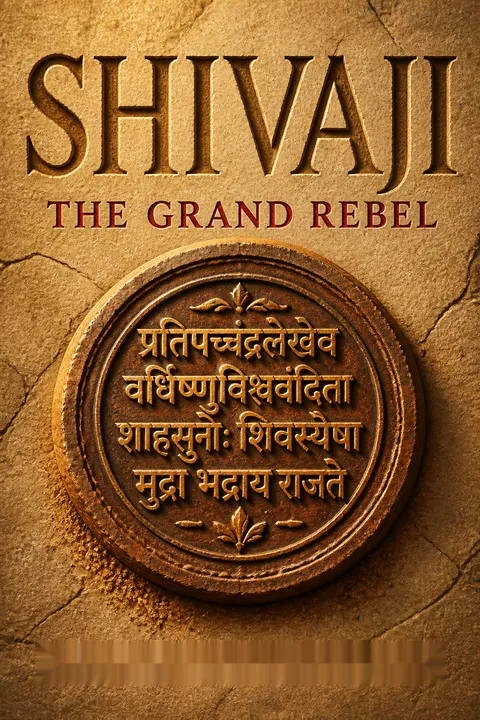
Dennis Kincaid's book is best read as an interpretive portrait of Shivaji, not as a modern critical biography. Its 1937 publication, British author, and intended English readership shape the story: it corrects the image of the Marathas as mere adversaries of British power and makes Shivaji a founder of political resistance. Kincaid presents a compelling transformation from frontier youth to king, using dramatic episodes to make state formation feel immediate and personal.
That narrative has real explanatory force. The same qualities recur across different arenas: attention to terrain, patience with negotiation, speed when an opening appears, and a willingness to retreat rather than risk annihilation. The book also insists that military success rested on governing: village recovery, relatively predictable taxation, and a disciplined army made the new state more than a band of raiders. Its account of religiously inclusive conduct complicates any easy opposition between Hindu and Muslim rule.
The vividness comes with risks. Kincaid calls the work an impression, and the story blends documentary material with traditions, dramatic scenes, and judgments about character. The introduction notes factual errors and the absence of maps, while also observing that Kincaid tends to depict Shivaji without blemishes. His contrast between a tolerant Hindu king and a bigoted Aurangzeb is central to the book's moral architecture, but it can flatten both men and overstate the unity of a diverse political landscape. The most reliable use of the book is therefore twofold: take seriously its account of strategic choices and state-building, while treating its polished hero portrait as evidence of how Shivaji was being interpreted in the 1930s as well as of the seventeenth-century life it recounts.
Review Summary
Shivaji by Dennis Kincaid is praised as a well-researched, engaging biography of the Maratha ruler. Readers appreciate Kincaid's balanced perspective as a British author writing about an Indian hero. The book is lauded for its vivid storytelling, historical context, and portrayal of Shivaji's character. Some note minor inaccuracies and occasional British bias, but overall consider it an excellent introduction to Shivaji's life and the Maratha Empire. Many reviewers express surprise at the book's readability and recommend it for both Indian and Western audiences interested in Indian history.
People Also Read








Glossary
chauth
quarter-value protection paymentA payment Shivaji's forces demanded from districts outside direct Maratha rule, described in the book as about one-quarter of the harvest's value. Some towns paid it to avoid Maratha raids. The term captures how military pressure could extend political influence without immediate conquest or a formal change of borders.
wag-nak
concealed claw-shaped weaponA small weapon made of sharp metal claws, held in the palm. In Kincaid's account, Shivaji carried one concealed when he met Afzal Khan, whose meeting was intended to capture or kill him. The weapon helped Shivaji defend himself when Khan seized him during their greeting.
ghorpad
wall-climbing monitor lizardA monitor lizard that Maratha tradition describes as strong and sure-footed enough to climb a fort wall while carrying a rope. In the story of the assault on Sinhgad, Tanaji's men use one to raise a rope ladder. Kincaid presents this as part of the traditional account of the fort's capture.
Council of Eight
senior governing councilThe group of eight officials Shivaji used to administer his state. Kincaid describes its members as effectively senior secretaries, with Shivaji retaining ultimate authority. Most were Brahmans, while the war minister was a Maratha. Members could help govern during Shivaji's absence, including as a council of regency.
taslim
Mughal court salutationA formal gesture of respect performed before the Mughal emperor. Kincaid describes the visitor placing the back of the right hand on the ground, raising it to stand upright, and then touching the crown of the head with the palm. At Agra, Shivaji declined this courtly form and used his own customary salute instead.
Download PDF
Download EPUB
.epub digital book format is ideal for reading ebooks on phones, tablets, and e-readers.








