

Key Takeaways
Treat history as both what happened and the story later made of it
Two meanings, one problem. History names both the events people lived and the accounts later made of them. These cannot be collapsed: narratives can omit or distort, but bodies, documents, buildings, and consequences constrain what can plausibly be said about the past.
The Alamo shows the hinge. Santa Anna’s army captured the mission in March 1836. Weeks later, Texan fighters invoked that defeat as they won at San Jacinto. The new victory recast the earlier loss as sacrifice on the road to triumph. The siege did not change, but its public meaning did. Trouillot uses this shift to show how people participate in history both through their actions and through the stories that interpret them.
What's striking is that this argument avoids two easy extremes. Evidence is not an untouched window onto the past, yet stories are not free to invent any past they please. The distinction resembles the difference between an event and its later social memory: each account selects a perspective, while surviving traces limit the range of credible interpretations. That balance matters in public disputes, where admitting that narratives are constructed can be misused to suggest that all claims are equally true. Interpretation is unavoidable; fabrication is still distinguishable from careful history.
Trace silence from the first record, not only the historian's final account
Silencing starts early. Trouillot uses silencing to mean an active process that makes some events or people less visible in the historical record. It can begin when a source is created, continue when sources are organized into archives, recur when historians retrieve facts, and deepen when a society decides which events matter.
The ledger leaves things out. Plantation records sometimes underreported enslaved infants because their survival was uncertain and the accounting could be revised later. The omission did not require a plot to hide births. It followed the record-keeping system’s practical logic, within a society built on slavery. Adding more documents can help, but it cannot by itself remove the assumptions and exclusions that shaped the documents in the first place.
This approach usefully shifts attention from individual bias to the full chain that turns experience into evidence. Similar questions apply to modern databases: who is counted, which categories are available, and what does the institution need the numbers to do? The example also complicates the idea that every gap is deliberate censorship. Some exclusions are routine consequences of a system’s design, which can make them harder to notice and harder to correct than an explicit ban.
Follow history beyond universities into films, monuments, and tourist sites
History has many workshops. Professional historians are only some of the people who shape public accounts. Schools, museums, films, anniversaries, guides, political organizations, and visitors all help select and circulate versions of the past. Their influence varies by place and time, so no single formula can rank their importance everywhere.
The Alamo is also a classroom. Trouillot notes that John Wayne’s film helped teach mid-twentieth-century audiences how to picture the siege, while television helped make Davy Crockett a widely recognized historical figure. The Alamo also drew millions of visitors each year, and its gift shop sold histories alongside souvenirs. Public memory forms through these encounters as well as through scholarly books.
This wider map makes historical influence easier to locate. A movie need not replace academic work to shape what audiences find plausible or memorable; it can set the questions that scholarship later has to answer. The same applies to exhibits and memorials, which present interpretation as part of an ordinary visit. Still, influence is not the same as control. Audiences can resist or revise a scripted account, as the Alamo disputes themselves demonstrate.
Trace Sans Souci's shared name to see how victory buries rivals
Three lives share a name. Jean-Baptiste Sans Souci was an African-born commander who resisted the French and later refused to accept the authority of Haitian revolutionary leaders he distrusted, including Christophe. Christophe’s soldiers killed him during negotiations. Years later, Christophe built his celebrated palace in Milot and named it Sans Souci, the same name as both the dead commander and a palace in Potsdam.
Records rank people unevenly. In papers preserved from the French campaign, Trouillot finds more than fifty mentions of General Fressinet, eleven of Christophe, and only one of Sans Souci. The mismatch helps explain how a militarily consequential opponent could recede from the story. Later writers emphasized Christophe’s palace or the possible European connection, while leaving the African commander’s significance at the margins.
The case shows why a name, a building, and an archive need to be read together. The palace does not simply preserve Christophe’s achievement; its name also draws attention away from the man who bore it first. Trouillot treats that overlap as meaningful, while the precise intention behind the naming remains difficult to prove. That uncertainty is instructive. Historical analysis can identify a powerful pattern without pretending that surviving evidence reveals every motive.
When an event breaks an era's categories, expect observers to explain it away
The revolution exceeded its frame. From 1791 to 1804, enslaved people in the French colony of Saint-Domingue overthrew slavery and colonial rule and established independent Haiti. Trouillot calls this history unthinkable because dominant Western assumptions offered no adequate way to imagine enslaved people as the authors of a successful revolution.
Observers bent the news. Before the uprising, colonists described enslaved people as obedient and a general revolt as impossible. When revolt came, many blamed outside conspirators, denied that enslaved people had acted for themselves, or predicted a quick return to colonial control. Later historical accounts could repeat the pattern by describing a rebellion without treating it as a revolution led by the formerly enslaved.
The argument resembles a familiar problem in the study of institutions: evidence that violates a group’s basic categories can be absorbed as an exception rather than allowed to change the model. Trouillot’s examples make that process visible in the language used to describe Haiti. The caution is that not every mistaken prediction proves a deep ideological refusal. But repeated explanations that deny the actors’ agency, despite accumulating evidence, deserve scrutiny as more than ordinary error.
Question the name and date before accepting a commemoration as neutral
A label chooses a viewpoint. Calling Columbus’s 1492 landing a discovery centers the Europeans who arrived and makes the inhabited islands seem newly historical. Trouillot argues that conquest or invasion better captures what followed, while acknowledging that names themselves are contested. The date also became significant over time, rather than being universally recognized as momentous by those who lived through it.
Celebrations build the event. Spain’s 1892 quadricentennial and Chicago’s 1893 exposition turned Columbus into a public symbol, but each served distinct political and commercial purposes. The 1992 quincentennial drew louder dissent from Indigenous, Black, and other critics. Commemorations package a past for present use, making one interpretation feel like a settled fact while pushing its context aside.
Anniversaries make political choices feel natural by attaching them to calendars, ceremonies, and familiar names. Asking who selected the date, and whose experience the label makes central, is a practical way to reopen that framing. Yet replacing one label does not produce a view from nowhere. Terms such as encounter may soften violence, while conquest can foreground it. The useful question is not which word is perfectly neutral, but what each word reveals and conceals.
Don't measure a past's present importance by its original scale alone
Scale does not dictate significance. Trouillot compares slavery across the Americas. The transatlantic trade carried at least ten million enslaved Africans to the region; Brazil received nearly four million, and the Caribbean as a whole received more. The small French island of Martinique alone imported more enslaved people than all the U.S. states combined, according to the figures he uses.
The present shapes remembrance. Despite these comparisons, slavery has often carried greater symbolic and explanatory weight in the contemporary United States than in Brazil or the Caribbean. Trouillot connects that difference not simply to the original scale of suffering, but to later histories, ongoing racism, and conflicts over how the past explains present inequality. Historical importance is continually made, not automatically inherited from an event’s magnitude.
This comparison separates two questions that public arguments often collapse: how extensive an event was, and how a later society uses its memory. The distinction helps explain why the same historical institution can occupy different places in national life. It also warns against treating national memory as a transparent measure of past harm. Differences in commemoration may reveal present political struggles, though they do not erase the distinct histories or continuing consequences of slavery across the Americas.
Judge historical displays by their present relationship, not realism alone
Accuracy is not the whole test. Disney’s proposed Virginia park included an exhibit about slavery. Critics worried that visitors might consume simulated suffering as entertainment and leave feeling absolved. Even an exhibit with accurate facts and convincing detail could create a dishonest relationship between slavery and the present if it treated the subject as safely over.
Authenticity faces forward. Trouillot uses authenticity for a responsible relationship between what is known about the past and the present in which it is represented. A replica or vivid reconstruction cannot guarantee that relationship. For him, condemning past slavery while avoiding current discrimination can become a comfortable substitute for confronting injustice that still operates. Historical displays matter partly because of the reactions and responsibilities they invite now.
This standard adds a question that fact-checking alone cannot answer: what kind of visitor, citizen, or audience does the display encourage someone to become? It gives curators a reason to connect evidence to the institutions and inequalities surrounding the exhibit, rather than rely on emotional intensity as proof of seriousness. The risk is that present-day purpose could become an excuse to simplify difficult evidence. A responsible display needs both factual care and an honest account of its own context.
Read Port-au-Prince's missing Columbus as an act, not an empty pedestal
A monument can change hands. In the book’s closing scene, Trouillot searches Port-au-Prince for a statue of Columbus and finds its pedestal empty. After Jean-Claude Duvalier’s dictatorship fell in 1986, demonstrators had removed the statue and thrown it into the sea. A nearby monument to Harry Truman had also been toppled, and its bust lay behind a fence.
The present enters the record. A passerby suggests the crowd may have associated Columbus with colonialism; in Haitian Creole, a word for Columbus also means colonist. Trouillot cannot confirm that explanation. The uncertainty does not make the removal meaningless. It shows people without the authority of the archive or the university acting on the public landscape, changing which figures can stand for the past.
The ending makes the book’s theory tangible: history is not only a story told about people who are gone. Removing a monument is itself an act that changes what a city asks its residents to remember. The uncertain motive is important, since later accounts can simplify a crowd’s varied reasons into a single heroic or destructive intention. Reading the absence carefully means preserving both its force and what cannot be known about it.
Analysis
Trouillot’s central achievement is to make historical power observable without reducing history to either objective recovery or unrestricted storytelling. His four moments of production, from the creation of sources through retrospective significance, give readers a method: inspect how traces were made, how institutions ordered them, which facts later accounts retrieved, and why some events came to matter. The method turns abstractions about bias into questions that can be asked of a ledger, a monument, a textbook, or a public anniversary.
The Haitian Revolution is the book’s sharpest test. A successful uprising by enslaved people did not merely challenge a particular colonial regime. It contradicted an intellectual order that treated European rule and racial hierarchy as natural. The resulting historical omission was not simply a conspiracy or a shortage of evidence. It could be reproduced by ordinary scholarly conventions that treated the revolution as peripheral, or its actors as incapable of independent political purpose. That diagnosis remains useful wherever institutional standards define relevance before research begins.
The argument also requires restraint. If every fact is selected and every narrative contains silences, that does not mean all accounts have equal evidentiary standing. Trouillot insists on material traces and on distinctions between credible history and fabrication. The strongest application of his framework therefore asks both how a narrative was produced and whether its claims withstand evidence. It also asks whether an account’s apparent neutrality reflects a specific institution’s habits rather than an absence of politics.
A further complication is that the category of the West can become too broad if it is treated as a single actor with one settled memory. The book itself shows variation among historians, states, elites, and publics. Its most powerful claims are therefore strongest when attached to concrete practices, such as a textbook’s framing or a record system’s omissions, rather than attributed to a unified civilization. That qualification strengthens, rather than weakens, the method: power becomes easier to analyze when its operators and mechanisms are named. The enduring lesson is not suspicion of every history, but disciplined attention to the conditions that make some pasts readily tellable and others difficult to recognize.
Review Summary
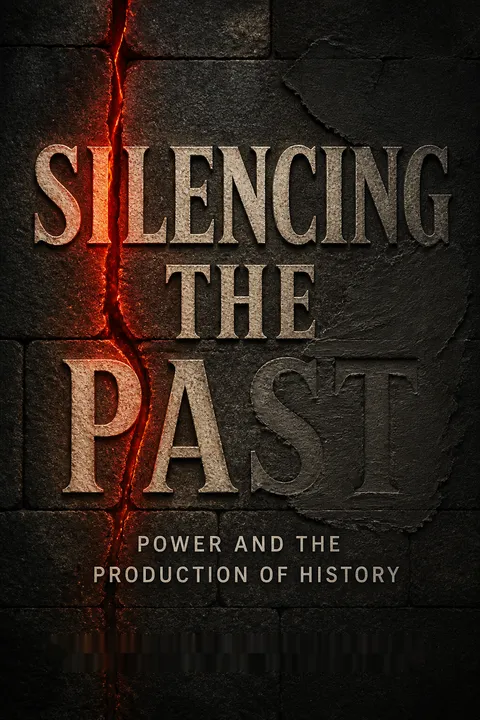
Silencing the Past is praised for its insightful analysis of how power shapes historical narratives, focusing on the Haitian Revolution and Columbus's legacy. Readers appreciate Trouillot's examination of historical silences and the production of history. The book is lauded for its thought-provoking content, though some find it academically dense. Many reviewers consider it essential reading for understanding historical interpretation, while a few critique its factual accuracy or writing style. Overall, it's regarded as a transformative work on historiography.
People Also Read



Glossary
Historicity 1 and historicity 2
Events and their accountsTrouillot’s distinction between history as the sociohistorical process, what people do and experience, and history as knowledge or narrative about that process. The two sides are distinct but overlap: events leave material traces, while later accounts select, organize, and interpret those traces.
Moments of historical production
Four stages of history-makingA framework for tracing how silences enter historical accounts: fact creation, when sources are made; fact assembly, when sources are organized into archives; fact retrieval, when facts are selected for narratives; and retrospective significance, when societies decide what the past means. These moments overlap in practice and are tools for analyzing particular cases.
Silencing
Active production of absenceThe process through which an event, person, or perspective becomes less visible in historical knowledge. Silencing can happen through the creation of sources, the organization of archives, the retrieval of facts, or the later assignment of significance. It does not always require conscious censorship; routine procedures can also produce and preserve omissions.
Archival power
Authority to organize evidenceThe power exercised by institutions and practices that gather, classify, and authorize sources as usable historical evidence. Archives include more than state repositories: museums, tourist guides, academic conventions, and other sites can shape which evidence becomes intelligible and credible. This power helps determine what may count as a serious historical question.
The unthinkable
Beyond an era’s conceptsAn event or possibility that people cannot adequately conceive within the concepts and assumptions available to them. Trouillot applies the term to the Haitian Revolution because dominant Western thought could not readily imagine enslaved people leading a successful revolt, abolishing slavery, and establishing an independent state.
Formulas of erasure and banalization
Ways narratives silence eventsTwo patterns Trouillot identifies in accounts of the Haitian Revolution. Erasure minimizes or removes the revolution as an event; banalization leaves events in the record but drains them of revolutionary meaning by treating them as isolated, ordinary, or marginal. Together, they can make a major historical transformation seem unimportant or almost nonexistent.
Authenticity
Honest relation to the presentFor Trouillot, authenticity is not a matter of making a perfect replica of the past. It concerns the relationship between what is known about the past and the present in which that knowledge is represented. A historically accurate display may still be inauthentic if it hides present-day power or turns past suffering into harmless spectacle.
Agents, actors, and subjects
Three capacities in historyTrouillot’s terms for how people participate in historical processes. Agents occupy structural positions, such as workers or enslaved people. Actors exercise capacities shaped by particular historical circumstances. Subjects are aware of their voices and purposes. A full account may need to recognize all three, rather than describe people only through their assigned social positions.
FAQ
What's "Silencing the Past: Power and the Production of History" about?
- Exploration of History and Power: The book examines how power influences the production of historical narratives, focusing on the silences and omissions that occur in the telling of history.
- Case Studies: Trouillot uses case studies, such as the Haitian Revolution and Columbus's discovery of America, to illustrate how historical events are often reshaped or silenced by those in power.
- Concept of Historicity: The book delves into the concept of historicity, distinguishing between what actually happened and what is said to have happened, and how these narratives are constructed.
- Critical Analysis: It provides a critical analysis of how history is written and remembered, challenging readers to consider the biases and power dynamics involved in historical storytelling.
Why should I read "Silencing the Past"?
- Understanding Historical Bias: The book offers insights into how historical narratives are shaped by power, helping readers understand the biases that can influence historical accounts.
- Critical Thinking: It encourages critical thinking about the sources of historical information and the processes that lead to the creation of historical narratives.
- Relevance to Current Events: The themes of power and historical silencing are relevant to contemporary discussions about history, memory, and identity.
- Engaging Case Studies: Trouillot's use of engaging case studies makes complex theoretical concepts accessible and relatable.
What are the key takeaways of "Silencing the Past"?
- Power Shapes History: Power dynamics play a crucial role in determining which historical narratives are told and which are silenced.
- Silences in History: Historical narratives often contain silences—omissions or erasures of certain events or perspectives—that reflect the interests of those in power.
- Historicity and Narratives: There is a distinction between the sociohistorical process (what happened) and historical narratives (what is said to have happened), and this distinction is often blurred by power.
- Critical Examination Needed: Readers are encouraged to critically examine historical narratives and consider the power structures that influence them.
How does Michel-Rolph Trouillot define "historicity"?
- Two Sides of Historicity: Trouillot defines historicity as having two sides: the sociohistorical process (what actually happened) and historical narratives (what is said to have happened).
- Interplay of Power: He emphasizes that power influences both sides of historicity, affecting how events are recorded and remembered.
- Fluid Boundary: The boundary between the sociohistorical process and historical narratives is fluid, allowing for reinterpretation and manipulation by those in power.
- Importance of Context: Understanding historicity requires considering the context in which historical narratives are produced and consumed.
What are the "silences" in history according to Trouillot?
- Active Silencing: Silences in history are not mere absences but are actively produced by those in power to shape historical narratives.
- Four Moments of Silencing: Trouillot identifies four moments where silences enter historical production: fact creation, fact assembly, fact retrieval, and retrospective significance.
- Impact on Narratives: These silences can significantly impact the narratives that are constructed, often omitting or downplaying certain events or perspectives.
- Challenge to Historians: Historians must work to uncover and address these silences to provide a more complete and accurate account of history.
How does Trouillot use the Haitian Revolution as a case study?
- Unthinkable Event: The Haitian Revolution is presented as an "unthinkable" event that challenged the prevailing ontological and political assumptions of its time.
- Silencing by Historiography: Trouillot examines how the revolution has been silenced or trivialized in Western historiography, despite its significance.
- Power Dynamics: The case study illustrates how power dynamics influenced the recording and interpretation of the revolution, often marginalizing the voices of the revolutionaries.
- Relevance to Modern Narratives: The Haitian Revolution serves as a powerful example of how historical narratives can be shaped by those in power, with lasting effects on how history is understood today.
What role does power play in the production of history according to Trouillot?
- Influence on Narratives: Power determines which events are recorded and how they are interpreted, often privileging certain perspectives over others.
- Creation of Silences: Those in power can create silences in historical narratives by omitting or downplaying events that do not align with their interests.
- Control of Archives: Power influences the creation and maintenance of archives, which are crucial in shaping historical narratives.
- Challenge to Objectivity: Trouillot challenges the notion of objective history, arguing that power dynamics are always at play in the production of historical narratives.
What are the best quotes from "Silencing the Past" and what do they mean?
- "History is the fruit of power, but power itself is never so transparent that its analysis becomes superfluous." This quote highlights the complex relationship between history and power, emphasizing the need for critical analysis of how power shapes historical narratives.
- "Silences are inherent in history because any single event enters history with some of its constituting parts missing." Trouillot points out that historical narratives are always incomplete, with certain elements omitted or silenced, often due to power dynamics.
- "The ultimate mark of power may be its invisibility; the ultimate challenge, the exposition of its roots." This quote underscores the challenge of uncovering the often-invisible influence of power in shaping historical narratives.
How does Trouillot address the concept of "discovery" in history?
- Critique of Eurocentrism: Trouillot critiques the Eurocentric notion of "discovery," particularly in the context of Columbus's landing in the Americas, as an exercise of power that frames history from a European perspective.
- Naming and Power: He argues that the power to name events, such as calling Columbus's landing a "discovery," shapes historical narratives and reinforces certain power structures.
- Alternative Perspectives: Trouillot encourages considering alternative perspectives that challenge the dominant narratives of discovery and conquest.
- Impact on Historical Understanding: The concept of discovery is used to illustrate how historical narratives can be manipulated to serve the interests of those in power.
What is the significance of the title "Silencing the Past"?
- Metaphor for Historical Omission: The title refers to the deliberate omission or erasure of certain events or perspectives in historical narratives, often due to power dynamics.
- Focus on Silences: Trouillot emphasizes the importance of examining the silences in history to understand how narratives are constructed and who benefits from them.
- Challenge to Historians: The title challenges historians to uncover and address these silences to provide a more complete and accurate account of history.
- Relevance to Contemporary Issues: The concept of silencing the past is relevant to contemporary discussions about history, memory, and identity, highlighting the ongoing impact of historical narratives.
How does Trouillot's work challenge traditional historiography?
- Critique of Objectivity: Trouillot challenges the notion of objective history, arguing that power dynamics are always at play in the production of historical narratives.
- Focus on Silences: He emphasizes the importance of examining the silences in history, which are often overlooked in traditional historiography.
- Interdisciplinary Approach: Trouillot's work draws on anthropology, history, and critical theory to provide a more nuanced understanding of historical production.
- Call for Critical Examination: He calls for a critical examination of historical narratives, encouraging historians to consider the power structures that influence them.
What impact has "Silencing the Past" had on the field of history?
- Influence on Historiography: The book has influenced the field of historiography by highlighting the role of power in shaping historical narratives and encouraging a critical examination of silences in history.
- Interdisciplinary Approach: Trouillot's interdisciplinary approach has inspired scholars in history, anthropology, and other fields to consider the broader context of historical production.
- Relevance to Contemporary Issues: The themes of power and historical silencing are relevant to contemporary discussions about history, memory, and identity, making the book a valuable resource for scholars and students.
- Ongoing Conversations: "Silencing the Past" continues to be a reference point in ongoing conversations about the politics of history and the importance of examining the narratives that shape our understanding of the past.
Download PDF
Download EPUB
.epub digital book format is ideal for reading ebooks on phones, tablets, and e-readers.








