

Plot Summary
Black Hearts, Black Ink
Kindra Amato1 ends a killing by removing her victim’s heart, staining it black, and leaving it in his dominant hand. She chooses men and women she believes have preyed on the vulnerable; her apprentice,3 Cat,3 watches with breathless admiration and rather less caution. On the drive away, Cat3 asks about Kindra’s brother,1 Reese, murdered when Kindra1 was seventeen.
He had been hung from meat hooks, his eyes removed, and strange marks cut into his skin. Cat3 claims she has uncovered a guest list for a secret gathering of serial killers, and Reese’s suspected killer, the Abattoir Adonis,2 appears on it. Kindra1 agrees to let Cat3 come to her home to explain, not knowing the invitation will place her beside the man she has hunted for years.2
Kindra’s ritual gives grief a procedure: identify the guilty, kill them, and leave a visible judgment behind. Yet the orderliness cannot contain what happened to Reese. Her brother’s murder remains the unsolved exception around which she has built her life. Cat’s admiration offers Kindra a rare form of recognition, but it also exposes the danger of being watched too closely. The island invitation converts private obsession into a physical destination. Kindra thinks she is following a trail toward justice; she is also stepping into a setting where her own rules and identity will be tested.
Miami on the Menu
Ezra Carter,2 a British private investigator with a carefully concealed life, lures Gary,7 a child predator, into joining the retreat as prey. His younger half-brother,4 Bennett,4 helps arrange the trip, though the brothers disagree over who should kill Gary.7
On the other side of the journey, Cat3 has made herself Kindra’s assistant3 and booked their travel, worsening Kindra’s1 fear that the trip will cost her job. At the airport, Ezra2 meets Kindra1 and Cat,3 trades seats so Kindra1 can sit beside him, and helps her through a mortifying flight mishap.
Their attraction grows during the flight and continues in Miami, where they arrange to meet at the same hotel. Ezra2 and Kindra1 spend the night together, each believing the encounter can remain separate from the rest of life.
The novel places desire beside professional danger from the beginning. Ezra’s recruitment of Gary is not incidental travel business: it reveals the moral sorting that structures his private world, while Bennett’s involvement establishes a brotherhood built on competition as well as loyalty. Kindra and Ezra meet under comic embarrassment rather than solemn destiny, which makes their attraction feel bodily and immediate. Their planned separation gives both permission to indulge. That assumption is already unstable, since the journey Cat arranged and the journey Ezra engineered are carrying them toward the same island and the same secret.
The Adonis on Board
The next morning, Kindra1 and Cat3 board the private jet to Devil’s Horn Island, where the Sinners Retreat has been held for years. Ezra2 arrives with Bennett,4 Gary,7 and other invited killers, then recognizes Kindra1 as a fellow participant.
She explains that she wants to identify her brother’s murderer, not break the retreat’s rule against killing guests. When she names the Abattoir Adonis,2 Ezra2 understands that she is searching for him. He killed Reese years earlier, though he cannot yet remember why. He conceals the connection and instead offers to help her investigate.
The orientation video has promised organized murder games, forbidden photography, and prisoners called Cattle, divided by the crimes they committed. Kindra1 has finally reached her target’s world, but she does not know he is sitting beside her.
The central irony is established before the island’s games begin: Kindra’s search is close to its answer, but the answer is also the man she desires. Ezra’s failure to remember Reese makes the secret less like a deliberate plan at first and more like a moral debt he has failed to revisit. Yet his concealment becomes a choice as soon as he understands Kindra’s goal. The retreat’s rules create a temporary boundary around violence, but they cannot prevent emotional harm. By offering help while withholding his identity, Ezra turns intimacy into a false investigative partnership.
An Alibi in Blood
At the beach, Ezra2 explains that the Cattle’s colored suits identify their crimes: pink marks child predators, red marks sex offenders, and yellow marks other criminals. Kindra1 admits she targets people who harm the weak, while concealing how closely her methods resemble the Heartbreak Killer’s.1
Eighties,8 a mulleted guest, mocks Kindra’s1 body. Ezra2 punches him, then later finds him alone in the Blood Grotto and drowns him before displaying his remains on the altar.
At the welcome dinner, the host6 announces that a guest has been killed and Ezra2 faces suspicion because of their public quarrel. Kindra1 could let the retreat remove him and return to her investigation, but instead she gives him an alibi. Her choice keeps Ezra2 on the island and draws her further into his danger.
The resort’s moral theater makes violence look categorized and manageable, but Ezra’s killing of Eighties breaks that appearance. He acts from wounded protectiveness, not careful investigation, and the impulsiveness exposes how easily his code bends when Kindra is involved. Her alibi is equally revealing: she values her search, yet she cannot treat Ezra as a disposable obstacle. The lie binds them more tightly than their sexual encounter did. Both characters claim to keep emotion contained, but their actions show that attachment has begun to alter their judgments.
Hooves Along the Shore
Ezra2 invites Kindra1 to the horseback activity, where selected Cattle are dragged behind the riders. Kindra1 chooses an adult rapist; Ezra2 selects a child predator. When Ezra’s2 target is still alive at the end of the ride, he lets Kindra1 finish the killing herself.
The shared violence gives her a measure of release, though she remains intent on discovering Reese’s murderer. Ezra2 tells her he admires the Heartbreak Killer,1 whom he believes is a woman, and Kindra1 hides that she is the person he admires.
Cat,3 meanwhile, talks with the other guests and continues to make a spectacle of her inexperience. Bennett4 mocks her ambition, sharpening the rivalry between them. Kindra1 sees that the retreat may help her narrow her suspects, but every new alliance risks exposing her own carefully guarded identity.
The horseback event turns violence into a partnership: Ezra gives Kindra the final act rather than claiming it for himself. That restraint matters more to her than a conventional romantic gesture because it recognizes her agency within a shared moral code. Their intimacy is nevertheless founded on asymmetrical knowledge. Ezra praises the very killer Kindra is hiding, while she listens for clues about the man she has not identified as her lover. Cat and Bennett’s antagonism offers a comic counterpoint, but it also highlights the social labor required to belong in a community whose members distrust one another.
The Olympic Machete
Kindra1 agrees to join Cat,3 Ezra,2 and Bennett4 in the Island Olympics, a timed obstacle race ending in a choice of killing methods. Bennett4 wins the first leg with a machete, while Ezra2 defeats his opponent with a drill.
The games are competitive, but the teams still avoid targets whose crimes fall outside their own boundaries. Then a yellow-suited prisoner escapes his handler and charges at Kindra1 with the machete. Ezra2 tackles him, takes the blade, and kills him before he can reach her.
He is cut in the struggle, and blood streaks Kindra’s1 face when he kisses her. Back at her villa, their fear and desire collapse into a dangerous encounter that includes Kindra’s1 request to be held underwater. As Ezra2 keeps her breathing in mind, she realizes she is falling for him.
The attack punctures the retreat’s carefully staged safety: these killers may be spectators and contestants, but the people they control can still break the script. Ezra’s rescue makes his protectiveness concrete, while Kindra’s chosen risk in private intimacy shows how she negotiates control rather than simply surrendering it. The two scenes mirror one another without being equivalent. In one, Ezra stops an actual assault; in the other, they establish a gesture that lets Kindra explore danger by choice. Her growing attachment is therefore tied to a fragile distinction between imposed harm and trusted risk.
Hooks in Eighties’ Villa
During a fishing excursion, Kindra1 and Ezra2 bait lines with pieces taken from a restrained prisoner. Cat3 receives an email from Kindra’s employer1 demanding a substantial story from the trip, a problem Cat3 helped create by presenting the retreat as work.
Ezra2 asks Bennett4 to plant meat hooks in Eighties’8 villa, hoping Kindra1 will believe the dead guest was the Abattoir Adonis2 and gain a publishable lead. They search the room together and find the hooks.
Kindra1 is disappointed that her brother’s killer seems to have been identified so anticlimactically, but the evidence appears to solve both her personal mystery and her career crisis. Ezra2 comforts her while knowing the clue is false. His attempt to buy time now threatens to turn a private lie into a public story.
The planted hooks convert Ezra’s fear into material deception. He does not merely withhold information; he creates a false object for Kindra to interpret, exploiting the investigative habits that define her. The device seems generous because it offers her a solution to her job problem, yet it steals her chance to choose what she does with the truth. The episode also joins professional and emotional stakes: Cat’s overreach endangered Kindra’s work, and Ezra’s attempted rescue further compromises her judgment. Care becomes ethically indistinguishable from manipulation when the cared-for person is denied knowledge.
The Letters Beneath Seven
At the Blood Grotto, a game of truth and dare pushes Kindra1 to describe Reese’s murder in full: the missing eyes and the marks she believed were sevens. Ezra2 realizes the marks were capital Ls, the first letter of a boy’s name connected to his old investigation.
Years earlier, a mother had hired him to gather evidence that Reese was abusing children; Ezra2 discovered the truth and killed Reese before Kindra1 found the body. Kindra,1 drunk and newly vulnerable, tells Ezra2 she is the Heartbreak Killer,1 the vigilante he has admired.
He now knows the woman he loves is also the killer he sought, yet he still postpones confessing that he killed her brother. Instead, he tells her he is falling in love with her, and she falls asleep before answering.
The reversed marks turn a remembered image into evidence, demonstrating how trauma can preserve detail while distorting its meaning. Ezra’s recollection restores the missing context, but it does not absolve his present deception. Kindra’s confession of her identity creates a striking exchange of trust: she reveals the secret that makes her legible to him, while he withholds the fact that most urgently concerns her. His declaration of love is sincere, yet sincerity cannot repair an unequal disclosure. The scene asks whether emotional truth has value when factual truth is being withheld.
Pineapple, Sprain, Waterfall
The morning after Ezra’s2 confession, Kindra1 tells Cat3 about his feelings and recognizes how much their friendship matters to her. The planned hike becomes a comic detour when they find Bennett4 using a pineapple as a sex toy, then catch him in a shirt patterned with the same fruit.
Cat3 sprains her ankle on the trail, so Bennett4 carries her back, leaving Ezra2 and Kindra1 to continue alone. Ezra2 guides Kindra1 past the rickety bridge to a hidden waterfall. They swim, share an intimate encounter, and speak more openly about life beyond the island.
Kindra1 lets herself imagine a future with him, though she still does not know what he has kept from her. Their day offers a brief, believable glimpse of ordinary companionship inside an extraordinary setting.
The pineapple episode is more than an absurd comic interlude. Its humiliation forces Bennett, Cat, and Kindra into shared laughter, loosening the defensive roles they have maintained. Cat’s injury then separates the pair without manufacturing danger, allowing Kindra and Ezra to experience a quieter intimacy. The waterfall becomes a temporary space outside the retreat’s spectacle, where affection can feel domestic rather than performative. Yet the future Kindra imagines is built on information Ezra continues to suppress. The scene’s warmth is genuine, which makes the coming breach of trust more consequential, not less.
Blood Below the Waves
On the scuba excursion, Kindra1 fears Ezra2 has been attacked when blood clouds the water. She discovers prisoners chained underwater and sees Ezra2 fighting one off after it grabs her; he has cut off the attacker’s arm to free her. Once Ezra2 shows her the color-coded straps on the prisoners’ masks, Kindra1 selects only those marked as sex offenders and cuts off their oxygen.
She refuses to join Ice Pick11 in attacking a target whose crime she cannot verify, keeping her distinction between punishment and indiscriminate killing. After they surface, Ezra2 tells her he wants to care for her beyond the retreat. Kindra1 asks whether that promise extends beyond the next day. He says it does, but avoids explaining why his tone carries a warning.
The underwater setting strips away speech and makes moral judgment depend on visible signs, the colored straps. Kindra’s hesitation over an uncertain target reveals that her violence is not simply appetite; she needs a story of culpability to justify it. Ezra’s intervention is again protective, but his refusal to explain his warning repeats the pattern of concealment. Their intimacy gains depth because Kindra asks for a future plainly. His answer offers emotional commitment without the information required to make that commitment fully informed.
Cat Leaves at Dinner
Cat,3 still recovering from Bennett’s4 drugged sleep remedy, warns Kindra1 that Bennett4 suspects Ezra2 is hiding something about his identity. Kindra1 dismisses the warning as jealousy and accuses Cat3 of trying to separate them. Cat3 leaves for the formal dinner without resolving the argument. Kindra1 attends with Ezra,2 then learns from Bennett4 afterward that Cat3 has left the island.
The loss hits hard: Kindra1 had only just begun to treat Cat3 as a friend, and now she believes she has driven her away. Ezra2 takes her back to his villa and comforts her. Their intimacy resumes, giving Kindra1 a few hours of safety before the secret she rejected catches up with her. Cat’s3 departure is not a plot to claim Kindra,1 but a response to being mistrusted.
Kindra’s accusation reveals how quickly old defenses return when attachment feels threatened. Rather than tolerate uncertainty about Ezra, she turns Cat’s concern into a rivalry, preserving the romance by sacrificing the friendship. Cat’s departure makes the cost immediate, and the contrast between her quiet absence and Ezra’s physical comfort leaves Kindra with a narrowed emotional world. The warning itself is accurate, but it arrives through a person whose earlier mistakes have made her difficult to trust. The scene shows that good intentions do not erase the damage of poor timing, just as love cannot substitute for an honest account.
The Adonis Is Ezra
Maverick5 arrives late and finds the meat hooks Ezra2 planted in Eighties’8 villa. Recognizing them as Ezra’s,2 he tells Kindra1 that Ezra2 is the Abattoir Adonis2 and that Eighties8 was never the killer she sought. Kindra1 leaves Ezra2 a note forbidding him to contact her and asks Bennett4 for directions to the airstrip. Bennett4 jokes and points her toward the hunting grounds instead.
In the morning, Ezra2 discovers she has vanished and learns where she went. He abandons the retreat’s final hunt and enters the jungle after her, while Bennett4 and other guests search as well. Kindra’s1 investigation has found its answer, but the planted clue and Ezra’s2 silence have made that answer feel like one more betrayal.
Maverick’s recognition collapses Ezra’s carefully staged false solution in a single practical detail: the hooks belong to the man who uses them. Kindra’s note is not a request for explanation but an attempt to reclaim control through distance. Bennett’s careless joke then turns emotional rupture into physical peril, placing Kindra in the very hunt she meant to escape. Ezra’s decision to leave the hunt marks a change in priority, but it cannot undo the fact that his choices helped put her there. The crisis is produced by several small failures of honesty, not by one sudden twist.
The Bridge Gives Way
Lost in the hunting grounds, Kindra1 kills a fugitive who stole a yellow suit, then wounds his daughter when she attacks. The injured woman later reaches the unstable bridge where Ezra2 is searching for Kindra1 and shakes it until he hangs over the ravine.
Kindra1 appears and knocks the attacker from the edge with a throwing knife, saving Ezra2 before rejecting his attempt to follow her. When Ezra2 explains that Reese abused children, Kindra1 refuses to believe him and raises her knife. A tranquilizer dart stops her.
In a villa, Maverick5 shows her childhood photographs and the scar Reese gave him when he was eight, confirming that he was one of Reese’s victims. The carved marks were Ls for Landon, Maverick’s5 birth name. Kindra1 finally sees that Ezra’s2 killing was vengeance for real abuse, not a lie about her brother’s character.
The bridge makes the emotional stakes literal: Ezra can fall, and Kindra can either let him or intervene. Saving him does not equal forgiveness; it simply shows that their bond survives her anger. The truth about Reese is harder because it dismantles a cherished family image and implicates Kindra in defending the person who harmed Maverick. His photographs and scar supply evidence the earlier conversation lacked, grounding the revelation in a survivor’s body and memory. Kindra’s belief changes only when she can confront proof. The scene treats truth not as a soothing disclosure but as a painful reorganization of loyalty.
Miami, Not Goodbye
After the revelation, Kindra1 apologizes to Maverick5 for dismissing his account and accepts that Ezra2 killed Reese to stop an abuser. Ezra2 admits the planted hooks and the lies, taking responsibility instead of asking her to excuse his intentions.
Kindra1 chooses to kiss him and continue their relationship. She and Ezra2 leave the island with Bennett4 and Maverick;5 they also learn Gary7 died trying to escape through the resort’s air vents, so Bennett4 never gets the promised kill.
In Miami, Ezra2 assumes Kindra1 will fly home alone, but she has secretly changed her ticket. She appears at his hotel instead, turning their parting into a reunion. The retreat has not made their relationship simple, but honesty gives them a beginning that neither has to disguise.
Forgiveness here follows disclosure and accountability, not a claim that love makes deception harmless. Ezra names his own actions, while Kindra reassesses Reese without surrendering her right to anger. Her changed flight is a deliberate choice, not an automatic reward for his apology. The story closes its central search by replacing vengeance against an imagined monster with grief for a real one, then lets the romance continue on terms of shared knowledge. Gary’s death in the vents supplies a darkly comic end to the retreat’s loose thread, reminding us that its machinery remains grotesque even when the lovers leave it.
Epilogue
Three months later, Kindra1 and Ezra2 carve pumpkins while Cat,3 Bennett,4 and Maverick5 gather at their home. Ezra2 proposes with a ring hidden in a severed arm he had recovered from the island, and Kindra1 accepts. A letter from the retreat’s host6 offers Ezra2 funding to run a winter gathering in Alaska. Kindra1 supports the plan, turning their shared history at the retreat into a possible shared project.
Bennett4 then reveals that he has traced another of their father’s children to Texas, though he does not yet know whether the sibling is a brother or sister. The group ends the evening around their ridiculous pumpkins, with a new marriage, a possible winter retreat, and another family mystery waiting.
The proposal translates the novel’s grotesque private language into a promise of partnership. The severed arm is not a sanitized symbol of romance; it shows that Kindra and Ezra are choosing a future without pretending to be ordinary. Yet Ezra’s decision to discuss the Alaska retreat with Kindra first marks a change from secrecy toward shared agency. Cat’s renewed friendship and Bennett’s welcome complicate the couple’s intimacy with a found-family structure. The newly discovered sibling opens another uncertainty, but the ending does not treat uncertainty as a threat to connection. It can now be met together.
Analysis
Sinners Retreat builds its romance around a problem that conventional romantic fantasy often avoids: desire does not make a person trustworthy. Kindra1 and Ezra2 are drawn together through erotic risk, shared contempt for predators, and a sense that each has found someone who understands the work of judgment. But their moral similarity initially conceals a crucial asymmetry. Kindra1 is seeking the man who killed Reese, while Ezra2 knows enough to suspect he is that man and chooses to manage her search instead of telling her the truth. His affection is sincere; his deception is also real. The novel refuses to treat sincerity as an adequate substitute for consent to the facts.
The retreat externalizes this ethical conflict. Its color-coded prisoners, scheduled activities, and polished meals convert violence into entertainment with procedures. Kindra’s private rituals and Ezra’s2 selective killings distinguish them from indiscriminate predators, yet the island repeatedly tests whether a claimed code can survive desire, anger, or convenience. Ezra’s2 impulsive killing of Eighties,8 his planted hooks, and his decision to delay confession each show a different way that emotion can corrupt the principles he believes he follows.
Reese’s revelation provides the story’s sharpest psychological reversal. Kindra1 has spent years organizing grief around an innocent brother and an external monster. Learning that Reese abused children does not erase her loss; it forces her to mourn both the brother she remembers and the person he was. Maverick’s5 scar and photographs give testimony a body, while Ezra’s2 old marks acquire meaning only when their history is recovered. Memory is necessary, but it is not the same as proof.
The ending offers reconciliation without pretending that betrayal disappears. Kindra1 can forgive Ezra2 because he finally stops controlling what she knows, and she chooses to continue the relationship on her own terms. The romance’s strongest movement is therefore not from isolation to love, but from self-protection through secrecy to connection that can withstand painful knowledge.
Review Summary
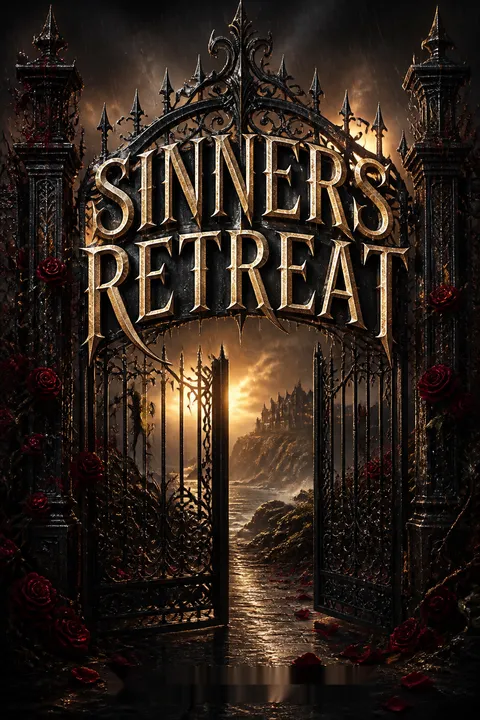
Sinners Retreat is a dark romcom about serial killers on a tropical getaway. Readers praise its humor, spice, and unique premise, comparing it to popular books like "Butcher & Blackbird." Many enjoyed the banter and chemistry between the main characters, Kindra and Ezra. Some found the gore and explicit content excessive, while others appreciated the blend of romance and dark themes. The book's pacing and character development received mixed reviews. Overall, it's a polarizing read that appeals to fans of unconventional romance with a dark twist.
People Also Read





Characters
Kindra Amato
The grieving vigilanteKindra is a crime journalist and vigilante whose targets are people she believes have harmed the vulnerable. Her controlled rituals give form to a life organized around the unsolved murder of her brother, Reese. She is observant, caustic, and fiercely protective of her privacy, but her hardness is not indifference: it is a defense against grief and dependence. Kindra distrusts easy intimacy and prefers to decide for herself when danger is acceptable. Her sharp moral boundaries distinguish her from killers who choose victims indiscriminately, while her attraction to Ezra2 and growing friendship with Cat3 challenge her belief that closeness only creates weakness.
Ezra Carter
The guarded British investigatorEzra is a British private investigator who has spent years in America and is skilled at reading people, concealing his intentions, and maintaining control. His dry wit and polished manners soften a more dangerous nature, while his bond with his younger half-brother, Bennett4, exposes a loyalty he rarely expresses directly. Ezra admires a secret vigilante and is drawn to Kindra’s1 intelligence, bluntness, and refusal to perform conventional femininity. He wants to be useful to her, but his instinct to manage a crisis privately can become deception. His central tension lies between a strict personal code and the selfish impulse to protect a relationship by withholding the truth.
Caterina, called Cat
The eager apprenticeCat is a young aspiring actress from Portland who becomes fascinated by Kindra1 and attaches herself to her as an apprentice and personal assistant. She is enthusiastic, impulsive, and often unable to distinguish helpful initiative from an intrusion. Her admiration gives her courage, but it also makes her reckless, as when she publicizes Kindra’s1 work and arranges the retreat as a job assignment. Beneath the theatrics, Cat wants genuine friendship and a place in a world she has romanticized. Her need to prove herself as a killer is balanced by a softer loyalty to Kindra1 and an uneasy attraction to the abrasive Bennett4.
Bennett Carter
Ezra’s chaotic brotherBennett is Ezra’s2 younger half-brother, raised in America and far less interested in polish than his British sibling. He favors unpredictability, blunt insults, and improvised violence, and his arguments with Cat3 quickly become a recurring sport. Bennett guards his independence and distrusts emotional entanglements, but his fierce loyalty to Ezra2 makes him willing to confront his brother when he sees him behaving dishonestly. His humor often conceals a serious fear of losing the only close family relationship he has built. Cat’s3 presence provokes him because she refuses to be intimidated or dismissed.
Maverick
The survivor with proofMaverick is a younger killer invited to the retreat and an old acquaintance of Ezra2 and Bennett4. He carries the composed manner of someone who has learned to live with a painful past without allowing it to define every encounter. His directness and physical confidence contrast with Ezra’s2 evasions, and he offers evidence when testimony alone cannot overcome disbelief. Maverick understands the difference between surviving abuse and being reduced to victimhood. His presence links the retreat’s violent culture to the real people harmed by the crimes that its guests claim to punish.
Jim Madigan
The eccentric hostJim owns Devil’s Horn Island and organizes the annual Sinners Retreat, presenting elaborate murder activities as a vacation for killers. He is theatrical, wealthy, and exacting about the event’s rules, especially privacy and the separation between guests and Cattle. His home and ceremonies make him the island’s impresario, but his control has limits: the people he gathers are volatile, and his carefully designed spectacles can break down. Jim’s eccentricity turns the retreat into dark pageantry, while his practical authority gives its violence a disturbing institutional order.
Gary
Ezra’s chosen preyGary is a child predator whom Ezra2 identifies as a target and persuades to travel to the retreat. Oblivious to the danger around him, he talks freely and treats the invitation as a welcome holiday. His function in the story is to expose how Ezra2 and Bennett4 classify people according to their own moral code, while also supplying a recurring source of grim, uneasy comedy.
Eighties
The mulleted guestEighties is a retreat regular whose mullet, moustache, and crude humor make him conspicuous among the guests. He openly insults Kindra1, provoking Ezra’s2 protective anger. His brief role illustrates how quickly the retreat’s posturing and rivalries can become dangerous, even among people who share a taste for violence.
Grim
The quiet German killerGrim is an elderly German guest who looks frail but is capable with a blade. He speaks sparingly and shares a close, largely wordless understanding with Maudlin Rose10. His calm presence gives the retreat one of its few examples of companionship built without performance or explanation.
Maudlin Rose
The silent archerMaudlin Rose is an older killer who does not speak and favors a bow. She communicates through gestures and appears to share an unspoken bond with Grim9. Her history makes her silence more than a quirk, while her competence in the hunt undermines assumptions that age or quietness mean helplessness.
Ice Pick
The blunt Texas killerIce Pick is a large, sunburned killer who carries the weapon behind his nickname and approaches other people with rough, physical familiarity. He is not especially subtle about social cues, but he can be loyal when someone is in danger. His bluntness provides both comic discomfort and practical help during the retreat’s search.
Chef Maurice
The cannibal chefChef Maurice prepares lavish meals for the retreat and treats cooking as a serious craft, despite the horrifying source of some ingredients. His polished service and grotesque menu create one of the story’s sharpest collisions between luxury and savagery. He makes the island’s violence feel not merely tolerated but catered.
Plot Devices
The Sinners Retreat
A secluded pressure cookerDevil’s Horn Island gathers killers, prisoners, and elaborate activities inside a controlled setting. Guests are told to confine their murders to scheduled events and surrender images before leaving, while the host6 supplies Cattle for games, meals, and hunts. The island removes ordinary safeguards and places rival codes of violence side by side. It also forces Kindra1 and Ezra2 into proximity before either can decide what their connection means. Its privacy enables the characters to act freely, but its rules make each breach, especially Ezra’s2 murder of a guest, visible to everyone.
Colored Cattle Suits
A visible moral sortingThe prisoners’ suit colors identify broad categories of crime: pink for child predators, red for sex offenders, and yellow for other offenses. The colors allow guests to select targets quickly during the retreat’s activities, but they also reveal the limits of the killers’ personal codes. Kindra1 and Ezra2 choose selectively, while others are willing to attack without the same distinctions. Later, matching colors on scuba gear carry that information underwater, allowing Kindra1 to make a choice even when she cannot speak. The system simplifies guilt into a label, which can guide judgment but cannot guarantee that every individual has been accurately classified.
Kindra’s Heart Signature
A ritualized accusationKindra1 removes victims’ hearts, stains them with black ink, and places each in the victim’s dominant hand. The ritual turns her killings into a personal message about the guilt she believes she has uncovered. Its repetition distinguishes her methods from the Abattoir Adonis’s2, even as her search for him draws her toward a world of similarly ritualized violence. The signature is both practical and psychological: it gives Kindra1 a sense of control after the unanswerable brutality of Reese’s murder, while making every crime scene a declaration of her private judgment.
The Meat Hooks
Evidence that can be plantedThe hooks connect Kindra’s1 memory of Reese’s murder to the Abattoir Adonis’s2 signature. Ezra2 exploits that association by placing his own hooks in Eighties’8 villa, allowing Kindra1 to mistake a planted clue for confirmation. Later, Maverick5 recognizes the hooks as Ezra’s2 and exposes the deception. The marks Kindra1 remembers as sevens also become meaningful when Ezra2 recalls they were Ls connected to the child he investigated. Together, the hooks and the carved letters show how physical evidence can be both persuasive and misleading, depending on who controls its context.
The Island Hunt
A private escape becomes dangerThe retreat’s final hunt releases Cattle into the island’s jungle while armed guests pursue them. It is introduced as the event’s climax and gives the prisoners a chance, however slim, to survive. When Kindra1 tries to leave the island, Bennett4 jokingly directs her toward the hunting grounds instead of the airstrip. She enters the same terrain as the fleeing prisoners and the killers searching for them. The hunt turns a misunderstanding into physical peril, forcing Ezra2 to abandon the event and confront the consequences of his dishonesty in the place designed for the retreat’s most extreme violence.
About the Author
Other books by Lauren Biel


Download PDF
Download EPUB
.epub digital book format is ideal for reading ebooks on phones, tablets, and e-readers.








