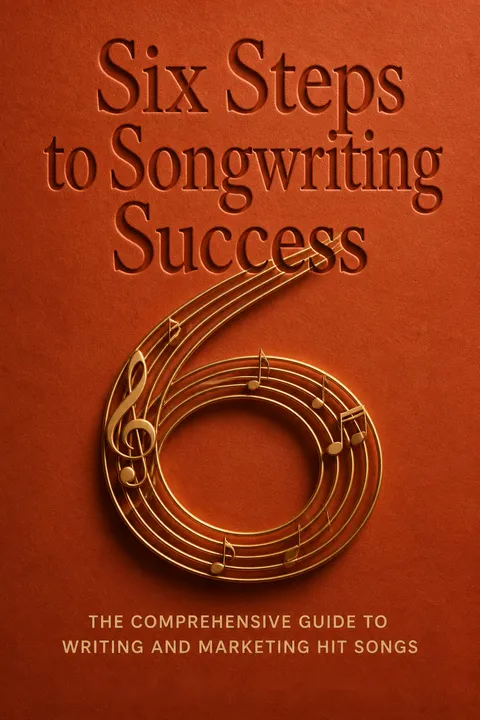


Key Takeaways
Treat songwriting as six linked crafts, not inspiration alone.
Craft makes inspiration travel. Blume began by writing songs as personal release, assuming that feelings powerful to him would naturally reach a mass audience. A harsh workshop critique forced a distinction: sincerity matters, but listeners also need a song they can follow, remember, and feel. The book’s six linked areas are structure, lyrics, melody, demos, music business, and persistence. None guarantees a hit, and none replaces the writer’s individual voice. Together, they make that voice easier to hear.
Learn before you bend. The author’s central argument is that familiar techniques are tools for communicating, not rules that every song must obey. He studied hundreds of successful songs to identify recurring choices, then turned those observations into exercises and checklists. His own career took years of practice, rejection, and revision, rather than one sudden burst of inspiration.
What's useful here is the distinction between emotional authenticity and communicative success. A writer can feel an idea intensely while leaving an audience unable to locate its point. That resembles the difference between having an experience and designing a message others can decode. Craft gives intuition a usable form. The caution is that chart success is not a neutral measure of communication: familiar conventions also reflect industry access, promotion, and taste. The techniques are strongest as options writers can choose knowingly, not as a definition of artistic worth.
Make the chorus the promise, and make every verse earn its return.
Give each section a job. In the mainstream styles Blume discusses, verses supply story, detail, and emotional context; the chorus distills the central idea and makes the title memorable. A pre-chorus, when used, builds a transition into that central statement. A bridge offers contrast, a new angle, or a final piece of information before the song returns to its main idea.
Structure prevents wandering. Blume recounts hearing polished demos from a writer who had invested heavily in recording ten songs. The performances sounded professional, but the songs lacked clear sections, repetition, and titles placed where listeners could retain them. The problem was not talent or production. It was that the music wandered without a form suited to the intended audience. Writers can study successful songs, identify each section, and use a familiar structure as a starting point.
A recurring chorus acts like a cognitive landmark: listeners can anticipate its return and gradually learn its words and melody. Verses then have a useful constraint, adding information rather than competing to be the main event. This is a powerful design principle for a short, repeated-listening medium. Still, formal familiarity is genre-specific. A pattern useful for a commercial country pitch may be a poor fit for a folk narrative or an experimental track. The writer’s task is not to impose one map everywhere, but to understand what map the intended audience already knows.
Choose a fresh title, then build one clear emotional story toward it.
Start with a destination. A title gives the listener a handle for remembering a song and gives the writer a target for the verses. Blume’s Three-Step Lyric-Focusing Technique begins by deciding what the title means, then outlining what each section must communicate, and only then writing the lines. This prevents a lyric from accumulating images that never arrive at its central idea.
Collect sparks before you need them. A hook book is a personal store of titles, phrases, and ideas gathered from conversation, books, films, and ordinary surroundings. The title of Jamie O’Neal’s song “There Is No Arizona” began with a line heard in a film, then remained in a writer’s notebook for years before becoming a song. A striking phrase is only a beginning: it must open onto an emotion or situation that listeners can recognize.
This approach resembles product design: identify the promise first, then make every component support it. A title can function as a compact retrieval cue, helping a listener remember not just a phrase but the emotional territory of the song. The method also reduces the burden of drafting because it separates concept decisions from line-level decisions. Its limitation is that a title-first process can overdetermine the song. Some writers discover meaning through sound, improvisation, or images. The useful principle is focused development, not a mandatory order of invention.
Show emotion through vivid scenes, not labels or recycled phrases.
Let the audience witness it. Instead of naming loneliness, a lyric might show someone eating alone, keeping the same late-night routine, or facing an empty side of the bed. These observable details allow listeners to infer the feeling and enter the scene themselves. Blume calls this showing rather than telling, and stresses that imagery should be specific without becoming so unusual that an audience cannot relate to it.
Keep the listener oriented. Strong lyrics generally stay with one idea and emotional tone, use clear pronouns and consistent tense, and let each line follow naturally from the one before it. The second verse should add information, not repeat the first. Conversational language, fresh images, and selective rhyme help the story sound singable rather than like a greeting card or a forced poem.
Concrete scenes recruit the audience as interpreters. Rather than receiving an emotional label, listeners assemble a feeling from actions and objects, which can make the song feel personally discovered. This is also why detail can make a familiar subject feel new: specificity supplies evidence of a particular life. But vividness is not automatically depth. A lyric overloaded with sensory detail can obscure its central feeling, while plain language can be exactly right for an intimate song. The test is whether each image sharpens the emotional signal.
Rewrite until each line earns its place in the song.
Treat the first draft as material. Blume argues that a song becomes stronger when its lines, melodies, and section transitions are tested rather than protected. A line should advance the story, intensify the feeling, or make the title pay off. If removing it changes nothing, it may be taking space from a more useful line. Trusted collaborators or qualified critics can reveal weak spots that the writer has stopped hearing.
Replace a general message with an image. Blume’s song “As Long as I Believe” began as a straightforward statement about self-belief. During revision, a more distinctive image of wings and flight became the center of a new song, “Wings,” which was selected for an animated Barbie film. The lesson is not that every lyric needs metaphor. It is that rewriting can uncover the line that makes the whole song feel particular.
Revision is a form of search, not merely cleanup. A writer generates alternatives, compares their effects, and keeps the version that best aligns meaning, sound, and audience. That process benefits from both divergent thinking, which produces options, and convergent thinking, which selects among them. External feedback can widen the search, but it can also reward conformity or reflect one evaluator’s taste. A useful critique identifies a problem the writer can investigate. It should not replace the writer’s judgment about the song’s purpose.
Write melodies people can sing back after one listen.
Make the hook easy to hold. Blume recommends short phrases, repetition, and lines with similar syllable patterns because they help listeners remember and sing a melody. He illustrates the point with “Back to Your Heart,” whose chorus uses compact, rhythmically similar lines. A cappella writing, meaning composing by singing without instrumental accompaniment, can also help a writer avoid letting familiar chord patterns dictate predictable melodies.
Make sound serve meaning. The title should be easy to locate in the melody, perhaps through a changed rhythm, a pause, or a different pitch range. Prosody means the music and lyric work together in emotion and emphasis. The word that carries the song’s meaning should land naturally in the melody. Writers can test a tune without its lyrics, vary rhythms and tempos, and try an unexpected note or instrumental phrase when it strengthens the feeling.
Memorability is partly an architecture problem. Repetition and symmetry lower the amount of new material a listener must process, leaving more attention for the emotional effect. A cappella composing can also loosen a writer’s dependence on habitual instrumental patterns. Yet simplicity is not the same as predictability. A melody needs enough surprise to become distinctive, and the book’s own emphasis on unusual rhythmic or pitch moments recognizes this tension. The goal is a pattern the ear can grasp, with one or two turns that make it worth remembering.
Record a demo only after the song itself is ready.
Let the recording demonstrate the song. A demo is a presentation of a song’s potential, not a repair job for an unfinished lyric or melody. Blume recommends recording a rough work tape first, getting objective feedback, and rewriting before spending money on a professional version. Production needs depend on the song: an intimate ballad may work with a strong vocal and simple accompaniment, while a dance track needs its groove and rhythm to come across.
Choose the right representation. A song demo pitches the composition, so the words and melody must be clear. An artist demo instead presents the performer and needs a more complete recording and a compelling vocal. The singer, arrangement, and instrumental hooks shape how a listener imagines the song. Preparation matters too: provide lyric sheets, charts, a suitable key, and clear direction to musicians. A polished recording cannot make a weak song strong.
The demo is a prototype: it tests and communicates a creative product under real listening conditions. That makes production choices strategic rather than decorative. Too little production can hide a song’s essential character; too much can create a persuasive illusion around a composition that still needs work. The distinction between pitching a song and pitching an artist is especially valuable because each asks the recording to prove something different. In any contemporary setting, the distribution format may change, but the underlying question remains: does this recording let the intended listener hear the work clearly?
Match each song to an artist, audience, and useful market.
Write for a real voice. A song is part of an artist’s identity, so its attitude and subject should fit the persona the performer presents. Blume uses “Dear Diary,” written for Britney Spears’s young audience, to show how a familiar crush can be framed in a way that suits a specific listener. Writing for a performer-songwriter also allows more room for abstract or personal lyrics than pitching a literal story to an outside artist.
Choose a market deliberately. The book surveys children’s, Christian, comedy, folk, Christmas, cabaret, and Latin music, emphasizing that each has distinct expectations for language, melody, and performance. A children’s tune needs accessible words and singable phrases; a comedy song needs a clear joke and timing; a Christian song needs a credible spiritual perspective. As opportunities for outside songs shrink in some sectors, Blume encourages writers to consider cowriting with artists and producers, as well as placements beyond mainstream radio.
Casting a song is a form of audience research: the same lyric can read as confident, implausible, or inappropriate depending on who sings it and who hears it. The idea of artist identity also explains why a technically strong song may still be a poor fit. Specialty markets expand the definition of a viable audience, though their economics and routes to listeners differ. There is a genuine tension between tailoring and imitation. The best fit expresses the performer’s recognizable perspective without simply repeating the last successful song associated with that performer.
Treat rights, pitching, and publishing as part of the craft.
Understand what a song earns. The book distinguishes mechanical royalties, which arise from copies of recordings, from performance royalties, which arise when songs are broadcast or performed in licensed settings. A synchronization license grants permission to pair music with visual media. The details of rates and platforms change, but writers need to know who owns the song, who collects each income stream, and what an agreement assigns.
Build routes to listeners. A publisher’s role is to develop, pitch, and administer songs, but writers can help by researching projects, networking, collaborating, and approaching only appropriate decision makers. Blume advises submitting a small number of strong songs, rather than overwhelming a recipient with a catalog dump. Contracts deserve experienced legal review, especially over rights, advances, and reversion clauses. Treat requests for large fees in exchange for promised publication or stardom as warning signs.
This is a reminder that creative work also has an institutional life. A song may be art, intellectual property, and an asset governed by contracts, each with different questions attached. Understanding those layers reduces the chance that enthusiasm will substitute for informed consent. The book’s practical framework is useful, but its specific rates, technologies, organizations, and market assumptions belong to its publication era and should not be treated as current legal guidance. The durable lesson is to verify terms with qualified professionals and understand what rights are being exchanged before signing.
Expect rejection, keep improving, and measure progress by what you control.
Success rarely arrives on schedule. Blume says it took him eleven and a half years to secure a staff-writing deal and more than sixteen years to earn what he considered a good living from songwriting. His song “Change My Mind” faced more than a hundred rejections before being recorded and later becoming a hit. He cites an estimate that only 5 percent of songs written by professionals generate income, a reminder that commercial outcomes are highly uncertain.
Build a practice that survives uncertainty. Set manageable goals for writing, revision, and business tasks instead of expecting a chart success by a fixed date. Blume found that writing early in the morning helped him protect creative time while holding a day job. His Ten Magic Minutes exercise offers a small, bounded session in which the writer produces freely without self-criticism. Measure effort and improvement, not only sales or recognition.
Persistence matters because creative careers involve long feedback loops and outcomes partly outside an individual’s control. The book usefully separates controllable actions, such as craft and outreach, from unpredictable results, such as an artist’s choice or a label’s promotion. But stories of eventual success can create survivorship bias: they spotlight those who endured, not everyone who worked hard without a commercial break. A resilient practice should therefore support both ambition and a life beyond the outcome. Persistence is healthiest when the process itself remains meaningful.
Analysis
Blume’s guide is most compelling when it treats songwriting as communication under constraints. A song has little time, limited lyrical space, and an audience that may be distracted. Structure, repetition, titles, imagery, and vocal range are presented as ways to reduce friction between a writer’s intention and a listener’s experience. This is not a claim that every successful song follows a formula. It is a claim that craft gives writers more deliberate choices, including the choice to depart from convention.
The book also makes a useful shift from the romantic image of the solitary songwriter to the working reality of a career. Songs need performances, recordings, collaborators, rights management, pitching, and patience. That breadth makes the six-part approach more practical than a manual focused only on lyrics or melody. The author’s personal history supplies a narrative of learning through rejection, while specific cases show that a song’s path can be long and unpredictable.
Its main tension is between commercial legibility and artistic independence. Blume acknowledges that performing songwriters often have more freedom, but much of the advice is optimized for writers pitching material to established artists and industry gatekeepers. That is a valuable use case, not a universal standard for songwriting. Similarly, the book’s discussion of revenue, recording formats, and industry contacts reflects the 2004 edition and cannot safely substitute for current financial or legal advice.
The strongest way to use the book is as a craft curriculum rather than a hit formula. Its exercises encourage analysis, drafting, testing, and revision. Its checklists can help diagnose a song, but should not be mistaken for scoring rules. The deeper lesson is that originality and technique are not enemies: technique makes an original idea more transmissible, while a distinctive perspective gives familiar craft a reason to matter. Commercial success remains uncertain, but stronger communication and informed business decisions are learnable.
Review Summary
Readers generally find "6 Steps to Songwriting Success" helpful, praising its practical advice on songwriting techniques and industry insights. Many appreciate the first three steps focused on the craft, while some find the later steps less relevant or outdated. The book is commended for its wealth of information, including tips from successful songwriters and business aspects of the music industry. Some readers note that certain sections, particularly regarding marketing and networking, may need updating. Overall, it's considered a valuable resource for aspiring songwriters, despite some limitations.
People Also Read





Glossary
Six Steps to Songwriting Success
Six-part songwriting approachBlume’s organizing approach treats songwriting success as six connected areas of work: developing song structures, writing effective lyrics, composing memorable melodies, producing demos, handling music business, and developing persistence with realistic expectations. The steps span both creative craft and career execution. They are presented as learnable skills, not a formula that guarantees a hit.
Three-Step Lyric-Focusing Technique
Title-to-lyric planning methodA lyric development method that begins by defining what a chosen title means, then outlining the information each section needs to convey, and finally writing the actual lines. It helps the writer keep verses connected to the title and prevents a lyric from drifting into unrelated details. The method is a planning aid, not a requirement for every style.
Hook book
Collection of song sparksA notebook or file for collecting possible song titles, memorable phrases, premises, images, and lyric fragments. Writers gather material from conversation, media, reading, and daily life, then revisit it when beginning a song or collaborating. The aim is to preserve an idea before it disappears and to keep raw inspiration available for later development.
Lyric palette
Related words and imagesA prepared collection of words, images, and phrases associated with a song’s title or subject. The writer generates possibilities before drafting, then selects only those that strengthen the song. A lyric palette can help keep imagery relevant and make a title feel integrated, but using every collected image can make a lyric crowded or unnatural.
Prosody
Music and lyric alignmentThe fit between a song’s words and music, including whether the melody’s emotional character matches the lyric and whether musical emphasis falls on the words a listener should notice. A sad lyric paired with an incongruously cheerful melody, or a stressed note on an unimportant syllable, can weaken the song’s effect. Prosody applies to both melody and lyric.
Nashville Number System
Number-based chord notationA way of writing chord charts using numbers for a chord’s position relative to the key’s root chord. Because the chart describes relationships rather than fixed chord names, musicians can transpose a song to another key without rewriting the entire chart. The system is especially associated with Nashville recording sessions and helps musicians communicate arrangements efficiently.
Work tape
Rough song recordingA simple recording used to communicate a song’s melody, chords, timing, and lyrics during development. It need not have polished production, but should represent the song accurately enough for critique or for musicians to learn it. A work tape helps writers test a song before committing the time and expense of a professional demo.
Song demo
Recording that pitches a songA recording created to demonstrate a composition’s potential to publishers, artists, producers, or other decision makers. Its arrangement and production should make the melody, words, and intended musical character clear. It differs from an artist demo, which is designed to present a performer’s recording potential and generally puts greater demands on the vocal and overall production.
Hold
Temporary exclusive song reservationA verbal agreement to reserve a song for a particular artist or recording project while decision makers consider or prepare to record it. During the hold, the writer or publisher agrees not to offer the song for another artist’s recording. A hold can last for months without producing a recording, so its practical costs and terms should be considered carefully.
Reversion clause
Rights-return contract provisionA publishing contract provision stating that rights to a song return to the writer if the publisher fails to meet specified conditions within a set period. Those conditions may include securing a commercial recording or a placement in film or television. The clause protects writers when a publisher stops actively working a song, but its timing and requirements need careful negotiation.
Mechanical royalties
Royalties from song copiesPayments generated when copies of a song are reproduced on recordings or other covered formats. The book distinguishes these royalties from income earned when a song is performed or broadcast. Rates, collection systems, and qualifying uses vary by jurisdiction and change over time, so the book’s historical figures should not be taken as current guidance.
Performance royalties
Royalties from song performancesPayments generated by performances of a composition, including many forms of radio and television broadcast and music use in licensed venues. Performing rights organizations collect and distribute these royalties for affiliated songwriters and publishers. The rules and payment amounts depend on the organization, territory, and type of use.
Synchronization license
Permission to pair music with imagesA license granting permission to use a composition in audiovisual media, such as a film, television program, or commercial. It is distinct from permission to use a particular existing recording, which may require a separate master-use license. Fees depend on the use, duration, territory, media, and rights being granted.
Ten Magic Minutes
Timed, uncensored writing exerciseA short exercise in which a writer sets a ten-minute timer and writes without judging or censoring the material. The writing does not need to become a song or even be good. The limited time and temporary suspension of criticism are intended to lower pressure, encourage creative output, and help writers move past self-consciousness.
FAQ
What's Six Steps to Songwriting Success about?
- Comprehensive Guide: The book is a detailed framework for aspiring songwriters, focusing on both the creative and business aspects of songwriting.
- Six Key Steps: It outlines six steps: developing song structures, writing lyrics, composing melodies, producing demos, handling business, and building persistence.
- Practical Exercises: Each section includes exercises to help readers apply the concepts, making it a hands-on guide for improving songwriting skills.
Why should I read Six Steps to Songwriting Success?
- Expert Insights: Written by Jason Blume, a successful songwriter, the book offers insights from his extensive industry experience.
- Proven Techniques: It presents techniques that have helped many songwriters achieve success, valuable for both beginners and experienced writers.
- Adaptable Across Genres: The principles can be applied to various music genres, making it relevant for a wide audience.
What are the key takeaways of Six Steps to Songwriting Success?
- Master the Craft: Focus on honing songwriting skills, including melody, lyrics, and structure.
- Understand the Business: Learn about the music industry, including producing demos and navigating publishing agreements.
- Networking is Essential: Building relationships with industry professionals can open doors and create opportunities.
What are the six steps to songwriting success outlined in Six Steps to Songwriting Success?
- Step 1: Song Structures: Focuses on using popular song structures to create engaging music.
- Step 2: Effective Lyrics: Teaches crafting lyrics that tell a story and evoke emotions.
- Step 3: Memorable Melodies: Discusses techniques for creating catchy melodies.
- Step 4: Successful Demos: Offers guidance on creating high-quality demos.
- Step 5: Business Aspects: Covers understanding royalties and publishing agreements.
- Step 6: Persistence and Expectations: Encourages commitment and realistic goals in the industry.
How does Six Steps to Songwriting Success suggest writing effective lyrics?
- Start with a Great Idea: Emphasizes beginning with a strong, relatable concept.
- Three-Step Lyric-Focusing: Involves starting with a title, outlining the story, and writing the lyrics.
- Detail and Imagery: Encourages using vivid imagery to evoke emotions and connect with listeners.
What techniques does Six Steps to Songwriting Success recommend for composing memorable melodies?
- Simple and Singable: Advises that melodies should be easy to remember and sing.
- Fresh Rhythms: Incorporating unique rhythms can make melodies more engaging.
- Vary Melodic Range: Choose a range comfortable for singers to ensure accessibility.
What specific advice does Jason Blume give about producing demos in Six Steps to Songwriting Success?
- Quality Matters: A well-produced demo can significantly impact a song's chances of success.
- Specific Instructions: Provide clear instructions about the sound and style for demo services.
- Thorough Preparation: Ensure all materials are ready and organized before recording.
How does Six Steps to Songwriting Success address the importance of networking?
- Building Relationships: Networking is crucial for connecting with industry professionals.
- Collaborative Opportunities: Can lead to collaborations that enhance creativity and open new avenues.
- Access to Resources: Networking provides access to pitch sheets, contacts, and feedback.
What are some common pitfalls in songwriting that Jason Blume warns about in Six Steps to Songwriting Success?
- Overemphasis on Commercial Success: Focusing solely on trends can stifle creativity.
- Neglecting the Craft: Rushing to produce songs without developing skills is a mistake.
- Ignoring Feedback: Embracing feedback is crucial for growth and refinement.
What does Jason Blume say about handling rejection in the music industry in Six Steps to Songwriting Success?
- Normal Part of the Process: Rejection is common and should not be taken personally.
- Learning Opportunity: Analyze feedback to improve future songs and pitches.
- Persistence is Key: Determination and resilience are crucial for long-term success.
What are the best quotes from Six Steps to Songwriting Success and what do they mean?
- “Specific elements in hit songs”: Highlights understanding common traits of successful songs.
- “Techniques and structures for creativity”: Emphasizes mastering the craft for creative freedom.
- “Songwriting is successful communication”: Underscores conveying emotions and stories effectively.
How does Jason Blume suggest songwriters should approach the business side of songwriting in Six Steps to Songwriting Success?
- Educate Yourself: Learn about publishing, royalties, and contracts.
- Be Proactive: Promote songs and seek opportunities actively.
- Set Realistic Goals: Establish achievable goals to stay focused and motivated.
Download PDF
Download EPUB
.epub digital book format is ideal for reading ebooks on phones, tablets, and e-readers.








