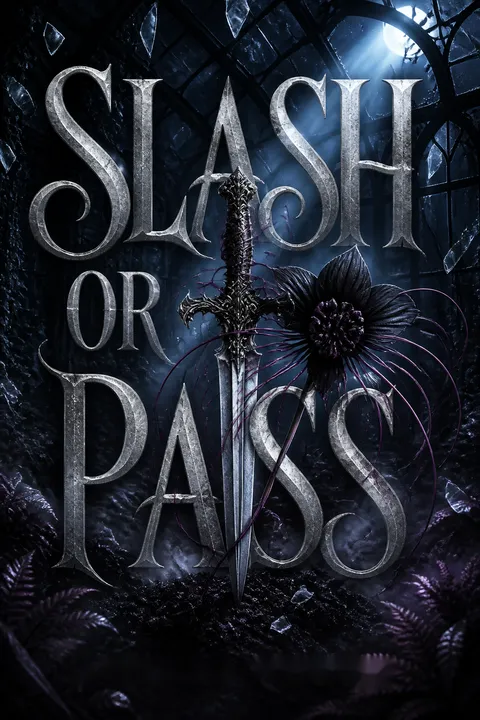


Plot Summary
Two Children Reach the Road
Ten years before the main story, eleven-year-old Eisley and Kansas flee the underground church where the Sinister Minister has starved and abused them. Their friend Constantine stays behind so the other two can escape, and Kansas tells Eisley that Constantine is dead.
In the present, Eisley has built a careful life in Shelley Vale: she tends unusual flowers, makes tea videos, and lives in the house left to her by her foster mother. When her friend Emi says their group will appear in a documentary about the church, Eisley refuses to profit from the suffering of its victims. Kansas is due to visit, but the film crew's interest has already brought the buried past back to her door.
The childhood flight establishes a painful bargain that governs Eisley's adult life: survival required leaving Constantine, so she treats happiness as something she must withhold from herself. Her garden, online work, and home are not merely decorative eccentricities. They are chosen spaces in which she controls what enters and what grows. The documentary threatens that control by turning private trauma into public entertainment. Starting with escape rather than the documentary makes clear that the present conflict is not simply about a film crew. It is about whether Eisley can inhabit a life built after abandonment without mistaking continued grief for loyalty.
Kansas Comes Home
Kansas arrives early, and the old attraction between him and Eisley returns alongside their old resentment. He wants a future with her; she still wears the ring from the childhood ceremony that she believes bound her to Constantine, and will not let herself move on.
At a drive-in screening, Spencer Foxworth sneaks up with a real knife as a prank, pressing it to Eisley's throat. Kansas attacks him, but the police dismiss Spencer's weapon and protect the wealthy Foxworth instead.
Eisley leaves in anger, then remembers Constantine's birthday. Rather than let the date become another punishment, she and Kansas bake a cake for their lost friend. When the documentary crew sends an unsettling letter to her home, she realizes the past is not staying buried.
The drive-in repeats the book's central danger in miniature: a blade is treated as harmless when wielded by someone powerful, while the person who reacts to protect Eisley becomes the apparent threat. Kansas's violence is both protective and shaped by his own history, making the scene emotionally complicated rather than heroic. The birthday cake offers a different response to trauma. Eisley briefly lets grief become an act of care instead of self-condemnation. Yet the letter punctures that fragile relief. Her community can celebrate its history, but when the survivors object to its uses, the town's institutions still decide whose discomfort matters.
A License at the Cross
While Eisley grieves at the wooden cross marking Constantine's supposed grave, Constantine is alive in Shelley Vale. He returns to the church, his inheritance, and finds four teenagers exploring the rooms where he, Kansas, and Eisley were imprisoned.
After they mock Eisley and repeat the police's contempt for victims, Constantine puts on a Ghostface mask and kills them. He leaves Eisley's childhood wedding license at the cross, where she finds it the next day.
The document bears her own young signature and confirms that the Minister arranged a marriage between her and Constantine. Soon afterward, Eisley's friend Therese shows her a news report: Constantine, the Sinister Minister's son, has been found alive. Eisley's grief becomes shock, then fury at having mourned a living man.
Constantine's return turns the memorial cross into a hinge between public history and private memory. The wedding license is not proof of a valid adult marriage, but it gives physical form to a bond formed under coercion and preserved through childhood. Constantine's killings also complicate his apparent return as a miracle: he punishes the teenagers for cruelty, but does so by reproducing the masked violence that defines the story's threat. The town's news report offers a revelation without repair. Learning he survived does not erase ten years of mourning; it adds the question of why he left her to do it.
The Husband in the Bar
Constantine approaches Eisley through her streaming account, then enters her home, drugs her wine, and touches her while she is unconscious. Their next meeting is face to face at a bar, where she recognizes him and demands to know why he stayed away. She leaves with him, torn between anger and the childhood intimacy they never resolved, and the two have sex at her house.
Constantine says he waited because returning too soon could have separated the survivors again. The documentary director then offers Eisley information about her family in exchange for an interview. She learns her parents, Gael and Leah Rosales, died when she was nine, and later visits their former home, where remembered details of her mother and father return.
The reunion deliberately denies the comfort of a clean homecoming. Constantine's secret entry and assault while Eisley is unconscious establish that desire and consent are not interchangeable in their relationship, even as she later chooses intimacy with him. The tension between those encounters matters: the story makes her attraction vivid but does not make his boundary violations disappear. The parents' house offers a contrasting kind of return. Its changed rooms cannot restore Eisley's childhood, yet a painted ceiling and familiar domestic routines let her recover memories that the church could not wholly erase.
Spencer's Hidden Shrine
Constantine helps Eisley get a moth tattoo, then kills Spencer after discovering him with a shrine of Eisley's photographs in his bedroom. Spencer had secretly been her largest paying online client, using the name FarawayFox, though Eisley never knew his identity.
The police focus on her work and the hidden shrine, questioning her as if she had caused his death. His girlfriend Soleil reveals the secret account, deepening the suspicion and grief around Eisley's friendship with the couple.
At Spencer's funeral, his mother welcomes Eisley as someone who comforted her son, while Soleil publicly accuses her of being his other woman. Constantine supports Eisley, but the funeral makes clear that even grief in Shelley Vale is filtered through money, status, and resentment.
Spencer's double life exposes how intimacy can be manufactured through unequal access. Eisley believed she was speaking to an anonymous customer; Spencer saw the paid exchange as a private claim on her, then built a shrine that converted access into possession. The police's scrutiny reverses responsibility, treating Eisley's livelihood as evidence while overlooking the coercive entitlement around her. At the funeral, competing women are made to carry the shame of Spencer's choices. His mother and girlfriend both use Eisley to manage their own grief, leaving her to defend herself while mourning someone she had regarded as a friend.
The Party Goes Dark
At a gathering held for Spencer, Eisley's friends take mushrooms while Constantine stays clearheaded. Soleil, drunk but not high, follows him outside and makes unwanted advances. Constantine puts on his mask and kills her. Eisley, unknowingly given an extra dose, hallucinates as the group flees a masked attacker; she is captured and taken back to the church, where she is drugged, restrained, and sexually used by someone she cannot identify.
Later, she calls Kansas in fear and asks him to come home. When the police take Constantine into custody, they blame him for supplying the mushrooms, although Micah was responsible. Eisley's group begins to fracture, and the murders are now close enough to touch her directly.
The party turns recreational confusion into a weapon. Eisley's impaired memory prevents her from knowing who touched her, while the others' intoxication makes the attack feel like another horror-film set piece rather than a crime with lasting consequences. Constantine's sober position gives him control over the scene, but the narration initially obscures what he does, forcing the reader to share Eisley's uncertainty. The arrest then shows how easily the town substitutes a convenient accusation for investigation. The group is not simply endangered from outside; its social habits, secrecy, and willingness to dismiss harm leave Eisley vulnerable.
Emi's Betrayal Burns
Kansas returns after Eisley asks for help, but the police hold Constantine over the mushrooms until Micah admits they were his. Emi then bars Eisley from the greenhouse and blames her for the deaths and the documentary's troubles.
Eisley and Kansas later break in to retrieve her plants, only to find her bat flowers shredded. Emi confronts them with a garden tool and admits she needs the documentary's money. She believes the killings are part of a planned slasher story and threatens to expose them for a payout.
Kansas strikes her with a shovel when she lunges at Eisley; after Emi flees to another greenhouse and attacks again, she is fatally stabbed in the struggle. Kansas burns the greenhouse and later finds emails showing Emi had recruited Eisley for the film.
The destroyed flowers make Emi's betrayal tangible: she has not only broken trust but attacked the work through which Eisley has made a life outside the church. Emi's financial desperation is real, yet she turns that vulnerability into a rationale for selling her friend and then threatening her. The fight collapses friendship into survival, leaving Kansas to decide what counts as protection and what counts as evidence. His fire erases the immediate scene but also deepens the cover-up. The emails confirm that Emi's friendship had been cultivated for the documentary, sharpening Eisley's sense that the town's kindness may have been another form of use.
The Scar That Closes
During the confusion after another confrontation, Kansas cuts his palm on a broken teapot in Eisley's kitchen. Eisley watches the wound close before she can bandage it. She searches for answers and discovers that Harper, Kansas's former girlfriend at college, was murdered weeks earlier, her body mutilated. Kansas had told Eisley only that they dated.
Constantine later explains that Kansas is Spencer's half-brother, the son of wealthy Teddy Foxworth, who sold him to the church; Kansas's mother was also part of the Family. Constantine reveals that he and Kansas were reanimated through the Minister's ritual, though each bears a permanent Y-shaped scar. Their childhood escape did not end the church's reach or the violence it taught them.
The healed hand turns the supernatural from folklore into evidence Eisley can touch. It also makes her earlier trust more precarious: Kansas has withheld both his family's identity and the fate of Harper, while Constantine controls which parts of their shared past become knowable. The scars function as bodily archives, records of an adult ritual built from the violence of their childhood. By linking Kansas to Spencer through their father, the revelation collapses the town's clean division between privileged families and captive children. The harm was not an aberration outside respectable life; it was financed from within it.
The Documentary Becomes Slasher
As the killings continue, Constantine attacks Micah at his security job but escapes before killing him. Micah identifies a masked assailant with Constantine's scar and moth tattoo, and police issue a curfew. Meanwhile, the documentary crew abandons its original project and begins staging a horror film. Its director lures Kansas to the set, then stabs and chases him, hoping to film a convincing death.
Kansas reaches the church, where Constantine helps him. The crew members are killed, though authorities later describe their deaths as a ritual suicide. The surviving friends are left to wonder who is next, while the film crew's decision to turn real deaths into entertainment has made the documentary itself another threat.
The documentary's shift from investigation to staged horror makes exploitation literal: the crew does not merely package the survivors' history, it tries to manufacture another victim for the camera. Kansas's injury echoes the violence of the church while revealing that he can be hurt, even if he can later heal. The official explanation of the crew's deaths repeats the town's older pattern of accepting a convenient story over evidence. The book's horror machinery therefore works on two levels. A masked killer endangers bodies, while institutions and media reshape what those bodies are allowed to mean.
Two Masks, One Claim
After Micah's description points toward Constantine, Eisley realizes the man she loves may be the masked killer. In a storm, she tries to flee, but Constantine intercepts her and drives her into the woods toward the church. He frightens and sexually dominates her there, then Kansas appears wearing a second Ghostface mask.
The two men reveal that they have acted together and have been killing people connected to the town's wealthy families. Eisley understands that Kansas knew Constantine was alive and hid it from her. Rather than choose between the men she loves, she admits she wants them both. Constantine and Kansas accept that arrangement, but their promise of belonging is bound to a plan of revenge and another dangerous ritual.
The revelation transforms the love triangle from a competition into a conspiracy, but it does not make the men's actions ethically simple. They have concealed Constantine's survival, controlled information, and used violence in Eisley's name. Her decision to love both men rejects the Minister's original demand that she choose which boy should live, reclaiming the form of the choice even as the circumstances are radically different. The scene's erotic charge sits beside genuine terror, not outside it. Eisley can desire them and still be confronting a coercive history that neither romance nor supernatural loyalty can neatly undo.
The Friends Become Offerings
Constantine and Kansas explain that the Reanimator's ritual can make Eisley immortal, and she agrees to join them. They plan to use a livestream as an alibi while they finish their revenge. Eisley invites Therese over under the pretense of baking, but Therese arrives with a knife and accuses her of the murders. Eisley knocks Therese unconscious, and the live video records the attack.
Constantine kills Micah; Kansas kills Therese after she attacks him. Earlier, the men have used a spell to make Eisley's friends forget her, and they continue preparing the church altar with candles and plants. The murders now serve two purposes for them: punishment for the town's complicity and materials for the ritual they intend to perform on Eisley.
The livestream converts Eisley's familiar performance space into both an alibi and an involuntary witness. Her work, once a source of independence, now helps the men manage suspicion while placing her in front of an audience during a real assault. The spell that erases her from her friends' minds extends the book's concern with social disappearance beyond the original captivity. Yet the men frame murder as justice and ritual preparation, collapsing accountability into private certainty. Eisley's consent to the transformation is real, but it arrives within a world the men have violently narrowed around her.
Eisley Dies at the Altar
Eisley is drugged with salvia and carried to the church altar, where Constantine and Kansas perform the ritual they learned from the Minister's books. They paint her with blood, use candles and her gathered plants, and have sex with her before Constantine stabs her through the chest. He cuts the ritual's Y-shaped mark and sews her body closed while Kansas counts out the required time.
Eisley wakes alive, with the new scar and the same regenerative power as the men. She now understands that the childhood ceremonies were not only religious theater: Constantine survived a far more brutal version, and Kansas underwent a shorter one. The three leave the church, believing they are bound together beyond ordinary death.
The altar revisits the site of childhood terror but changes the roles: Eisley is no longer a captive girl forced into a ceremony by the Minister. She has agreed to the transformation, though the men drug her and control its immediate conditions. That distinction is meaningful but uneasy, preserving the book's recurring tension between chosen desire and compromised agency. The scar makes survival visible rather than clean. Reanimation does not erase what happened; it gives the body a permanent inscription and converts the old ritual's promise of sacrifice into a chosen, if extreme, form of shared future.
Hemlock and Headlights
Back at Eisley's house, Remington arrives with a gun and handcuffs, determined to turn the three killers over to police. Eisley spots the assassin's teapot in her kitchen and quietly brews ordinary tea in one chamber and hemlock in the other.
Rem insists that everyone drink, then takes the poisoned cup and collapses before he can complete his call. Kansas and Constantine free themselves, and Eisley gathers her medication, wedding certificate, and belongings. The police arrive as the three drive away from Shelley Vale.
Constantine and Kansas admit they sent the unnerving bouquets that appeared after each death. Eisley leaves her house and garden behind, holding both men's hands as they follow the escape rule that once carried her out of the church.
The final escape reverses the opening image without simply repeating it. As a child, Eisley ran because two boys made a path through the dark; now she acts decisively, using knowledge of plants and a household object to stop Rem. The assassin's teapot embodies her transformation from someone who cultivated dangerous plants as comfort to someone willing to use them under pressure. Taking her medication alongside the wedding certificate also matters: her future is not framed as choosing between treatment and love, but as carrying her own needs into an uncertain life. The bouquets reveal that even their gestures of devotion have been entangled with menace.
Analysis
Slash or Pass uses the machinery of a slasher film to ask who gets to decide whether violence is a spectacle, a punishment, or a private act of survival. Its most important contrast is not simply between victims and villains. Shelley Vale's wealthy families, police, and documentary crew each find ways to make the children's suffering useful while refusing its consequences. The town protects Spencer's family, excuses the film crew's intrusions, and repeatedly treats Eisley's work and mental health as more suspicious than the powerful people around her.
Eisley's relationship with Kansas and Constantine carries the book's deepest contradiction. They share memories of captivity that create genuine intimacy, but those memories also become a rationale for possessiveness, secrecy, and control. Eisley's desire is real, yet the story places it beside drugging, surveillance, and coercion rather than pretending romance dissolves them. Her eventual refusal to choose between the men answers the Minister's childhood demand on her own terms, though it does not make the surrounding violence benign.
The repeated slasher rules and horror-film references turn genre convention into both joke and warning. A fake knife at a drive-in is treated as harmless until someone is actually threatened; the documentary literally shifts toward manufacturing a slasher story; and a mask makes violence legible while concealing the person responsible. These reversals suggest that spectatorship is never neutral when institutions profit from suffering.
Eisley's gardening offers a quieter counterpoint. She cultivates plants for tea, beauty, and comfort, while keeping poisonous varieties as a private safeguard. By the ending, that knowledge is neither purely decorative nor purely defensive. It becomes action. Her escape does not restore an untouched life, but it does leave her choosing what to carry: her medication, the rings, and the relationships she wants. The book's version of survival is less innocence recovered than agency seized inside an irreparably compromised world.
Review Summary
Slash or Pass received mixed reviews, with ratings ranging from 1 to 5 stars. Positive reviews praised the book's horror elements, spicy scenes, and unique cult storyline. However, many readers felt the book didn't deliver on its marketing promises, particularly regarding the MMF content. Criticisms included weak character development, confusing pacing, and grammatical errors. Some readers found the main character, Eisley, frustrating and unrealistic. Despite these issues, several reviewers enjoyed the book's entertainment value and its nod to 90s slasher films.
People Also Read









Characters
Eisley Rosales
Trauma-shaped final girlEisley is a gothic content creator, gardener, and survivor of the Sinister Minister's church. Her greenhouse and tea-making give her routines she can control, while her work online lets her turn attention into financial independence. She is funny and perceptive, but her instinct to find the good in people can leave her vulnerable to those who use her trust. Her childhood bond with Kansas and Constantine has shaped her ideas of loyalty, desire, and guilt. Eisley lives with bipolar disorder and makes complicated choices about medication and treatment. She wants a life that belongs to her, even as the past, her friends, and her lovers keep pressing claims upon it.
Kansas
Protective childhood confidantKansas escaped the church with Eisley and grew up as her closest confidant. He is clever, observant, and protective, with a competitive streak that grows sharper whenever Constantine enters Eisley's life. College gives him a route toward independence, but his ambition and anger are shaped by the knowledge that wealthy people can bend rules that would punish anyone else. Kansas wants Eisley to choose him, yet he also understands their bond was formed under extraordinary pressure. His humor and physical confidence can mask how strongly he fears being left behind or treated as expendable.
Constantine Blackwood
Surviving cult heirConstantine is the Sinister Minister's son and the third child who shared the church's underground captivity with Eisley and Kansas. As a boy, he found ways to bring food, books, and small comforts to his friends. He is intense, secretive, and accustomed to treating protection as something he must provide through force. His attachment to Eisley blends tenderness, possessiveness, and a deep fear of losing the family they formed in confinement. The adult Constantine carries the church's history in his scars and habits, while trying to build a life with people who knew him before either of them could choose their circumstances.
Emi Hajime
Best friend under strainEmi is Eisley's red-haired friend from the greenhouse community. Practical and financially pressured, she works hard to keep herself afloat and is drawn to opportunities that promise immediate money. Her warmth with Eisley rests on shared hobbies and familiarity, but she can also defend her choices sharply when Eisley questions them. Emi's relationship with her police-officer father is strained, adding another source of insecurity beneath her easy social manner.
Soleil Walton
Grieving socialiteSoleil is wealthy, outspoken, and socially confident, and she dates Spencer while moving among Shelley Vale's privileged young adults. Her friendship with Eisley mixes affection with teasing and assumptions about class, sex, and desirability. Soleil often treats bluntness as humor, but the people around her do not always experience it that way. Her public ease masks the pressure of living inside a tight social circle where loyalty, status, and jealousy are constantly being performed.
Spencer Foxworth
Heir with hidden appetitesSpencer is a wealthy Shelley Vale heir whose family name carries influence with local authorities. He is possessive of his place in Eisley's social group and dislikes outsiders who challenge its hierarchy. His relationship with Soleil appears settled to their friends, while his private interests remain hidden from her and Eisley. Spencer's ease around privilege contrasts with Kansas's experience of having to earn every opportunity, making him a focal point for the town's inherited advantages.
Therese
Gossip with a sharp edgeTherese is a stylish, talkative member of Eisley's circle and a cousin of one of the first teenagers killed. She loves information and often arrives with the latest news, sometimes before she has considered what it will mean to the person hearing it. Her relationship with Rem gives her a place within the town's old families, while her friendship with Eisley is complicated by her judgment of Eisley's independence and work.
Remington
Friendly heir to secretsRemington, usually called Rem, is Therese's boyfriend and a friendly presence among the young men in Eisley's circle. He works in computers and is more observant than his easygoing manner first suggests. Rem's family history ties him to Shelley Vale's established wealth, but he is troubled by what the town's privileged families may have concealed. His caution grows as he notices that the recent deaths may connect to older crimes.
Micah Palmer
Easygoing security workerMicah is a large, sociable friend who jokes easily with Rem and Kansas. He works for his father's business and is accustomed to support from his family, though their expectations also shape his choices. Micah's casual manner can make serious situations feel less threatening than they are. His connections to the friend group and to the town's powerful families place him near the story's conflicts even when he would rather keep life uncomplicated.
Dave Hues
Documentary directorDave directs the production that arrives in Shelley Vale to revisit the Sinister Minister's crimes. He presents the project as a platform for victims, but his appetite for a compelling story outruns his concern for their boundaries. Dave is resourceful at finding records and persuading people to participate. His professional ambition makes him a face of the larger conflict between documenting harm responsibly and turning it into entertainment.
The Sinister Minister
Cult leader and fatherThe Sinister Minister leads the Family from a church hidden in the woods and controls the children held beneath it. He uses religious authority, isolation, starvation, and staged ceremonies to make cruelty seem inevitable. As Constantine's father, he turns family itself into another instrument of control. His calm certainty is part of his menace: he presents his decisions as sacred law and trains those around him to accept them.
Teddy Foxworth
Powerful town patriarchTeddy Foxworth is Spencer's father and a prominent Shelley Vale businessman. His money and reputation give the Foxworth family access to influence, while his private history links him to the town's buried abuses.
Gael Rosales
Eisley's lost fatherGael is Eisley's biological father. Her recovered memories associate him with warmth, family gatherings, hockey, and the small rituals of home she lost when she was taken.
Leah Rosales
Eisley's lost motherLeah is Eisley's biological mother. Eisley remembers her singing while painting a starry ceiling and giving her watercolors, fragments that help restore a sense of childhood before the church.
Plot Devices
The childhood wedding rings
A promise carried forwardThe Minister gives Eisley and Constantine rings during a childhood ceremony designed to control which boy will be treated as husband and which will be sacrificed. Eisley and Constantine keep the rings on chains around their necks, and the wedding license survives as a document of the event. The objects connect their adult romance to the captivity that shaped it. They can signify enduring attachment, but they also preserve a bond made under coercion, forcing Eisley to decide what meaning she will give them now.
The Ghostface mask
Fear with a familiar faceA Ghostface mask turns the murders into recognizable slasher imagery and hides the identity of the person pursuing Eisley and her friends. Its familiarity makes the masked figure seem at first like a prank or a film reference, even when real danger follows. The mask also lets the killers borrow the documentary's visual language, blurring staged horror and actual violence. It becomes an instrument of suspense and a clue that Eisley must interpret rather than trust at face value.
The Reanimator ritual
Violence made immortalThe Minister's invented faith centers on a ritual that joins blood, death, sexual release, candles, plants, and a precise count of 237. The Family uses it to claim supernatural healing, while the Minister keeps its knowledge under his control. Constantine and Kansas later interpret the same books as a way to transform themselves and Eisley. The ritual is not a real-world religious practice in the story; it is a fabricated mechanism that binds the supernatural plot to the bodily memory of the children's abuse.
The assassin's teapot
A divided cup of dangerEisley's teapot has separate chambers, allowing two liquids to be poured from one vessel without mixing. She first explains its historical use as a way to hide poison, fitting her fascination with dangerous plants and the security they seem to offer. Late in the story, that practical knowledge becomes a means of defense when Rem controls the room with a gun. The device turns one of Eisley's domestic curiosities into a decisive tool, making her expertise matter under pressure.
The documentary production
Trauma turned into contentThe film crew's project brings the survivors' past into public view, creating the occasion for their reunion and for the town's old families to feel exposed. The crew initially claims to be documenting the Sinister Minister, then increasingly treats the events as material for a more sensational production. Interviews reveal information about Eisley's parents, while staged scenes and camera presence make it difficult to separate testimony from performance. The project drives the mystery and critiques the conversion of real suffering into a marketable story.
FAQ
Synopsis & Basic Details
What is Slash or Pass about?
- Trauma Survivors Escape Cult: The story follows Eisley and Kansas, two young survivors who escaped a horrific cult led by the "Sinister Minister" ten years prior, enduring abuse, starvation, and psychological torment in a secluded church basement.
- Past Haunts Present: Years later, living seemingly normal lives in Shelley Vale, their fragile peace is shattered by the arrival of a documentary crew investigating the cult, stirring up buried trauma and attracting unwanted attention.
- Mysterious Murders Begin: A series of brutal murders mirroring the cult's violence rocks the town, targeting individuals connected to the past and forcing Eisley and Kansas to confront the possibility that the horrors they escaped are far from over, and the killer might be closer than they think.
Why should I read Slash or Pass?
- Unique Horror Romance Blend: It offers a fast-paced, absurd narrative that blends slasher film tropes with dark romance, exploring themes of trauma, survival, and unconventional relationships against a backdrop of small-town secrets and supernatural elements.
- Deep Character Psychology: The book delves into the complex psychological impacts of religious trauma and abuse on the protagonists, showcasing their coping mechanisms, unspoken desires, and twisted bonds forged in captivity.
- Intriguing Mystery & Symbolism: Beyond the kills, the story weaves a mystery involving hidden family histories, ancient rituals, and recurring symbols (like the Death's Head Moth and specific flowers) that add layers of meaning to the characters' actions and motivations.
What is the background of Slash or Pass?
- Fictional Cult & Dark Magic: The core background involves a made-up cult, "The Family," led by the "Sinister Minister", which practiced a unique form of dark magic centered around a being called the "Reanimator," requiring sacrifices for power and immortality.
- Small Town Secrets: Shelley Vale, named after Mary Shelley, is depicted as a town with deep-seated secrets, where powerful, wealthy families were complicit in funding or enabling the Minister's atrocities, creating a corrupt social structure that protects its own.
- Trauma and Purity Culture: The narrative is steeped in the themes of religious trauma and purity culture imposed by the cult, which profoundly impacts the protagonists' understanding of relationships, sexuality, and self-worth, particularly Eisley's journey with intimacy.
What are the most memorable quotes in Slash or Pass?
- "Don't talk to anyone. Don't look back. Just run.": This repeated phrase serves as both a survival rule from their escape and a thematic echo throughout the book, representing the characters' initial flight from trauma and the later struggle to confront or escape its lingering effects.
- "You're mine, in every sense of the word, wife.": Spoken by Constantine to Eisley, this line encapsulates his possessive claim over her, rooted in their childhood "marriage" and his adult desires, highlighting the complex and controlling nature of their bond.
- "Everyone does have secrets.": Uttered by Kansas after Emi's death and later echoed by Constantine, this quote underscores the pervasive theme of hidden truths and the idea that seemingly normal individuals, or even entire communities, harbor dark secrets that drive the plot and character actions.
What writing style, narrative choices, and literary techniques does Tylor Paige use?
- Fast-Paced, Absurdist Tone: Paige employs a rapid narrative pace and embraces absurdity, openly acknowledging the slasher genre's conventions and sometimes illogical plot points ("Why doesn't she just run the other way?"), prioritizing thrills and character dynamics over strict realism.
- Multiple Character Perspectives: The story shifts perspectives between Eisley, Kansas, and Constantine, often marked by "Rule" headings attributed to each character, offering intimate access to their thoughts, motivations, and differing interpretations of shared events.
- Symbolism and Foreshadowing: The author utilizes recurring symbols (bat flowers, specific bouquets, masks, scars, the Church itself) and subtle foreshadowing (throwaway lines about cameras, character quirks, environmental details) to hint at future events and deepen thematic resonance, particularly around trauma, control, and transformation.
Hidden Details & Subtle Connections
What are some minor details that add significant meaning?
- Eisley's Bat Flowers: Her dedication to growing the rare, dark Tacca chantrieri ("bat flower") symbolizes her embrace of a gothic aesthetic and her connection to darkness and the macabre, hinting at her comfort with themes others find unsettling and foreshadowing her eventual acceptance of the Reanimator's dark magic.
- The Assassin's Teapot: Eisley's prized teapot with separate chambers, explained as being used to serve two drinks (one potentially poisoned), subtly foreshadows the theme of hidden dangers within seemingly innocuous things and her own comfort with the idea of poison as a "comfort thing" against dark thoughts.
- The 237 Motif: The recurring number 237 (Constantine's candle count, Kansas's death count) is a direct allusion to The Shining, a horror classic about psychological breakdown and supernatural influence, subtly linking the Church's horrors and the Reanimator's power to themes of madness and inescapable evil.
What are some subtle foreshadowing and callbacks?
- Kansas's Scar & Constantine's Scar: The reveal that both men bear similar Y-shaped scars on their chests, initially explained away by Kansas as a hazing ritual, is a major callback to the Reanimator ritual described in the Minister's manual and foreshadows their shared experience with reanimation and immortality.
- Eisley's Missing Necklace: Kansas ripping off Eisley's wedding ring necklace during their greenhouse encounter foreshadows her temporary separation from her symbolic bond with Constantine and highlights Kansas's possessive desire to break that connection, only for Constantine to later return it.
- The Documentary Crew's Research: The crew's casual mention of digging through Shelley Vale records and finding the police report about Eisley and Kansas's escape subtly foreshadows how easily their past can be exposed and how the town's secrets are intertwined with their own history.
What are some unexpected character connections?
- Kansas and Spencer Foxworth's Brotherhood: The shocking reveal that Kansas is the illegitimate half-brother of Spencer Foxworth, a member of one of the wealthy families complicit in the cult's funding, creates a direct, personal link between Kansas and the town's corrupt elite, fueling his resentment and desire for revenge against them.
- Emi's Father's Role: The detail that Emi's father is a police officer, possibly the chief, adds a layer of irony and subtle connection to the town's systemic failure to investigate the cult, suggesting that even the families of Eisley's friends benefited from or were involved in covering up the truth.
- Therese's Break-in: Therese's seemingly random act of breaking into Eisley's house and destroying her kitchen, motivated by jealousy and stress, reveals a hidden capacity for destructive behavior among the friends and foreshadows her later, more desperate actions driven by fear and suspicion.
Who are the most significant supporting characters?
- Emi: Initially presented as Eisley's supportive best friend, Emi becomes significant as the first major betrayal, revealing the superficiality of their friendship and her willingness to exploit Eisley's trauma for personal gain (documentary bonus), ultimately becoming a victim of the unfolding violence.
- Spencer Foxworth: As a representative of the wealthy, complicit families and Kansas's half-brother, Spencer's character highlights the generational privilege and entitlement in Shelley Vale, his obsession with Eisley adding a personal motive for conflict before his murder makes him a key victim.
- Therese: Another friend from a complicit family, Therese's character arc showcases the psychological breakdown under pressure, her initial denial and later destructive actions (trashing Eisley's kitchen) driven by fear and suspicion, making her a significant figure in the escalating violence and the reveal of the friends' true feelings.
Psychological, Emotional, & Relational Analysis
What are some unspoken motivations of the characters?
- Eisley's Need for Control: Beyond her stated reasons, Eisley's meticulous gardening and streaming career are unspoken attempts to create order and control in a life defined by chaotic, uncontrollable trauma, providing a safe space where she dictates the rules, contrasting with her powerlessness in the cult.
- Kansas's Possessive Love: While expressing love, Kansas's actions (ripping off her necklace, forcing intimacy, deleting camera footage) reveal an unspoken, deep-seated possessiveness rooted in their shared captivity, viewing Eisley as "his" and struggling with her independence or connection to others, including Constantine.
- Constantine's Desire for a Twisted Family: Constantine's motivation extends beyond simple revenge; his actions suggest an unspoken desire to recreate a twisted version of the "Family" he grew up in, with Eisley and Kansas as his chosen, immortal companions, replicating the forced bonds and rituals of his past in a new context.
What psychological complexities do the characters exhibit?
- Trauma-Induced Coping Mechanisms: Eisley exhibits complex coping mechanisms, including avoidance (refusing the documentary), dissociation (blacking out during traumatic events or drug use), and finding solace in routine/control (gardening, streaming), all stemming from her prolonged childhood abuse and captivity.
- Moral Ambiguity & Justification: Kansas and Constantine display significant moral complexity, justifying their murders and manipulation as necessary consequences for the families who enabled their suffering, showcasing how trauma can warp moral reasoning and create a sense of entitlement to vengeance.
- Twisted Bonds & Attachment: The intense, almost obsessive bonds between Eisley, Kansas, and Constantine are psychologically complex, representing trauma bonding where shared horrific experiences create an unbreakable, albeit unhealthy, attachment that blurs the lines between love, protection, and control.
What are the major emotional turning points?
- Eisley's Discovery of the Wedding License: Finding the childhood wedding license at Constantine's memorial cross is a major emotional turning point for Eisley, forcing her to confront the reality of their past bond and sparking the emotional turmoil that leads to her drunken breakdown and vulnerability.
- Hearing Friends' True Opinions: Overhearing her friends' cruel comments about her job and past at the bar is a significant emotional turning point for Eisley, shattering her illusion of their support and fueling her later anger and disillusionment with them, paving the way for her acceptance of Kansas and Constantine's darker worldview.
- The Reanimation Ritual Experience: Eisley's experience during the reanimation ritual, particularly the intense, drug-fueled sexual encounter with both men, is a profound emotional and psychological turning point, forcing her to confront her deepest fears and desires, ultimately leading to her transformation and acceptance of her new reality with them.
How do relationship dynamics evolve?
- Eisley and Kansas: From Childhood Protectors to Complex Lovers: Their relationship evolves from a platonic bond forged in shared trauma and mutual protection to a complicated dynamic marked by Kansas's unrequited desire, jealousy, and eventual sexual intimacy, culminating in a polyamorous relationship rooted in their shared past and future immortality.
- Eisley and Constantine: From Lost Love to Possessive Husband: Their relationship transforms from a childhood "marriage" and presumed death to Constantine's reappearance as a controlling, possessive figure who claims Eisley as his wife, their bond deepening through shared secrets, dark magic, and intense sexual encounters that redefine their connection.
- Eisley and Her Friends: From Support System to Betrayal: Eisley's relationships with Emi, Therese, Soleil, Rem, and Micah deteriorate from a seemingly supportive friend group to a series of betrayals, revealing jealousy, superficiality, and ultimately, their complicity (or their families') in the system that harmed Eisley, leading to her complete break from them.
Interpretation & Debate
Which parts of the story remain ambiguous or open-ended?
- The Full Nature of the Reanimator: While the ritual is described, the true nature, origins, and ultimate goals of the "Reanimator" entity remain largely ambiguous, presented as a powerful, ancient being requiring specific sacrifices but without a clear mythology beyond the Minister's interpretation.
- The Extent of Family Complicity: The narrative implies widespread complicity among Shelley Vale's wealthy families in funding or enabling the cult, but the precise details of each family's involvement and how many individuals were aware remain somewhat open-ended, leaving room for interpretation on the town's collective guilt.
- The Future of the Trio: The ending sees Eisley, Kansas, and Constantine escaping Shelley Vale as immortal, reanimated killers, but their future remains open-ended; the story doesn't detail where they go, what they do, or how they navigate their new existence and the "urge" to kill in the wider world.
What are some debatable, controversial scenes or moments in Slash or Pass?
- The Reanimation Rituals: The descriptions of the Reanimator rituals, particularly the graphic details of organ removal, skinning, and bathing in blood, are highly controversial and push the boundaries of horror, prompting debate on the use of extreme gore and body horror.
- Dubious Consent Sexual Encounters: Several sexual encounters, particularly those initiated by Kansas or Constantine when Eisley is emotionally vulnerable, intoxicated, or under the influence of drugs (like the greenhouse encounter, the bathroom scene, or the reanimation ritual), feature elements of dubious or non-consent, sparking debate on power dynamics, consent, and the portrayal of sexual violence in romance.
- Protagonists as Justified Killers: The narrative frames Eisley, Kansas, and Constantine as protagonists who commit multiple murders, often graphically, but justifies their actions as revenge against those who harmed them or enabled their suffering, leading to debates on whether their trauma excuses their violence and if they are truly heroes or villains.
Slash or Pass Ending Explained: How It Ends & What It Means
- The Ritual's Success & Transformation: The ending culminates in Eisley undergoing the Reanimator ritual, facilitated by Kansas and Constantine, which successfully reanimates her, granting her the same immortality, rapid healing, and potentially the "urge" to kill that they possess, fulfilling the Minister's prophecy in a twisted way.
- Escape and New Identity: With Eisley now reanimated and their friends/enemies dead or neutralized, the trio decides to abandon Shelley Vale entirely, leaving behind the crime scenes and their past lives to start anew, embracing their new identities as immortal beings bonded by trauma, dark magic, and shared violence.
- Meaning: Reclaiming Power Through Trauma: The ending signifies the protagonists reclaiming power over their trauma. By embracing the dark magic that cursed Kansas and Constantine and nearly killed Eisley, they turn the source of their suffering into a tool for survival and vengeance, choosing to become the monsters their abusers created, but on their own terms and together.
Download PDF
Download EPUB
.epub digital book format is ideal for reading ebooks on phones, tablets, and e-readers.








