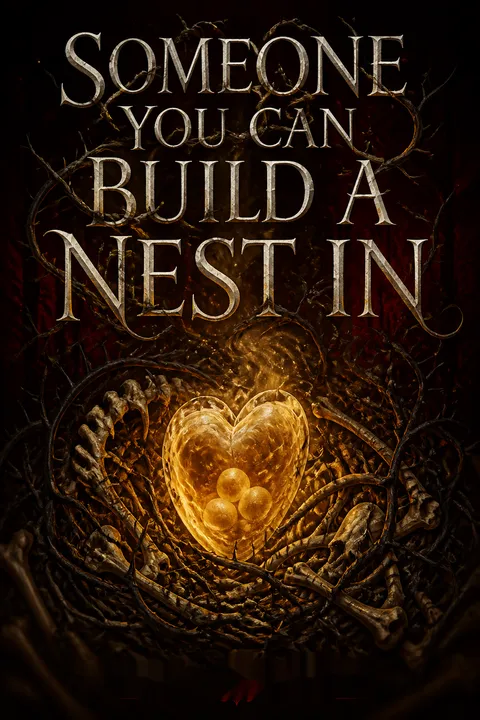


Plot Summary
The Waking Trap
Shesheshen1 wakes weak in her flooded lair as monster hunters Rourke8 and Malik9 arrive with Catharsis Wulfyre,5 a golden-armored heir whose family wants the Wyrm of Underlook1 killed.
She disguises herself as a frightened captive and tries to send them after a harmless herb, but Catharsis5 rejects the delay and smears rosemary oil across her face. The poison burns her flesh. Shesheshen1 answers by vomiting up the bear trap she keeps inside her body, which snaps through Catharsis’s5 armor and severs his hand.
When he shoots her with a barbed, poisoned bolt, Rourke8 flees with the injured Malik.9 Catharsis5 slips on his own rosemary oil and is left behind. Shesheshen1 eats him to survive the poison, then follows her blue bear companion, Blueberry,7 toward town in search of more food.
The opening makes the monster’s body both a survival tool and a record of deprivation. Shesheshen builds herself from scavenged bones because she has no stable skeleton, while the hunters bring weapons designed to make her vulnerability legible and exploitable. Their assumption that a monster must have a conventional heart or blood already exposes the gap between legend and the creature before them. Her killing of Catharsis is self-defense, but eating him is also how she repairs the damage he caused. The scene refuses a clean division between violence and need: Shesheshen is dangerous, yet the danger begins with a wealthy family sending armed men into her home.
The Bonfire Finds Her
Still poisoned and hungry, Shesheshen1 enters Underlook in a red cloak, hoping to feed without being recognized. The town is holding a bonfire festival for the supposed death of its monster.1 A wealthy trader, Laurent,10 explains that local leaders invented the Wyrm of Underlook1 to frighten travelers into spending money.
The lie stings more than the rosemary: people are celebrating her death while denying she exists. Then Rourke8 and Malik9 arrive and announce that the creature1 survived. Malik9 points Shesheshen1 out, and Laurent10 tears away her hood before the frightened crowd.
She flees through the streets as townspeople seize torches and weapons. An archer and other riders pursue her beyond the town, forcing her off the road and toward a ravine. Her horse bucks, throwing her into the river gorge.
Underlook’s festival turns fear into a civic product. The town does not merely misunderstand Shesheshen; it profits from a story that lets residents feel protected while leaving the actual creature unnamed and unrecognized. Laurent’s revelation therefore wounds her sense of existence as much as it exposes the town’s corruption. Her flight also shifts the novel from solitary survival into social consequence. Once she is seen, the people who imagined a monster begin hunting a real one, and the danger spreads to anyone near her. The ravine is the first break in Shesheshen’s control: an accident forces her into contact with a human she did not choose as prey.
Soup and a Witch Hat
Homily,2 a traveling naturalist, finds Shesheshen1 unconscious by the river and treats her wounds, including removing the poisoned bolt. She wraps the stranger in quilts, feeds her broth, and offers a ride to Underlook.
Shesheshen1 calls herself Siobhan and hides her nature, but Homily’s2 care unsettles her more than a threat would. In town, people avoid Homily2 because her family’s power makes them wary, leaving her isolated at a dance. Shesheshen1 spots her alone, secretly outfits herself with bones from a butcher’s shop, and returns to ask for a dance.
Before that, she coerces Laurent10 into cleaning several rooms of her lair. The dance gives Homily2 a welcome companion and gives Shesheshen1 the conviction that the woman could become her ideal nest. She invites Homily2 home instead of eating her.
Homily’s rescue introduces care as an action rather than a sentiment: she removes the bolt, binds the wound, and feeds someone who cannot repay her. Shesheshen interprets this kindness through the only relational model she has, imagining Homily as a nest for her future young. That misreading is comic, but also revealing. She can recognize warmth and attachment before she can imagine intimacy without possession. Homily, meanwhile, is isolated not because she lacks social skill but because the town treats her family name as a threat. Their dance briefly reverses that arrangement: the feared creature offers companionship to the woman whom everyone else leaves alone.
Blood on the Highway
As Homily2 drives Shesheshen1 toward the lair, three masked robbers stop their wagon and search her books and animal-scent samples. When they threaten Homily,2 she swings her mace and cracks the leader’s mask.
Shesheshen1 abandons her human disguise, kills the other two bandits with bones pushed through their necks, and crushes the leader beneath her feet. Homily2 is left with a deep shoulder wound. Shesheshen1 carries her to the newly cleaned rooms Laurent10 prepared and closes the injury by giving Homily2 a piece of her own flesh.
During their recovery, Homily2 reveals that she is a Wulfyre, daughter of the feared Baroness,3 and that a curse supposedly threatens her siblings. She asks Shesheshen1 to help find the Wyrm of Underlook.1 Shesheshen1 knows she is the creature1 Homily2 intends to hunt, but cannot yet bring herself to confess.
The highway attack gives the relationship its first reciprocal test. Homily acts despite being outnumbered, and Shesheshen answers not with a performance of humanity but with the bodily force she has been hiding. Her gift of living tissue then complicates the violence: the same body that kills can repair, and the repair is intimate without being a conventional cure. Homily’s family revelation makes the concealed truth more dangerous. She is not merely an accidental companion to a monster hunter. She is tied to the very family that has pursued Shesheshen for years. The romance now rests on an asymmetry of knowledge, and Shesheshen’s silence becomes an active choice with consequences.
A Mother’s Steel Fangs
Shesheshen1 tests Homily’s2 story by setting a sheep in false antlers among the trees, but Homily2 sees through the crude decoy and realizes she has found no real wyrm. When Homily2 reunites with her siblings, Epigram4 accuses her of abandoning the family, while their mother, the Baroness,3 treats her as a disobedient liability.
Shesheshen1 joins them and sees a familiar object at the Baroness’s3 throat: the steel fangs once worn by Shesheshen’s mother.3 The Baroness3 claims she tore them from the previous wyrm she killed after it implanted eggs in her husband.
Homily2 repeats that the Wyrm of Underlook1 cursed the family and that its heart can break the curse. Shesheshen1 recognizes her own mother’s3 teeth, but she cannot expose herself without destroying Homily’s2 trust.
The necklace turns a family legend into a private wound for Shesheshen. Until this moment, her mother exists only as a fragment of memory, while the Baroness wears that fragment as a trophy and tells a story that casts the monster as pure predation. Shesheshen has no way to verify the tale, yet the visual evidence makes the hunt personal. Homily’s belief in the curse also shows how inherited narratives can become emotionally real even when their origins are uncertain. The two women are now caught in competing stories about the same past: one has been raised to fear a cursed monster, the other has been made into the monster in another family’s account.
Rosemary at Supper
At a formal supper, the Baroness3 makes Homily2 and Shesheshen1 drink rosemary wine, claiming it will kill the Wyrm of Underlook1 if it is present. Shesheshen1 secretly transfers the burning liquid into a borrowed lung and expels it through her boot, preserving her disguise.
The family argues over signs of the monster, and Epigram4 reports sightings of a huge blue bear. Homily2 explains that the bear fled from her in the ravine, but the Baroness3 dismisses her evidence and orders a hunt. Epigram4 later uses Homily’s2 scent lures to drug and capture Blueberry,7 chaining the injured bear in a clearing as bait.
Shesheshen1 infiltrates the camp and sabotages weapons, but she cannot reach Blueberry7 without alerting the guards. The family’s search for a monster has become a threat to the one creature Shesheshen1 loves without wanting to consume.
The rosemary test turns the dinner table into an instrument of coercion. The Baroness calls the ritual proof, but its real function is to force obedience and expose anyone who cannot comply. Shesheshen survives by adapting her body in secret, a small act of resistance inside a scene designed to make submission visible. The bear’s capture sharpens the cost of the Wulfyres’ mythology. Because Homily’s knowledge is repurposed by her family, even her attempts to study wildlife help the hunters seize Blueberry. Shesheshen’s attachment to the bear is meaningful precisely because it is not reproductive or possessive. She cares for Blueberry as a companion, not as food or a future nest.
Blueberry in Chains
A storm gives Shesheshen1 a chance to join the night patrol and approach the clearing, but a rosemary-coated bear trap crushes her leg. At that moment, a mass of gray flesh on branchlike legs11 emerges from the woods and attacks the patrol.
Rourke8 and Malik9 try to drive it off, while Shesheshen1 cuts away her trapped limb and limps to Blueberry.7 She unlocks the bear’s chains. Homily2 arrives carrying rosemary oil and forces the creature11 back, then guides Shesheshen1 into a guarded tent where Ode6 has been left alone.
The child6 slips outside, still wanting to see the monster. The creature11 swallows her before Homily2 can pull her back. Homily2 and Shesheshen1 survive, but Ode6 is gone, and the Wulfyre family’s grief becomes a new excuse for escalating the hunt.
The attack refuses the hunters’ tidy categories: the supposed monster is neither the only danger nor the creature they expected to find. Shesheshen’s injury forces her to sacrifice part of her own body to reach Blueberry, while Homily uses the same rosemary that hurts Shesheshen to save her. Their care is real, but it is costly and imperfect. Ode’s death follows not from a grand battle plan but from a child being left unprotected while adults treat violence as spectacle. The scene also exposes the family’s central failure: they can organize armies and traps, yet they cannot protect one another from the consequences of their own cruelty.
The Nest Beneath
After Ode’s6 death, Homily2 returns to the inn shattered by her family’s blame. She reveals that Epigram4 once injured her during childhood games and later slashed her throat when a marriage was arranged. Homily2 had learned to protect her sister4 by accepting harm, and still believes she must prove her worth to the family.
Shesheshen1 comforts her, then discovers a blood-filled organ inside her own chest. It is not a heart but an egg sac, awakened by her attachment to Homily.2
At her lair, she also finds that the lump of unformed tissue she had expelled after gorging on the dead bandits has vanished. The gray attacker11 shares her flesh and rosemary weakness. Shesheshen1 realizes it is an accidental offspring, formed without eggs,11 and that it may be hunting the Wulfyres as well as her.
The bodily revelation gives a physical form to Shesheshen’s fear that love will become possession. Her egg sac awakens not through a deliberate act but through attachment, making reproduction feel like an instinct that could overrule consent. Homily’s account of childhood abuse parallels that danger: she has been trained to treat self-sacrifice as proof of love and usefulness. Shesheshen recognizes the pattern because she fears inflicting it herself. The new creature adds another complication. It is neither a planned child nor simply a piece of Shesheshen to reclaim. The novel makes parenthood a question of responsibility toward an unpredictable being, not merely a biological event.
The Baroness Unmasked
Rourke8 and Malik9 propose using a Wulfyre as bait to draw out the gray creature.11 Homily2 volunteers, convinced this will be her last sacrifice for the family, and Shesheshen1 joins the hunt. When Shesheshen1 encounters her offspring11 alone, it approaches without attacking, seemingly seeking reunion.
The Baroness3 intervenes, wounds it, and sends the hunters after it. Shesheshen1 turns on her, driving metal skewers through her neck. The Baroness3 appears to die, then rises in a distorted body of gray flesh and reveals that she is the original monster3 wearing a human identity.
She says she created Shesheshen1 by laying eggs in the Baron, and wants Shesheshen’s1 egg sac to prolong her own life. She kills Rourke8 and leaves Shesheshen1 impaled and badly injured, forcing her to flee back toward Homily.2
The revelation overturns the moral map the Wulfyres have used to organize their lives. The family’s supposed curse is not an external punishment but a story maintained by the very creature they trust as its protector. The Baroness has survived by converting people into roles: children as future masks, political authority as camouflage, and Shesheshen as a source of eggs. Yet Shesheshen’s own reproductive instinct makes the confrontation uncomfortable rather than simple. She has imagined Homily as a nest, so the Baroness’s predation exposes a possible future Shesheshen must actively refuse. Her choice to protect Homily now requires resisting not only the enemy but the logic of inheritance.
Homily Takes the Knife
Shesheshen1 reaches Homily’s2 tent intending to confess, but Epigram4 is waiting in Homily’s2 blue robe. She shoots Shesheshen1 with a rosemary-filled bolt and accuses her of being the Wyrm of Underlook.1 Homily2 arrives as Shesheshen’s1 body melts under the poison.
Epigram4 insists the curse was only a family story used to manipulate outsiders, then pushes a crossbow into Homily’s2 hands and orders her to kill the monster.1 Homily2 understands that her family has pursued Shesheshen1 without cause, and that Epigram4 still expects her to absorb the violence.
Instead, Homily2 takes Epigram’s4 knife and cuts her sister’s4 throat. She admits that her family’s actions created a real curse through their persecution, even if no magic ever existed. Shesheshen,1 barely conscious, apologizes for the harm she caused.
Homily’s choice is not a triumphant escape from trauma. She kills someone she loves and fears, then has to face the fact that the act may have been necessary without becoming morally simple. Epigram’s appeal to family duty repeats the coercive structure Homily has endured since childhood: her feelings matter only when they serve someone else’s survival. The revelation that the curse was fabricated does not erase its effects. The Wulfyres’ violence made the supposed curse materially true for Shesheshen. Her apology matters because it acknowledges that being hunted does not absolve her of deception, just as Homily’s history does not make her responsible for her family’s abuse.
Underlook Burns Again
Shesheshen1 tells Homily2 that the creature11 is her accidental offspring11 and that the Baroness3 is another wyrm wearing a human life.3 Homily2 believes her after recalling reports of her mother3 surviving injuries no person could survive.
They return to Underlook with armed escorts, but find the Baroness3 bombing homes and warehouses while searching for the hidden creature.11 Homily2 and Shesheshen1 approach together, pretending to be Epigram4 and Homily.2 They question the Baroness’s3 refusal to drink rosemary wine and draw the townspeople’s attention to her suspicious behavior.
Before they can expose her, the offspring11 bursts from a building and attacks the Baroness.3 The creature11 escapes around the warehouse. Shesheshen1 offers to lead the pursuit, using the disguise of Epigram4 to draw the Baroness3 away from Homily2 and the remaining witnesses.
The town’s walls, once intended to keep monsters out, become a prison when the Baroness turns her military power inward. Her destruction of Underlook reveals that civic order was never a neutral good; it depended on whose property and lives the ruler considered expendable. Homily’s strategy uses the Baroness’s assumptions against her. By adopting the role of the obedient family, she gains the moment needed to maneuver, while Shesheshen’s disguise exposes how easily social identity can be performed. Yet their success is partial. The offspring’s sudden attack turns their plan into a chase, and the final confrontation will depend on whether they can protect one another without surrendering the young creature.
The Egg Sac’s Price
Shesheshen1 leads the Baroness3 into a cellar and sends the offspring11 into the wall to hide. When the Baroness3 discovers the ruse, she attacks Shesheshen1 and digs through her body for the egg sac. The offspring11 leaps from hiding to defend her, but the Baroness3 crushes and poisons it.
Shesheshen1 offers her own eggs in exchange for its life and Homily’s2 safety. She swallows a jug of rosemary wine and forces the poison into the egg sac, making it rigid and visible.
The Baroness3 tears it free and eats it, but Shesheshen1 clings to her head, pours the remaining poison into her eyes, and bites down with her mother’s recovered steel fangs.3 The Baroness3 staggers into the street, where Homily2 and Underlook’s citizens attack. Malik9 burns the last living strand of the monster,3 ending its escape.
Shesheshen defeats the Baroness by refusing the inheritance she has feared. Her egg sac is the means by which the older wyrm hoped to extend its life, but Shesheshen turns it into a weapon and accepts the cost to protect the offspring and Homily. The steel fangs, once a relic displayed by the Baroness, become Shesheshen’s own tool of resistance. The final blow is collective: Homily, Malik, and ordinary townspeople help destroy what Shesheshen alone cannot finish. Civilization here is no longer a mask for the powerful. It becomes a shared action against someone who has used political authority to make private violence look inevitable.
A Household of Three
Homily2 hides Shesheshen1 and the surviving offspring11 while Underlook celebrates the monster’s3 apparent death. Once Shesheshen1 can recover, she and Homily2 begin rebuilding life together in the Wulfyre estate. Their first formal date turns into a playful food fight, and Homily2 gradually faces nightmares about killing Epigram4 and losing Ode.6
Shesheshen1 comforts her without demanding that grief disappear. The offspring,11 whom Homily2 names Epilogue,11 proves affectionate but keeps attacking her, driven by its wish to merge back into Shesheshen.1
Homily2 refuses Shesheshen’s1 suggestion to poison it and instead helps teach it that distress does not entitle it to hurt others. The family’s life grows through hunting, reading, swimming, and tending Blueberry.7 As autumn approaches, Shesheshen1 grows weak and warns Homily2 that hibernation will leave her alone with Epilogue.11
The aftermath makes care a practice with limits. Homily cannot undo the past by being endlessly generous, and Shesheshen cannot solve Epilogue’s distress by absorbing it back into herself. Their new household depends on distinguishing affection from self-erasure. Homily’s insistence on teaching the young creature rather than poisoning it marks a departure from her family’s punitive habits, while Shesheshen’s warning about hibernation shows that love now includes planning for vulnerability. Grief remains present in nightmares and ordinary routines. The book does not treat healing as a reward that follows the defeat of an antagonist; it is labor that the characters continue after the immediate danger has passed.
What Survives Winter
Shesheshen1 sinks into the hot spring for winter, troubled by memories and by the fear that Homily2 and Epilogue11 will be unsafe without her. Her hibernation becomes fractured by the sounds of her housemates moving, fighting, and keeping her from deep rest.
When she finally claws her way out of the water, Homily2 is alive beside her, and Epilogue11 is whole and waiting. Homily2 explains that she and the young creature11 learned to live together through a difficult season, including Epilogue’s11 own brief hibernation.
The creature11 can write and is beginning to draw maps. It wraps itself around Shesheshen1 without trying to consume her, then holds Homily’s2 hand as well. Shesheshen,1 still rebuilding her body, asks what kept them together. Homily2 answers that they wanted Shesheshen.1
The ending resolves the book’s opening image of the nest without returning to the fantasy of being sheltered from all danger. Shesheshen’s childhood nest was made from a parent’s body and defined by dependence; the new household survives because its members remain distinct and learn each other’s limits. Homily does not simply wait passively through the winter. She and Epilogue build a relationship in Shesheshen’s absence, proving that care need not mean ownership or constant supervision. Epilogue’s writing and mapmaking signal a future shaped by curiosity rather than hunger alone. Shesheshen wakes to a family that has chosen her, not one that requires her body as its shelter.
Analysis
The novel uses the monster’s1 body to make questions of identity, intimacy, and consent materially difficult. Shesheshen1 can alter her shape, borrow organs, and turn bones into tools, but flexibility does not automatically make her free. She has inherited no trustworthy model of family. Her early belief that love means placing eggs inside a suitable person is not simply grotesque humor; it is a sincere attempt to translate attachment into the only form of care she understands. The story’s emotional work lies in making her revise that instinct without denying her nature.
Homily2 faces a parallel problem from the human side. Her family has trained her to equate usefulness with love, so she repeatedly offers herself to people who exploit her. Her relationship with Shesheshen1 becomes meaningful when each woman stops treating sacrifice as proof of devotion. Shesheshen1 refuses to make Homily2 a nest, while Homily2 learns that kindness does not require tolerating injury. Their bond is not healing by magic or effortless acceptance. It grows through disclosure, conflict, mutual protection, and the repeated practice of respecting limits.
The Wulfyre curse demonstrates how an untrue story can produce true consequences. The family’s supernatural explanation gives political violence a sacred purpose, while the Baroness’s3 authority turns fear into a campaign that endangers the entire town. The real curse is therefore not a spell but a system: inherited abuse, secrecy, and the ability of powerful people to make their desires appear necessary. Yet the book does not suggest that monstrosity belongs only to the human antagonist. Shesheshen1 can be frightening, deceptive, and dangerous. What distinguishes her is not innocence but her willingness to change how she acts toward others.
The ending rejects the idea that survival means returning to a self-contained life. Shesheshen1 wakes to find that Homily2 and Epilogue11 have formed their own relationship while she slept. Her family is not a body she owns or a nest that must depend entirely on her. It is a shared practice, sustained across absence, fear, and winter.
Review Summary
People Also Read


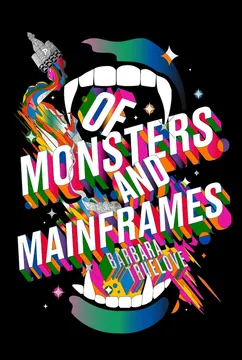



Characters
Shesheshen
The misunderstood wyrmShesheshen is a shapeshifting predator who survives by digesting flesh and building a body from borrowed organs and scavenged bones. She has spent most of her life alone, so she reads human customs as practical puzzles and often mistakes affection for a form of feeding or reproduction. Her blunt humor and literal thinking are not signs of simple-mindedness; they are adaptations to a world that labels her monstrous before asking what she wants. She values privacy and self-sufficiency, yet her attachment to Homily2 and Blueberry7 makes isolation less satisfying than it once was. Her central struggle is learning to care without claiming, and to make choices that resist both human prejudice and her own predatory instincts.
Homily Wulfyre
The stubborn caretakerHomily is a traveling naturalist and member of the powerful Wulfyre family. She collects books, studies animals through scent lures, and is quick to treat an injured stranger, even when that stranger offers little explanation. Her warmth is genuine, but it has been shaped by a family that taught her to earn safety by caring for everyone else. Homily often minimizes her own needs and accepts blame for other people’s choices. Her curiosity and humor keep her from becoming only a victim of that upbringing. With Shesheshen1, she encounters a relationship in which care must be mutual, boundaries matter, and being loved does not require her to prove her usefulness.
Baroness Wulfyre
The iron-willed matriarchThe Baroness rules the Wulfyre family and holds political influence across the contested isthmus. She treats leadership as an unforgiving duty and expects her children to embody the family’s strength and secure its future. Her public authority is built from discipline, military power, and a willingness to make others absorb the cost of her decisions. She is especially hard on Homily2, whose independence and uncertainty challenge the Baroness’s vision of a useful heir. The Baroness’s grief and fear are real, but she converts them into control rather than vulnerability. Her character shows how political competence can coexist with intimate cruelty, and how power protects its holder from having to name that cruelty.
Epigram Wulfyre
The gilded younger sisterEpigram is Homily’s2 younger sister, an aspiring monster slayer who presents herself in bright armor and expects attention. She is combative, proud, and deeply invested in proving that she can match her family’s celebrated hunters. Her anger has roots in a childhood shaped by instability and cruelty, but she repeats the same patterns against Homily2 rather than questioning them. Epigram wants recognition and security, yet she pursues both through domination and performance. Her relationship with Homily2 carries the intimacy of siblings alongside an old imbalance of harm, responsibility, and unspoken fear.
Catharsis Wulfyre
The golden heirCatharsis is Homily’s2 older brother and the family’s celebrated monster hunter. He wears conspicuous golden armor and believes his lineage gives him the right to command others. His confidence rests on inherited stories of Wulfyre victories, and he treats professional caution as a challenge to his authority. To Homily2, he is both an important sibling and a symbol of the family’s expectations.
Ode Wulfyre
The indulged youngestOde is the youngest Wulfyre child, a small girl accustomed to commanding adults and receiving her mother’s3 attention. She is demanding, theatrical, and drawn to music, but her behavior reflects a household where power is modeled as the right to make others obey. She treats frightening events as entertainment because the adults around her have not taught her how to recognize danger. Homily2 feels protective of her, even when Ode imitates the family’s harshness.
Blueberry
Shesheshen’s loyal bearBlueberry is an enormous blue bear who lives near Shesheshen’s1 lair. She is affectionate, food-motivated, and physically warm, with an old limp from a trap injury. Shesheshen1 treats her as a companion rather than prey, sharing scraps and tending to her. Blueberry’s presence gives Shesheshen1 a form of intimacy that does not depend on speech, human manners, or reproduction.
Eoghan Rourke
The wary monster hunterRourke is an experienced monster hunter hired by the Wulfyres to investigate the lair. He is cautious about the danger, skeptical of his employer’s confidence, and willing to retreat when a mission becomes reckless. His practical knowledge helps the hunters prepare, though he still accepts the premise that the creature1 must be killed. Rourke’s uneasy professionalism contrasts with Catharsis’s5 entitlement.
Nasser Akkad Malik
Rourke’s determined partnerMalik is Rourke’s8 younger partner, a capable hunter who tries to temper Catharsis’s5 impulsiveness and later works with the Wulfyre forces. He is more willing than Rourke8 to consider new evidence, but remains caught in a profession built around hunting creatures labeled dangerous. Malik’s injury and captivity leave him dependent on the people who once treated him as expendable. His religious gestures suggest a need for steadiness in work that offers few guarantees.
Laurent
Underlook’s vain traderLaurent is a wealthy Underlook trader who profits from the town’s commerce and enjoys being noticed. He initially treats Shesheshen1 as a flirtation and dismisses the monster1 as a profitable fiction. Once he understands the danger, fear makes him unusually cooperative. His vanity and opportunism make him comic, but his willingness to help also shows that self-interest can be redirected when consequences become immediate.
Epilogue
The unruly young creatureEpilogue is the name Homily2 gives a strange, shape-changing young creature encountered in the isthmus. It is curious, physical, and difficult for humans to read, with impulses that can turn affectionate contact into dangerous aggression. Its behavior reflects the challenge of caring for someone whose needs cannot be interpreted through ordinary human rules. It becomes a test of whether patience and boundaries can coexist.
Arnau Sernine
The Baroness’s attendantArnau Sernine serves the Baroness3 as an attendant and handles the practical work of her orders. Formal and status-conscious, he is used to delivering decisions rather than questioning them. His position gives him access to the machinery of power while leaving him vulnerable to its demands.
Farhan Janabi
Underlook’s butcherFarhan is a successful butcher from a family with roots in the Al-Jawi Empire. His shop provides Shesheshen1 with discarded bones she uses to rebuild her human disguise. He represents the ordinary commerce that thrives in Underlook, largely unaware of the monster1 moving through its streets.
Agatha Wulfyre
The absent Wulfyre auntAgatha is Homily’s2 aunt, remembered by the family as an earlier casualty of the supposed Wulfyre curse. Though absent from the present action, her story helps explain why Homily2 fears for her siblings and why the family treats the legend as urgent.
Plot Devices
Borrowed anatomy
A body built from salvageShesheshen1 can absorb, digest, and reshape flesh, while using bones and metal as a temporary skeleton. This ability lets her pass as human, survive injuries, create weapons inside her body, and adapt to the people hunting her. It is also the source of her central danger: because she thinks through a predator’s body, she initially interprets attachment as the desire to make a nest from someone else. The physical transformations make identity concrete rather than abstract. Shesheshen’s1 disguises conceal her from hostile people, but the same malleability lets her experiment with a less possessive way of being close to Homily2.
Rosemary poison
A hunter’s borrowed weaknessRosemary burns and poisons Shesheshen1, so hunters use it in oil, wine, traps, and crossbow bolts. Its repeated use makes it a practical danger and a source of misdirection: the Wulfyres treat the herb as proof of their monster lore, while Shesheshen1 learns to conceal or redirect its effects. In the final conflict, she turns the poison against the creature that created her3, exploiting its appetite for the blood in her egg sac. The herb therefore moves from a weapon used to identify and injure a monster to a tool by which Shesheshen1 chooses what she will sacrifice.
The Wulfyre curse
A family story used as leverageThe Wulfyres believe a wyrm1 cursed their family to die one by one, and Homily2 sees hunting the creature as the only way to save her siblings. The belief motivates her journey and drives the family’s increasingly violent campaign. It also allows the Baroness3 to present control and militarism as necessary protection. The story is not a literal magical curse, but it produces real harm: Shesheshen1 is hunted, Homily2 is manipulated, and the town is placed under threat. Its power comes from the family’s willingness to treat inherited fear as unquestionable fact.
The egg sac
A false heart with a costShesheshen1 develops a blood-producing egg sac that she initially mistakes for a heart. It explains why the Baroness3 believes Shesheshen1 has a heart to claim, and it gives physical force to Shesheshen’s1 fear that her instinct to reproduce could override Homily’s2 consent. The sac becomes the object the Baroness3 wants in order to extend her own life. Shesheshen1 ultimately uses rosemary to poison it rather than surrender Homily2 or her offspring11. The device binds bodily vulnerability, inherited predation, and the question of whether love requires creating a family in the expected way.
Discarded flesh
A second life from leftoversAfter Shesheshen1 digests and regurgitates a large mass of her own tissue, the abandoned material develops into a separate creature11. Its existence reveals that her species can reproduce in a way Shesheshen1 did not know, without a partner or planned birth. The creature’s11 changing body, predatory impulses, and desire to merge with Shesheshen1 create a new problem after the family hunt has begun. It is both a potential threat and a young being who needs care. Its development allows the novel to explore parenthood as an ongoing relationship shaped by boundaries, patience, and learning.
Download PDF
Download EPUB
.epub digital book format is ideal for reading ebooks on phones, tablets, and e-readers.








