

Key Takeaways
Treat a lynching as political terror, not a spontaneous punishment.
A murder changed the frame. In 1892, Thomas Moss, Calvin McDowell, and Wil Stewart ran the People’s Grocery, a Black-owned store competing with a white-owned business near Memphis. After a confrontation, the three were arrested, jailed, and killed by a mob before any trial. Wells knew them as friends and respected business owners. Their deaths overturned her earlier belief that lynching was chiefly a response to rape or other crimes. She concluded that mob violence could punish Black people for gaining property and economic independence.
Name the lawlessness. Wells used the term Lynch Law for punishment imposed by a mob outside lawful process, often with authorities failing to prevent or prosecute it. She described it as organized intimidation, not an isolated burst of anger.
What is striking is how the grocery store makes the economic motive legible. The victims were not abstract figures in a racial debate. They were business owners whose success unsettled a local hierarchy. Political violence often works by warning people beyond its immediate victims, and this case shows how a killing can police an entire community’s ambitions. The interpretation should not flatten every lynching into one identical motive. Wells’s larger point is that the public rationale often concealed a broader system of coercion.
Compare the charge with the record before accepting its moral alibi.
Numbers tested the story. In A Red Record, Wells reported that 241 people were lynched in 1892, including 160 African Americans. For 1882 to 1894, she counted 1,115 Black victims and said only 348 had been charged with rape. The recorded accusations included murder, arson, theft, alleged insults, and no stated offense. Women and children were among those killed. These figures challenged the claim that lynching was mainly an emergency response to sexual violence.
Count what the excuse hides. Wells drew on reports compiled by the Chicago Tribune and other newspapers, including accounts that listed charges and locations. Her method made a public justification measurable: if rape explained the killings, the recorded reasons should show it. In her evidence, they did not.
Quantification turns a moral claim into a proposition that can be checked. Wells asks whether the stated cause fits the reported cases, rather than debating a stereotype on its own terms. That is a powerful move in public argument, especially when the numbers come from sources that are not naturally aligned with the advocate. Still, counts are not self-interpreting. Records can omit victims, misclassify accusations, or reproduce the biases of the newspapers reporting them. The figures are strongest as a direct challenge to the dominant explanation, not as a complete census.
Ask whose honor is protected, and whose violence is left unnamed.
A racial story had gender rules. White women were portrayed as pure and in need of protection, while Black men were cast as predatory. Black women, meanwhile, were often denied the same claim to sexual protection. Wells pointed to cases in which white men assaulted Black women without facing comparable punishment, and to Black men accused after consensual relationships with white women. Her argument was not that every relationship was consensual. It was that a relationship or accusation could not itself prove rape, and that the law treated women’s testimony and safety unequally.
Expose the double standard. In one Ohio case Wells cited, a white minister’s wife later admitted that a Black man convicted of raping her had been her willing partner. He had already served four years in prison.
Wells exposes how a story about protecting women can also protect male power. The crucial question is not merely whether a sexual crime occurred, but whose account receives credibility and whose injury counts. Her analysis anticipates a modern concern in legal and social research: institutions can apply apparently universal rules through deeply unequal assumptions. A necessary nuance is that challenging false accusations must not become a reason to dismiss real sexual violence. Wells’s point is about evidence, unequal protection, and the danger of collective blame.
Make the hostile press document what official stories conceal.
Use the record against itself. Wells often cited white newspapers, including the Chicago Tribune, to document lynchings and the charges used to justify them. This made it harder for opponents to dismiss her findings as unsupported claims by a Black journalist. She compared reports, identified inconsistencies, and used published accounts to show that victims were sometimes killed without a trial or even a clearly stated offense.
Do not confuse publication with proof. Newspapers also repeated distorted claims. In one case, a paper described a girl as a child when she was over eighteen; in another, a lynching report omitted the victim’s name and alleged offense. Wells therefore treated the press as evidence to scrutinize, not as a neutral narrator. Her pamphlets made the source of the information part of the argument.
This is a durable model of investigative advocacy: cite the institution’s own record, then examine how that record was made. It resembles source triangulation in historical research, where independent accounts are compared to expose gaps and contradictions. Wells also understands that credibility is political. A source may be useful precisely because it is not sympathetic, but hostility does not make it accurate. The method works best when the reader can see both the evidence and its limitations, rather than being asked to trust a single authority.
Defend due process without confusing it with a verdict of innocence.
A charge is not a trial. Wells insisted that even a person accused of a serious crime must have a chance to answer it in court. In her account of Hamp Biscoe, a Black farmer whom witnesses described as mentally unwell, a mob killed him, his wife, and their thirteen-year-old son. The authorities did not prosecute the killers. In another case, C. J. Miller was handed to a mob after conflicting evidence and an uncertain identification. He was killed without a lawful determination of guilt.
The rule must be even. Wells did not argue that Black people could never commit crimes. She argued that accusations should be tested by law and that punishment should not depend on race. Lynch mobs replaced the burden of proof with the demand that victims somehow prove their innocence.
Due process matters here not as a technical courtesy but as a barrier against unchecked power. It slows punishment, requires claims to be tested, and makes officials accountable for what they do with a prisoner. Those safeguards cannot, by themselves, eliminate a biased court system. Yet the alternative described in these cases is not more reliable justice. It is a crowd deciding guilt, punishment, and the limits of citizenship at once. Wells’s demand is deliberately modest and radical: apply the law to everyone.
Use economic leverage and independent reporting when courts refuse protection.
Withhold what sustains the system. After the Memphis murders, Wells urged Black residents to leave a city that would not protect them. Thousands migrated, and those who stayed also withheld patronage from businesses and streetcars. Wells argued that economic pressure could make mob violence costly to the people who tolerated it. She also called for supporting Black newspapers, which lacked the money to investigate and circulate facts widely.
Self-help had sharper edges. In Southern Horrors, Wells also urged armed self-defense, arguing that the law offered no protection in some places. This was a response to immediate danger, alongside migration, boycotts, and reporting. It was not a substitute for legal protection, but a recognition that people facing violence could not always wait for institutions to act.
The strategy connects political rights to material dependence. A boycott or migration can expose how much a local economy relies on people it refuses to protect. Collective action also changes the calculation for businesses and officials who benefit from the status quo. But economic pressure distributes risk unevenly: people with fewer resources may have less ability to leave or withhold spending. Wells’s call for self-defense also reveals the painful tension between immediate survival and the ideal of law-governed justice.
After threats destroyed her newspaper, turn exile into a publishing platform.
The danger redirected her work. After Wells’s editorial challenged the accepted story of lynching, a mob threatened her, destroyed the Free Speech office, and forced her into exile from Memphis. In New York, she wrote for the New York Age and used money raised by Black women to publish Southern Horrors. The attack intended to silence her, but it also widened her audience and made her an increasingly visible speaker.
A public voice was built. Wells had been a journalist and teacher, not an established public orator. At a testimonial organized by women from New York and Brooklyn, she told the story of her exile before a large audience. The money and support helped launch her pamphlet and speaking career.
Wells turns an attempt at censorship into a new channel of circulation. The transition from local newspaper to pamphlet, speeches, and national reporting shows why movements need more than one medium. It also demonstrates the importance of material support: allies supplied funds, venues, and an audience when the original platform had been destroyed. The transformation should not romanticize exile. The wider reach came at the cost of home, livelihood, and safety, and was made possible by other people’s organizing.
Use international scrutiny to make American hypocrisy costly.
Take the evidence abroad. Wells’s British tours brought her accounts of lynching to audiences in Scotland and England. She described mob killings, racial restrictions, and the failure to provide fair trials. British newspapers reported on her speeches, while reformers helped arrange events and organize anti-lynching support. Wells saw foreign attention as leverage because American leaders wanted their country regarded as civilized and dependable in international affairs.
Build alliances, not just headlines. The campaign included journalists, clergy, reformers, and Black women’s clubs. The testimonial for Wells helped create the Women’s Loyal Union in New York and Brooklyn, while related organizing contributed to a broader network of Black women activists. International publicity and local organization gave the campaign both reach and continuity.
The strategy turns national reputation into political pressure. When domestic institutions ignore abuses, an outside audience can make silence visible to people whose approval matters. Wells also avoided treating publicity as a complete victory: alliances, meetings, and organized constituencies were needed to keep the issue in circulation. There is a tension in appealing to a foreign power that also has its own imperial interests. Yet Wells’s argument is not that Britain is innocent; it is that a government claiming moral authority should be answerable to its own conduct.
A yellow fever epidemic made sixteen-year-old Ida responsible for her siblings.
A family loss forced a new path. In 1878, yellow fever killed Wells’s parents and youngest brother. She was sixteen and returned to Holly Springs to care for her surviving siblings, refusing the plan of adults who wanted to place them in other homes. She found teaching work, made arrangements for some siblings, and later moved to Memphis with two younger sisters. The crisis made her independent early, but it also placed adult responsibilities on a teenager.
Public work grew from experience. Wells became a teacher, journalist, editor, and organizer in communities where Black women had limited access to public authority. Her family’s commitment to education and civic participation shaped her sense of responsibility, while her own experience navigating work and racial restrictions sharpened her political attention.
The biography complicates the familiar story of a public leader as someone simply born for the podium. Wells’s career developed through grief, paid work, family obligation, and community networks. That history makes her independence concrete, but it should not turn hardship into a virtue that society can demand from others. Her achievement is not that a teenager had to shoulder a family’s survival. It is that she built public capacity despite conditions that narrowed the options available to her.
When Congress rejected reform, make silence itself politically costly.
Legislation was not the first measure. Wells supported federal action, including a proposed congressional investigation into assaults and mob violence. The proposal did not pass. She nevertheless treated public awareness as a necessary step toward law: churches, newspapers, civic groups, and citizens could condemn lynching and press officials to enforce existing protections.
Attention mattered, but it was not enough. Wells and her allies forced newspapers, governors, religious leaders, and audiences abroad to address a violence many had ignored. Lynching continued, and the legal campaign against it faced repeated defeats. The record therefore contains both an achievement and a limit: public silence became harder to defend, but exposure alone could not guarantee safety or justice.
The distinction between attention and remedy is essential. Public pressure can change what institutions must explain, but a changed conversation is not the same as a changed law or a protected life. Wells’s campaign is valuable partly because it refuses that easy equation. Her work supplies a sequence for civic action: document abuses, circulate the evidence, organize allies, and demand institutional response. The sequence can create leverage, but it also requires sustained enforcement and political power beyond the act of telling.
Analysis
This collection is not a single, detached history of lynching. It brings together Wells’s investigative pamphlets, her account of exile and British advocacy, and an introduction that situates her work within Reconstruction’s collapse, racial violence, and the constraints on women’s public lives. The form matters. The pamphlets seek to persuade contemporary readers, while the later framing helps readers understand the political world in which persuasion had to operate.
Wells’s central intellectual move is to treat the accusation that justified a killing as evidence to be investigated, not a fact to be accepted. She tests the rape rationale against reported charges, victims, and circumstances, then exposes the unequal distribution of sexual protection. That argument is especially powerful because it links race, gender, property, and state authority without reducing them to a single cause. It also requires careful reading: newspaper statistics reveal patterns, but the records themselves reflect the institutions that produced them.
Her advocacy is both evidentiary and strategic. She uses the white press to challenge white public opinion, Black-owned media to strengthen independent reporting, economic withdrawal to pressure local business, and British attention to challenge American claims of civilization. These methods reveal that political influence is not limited to legislation. Public reputation, commercial interest, and organized networks can all create pressure. Yet the collection does not suggest that persuasion alone ends violence. Wells’s calls for due process, self-defense, and federal action register the gap between exposing injustice and securing protection.
The narrative of her life deepens the analysis. Wells’s public authority emerged in a society that restricted women’s speech and denied Black people equal citizenship. Her journalism and organizing were not simply personal accomplishments. They were interventions in who could produce public knowledge and whose suffering counted as politically consequential. The enduring lesson is not that courage guarantees victory, but that carefully documented truth can unsettle an accepted explanation, recruit allies, and make institutions answer for what they have chosen to ignore.
Review Summary
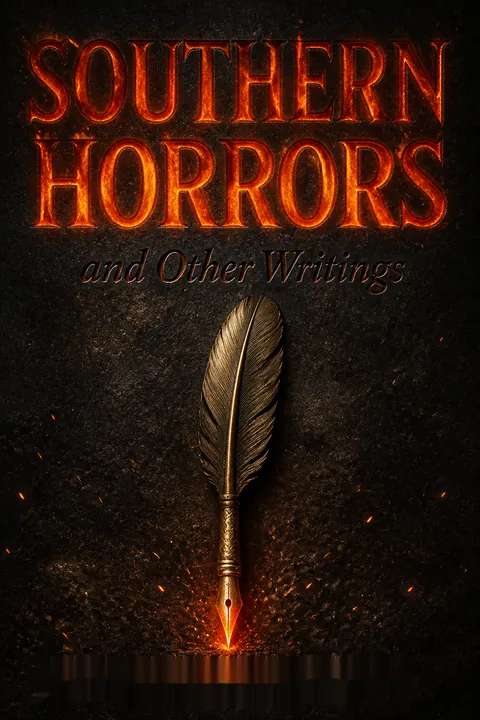
Southern Horrors and Other Writings is a powerful collection of Ida B. Wells' anti-lynching pamphlets. Readers describe it as eye-opening, disturbing, and essential reading. Many praise Wells' bravery, investigative skills, and persuasive writing. The book exposes the brutal reality of lynching in the post-Reconstruction South, challenging common justifications for the practice. Reviewers emphasize the importance of confronting this dark history and note parallels to modern racial issues. While difficult to read, the book is widely recommended for its historical significance and Wells' pioneering civil rights work.
People Also Read





Glossary
Lynch Law
Mob punishment outside lawA term Wells uses for punishment carried out by a mob rather than through lawful court procedures. In her account, lynching often involved public killing, intimidation, and the failure of officials to protect prisoners or prosecute perpetrators. She rejects the idea that such acts were legitimate community justice, presenting them instead as criminal violence.
Jim Crow laws
Racial segregation statutesState and local laws that enforced racial separation and restricted African Americans’ civic and social rights after Reconstruction. In the collection, examples include separate railway cars and prohibitions on interracial marriage. Wells presents these laws as part of a wider system that limited Black mobility, citizenship, and access to public life.
true womanhood
Ideal of domestic femininityA nineteenth-century ideal that defined respectable womanhood through purity, modesty, piety, and devotion to home and family. It treated public speaking and political activity as improper for women. The introduction explains how this standard constrained women’s lives, while Wells and other Black women entered public arenas despite race and gender barriers.
frontier justice
Justice outside formal courtsA rationale for bypassing legal institutions when they are absent or believed to be inadequate. The introduction explains how this idea could make unlawful punishment seem necessary in frontier settings, then notes its use to excuse mob violence even where courts and legal authorities existed. Wells challenges that justification by documenting lynchings in established communities.
Women’s Loyal Union
Black women’s reform clubAn organization formed by Black women in New York and Brooklyn after their 1892 testimonial for Wells. The women raised money to support her anti-lynching work and continued organizing together. The introduction and Wells’s autobiography connect this effort to the growth of Black women’s clubs and wider networks for community reform.
About the Author
Other books by Ida B. Wells-Barnett

Download PDF
Download EPUB
.epub digital book format is ideal for reading ebooks on phones, tablets, and e-readers.








