

Key Takeaways
Influence begins in the gap between what people see and what they assume.
Perception fills in blanks. The book’s central idea, the perceptual gap, is the distance between what an audience can observe and what its members conclude. The mind routinely completes incomplete pictures, connects events into causes, and treats assumptions as facts. A flipbook seems to move because viewers mentally supply the motion between still images. In magic, that same instinct can make a carefully arranged sequence feel impossible. Kwong describes astonishing Will Shortz, the New York Times puzzle editor, with card and currency illusions, despite having lost their table tennis match badly. The trick worked not because Kwong had supernatural powers, but because he understood what Shortz would notice and infer.
A powerful tool needs limits. Entrepreneurs can use the same gap to notice weaknesses in their own plans, rather than assume success is guaranteed. The danger is that audiences also fill gaps with beliefs they want to hold, making them vulnerable to fraud. Influence begins in how people interpret evidence, not merely in the evidence itself.
The idea aligns with predictive processing: the brain does not passively record the world, but uses prior expectations to interpret incomplete input. That makes skilled communication partly an exercise in shaping which interpretation feels most plausible. It also explains why confidence can be mistaken for competence. A useful safeguard is to separate observation from inference: what was directly seen, and what story was added? The gap is not inherently deceptive. It can make teaching and entertainment vivid, but the same mechanism becomes exploitative when someone hides material facts or encourages belief without evidence.
Prepare so thoroughly that the visible performance feels effortless.
Front-load the hard work. Magicians call advance preparation and placement of needed objects loading up. Kwong contrasts this quiet labor with vaudeville performer Arthur Lloyd, whose elaborate costume reportedly held 15,000 paper items and weighed 45 pounds. The audience saw instant answers to requests; the performer had spent years arranging and rehearsing them. Professional kitchens use a related practice, mise en place, arranging and preparing ingredients before service begins. A chef cannot afford to hunt for a knife when orders are piling up.
Start from the result. Decide what success should look like, then work backward through the skills, information, equipment, and contingencies required. Cemex changed how it delivered concrete by studying logistics firms and adapting their routing methods. It did not merely improve the product. It prepared a more useful system around it. Preparation also includes learning the audience and choosing which tasks deserve attention first.
Preparation converts scarce attention into reliable execution. The cognitive benefit is not only practice: rehearsed actions consume less conscious effort, leaving more capacity for surprises and judgment. This is why checklists and staging areas help in fields as different as surgery, aviation, and restaurant kitchens. The principle has a boundary, however. Extensive preparation can harden a plan around assumptions that have become obsolete. Strong preparation therefore includes rehearsal and revision, not just meticulous execution of a fixed script.
Give facts a plot, a struggle, and an ending people can retell.
Stories organize attention. A strong narrative gives an audience a person to follow, a problem to care about, rising difficulty, and a resolution. In one experiment described in the book, ordinary secondhand objects were paired with invented stories before being sold online. Their combined selling price rose dramatically, illustrating how context can change perceived value. In business, a story can make data meaningful, explain why change matters, or help customers see themselves as participants rather than spectators.
Endings shape memory. A false recap is a strategically weighted summary of what just happened, designed to influence what the audience remembers as most important. In a performance, a recap can emphasize preparation over the trick’s mechanics. In a presentation, a speaker can accurately summarize the evidence while highlighting the conclusion that deserves attention. The method is persuasive because listeners rarely retain every detail equally. The story’s last impression becomes a portable version of the whole experience.
Narrative is an efficient compression format: it links facts through motives and consequences, making information easier to retrieve and share. That strength also creates risk. A coherent plot can make weak evidence feel stronger by supplying emotional logic where causal proof is missing. Good communicators can use story to clarify complexity, but they should distinguish illustrative cases from representative data. The Mast Brothers controversy in the book shows why authenticity matters: when a brand’s origin story proves unreliable, even an unchanged product can lose public trust.
Direct attention by changing the frame, not by shouting louder.
Attention has edges. A frame is the part of an experience an audience treats as relevant. Misdirection steers attention toward that area and away from information that would reveal how an effect works. Franklin Roosevelt used carefully planned entrances, supports, and confident public speaking to direct attention toward his political ability rather than the physical effort required to reach the podium. The strategy did not change his disability; it changed what the audience focused on.
Timing matters. Magicians call moments of heightened focus on-beats, and relaxed moments off-beats. An audience may concentrate on a dramatic reveal, then loosen its attention during laughter or applause. The book connects this to inattentional blindness: in a famous ball-passing video, many viewers failed to notice a person in a gorilla suit because they were counting passes. When presenting, align gestures, visuals, and speech so the audience’s limited attention serves the message.
The frame metaphor is useful because it shifts communication from volume to selection. Attention is finite, so a presentation that adds more detail may become less comprehensible, not more persuasive. Designers use the same logic when interfaces make key actions visible and peripheral options quiet. Yet directing attention is not the same as ensuring understanding. A clear frame can conceal trade-offs as easily as it can clarify an idea. In high-stakes settings, communicators should make important limitations visible rather than treating every inconvenient fact as an offstage distraction.
Offer bounded choices that preserve agency and guide useful action.
Context shapes decisions. Choice architecture means arranging the options and circumstances in which people decide, without necessarily removing their ability to choose. In a French mall experiment, adding a reminder that shoppers were free to refuse a request for change raised donations from 10 percent to 47.5 percent. The reminder reduced the feeling of pressure, making cooperation easier. At Infosys, a voluntary points-and-prizes program encouraged employees to arrive before rush hour. Early arrivals doubled, while average commute time fell by more than 16 percent.
Respect the chooser. FBI negotiator Gary Noesner used questions and meaningful alternatives to let a hostage-taker retain a sense of control while releasing captives. A magician may secretly force an outcome, but in ordinary leadership, the aim should be to make good options easier to see, not to disguise coercion. Too many options can also paralyze people, so a small, relevant set is often more useful than a limitless menu.
This principle connects to behavioral economics, where defaults, social cues, and friction reliably influence decisions. The strongest version improves alignment between what people already value and what a system needs. The ethical test is whether the chooser would still regard the arrangement as fair if its design were explained. Negotiation also shows why agency matters under stress: people are more likely to cooperate when treated as participants in a solution. Choice is not meaningful, however, if options are misleading, consequences are hidden, or refusal carries an unfair penalty.
Use familiar patterns as cover, then break them with purpose.
Familiarity makes shortcuts. Habituation is the process by which repeated experiences teach people what to expect. Once a pattern feels ordinary, its details can escape notice. In World War II, Allied camouflage teams used dummy tanks, fake supply activity, and misleading construction to convince German forces that an attack would come from the wrong direction. The deception worked because it fit the enemy’s expectations about military preparations. In everyday life, routines similarly help people act efficiently, but they can also make them overlook changes.
Deviation creates surprise. A break in a familiar pattern catches attention, especially when it is relevant to the audience. Tesco placed virtual grocery displays in South Korean subway stations, where commuters could scan products for delivery. The display was unusual but fit the existing habit of shopping after work. By contrast, a surprise that feels irrelevant may simply be ignored. Use familiarity to make an idea legible, then change one meaningful element to make it memorable.
Pattern recognition is both a cognitive advantage and a source of error. It reduces effort, but it can also encourage people to mistake correlation for cause or to treat a convenient stereotype as reliable evidence. The book’s examples suggest a practical sequence: identify the audience’s normal context, preserve enough of it to remain understandable, and introduce a consequential deviation. The ethical issue is whether the new pattern genuinely improves the experience or merely exploits habit. A novelty that attracts attention but fails to deliver value is a trick with no satisfying second act.
Build outs before risk turns a mistake into a crisis.
Plan for imperfect conditions. A safety out is a contingency that protects a performance or project when the preferred plan fails. Magician Harry Blackstone Sr. once used an unexpected fire next door to redirect a theater audience outside in orderly groups, preventing panic while firefighters worked. In business, an out might be a backup supplier, insurance, a staged launch, or a clear exit strategy. These provisions make it possible to take worthwhile risks without relying on every detail going right.
Learn from what failed. Survivor bias is the mistake of studying only the cases that made it through. During World War II, statistician Abraham Wald argued that aircraft needed armor where returning planes had not been hit, because planes struck there were less likely to return. The visible damage on surviving aircraft told an incomplete story. Test plans, document failures, and adjust while the cost of change is still manageable. A recovery can preserve confidence, but pretending failure never happened blocks learning.
Contingency planning is a form of resilience engineering: safety comes not from predicting every failure, but from building systems that can absorb disruption and recover. Wald’s reasoning remains powerful because it asks what evidence is missing, not only what is present. A caveat is that a polished recovery can conceal recurring defects. In organizations, the goal should be to protect people and service while also recording what went wrong. Otherwise, the out saves the immediate performance but leaves the underlying hazard untouched.
Use illusion to create value, never to sell a false reality.
Consequences define the line. Kwong distinguishes entertainment and helpful influence from a con by asking who benefits from the belief being created. A compelling product presentation can make a genuine benefit easier to understand. A fabricated claim about health, money, or supernatural power can extract trust and resources from people who need help. The book contrasts magicians who openly present deception as entertainment with operators such as faith healer Peter Popoff, whose supposedly divine audience insights were exposed as information supplied through an earpiece.
Keep skepticism available. The book also recounts how Bernie Madoff exploited social trust and promised returns that an analyst quickly judged mathematically impossible. A practical defense is to ask what evidence supports a claim, what information is missing, and whether the promised outcome is plausible. The more awe a communicator creates, the greater the responsibility to make sure the audience is not being harmed by what it believes.
Influence is not ethically neutral just because it relies on ordinary cognition. Audiences may enjoy being surprised in a theater, but decisions about savings, medicine, or public policy carry consequences that outlast the moment of persuasion. A useful standard is informed trust: the audience need not know every technique, but should not be misled about material facts or risks. This standard preserves the creative power of framing while rejecting the assumption that any successful persuasion is justified by its effectiveness.
Analysis
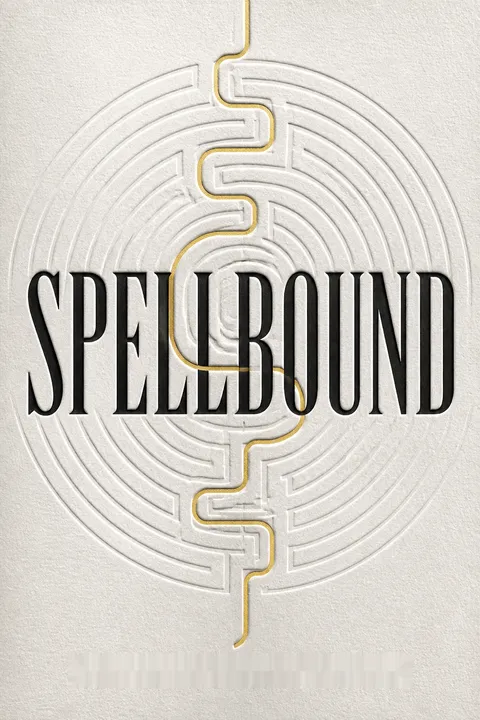
Spellbound is a practical book about influence, but its deeper subject is the gap between perception and reality. Its seven-part structure translates stagecraft into a general method: anticipate what people will infer, prepare the conditions, give the experience a story, focus attention, arrange choices, exploit familiar patterns, and retain a recovery plan. The magician’s stage provides a memorable laboratory because success depends on audience interpretation, not on supernatural ability.
The book is strongest when it treats influence as a design problem rather than a personality trait. Its examples show that preparation, timing, and context can matter more than charisma. The restaurant kitchen and Cemex illustrate operational design; Roosevelt and Noesner show how public performance and interpersonal agency shape trust; Wald’s aircraft analysis demonstrates how examining missing evidence can correct a persuasive but incomplete story. These examples make the central insight usable across work, communication, and decision-making.
The framework also exposes a tension the reader must manage. The same techniques can clarify a real benefit or obscure a material truth. A story can give meaning to data, but it can also make unsupported claims feel inevitable. A default can help someone follow through on a goal, or quietly privilege an organization’s interest over the chooser’s. The book’s ethical distinction, value creation versus extraction, is therefore not an afterthought. It is the standard that determines whether influence deserves trust. A modern extension is to treat every persuasive design as both a message and a system of incentives. Ask what the audience is invited to believe, what action follows, who bears the downside, and what evidence would reveal failure. That audit does not eliminate surprise or performance. It makes them accountable. The best use of illusion is not to make people helpless before appearances, but to make useful possibilities visible while keeping consequential facts in view.
Review Summary
The reviews for Spellbound are generally positive, with an average rating of 3.74 out of 5. Readers appreciate the book's unique perspective on how magicians think and apply their principles to everyday life and business. Many find it fascinating, well-written, and full of interesting anecdotes. Some readers note that the book offers insights into psychology and creativity. However, a few reviewers mention issues with consistency in the writing and organization of ideas. Overall, most readers find the book enjoyable and thought-provoking.
People Also Read








Glossary
perceptual gap
space between evidence and inferenceThe perceptual gap is the difference between what a person can directly observe and what the mind concludes from it. People automatically fill incomplete information with assumptions, patterns, and causal explanations. Magicians and communicators can shape those inferences, but the same tendency can make audiences vulnerable to confident misinformation.
loading up
advance preparation for performanceLoading up is the advance organization and placement of tools, information, or hidden resources needed for a later effect. In magic, it may involve arranging objects so they can be accessed without notice. More broadly, the term describes preparing skills, plans, and contingencies before the moment when execution must appear smooth.
mise en place
ingredients and tools preparedA French culinary term meaning putting things in place. In a professional kitchen, ingredients and tools are selected, measured, and arranged before service begins. This preparation reduces searching and scrambling during busy periods. Kwong uses it as a parallel to a magician’s advance preparation and to organizing work before execution.
false recap
selectively shaped event summaryA false recap is a summary that sounds like a straightforward account of what just happened but strategically emphasizes or alters details to shape the audience’s memory. In magic, it can make a spectator remember handling a deck differently than they did. In a presentation, a carefully weighted recap can direct attention to the conclusion the speaker wants remembered.
on-beats and off-beats
moments of focused or relaxed attentionOn-beats are moments when a performer signals that the audience should focus closely. Off-beats are moments when attention relaxes, often during humor, applause, or a pause. Magicians time secret actions around these shifts. The distinction also helps explain why audiences may overlook small details during moments of heightened focus or distraction.
choice architecture
design of decision conditionsChoice architecture is the arrangement of options and circumstances that influences how people decide. It can include defaults, the order of options, reminders, and the amount of effort required for each action. A well-designed choice environment can help people act on their own goals, but it can also steer them toward outcomes chosen by the designer.
mental judo
leveraging existing preferencesMental judo is Kwong’s term for using an audience’s existing expectations and preferences to guide behavior. Instead of forcing a new response directly, the designer identifies patterns already influencing the audience and redirects them toward a desired outcome. The technique depends on understanding what people are likely to notice, want, or choose.
safety out
planned fallback for failureA safety out is a contingency prepared in advance to protect a performance, project, or organization if the preferred plan fails. It may be a backup method, reserve resource, insurance policy, alternative route, or exit strategy. Safety outs support calculated risk by allowing a response to disruption without requiring every detail to go perfectly.
survivor bias
overlooking missing failuresSurvivor bias occurs when conclusions are drawn from cases that remain visible while failed or missing cases are ignored. The book’s aircraft example shows the problem: studying only planes that returned made researchers focus on damaged areas, while the most vulnerable areas were those where hits were absent. Reliable analysis asks what did not survive or get reported.
emergency out
improvised recovery after disruptionAn emergency out is a rapid response to an unforeseen failure that has already become visible. Unlike a backup plan prepared for a known possibility, it redirects attention and action after the original plan has broken down. The aim is to protect people, restore control, or begin a new course of action without pretending the disruption did not occur.
Download PDF
Download EPUB
.epub digital book format is ideal for reading ebooks on phones, tablets, and e-readers.








