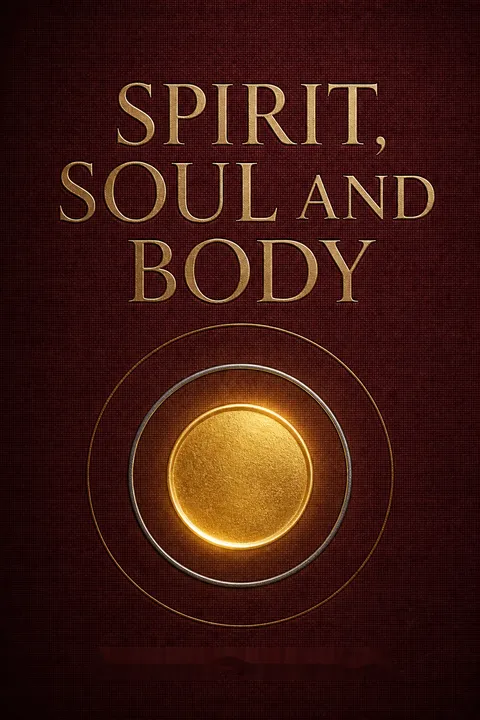


Key Takeaways
Read the gap between spiritual identity and daily experience correctly
Three dimensions of a person. Wommack reads the Bible as describing body, soul, and spirit. The body is physical; the soul includes mind, will, emotions, and conscience; the spirit is the innermost self, which he says cannot be detected through the senses. In his account, conversion changes the spirit immediately, while the soul and body remain in process.
Experience can lag behind belief. Wommack recalls a powerful spiritual encounter in 1968, followed by a return to ordinary feelings and difficult circumstances. During military service in Vietnam, he studied Scripture intensely, seeking to understand why his inner expectations and daily life differed. He came to view that gap not as proof that nothing had changed, but as a difference between spiritual identity and outward experience.
The model offers a useful distinction between a person's deepest identity and their changing feelings or behavior. That distinction can loosen the grip of shame: a bad day need not become a total verdict on the self. Its force, however, depends on accepting Wommack's theological account of an unseen spirit. The categories are not something a reader can verify through ordinary observation, so they function as a lens of faith rather than a psychological measurement. The framework is most helpful when it supports responsibility and hope, not when it dismisses distress that needs practical care.
Renew your thinking to express what you believe God has already given
Growth means alignment. Wommack calls the ongoing work of changing one's thoughts to fit Scripture renewing the mind. In his model, the soul connects spirit and body: when thought and feeling agree with spiritual identity, its qualities can shape conduct and experience. When the soul takes the body's immediate evidence as the whole truth, that flow is blocked. The task is not to acquire more from God, but to recognize and express what salvation has already provided.
A struggle over a Bible. Early in ministry, Wommack could not afford a replacement for his damaged Bible. He spent months worrying about the money, then found that his doubts disappeared once he had bought one. He uses the episode to illustrate how believing a provision is already available can replace anxious striving with trust.
This account turns spiritual growth from a shopping list into a practice of interpretation: what does a person believe is already true, and how does that belief change the next action? The shift can encourage agency rather than helpless waiting. Yet the Bible-purchase story shows that the money did arrive; it cannot establish that every desired outcome is guaranteed. The distinction matters. Trust may shape persistence and reduce distress, but it should not be treated as proof that material needs will always be met on a preferred schedule.
Let Scripture shape your interpretation without pretending symptoms are imaginary
Two kinds of attention. Wommack uses carnal mindedness for thought governed mainly by the five senses, and spiritual mindedness for thought guided by God's Word. He reads Romans 8:6 as contrasting the distress of the first with the life and peace of the second. For him, spiritual focus means refusing to let visible circumstances define the believer's ultimate identity or the limits of what God can do.
The conflict is concrete. In the book, he describes being ill while believing biblical promises of healing. His body and other people's observations pointed one way; Scripture pointed another. The episode illustrates his call to hold onto faith through contradiction. It should not be read as advice to ignore symptoms, reject medical judgment, or assume that illness reflects weak belief.
The distinction between an observation and the meaning assigned to it is valuable. A symptom is real information, but it need not dictate a person's entire sense of hope or worth. That insight can coexist with medical assessment and treatment. The danger appears when spiritual confidence is made a test of faith or used to discount evidence. Wommack's argument is strongest as a practice of maintaining hope under uncertainty, rather than as a promise that belief alone will produce a particular physical result.
Anchor your worth in the new identity, not fluctuating performance
A settled spiritual status. Wommack interprets passages such as 2 Corinthians 5:17 and 1 John 4:17 as describing the believer's spirit, not an instant makeover of the body or personality. Through union with Christ, he says, the spirit becomes righteous, holy, and complete. A person's moods, habits, appearance, and knowledge may still need change; they do not define this spiritual identity.
A mirror for the unseen. Wommack presents Scripture as a spiritual mirror, meaning a source for understanding what cannot be confirmed by sight or feeling. The body and soul, in his account, are still being transformed, while the spirit is already complete. This lets him explain how someone can feel depressed or act poorly while remaining accepted by God in the spiritual sense he describes.
Separating worth from performance can interrupt the familiar cycle in which every failure becomes evidence of personal unworthiness. The theological move is stronger than ordinary positive thinking: acceptance is grounded in Christ, not self-esteem or a record of success. At the same time, identity language can become evasive if it is used to avoid accountability for harmful actions. The book's distinction works best when a secure sense of belonging makes honest change possible, rather than turning conduct into something irrelevant.
Let assurance make holiness fruitful, not transactional
Acceptance is not a reward. Wommack calls Christ's once-for-all forgiveness eternal redemption. He interprets the Holy Spirit's seal as preserving the believer's spirit, so later failures do not erase its righteousness. In his reading, sin still damages a person's life: it can affect the body and soul, disrupt relationships, and create opportunities for destructive patterns. But it does not make God withdraw acceptance from the born-again spirit.
Change without panic. Wommack treats confession and repentance as ways to turn from wrongdoing and address its effects, not as repeated payments required to regain salvation. He argues that people are more likely to pursue holiness from gratitude and a changed nature than from fear of rejection. His distinction is between conduct as a consequence of salvation and conduct as a price paid to earn it.
This is a significant motivational distinction. When belonging is not continually threatened, moral effort can become less defensive and more candid: failure can be named without being mistaken for total abandonment. The challenge is to hold assurance and consequence together. Forgiveness does not erase harm to another person, remove legal obligations, or make repair unnecessary. Wommack's account is most persuasive when security creates the courage to repent and make amends, rather than a reason to minimize what a choice has done.
Separate ordinary failure from a deliberate rejection of faith
Neither repeated loss nor effortless security. Wommack rejects the idea that every sin causes a person to lose salvation and must be followed by a new conversion. He also does not reduce salvation to an irreversible status regardless of faith. Reading Hebrews 6:4-6, he argues that a person can reject salvation through a deliberate repudiation of Christ, not through ordinary failure, frustration, or a period of struggle.
A demanding threshold. He reads that passage as describing someone who has been deeply engaged in faith, experienced the Holy Spirit, grown in Scripture, and then knowingly turned away. He says this is far more serious than a careless statement or relapse. These are Wommack's particular interpretations of difficult passages, not a consensus shared by every Christian tradition.
The distinction can help prevent a troubled person from treating every lapse as proof of damnation. It also recognizes that faith, in this account, involves more than a momentary declaration. The unresolved difficulty lies in deciding what counts as full rejection and who can know it. Different Christian traditions read these passages differently, and no reader should use this framework to pronounce another person's spiritual fate. Its pastoral value is greatest when it reduces needless terror while leaving room for serious reflection.
Stop pleading for more faith; practice the faith you believe you received
Faith as a gift. Wommack reads Ephesians 2:8 and Romans 12:3 to mean that God supplies faith as well as salvation. He distinguishes this supernatural faith, grounded in God's Word, from everyday trust based on visible evidence. In his interpretation, every believer receives the same measure at conversion. The issue is not a shortage of faith, but a lack of understanding about how to use it.
A shared inheritance. Wommack points to Peter, who performs striking acts in the New Testament, and argues that Peter's faith is not a special resource unavailable to ordinary believers. The believer's task is to learn Scripture, recognize this gift, and act on it. This is a theological claim about faith's source and measure, rather than a guarantee that every hoped-for outcome will occur.
The practical strength of this teaching is that it can replace self-measurement with action: instead of repeatedly asking whether faith is strong enough, a believer can ask what faithful action is possible now. The claim that every Christian has precisely the same measure is a particular reading of Scripture, however, and Christians interpret those passages in other ways. It is also important not to turn the idea into blame. An unwanted outcome does not, by itself, prove that someone failed to believe correctly.
Study Scripture, and test inner impressions against its message
Understanding becomes revelation. Wommack calls revelation knowledge an insight from Scripture that moves beyond information and becomes personally understood. He says the believer's spirit has the mind of Christ, while the everyday mind must learn to agree with it. Reading, studying, and meditating on the Bible are the main ways he recommends for bringing that alignment about.
A charismatic practice. He also teaches that praying in tongues, which he connects to baptism in the Holy Spirit, can strengthen believers and prompt understanding. He recounts spending hours studying Scripture and praying in tongues, and says the resulting impressions should be checked against the Bible rather than automatically treated as divine instruction. These practices belong to his Pentecostal-charismatic theology; not all Christian traditions interpret them the same way.
The insistence on checking impressions against a shared text is an important safeguard. It recognizes that intense inner experience can be meaningful without being self-validating. The broader method combines disciplined study with prayer, giving both interpretation and devotion a role. Its limitation is that different readers may disagree about what a passage means or whether a spiritual impression fits it. That makes humility, careful reading, and openness to correction essential parts of the practice, not optional extras.
Change behavior by feeding a new identity, not merely fighting old habits
The flesh is not the whole self. Wommack uses flesh for the physical body and the unrenewed mind, rather than a second sinful nature inside a believer. He reads Romans 7 as showing the limits of trying to obey God through unaided human effort, and Romans 8 as a call to live from the Spirit. In his account, focusing on identity in Christ helps reshape habits and actions.
Attention before cleanup. Wommack tells of a newly converted musician who kept reading the Bible while still using cocaine to stay awake. He says the man began learning what he believed about himself before leaving that lifestyle and eventually became a pastor. The point is not that destructive behavior is harmless, but that a person need not wait to be fixed before engaging with faith and seeking change.
This approach resembles a shift from suppression to replacement: a person builds routines around a valued identity instead of making every day a referendum on temptation. That can make change feel more possible than relying on willpower alone. The story should not be mistaken for a universal sequence or a substitute for support in addiction. Spiritual practice may be important to a person's recovery, but complex patterns can also require medical, social, and professional help.
Analysis
The book's central move is to explain the distance between Christian promise and ordinary experience by dividing the person into spirit, soul, and body. Conversion, in Wommack's theology, transforms the spirit completely; thought, emotion, and physical life change more gradually. This lets him preserve strong claims about salvation while accounting for believers who still struggle. The model's practical engine is attention: Scripture tells the believer who they are, renewed thinking aligns the soul with that identity, and conduct follows.
That structure is memorable because it answers several pastoral questions at once. Why can a believer still feel defeated? Why does failure not necessarily mean rejection? Why pursue holiness if acceptance is secure? Wommack's answers are consistent within his framework: the spirit is settled, the soul is being renewed, and choices still shape lived experience. His personal stories, from Vietnam to an early ministry shortage, make the shift from seeking more to recognizing what is already received feel lived rather than abstract.
The framework also has limits. Its claims about the spirit are theological interpretations, not observable findings, and the book sometimes moves from spiritual hope to strong expectations about healing, prosperity, and supernatural power. That shift deserves care. Symptoms and material hardship should not be treated as evidence of deficient faith, and spiritual confidence should not replace medical or practical support. The book's emphasis on assurance is most constructive when it protects people from shame while encouraging responsible action.
As a whole, the adaptation's key distinction is between status and expression. A believer's spiritual standing, as Wommack defines it, does not fluctuate with performance; the quality of daily life can. Readers who share his Christian premises may find this a powerful account of identity and change. Readers from other traditions can still recognize the pastoral question it addresses: how can a person accept failure without surrendering the possibility of growth?
Review Summary
Spirit, Soul and Body receives mostly positive reviews, with readers praising its clear explanations of Christian concepts and its impact on their spiritual lives. Many found it enlightening and transformative, helping them understand their identity in Christ. Some readers appreciated the scriptural backing and simple writing style. A few expressed disagreement with certain theological points, particularly regarding prosperity and healing. Overall, readers recommend it as a valuable resource for Christians seeking to deepen their faith and understanding of spiritual matters.
People Also Read





Glossary
spirit, soul, and body
Three dimensions of a personWommack's model of human nature, based on his reading of biblical passages that name spirit, soul, and body. The body is the physical self; the soul includes mind, will, emotions, and conscience; the spirit is the innermost self. He argues that conversion transforms the spirit, while the soul and body remain subject to change.
born-again spirit
The transformed inner selfIn Wommack's theology, the part of a person changed at conversion. He describes it as newly created in righteousness and holiness, united with Christ, and complete from the moment of salvation. This differs from the soul and body, which he says are not instantly transformed and must still undergo change.
spiritual mirror
Scripture's view of identityWommack's metaphor for the Bible, especially the New Testament, as a reflection of a believer's unseen spiritual identity. Since the spirit cannot be assessed through ordinary senses, he argues that Scripture is the trustworthy source for learning what is true of the born-again spirit, even when feelings or circumstances suggest otherwise.
renewing your mind
Aligning thought with ScriptureThe ongoing practice of changing one's thoughts, attitudes, and values to agree with the truths Wommack finds in Scripture. He sees it as the way a believer's soul comes into agreement with the transformed spirit, allowing spiritual identity to influence conduct and experience. It is a continuing process, not an instant change at conversion.
eternal redemption
Christ's once-for-all redemptionWommack's emphasis that Jesus' sacrifice secures redemption once for all time, rather than requiring a new sacrifice or renewed salvation after each failure. He applies this to a believer's standing with God, arguing that sin can have consequences in daily life without undoing the righteousness of the born-again spirit.
revelation knowledge
Personally grasped spiritual understandingWommack's term for insight that becomes more than information because a truth from Scripture is understood and embraced inwardly. He describes it as the everyday mind agreeing with what the believer's spirit already knows. Bible study is central to this process; he also connects it to prayer in tongues.
like precious faith
Faith shared by believersWommack's reading of language in 2 Peter 1:1. He uses the term to argue that believers receive the same quality and measure of faith through Christ, rather than receiving unequal portions based on spiritual rank or performance. In this interpretation, differences in visible results reflect how faith is understood and expressed.
flesh
Body and unrenewed thinkingWommack's specialized use of the biblical term for the physical body and the parts of the mind and soul not guided by the Spirit. He rejects the idea that a believer retains a second, sinful spiritual nature after conversion. In his model, learned patterns and sense-led thinking can persist even though the old spirit has been replaced.
baptism in the Holy Spirit
A charismatic empowerment experienceWommack's term for a distinct experience of empowerment by the Holy Spirit that he believes follows conversion and includes the ability to pray in tongues. He presents this experience as a source of spiritual power and a means of personal edification. Christians differ on whether it is separate from conversion and whether tongues accompany it.
About the Author
Other books by Andrew Wommack

Download PDF
Download EPUB
.epub digital book format is ideal for reading ebooks on phones, tablets, and e-readers.








