

Key Takeaways
Use divorce as a turning point, not a verdict on your worth
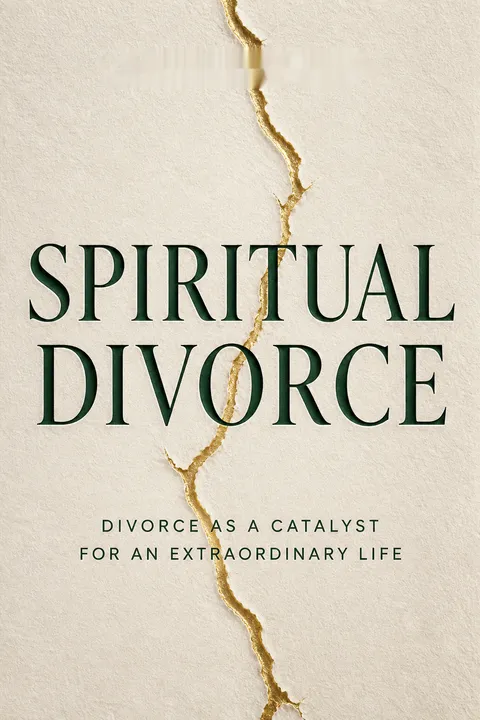
A different purpose for pain. Debbie Ford begins with her own separation from Dan. Having grown up devastated by her parents’ divorce, she had promised herself that her son would have the intact family she never had. When her marriage ended, she felt she had failed both herself and her child. Her shift came when she stopped treating the breakup only as a catastrophe and began asking what it could teach her about her own patterns and choices.
Growth, not guaranteed destiny. Ford calls using divorce to heal, learn, and build a more conscious life a Spiritual Divorce. The term describes a way of approaching the experience, not proof that the breakup was meant to happen or that it must feel beneficial. The practical invitation is to make the crisis serve your recovery rather than let it define your identity.
The strongest part of this reframe is that it offers agency without requiring a cheerful attitude. A person can grieve the marriage and still decide that the experience will not be the final measure of their life. This resembles post-traumatic growth, the possibility that some people develop new priorities or capacities after hardship. Growth is not guaranteed, however, and it does not make the hardship necessary or good. The approach works best when meaning is something a person chooses to make, not an explanation imposed on them while the loss is still raw.
Write down what happened before deciding what it means
Separate events from conclusions. Ford argues that divorce intensifies old fears, making an event feel like proof of a sweeping story. Her own list of facts included that she would need a job, move, pay bills, and share parenting time. Those facts were difficult, but they were not the same as her fear that her whole life was over. Another example: a spouse leaving is a fact; deciding that the departure proves someone is unlovable is an interpretation.
Try the distinction yourself. Write two short accounts: first, what an impartial observer could verify; second, the story your mind attaches to it. Notice which parts are predictions, judgments, or echoes of childhood experiences. This does not erase the hurt. It can reduce the extra suffering that comes from treating a frightening interpretation as settled fact.
This exercise resembles cognitive reappraisal, a psychological skill that examines how interpretations shape emotional responses. Its strength is modesty: a written list does not solve custody, housing, or betrayal, but it can make a problem more legible. Separating facts from interpretations should not become a way to dismiss intuition or label justified fear as drama. A partner’s threats, financial control, or violence are not merely stories. The useful question is not whether a feeling is objectively correct, but what evidence supports the conclusion and what action the situation requires.
Accept the ending without surrendering your practical choices
Face the situation as it is. In Ford’s framework, acceptance means acknowledging what is happening instead of spending all available energy insisting that it should be different. She describes repeating an unwelcome fact to herself when a hoped-for career path failed, and later when she had to adjust to living on a budget. Naming reality helped her stop bargaining with it and consider what to do next.
Let go of control, not action. When she feared Dan might reduce child support, she wrote down the worst outcomes: selling her home, renting, and finding another source of income. Seeing that she could face those possibilities helped her call him directly. He told her the questions were not a threat to support. Acceptance, then, can make room for clear action even when the outcome remains uncertain.
This distinction matters because acceptance is often mistaken for passivity. In psychological practice, acknowledging an unpleasant reality can free attention for problem-solving, while denial tends to keep people locked in futile negotiation with the past. Yet the book’s language of divine order can imply that harmful events are inherently right or deserved. A safer reading is narrower: accept the facts of the present, while still contesting injustice, seeking legal advice, protecting children, and changing what can be changed. Reality can be acknowledged without being endorsed.
Let support and stillness interrupt the isolation of crisis
Do not heal alone. During an emotional collapse, Ford’s sister Arielle sat with her, helped her name her fear of being alone, and prayed with her. Ford also describes returning to meditation when daily demands and anxious inner talk made her feel overwhelmed. For her, prayer and meditation were ways to quiet mental repetition and reconnect with hope, not substitutes for practical support.
Make help concrete. Another story follows Jill, who felt abandoned after her husband left. She went to a single-parent support group, found people who understood the upheaval, and gradually rebuilt friendships and confidence. Ford’s practices include a quiet place for reflection, a few minutes of attention to breathing, and asking directly for help from trusted people. Support can arrive through a friend, a therapist, a group, or a spiritual practice.
The section’s most useful claim is that inner work and interpersonal help belong together. Mindfulness can create a pause between distress and reaction; social support can reduce the loneliness that makes problems feel unmanageable. Neither practice requires agreement with Ford’s theology. For readers who are not religious, prayer can be replaced with contemplation, a grounding ritual, or conversation with someone trustworthy. Stillness is not a cure for depression, trauma, or unsafe circumstances. Severe or persistent distress calls for qualified professional care, not a test of faith.
Name your emotions before they start making decisions for you
Treat feelings as information. Ford describes stopping during waves of sadness to ask what the feeling was actually about: missing a partner, losing security, grieving a dream, or being far from family. Naming the source helped her respond to the real need instead of automatically blaming Dan. Her journal became a place to record feelings and notice when present pain connected with older experiences.
Give emotion a safe outlet. Ford recounts a seminar participant, Marc, who had blamed his wife for his affair. Facing the guilt and hurt beneath that defense helped him acknowledge his own actions. Ford also recommends private writing and other forms of expression. The goal is not to punish oneself or unleash anger on an ex-partner. It is to recognize the emotion, understand its context, and choose a response that does not cause further harm.
Emotional labeling is a practical bridge between feeling and action. A person who can identify anger, shame, or fear may be better placed to choose a response rather than act on an undifferentiated surge. Ford’s emphasis on responsibility is valuable when it means taking ownership of one’s behavior. It becomes harmful if it suggests that a betrayed or abused person caused another person’s conduct. Her advocacy of cathartic release also needs care: intense venting can sometimes reinforce anger rather than settle it. Safe expression is individual, and professional guidance may be appropriate.
Treat your triggers as clues, not proof of your partner's guilt
Look beneath the behavior. Ford uses the idea of projection to explain how people can fixate on a partner’s quality while overlooking related tendencies in themselves. She once believed she was the willing partner because Dan resisted working on their relationship. Looking more closely, she saw that she wanted to work on him, not herself. That recognition did not make their behavior identical; it showed her one part of her own contribution.
Investigate, do not indict yourself. When a trait in an ex-partner provokes a strong reaction, ask what the trait means to you and whether you have shown some version of it, perhaps in another setting or toward yourself. Ford also suggests identifying the useful and harmful sides of a quality. This can soften black-and-white judgments without requiring anyone to approve of dishonesty, neglect, or cruelty.
The mirror metaphor can prompt self-examination, especially when anger has become the only lens for seeing a relationship. It also has a serious limit: being upset by a behavior does not prove that the same behavior exists inside the observer. Nor does discovering a personal flaw establish equal responsibility for a partner’s misconduct. Projection is one possible explanation for a charged reaction, alongside a sound response to mistreatment or a boundary violation. Used as a question, the model opens reflection. Used as a verdict, it can turn insight into self-blame.
Borrow your ex's perspective to loosen the grip of certainty
Try another point of view. Ford describes imagining her marriage from Dan’s position, including the pressures he may have felt as she became unhappy with their home and town during a difficult pregnancy. In another exercise, Susie wrote a letter as if it came from her ex-husband, Roger. It helped her consider how he might have experienced their family life and the distance between them. The exercise is called otherness in the book: temporarily stepping beyond one’s own viewpoint to imagine another person’s experience.
Treat it as a possibility. Ford also asks readers to generate different interpretations of a former partner’s behavior and notice which ones leave them less trapped in resentment. These imagined accounts are not evidence of what an ex actually thinks. Their value is that they loosen a single, fixed explanation and can make room for more deliberate communication or co-parenting.
Perspective-taking is a useful antidote to the certainty that often fuels conflict. It can help people distinguish between understanding a motive and approving an action, a distinction especially important in co-parenting. The imagined letter is best treated as a hypothesis, not a substitute for listening to the other person or a reliable account of their inner life. Some situations offer little basis for charitable interpretation, and no one is obligated to manufacture one. The goal is flexibility in one’s own thinking, not acquittal of the former partner.
List what the marriage gave you without denying what it cost
Recover the whole account. Ford recommends writing down what a marriage contributed as well as what hurt. Her own list included her son Beau, the experience of parenting, new work opportunities, and learning to ask for what she needed. She does not present these gains as proof that the marriage should have continued. They are parts of a life that would otherwise be reduced to its ending.
Use gratitude to integrate, not erase. Justin, divorced from his first wife for many years, realized he had stolen and sold her camera during a period of drug use. He replaced it and apologized, while recognizing that the separation had become a turning point in his recovery. A list of lessons, relationships, skills, and acts of repair can help a person carry forward what was valuable without pretending the loss was painless.
A deliberate inventory can counter the mind’s tendency to recall only the latest injury, especially when a relationship has ended in conflict. In this sense, gratitude is less a demand to feel thankful than a method for making the story more complete. It must not become a requirement to praise an abusive relationship, reconcile, or minimize lasting damage. The person writing the list decides what counts as a gift, and an honest list may include both genuine losses and unexpected capacities. Gratitude is most credible when it leaves room for grief.
Forgive to stop carrying the conflict into every new room
Release resentment at your pace. Ford argues that persistent grievance keeps a former partner emotionally present, even after the marriage ends. Her own effort to reach a respectful relationship with Dan took nearly two years, in part because they shared responsibility for their son. She describes making separate lists of what she wanted to forgive her ex for and what she wanted to be forgiven for, including actions and disappointments on both sides.
Forgiveness is not permission. In the book, forgiveness means loosening the hold of resentment and finding compassion, first for oneself and then for the other person. It does not require renewed intimacy, restored trust, or dropping necessary boundaries. The point is to make room for a future not governed by the old argument, especially when contact remains necessary for parenting or practical matters.
This account gives forgiveness a useful purpose: reducing the amount of attention and emotional energy a grievance occupies. It also correctly presents the process as gradual rather than a switch someone can flip on command. Contemporary trauma-informed practice stresses choice and safety, which means forgiveness should never be demanded as proof of healing or used to pressure someone into contact. A person can pursue legal protection, maintain distance, and still seek relief from corrosive resentment. Forgiveness is an option for the injured person, not an entitlement for the person who caused harm.
Build the next life through small promises you can keep
Turn insight into a direction. In the children’s story Ford recounts, a crab named Grasper sheds his shell and has to choose between returning to familiar shelter and exploring beyond the rocks. The image captures her view of divorce as a vulnerable transition: old protections may no longer fit, while a new identity is still forming. Her practical tool is a divorce vow, a written statement of how she wants to behave in the continuing relationship with Dan as they raise their son.
Make the future behavioral. Ford suggests comparing daily habits with the kind of person one wants to become, then choosing specific actions and manageable risks. A vow might name commitments such as respectful communication or flexibility around parenting schedules. The value lies less in dramatic reinvention than in repeated choices that express one’s priorities, even when emotion or conflict makes the old reaction tempting.
The transition metaphor is compelling because it treats vulnerability as a temporary condition rather than evidence of weakness. The vow translates an abstract aspiration into a standard that can guide decisions under stress, much like values-based approaches in behavioral psychology. Its usefulness depends on keeping commitments reciprocal and realistic. A person should not promise flexibility that compromises safety or fairness just to appear spiritually evolved. Small, observable actions make a future more credible than a vision alone, while room to revise the vow allows it to respond to changing needs.
Analysis
Spiritual Divorce is a hybrid of memoir, spiritual teaching, and self-help workbook. Its story begins with Ford’s fear that her own separation repeats the wound of her parents’ divorce. That personal narrative gives the book emotional stakes, while the seven-law structure turns the crisis into a sequence of practices: face reality, loosen resistance, seek support, examine one’s role, revise interpretations, release resentment, and direct attention toward a new life. The most portable material is concrete: writing facts separately from conclusions, naming feelings, journaling, considering another perspective, listing relationship gains, and stating commitments for co-parenting.
The book’s worldview is more demanding than its exercises. Ford often treats events as divinely arranged lessons, and describes partners as mirrors or karmic teachers. These claims can make suffering feel meaningful, but they are metaphysical beliefs, not conclusions established by the anecdotes. Taken literally, they may imply that a person attracted mistreatment or that every painful event serves a beneficial design. A safer and more useful interpretation preserves the agency of the exercises while leaving the cosmic explanation optional.
The same distinction applies to responsibility and forgiveness. Taking responsibility for one’s reactions can restore a sense of choice; it must not be confused with responsibility for a partner’s betrayal, abuse, or coercion. Forgiveness may reduce the grip of resentment, but it is neither reconciliation nor a duty. The book is most compelling when read as an invitation to examine one’s own interpretations and actions, not as a universal theory of why divorce happens.
Its central promise is therefore practical rather than supernatural: a marriage can end without becoming the final story about a person. Grief, accountability, boundaries, support, and deliberate choices can coexist. The adaptation’s strongest use is to take the exercises, retain the permission to make meaning, and reject any reading that asks someone to deny harm or hurry their healing.
Review Summary
Spiritual Divorce receives mostly positive reviews, with readers praising its approach to healing and personal growth after divorce. Many found it transformative, helping them move past pain and guilt. The book is seen as helpful for those already going through divorce, not for saving marriages. Some critics felt it had a victim-blaming tone or promoted a disposable view of marriage. Overall, readers appreciated the book's perspective on using divorce as a catalyst for positive change and self-discovery.
People Also Read








Glossary
Spiritual Divorce
Divorce used for growthFord’s term for approaching divorce as an opportunity to examine personal patterns, heal emotional wounds, and build a more conscious life. It describes a chosen orientation toward the breakup, not a claim that every divorce is beneficial, divinely intended, or free of grief.
karmic cords
Emotional ties to unresolved lessonsFord’s spiritual metaphor for the powerful connections that keep former partners emotionally bound through unresolved wounds, resentment, or projection. She proposes that learning from the relationship and releasing grievance can loosen these ties. The book presents the idea as a spiritual model, not a measurable mechanism.
Shadow Process
Exercises for disowned qualitiesThe name Ford gives to her emotional-release seminar and body of work. It guides participants to identify feelings and traits they have rejected or projected onto others, explore their personal history, and consider how those traits might be acknowledged and integrated. The book presents it as a structured method for self-examination.
subpersonalities
Named parts of the selfDistinct aspects of a person’s inner life that can be identified, named, and imagined as characters. Drawing on psychosynthesis, Ford uses dialogue with these parts to hear what a feeling or behavior may be communicating. The aim is to relate to a difficult quality with awareness rather than treating it as the whole self.
light shadow
Disowned positive qualitiesFord’s term for positive abilities or traits a person has not fully recognized in themselves and instead notices in people they admire. Identifying these qualities in others can suggest capacities to develop in one’s own life. The concept extends her broader view that people may project both rejected and admired traits outward.
divorce vow
Commitment for post-marriage conductA written statement describing how a person wants to act in the relationship that continues after marriage, particularly when co-parenting. Ford uses her own vow to remind herself of commitments such as respectful communication and flexibility. It functions as a personal guide for behavior, not as a legal agreement.
About the Author
Other books by Debbie Ford






Download PDF
Download EPUB
.epub digital book format is ideal for reading ebooks on phones, tablets, and e-readers.








