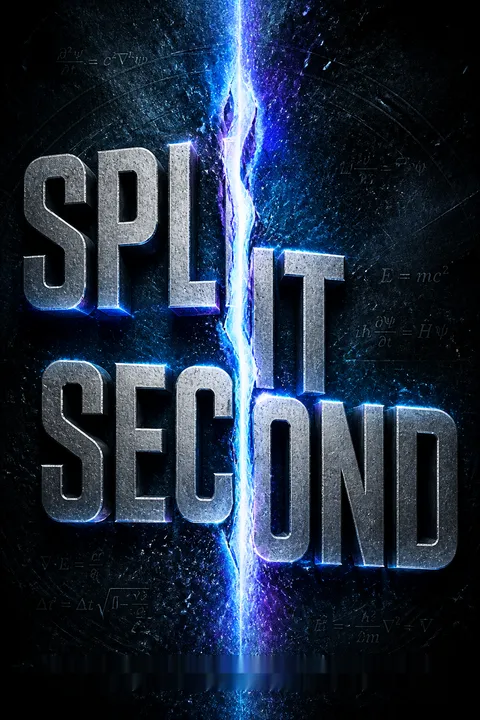


Plot Summary
The Night the Future Arrives
After a week helping her younger sister Amber care for a newborn, genetics student Jenna Morrison returns to California and finds her brilliant physicist fiancé, Nathan Wexler, waiting with an astonishing discovery.
He has derived a way to send matter a fraction of a second into the past, though he has not yet found a practical use. Before he can explain further, three trained strangers storm their home. They remove Nathan’s computers and phones, erase his online files, and insist that both scientists come with them.
The intruders know about Nathan’s work almost immediately, suggesting they have monitored him long before this night. Jenna and Nathan are taken away without being told who is behind the operation or why a theoretical result has made them targets.
The breakthrough begins as an intimate promise of shared discovery, staged between two people who have postponed larger commitments while pursuing demanding careers. The intrusion converts that private promise into a security crisis before Nathan can explain what he has found. Jenna’s earlier thoughts about family and delayed decisions acquire an unplanned urgency: the future she imagined with Nathan is suddenly no longer under their control. The scene also establishes a central tension of the novel. Knowledge can be intellectually abstract to its creator while already carrying immediate political value to those who know how to exploit it.
Blood on Palomar Mountain
The captors take Jenna and Nathan in a Hostess-branded truck toward a hidden facility on Palomar Mountain. Their escorts carry specialized equipment and weapons, but their calm collapses when they learn a rival team is nearby. Gunfire erupts; the truck overturns and slides down a wooded slope. Jenna survives with minor injuries, while the crash breaks Nathan’s legs.
One guard, Simkin, destroys Nathan’s computers, then shoots him at close range rather than let the opposing force take him. Andy Cavnar pulls Jenna from the wreckage and gives her night-vision goggles and a gun. A helicopter attack kills one of her escorts and wounds Cavnar. Jenna flees down the mountain, stops a passing driver at gunpoint, and takes his car to escape.
The ambush destroys any simple distinction between captors and rescuers. Cavnar tries to save Jenna, yet the violence around her is so uncontrolled that survival depends on fleeing everyone. Nathan’s murder is especially devastating because his intellectual promise is literally treated as a thing to be erased: first his stored work, then the person who produced it. Jenna’s forced transformation from researcher to armed fugitive is not a sudden revelation of hidden toughness so much as a series of narrow choices made under extreme pressure. Each choice saves her life while leaving her less able to return to her former self.
The Flash Drive Standoff
Jenna returns to her La Jolla home because she knows Nathan kept sensitive work offline. Hidden inside a modified Newton’s cradle, she finds his backup flash drive, then discovers an armed intruder waiting in the living room.
With no weapon in hand, she raises a glass of wine and holds the drive over it, bluffing that one drop will destroy the only copy. The gunman backs down, and Jenna traps him in her car’s trunk before leaving in the vehicle she stole on Palomar.
She refuses to trust the police, reasoning that either faction could influence them, and that authorities might mistake her for a killer. Instead, she drives to Los Angeles and hires Aaron Blake, a recently retired Army Ranger who has just opened a private investigation practice.
Jenna’s wineglass bluff is a small, precise reversal of power. She cannot overpower a trained gunman, so she makes the object he wants more valuable than the threat he poses. Her willingness to use a fragile, uncertain threat reflects both tactical intelligence and grief: she has lost Nathan, and fear of death no longer works on her in the usual way. Hiring Blake is also an important psychological decision. Jenna does not hand her problem to an institution; she chooses a person whose skills she can assess and whose accountability is personal. Her investigation begins as an effort to make the violence legible.
A Cleaned Crime Scene
Blake verifies Jenna’s identity and listens to her account, then helps protect her by disguising her appearance and hiding her stolen car. He recruits his former military colleague Greg Soyer, a computer specialist, to break into Nathan’s flash drive without triggering its self-destruct feature.
Jenna proposes preparing an emergency online release of the file, but they delay activating it until they understand its contents. On Palomar Mountain, Blake photographs workers posing as Forest Service staff as they erase the crash site.
When he approaches for more evidence, a man named Mark Argent catches him and identifies him as Jenna’s investigator. Jack Rourk arrives, shoots Argent dead, and turns his gun on Blake. Blake wounds Rourk, escapes, and takes the phone Rourk leaves behind.
The scrubbed mountain makes absence itself evidence. The fake forestry crew, erased tire marks, and vanished truck show that the people behind the operation can alter not only a scene but the records by which ordinary authorities would recognize it. Blake’s military competence gives Jenna a way to challenge that power, but his encounter with Argent and Rourk also exposes how unstable the factions are: a man who appears to be an ally kills another operative without hesitation. The drive’s proposed public release introduces a moral dilemma early. Keeping it secret might prevent catastrophe, while releasing it could be the only protection against those who want to control it.
Forty-Five Microseconds
To reach Nathan’s friend, UCLA physicist Dan Walsh, Blake uses a tablet message and the university’s steam tunnels to evade surveillance. Walsh leaves his phone behind and meets them underground. He has received convincing emails from someone impersonating Nathan, but recognizes Jenna’s private clue and agrees to help.
In Nathan’s message, he learns that the discovery would allow matter to travel backward in increments of 45.15 microseconds, perhaps repeated to approach half a second. Nathan believed the process was safe but had no clear practical application.
Walsh explains the competing ideas: time may be fixed like a completed film, changes may branch into new timelines, or tiny changes may cascade unpredictably. Their discussion yields theories, not answers, and Jenna falls asleep from exhaustion before they can resolve why anyone would kill for so brief a journey.
Walsh’s arrival changes the investigation from a chase into an interpretive problem. Jenna and Blake can identify conspiratorial behavior, but only a physicist can begin to assess what Nathan’s equations mean. The email also gives Nathan a posthumous presence: his careful excitement survives in technical notes that his loved ones must now read without him. The discussion of a fixed past and uncertain causation mirrors Jenna’s predicament. She wants to undo the night that killed Nathan, but the theory offers no route to a clean correction. Knowledge expands their understanding while making the loss harder to accept.
The Friend in the Gas
After discussing time travel, Jenna, Blake, and Walsh return to Soyer’s home to retrieve Nathan’s file. They find the office smashed and traces of blood, but Blake recognizes the scene as a trap just before a gas canister lands in the kitchen.
He holds his breath, knocks out one attacker, and uses the man’s mask to revive himself. Blake incapacitates a Green Beret and a second soldier, then escapes with the unconscious Jenna and Walsh as a nearly silent helicopter closes in.
The attackers have already taken Soyer and the original flash drive. Blake later discovers that Soyer had uploaded a protected copy of Nathan’s work, so the investigators retain access to it. He then calls Edgar Knight, the man Rourk contacted, demanding Soyer’s return.
The attack at Soyer’s house makes the cost of Jenna’s investigation tangible beyond her own circle. Soyer joined because he trusted Blake, and that trust has placed him in the hands of a powerful organization. Blake’s escape demonstrates why he is useful, but his success does not feel like victory: the team is scattered, Soyer is missing, and the enemy has taken the original drive. The protected cloud copy prevents the story’s central knowledge from disappearing, yet it also creates leverage that can endanger everyone involved. Information is now both their only bargaining chip and the reason no one can safely leave.
Two Men Claim the Truth
Knight tells Blake that he invented a device capable of drawing on dark energy to send matter backward in time. He says the useful consequence is duplication: an object sent into the past appears beside an earlier version of itself.
He claims Lee Cargill, his former superior, has become the dangerous rogue. The explanation is persuasive, but Knight’s account comes from a man whose motives remain unknown. Blake and Jenna then reach Cargill through Rourk’s phone and demand Soyer’s release. Cargill agrees to return him and offers his own account.
When Soyer is delivered, he tranquilizes Blake, allowing Cargill’s people to take Blake, Jenna, and Walsh to Cheyenne Mountain. There, Soyer explains that he accepted Cargill’s case after seeing evidence that Knight had deceived them.
The two competing accounts force the protagonists to treat truth as something that must be tested, not merely heard. Knight’s scientific explanation has the clarity of a genuine discovery, but it is embedded in a self-serving story about who deserves power. Cargill’s people do not win trust through a better speech; they use Soyer’s firsthand judgment and the physical evidence he has seen. Soyer’s tranquilizer dart feels like betrayal to Blake because it violates friendship at the moment when trust matters most. Yet the act also reveals a more difficult possibility: a friend may act against someone’s wishes because he believes those wishes will get them killed.
Teleportation’s Human Cost
At Cheyenne Mountain, Cargill confirms that Knight’s time machine works, but says Knight is the one pursuing unchecked power. Forty-five microseconds of displacement can duplicate matter; extending the process to half a second could move a person roughly a hundred miles through space as Earth travels beneath them.
Knight wants to make a transporter that destroys the original after its duplicate arrives, treating one person’s death as the price of instant travel. Cargill also warns that duplication could multiply weapons, wealth, and expert soldiers, while Knight’s private vision includes ruling the world and controlling reproduction.
He demonstrates the technology by sending Blake’s wallet across a room, producing an exact duplicate. The display proves the science, not Cargill’s moral authority, so the group agrees to consider his recruitment offer cautiously.
The central invention changes meaning as its scale becomes clear. What first sounded like a useless trick with fractions of a second becomes a system for duplicating resources, moving bodies, and manufacturing force. Cargill’s explanation makes Knight’s ambition frightening without making Cargill automatically virtuous. His own program still has enormous power and little oversight. The wallet demonstration is especially effective because it replaces abstract claims with an ordinary object, identical down to its wear. The copy is not a metaphor for the original; it has the same material history. The moral question shifts from whether the machine works to who gets to decide what counts as an acceptable duplicate.
The Mole’s False Victory
Cargill tries to identify the remaining mole in Q5 with a supposedly unbeatable polygraph. The test is a bluff designed to make a traitor expose himself. Chris Entwistle, a genuine Knight sympathizer but not the mole Cargill seeks, seizes Cargill’s decoy gun and is killed by Joe Allen when the confrontation turns violent.
Brian Hamilton, Knight’s actual informant, passes unnoticed. The apparent success lets Cargill resume normal operations and recruit Jenna and Blake, while Walsh studies Nathan’s work with Q5 scientists.
Jenna and Blake accept a trial period but insist on preserving the file’s fail-safe until they trust the organization. Hamilton learns that Cargill plans to move them to Schriever Air Force Base, where they will be protected, and sends the information to Knight.
Cargill’s trap succeeds tactically but fails epistemically: it produces a visible traitor, not the one he needs to find. Entwistle’s death gives the room a false sense of closure, and Hamilton survives by letting everyone mistake an emotional outburst for the full conspiracy. The episode shows how institutions can confuse a dramatic confession with reliable knowledge. Jenna and Blake’s conditional alliance reflects a parallel caution. They are willing to work with Cargill, but they do not surrender the only safeguard they possess. Their reluctance is not indecision; it is an attempt to keep power accountable when no outside authority can be trusted.
The Truck Changes Course
During the drive to Schriever, Hamilton notices a staged road accident and leaves the truck to inspect it. He kills the Cargill duplicate driving the cab, then uses knockout gas to subdue Jenna, Blake, and the other guards.
The transfer had been part of Cargill’s counterplan: he and trusted personnel had allowed copies of themselves to serve as bait, while their originals remained elsewhere. Hamilton takes the prisoners to Knight’s base at Lake Las Vegas.
Knight greets Jenna and Blake in his fortified headquarters, where he explains his ambition to impose a rational global order, including eliminating opponents and controlling who may reproduce. He asks for Nathan’s file in exchange for a reunion with Nathan. Jenna refuses, and Knight brings in Nathan and another Jenna, revealing that he has copied them for months.
The road accident turns an ordinary transfer into a scene of concealed identity and planned sacrifice. Hamilton does not merely exploit Cargill’s security failure; he kills a version of Cargill and takes advantage of the fact that copied lives can be spent as decoys. At Knight’s headquarters, his political logic becomes personal. He describes coercion and mass death as arithmetic, while the captive Jenna sees the human beings his calculations reduce to units. The arrival of another Nathan and another Jenna makes duplication emotionally immediate. The machine has not only multiplied power; it has multiplied grief, attachment, and the number of people who can be treated as expendable.
The Jenna in Chains
Knight reveals that he has eight Nathan Wexlers and eight Jennas, each kept in a controlled environment while the physicists try to reproduce the breakthrough. None has matched the original Nathan’s insight, which Knight attributes to the random circumstances that sparked it.
To force the captive Jenna’s cooperation, he shoots the other Jenna in front of her and Nathan. Jenna offers to provide the file only if Knight releases Blake and Nathan, then persuades him to give the two men fifteen minutes to escape.
She claims she may accept Knight’s vision and will help after they are safe. Knight agrees, confident his security will catch them. Jenna waits until Blake and Nathan are outside, then directs Knight to the protected cloud file, keeping his attention on the discovery while the escape begins.
The duplicate’s murder exposes the cruelty built into Knight’s supposedly rational system. He believes a copy can be tortured or killed without altering his larger project, but Jenna’s response makes clear that shared identity does not make suffering interchangeable. The two Jennas may have diverged in experience, yet each is a person with attachments and fear. Jenna’s bargain is therefore neither simple surrender nor fearless heroism. She offers Knight a performance of cooperation because it buys Blake and Nathan time, while she remains acutely afraid of what will happen next. Her strategic patience is an expression of care, not emotional distance.
Blake Finds the Machine
Once free, Blake tears duct tape from Nathan’s mouth and rejects the physicist’s belief that escape is impossible. He blinds cameras on several floors, then uses a medical office computer and a discarded flash drive to download a program from Cargill’s network.
Blake deliberately sends security searching for him, steals a guard’s weapon, and uses the distraction to reach Knight’s time-travel chamber. Nathan knows enough about the facility to guide him. When guards attack near the chamber, Blake takes bullets in his shoulder and leg but gets Nathan inside.
He gives him a transmitter to stop repeated duplication and a phone programmed with Cargill’s number. Nathan seals himself in the chamber as armed men rush Blake, who completes the final turn of the door handle.
Blake’s escape depends less on brute force than on manipulating expectations. He understands that guards will search where they expect fugitives to go, so he creates false trails and uses the building’s own systems against it. Nathan, meanwhile, contributes knowledge that Blake cannot supply; their escape is a partnership between practical improvisation and scientific understanding. Blake’s injuries make the rescue costly, but he continues working because his role is not to survive at any price. He is trying to preserve a person who can still choose what to do with the discovery. The transmitter and downloaded program turn abstract theory into a narrowly timed rescue mechanism.
The Island Goes White
A blast shakes Knight’s headquarters, the signal that Nathan has reached another time-travel unit and escaped. Jenna explains that she and Blake were voluntary duplicates sent by Cargill as part of a plan to reach Knight. Cargill had also planted false locations to expose Hamilton, then sent sacrificial copies of himself and his team as bait.
Jenna reveals the explosive beneath her ring, made possible by Knight’s own duplication technology. She knows detonating it will kill her as well as Knight and the scientists around him, but believes leaving Knight in control is more dangerous. She presses the ring. The explosion destroys the central buildings on the island and kills Knight, Jenna’s mission copy, and many of the people held there.
The climax makes the story’s ethical problem impossible to keep abstract. Jenna’s choice destroys a tyrant’s command structure, but it also kills people who may not have chosen to be there, including versions of herself. Her fear does not cancel the decision; it is part of what makes the decision human rather than merely procedural. Cargill’s plan has outmaneuvered Knight, yet it relies on a willing sacrifice and on the hope that a catastrophe will prevent a larger one. The explosion is both liberation and moral injury. There is no clean victory when the power to save the world is also the power to erase lives.
The Survivors Reunite
Nathan arrives in the desert, calls Cargill, and is collected by a military helicopter before being flown to Cheyenne Mountain. There he reunites with the Jenna who remained with Cargill, along with Blake and Joe Allen.
The two lovers have to confront the fact that each witnessed a different version of the other die. Jenna explains that Knight’s island was destroyed and that the blast killed many duplicated scientists, a loss Nathan finds horrifying even as he recognizes the danger they posed.
Together they accept that the identities and responsibilities of duplicates cannot be resolved quickly. Nathan is eager to study the work his other self produced, while Jenna tells him Q5 has already begun exploring whether the theory can enable interstellar travel.
The reunion offers emotional relief without pretending the dead have been restored. This Nathan is continuous with the man Jenna loved, yet he has lost the last three months of shared life and has seen another Jenna die. Their bond survives because it rests on a longer history than the duplicated interval, but their grief remains specific to the people they watched disappear. The loss of Knight’s scientists complicates the triumph as well: they were both victims of captivity and potential sources of extraordinary harm. The ending refuses an easy moral ledger, asking the survivors to live with consequences they cannot fully repair.
A Different Kind of Future
After they have time alone, Jenna and Nathan begin rebuilding their relationship through familiar memories, humor, and physical closeness. They decide not to let the duplicate deaths dictate whether they can love one another, though both agree that the ethical questions surrounding time travel need sustained thought.
Jenna tells Nathan that Q5 wants him to examine a new idea: using the fifth dimension to move through space rather than time, potentially making interstellar travel practical.
She also asks him to make their marriage official, reversing her former reluctance to plan a wedding. Nathan agrees, and Jenna imagines a honeymoon near Saturn’s rings once he has developed the theory. Their plans give the future a shape again, but one grounded in choices they make together.
The closing movement answers the opening’s postponed questions about family and commitment, but not by restoring the life Jenna expected to have. She and Nathan choose marriage after facing the possibility of losing each other, and the choice gains weight because it is no longer an abstract someday. Their interest in space travel also redirects the novel’s technological ambition. The same mathematics that enabled coercion and duplication may open a route beyond Earth, but the survivors now know that discovery alone does not guarantee wise use. Their renewed future depends on both scientific curiosity and the difficult work of deciding what should be done.
Analysis
Split Second turns a compact scientific premise into a political and ethical crisis by asking what follows when time travel is useful not for visiting history but for copying matter. The distinction matters. A device that can reproduce medicine, weapons, wealth, or trained people does not merely expand human capability; it redistributes power toward whoever controls the apparatus and the rules around it.
Jenna’s perspective keeps these questions attached to particular lives. Her grief over Nathan cannot be solved by producing another Nathan, because continuity of memory does not make a murdered person interchangeable. The same is true of the duplicated Jenna who dies at Knight’s headquarters. The novel’s speculative mechanism therefore becomes a test of whether people can resist treating consciousness as a replicable resource.
Knight and Cargill are not simple opposites. Both believe secrecy and concentrated authority may be necessary to prevent disaster. Knight’s certainty that he can rationally govern the world makes coercion seem like a manageable cost; Cargill’s restraint is more humane, but his organization still operates without meaningful public oversight. The novel leaves the reader wary of any savior who claims exceptional power is justified by exceptional danger.
The final sacrifice defeats Knight but does not resolve the underlying problem. Jenna and Nathan must live with the knowledge that their survival depended on copies dying, while Q5 retains the technology and begins considering new uses for it. Their hope for interstellar travel gives discovery a constructive direction, but the closing promise is not that science will save humanity. It is that scientific power must remain answerable to people who understand the value of the lives it can alter.
Review Summary
Split Second receives mixed reviews, with some praising its unique time travel concept and thrilling plot, while others criticize the writing style and character development. Positive reviews highlight the intriguing scientific aspects and thought-provoking nature of the story. Negative reviews point out issues with dialogue, pacing, and excessive explanations. Some readers find the political commentary off-putting. Despite the polarized opinions, many agree that the time travel premise is innovative and engaging.
People Also Read

Characters
Jenna Morrison
The fugitive scientistA gifted genetics doctoral student, Jenna combines analytical discipline with a practical sense of how people behave under pressure. Her relationship with physicist Nathan Wexler is affectionate and intellectually intimate, though both have delayed decisions about marriage and family while pursuing demanding careers. When violence destroys the life she expected, Jenna uses observation and improvisation rather than waiting for rescue. Her grief does not erase her scientific curiosity or her capacity for trust, but it makes every ethical choice personal. She is especially alert to the difference between being clever and being right, a quality that helps her resist simple answers from powerful men.
Nathan Wexler
The theoretical physicistNathan is a young full professor whose unusual gift is not just mathematical ability but the capacity to connect abstract ideas in unexpected ways. He is warm, funny, and absentminded rather than impressed with his own brilliance. His relationship with Jenna gives him a place to bring difficult ideas into ordinary life, and her respect for his mind is balanced by their shared ease. Nathan’s discovery grows from theoretical work on dark energy and higher dimensions. He is driven by the desire to understand reality, not by a wish to control it, and his humility makes his work especially vulnerable to those who want to exploit it.
Aaron Blake
The veteran investigatorA former Army Ranger, Blake has left combat service to build a private investigation practice, but his training and appetite for high-stakes problems remain close to the surface. He is observant, inventive, and capable of acting quickly without confusing aggression with competence. The deaths of close friends and frustration with political decision-making have made him wary of institutions, though not indifferent to service. Blake’s bond with Jenna grows from professional trust into a loyalty grounded in shared danger. He knows his attraction to risk can become destructive, so the case tests not only his skills but his ability to protect others without treating danger as a game.
Lee Cargill
The secret program chiefCargill directs Q5, a covert organization built to study and control technologies with national and global consequences. He thinks in terms of strategic risk and accepts secrecy as a necessary tool, but he is not immune to mistakes or to the temptation of unaccountable authority. His history with Edgar Knight is shaped by mutual respect, conflicting visions, and a struggle over who should control a world-changing invention. Cargill’s pragmatism makes him useful in a crisis and difficult to trust completely. He wants to protect the public, yet his methods raise the same question he asks of Knight: who watches the person holding this much power?
Edgar Knight
The inventor with a mandateKnight is an extraordinary experimental scientist whose instincts helped turn an obscure energy field into a working time-travel device. He is persuasive, ambitious, and convinced that his capacity for rational calculation qualifies him to make decisions for everyone else. He imagines that concentrated power can end terrorism, increase prosperity, and impose stability, while discounting the coercion required to achieve those goals. His relationship with Cargill begins in a shared scientific mission and becomes a contest over the invention’s use. Knight’s confidence is both his strength and his danger: he can envision consequences on a vast scale, but often treats individual lives as costs to be managed.
Dan Walsh
The physicist and interpreterWalsh is a UCLA physicist and Nathan’s friend, with enough technical depth to assess the breakthrough and explain its implications to Jenna and Blake. He is intellectually curious, candid about what he does not know, and inclined to work through competing theories rather than settle for an exciting conclusion. His decision to join the investigation puts academic caution in close contact with operational danger. Walsh helps the group translate abstract physics into consequences they can reason about, while his willingness to leave safety behind shows that intellectual commitment can become a form of courage.
Greg Soyer
The trusted computer expertSoyer is Blake’s former military colleague, a gifted computer specialist with a gentle manner that contrasts with his formidable training. He values friendship and uses his technical skills to protect sensitive information, including by creating secure copies and safeguards. His home and civilian life offer a quiet counterpoint to the covert world pulling him back in. Soyer is not merely a source of expertise: his judgments matter because Blake trusts him, and his choices force the group to confront how loyalty can require actions that look like betrayal.
Joe Allen
Cargill’s second-in-commandAllen is Cargill’s experienced deputy, responsible for coordinating teams and interpreting intelligence when the organization is under pressure. He is loyal to Cargill and generally composed, but his work requires him to act within a system where the chain of command is hidden even from many participants. Allen’s professional confidence contrasts with the uncertainty surrounding Q5’s moles and rival factions. He represents the operational face of Cargill’s authority, where high-level decisions become missions, security plans, and difficult choices made on the ground.
Brian Hamilton
The embedded informantHamilton is an Inner Circle operative who believes Knight’s sweeping vision is preferable to Cargill’s restraint. Patient and ideological, he views forceful social change as a necessary answer to threats that others are too cautious to confront. His ability to pass as a trusted colleague makes him dangerous within a closely guarded organization. Hamilton’s role exposes the difference between loyalty to an institution and loyalty to the future one hopes that institution will create.
Jack Rourk
The double agentRourk is a highly trained operative whose shifting loyalties make him a key link between rival organizations. He is disciplined, pragmatic, and accustomed to acting before others can understand his motives. His choices turn the mountain operation into a personal danger for Blake and provide the investigators with a route toward the people pursuing them. Rourk embodies the instability of a covert world in which shared training does not guarantee shared purpose.
Amber Morrison
Jenna’s younger sisterAmber is a young new mother raising her daughter after the baby’s father disappears. Jenna visits her to offer emotional and practical support. Her situation prompts Jenna to think about motherhood, family, and the decisions she and Nathan keep postponing.
Sophia
Amber’s newborn daughterSophia is Amber’s infant daughter, whose needs shape the sisters’ visit and draw out Jenna’s unexpected tenderness toward motherhood. She represents the family life Jenna can imagine but has not yet chosen.
Andy Cavnar
The battlefield rescuerCavnar is one of the armed operatives who reaches the wrecked truck on Palomar Mountain. He tries to protect Jenna and helps her escape the immediate gun battle, giving her the equipment she needs to survive alone.
R. Sylvia Tagert
Blake’s intelligence contactTagert is a CIA operative who has worked with Blake in the field and understands his capabilities. Her access to surveillance footage helps his investigation, while her loyalty to him makes her a potential target when Q5 follows the lead.
Ricardo Recinos
The cautious Green BeretRecinos is a Green Beret assigned to the operation at Soyer’s home. A skilled climber and careful planner, he questions orders when the proposed tactic puts civilians at unnecessary risk. His judgment becomes important when Blake turns the ambush against its operators.
Plot Devices
The quintessence time machine
Time becomes duplicationThe device draws on dark energy and uses a fifth dimension to send matter 45.15 microseconds into the past. Because Earth moves through space during that interval, the arriving object appears at a different location from its earlier version. Repeated transfers can multiply matter, and extending the displacement toward half a second makes movement across great distances possible. The mechanism drives the novel’s scientific mystery, arms race, and ethical conflict. It can duplicate people as well as objects, turning a theoretical question about time into a practical crisis of identity, consent, and control.
Nathan’s protected flash drive
The discovery’s physical keyNathan keeps his most important work offline, backed up on a password-protected drive hidden inside a modified Newton’s cradle. The drive survives the destruction of his computers and becomes the object both rival factions seek. Its security measures include a wipe function, which makes guessing the password dangerous. Later, a protected cloud copy and a conditional release system give Jenna and Blake bargaining power, but also force them to decide when dangerous knowledge should be shared or destroyed.
The weekly release safeguard
A threat against secrecySoyer helps protect Nathan’s file with a cloud-based system that can release the information if the agreed codes are not entered regularly or if someone tries to interfere with it. The safeguard is initially intended to discourage attacks on the people holding the file, not to publish the discovery immediately. Jenna and Blake use the threat of exposure in negotiations with Knight and Cargill, while remaining wary of activating it before they know what the discovery could enable. It makes their survival partly dependent on convincing powerful organizations that secrecy is safer than force.
Duplicate identities
Copies complicate personhoodTime travel creates physically exact versions of people whose memories diverge from the moment of duplication. Knight uses this to create multiple Nathans and Jennas, hoping one will reproduce the breakthrough, and Cargill uses it as part of a dangerous plan to reach Knight. The device makes identity more than a philosophical puzzle: each copy can suffer, love, make choices, and claim a life. It also destabilizes responsibility, family ties, ownership, and the meaning of sacrifice, since one version’s survival does not undo another’s death.
The hidden loyalties
Trust becomes a weaponQ5 and Knight’s organization infiltrate one another, so every transfer of information may be a trap. Phones are monitored, emails are impersonated, crime scenes are erased, and operatives conceal their affiliations from their own teams. Blake and Jenna respond by using face-to-face meetings, decoys, disguises, and improvised routes such as UCLA’s steam tunnels. These tactics keep the plot’s information uncertain, but they also develop its central problem: in a world without reliable institutions, people must decide whom to trust using incomplete evidence and the consequences of being wrong.
FAQ
Synopsis & Basic Details
What is Split Second about?
- High-stakes scientific discovery: The novel centers on Nathan Wexler, a brilliant physicist who makes a theoretical breakthrough allowing for time travel, specifically sending matter back 45.15 microseconds. This seemingly impractical discovery triggers a violent conflict between powerful, clandestine organizations.
- Fugitive's quest for truth: When Nathan is murdered during a chaotic abduction, his fiancée, Jenna Morrison, a genetics PhD student, escapes and becomes a fugitive. Driven by grief and a need for justice, she seeks help from a former Army Ranger turned private investigator, Aaron Blake, to uncover the truth behind Nathan's death and the forces vying for his work.
- Unraveling complex conspiracies: Jenna and Blake navigate a dangerous world of espionage, betrayal, and advanced technology, discovering that Nathan's "split second" time travel has far-reaching implications, including matter duplication and potential teleportation, leading to a confrontation with two rival leaders, Lee Cargill and Edgar Knight, each with their own vision for controlling this revolutionary power.
Why should I read Split Second?
- Mind-bending scientific concepts: The book delves into fascinating, real-world physics theories like dark energy, quintessence, the block universe, and time travel paradoxes, presenting them in an accessible yet thought-provoking way that expands your understanding of the universe.
- Thrilling, fast-paced plot: It's a high-octane technothriller with constant twists, narrow escapes, and intense confrontations, keeping you on the edge of your seat as the characters race against time and powerful enemies.
- Compelling character arcs: You'll witness characters like Jenna and Aaron transform under extreme pressure, grappling with grief, betrayal, and impossible ethical dilemmas, making their journey emotionally resonant amidst the action.
What is the background of Split Second?
- Real-world physics theories: The core scientific concepts, including dark energy, quintessence, the block universe, the speed of light as a limit, and the idea of retrocausality, are based on actual theories and ongoing scientific inquiry, though their application to time travel in the book is fictional speculation.
- Military and intelligence operations: The novel draws on concepts of elite military units (Army Rangers, Green Berets), black operations, surveillance techniques, and secure facilities (Cheyenne Mountain, fictional Palomar base), grounding the high-tech plot in recognizable elements of national security and espionage.
- Philosophical and ethical debates: The story engages with profound philosophical questions, such as the nature of time, free will, identity in the face of duplication, and the ethics of wielding potentially world-altering technology, reflecting contemporary discussions about scientific responsibility and human nature.
What are the most memorable quotes in Split Second?
- "The cutting edge of this instant right here and now is always nothing less than the totality of everything there is.": This quote, attributed to Robert Pirsig, opens the book and immediately establishes the theme of the present moment's significance, ironically foreshadowing a story about manipulating that very instant through time travel.
- "There is no hunting like the hunting of man, and those who have hunted armed men long enough and liked it, never care for anything else thereafter.": Attributed to Ernest Hemingway, this quote reflects Aaron Blake's internal struggle with his adrenaline addiction and the dangerous allure of high-stakes conflict, highlighting the psychological toll of his past and present life.
- "It's not easy being green.": This seemingly simple quote, referenced by Blake via the Kermit the Frog tattoo, serves as a subtle nod to the Green Berets' motto and the inherent difficulty and moral complexity faced by special operators, linking a pop culture reference to the harsh realities of covert military life.
What writing style, narrative choices, and literary techniques does Douglas E. Richards use?
- Accessible technothriller prose: Richards employs a clear, direct, and fast-paced writing style typical of the technothriller genre, prioritizing plot momentum and making complex scientific concepts understandable to a general audience through character dialogue and simple analogies.
- Alternating perspectives and limited omniscience: While primarily following Jenna and Aaron, the narrative occasionally shifts perspective to reveal the thoughts and plans of antagonists like Cargill and Knight, creating dramatic irony and building suspense by showing the reader threats the protagonists are unaware of.
- Integration of real-world science and references: A key technique is weaving actual scientific theories, historical figures (Faraday, Maxwell, Einstein), philosophical concepts (Zeno's paradoxes, Chaos Theory), and real locations (Cheyenne Mountain, Lake Las Vegas) into the fictional plot, lending a sense of plausibility and intellectual depth to the speculative elements.
Hidden Details & Subtle Connections
What are some minor details that add significant meaning?
- Nathan's cloud paranoia: Early on, Jenna mentions Nathan's quirk of not storing important work in the cloud due to paranoia about hackers. This seemingly minor detail becomes crucial when his physical computers are destroyed, revealing the hidden flash drive as the only surviving copy, directly driving the plot forward.
- The Hostess truck disguise: The choice of a Hostess Cakes truck for the initial abduction is initially jarring and surreal. This mundane, even comical, disguise highlights the sophisticated resources and planning of Cargill's group, capable of using such an innocuous vehicle for a high-stakes covert operation and later erasing all evidence of it.
- The diamond ring's hidden function: Jenna's engagement ring, a symbol of her love for Nathan, is initially just a piece of jewelry she considers removing for disguise. It is later revealed to contain the octa-nitro-cubane explosive, transforming a personal symbol into a weapon of mass destruction and the ultimate sacrifice, linking love and devastating power.
What are some subtle foreshadowing and callbacks?
- The "Idiocracy" discussion: Jenna and Nathan's conversation about the movie "Idiocracy" and the potential for societal devolution based on differential reproduction rates subtly foreshadows Edgar Knight's chilling eugenics plans and his rationale for wanting to control global population and intelligence.
- Blake's "hunting of man" reflection: Aaron Blake's internal monologue about the addictive nature of hunting armed men foreshadows his deep involvement in the deadly conflict and his willingness to engage in high-risk maneuvers, culminating in his sacrificial act.
- The Star Trek transporter debate: Knight's fascination with the Star Trek transporter and the philosophical debate about whether it kills and recreates the user directly foreshadows his plan for teleportation via duplication and incineration, revealing the disturbing logic behind his proposed method.
What are some unexpected character connections?
- Blake and Soyer's military bond: The deep trust and loyalty between Aaron Blake and Greg Soyer, forged through shared combat experiences as Army Rangers, is a powerful connection that is unexpectedly tested when Soyer is coerced into betraying Blake, highlighting the immense pressure and manipulation exerted by Cargill's group.
- Sylvia Tagert's CIA link to Blake: The seemingly random CIA agent, Sylvia Tagert, who pulled the street camera footage for Blake, is revealed to be a former colleague from his counter-terrorism days. This connection demonstrates Blake's extensive network and the trust he inspires, providing a crucial moment of assistance early in the investigation.
- The duplicate relationships: The most unexpected connection is the existence of duplicate versions of Nathan and Jenna, created by Knight. This leads to bizarre and emotionally complex reunions, forcing the characters to grapple with the reality of loving and losing versions of themselves and their partners.
Who are the most significant supporting characters?
- Aaron Blake: As the private investigator, Blake is arguably a co-protagonist. His military background, strategic thinking, resourcefulness, and moral compass are essential to Jenna's survival and their ability to uncover the conspiracy. He provides the action and tactical expertise the scientific characters lack.
- Edgar Knight: The primary antagonist, Knight's brilliant but twisted mind drives much of the plot. His scientific breakthroughs, megalomaniacal ambitions, and ruthless methods create the central conflict and raise the profound ethical questions the story explores.
- Lee Cargill: The head of Q5, Cargill represents a morally complex force. Initially appearing as an abductor, he is later revealed as Knight's rival, also seeking to control the technology but with different, arguably less destructive, goals. His strategic maneuvering and willingness to make difficult choices are key to the story's resolution.
Psychological, Emotional, & Relational Analysis
What are some unspoken motivations of the characters?
- Jenna's drive for revenge: Beyond seeking truth, Jenna's initial motivation is fueled by intense grief and a burning desire for revenge for Nathan's brutal murder. This unspoken drive pushes her to take extreme risks and fuels her transformation from scientist to determined operative.
- Blake's need for purpose and adrenaline: Aaron Blake, having left the military due to disillusionment and an addiction to high-stakes situations, is subtly motivated by a need to find a new purpose that challenges him and provides the adrenaline rush he craves, making this dangerous case ironically fulfilling.
- Knight's desire for recognition and control: While Knight articulates his rationales for global control, an unspoken motivation is likely a deep-seated need for recognition of his genius and a desire to impose order on a chaotic world, stemming from a belief in his own intellectual superiority.
What psychological complexities do the characters exhibit?
- Jenna's trauma and resilience: Jenna exhibits significant psychological complexity as she processes extreme trauma (abduction, witnessing murder, becoming a fugitive). Her ability to compartmentalize grief, maintain focus, and adapt to barbaric circumstances demonstrates remarkable resilience, contrasting with moments of vulnerability and despair.
- Blake's moral conflict and pragmatism: Blake grapples with the moral implications of violence and covert operations, a reason he left the military. However, his pragmatism and survival instincts often override his moral qualms in the face of immediate threats, showcasing the psychological tension between his ideals and the demands of his situation.
- Knight's rationalized sadism: Edgar Knight presents himself as purely rational, making decisions based on logic and the "greater good." However, his actions, particularly the casual torture and murder of duplicates, reveal a sadistic streak that he rationalizes as necessary, highlighting the psychological defense mechanisms of a disturbed mind.
What are the major emotional turning points?
- Nathan's murder: The most significant emotional turning point is Nathan's brutal death. This event shatters Jenna's world, transforming her from a focused academic into a grieving, determined fugitive seeking justice, and sets the entire plot in motion.
- Blake's betrayal by Soyer: Greg Soyer's betrayal, though coerced, is a major emotional blow for Aaron Blake. It forces him to confront the limits of trust, even in bonds forged in combat, and fuels his determination to rescue Soyer, demonstrating the depth of his loyalty.
- The reunion with duplicate Nathan: Jenna's reunion with the duplicate Nathan Wexler is an emotionally overwhelming turning point. It forces her to confront the bizarre reality of human duplication, grapple with complex feelings of love and loss for different versions of the same person, and ultimately reaffirm her bond with the living Nathan.
How do relationship dynamics evolve?
- Jenna and Blake's partnership: Their relationship evolves from a professional client-PI dynamic to a deep bond of trust and mutual reliance forged through shared trauma and danger. Blake becomes her protector and confidante, while Jenna's intelligence and resilience earn his profound respect.
- Cargill and Allen's trust: The relationship between Lee Cargill and Joe Allen is tested by the presence of a mole. Cargill's initial suspicion gives way to reaffirmed trust in Allen, highlighting the importance of loyalty and proven history in their high-stakes world.
- The duplicate relationships: The existence of duplicates creates unprecedented relationship dynamics. Nathan and Jenna must navigate their feelings for their deceased duplicates and reaffirm their love for each other, demonstrating the resilience of their core connection despite the disruption of shared history.
Interpretation & Debate
Which parts of the story remain ambiguous or open-ended?
- The ultimate fate of Knight's technology: While Knight's central Brain Trust is destroyed, it's ambiguous whether all his time travel devices or duplicate scientists are truly gone. Cargill mentions mop-up crews, but the potential for hidden devices or surviving duplicates leaves the door open for future threats or ethical dilemmas.
- The long-term implications of Q5's power: The story ends with Cargill's Q5 in control of the technology and inviting the protagonists to join. However, the question of who checks Cargill's power and whether his benevolent intentions will remain constant is left open, raising concerns about the potential for future abuses.
- The nature of consciousness in duplicates: The novel doesn't fully resolve the philosophical debate about whether the duplicates are truly the "same" person or merely perfect copies. While the characters grapple with this, the ultimate nature of consciousness and identity in the context of duplication remains a profound ambiguity.
What are some debatable, controversial scenes or moments in Split Second?
- Knight's sterilization plan: Edgar Knight's plan to sterilize those below a certain intelligence level is highly controversial, forcing readers to confront uncomfortable questions about eugenics, societal progress, and who has the right to make such decisions, even if framed as a "rational" solution to perceived problems.
- The killing of duplicates: The casual torture and murder of duplicate scientists by Knight, and the planned incineration of duplicates in his teleportation scheme, are disturbing and debatable moments that challenge conventional ethics regarding the sanctity of life, forcing characters and readers to question if a duplicate life holds the same value as an "original."
- Jenna's final sacrifice: Jenna's decision to detonate the explosive, killing herself and thousands of duplicate scientists to stop Knight, is a controversial act of sacrifice. While framed as necessary to save the world, it involves the intentional killing of potentially innocent duplicate lives, raising questions about the morality of her choice and the definition of "innocent" in this context.
Split Second Ending Explained: How It Ends & What It Means
- The Climax: Sacrifice and Destruction: The ending culminates in a complex plan orchestrated by Cargill, Blake, and Jenna to stop Edgar Knight. Blake, a duplicate, sacrifices himself by teleporting Nathan Wexler to safety while simultaneously triggering an explosive device on the ground floor of Knight's headquarters. Jenna, also a duplicate, then detonates a much larger explosive hidden in her ring, ensuring the destruction of Knight, his central Brain Trust buildings, and thousands of duplicate scientists.
- The Resolution: Survival and New Beginnings: Nathan Wexler is successfully teleported to safety and reunited with the original Jenna Morrison at Cheyenne Mountain. Lee Cargill's Q5 group consolidates power, capturing remaining Knight loyalists and securing the time travel technology. The original Jenna and Nathan, having survived the ordeal and the loss of their duplicates, are invited to join Q5, with Nathan offered a leading role in exploring the technology's potential, particularly for interstellar travel.
- The Meaning: Ethical Ambiguity and Hope: The ending means the immediate threat of Edgar Knight's dangerous vision is neutralized, but it leaves profound ethical questions unresolved, particularly regarding the morality of creating and destroying human duplicates. It suggests that while humanity possesses the capacity for incredible scientific advancement (time travel, duplication, potential interstellar travel), it also grapples with the moral responsibility and potential for abuse. The final scene offers a hopeful, albeit complex, vision of the future, where the technology might be steered towards exploration and progress under Cargill's leadership, rather than Knight's tyrannical control, but the inherent dangers and moral compromises remain.
Download PDF
Download EPUB
.epub digital book format is ideal for reading ebooks on phones, tablets, and e-readers.








