

Key Takeaways
Turn a visible unmet need into a business with a dependable way to help.
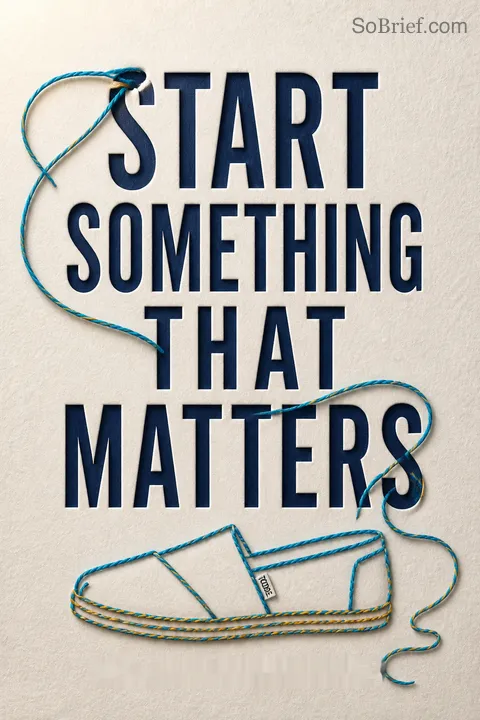
A problem becomes a promise. In Argentina, Blake Mycoskie saw children going without shoes and learned that shoe drives could not reliably supply the right sizes. He first considered seeking donations, then recognized the fragility of a solution dependent on donors. His alternative was a company that sold shoes and provided a new pair for each one sold, creating a continuing source of shoes through sales rather than occasional charity. He called the model One for One.
Business can carry the mission. TOMS began with 250 samples, made with local artisans, and reached its first 10,000 sales within months. The initial Shoe Drop, the delivery of those shoes to children in Argentina, showed Mycoskie that commerce could support a social purpose while paying employees and suppliers. The central challenge is designing the business and the benefit to reinforce each other.
What's compelling is the shift from an episodic response to an operating mechanism. A charity drive can meet immediate need, but a recurring revenue stream may make provision more predictable and easier to scale. The model also gives buyers a visible role in the act of giving. Still, a sale-linked donation is not automatically a better intervention than direct funding. Its value depends on whether the donated product is wanted, useful, and delivered responsibly. The transferable insight is not that every cause needs a matching product, but that the route from customer payment to intended benefit should be built into the venture rather than left to good intentions.
Make the mission easy to retell, and customers can become your storytellers.
A story travels farther. TOMS was not merely selling canvas shoes. Its simple account connected an ordinary purchase to a child receiving shoes. After a Los Angeles Times feature, online orders surged from roughly one or two per day to 900, then 2,200 in a single day. The company had only about 160 pairs in stock, but almost every early buyer accepted an eight-week delay after being told honestly about the shortage.
Emotion gives facts context. The book describes a 2009 Carnegie Mellon University experiment: students who read statistics about hunger in Malawi gave an average of $1.14 to charity, while those who read about a specific child gave $2.38. A group that received both appeals gave less than the story-only group. A memorable narrative can help people understand why facts matter, and can give supporters a concise explanation to pass along.
The story-versus-statistics finding captures a familiar limit of human attention: a vivid individual is easier to imagine than a population-level number. In communication, narrative can make an abstract need feel concrete and memorable. But a compelling story can also make a complex problem look simpler than it is. One child’s experience cannot establish how widespread a condition is or which intervention works best. Strong social ventures need both: stories that invite attention, and evidence that tests whether the promised response is effective. The useful standard is not storytelling instead of facts, but storytelling that opens the door to facts rather than replacing them.
Start before certainty arrives, then let small tests teach you.
Fear is not a verdict. Mycoskie argues that fear often signals uncertainty, not certain disaster. His mother, Pam, illustrates the point: after improving her cholesterol, she wrote a cookbook despite knowing little about publishing. Her first printer failed, leaving the family $60,000 in debt. She found another printer, sold 5,000 copies in three weeks, and ultimately sold 1.4 million books. The mission mattered enough to keep her moving through fear and setbacks.
Make the first risk smaller. Mycoskie did not begin by quitting everything and ordering a vast inventory. He took 250 shoe samples back to the United States and tested interest. He also recommends writing down the feared outcome and what would actually happen if it occurred. That turns a shapeless dread into a concrete risk to evaluate, while a small pilot can reveal whether the idea merits a larger commitment.
This advice usefully separates feeling afraid from deciding that a project is unwise. Small experiments reduce the cost of being wrong and produce information that planning alone cannot supply. In decision science, this resembles a real option: a modest initial investment buys the right, but not the obligation, to invest more once uncertainty falls. The caution is that courage and perseverance do not guarantee a good outcome. Pam's story is memorable partly because she succeeded after costly errors. The lesson is not to ignore warning signs, but to distinguish reversible experiments from risks that could threaten health, housing, or financial stability.
Treat scarcity as a design constraint, not a reason to wait.
Use what is already available. TOMS began in Mycoskie's apartment, with interns recruited online, borrowed space, and improvised systems. When an order arrived, the small team sometimes had to contact customers directly and explain delays. Other entrepreneurs in the book improvise in similarly concrete ways: TerraCycle founder Tom Szaky used discarded plastic bottles to package fertilizer made from worm waste, while Falling Whistles began by buying five inexpensive whistles and selling them to raise its first funds.
Scarcity can enforce focus. Mycoskie argues that lean beginnings teach organizations to solve problems creatively and avoid habits of waste. He contrasts that approach with Pets.com, which raised more than $300 million but reportedly spent $11.8 million on advertising in its first fiscal year while earning $619,000 in revenue. Yet lack of money is not inherently virtuous. The point is to seek only the resources that the work needs, not to treat underfunding as proof of commitment.
A tight budget can function like a constraint in design: it forces choices, exposes unnecessary complexity, and makes an early venture test its assumptions before building expensive infrastructure. The Pets.com example illustrates how capital can amplify a flawed plan rather than repair it. But scarcity also has a cost. Understaffed teams can burn out, and insufficient funding can prevent a useful service from reaching people who need it. The better principle is disciplined sufficiency: spend carefully, preserve room to adapt, and raise or secure resources when they address a real bottleneck. Frugality is a tool for learning, not a moral badge.
Strip away everything that obscures the product's promise.
Clarity lowers the burden. Mycoskie treats simplicity as a business advantage in both design and purpose. The alpargata that inspired TOMS was a straightforward canvas shoe, adapted with a more durable sole and insole. Its basic shape became a canvas for new patterns and customer decoration. The sisters behind SENDaBALL built a business around mailing a ball with a message written on it. They resisted advice to branch out, choosing instead to improve the uncomplicated service.
A simple idea spreads. The book points to Google limiting the words on its home page and to Southwest Airlines focusing on low fares for short flights. A clear promise helps customers understand what a business does and makes it easier to explain to someone else. Mycoskie suggests that founders should be able to describe their business, purpose, or product in one sentence. If the explanation cannot be made clear, the offer may need more work.
Simplicity is not merely a visual preference. It reduces the cognitive effort required to understand an offer, which matters when customers have limited time and competing choices. It can also help an organization make decisions consistently: a clear priority becomes a filter for new features and partnerships. The danger is confusing a simple message with a simple problem. Medical care, poverty, and supply chains often involve competing needs that cannot be solved by a slogan or a stripped-down product. The strongest use of simplicity is to make the entry point understandable while keeping the underlying work appropriately nuanced.
Trust people with real responsibility, and own mistakes publicly.
Empowerment makes trust practical. Mycoskie draws on Zappos, where founder Tony Hsieh encouraged employee autonomy and prioritized relationships with staff, vendors, and customers. At TOMS, interns received substantial responsibilities rather than being confined to errands. The argument is that capable people contribute more when they have both the responsibility and the authority to act.
Separate mistakes from betrayal. Mycoskie describes ordering 800 Airstream-themed shoes for an audience that largely preferred different footwear. TOMS sold only five pairs at the event. He accepted responsibility and used the failure as a reason to research future designs. In another case, the company alerted retailers to a batch of 6,000 shoes whose soles became slippery when wet, then offered to take them back. The book draws a firm line between errors that can be learned from and behavior that breaks trust.
Trust is not just a warm workplace value; it is a coordination system. When employees can make decisions without constant approval, information moves faster and leaders do not become bottlenecks. Owning a mistake also makes it safer for others to surface problems early, when correction is still possible. The boundary matters: psychological safety does not mean accepting deception or repeated negligence. A trustworthy organization needs clear expectations, room to learn, and consequences for conduct that harms colleagues or customers. Mycoskie's examples are especially useful because they show trust in action through disclosure and repair, not simply through declarations of good intent.
Build giving into operations, but let recipients define what helps.
Purpose can strengthen a business. Mycoskie says that a social mission helped TOMS attract customers who promoted its story, employees who wanted meaningful work, and partners who wanted to participate. The book also describes FEED Projects, whose bags funded school meals. By the time of writing, the company had sold more than 500,000 bags and generated enough funding for over 60 million school lunches. Giving, in this account, can contribute to both social benefit and commercial momentum.
Good intentions need good practice. The book cautions that donations can impose hidden costs, such as transport, storage, or volunteer time. It advises listening to local organizations, limiting unnecessary restrictions, and asking for feedback. It also argues for transparent reporting so supporters can see what a company or nonprofit actually does. Giving should be designed around the needs of the people served, not around what the giver finds easiest or most emotionally satisfying.
A mission can align business incentives with a social goal, making customers and employees participants rather than passive observers. That alignment is powerful, but it can also blur the difference between marketing a benefit and demonstrating one. A pair donated or a meal funded is an output; it does not by itself establish lasting improvements in health, education, or income. Responsible giving therefore needs feedback from recipients and partners, plus measures that track outcomes as well as activity. The book's emphasis on listening and hidden costs is important because it counters the tempting assumption that a well-intended gift is automatically useful.
Take the next concrete step; grand plans begin as small acts.
Ideas gain force through action. The book closes with examples of people who began without certainty that their projects would grow. One was Tyler Eltringham, a college student inspired by TOMS who created OneShot, a proposal to pair meningitis vaccinations for American college students with vaccinations for people in Africa's meningitis belt. He and his student team developed the idea, entered a university competition, and won $10,000 in seed funding. The work was still difficult and its long-term success uncertain, but starting changed the direction of his studies and career.
Choose a next step, not a fantasy. Mycoskie's practical invitation is to write down an idea, discuss it with someone, volunteer, test a product, or otherwise bring it into the world. A first step does not need to be impressive. It needs to produce movement, learning, or help for someone. The project may stay small, and that can still matter. If it grows, the early action gives it something real to grow from.
This ending turns inspiration into a behavioral prompt. A vague ambition can feel enormous because it contains no boundary; a specific action creates a manageable unit of effort and a chance to receive feedback. The OneShot example also shows how a borrowed model can be adapted to a different need rather than copied mechanically. Still, action alone is not impact. A project should learn from the people it serves, respect professional expertise where health or safety is involved, and be willing to change course. The most useful definition of starting is not simply launching something, but beginning a cycle of action, evidence, and revision.
Analysis
Start Something That Matters is part memoir, part entrepreneurship manual, and part anthology of social ventures. Its structure gives the advice a narrative engine: Mycoskie begins with a specific encounter in Argentina, turns that encounter into TOMS, then uses other founders' stories to illustrate storytelling, risk, resourcefulness, simplicity, trust, and giving. This makes the book accessible because its principles arrive attached to real decisions, awkward improvisations, and visible consequences. The most distinctive argument is that social purpose need not sit outside a business as a donation made after profits arrive. It can shape the product, customer relationship, and reason employees and partners choose to participate.
The book is strongest when it shows mechanisms rather than offering slogans. Telling customers about delayed orders preserved confidence during a supply failure. Admitting the Airstream shoe mistake made learning public. Asking community organizations to guide distribution recognizes that a founder's enthusiasm is not the same as local knowledge. These details help turn abstract claims about purpose and trust into operational choices.
Its evidence also requires careful reading. The success stories are selected, and revenue, units distributed, or event attendance are not equivalent to long-term social outcomes. A matching product can fund useful support, but the quality of that support depends on need, delivery, opportunity costs, and follow-up. The book's own advice about listening, transparency, and hidden costs provides a useful corrective to its most optimistic claims. Similarly, scarcity can prompt ingenuity, yet chronic underfunding can constrain capacity and exhaust workers. The sensible reading is not to imitate every tactic, but to test whether a tactic fits the venture's context.
The book's enduring value lies in its invitation to begin at a human scale. A reader need not invent a large company or a novel funding model. The practical sequence is to notice a problem, identify a credible way to address it, make a small test, explain the work clearly, and remain accountable to the people affected. Purpose becomes consequential when it is translated into choices that can be examined and improved.
Review Summary
Start Something That Matters receives mostly positive reviews, with readers finding it inspiring and motivational. Many praise the book's simple yet powerful message about combining profit with social impact. Mycoskie's story of founding TOMS and his advice for entrepreneurs resonates with readers. Some criticize the book for being repetitive or oversimplifying complex issues. Overall, reviewers appreciate the book's emphasis on giving back and starting meaningful ventures, though a few question the long-term impact of TOMS' business model.
People Also Read



Glossary
One for One
Purchase matched with givingTOMS' business model links a customer purchase to a corresponding benefit for someone in need. At the time described in the book, each pair of shoes sold was matched by a new pair given to a child. The company later applied the idea to eyewear by linking sales to sight-related services. The model makes giving part of the transaction rather than a separate charitable campaign.
Shoe Drop
Shoes delivered to childrenA Shoe Drop is a TOMS trip to distribute shoes to children, often with local organizations helping identify communities and shoe sizes. The trips also let employees, customers, and supporters witness the distribution firsthand. In the company's early period, the first Shoe Drop delivered 10,000 pairs across Argentina after TOMS reached its initial sales milestone.
One Day Without Shoes (ODWS)
Barefoot awareness eventOne Day Without Shoes is a TOMS campaign inviting people to go barefoot for a day to draw attention to the experience of living without shoes. The idea began with a barefoot walk organized by students at Pepperdine University and was adopted as an official company program. Schools, workplaces, and community groups organized events, with more than 250,000 participants reported in 2010.
Dirty List
Prohibited product ingredientsMethod's Dirty List is a company policy that excludes ingredients judged unhealthy for homes or the environment. The book gives beef fat in dryer sheets as an example of an ingredient the company rejected, choosing plant-based oilseed instead. The list makes an environmental promise more concrete by translating it into a product-design rule, rather than leaving it as a broad brand claim.
supporters
Customers invested in the missionMycoskie distinguishes supporters from ordinary customers. Customers may buy because a product is attractive, useful, or well-priced; supporters also identify with the company's purpose and are willing to tell its story to others. In the book, this stronger connection is treated as a source of word-of-mouth, community participation, and lasting loyalty, though it depends on the mission being credible.
FAQ
What's "Start Something That Matters" about?
- Author's Journey: The book is written by Blake Mycoskie, the founder of TOMS Shoes, and it details his journey from a vacation in Argentina to creating a successful business with a social mission.
- Business and Philanthropy: It explores the concept of combining business with philanthropy, specifically through the One for One model, where a product sold results in a product given to someone in need.
- Inspiration and Guidance: The book aims to inspire readers to start their own ventures that matter, providing practical advice and sharing stories of other entrepreneurs who have made a difference.
- Personal and Professional Fulfillment: Mycoskie emphasizes that success is not just about financial gain but also about contributing positively to the world and finding personal fulfillment.
Why should I read "Start Something That Matters"?
- Inspiration for Change: The book is a source of inspiration for those looking to make a positive impact through their work or personal projects.
- Practical Advice: It offers practical advice on starting and sustaining a business or project with a social mission, making it valuable for aspiring entrepreneurs.
- Real-Life Examples: Mycoskie shares real-life examples and stories of other successful social entrepreneurs, providing diverse perspectives and insights.
- Personal Growth: Readers can gain insights into personal growth and fulfillment by aligning their work with their values and passions.
What are the key takeaways of "Start Something That Matters"?
- One for One Model: The book highlights the success of the One for One model, where each product sold results in a product given to someone in need, as a sustainable business strategy.
- Importance of Storytelling: Mycoskie emphasizes the power of storytelling in building a brand and connecting with customers on an emotional level.
- Facing Fears: The book encourages readers to face their fears and take risks, as overcoming challenges is a crucial part of starting something meaningful.
- Simplicity and Trust: It advocates for simplicity in business models and the importance of building trust with employees, customers, and partners.
How did Blake Mycoskie start TOMS Shoes?
- Inspiration in Argentina: Mycoskie was inspired during a trip to Argentina, where he saw children without shoes and learned about the alpargata, a traditional shoe.
- Business Idea: He decided to create a for-profit business that would provide shoes to children in need, using the One for One model.
- Initial Challenges: Mycoskie faced challenges such as lack of experience in the shoe industry and limited resources, but he relied on creativity and resourcefulness.
- Growth and Impact: TOMS Shoes quickly gained popularity, leading to significant social impact by providing millions of shoes to children worldwide.
What is the One for One model?
- Basic Concept: The One for One model is a business strategy where for every product sold, a similar product is given to someone in need.
- Sustainability: It ensures a sustainable flow of goods to those in need, as it ties giving directly to sales.
- Customer Engagement: The model engages customers by making them part of the giving process, enhancing brand loyalty and support.
- Expansion Beyond Shoes: TOMS has expanded the model beyond shoes to include eyewear, where each purchase helps provide eye care to someone in need.
What are some key stories shared in "Start Something That Matters"?
- TOMS Origin Story: Mycoskie shares the story of how TOMS Shoes was founded and the challenges he faced in the early days.
- Method's Founders: The book includes the story of Adam Lowry and Eric Ryan, who created eco-friendly cleaning products with a strong brand story.
- FEED Projects: Lauren Bush's FEED Projects is highlighted as an example of a business that combines fashion with a social mission to fight hunger.
- Charity: Water: Scott Harrison's journey from nightclub promoter to founder of Charity: Water is shared as an inspiring example of personal transformation and impact.
What advice does Blake Mycoskie give for starting a business?
- Find Your Story: Mycoskie emphasizes the importance of having a compelling story that resonates with customers and supporters.
- Face Your Fears: He advises entrepreneurs to confront their fears and take calculated risks, as fear is a natural part of the journey.
- Be Resourceful: The book encourages using creativity and resourcefulness to overcome challenges, especially when resources are limited.
- Keep It Simple: Mycoskie advocates for simplicity in business models and product design to ensure clarity and focus.
How does "Start Something That Matters" address fear?
- Understanding Fear: The book explains that fear is a natural response to uncertainty and risk, but it can be managed and used as a motivator.
- Overcoming Fear: Mycoskie shares personal stories and strategies for overcoming fear, such as focusing on actions rather than emotions.
- Learning from Mistakes: He highlights the importance of learning from mistakes and viewing them as opportunities for growth and improvement.
- Support Systems: The book suggests surrounding oneself with supportive people, such as mentors and enthusiastic team members, to help navigate fear.
What role does storytelling play in "Start Something That Matters"?
- Emotional Connection: Storytelling is presented as a powerful tool for creating an emotional connection with customers and supporters.
- Brand Identity: A compelling story helps define a brand's identity and differentiates it from competitors in a crowded market.
- Customer Engagement: Stories engage customers by making them feel part of a larger mission, increasing loyalty and advocacy.
- Sharing Impact: Mycoskie uses storytelling to share the impact of TOMS' work, inspiring others to join the movement and support the brand.
What are some of the best quotes from "Start Something That Matters" and what do they mean?
- "Be the change you want to see in the world." This quote, attributed to Mahatma Gandhi, encapsulates the book's message of taking action to create positive change.
- "The more you give, the more you live." This reflects the idea that giving enriches one's life and brings fulfillment beyond financial success.
- "Start something that matters." The book's title and central theme encourage readers to pursue ventures that have a meaningful impact on the world.
- "Success is the ability to go from one failure to another with no loss of enthusiasm." This quote by Winston Churchill emphasizes resilience and perseverance in the face of challenges.
How does "Start Something That Matters" suggest building trust in business?
- Internal Trust: Mycoskie advises building trust within an organization by empowering employees and fostering open communication.
- External Trust: Trust with customers and partners is built through transparency, honesty, and delivering on promises.
- Admitting Mistakes: Acknowledging and learning from mistakes is crucial for maintaining trust and credibility.
- Consistent Values: Consistently aligning actions with the company's values and mission reinforces trust and integrity.
What impact has TOMS Shoes had since its founding?
- Millions of Shoes Given: Since its founding, TOMS has given millions of pairs of shoes to children in need around the world.
- Expansion of Giving: The company has expanded its giving model to include eyewear, providing eye care to those in need.
- Inspiration for Others: TOMS has inspired other businesses and entrepreneurs to adopt similar models of social entrepreneurship.
- Cultural Shift: The success of TOMS has contributed to a cultural shift towards conscious capitalism, where businesses prioritize social impact alongside profit.
Download PDF
Download EPUB
.epub digital book format is ideal for reading ebooks on phones, tablets, and e-readers.








