


Plot Summary
Birthday Road Snare
Seventeen-year-old Cécile de Troyes finishes a song in her village market, proud that her voice has finally survived the demanding lesson her mother arranged before taking her to the city. She promises her best friend Sabine she will return, then rides home with eggs for the farewell feast. On the forest road, Luc, a young man she knows, blocks her way.
When she refuses to follow him, he seizes her reins. Cécile escapes on horseback, but a branch knocks her from the saddle, and she wakes bound across Luc’s horse. He admits that he sold her to people beneath Forsaken Mountain, valuing the gold promised for her more than her life or her family.
Cécile begins with a future that feels earned: her voice is trained, her departure has been planned, and her friendship with Sabine gives the leave-taking emotional weight. Luc’s betrayal turns familiar terrain into hostile ground. The story’s first rupture is not caused by a stranger but by someone Cécile recognizes, making trust itself part of the danger. Her singing matters from the outset as both ambition and identity, while her brief use of will to persuade Sabine hints that her talents exceed performance. The abduction also exposes the transactional logic that will govern Trollus: people in power assign a price to human lives.
The City Beneath
Luc forces Cécile through a flooded passage under the mountain and tells her that the lost city of Trollus still exists, inhabited by trolls. A huge sluglike creature pursues them through the tunnels, but a young nobleman, Marc de Biron, intervenes and leads them safely into the buried city.
Cécile sees a glittering capital held beneath tons of rock by magic, then meets its rulers: King Thibault, Queen Matilde, and Matilde’s conjoined twin, the Duchesse Sylvie. Sylvie identifies Cécile as the human girl described in a prophecy and declares she must marry Prince Tristan, the King’s son. Luc receives Cécile’s weight in gold. Tristan, handsome and openly resentful, accepts the match without even pretending it is his choice.
The underground city reverses Cécile’s assumptions about the world while preserving the coercion that brought her there. Trollus is beautiful, but its grandeur rests on imprisonment, and the welcome offered by its rulers treats Cécile as a resource rather than a person. Marc’s courtesy provides a brief contrast to Luc’s brutality and the King’s appetite for control, yet even kindness cannot restore her freedom. Sylvie’s prophecy converts a private kidnapping into a political scheme: Cécile is valuable because others expect her to perform a role. The weighing of her body against gold makes that logic literal, stripping the royal bargain of any romantic disguise.
Moonlit Bond
Before the ceremony, Cécile learns that the trolls expect her to become Tristan’s wife in every sense and produce an heir. Tristan’s father treats this as an order, while Tristan refuses to force himself on her and asks her to help conceal his refusal. At the river altar, they drink a magical liquid and join hands beneath the moon.
The ritual binds their minds and emotions, marking Cécile’s hand with silver vines, but it does not release the trolls from the mountain. Thibault’s hope collapses into anger as factions in the city riot and several trolls die. Tristan hurries Cécile to safety, then explains that an ancient human witch cursed his people to remain trapped.
The failed ritual establishes the difference between intimacy and consent. Cécile is compelled into marriage for the collective hopes of Trollus, yet the bond creates a direct emotional connection that neither spouse chose. Tristan’s refusal to claim her body distinguishes him from his father, but it does not undo the coercive structure surrounding them. The curse’s survival turns the ceremony into both political failure and personal entanglement. Their shared mark makes the bond visible, while its emotional effects make concealment impossible. The resulting riot shows that prophecy is not merely a private belief: in a confined society, disappointed hope can become immediate violence.
A Prisoner’s First Map
Tristan hides Cécile from his father, who considers killing her after the prophecy fails, then leaves her locked in a closet. That night he gives her a light that responds to her touch and explains that trolls cannot lie, although they can deceive. The next day, the Duchesse sends Cécile into the city to appear publicly as a princess.
Shopkeepers and passersby avoid her, and her maid Élise explains that the great houses are waiting to see whether her status will last. At a trader’s shop, Cécile meets Esmeralda Montoya, a human who describes the law that keeps half-blood trolls enslaved. Cécile learns that the River Road is barred to her and that the labyrinth is the only other route out.
Cécile’s first map of Trollus is social as well as physical. Its streets, gates, and laws teach her that confinement is maintained through habits of ownership and controlled information, not only through magic. The light Tristan gives her is modest but consequential: it recognizes a practical need he had overlooked and becomes a first gesture of care. Esmeralda’s blunt account makes Cécile’s own captivity part of a larger system, unsettling any simple division between a victim and a political observer. The city’s refusal to acknowledge her also shows that a title alone does not confer belonging. Her public presence is a test staged by rulers, and she begins to understand that every choice will be watched.
The River Road Run
After learning that Tristan’s family owns hundreds of half-bloods, Cécile breaks her wineglass and bolts through the city, hoping the river will carry her outside. The current sweeps Élise away when she tries to stop Cécile, but the maid survives. Cécile finds Christophe Girard, a farm boy from home, and begs him to help her.
When he strikes at a guard, the troll Albert pins him down and nearly suffocates him. Tristan stops the crowd from killing Christophe by reminding it that Trollus depends on human traders for food. He then shows Cécile the barred river tunnel and explains the rules governing human visitors. Jérôme, Christophe’s father, urges her to judge Tristan by his actions.
Cécile’s escape attempt produces a painful correction: reaching for home does not automatically restore safety, and her desperation places others in danger. Christophe’s arrival offers a living link to the world she lost, but the city’s laws make even his rescue perilous. Tristan uses contemptuous language in public while preventing a killing, forcing Cécile to separate performance from consequence. That discrepancy is the beginning of her political education. Jérôme’s warning does not ask her to trust Tristan blindly; it asks her to observe what he does when power is available. Cécile has not yet chosen a cause, but she can no longer treat Trollus as a single, uniformly hostile enemy.
Plans Beneath the Party
At a party hosted by Marc, Cécile meets the enormous, irreverent twins Victoria and Vincent and watches Tristan maintain his public hostility toward her. She wanders into a locked cellar room and hides when Tristan arrives with his friends to inspect secret architectural plans. Before she can replace the papers, Angoulême, a powerful nobleman and rival of Tristan’s, finds her and offers to help her escape if she betrays the prince.
Marc interrupts, warning her that Tristan’s death could kill her too because of their bond. Cécile refuses Angoulême’s offer and confronts Tristan privately. He admits that he leads a half-blood resistance and plans to depose his father, then build a structure that could support the mountain without magic.
This discovery changes Cécile from a captive trying to understand her surroundings into someone capable of affecting their balance of power. Her leverage comes from an accident, but her refusal to hand over the plans is deliberate. Tristan’s design is both engineering and political promise: it would free half-bloods from dependence on noble magic, but also threaten the people who currently wield it. His reluctance to share the truth is understandable as security strategy, yet it repeats the same paternalistic habit that has governed Cécile’s life. Their alliance therefore begins with mistrust still intact. Neither can afford to treat the other as a simple instrument, even though both have been placed in that role.
A Princess Takes a Stand
Cécile begins lessons in strategy, history, and the arts while learning to pass as a royal in public. At a city fountain, Dowager Duchesse Damia beats her half-blood servant Lessa and threatens to send her into the labyrinth. Cécile intervenes, but Damia exploits the law against buying one’s own relative to block an easy rescue.
Rather than appeal to Tristan, Cécile lets Damia believe she has given up, then uses the King’s own rules to argue that the beating was an abuse of power. She finds a loophole: Lessa cannot be purchased by her royal family, but she can be transferred as a gift. Thibault orders Damia to give Lessa to the crown or lose her head, and Cécile’s legal maneuver saves the servant.
Cécile’s intervention is effective because she learns how power is written into the law and then makes the law contradict its intended cruelty. Her first instinct is compassion, but compassion alone would leave Lessa exposed and Tristan politically compromised. The staged retreat gives Damia room to incriminate herself, turning silence into a tactic rather than submission. This is also a shift in Cécile’s self-understanding: she can act within a political system without accepting its values. Yet Lessa’s transfer is not simple liberation, because she remains subject to ownership. Cécile wins a concrete reprieve, not a transformed society, and that limitation points toward the greater changes her choices will later demand.
Below the Quota
Cécile disguises herself as a miner and joins Élise, Zoé, and Tips’s half-blood gang on a twelve-hour shift. Deep underground, Tips explains that each gang must meet a production quota or choose one member to be sent into the labyrinth as food for the sluag.
The strongest half-bloods are claimed as servants, while miners and street workers face other dangers; those with the least magic are often eliminated before they can reach an auction. Cécile watches the gang labor and learns that Tips has kept his members alive by finding gold reliably.
On the return lift, a guild worker describes digging through a collapsed tunnel where an entire gang has died. He makes a binding promise to keep rescuing miners, then quietly admits he must still obey unjust laws.
The mine transforms an abstract account of slavery into a schedule of labor, risk, and forced choice. Cécile sees how the system recruits its victims to administer scarcity among themselves: the gang must decide which member dies, allowing rulers to avoid making the choice openly. Tips’s authority rests not on magical strength but on knowledge, steadiness, and earned trust. The guild worker complicates the moral map again. He belongs to the privileged class, yet his grief and promise reveal resistance within it. Cécile’s sympathies now have evidence behind them. She is not merely helping because she dislikes Thibault; she has seen what the proposed revolution would be fighting to change.
The Witch’s Grimoire
In the royal library, Cécile studies the Fall of Trollus and the curse cast by Anushka, a human witch whose red hair and blue eyes resemble her own. Tristan recites the prophecy linking a prince of night and a daughter of day, but he refuses to help hunt for Anushka. He fears that a free troll kingdom could repeat its history of conquest and slavery.
Cécile finds Anushka’s grimoire, and a cut finger opens its clasp; blood also lets her read the unfamiliar script. Its spells require sacrifices and troll blood to affect trolls. After Thibault threatens to imprison her unless she appears to satisfy Tristan, Cécile studies the book secretly and realizes her persuasive gift may be human magic.
The grimoire gives Cécile a form of knowledge that the city’s institutions cannot easily contain, but it offers no simple solution. Its rules make magic costly and specific, while its bloody methods connect power to vulnerability rather than effortless mastery. Cécile’s resemblance to Anushka raises the possibility of inheritance without proving destiny; the distinction matters because prophecy already threatens to reduce her to a function. Tristan’s fear of releasing his people is ethically serious, grounded in their history of empire, but his refusal to pursue alternatives risks converting caution into permanent imprisonment. Cécile’s emerging agency begins in a question: whether inherited power can be used differently from the power that made Trollus a cage.
Angoulême’s False Picture
Tristan shows Cécile the magical tree that holds up the mountain and explains that he maintains it daily. Their growing closeness unsettles him, and he continues to hide the full extent of his feelings. Angoulême catches them together, then suggests that Tristan is secretly involved with his daughter Anaïs. Cécile believes the accusation and runs to the labyrinth gate, picking its lock and entering alone.
Tristan senses her distress but chooses not to stop her, knowing that escape may be her only chance to leave him. Cécile reaches a flooded passage, turns toward a route marked for sluag, and falls into a pit of slime. There she finds Luc’s remains and the gold he carried, while Tristan’s presence draws nearer through their bond.
The tree makes Tristan’s burden visible: the city’s survival depends on a task he performs continually, while its people mistake his secrecy for indifference. Angoulême exploits the emotional cost of that secrecy with a rumor designed to make Cécile doubt the one relationship she cannot verify from outside. Her flight is not simply impulsiveness; it is a response to betrayal that seems to confirm her fear that she remains disposable. Tristan’s decision not to pursue her respects her autonomy, but it also exposes the danger of leaving trust unspoken. The labyrinth turns emotional uncertainty into physical peril, and Luc’s bones bring the story’s first betrayal to its grotesque conclusion.
Venom in the Dark
Tristan reaches Cécile alone and explains that his apparent affair with Anaïs is a cover for meeting resistance leaders; Anaïs is his ally, not his lover. He tells Cécile he came because he feared losing her. Before they can escape, a sluag attacks and stings Tristan. Cécile binds the wound and tries to draw out the venom, but troll magic cannot heal him, and her first attempt at blood magic only closes the cuts she made.
Tristan’s strength fades as the poison spreads. He urges her to flee with his light, but Cécile refuses to leave him. She drags him into a narrow hiding place and keeps the sluag at bay until Marc and the other trolls arrive and kill it. Marc blames her for Tristan’s condition.
The rescue reveals that Tristan’s distance has not meant lack of feeling, but the truth arrives under the pressure of imminent death rather than through an easy confession. Cécile’s refusal to abandon him reverses the structure of the kidnapping: she is no longer being carried toward a fate others chose, but choosing to stay beside someone she loves. Her magic proves real yet insufficient, separating power from omnipotence. The sluag’s venom also exposes a vulnerability that Trollus’s rulers cannot command away. Marc’s anger is understandable as grief in advance, but it places responsibility on the person who has just risked herself to keep Tristan alive.
The Blade Pauses
Tristan is carried back to Trollus, while Cécile is dressed in mourning clothes and taken before the city for execution. Thibault blames her for the apparent end of his dynasty, and half-bloods accuse her of betraying their cause. As the blade falls, Marc notices that the silver marks on Cécile’s hand are changing.
Matilde confirms that Tristan is alive, and the execution is stopped before it can kill Cécile. Back in his rooms, Tristan awakens and tells her he heard everything while unconscious. He recognizes that she used magic to try to save him, and she shows him Anushka’s grimoire. Tristan tells her to hide the book, because the others must not learn that she is a witch.
The execution scene makes the bond’s emotional logic public: Cécile’s survival depends on a sign that Tristan still lives, even while the crowd has already assigned her guilt. The blade’s near descent brings private despair into a civic spectacle, where both the King and the half-bloods treat her as a symbol before treating her as a person. Her return to Tristan does not erase the damage; it gives their relationship a new basis in shared knowledge. Cécile has crossed from being the presumed solution to becoming an unpredictable source of power. Keeping her witchcraft secret is protection, but also another layer of concealment that may later complicate trust.
The Choice at the Barrier
After the crisis, Cécile learns more about the past brutality of the troll kings and argues with Tristan over whether breaking the curse would unleash another conquest. Marc tells her how he lost Pénélope, the troll he loved, deepening Cécile’s understanding of what the bond can cost. Tristan finally admits that he loves Cécile but fears she will leave him.
He leads her to River Road and lets her cross the curse’s barrier alone. Cécile spends hours in the sunlight, weighing freedom, family, music, and life with Tristan. A rider offers to take her toward the city, but she turns him down. She returns to the barrier and chooses Trollus, just as an earthquake begins shaking the city.
The barrier makes a genuine choice possible for the first time. Cécile can feel the difference between being kept and staying, and the sunlight gives her a sensory measure of what she would surrender. Her decision is not a rejection of her former life: she still values family, music, and the open world. Rather, she judges that love and responsibility have become part of her chosen life, not merely the terms of captivity. Marc’s grief offers a warning against imagining the bond as uncomplicated happiness, while Tristan’s confession makes his fear legible. The earthquake immediately tests the decision, placing private commitment beside the city’s material fragility.
The Mountain Breaks
The earthquake sends a boulder crashing into Trollus and collapses mine shafts, leaving half-blood workers trapped. Anaïs stays with Cécile in the palace while the others try to stabilize the city. When Cécile learns that Tips’s leg has been crushed, she uses a human healing spell to save his life, though the damaged leg must be removed.
Her secret now known to Élise and Victoria, Cécile returns to the Dregs as Prince Roland, Tristan’s unstable younger brother, hunts half-bloods. She draws his attention away from the fleeing miners, but Roland throws her against the street with magic. Tristan reaches her after the attack and finds her gravely injured, with broken ribs and internal bleeding.
Cécile’s first successful healing spell is both a practical rescue and a declaration that her power belongs to the living people around her, not to prophecy alone. Saving Tips requires accepting a limit: she can preserve his life but cannot restore his leg. The earthquake exposes how fragile the city’s dependence on magic remains, while Roland’s rampage converts that structural crisis into a personal one. Cécile acts despite her physical weakness, but her courage cannot substitute for protection against a powerful attacker. The sequence places agency and vulnerability side by side. Her magic can alter the outcomes of individual lives, yet the political system still gives a violent prince the capacity to destroy her.
The King’s Trial
As Cécile’s condition worsens, Thibault refuses to let Jérôme fetch her grandmother, a human healer. He reveals that he has another witch ready to treat Cécile, but only after Tristan makes his move against him. The King admits he has known about Tristan’s resistance for years and has allowed its failures to harden his son into a ruler.
Tristan begins the rebellion anyway, and Thibault attacks him in Cécile’s room. Anaïs arrives and helps overpower the King, but Thibault traps Tristan and drives a sluag spear through Anaïs. Cécile uses blood magic to bind Thibault’s magic, allowing Tristan to restrain him. Tristan refuses to kill his helpless father, while Anaïs urges him to escape with Cécile.
Thibault’s revelation reframes the rebellion as both political conflict and a cruel education he has imposed on his son. He treats suffering as a tool for shaping kingship, repeating the logic by which people become instruments of power. Tristan’s decision to act before he is ready is driven by love and urgency, but it also exposes the half-bloods to danger. Anaïs’s intervention makes her strategic loyalty concrete, while Cécile’s spell changes the balance of the fight without deciding its moral outcome. Tristan must still choose what kind of ruler he will become. His refusal to kill his father is not a victory over Thibault, but a refusal to let vengeance dictate his character.
A Farewell Under Stone
With Thibault restrained and Anaïs badly wounded, Tristan carries the dying Cécile through the city as the rebellion erupts around them. Victoria and Vincent help them evade the fighting, while Marc opens the labyrinth gate and chooses to remain in Trollus.
Tristan’s friends buy time as he and Cécile reach the flooded entrance. He sends her through the curse’s barrier to Christophe, who is waiting with the Girards, then uses an illusion of solid rock to conceal the opening again.
Cécile wakes days later at her family’s farm, alive but separated from Tristan. Her grandmother has treated her injuries. Tristan’s letter warns her never to return to Trollus, but Cécile decides she will not forget him or accept helplessness. She sets her sights on finding Anushka.
The escape resolves the immediate question of whether Cécile will live, but it does not restore the life she had before Trollus. Tristan gives her the safety he promised while accepting the separation he feared, and the barrier turns that sacrifice into physical fact. Marc’s decision to stay, like Victoria and Vincent’s defense of the escape, shows that loyalty in Trollus cannot be reduced to a single romance or faction. At home, Cécile is surrounded by family yet oriented toward the people still trapped below. Her final resolve does not claim she can easily undo the curse; it insists that survival creates an obligation to act. The story closes on a new pursuit rather than a settled return.
Analysis
Stolen Songbird uses confinement to make power tangible. Trollus is not merely a fantasy setting beneath a mountain; it is a political machine whose continued survival depends on a magical structure, a hereditary ruling class, and laborers forced to police one another. The central conflict therefore cannot be solved by defeating one villain. Even Thibault’s removal would leave the half-bloods dependent on the same system, while breaking the curse could restore the military capacity that once enabled troll conquest. Tristan and Cécile disagree because each sees a different historical danger, not because one is simply wise and the other naive.
Cécile’s growth is measured by the widening scale of what she notices. At first she wants to recover her own life and voice. In Trollus, she recognizes that the servants, miners, and traders also live under constraints, and her empathy becomes political action: she studies the law, bargains for Lessa, enters the mines, and risks using magic to save Tips. Her voice is not only an artistic talent but a form of presence in a city designed to make certain people invisible. Yet her courage has costs. Her choices can endanger allies, and good intentions do not guarantee good outcomes.
Tristan’s guardedness grows from a different wound. He has inherited exceptional power and knows that releasing it may endanger the world, so he treats self-denial as responsibility. His fatal weakness is that he extends this logic to the people he loves, withholding truth in order to control risk. Cécile’s insistence on choice challenges that habit without making trust automatic. Their romance matters because it is tested against actual political disagreement: love cannot itself settle what freedom should mean.
The ending refuses a convenient victory. Cécile survives and returns to the human world, but Tristan remains trapped, the rebellion unresolved, and the witch still unlocated. Her decision to seek Anushka carries the story forward as an ethical question as much as a quest: can a power created through blood and domination be used to release people without recreating the violence it was meant to end?
Review Summary
Stolen Songbird receives mostly positive reviews for its unique take on trolls, complex characters, and slow-burn romance. Readers praise the world-building, engaging plot, and lack of common YA tropes. Some criticize underdeveloped aspects and predictable elements. The main characters, Cécile and Tristan, are generally well-liked for their growth and chemistry. While a few found the story cliché or frustrating, many readers eagerly anticipate the sequels. Overall, the book is considered an entertaining and refreshing addition to the YA fantasy genre.
People Also Read

Characters
Cécile de Troyes
The captive songbirdCécile is a farm-raised singer whose ambition has been cultivated by her distant opera-star mother. She is proud, quick-witted, and physically brave, but often acts before she has measured the cost. Her persuasive streak initially seems like force of personality; it also hints at a deeper capacity she does not yet understand. Being treated as a bargaining object sharpens her attention to how power works, especially when others are denied the choices she once took for granted. Cécile’s compassion is active rather than abstract: she intervenes, investigates, and accepts risks for people she has only recently met. Her central tension lies between longing for an expansive life and the loyalties she chooses inside a world that confines her.
Tristan de Montigny
The guarded heirTristan is the young troll prince and heir to the buried city of Trollus. He is intelligent, strategic, and practiced at masking his feelings behind sarcasm and public cruelty. His education in power has made him wary of hope and suspicious of any choice that risks future violence. He carries a daily responsibility for the magic that supports the city, a duty that reflects both his competence and his confinement. With Cécile, his impulse to protect conflicts with his fear of manipulating her. Tristan’s defining struggle is not simply between rebellion and obedience; it is between accepting inherited power as inevitable and trying to shape a future that does not reproduce his ancestors’ domination.
Marc de Biron
The scarred strategistMarc is Tristan’s cousin and closest confidant, a nobleman whose visibly altered face makes him unusually aware of how others judge appearances. He is courteous to Cécile and often acts as a buffer between her and the court, though his loyalty to Tristan can make him guarded. Marc understands the political dangers surrounding the prince and weighs survival carefully. His grief over a past love gives him a private tenderness beneath his caution, while his readiness to support the resistance shows that he is more than a courtly observer.
Thibault de Montigny
The tyrant kingThibault rules Trollus through overwhelming magical power, appetite, and fear. He regards political authority as a natural entitlement and sees people as resources to be deployed for the survival and future glory of his house. His relationship with Tristan is shaped by control: he wants an heir capable of ruling, but tries to produce that strength through pressure and calculated suffering. Thibault is not careless or unintelligent. His ability to anticipate rivals makes him more dangerous, because he can turn even resistance into part of his own design.
Sylvie Gaudin
The foresighted auntSylvie is the Duchesse and one half of the conjoined pair that shares Queen Matilde’s body. She possesses foresight and carries the prophecy that makes Cécile politically valuable. Direct, impatient, and difficult to intimidate, Sylvie treats ceremony as a tool rather than a sacred obligation. She believes the future can be read, but her confidence does not erase the risk of interpreting a prophecy too narrowly.
Matilde de Montigny
The gentle queenMatilde is Thibault’s queen and Sylvie’s conjoined twin. She is warm toward Cécile and displays a maternal instinct that contrasts with the court’s transactional treatment of the girl. Her dreamy manner can make her seem absent, yet her kindness gives Cécile moments of human recognition inside the palace. Matilde’s gentleness exists within a royal household whose decisions she does not appear to control.
Anaïs d’Angoulême
The brilliant rivalAnaïs is the beautiful daughter of Tristan’s political rival and a skilled strategist with a military education. Her sharpness and pride can make her seem cruel, especially when she feels threatened or excluded. Beneath that composure is a young woman who knows that Trollus measures her worth against standards she cannot control. Her connection to Tristan is intimate but complicated by loyalty, political necessity, and her own sense of inadequacy. She is more than a romantic obstacle: she can read a battlefield and act decisively when others hesitate.
Esmeralda Montoya
The human brokerEsmeralda is a wealthy human trader who moves through Trollus with confidence few humans can afford. She understands the city’s prejudice and bargains carefully around its laws, but she refuses to accept the treatment of half-bloods as inevitable. As Élise and Zoé’s aunt, she has a personal stake in the future she advocates. Her bluntness gives Cécile essential political information, though her willingness to negotiate favors shows that resistance in Trollus must operate within dangerous constraints.
Élise
The observant maidÉlise is Cécile’s half-blood maid and Zoé’s older sister. She is practical, perceptive, and more politically informed than her deferential position first suggests. She helps Cécile navigate the city, warns her about danger, and protects her from mistakes without pretending that either of them has much freedom. Élise’s composure reflects adaptation to a system that demands obedience, while her private loyalty shows that caution does not mean indifference.
Zoé
The wary maidZoé is Élise’s younger sister and another half-blood in Tristan’s household. She is gentle and emotionally guarded, shaped by the loss of her human mother and by the precarious status she shares with other mixed-blood trolls. Zoé understands the costs of hoping for change, so she approaches Cécile’s ambitions with both care and doubt. Her quiet presence helps reveal how slavery becomes ordinary through daily service and inherited expectation.
Tips
The miners’ captainTips leads a gang of half-blood miners despite having little magical power and a scar that has cost him an eye. His authority comes from competence: he can locate gold and has kept his gang from missing its quotas. He is blunt, funny, and alert to the dangers of false hope. Tips’s practical leadership challenges Trollus’s assumption that magical strength determines a person’s value.
Jérôme Girard
The trader fatherJérôme is Christophe’s father and a human trader who knows the laws and dangers of Trollus through long experience. He is practical without being cynical, and he warns Cécile to judge the trolls by their actions rather than their claims. His work makes him part of the fragile trade that keeps the buried city supplied, while his care for his son gives him a personal stake in its uneven rules.
Christophe Girard
The farmstead friendChristophe is a young farmer and childhood acquaintance of Cécile’s family. He represents the familiar life she was taken from: horses, fields, and the human community above the mountain. His loyalty is sincere, but his experiences as a trader have left him convinced that trolls are uniformly cruel. His protectiveness can become rash, particularly when he believes Cécile is in danger.
Sabine
The loyal childhood friendSabine is Cécile’s lifelong friend from Goshawk’s Hollow. Shy and wary of horses, she fears that Cécile’s move to the city will end their closeness. Her affection is steady rather than dramatic, and her willingness to overcome a personal fear for Cécile shows how deep that loyalty runs.
Frédéric de Troyes
The soldier brotherFrédéric is Cécile’s older brother, a soldier whose visits home have grown less frequent as his career advances. He taught Cécile practical skills and treated her as capable rather than fragile. His absence shapes the family’s vulnerability when she disappears, while his sense of responsibility reflects the close bonds of their rural household.
Roland de Montigny
The volatile princeRoland is Tristan’s much younger brother and a prince whose power is matched by frightening instability. He has been raised away from the immediate royal household, under the influence of a family with its own ambitions. Roland’s inability to understand attachment or restraint makes him unpredictable, and his existence complicates the succession that Tristan is expected to inherit.
Lessa
The hidden royalLessa is a half-blood woman in Damia’s household whose lineage gives her unusual value in Trollus’s status-conscious aristocracy. She is quiet under scrutiny and has learned to endure treatment that would provoke open resistance from someone with more protection. Her presence exposes how bloodline politics can turn family connection into both a source of danger and a bargaining chip.
Angoulême
The bloodline puristAngoulême is a powerful duke and Anaïs’s father, committed to preserving troll bloodlines and aristocratic control. He is patient, calculating, and skilled at using technically truthful statements to mislead people. His polished manner conceals a ruthless political imagination. He regards Cécile less as a person than as a possible instrument against Tristan.
Victoria de Gand
The fearless baronessVictoria is one of the enormous twins who share a barony with her brother Vincent. She is athletic, outspoken, and dismissive of human assumptions about gender and status. Her humor makes her a lively companion, but she is also attentive to the risks Cécile takes and ready to help when events turn dangerous.
Vincent de Gand
The laughing baronVincent shares his family’s barony with Victoria and matches her size, strength, and magical ability. He is playful, fond of contests, and particularly pleased by jokes and wordplay. Beneath the comedy is a loyal friend who takes Cécile’s safety seriously, even when he expresses concern through teasing.
Martin
The cautious archivistMartin is a librarian who helps Cécile research the Fall, the prophecy, and the history of Trollus. He is precise and bookish, preferring documented facts to speculation. His willingness to guide her through the collection gives Cécile access to knowledge the court has left scattered across centuries.
Pierre
The earth watcherPierre is a crippled troll who monitors the earth’s movements and keeps records of quakes beneath Trollus. He is curious, theatrical, and more willing than most to discuss what the future might hold. His scientific attention to the mountain reflects a desire to understand the world beyond the limits of the city.
Anushka
The vanished witchAnushka is the human witch whose curse has defined Trollus for centuries. The surviving records describe her as a foreign-born court entertainer with formidable magical knowledge. Her motives remain disputed, and the uncertainty surrounding her makes her a historical figure who still shapes present choices.
Genevieve de Troyes
The absent opera starGenevieve is Cécile’s mother, a celebrated opera singer who lives apart from her rural family. She arranged for Cécile’s voice to be trained and believes her daughter has the talent to succeed onstage. Her ambition and distance leave Cécile both inspired by her artistry and hurt by the emotional space between them.
Madame Delacourte
The exacting voice teacherMadame Delacourte teaches Cécile to sing and pushes her through repeated lessons with sharp criticism. She compares Cécile unfavorably with Genevieve, intensifying the young singer’s desire to prove that her talent belongs to her, not merely to her mother’s reputation.
Plot Devices
The marriage bond
Shared feeling and perilThe moonlit ritual links Cécile and Tristan through a magical mark and a continuing awareness of each other’s emotions. It makes deception harder between them, but it does not grant Cécile access to Tristan’s thoughts or remove the power imbalance surrounding their marriage. The bond also means that serious harm to one threatens the other, giving political rivals leverage and turning emotional distance into a physical risk. Its meaning changes over the story: first a forced contract, then an unwanted intimacy, and eventually a relationship Cécile chooses to keep.
Sylvie’s prophecy
A human made necessarySylvie’s foretelling identifies a prince of night and a daughter of day as the pair connected to Trollus’s curse. The King’s court interprets this as a reason to find and bond Cécile to Tristan. Because the prophecy is phrased symbolically and its first apparent fulfillment fails, it creates competing interpretations rather than clear instructions. It gives Cécile political importance before she understands the city, while also encouraging the rulers to treat her as a means to an end.
The magic tree
A city held aloftA vast structure of troll magic supports the rock above Trollus and distinguishes stone from things allowed to pass through, including the river. Tristan replenishes and adjusts it each day, making the city’s survival dependent on his labor and the power of the royal bloodline. The tree embodies both a technical marvel and a political vulnerability: as long as the half-bloods need it to survive, they cannot easily overthrow the nobles who maintain it.
True names and oaths
Words with binding forceTrolls can be compelled through their true names, and their promises can bind them with magic. Traders also swear oaths that prevent them from revealing Trollus or endangering its people. These rules shape politics, secrecy, and trust: a promise can offer protection, but a true name can turn a person into a weapon. Cécile’s growing awareness of how words bind action helps her search for solutions beyond brute magical force.
Anushka’s grimoire
Human magic’s dangerous manualThe grimoire contains spells rooted in blood and the elements, including methods that can affect trolls in ways their own magic cannot. Cécile opens it through her blood and discovers that she can read its script and perform human magic. Its instructions are practical but morally unsettling, requiring ingredients, sacrifices, and precise actions. The book does not hand Cécile an easy cure for the curse; it gives her a dangerous new form of agency and makes her a target if others learn what she can do.
The Malediction Trilogy Series

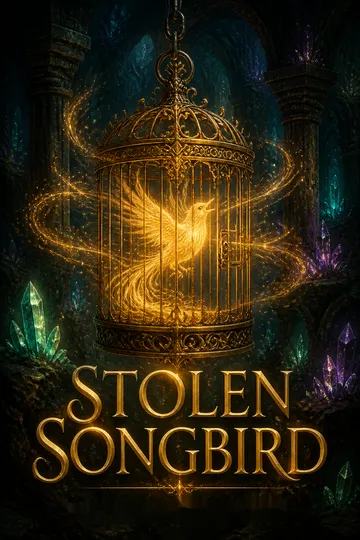

About the Author
Other books by Danielle L. Jensen








Download PDF
Download EPUB
.epub digital book format is ideal for reading ebooks on phones, tablets, and e-readers.








