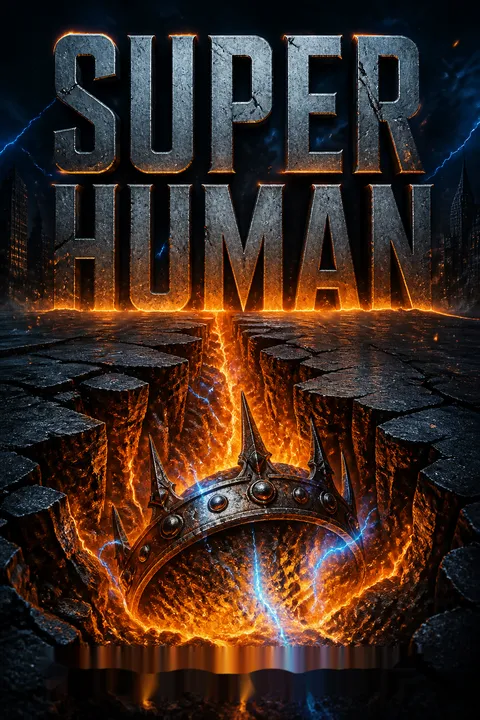


Plot Summary
Prologue
More than four thousand years before the main story, the immortal warrior Krodin cuts through an Egyptian army and orders the survivors to help him conquer their kingdom. He claims to have lived for centuries, calls himself the Fifth King, and insists that neither age nor ordinary weapons can kill him.
His victory is not merely military: Krodin treats the defeated as property and plans to turn their land into a weapon against its people. The prologue establishes the ancient conqueror whose return will threaten the modern world.
Krodin’s immortality is presented as power without a moral limit. He can survive wounds that would kill another person, but the more revealing choice is his treatment of the helpless: even after his enemies surrender, he orders the badly wounded killed and plans to ruin their homeland. That distinction matters. The danger ahead is not simply an exceptionally strong man, but a ruler who believes that survival and victory entitle him to own other people.
The Briefcase in the Hedge
Fourteen-year-old Lance McKendrick makes a living from small cons and careful anonymity, so Paragon’s public exposure at the mall feels worse than losing his money. Soon afterward, Lance pulls an injured driver from a burning car and watches Paragon pursue him. The crash leaves a leather briefcase hidden in a neighbor’s hedge.
Lance takes it, uses its keycard and code to enter a warehouse, and discovers equipment modeled on Paragon’s armor, including a jetpack. When the warehouse’s owners return, Lance escapes with the stolen gear. A gunshot activates the jetpack while he is riding his bicycle, sending him onto a freeway at terrifying speed. His attempt to stay unnoticed has become a very public emergency.
Lance begins by treating invisibility as a kind of success: if a mark forgets him, he can pretend no harm was done. The crash interrupts that private logic. He helps the injured driver before he knows what the man has done, then steals evidence that could matter to people beyond himself. His choices are still self-serving, but their consequences now exceed the small world in which he has justified them.
Midway Goes Silent
At the unfinished Midway power plant, Roz Dalton joins her brother Max’s superhero team, but a mysterious weapon leaves Max, the Rangers, and speedster Quantum gravely ill. Roz’s telekinesis lets her attack the armed captors, yet she is caught and handcuffed beside her brother. In a nearby town, diner waitress Abby de Luyando hears that Max has been taken and puts on homemade armor.
She meets Thunder, a teenager who can control sound, and the two help Colonel Morgan’s soldiers enter the plant unseen. Roz frees herself with a stolen cuff key and tips over a desk to expose the last gunmen. The hostages are rescued, but the woman commanding the attackers escapes by disguising herself as a patient.
The rescue turns limited, improvised abilities into practical tools. Roz cannot overpower a trained force, but she notices the cuff key and redirects a desk at exactly the moment it matters. Abby’s homemade armor and Thunder’s sound control likewise become useful only when joined to a larger plan. The escape of the disguised commander prevents the apparent victory from closing the story: the children have saved captives, but they have not yet understood the attack.
The Plague Has a Plan
Paragon catches Lance on the freeway and carries him to the power plant, where the boy recognizes The Helotry as the organization named by the warehouse thieves. One captured attacker mutters that they are bringing back the Fifth King, an ancient warrior said to have ruled through conquest. Lance notices that the illness disabling adults is spreading far beyond the plant, while the attackers remain healthy.
He also realizes that the outbreak is not ordinary flu and that the assault on Midway may be part of something larger. Paragon, Colonel Morgan, and the adult responders begin falling sick themselves. Before the infection incapacitates him, Paragon leaves Lance with Roz and asks the young heroes to investigate.
Lance’s value shifts from the equipment he stole to the pattern he can read. He links a phrase overheard in a warehouse to the power-plant attack, then notices that illness follows age and allegiance rather than ordinary exposure. His knack for watching people and remembering details, once used to exploit marks, becomes investigative skill. The heroes’ adult mentors are not simply absent; the epidemic is designed to remove their authority and leave children responsible.
The King Before Dawn
The story’s ancient interludes reveal Krodin after his conquests, ruling a vast empire through fear and obedience. He punishes a warrior who challenges him and treats the devotion of his subjects as proof of his greatness. His wife, Alexandria, finally tells him that the people do not love him and that his wars have brought only grief.
She describes a prophecy: at sunrise, a blaze will consume him and free the world. Krodin dismisses her warning, but when dawn reaches his face, his body catches fire. The historical scenes clarify why The Helotry worship the Fifth King, while showing that their accounts of his supposed death may not tell the whole story.
Alexandria’s challenge punctures Krodin’s central defense: that conquest is justified because he is powerful enough to succeed. She measures his rule by what it has done to ordinary lives, not by the borders he has redrawn. His reaction exposes a ruler who can command submission but cannot make intimacy or consent real. The sunrise prophecy also gives the present-day plot a precise hinge between history and technology.
Adults Fall, Children Run
As the plague spreads, Roz, Abby, Thunder, and Lance learn that adults across the country are becoming too sick to help. Lance finds coded pages in the stolen briefcase; their dates, worker details, and plant coordinates reveal that The Helotry studied Midway before targeting Windfield, a matching operational facility.
The group heads toward Oak Grove Prison to recruit Pyrokine, a fifteen-year-old superhuman who can transform matter into energy. On the way, they leave a gravely ill motorist where rescuers might find her, a decision that unsettles Abby.
In Oak Grove, a teenage mob blocks their truck, and Lance’s invented warning briefly scares the crowd. Slaughter then attacks, blinding the others with Pyrokine’s light and carrying Roz into the sky.
This section forces the children to choose between immediate care and a threat that could endanger millions. Abby’s distress over the stranded motorist is not a failure of courage; it shows how easily emergency logic can make a particular person disappear behind a larger mission. Meanwhile, Lance’s false story about the plague echoes his old cons, but now he uses invention to prevent a mob from taking the team’s vehicle.
Oak Grove Breaks Open
Slaughter carries Roz away while Abby and Thunder fight armored Helotry soldiers in Oak Grove. Lance, blinded by Pyrokine’s flash, hides in a bookshop with a frightened child, then is captured when the attackers identify him. Thunder is taken too.
Abby reaches the prison and finds it wrecked, with guards and supervillains left sick or injured. She realizes The Helotry came for Pyrokine, then opens the heavy vault holding Brawn, a blue giant imprisoned for his powers.
Brawn initially abandons her after promising help, but returns when Helotry troops pursue her, smashing their armored vehicles and rescuing her. Meanwhile, Lance and Thunder bluff their way out of captivity by using Thunder’s imitation of the old woman’s voice and Lance’s knowledge of the enemy’s plans.
The team’s separation tests whether their different strengths can survive without the group around them. Abby’s decision to open Brawn’s cell is a gamble grounded in need, not trust. Brawn’s return matters because he honors a promise after first acting in his own interest. Lance and Thunder, forced to cooperate while captive, turn performance into a means of escape; Lance’s fluency in deception is finally useful to people who know he cannot be trusted automatically.
The Cure Has a Counter
Roz outlasts Slaughter by using her telekinesis to close the woman’s eyes, then escapes while Slaughter struggles to see. At a police car, Roz reaches Doctor Janine Gertler at the CDC and learns that The Helotry engineered a rapidly changing virus with an internal timer. The CDC needs to understand how it was distributed before it can spread a cure.
Abby and Brawn reconnect with Roz, while Lance and Thunder steal a jeep and follow the enemy’s route toward Windfield. Brawn’s strength gives them the muscle they lack, and Lance’s coded pages explain why the first plant mattered: it supplied a model for the second. Together, the young allies head for Windfield, where The Helotry are preparing their final operation.
The escape from Slaughter is won through observation rather than greater force. Roz recognizes that Slaughter’s vision is essential to her attacks and uses the limitation to create an opening. The CDC call then enlarges the stakes: the virus is not just a weapon that spreads, but a designed process with a deadline. At the same time, the team’s reunion depends on accepting help from Brawn, whose former villain status is less immediately useful than his present choice to stand with them.
Windfield Opens the Past
The Helotry’s forces defend Windfield while Slaughter prepares Pyrokine to turn reactor energy into a passage through time. Abby and Roz break through the guards with Brawn’s help, but Slaughter activates the machinery before the old woman leading The Helotry arrives. Krodin appears from the past, pulled from the instant before the sunrise fire recorded as his death.
He immediately treats the modern world as territory to conquer. During the fighting, Lance is captured with the old woman and learns that she created the plague by altering a virus; she also carries a countervirus that can neutralize it. Lance secures the antidote and passes it to Max, who has arrived gravely ill, while the others struggle to hold Krodin back.
The time passage makes The Helotry’s worship literal: they do not want a symbol or a successor, but the living ruler they have built their faith around. Their technological achievement does not soften that devotion; it gives it machinery. Lance’s discovery of the countervirus supplies a second objective during the battle. The children must stop the conqueror, but they must also preserve enough people to make stopping the plague meaningful.
A Cure, A Buried Love
After Lance gives Max the countervirus, Max recovers and uses his mental abilities against Krodin. Lance carries the cure to Quantum, whose speed allows him to touch infected people worldwide; the CDC then works to spread an airborne version. During the fighting, Roz recognizes Pyrokine as Fabian, the boy she once loved.
They remember that Max erased their relationship and framed Fabian, sending him to prison. Max insists the deception was meant to protect Roz, but Fabian’s anger breaks through the alliance. Max strikes him, Fabian fires back, and the clash jolts Krodin awake. The group must face their enemy again just as Roz learns that her brother’s protection has included control over her memories.
The revelation recasts Max’s guardianship as a conflict between care and ownership. He may believe that he is protecting Roz, but erasing her relationship and shaping Fabian’s fate denies both young people the right to understand their own lives. The cure’s distribution offers a striking counterpoint: survival is restored through voluntary contact and shared labor, not secret control. The renewed battle begins at the moment that trust within the team is most damaged.
Fire Takes the Fifth King
Krodin adapts to the heroes’ attacks and defeats Brawn, while Max cannot simply overpower his mind. Paragon and the others join the fight, but Krodin’s strength and ability to adjust make each tactic temporary.
When Krodin breaks Pyrokine’s neck and threatens Roz, Fabian rises again, surrounding himself in a brighter, hotter transformation than before. He attacks Krodin directly, burning faster than the ancient warrior can heal. The blast consumes both of them and leaves only scorched ground.
The cure continues spreading, but Fabian’s return to Roz has lasted only hours. Afterward, Max’s interference with their memories is repeated: Roz and Abby no longer remember the relationship, leaving the surviving team to mourn a loss they cannot fully name.
Krodin’s adaptability makes him a problem that cannot be solved by simply escalating force. Fabian’s final transformation succeeds because it is not another contest of strength: he spends himself to protect Roz and end Krodin’s rule. The cost is sharpened by Max’s repeated memory manipulation. The victory saves lives, yet it cannot restore the truth of Fabian and Roz’s relationship to the people who lived it. Survival and justice arrive on different terms.
Analysis
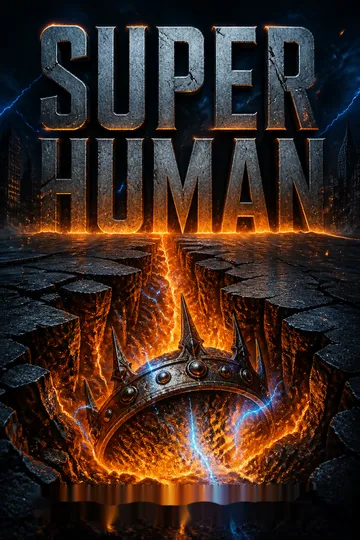
Super Human makes the familiar superhero question, who has the greatest power, less decisive than the question of who accepts responsibility for other people. Krodin believes that strength grants the right to rule. The Helotry convert that belief into a religion and build technology around it, then infect the world to clear the way for his return. Against this scale, the young heroes have uneven abilities, incomplete training, and no dependable adult command structure. Their effectiveness comes from sharing what each can do: Roz reads physical openings, Thunder manages sound, Abby commits her strength, and Lance supplies inference and improvisation. Lance’s arc is especially revealing because he begins with a moral system designed to excuse taking from strangers. The crisis does not instantly make him virtuous; it gives him consequences he cannot dismiss as harmless. He helps save people by using the same attentiveness and nerve that once made him a skilled thief. The book also complicates protection through Max. His care for Roz is real, but his willingness to control her memories shows how benevolence can become coercive when a powerful person assumes that good intentions erase another person’s agency. Fabian’s return makes that cost intimate, while his final act refuses Krodin’s premise that power exists to dominate. Victory therefore comes through sacrifice and cooperation, not the discovery of a stronger ruler. Yet the repeated memory erasure leaves the ending unsettled: the world can be rescued while the people who saved it remain deprived of parts of their own history.
People Also Read



Characters
Lance McKendrick
Reluctant young strategistLance is a fourteen-year-old con artist who prizes anonymity and excuses his schemes by insisting that no one is seriously harmed. His sharp eye for behavior, talent for improvisation, and appetite for risk become unexpectedly valuable when the crisis grows beyond his control. He is not superhuman, a fact that makes him sensitive to being dismissed by stronger teammates. Lance’s development hinges on whether he can use deception without treating people as marks. He remains irreverent and self-protective, but begins to measure his actions by what they might do to someone else.
Roz Dalton
Telekinetic young leaderRoz is a fifteen-year-old telekinetic raised and trained by her older brother Max after their parents died. She is disciplined, observant, and more comfortable acting than asking for help, though flying and combat still frighten her. Her power is limited by what she can see and by her own physical endurance, forcing her to solve problems through attention and timing. Roz’s instinct to protect her younger brother and follow Max’s orders coexists with a growing need to make decisions for herself. She is brave without being fearless, and her leadership grows from practice rather than certainty.
Abby de Luyando
Self-made metal fighterAbby is a fourteen-year-old waitress whose superhuman strength and unusual control over metal emerge while she is working to support her family. She builds her own armor and sword from available materials, reflecting both ingenuity and the practical demands of her life. Abby is protective of her mother, sister, and four younger brothers, and she feels responsible for people who might otherwise be overlooked. That sense of duty can put her at odds with the team’s harsher calculations. She is new to hero work, but her courage comes from acting despite uncertainty, not from believing she cannot be hurt.
Thunder
Sound-shaping allyThunder is a teenage sound manipulator who can hear across great distances, silence an area, and redirect or reproduce sounds. He is intelligent, confident, and quick to criticize, often using sarcasm to keep others at a distance. His abilities are useful in reconnaissance and combat, but they do not make him physically invulnerable. Thunder expects competence from himself and his teammates, and he initially judges Lance by his record rather than his potential. Beneath his impatience is a capacity to cooperate when the danger becomes real.
Max Dalton
Telepathic protectorMax is Roz’s older brother, an established superhero whose telepathy and mental control make him formidable. He has taken on the responsibilities of a parent and trains Roz with the seriousness of someone who believes danger can be managed through preparation. Max’s protectiveness is sincere, but it can become paternalistic: he is accustomed to deciding what others should know and do. His confidence in his own judgment is one of his strengths and a source of unease. He represents the difficult boundary between keeping someone safe and claiming authority over their choices.
Fabian, Pyrokine
Dangerous energy shaperFabian is a fifteen-year-old superhuman able to transform matter into energy, a power dangerous enough to make others fear what might happen if he loses control. The name Pyrokine suggests a simple fire-starter, but his ability reaches far beyond flame. He is young, isolated, and wary of the damage his presence might cause. His vulnerability sits beside immense potential, making him a person others may try to use or contain. Fabian’s connection to Roz is important to his emotional life, but he should not be reduced to either his power or his relationship.
Paragon
Armored veteran heroParagon is a non-superhuman hero who relies on self-built armor, a jetpack, and carefully engineered equipment. He is blunt with young people and impatient with recklessness, but he also recognizes courage when he sees it. His public visibility contrasts with his reluctance to turn heroism into celebrity. Paragon’s technology gives him the reach of a superhuman while keeping him dependent on human judgment and mechanical limits. He serves as an experienced guide whose advice is valuable, though the crisis soon removes the adults’ ability to direct the younger heroes.
Krodin, the Fifth King
Immortal ancient conquerorKrodin is an ancient warrior who believes his extraordinary strength, longevity, and capacity to survive make him fit to rule. He is intelligent and adaptable, with a perfect memory and a strategic mind, but he measures people in terms of power and obedience. His history includes both political calculation and personal loneliness, though he has difficulty recognizing the needs of anyone beneath him. Krodin is not merely a relic brought into the present; he is a ruler whose certainty about his right to command collides with a world that does not accept strength as legitimacy.
Slaughter
Relentless superhuman enforcerSlaughter is a fast, powerful fighter who approaches conflict with aggression and little concern for collateral harm. She works for The Helotry and is feared even by its members. Her physical confidence can make her appear impossible to challenge, but she is also proud and vulnerable to frustration when opponents refuse to behave as expected. Slaughter’s identity is built around force, making patience and cooperation difficult for her. She is a dangerous antagonist because she treats violence not as a last resort but as the natural language of command.
Brawn
Imprisoned giant allyBrawn is a sixteen-year-old superhuman whose enormous blue body gives him immense strength and makes others instinctively fear him. Imprisoned among adult supervillains, he is more thoughtful than his size and reputation suggest. He can be self-interested and unpredictable, yet he understands the difference between being treated as a monster and choosing to act like one. Brawn’s presence challenges the assumption that appearance or a criminal label tells the whole story.
The old woman
Helotry elderThe old woman is a frail, formidable figure whose authority within The Helotry is initially difficult to gauge. She has lived through a long history of devotion to the Fifth King and treats the organization’s plans as sacred work. Her patience and conviction make her more dangerous than a simple zealot, since she can plan over generations and justify immense suffering as necessary. She is also a superhuman, though the limits and consequences of her abilities are not obvious at first.
Quantum
Superfast veteran heroQuantum is a masked speedster who works alongside Max and has experience with dangerous missions. His speed makes him a valuable scout, but it also causes illness to affect him quickly. He is lighthearted with Roz and accustomed to operating as part of an adult superhero network. Quantum’s anonymity contrasts with Max’s public identity, while his powers make him one of the team’s most effective links between distant places.
Alexandria
Krodin's dissenting wifeAlexandria is Krodin’s wife, an Assyrian envoy who becomes his closest companion and his most honest critic. She sees the human cost of his empire more clearly than he does and refuses to mistake fear for loyalty. Her courage is not martial; it lies in speaking plainly to someone who can punish dissent without consequence. Alexandria gives the ancient story its moral counterweight, insisting that power cannot make conquest benevolent.
Imkhamun
Captured Egyptian generalImkhamun is an Egyptian general who faces Krodin after his army has been defeated. He is frightened but does not conceal his loyalty to his king or his refusal to accept Krodin’s rule as inevitable. His brief encounter with the conqueror establishes the cruelty and scale of Krodin’s ambition.
Cody McKendrick
Lance's popular brotherCody is Lance’s older brother, a successful student and athlete with an easy place in the social world. His popularity sharpens Lance’s wish to avoid notice, even though the brothers care about each other. Cody represents the ordinary family life Lance risks losing through his schemes.
Joshua Dalton
Youngest Dalton siblingJoshua is Roz and Max’s ten-year-old younger brother. Max’s concern for his future powers helps explain the protective atmosphere surrounding the Dalton household. Joshua is largely away from the central action, but his place in the family gives Roz another reason to follow her brother’s plans.
Alison de Luyando
Abby's wheelchair-using motherAlison is Abby’s mother, a warm, resourceful parent living with limited mobility and financial hardship. She depends on her daughters for practical help but remains attentive to Abby’s safety and education. Her circumstances explain why Abby works long hours and why heroism cannot be separated from family responsibility.
Vienna
Abby's older sisterVienna is Abby’s older sister, who works to help support their household. She worries about Abby’s long hours and unexplained absences, and often takes on the role of a second adult in the family. Her practical concern keeps Abby’s secret life anchored to home.
Colonel Morgan
Military crisis commanderColonel Morgan directs the military response at the Midway plant and is willing to adapt when Thunder’s hearing provides useful intelligence. He values trained procedure but recognizes that the emergency exceeds what his ordinary forces can manage. His cooperation gives the young heroes access to the operation without pretending they are simply soldiers.
Doctor Janine Gertler
CDC virus specialistDoctor Gertler is a CDC researcher working to identify the engineered virus. She explains its changing structure and warns Roz that scientific treatment depends on understanding how The Helotry spread it. Her expertise translates the biological threat into a problem the young heroes can act on.
Plot Devices
The Helotry's plague
Removes adult protectorsThe Helotry release an engineered virus that rapidly sickens adults while leaving children and teenagers comparatively unaffected. Its delayed activation allows carriers to take it across the world before symptoms appear, and its changing genetic structure makes a cure difficult to create. The plague disables superheroes, soldiers, and government responders at the moment the organization attacks the power plants. It turns the age of the protagonists from a liability into the reason they are still able to act. The countervirus hidden in the old woman’s power provides a path to recovery, but only after Lance recognizes how to move it from person to person.
The stolen plant data
Points toward WindfieldTwo coded pages from Marcus’s briefcase list coordinates, schedules, workers, and access details for nuclear facilities. Lance initially takes the papers without understanding them. Thunder later deciphers enough to see that Midway was a rehearsal for Windfield, whose layout matches the earlier plant. The pages convert Lance’s theft into actionable intelligence and explain why The Helotry attacked a facility that was not yet producing power.
The reactor time passage
Retrieves the ancient kingThe Helotry combine Windfield’s reactor with Pyrokine’s ability to transform energy. Their calculations are intended to open a passage through time and take Krodin from the final second before his recorded death. The power plant therefore serves as more than a target: its energy turns an ancient story into a present danger. The plan depends on the belief that removing Krodin from that instant will save him without changing history, a belief the heroes challenge.
Superhuman abilities
Turns limits into tacticsThe heroes’ powers come with clear constraints. Roz can move only what she can see and can tire herself out; Thunder can manipulate sound but lacks comparable physical strength; Abby’s unusual strength is especially effective with metal; and Pyrokine’s energy control is dangerous even to him. These limits prevent the conflict from being solved by a single ability. The team succeeds by combining perception, timing, equipment, deception, and force, while the villain’s ability to adapt continually demands a new approach.
The New Heroes/Quantum Prophecy Series
Download PDF
Download EPUB
.epub digital book format is ideal for reading ebooks on phones, tablets, and e-readers.








