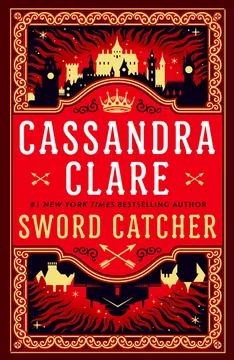


Plot Summary
Prologue
Legate Aristide Jolivet arrives at the cliffside Orfelinat to take ten-year-old Kel, an orphan, to the Palace. Counselor Mayesh Bensimon gives Kel a charm that makes others see him as the ailing Prince Conor during a diplomatic banquet. The impersonation succeeds, but the King wants more than a one-night substitute.
Conor explains the Malgasi custom of a Sword Catcher, a boy trained to take his place and shield him from danger. Kel accepts because Conor offers him education, security, adventure, and, most powerfully, the feeling that someone needs him.
Kel’s recruitment begins as a polished royal errand and reveals its true cost only after he has been made useful. The Palace disguises the taking of a child as opportunity, while Kel’s hunger for books, safety, and belonging makes the bargain emotionally persuasive. His choice is not simply coerced, but neither is it freely made: he is offered extraordinary prospects against the grim alternatives awaiting an orphan. That tension becomes the pattern of his adult loyalty. Kel protects Conor out of genuine love, while the institution that gives their bond meaning also claims his future.
The Prince’s Borrowed Face
At twenty-three, Kel lives as Conor’s double, bodyguard, and closest companion, slipping between his own identity and the royal one whenever danger or ceremony demands it. On Castellane’s Independence Day, a suspected crossbowman makes the Palace replace Conor with Kel for the public speech. Wearing Conor’s crown and speaking through the illusion charm, Kel wins the crowd’s fervor, then joins Conor for a night in the city.
Their closeness is easy, but their freedom is staged: guards follow at a distance, and Kel’s work is to keep Conor safe even when Conor wants to forget he needs protecting. At the Caravel, a pleasure house favored by nobles, Kel arranges a private meeting with a chemist he hopes can identify a poison.
Kel’s public performance is not merely a disguise; it lets him experience a form of belonging that his private life cannot safely claim. The crowd’s affection lands on the Prince’s image, yet Kel feels its force in his own body. The scene sharpens the contradiction at the heart of his vocation: he is indispensable precisely when no one can recognize him. His loyalty to Conor is intimate and chosen, but its public expression must remain anonymous, making love and erasure difficult to separate.
A Physician Shut Out
In the Scholars’ Quarter, Lin Caster, an Ashkar physician, tries to buy a medical text that the Academy reserves for its students. The bookseller refuses because she is Ashkar, despite knowing she has treated his ailments.
Lin’s friend Mariam Duhary guides her away before anger earns Lin a fine. In the Independence Day crowd, Mariam suddenly coughs blood and collapses. Lin catches her, but strangers hesitate to help an Ashkar woman; a Palace carriage sent by Mayesh Bensimon carries them back to the Sault.
Lin tends Mariam through the night and confronts the fact that her friend is worsening despite every remedy she knows. She wants the denied book because ordinary medicine has not explained Mariam’s illness, and she cannot accept helplessness as a treatment.
Lin’s medical ambition is born from care, but exclusion makes that care more desperate. The city will accept her skills when they are useful and deny her the knowledge that might enlarge them. Mariam’s collapse therefore turns a political barrier into an intimate emergency. Lin is not pursuing forbidden books for prestige; she is trying to keep one beloved person alive. Her professional discipline and her fear of loss reinforce each other, creating a risk that care may become an inability to respect the limits of another person’s life.
The Ragpicker’s Test
At the Caravel, Kel asks Merren Asper, a student of chemistry and poisons, for an antidote to cantarella, an old toxin recently used against a royal guard. After Merren’s wine secretly drugs him with a truth serum, a black carriage snatches Kel from the street.
The Ragpicker King, Andreyen Morettus, knows Kel is Conor’s Sword Catcher and wants him to identify the Hill patron financing Prosper Beck, a new criminal power encroaching on the Maze. Kel refuses to spy on the Palace or betray Conor.
He resists the serum by cutting his palm to counter its effects, then leaves with Andreyen’s password and an invitation to reconsider. The encounter teaches Kel that the King of the City has noticed both his access and the limits imposed by his royal duty.
Andreyen’s test makes Kel’s loyalty legible to an outsider, but also exposes how easily devotion can be treated as a resource. Kel’s physical resistance to the truth drug is an extension of his training, while his refusal is an ethical decision rather than a reflex. Still, the Ragpicker King’s offer unsettles him because it names a cost Kel has normalized: a life in which nearly every choice is made in service to Conor. His resistance is firm, but the question has entered the room.
Petrov’s Hidden Stone
Lin visits Anton Petrov, an elderly patient whose unexplained symptoms resist her treatments. Before dismissing her, Petrov gives her a smooth gray stone that seems to hold shifting shapes within it.
When Lin returns, his flat has been emptied, blood stains the floor, and his landlady says men claiming to be his friends came for him. Lin keeps the stone and brings it to the Black Mansion, where Andreyen identifies it as an Arkhe, or Source-Stone, a relic capable of storing the power behind the lost High Magic.
He believes Lin’s touch may have awakened it while she treated patients. Because she cannot use the Sault’s medical laboratory, Andreyen offers his own and asks her to seek Qasmuna’s forbidden research. Lin agrees, hoping the knowledge might help Mariam.
The stone gives Lin an opening into power, but it arrives through a death she cannot investigate and a bargain with a criminal she cannot fully trust. Her response is consistent with her physician’s identity: she asks what the object can do for the sick, not what it can do for her. Yet the offer also answers a longstanding deprivation. The laboratory and lost medical knowledge promise competence denied to her by both Castellani law and Ashkar custom. The temptation is therefore moral as well as practical.
The Wrong Man Bleeds
After Kel leaves Merren’s lodging, Crawlers mistake his borrowed black cloak for Conor’s and ambush him on the Key. Their leader Jerrod Belmerci realizes the victim is not the Prince, but another Crawler stabs Kel before they scatter.
Ji-An, Andreyen’s armed lieutenant, shoots into the alley and drives them off. Mayesh brings Lin to the Palace after finding Kel near death. She drains blood pressing against his heart and lungs, closes his wounds, and gives him healing talismans.
When she recognizes the old Ashkari illusion charm in Kel’s hand, she understands he is no royal cousin but the Sword Catcher. Mayesh confirms the secret. Lin swears to keep it, while Kel wakes knowing that the physician who saved him sees the person beneath his princely disguise.
Lin’s treatment of Kel briefly suspends the hierarchies that usually govern their city. She orders the Prince out of the room because her patient needs quiet, and he has to accept her authority. Kel, in turn, is seen without the polished identity that has protected and confined him. The recognition between them begins not as romance but as a clinical fact: she knows what he is, and still treats him as a person rather than a royal instrument. Trust grows from that practical encounter.
Ten Thousand Crowns
As Kel recovers, Conor admits that Prosper Beck has bought up ten thousand crowns of his unpaid bills and threatened to force repayment through the Treasury, exposing the Prince to the Council’s scrutiny.
Conor has already borrowed against his future by secretly arranging to marry Princess Aimada of Sarthe in exchange for the dowry. The deal is meant to end Beck’s leverage, but it bypasses his parents and the Council.
Meanwhile, King Markus appears at a Council meeting speaking of doom foretold in the stars, and Conor’s distress suggests the King’s long withdrawal is more than scholarly eccentricity. Kel realizes the danger may reach beyond a criminal’s demand for money, while Conor hides the engagement and its price from his closest friend.
Debt converts private indulgence into a constitutional threat. Conor’s spending is not harmless simply because the Crown is wealthy; his creditors can make the state’s finances, and his fitness to inherit, public weapons. His secret marriage bargain is an attempt to regain control, but it repeats the very problem it solves: he makes a consequential decision alone, then conceals it from the people expected to manage its consequences. Kel’s protective role now requires judgment, not only physical defense.
A Prince Punished
At a diplomatic dinner, Ambassador Klothilde Sarany reveals that Markus promised Conor to Malgasi Princess Elsabet before either child was born, supposedly under a star-bound agreement. Conor counters by announcing his secret engagement to Aimada of Sarthe, and the Sarthian envoy confirms that the dowry has already been paid.
Markus, suddenly lucid and furious at his adviser Fausten’s manipulation, orders Jolivet to whip Conor until he loses consciousness. The Queen summons Lin in secret. Kel expects the physician to refuse after Conor banned her from Marivent, but she comes because a patient is in danger. She finds Conor’s back torn open and his family unable to stop what the King has ordered.
The dinner reveals that dynastic power is exercised through promises made over children’s bodies, then enforced as if fate itself had consented. Conor’s attempt to choose his own alliance is neither cleanly rebellious nor fully free; it is an improvised escape from another inherited arrangement. Markus’s violence collapses the distinction between paternal authority and royal command. Lin’s arrival introduces a different kind of authority, one grounded in skilled care and willing to confront the body that politics treats as property.
The Stone Heals
Lin cleans Conor’s bloodied back and refuses his demand for a promise that he will never scar. She uses Ashkari talismans and, feeling her Source-Stone burn against her skin, concentrates on the word for healing. By morning Conor’s wounds have vanished without even a scar. Lin, Kel, and Conor agree to hide the miracle so the whipping will not become a public scandal.
Lin later recognizes Kel’s talisman and tells him she knows he is the Sword Catcher; Kel admits Ji-An saved him and that he concealed their shared connection to Andreyen. Conor remains unsettled by Lin’s refusal to accept payment, while Lin is left with proof that her stone can do more than traditional gematry, though she does not yet understand its limits.
The healing is both a medical breakthrough and a political concealment. Lin’s power repairs the Prince’s body, but the secrecy protects the institution that permitted his injury and leaves its violence unaccounted for. Her reluctance to accept payment refuses the normal exchange between ruler and subject, though it also makes Conor feel indebted to her. The stone responds to her intention, yet does not become a simple tool. Its power arrives as a command she must learn to interpret, carrying promise and danger together.
The King’s Unsent Warning
Andreyen shows Kel a letter from Markus asking the Ragpicker King to meet because the city, the King, and Conor are in danger. The messenger, a royal guard, was murdered before the reply could reach the Palace. Kel approaches Markus in the Star Tower, but Fausten removes him before the King can explain what he means by a debt of blood.
Fausten threatens that the King could imprison Kel, while Andreyen argues that Beck may know more about the danger. Kel decides to seek Beck through Jerrod rather than keep waiting for a clear answer from the Palace. For the first time, Kel’s access to Conor’s world becomes a means of pursuing a threat that official channels have failed to name.
The unsent letter makes political silence material: a murdered messenger has severed the two rulers’ communication, leaving each to misread the other. Kel is caught between formal loyalty and practical necessity. The King’s language points toward a personal catastrophe, while Fausten controls access and Andreyen supplies a competing interpretation. Kel’s choice to investigate is not a rejection of Conor; it is an expansion of what protection must mean when the people closest to power may be withholding the danger.
Cantarella at Supper
At a noodle house, Kel poisons both Jerrod and himself with cantarella, carrying the antidote so neither will die unless the other refuses to cooperate. The gamble forces Jerrod to arrange a meeting with Prosper Beck.
Beck admits that a wealthy figure on the Hill financed his rise and wanted him to buy Conor’s debts to destabilize House Aurelian. In exchange for revealing the patron, Beck demands Antonetta Alleyne’s gold heart locket, claiming it contains useful information. Kel agrees to pursue it, though he does not trust Beck’s explanation.
Merren is horrified that Kel deliberately poisoned himself, partly because Merren’s own father died by suicide. Kel’s willingness to die for Conor has now injured his growing relationship with Merren as well as his own sense of self-preservation.
Kel’s tactic turns his defining strength, willingness to absorb danger, into something perilously close to self-erasure. Merren sees the act not as heroism but as evidence that Kel’s life has little value to him. Beck’s bargain is similarly designed to deform relationships: Kel must violate Antonetta’s trust to protect Conor. The scene refuses a simple distinction between noble sacrifice and recklessness. Duty can be courageous, but when a person treats survival as expendable, loyalty risks becoming another form of coercion.
A Child for a Bride
When Sarthe’s delegation arrives, Conor expects the adult Princess Aimada, but the carriage brings her twelve-year-old sister, Luisa, whose full name technically satisfies the marriage contract. The substitution humiliates the Aurelians and inflames the Charter Families, while anti-Sarthe demonstrators gather outside.
Kel urges Conor to treat Luisa kindly rather than make the child pay for her country’s maneuver. Conor bows to her, offers a ruby-eyed lion brooch, and accepts the public arrangement to avoid provoking war.
Luisa arrives without speaking Castellani and with little understanding of the political trap around her. Vienne d’Este, her Black Guard protector, stays close, while Antonetta begins to show more care for the child than the Hill’s other nobles do.
The substitution exposes the human scale hidden inside diplomatic language. A contract can be satisfied by a child’s name while violating the expectations of the adults who negotiated it. Kel recognizes the familiar shape of his own childhood in Luisa’s displacement, while Conor faces the choice between public rage and restraint. His courtesy does not undo the coercion, but it prevents him from transferring the humiliation onto the person least able to refuse it.
A Dance for Luisa
At a Roverge party meant to welcome the expected adult bride, Charlon Roverge orders Luisa to dance for the guests, exploiting her shyness as entertainment. Lin steps in and offers to take her place.
She performs the Ashkari Goddess Dance, turning a hostile test into a fierce story of Adassa’s betrayal, sacrifice, and defiance. Conor mocks the performance afterward, and Lin leaves furious. He follows her into a private room, admits he wanted to see her without her guarded composure, and kisses her.
Lin kisses him back before recoiling from the power and desire between them. She tells him she wants no place on the Hill. The encounter deepens their attraction, but also makes clear that his privilege can wound even when he thinks he is offering intimacy.
Lin’s dance reclaims a ritual that the nobles tried to use as a spectacle, turning the body they expected to judge into the author of the scene. Her art does not ask the audience for approval; it makes them witness a history of betrayal and survival. Conor’s desire is entangled with a wish to penetrate her defenses, which she experiences as another form of intrusion. Their kiss is not a resolution but a collision between genuine attraction and a profound imbalance of power.
The Ring in Gold
At the Roverge gathering, Beck’s demand pushes Kel to steal Antonetta’s heart locket. He opens it expecting incriminating information and discovers a hidden compartment containing the simple grass ring he gave her as a boy.
Antonetta later opens the locket herself and pretends it is empty, so Kel returns it without exposing the ring. Falconet explains why Merren hates Artal Gremont: Gremont had a guildmaster imprisoned, assaulted his daughter Alys Asper, and drove her father to suicide. Kel also learns Gremont is expected back in Castellane.
At the party, Glass Charter holder Polidor Sardou hints that the Prince should resist the Sarthian marriage. Kel leaves with the locket’s meaning unresolved and several possible conspiracies converging around the same circle of nobles.
The grass ring is a small object with disproportionate emotional weight. Hidden inside a piece of jewelry designed to imply secrets, it preserves a childhood attachment neither Kel nor Antonetta has been able to name openly. Kel’s decision to return the locket without revealing what he found is an ethical refusal, even as he has already crossed a boundary by taking it. The scene also links private tenderness to public leverage: Beck’s political game reaches directly into the most vulnerable part of Kel’s past.
A Book and a Boundary
After their encounter, Conor brings Lin a rare copy of Qasmuna’s work on Source-Stones, hoping to repay his debt and free himself from constant thoughts of her. Lin’s joy is short-lived. The Maharam discovers the forbidden book and confiscates it, threatening to refer her to the Sanhedrin.
Mayesh intervenes, claiming Conor mistook it for a medical text, but Lin must surrender it to prevent a harsher punishment. Before losing access, she studies enough to understand how to bind herself to the stone.
When Mariam’s illness worsens, Lin uses that knowledge to ease her friend’s breathing. The improvement is real but incomplete. Lin now has evidence that magic might help, alongside the knowledge that her community may punish her for pursuing it.
Conor’s gift is caring in intention but careless in its consequences. He can cross a boundary and call the gesture generous because he does not bear the risks of living inside the Sault. Lin’s anger is therefore not ingratitude; it is an insistence that good intentions cannot substitute for understanding. Her brief success with Mariam deepens the dilemma. The magic offers genuine help, but its use may isolate her from the community she wants to serve.
Fausten’s Last Warning
On a blue-moon night, Kel disguises himself as Conor to enter the Trick and question Fausten. The former royal adviser says the danger to House Aurelian is closer than Malgasi, among the nobles on the Hill, and warns that Kel himself may someday betray the Prince. Kel dismisses the claim as an attempt to divide them.
Later, hidden on the Sea Path, he watches Markus drag Fausten onto a concealed platform and throw him into the harbor, where a crocodile kills him. Jolivet sees Kel witnessing the execution but does not stop him. Kel returns to Conor shaken, carrying a truth he cannot easily explain: the King is capable of lethal violence, and the Palace’s internal danger is no longer only a matter of rumor.
Fausten’s warning is compromised by his history of manipulation, but the King’s violence gives Kel independent evidence that the Palace cannot be treated as a safe moral center. The disguise that once protected Conor now lets Kel access a forbidden space, though it also deepens the habit of solving danger by impersonation. His silence afterward is not simple deception. It is a protective calculation made in a household where disclosure could endanger the person he is trying to protect.
Two Midnights Ignite
At the Goddess Festival, Lin claims to be Adassa returned, gambling that the Maharam will not dismiss her before midnight. At the same moment, masked attackers breach the Palace banquet, killing Luisa and Ambassador Anessa.
Kel fights toward Conor while a faceless crossbow assassin escapes across the roof after warning that House Aurelian is beginning to fall. Vienne kills the remaining attackers, then charges Conor in grief; Markus flings her into a wall, killing her with impossible force.
Gremont dies in Kel’s arms after urging him to trust no one on the Hill. Across the harbor, Cabrol’s explosives destroy six Roverge ships, and the light makes Lin’s prophecy appear fulfilled. The Maharam and the Sault kneel to her, while the Palace reels from murder and political catastrophe.
The two midnight events turn the book’s separate systems of power into one crisis. Lin uses an explosion planned by a criminal as evidence of divine return, while the Palace’s ceremonial defenses fail to protect a child bride. Her performance produces immediate authority, but it rests on a dangerous deception and a genuine, poorly understood magical capacity. At Marivent, Kel’s role as shield can save no one from the larger design. The simultaneous triumph and disaster leave both protagonists with new power and less certainty.
The Place Between
After the attack, Kel leaves the Palace rather than follow Conor into the Carcel. Jolivet intercepts him, admits he knows about Kel’s contact with the Ragpicker King, and asks him to use that connection to find who helped the assassins breach Marivent.
Kel accepts cooperation without becoming Andreyen’s employee. He reaches the Black Mansion as the Roverge fleet burns and tells Andreyen that he will work with him because he cannot protect Conor alone.
In the Sault, the Maharam takes Lin to the Shulamat after the harbor explosions appear to confirm her claim. The book closes with Kel entering a clandestine investigation and Lin entering religious authority, while the assassin, the Hill’s conspirators, and the cost of her claim remain unresolved.
The ending grants neither protagonist a clean escape from the structures that have shaped them. Kel makes a more adult choice than simple obedience: he asks for help without surrendering his judgment or loyalty. Lin gains recognition, but it arrives through a calculated act that may expose her to new forms of control. Both occupy thresholds, between Palace and city, medicine and magic, private conviction and public role. The novel closes not with stability, but with a clearer sense of what each must risk to act.
Analysis
Sword Catcher builds its fantasy politics around people asked to become symbols before they are allowed to become themselves. Kel is trained to wear the Prince’s face; Luisa is exchanged as a treaty clause; Lin is barred from knowledge in the name of protecting her community; and Conor is told that his marriage belongs to the state. Each arrangement offers security or order, yet each extracts agency from the person who must embody it. The book’s repeated disguises make social perception a material force: a charm, a crown, a contract, or a public claim can redirect what others believe and therefore what they permit.
The novel also refuses to make loyalty an uncomplicated virtue. Kel’s devotion to Conor is real, but his willingness to risk his life becomes a way of avoiding his own desires. Lin’s commitment to healing is generous, but fear for Mariam can tempt her to cross limits she does not yet understand. Conor resists the machinery of dynastic power, then reproduces its secrecy when he makes a marriage bargain alone. These characters are not hypocrites so much as people formed by systems that teach them the wrong tools for freedom.
Magic intensifies this problem rather than solving it. The Source-Stone can heal, but it comes from a history in which power was stored through exploitation. Lin’s healing of Conor repairs his body without correcting the political violence that injured him. Her later claim of divine identity wins her a hearing because a criminal’s explosives create the appearance of a miracle, an act that may protect Mariam and endanger Lin’s standing in the Sault. The ending therefore offers no simple restoration. Kel and Lin both gain access to new forms of power, but each must enter a more dangerous relationship with authority to use it. The book closes on a question of accountability: whether people trapped between institutions can alter those institutions without becoming instruments of them.
Review Summary
Reviews of Sword Catcher are decidedly mixed, averaging 3.83/5. Praise centers on Clare's successful transition to adult fantasy, rich worldbuilding, and likable protagonists Kel, Lin, and Conor. Critics frequently cite excessive length, insufficient editing, underdeveloped characters, minimal romance despite marketing claims, and slow pacing. Several readers drew comparisons to V.E. Schwab's A Darker Shade of Magic, with some alleging plagiarism while others dismissed the claim. Many felt the book functioned more as a series setup than a standalone story, though numerous readers expressed interest in continuing the series.
People Also Read







Characters
Kel Saren
The Prince’s hidden shieldAn orphan raised at the Palace, Kel is trained to impersonate and protect Crown Prince Conor. He is observant, physically disciplined, and more emotionally perceptive than the nobles who mistake his silence for simple obedience. His loyalty to Conor is rooted in a childhood bond and in gratitude, but it also shapes his entire sense of purpose. Kel longs for books, travel, and the freedom to be known on his own terms; he rarely permits those wishes to compete with duty. His habit of taking danger into his own body is both a genuine courage and a way of avoiding the harder question of what he might want if no one needed saving.
Lin Caster
The Ashkar physicianLin is a gifted physician from the Ashkar Sault, stubborn enough to challenge both Castellane’s restrictions and her own community’s expectations. She is driven by the practical demands of healing, especially her lifelong devotion to Mariam, but also by a deep appetite for knowledge. Her anger is often a defense against grief and exclusion; she would rather act than accept a limit as inevitable. Lin’s medical discipline gives her a strong ethical center, though her fear of losing patients can tempt her to take risks without fully understanding them. She wants to belong to her people while resisting the rules that make women like her dependent on permission.
Conor Aurelian
The restless Crown PrinceConor is the heir to Castellane, raised amid ceremony, political bargaining, and the expectation that his private life will serve the state. He is witty, theatrical, and socially magnetic, using humor and fashion to disguise fear or frustration. His deepest attachment is to Kel, whose presence lets him feel understood without needing to explain himself. Conor wants to travel and choose his own future, yet he has grown accustomed to acting as if privilege can solve what it cannot. His impulsiveness is not simply arrogance; it is also a response to a life in which nearly every important decision has already been made for him.
Andreyen Morettus
The Ragpicker KingKnown throughout Castellane as the Ragpicker King, Andreyen rules a vast criminal network from the Black Mansion. He presents himself with elegance and a dry wit, but his courtesy never makes him harmless. He values information, controlled order, and people whose loyalties can be understood. His bond with his unusual circle of associates suggests a capacity for care, though he tends to express it through protection and bargains rather than sentiment. Andreyen is a realist who believes lawful institutions and criminal enterprises are both forms of power, each capable of keeping a city stable or pushing it toward chaos.
Mariam Duhary
Lin’s chosen sisterMariam is Lin’s closest friend, a talented dressmaker whose gentleness conceals a resilient will. An orphan who escaped violence in Malgasi, she understands grief without pretending it can be neatly repaired. She often gives Lin emotional care that Lin cannot give herself, reminding her to remain a friend as well as a physician. Mariam loves beauty, clothes, stories, and the small pleasures that make a life feel worth inhabiting. Her affection for Lin is steady rather than possessive, and her own vulnerability gives their friendship an urgency neither woman can ignore.
Mayesh Bensimon
The Ashkar royal counselorMayesh is Lin’s grandfather and the Ashkar Counselor to the King, a position that makes him a bridge between the Sault and Castellane’s ruling family. He is controlled, politically skilled, and accustomed to sacrificing personal closeness for public responsibility. Lin experiences his reserve as abandonment, while Mayesh sees his work as a way to protect a vulnerable community. He seldom explains his motives until circumstances force him to, which makes his care difficult to recognize. His life embodies the uneasy question of whether serving power can also defend those excluded from it.
Queen Lilibet
The Palace’s iron hostessLilibet, Queen of Castellane and Conor’s mother, is a forceful political hostess who understands how ceremony, appearance, and alliances shape authority. Her affection for her son is real, but she often expresses it through management and control rather than open emotional conversation. She delights in planning elaborate festivities and expects the Palace to present a composed face even when its family is under strain. Her Marakandi heritage links her to a world beyond Castellane, though her loyalties are firmly entangled with the royal household.
King Markus
The withdrawn philosopher-kingMarkus is Conor’s father, a once-commanding ruler who has retreated from public life into the Star Tower and the study of the heavens. His distance leaves others to manage the visible work of government, while his actions still carry the force of royal command. He is difficult to read, and people around him struggle to distinguish illness, belief, and political influence. His history at the Malgasi Court and his fixation on destiny weigh heavily on the royal household. Markus represents the danger of treating private conviction as a substitute for accountable judgment.
Aristide Jolivet
The Arrow Squadron’s commanderJolivet, known as the Legate, leads the King’s elite Arrow Squadron and trained Kel from childhood. Severe, economical with words, and deeply committed to discipline, he thinks in terms of preparation and consequences. His relationship with Kel is both martial and paternal, though he rarely softens his standards. Jolivet understands the Palace as a system whose survival depends on anticipating danger, and his loyalty to the Crown can place him in morally difficult positions. Beneath his hard exterior is a soldier who takes responsibility for the people his orders put at risk.
Antonetta Alleyne
The silk heiress in disguiseAntonetta is the only daughter of the powerful House Alleyne, which controls Castellane’s silk trade. As a child she was bold, clever, and at ease among Kel, Conor, and their friends; as a young woman she learns to use a deliberately frivolous public manner to hide her intelligence. Her mother’s ambitions and the limits placed on women make power a practical concern for her, not an abstract one. Antonetta is kinder and more perceptive than many nobles assume, but her careful performance also protects her from being treated as a threat.
Ji-An
The King’s quiet bladeJi-An is a skilled fighter and covert agent who serves Andreyen directly. She is blunt, observant, and uncomfortable with displays of sentiment, preferring to make loyalty visible through action. Her calm manner can seem cold, especially when she is weighing whether someone poses a danger. Ji-An has a personal history she keeps guarded, and her loyalty to the Ragpicker King is tied to a debt that matters deeply to her. She is not easily impressed by status, but she respects capability and decisiveness.
Merren Asper
The gentle poison scholarMerren is a chemistry and botany student who studies poisons with the curiosity of a scientist rather than a taste for violence. He is Alys Asper’s brother and one of Andreyen’s associates, though his moral instincts are more tender than his specialty suggests. Merren is intellectually confident in the laboratory and socially awkward beyond it. His father’s fate has left him with a private desire for justice, and his fear of losing people makes Kel’s disregard for his own life especially painful to witness.
Prosper Beck
The Maze’s new power brokerBeck is a wealthy criminal who has expanded quickly into gambling, debt collection, and the Maze’s illicit businesses. Unlike Andreyen, he does not cultivate a gentlemanly image or a stable headquarters. He is blunt, opportunistic, and willing to make legal mechanisms serve coercive ends. Beck understands that a royal family can be pressured without a sword if its debts and reputation are exposed. His willingness to bargain with people who may oppose him makes him unpredictable, especially to those accustomed to the older rules of Castellane’s underworld.
Jerrod Belmerci
Beck’s masked lieutenantJerrod is a Crawler and Beck’s right-hand man, recognizable by the silver mask covering part of his face. He is a practical survivor who measures risk before allegiance, and he can be both dangerous and unexpectedly candid. His position depends on navigating the Maze’s shifting loyalties without revealing everything he knows. Jerrod distrusts polished authority, but he also understands that survival sometimes means refusing a fight rather than winning one.
Vienne d’Este
Luisa’s sworn protectorVienne is a member of Sarthe’s elite Black Guard and is assigned to protect Princess Luisa. She is alert, disciplined, and devoted to the child in her care, treating the oath as a lasting personal responsibility rather than a temporary post. Her reserve comes from training, not indifference. Vienne notices how power operates around Luisa and is willing to judge even a Prince by his behavior. She recognizes the loneliness of those whose lives are organized around protecting someone else.
Luisa d’Eon
The child bride from SartheLuisa is a young Sarthian princess whose place in diplomacy is far larger than her understanding of it. Curious, expressive, and eager to connect, she is still a child who wants games, sweets, and friendly attention. Her reliance on Vienne gives her safety in unfamiliar surroundings, while her openness makes the political world around her especially stark. Luisa’s presence reminds the adults that treaties do not remain on parchment; they shape the childhood and choices of real people.
Matyas Fausten
The King’s star-reading tutorFausten is a Malgasi scholar and former tutor who has remained close to Markus since the King’s youth. He interprets the stars for the withdrawn monarch and wields influence through access rather than formal office. Nervous and physically slight, he can appear harmless, but he understands how belief may direct political action. His loyalty is difficult to separate from his desire to preserve his own influence, and his history with Markus carries a weight that the Palace has never fully explained.
Davit Benezar
The Sault’s stern MaharamDavit is the Maharam, the Ashkar community’s religious and legal authority. He is learned, formal, and convinced that preserving the Sault’s traditions protects a people who have repeatedly faced persecution. His decisions can be compassionate within the boundaries he recognizes, but he is deeply suspicious of forbidden magic and outside influence. His personal history with Mayesh complicates his judgment, especially when their disagreements concern the future of Ashkar children and scholars.
Chana Dorin
Lin’s practical mentorChana leads the House of Women and helped Lin win permission to train as a physician. She is direct, capable, and affectionate without being indulgent. Her own experience of loss makes her sensitive to the emotional needs that medicine cannot address. Chana often challenges Lin when professional purpose begins to eclipse friendship, and she serves as a model of care grounded in both action and community.
Oren Kandel
The resentful gatekeeperOren is a Shomrim guard at the Sault gates who has long resented Lin’s independence. He is rigid about the community’s rules and interprets his own judgments as protection. His attention to Lin is unwelcome, and his pride makes refusal difficult for him to accept.
Joss Falconet
The charming spice heirJoss inherited House Falconet’s spice Charter while still young and moves easily among the Palace, the Hill, and the city’s pleasures. He is witty, observant, and generally reluctant to take any situation more seriously than necessary. His casual manner can obscure political intelligence and a capacity for loyalty. Joss’s friendship with Conor is long-standing, though he also understands the ambitions that shape the Council.
Artal Gremont
The returning Charter heirArtal is the son of the aging holder of the tea and coffee Charter. He has spent years away from Castellane after a scandal that the Hill prefers not to discuss openly. His return unsettles people who remember the damage he left behind, particularly those whose families were caught in the Charter Houses’ pursuit of power.
Anton Petrov
Lin’s mysterious patientPetrov is an elderly traveler from Nyenschantz whose unexplained illness makes him one of Lin’s most puzzling patients. He is gentle, private, and deeply attached to the objects and stories he has collected on the Gold Roads. His trust in Lin carries a significance she does not initially understand.
Ciprian Cabrol
The ink merchant seeking revengeCiprian is a member of a family driven from its business by the Roverges’ control of trade. He is theatrical, angry, and determined to make the people who wronged his family witness the cost of their power. His grievance is grounded in real injustice, though his chosen response risks harming people beyond its intended targets.
Plot Devices
The Sword Catcher’s talisman
A borrowed royal faceThe Ashkari anokham talisman does not physically change Kel. Instead, it inclines observers to see him as Conor when they already expect the Crown Prince. Kel uses it to stand in for Conor at public appearances and to move through dangerous situations, while his training makes the resemblance convincing. The charm embodies the story’s concern with identity as a social construction: people often see the rank and role they expect, not the person before them. Its existence also makes Kel’s secret both a protection and a vulnerability.
The Source-Stone
A vessel for lost magicThe gray stone Lin receives from Petrov is an Arkhe, or Source-Stone, a remnant of the age when magic-users stored power beyond their own bodies. Its response to Lin appears linked to intention, especially healing, but neither she nor Andreyen initially understands the rules governing it. The stone opens a path from Ashkari gematry to the forbidden High Magic of the past. It also tests Lin’s belief that knowledge should serve life, since stored power can heal but has a history of enabling domination.
The Királar custom
A child made into armorThe Malgasi tradition of choosing a Sword Catcher gives a single heir a trained double and protector. In Castellane, the custom brings Kel from the Orfelinat into Conor’s life, where he learns the Prince’s speech, appearance, and habits as well as combat. The role gives Kel access to education, safety, and intimate friendship, but binds his future to another person’s survival. It structures the central conflict between freely chosen love and a duty created by an institution that selected a vulnerable child.
Charters and royal debt
Commerce becomes political leverageCastellane’s Charter Houses control major trades, while merchants and nobles rely on credit to keep goods moving along the Gold Roads. Beck exploits this system by buying Conor’s unpaid bills and threatening to expose the Prince through legal means. Conor’s secret marriage bargain with Sarthe is an attempt to pay the debt, but it creates a larger diplomatic crisis. The device shows that power in Castellane is not held only by armies or crowns; contracts, credit, and trade can force decisions as effectively as weapons.
The Ragpicker compact
Crime policed from the shadowsAndreyen explains that the Ragpicker King’s office has long maintained a secret arrangement with the King on the Hill. The criminal network is tolerated so long as it keeps more destabilizing forms of crime in check, while the Crown leaves its larger operations untouched. This hidden compact complicates the boundary between lawful government and criminal authority. It also gives Kel a route to information unavailable through the Palace, forcing him to decide whether cooperation with the underworld can serve his loyalty to Conor without turning him into Andreyen’s agent.
Download PDF
Download EPUB
.epub digital book format is ideal for reading ebooks on phones, tablets, and e-readers.








