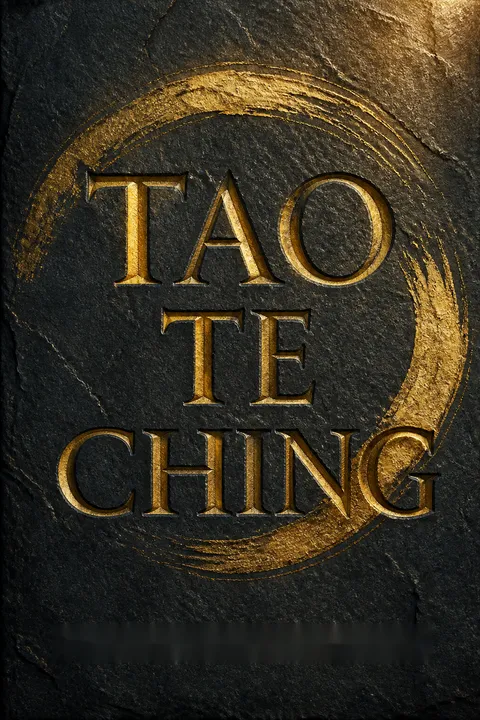


Key Takeaways
Treat Tao as a pattern to notice, not a truth to possess
Look beneath the names. Tao, often translated as the Way, is the underlying natural order through which the universe and its creatures operate. It cannot be captured by a label or description, but its patterns can be noticed in the world it shapes. The book opens by distinguishing the nameless source from the visible things that emerge from it. Both matter: the surface reveals the deeper order, even if it cannot fully explain it.
Quiet the lens. Desire can make people see the world mainly as a source of rewards or threats. Stepping back from those expectations makes it easier to observe what is happening, rather than what one hopes or fears is happening. The aim is not to reject everyday life, but to see it with less distortion.
What's striking is the book's combination of metaphysical modesty and practical confidence. It refuses to claim that language captures reality, yet it trusts close attention to reveal useful patterns. This resembles a systems perspective: a system is often understood less by naming its parts than by observing how they relate and change. The limit is that humility about explanation can slide into distrust of evidence or expertise. The stronger reading is not that inquiry is futile, but that a name, theory, or model should remain a map, open to correction by what it helps people observe.
Intervene less, and only when your action improves the whole
Practice calibrated restraint. Wu-wei means non-action, but not simply doing nothing. It is acting without forcing outcomes, and limiting intervention to what the situation genuinely requires. The book applies this especially to rulers: ambitious policies can create side effects that are as damaging as the original problem. A small remedy is often safer than a grand plan imposed before its consequences are understood.
Let processes work. The natural world changes and corrects itself without constant direction. People, too, may find workable arrangements when leaders do not overwhelm them with restrictions, commands, and incentives. Restraint therefore requires attention, not indifference. The question is whether an intervention addresses a real need or merely expresses a desire to control what is uncertain.
The idea has a useful connection to adaptive management: make a proportionate move, observe what follows, and avoid treating uncertain forecasts as guarantees. It also challenges the assumption that visible activity equals competence. Yet restraint is not automatically wise. Inaction can preserve an unjust arrangement or leave preventable harm untouched. A sound application needs a threshold: act when the likely cost of waiting exceeds the risk of intervention, and prefer measures that can be revised. That qualification preserves the book's warning against overreach without turning non-action into an excuse for neglect.
Hold opposites together instead of turning preferences into absolutes
Notice what depends on what. The book uses yin and yang, complementary tendencies such as dark and light or yielding and forceful, to show how apparent opposites shape one another. Beauty makes ugliness recognizable; high and low only have meaning in relation. A condition praised in one setting may be harmful in another, and no single preference tells the whole story.
Judge with care. This is not a command to pretend that every action is equally good. Rather, it warns against treating a label as a complete account of a person or event. The sage, Lao Tzu's model of grounded wisdom, avoids needless moral display and attends to consequences. Seeing relationships first can make a response more accurate than rushing to divide the world into heroes and villains.
This relational view is valuable because it turns attention from isolated qualities to the conditions that produce them. In ecology, for instance, an element's role depends on its relations within a larger system; removal or excessive emphasis can change the whole. The ethical caution is equally important: interdependence does not erase responsibility. A harmful act can be understood in context and still require a boundary or response. The strongest use of this principle is to resist simplistic judgment while remaining clear about preventable harm, rather than confusing nuance with moral neutrality.
Yield like water: adapt around resistance instead of hardening against it
Use softness strategically. Water is Lao Tzu's recurring picture of the Way: it nourishes life, moves around obstacles, and seeks low places rather than demanding the highest ground. Its lesson is not weakness for its own sake. Yielding can preserve energy, find openings, and accomplish what direct force cannot.
Apply it to conflict. In relationships and government, a person who does not insist on winning every point can make cooperation possible. A large country, the book argues, has particular reason to yield to smaller neighbors because its size already gives it influence. The aim is not surrender, but an arrangement in which others have room to participate instead of being pushed into permanent resistance.
Water offers a model of flexible strength, close to the idea of resilience in complex systems: robustness can come from adjustment, not just from resisting pressure. The image also reframes power as the ability to make space and maintain relationships, rather than to compel immediate compliance. Still, yielding is not a universal remedy. It can invite exploitation when the other party interprets restraint as incapacity. The relevant distinction is between flexibility about tactics and clarity about essential limits. Without that distinction, a principle of accommodation can become a prescription for the weaker party to absorb every cost.
Decide what is enough before desire makes every gain feel small
Put a ceiling on wanting. Lao Tzu links excess desire to envy, anxiety, and the inability to enjoy what is already available. Wealth and status can become costly possessions: the rich person may spend more attention protecting a fortune than enjoying it, while public recognition brings the fear of losing it. The pursuit promises satisfaction, but the finish line keeps moving.
Choose restraint deliberately. The book compares overfilling a vessel with stopping before it spills, and sharpening a blade until it becomes fragile. Both images warn that more can undermine what was valuable in the first place. Moderation is not deprivation as a moral performance. It is deciding which goods genuinely serve life, and refusing to let every new attraction reset the definition of enough.
This argument anticipates a familiar problem in consumer culture: acquisition can raise expectations faster than it improves contentment. Its useful contribution is to ask not only whether something can be gained, but what attention and security it will demand afterward. That accounting makes desire less abstract. However, moderation should not be confused with accepting deprivation imposed by others. A person lacking food or safety does not need a lecture about wanting less. The principle is most persuasive when aimed at avoidable excess and status competition, not at disguising unequal access to basic necessities.
Protect emptiness; usefulness often depends on what you leave out
Make room for function. Lao Tzu points to the empty center of a wheel, the hollow inside a bowl, and the openings in a house. The material matters, but the space left unfilled is what lets each object serve its purpose. Emptiness is not simply absence; it is capacity.
Carry the idea into attention. The book also warns that too many colors, sounds, flavors, and pursuits can dull perception. Restraint lets small differences become noticeable. In art, silence between notes and unpainted space around a mark can contribute as much as the visible material. In daily life, pauses can keep stimulation from becoming noise. The practical question is not only what to add, but what needs room to work.
The chapter's examples make a subtle idea tangible: negative space is part of design, not a defect waiting to be filled. That insight travels well into architecture, music, and the organization of attention. A schedule with no margin, like a vessel filled to the rim, has no capacity to absorb surprise. But empty space is not inherently productive. A vacant room can be unused, and silence can conceal exclusion. The value comes from the relation between absence and purpose: what is left open should enable something meaningful, rather than merely celebrate lack.
Lead by lowering burdens, not by making your authority impossible to ignore
Make leadership unobtrusive. Lao Tzu ranks rulers by how their people experience them. The best leader is scarcely noticed; when the work succeeds, people feel they took part in making it happen. Leaders who demand praise, rule through fear, or burden people with intrusive controls are progressively less worthy of trust.
Use Te as practice. Te, usually translated as virtue, is the quality expressed by living in accord with the Way. It is not a badge the leader awards themself. In this view, good leadership means restraint, care, and decisions that allow people to meet ordinary needs. The same standard applies beyond a throne: to a parent, manager, teacher, or anyone with power over others.
This account treats legitimacy as something produced through everyday experience, not merely asserted by title. Its insight aligns with participatory leadership: people are more likely to own work when they retain agency in carrying it out. The model also exposes a common trap, where leaders confuse being visible with being effective. Yet low visibility alone is no proof of good governance. Complex societies need coordination, public accountability, and protections for people who lack power. The useful test is whether unobtrusive leadership genuinely reduces burdens and expands agency, not whether authority simply becomes harder to scrutinize.
Treat every war as a failure, even when your side wins
Keep grief in view. The book treats weapons as tools of last resort, not objects of admiration. War kills, disrupts ordinary life, and leaves bitterness that can outlast the fighting. A victory worth celebrating as spectacle risks making violence seem desirable in itself. A capable leader therefore seeks a swift end to conflict, without adding humiliation, revenge, or personal glory.
Build a settlement that can last. Lao Tzu advises the stronger party to honor its own obligations instead of fixating on every concession owed by the defeated. That approach recognizes that peace depends on what winners do with their advantage. The text does not promise that every conflict can be avoided, but it insists that even necessary force should remain reluctant, limited, and directed toward ending harm.
The emphasis on the aftermath is a strong corrective to stories that measure war only by battlefield success. Peace is not secured simply because one side has stopped fighting; the settlement can plant resentment that makes renewed conflict easier. This makes restraint after victory a form of strategic judgment as well as mercy. The limits matter too: the book's preference for yielding does not settle every question about defending people from aggression. Its contribution is less a complete policy for war than a demanding test of motive, proportionality, and the winner's willingness to share the costs of repair.
Address small troubles early, before they grow beyond easy repair
Catch change at its beginning. Lao Tzu argues that large difficulties begin as small ones, when they are easier to understand and address. A tree begins as a shoot; a towering structure begins with a small foundation. Those images turn prevention into a practical habit: notice early signs rather than waiting for a crisis dramatic enough to demand attention.
Stay careful through completion. The same discipline applies to projects. People often begin with focus and then relax as success seems close, leaving the final steps vulnerable to mistakes. Attention at the end should be as deliberate as attention at the start. The principle is not to intervene in every minor fluctuation, but to distinguish an early warning from harmless variation before the problem becomes costly.
This is a compact theory of prevention: the earlier a real problem is recognized, the less force may be needed to correct it. It resembles safety engineering, where systems are examined for small failures before they cascade. The warning about finishing also matters because plans are not complete simply when their main effort appears successful. Yet vigilance can become micromanagement if every anomaly is treated as a threat. Good prevention requires thresholds, context, and patience. The point is to respond while remedies remain proportionate, not to eliminate uncertainty by controlling every detail.
Value the life you have more than the status that consumes it
Do not outrun your own life. Lao Tzu contrasts living with the frantic effort to extract every possible pleasure, possession, or distinction from life. The person who is always chasing a richer experience may arrive at death feeling that life passed too quickly, because attention stayed fixed on what was still missing. The book instead asks readers to care for the body and treat life itself as more precious than reputation or wealth.
Make peace with limits. Taoism in this account does not offer a promise of physical immortality. It asks for a less fearful relation to mortality: appreciate life without pretending it can be held forever. That acceptance can support care and courage at once. It does not make life disposable; it makes the present life worth protecting without turning its preservation into the only purpose.
Mortality can clarify priorities because it places a limit on accumulation: time spent protecting status cannot also be spent living the life status was meant to improve. This resembles the philosophical practice of viewing choices from the perspective of a finite lifespan. The book's challenge is not simply to slow down, but to ask whether urgency serves a real need or disguises fear of missing out. Acceptance of death, however, should not become fatalism. Acknowledging limits can deepen commitment to health, relationships, and public responsibilities rather than weaken them.
Analysis
This book presents a classic through an interpretive companion's voice, so its central achievement is not a single argument but a way of reading: the world is intelligible through recurring patterns, while no description exhausts the reality it describes. Its adaptation must preserve the tension between metaphysical claims about Tao and practical counsel about desire, leadership, conflict, and attention. The recurring images do much of the work. Water makes yielding visible; the hollow bowl gives emptiness a function; the uncarved wood makes simplicity feel like possibility rather than mere lack.
The text's history reinforces its openness. The book describes the legendary Lao Tzu as uncertain in historical identity, and reports that manuscripts found at Mawangdui and Guodian preserve versions much older than previously known copies. Their substantial similarity supports a long-lived textual core, while changed ordering and the later division into 81 chapters warn against treating every chapter boundary as original. This makes the Tao Te Ching less like a modern argument with a fixed outline and more like a set of sayings whose meanings gather through recurrence and contrast. The most productive modern reading treats non-action as disciplined restraint under uncertainty, not as a literal rule against intervention. That interpretation connects the text's ecological caution to systems thinking: interventions can have effects beyond their intended target, and small adjustments may preserve more options than sweeping redesign. The same logic informs its politics, where trust and low burdens matter more than theatrical authority. But the book's suspicion of knowledge and preference for minimal rule require qualification. Knowledge can expose harms that tradition overlooks, and inaction can protect the powerful. Its enduring value lies less in prescribing passivity than in forcing a difficult question before action: what is understood, what may be damaged, and who bears the cost?
Review Summary
Readers highly praise Tao Te Ching by Stefan Stenudd for its faithful translation and insightful commentary. Many find it accessible, clear, and deeply meaningful, appreciating Stenudd's approach as an Aikido master who lives the Taoist way. The book is lauded for its modern relevance, thoughtful amplification of the original text, and ability to provide wisdom for both thought and soul. While some readers suggest comparing it with other translations, most consider it an excellent resource for understanding Taoism, recommending it for those seeking life-changing wisdom.
People Also Read







Glossary
Tao
The universe's underlying WayTao is the fundamental natural order through which the universe and its processes operate. It is not a named creator or an object that can be directly grasped. The text presents it as prior to the visible world, while its workings can be inferred from patterns in that world. Following Tao means living in accord with how things naturally develop.
Te
Virtue aligned with the WayTe is commonly translated as virtue in the title Tao Te Ching. In the book's interpretation, it is the quality expressed by a person or thing that follows Tao. It is less a moral label or public reputation than a natural capacity to act in accord with the Way. Te can guide conduct when direct understanding of Tao is absent.
wu-wei
Non-forcing actionWu-wei means non-action, but not simple idleness. It describes acting without unnecessary force or interference, and doing only what circumstances genuinely require. The principle favors restraint because actions can produce unintended consequences, especially when rulers try to impose sweeping solutions. It calls for alertness and proportion, not indifference to suffering.
yin and yang
Complementary tendenciesYin and yang are paired tendencies used to describe contrasts such as dark and light, yielding and forceful, or low and high. They are not fixed enemies or moral categories. Each helps define the other, and both can be present in the same thing. The image emphasizes relationship, change, and the limits of treating one pole as wholly independent.
ch'i
Vital breath or life energyCh'i, also written qi, is a traditional Chinese concept of vital breath or life energy. In the book's account, it nourishes living beings and flows through the body and the wider world. Lao Tzu's concern is not to force or display this power, but to remain gentle even when it is strong. Its meaning is cosmological and traditional, not a scientific measurement.
uncarved wood
Natural, unforced simplicityUncarved wood is Lao Tzu's image for a state before it has been shaped to serve human ambitions. It represents simplicity, openness, and potential: the wood can take many forms, but carving changes it rather than making it inherently better. Applied to people and government, the image favors fewer imposed desires and less needless complication.
sheng-jen
The wise, humble personSheng-jen is usually translated as the sage. In the book, the sage is not a superior being set apart from ordinary people, but someone who follows Tao through humility, care, and restraint. The sage does not seek status or control for its own sake, and often leads by reducing interference rather than demanding attention.
Download PDF
Download EPUB
.epub digital book format is ideal for reading ebooks on phones, tablets, and e-readers.








