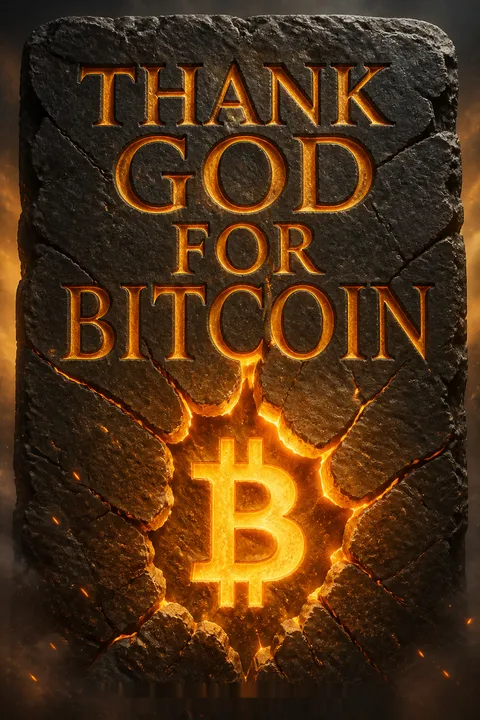


Key Takeaways
Judge money by the behavior its rules reward, not just what it buys.
Money shapes relationships. The authors define money as a tool for trading value across people, places, and time. It lets specialists exchange the results of their work and save today’s earnings for future needs. In their Christian framework, work creates value for a community, while theft takes value without contributing. Money can record the value someone has provided, much like a claim on future goods or services.
Design has moral consequences. The book challenges the idea that money is always a neutral tool: a system that makes savings vulnerable and favors unearned gains can reward different behavior from one that makes value harder to steal. The authors regard money as a gift meant to serve human cooperation, not as a source of identity or salvation.
What's useful here is the shift from asking whether money is good or bad to asking what its rules make easier. Institutional economics studies a similar question: incentives shape behavior even when individuals have good intentions. A payment system, like a legal system, can distribute power and risk through its design. Still, incentives do not dictate every choice. People act generously under flawed systems and selfishly under fairer ones. The moral argument is strongest as a call to examine institutions alongside personal virtue, rather than treating monetary design as a substitute for either.
Each monetary shortcut made trade easier, then created a new point of capture.
Convenience changed the risks. The book traces money from commodities such as gold and silver to coins, banknotes, central banking, and modern fiat currency. Money works best, the authors argue, when it is divisible, portable, durable, recognizable, and scarce. Coins reduced the need to weigh metal at every purchase, but rulers could debase them. The Roman denarius, they report, fell from about 3.9 grams of silver in Jesus’s era to almost none in some later issues.
Promises became vulnerable. Banknotes made large payments easier, but people had to trust that banks held enough metal to redeem them. Fractional-reserve lending and central banks weakened that assurance. The authors connect the end of dollar convertibility into gold in 1971 with the modern fiat era, where governments can issue money without a commodity backing it.
The historical sequence makes a compelling point about tradeoffs: lowering transaction costs can also concentrate control in institutions that users must trust. That pattern appears in other technologies, from online platforms to payment networks. However, the presence of intermediaries does not by itself prove fraud; shared reserves and lending can provide useful services when rules, disclosure, and oversight are credible. The book’s history is most illuminating when read as a recurring problem of governance: convenience may be worth adopting, but its new powers need safeguards.
Treat money creation as redistribution, not as free wealth.
The authors separate two terms. They use monetary expansion for growth in the money supply and price inflation for the resulting loss of money’s purchasing power, though everyday usage often calls rising prices simply inflation. Their central claim is that new money does not create goods or labor by itself. It changes who can spend first and who holds currency as its value declines.
The numbers show scale. The book reports that US M2 money stock grew from about $288 billion in 1959 to $18.1 trillion in 2020, roughly 7% annualized. It argues that new money can reach borrowers and asset owners before its effects spread to other prices, while savers and wage earners bear losses. The authors describe this as an indirect tax because it lacks the visibility of a voted tax.
The distributional question is important: monetary changes can affect households differently depending on when they receive income, whether they hold cash or assets, and what they owe. That is a sharper concern than treating a national inflation average as everyone’s experience. But the book’s accounting should not be mistaken for a settled one-to-one law. Money supply growth does not translate mechanically into equal price growth; production, credit demand, expectations, and policy also matter. The argument is strongest as a warning to ask who benefits from new purchasing power and who absorbs its costs.
Follow new money to see who gains before prices adjust.
Access arrives unevenly. The Cantillon Effect is the book’s term for the advantage enjoyed by people and institutions that receive newly created money early, before broader prices have adjusted. The authors name banks, large firms, and asset buyers as likely beneficiaries, while people on fixed incomes or holding savings in cash may be disadvantaged.
Politics shapes the flow. In the authors’ account, fiat currency lets governments borrow and spend without immediately asking voters for higher taxes. That can support services, but it can also make wars, bailouts, and politically favored projects easier to finance. They argue that debt and money creation can reinforce one another: low borrowing costs encourage more debt, while further borrowing creates more money. The result, they contend, is weaker accountability for both officials and financial institutions.
Tracing the first recipients of new money is a valuable way to make an abstract policy distributional. It resembles analysis of policy incidence: the nominal recipient is not always the final beneficiary, and the burden can land elsewhere. The concern about bailouts also connects to moral hazard, when protection from losses encourages risk-taking. Yet early access does not guarantee a windfall, and public borrowing can finance infrastructure or emergency support with genuine social value. The key question is not simply whether money was created, but whether the benefits justify the costs and who gets to decide.
Notice how a money treadmill can crowd out saving, craft, and community.
Money shapes daily priorities. The authors argue that when people must constantly protect savings from losing value, money can consume time meant for family, meaningful work, and service to neighbors. They connect easy credit and repeated bailouts with excessive risk-taking, debt dependence, and businesses rewarded for proximity to finance rather than for useful work.
Churches face the same pressures. The book recounts how the sale of indulgences helped provoke Martin Luther’s protest, then compares that history with churches taking on large building loans, competing for donors through amenities, or promising material wealth in exchange for donations. Its concern is that debt service and fundraising can displace ministry. The authors urge churches to examine not only how they spend, but also how their financial choices shape their obligations and priorities.
The institutional lens adds something important to familiar warnings about greed: structures can normalize behaviors that individuals might otherwise question. A church whose budget depends on constant growth may begin to measure success in attendance and revenue, much as a company can confuse scale with value. Still, borrowing is not automatically a moral failure, and a building or program can serve a real community need. The ethical test is practical as well as spiritual: whether the obligation is manageable, transparent, and genuinely serves people rather than turning them into a revenue source.
Bitcoin pairs online transfers with a supply no issuer can casually expand.
The proposed alternative is digital. The authors describe Bitcoin as decentralized digital money, transferable over the internet without a bank or payment company approving each transaction. Its public transaction record is called the blockchain. Network participants can use cryptographic checks to verify transactions, rather than relying solely on a central institution’s promise.
Its supply is deliberately limited. The protocol sets a maximum of 21 million bitcoin, a feature the authors present as protection against discretionary money creation. Unlike gold, whose supply can grow through mining or new discoveries, Bitcoin’s issuance rules are visible and enforced by the network’s software. The book argues that this combination of digital transfer, public verification, and limited issuance makes Bitcoin a more trustworthy store of value than fiat currency.
Bitcoin’s design directly addresses a real coordination problem: digital files are easy to copy, so a system needs a way to distinguish a valid transfer from a duplicate spend. A shared ledger and independent verification offer one solution without requiring a single record keeper. The fixed issuance schedule also makes supply policy legible. But scarcity alone does not guarantee stable purchasing power or broad usefulness. The protocol’s rules depend on continued participation and agreement among users, miners, and software operators, so its durability is technological and social, not simply mathematical.
Use Bitcoin's independence carefully; sovereignty shifts risk onto the holder.
Fewer gatekeepers, fewer permissions. Bitcoin can allow people to send value without a bank, card network, or payment platform deciding whether a transaction proceeds. The authors point to people facing currency controls, high remittance fees, or financial exclusion as potential beneficiaries. They also argue that self-custody, holding one’s own Bitcoin rather than relying on a custodian, can make confiscation harder.
The same openness has costs. Bitcoin can also be used for criminal payments, and the book acknowledges that its lack of a central censor enables both harmful and helpful transactions. Holding funds directly requires users to protect access to their wallets. The authors present this freedom as a moral advantage over intermediaries, but it is not risk-free: mistakes in custody, price volatility, and barriers to converting between Bitcoin and everyday goods all matter.
Removing gatekeepers can expand access, especially for people poorly served by banks or living under restrictive governments. It also changes who bears responsibility: a user gains control but loses the protections and recovery options that a well-run intermediary may provide. This is a familiar tradeoff in cybersecurity, where reducing centralized points of failure can increase the burden on individual operators. The book’s case for open transactions is principled, but openness does not settle every policy question. Societies still have to consider fraud, coercion, and how to protect people without granting authorities unchecked power.
Scarcity can force political tradeoffs, but it cannot make rulers virtuous.
The political case is constraint. The authors imagine that a Bitcoin standard would prevent governments from paying for spending through discretionary money creation. Officials would need to rely more visibly on taxes, borrowing, or existing resources. In the book’s view, that pressure could make public spending more accountable, limit bailouts, and raise the cost of prolonged wars.
The same constraint has limits. A fixed supply cannot decide which programs deserve funding, prevent every form of corruption, or ensure that taxes are fair. Governments might still borrow, change rules through political processes, or respond poorly to crises. The book presents monetary scarcity as a boundary that can discourage hidden costs, not as a detailed blueprint for governing. Its hopeful projections depend on the public and institutions continuing to respect Bitcoin’s rules.
A hard budget constraint can improve accountability because it forces tradeoffs into public view. This resembles a basic principle of organizational governance: scarce resources make priorities testable. Yet scarcity is not synonymous with justice. Austerity can protect creditors while harming people with little power, and a government facing an emergency may need flexibility. The authors’ strongest point is that hidden financing can weaken consent. Their broader prediction that sound money would improve political character is more uncertain, since institutions also depend on law, norms, and the distribution of political power.
Adopt sound money without mistaking financial gain for spiritual renewal.
The book ends with a warning against worship. Its Christian argument is that money should support work, cooperation, generosity, and care for others, rather than become a source of identity or ultimate hope. Bitcoin may help people save and reduce reliance on financial intermediaries, the authors argue, but acquiring it is not the same as becoming wise or virtuous.
Change begins with choices. The authors call for churches to examine their debt and priorities, and for individuals to learn how the monetary system works. They reject a simple return to gold, arguing that physical gold and gold-backed banking leave room for centralized control. Bitcoin, by contrast, can be adopted by individuals without waiting for governments to redesign the whole system. The proposed path is voluntary adoption paired with humility and service.
This final distinction keeps the monetary thesis from collapsing into a promise of salvation through an asset. It is a useful safeguard in a book that makes large claims about Bitcoin’s social effects. Theologically, it separates a tool’s potential from the character of its user; politically, it recognizes that people can turn even a critique of money into a new status competition. The adaptation is most persuasive when it invites scrutiny of incentives and institutions while preserving that humility. No currency, however well designed, can perform the work of trust, generosity, or moral judgment.
Analysis
Thank God for Bitcoin is best read as a Christian moral argument about monetary institutions, not as a neutral survey of monetary economics. Its narrative runs from money as a record of human cooperation, through historical episodes of debasement and financial intermediation, to Bitcoin as a proposed alternative. The central move is to treat money’s rules as morally consequential: if an institution makes certain forms of extraction easier, its effects reach beyond prices into politics, work, family life, and churches.
The book is strongest when it asks readers to inspect hidden incentives. Its account of early access to newly created money, the political appeal of less visible financing, and the moral hazard of bailouts provides a useful framework for asking who receives benefits and who bears risks. Its church examples give those abstractions human stakes. The Christian language is not decorative; it defines the book’s tests of justice, work, theft, stewardship, and worship.
The argument is less secure when it moves from critique to prediction. The authors sometimes treat monetary expansion as theft and connect it directly to social decline, while economic outcomes also depend on production, credit demand, institutions, and policy choices. Similarly, Bitcoin’s supply limit can restrict one kind of monetary discretion, but it cannot by itself guarantee fair government, stable purchasing power, or good stewardship. The claims that a Bitcoin standard would reduce war, improve family formation, or restore church integrity require more than the monetary mechanism described.
The most durable takeaway is therefore narrower and more valuable than a promise that one asset can redeem society: monetary systems distribute power, shape incentives, and deserve moral scrutiny. Bitcoin presents a notable experiment in digital scarcity and user control. Its benefits and risks should be judged with the same attention the book asks readers to give fiat money, including who can participate, who carries the risks, and how a community holds its institutions accountable.
Review Summary
"Thank God for Bitcoin" receives mostly positive reviews, with readers praising its critique of the current fiat monetary system and explanation of Bitcoin's potential benefits. Many appreciate the Christian perspective and biblical references, though some find them excessive or misapplied. The book is commended for its accessibility and thought-provoking content, particularly regarding the moral implications of different monetary systems. Some criticisms include repetitiveness, occasional alarmist tone, and limited technical discussion of Bitcoin itself. Overall, reviewers find it an insightful introduction to monetary ethics and Bitcoin's role in addressing current economic issues.
People Also Read




Glossary
Fiat money
Government-decreed currencyMoney that a government declares acceptable for payment, without requiring it to be redeemable for a commodity such as gold. The book emphasizes that fiat currency depends on public confidence and legal authority, and that governments can expand its supply. It argues that this discretion can enable hidden redistribution and weaken monetary discipline.
Monetary expansion
Growth in money supplyAn increase in the amount of money circulating in an economy. The authors use this term to distinguish growth in the money supply from price inflation, which they define as a decline in money’s purchasing power. They argue that expansion can redistribute purchasing power toward early recipients of new money and away from holders of existing money.
Price inflation
Declining purchasing powerA rise in the prices of goods and services, or, in the book’s framing, the loss of purchasing power that follows monetary expansion. The authors distinguish it from an increase in the money supply itself. They argue that measured price changes may not show how differently inflation affects assets, wages, savings, and household expenses.
Cantillon Effect
Unequal gains from new moneyThe idea that new money affects people unevenly because it enters the economy through particular borrowers, institutions, or sectors before prices have fully adjusted. The book uses the term to explain why banks, asset owners, and politically connected organizations may benefit earlier than wage earners or savers. It presents the effect as a source of unequal gains.
Fractional-reserve banking
Lending beyond cash reservesA banking arrangement in which a bank lends out some deposited funds while keeping only a fraction available for immediate withdrawal. The book describes this as a way banknotes or deposits can exceed the money held in reserve, creating vulnerability if many customers seek their funds at once. The authors regard the practice as a risk to trust and monetary integrity.
Blockchain
Shared transaction recordThe public record of Bitcoin transactions, maintained and checked by computers participating in the network. The book emphasizes that users can inspect and verify this record without relying on a single bank or payment company to confirm transactions. The ledger helps the network track transfers and prevent the same Bitcoin from being spent twice.
Anti-entropic principle
Cooperative creation of valueThe authors’ term for people using their ability to create, organize, and cooperate to turn disorder into useful work. They connect it to voluntary exchange and specialization: people working together can produce more than isolated individuals. In this framework, money helps coordinate that cooperation by making the exchange and storage of value easier.
FAQ
1. What is "Thank God for Bitcoin" by Bitcoin and Bible Group about?
- Explores Money’s Moral Dimension: The book examines the creation, corruption, and potential redemption of money, focusing on its spiritual and ethical implications.
- Connects Bible and Economics: It uses biblical principles and stories to analyze how money shapes relationships, societies, and individual character.
- Critiques Modern Monetary Systems: The authors argue that current fiat money systems are inherently immoral, leading to theft, corruption, and societal decay.
- Proposes Bitcoin as Solution: The book presents Bitcoin as a more moral, just, and spiritually aligned alternative to traditional money.
2. Why should I read "Thank God for Bitcoin" by Bitcoin and Bible Group?
- Unique Moral Perspective: It offers a rare blend of theology, history, and economics, making it valuable for readers interested in the intersection of faith and finance.
- Understand Money’s Impact: The book helps readers see how monetary systems affect personal lives, communities, and even churches.
- Learn About Bitcoin’s Ethics: It provides a clear, accessible explanation of why Bitcoin could be a more ethical form of money.
- Actionable Spiritual Insights: The book encourages readers to reflect on their own relationship with money and consider practical steps toward financial and spiritual integrity.
3. What are the key takeaways from "Thank God for Bitcoin"?
- Money Is Not Neutral: The form and structure of money have deep moral and spiritual consequences, influencing behavior and societal outcomes.
- Fiat Money Enables Corruption: Centralized, inflationary fiat systems incentivize theft, debt, and moral decay at both individual and institutional levels.
- Bitcoin as Moral Money: Bitcoin’s decentralized, scarce, and transparent nature aligns more closely with biblical principles of justice, honesty, and stewardship.
- Personal and Societal Change: True reform starts with individuals and communities understanding and choosing better money, leading to broader societal transformation.
4. How does "Thank God for Bitcoin" define money and its purpose?
- Medium of Exchange and Trust: Money is described as a tool for trade, enabling people to exchange value across time and space, and is fundamentally based on trust.
- Spiritual and Relational Role: The book emphasizes that money is deeply spiritual, affecting relationships, community, and even one’s relationship with God.
- Store of Work and Value: Money is seen as a way to store the fruits of labor, allowing for saving, planning, and rewarding productive work.
- Tool for Good or Evil: Depending on its design and use, money can either enable charity, justice, and flourishing or incentivize theft, greed, and oppression.
5. What is the book’s critique of fiat money and inflation?
- Fiat Money Defined: Fiat money is money created by government decree, not backed by physical commodities, and is easily manipulated by authorities.
- Inflation as Hidden Theft: The book argues that inflation, caused by expanding the money supply, is a form of hidden taxation and theft from savers and future generations.
- Corrupts Incentives and Society: Fiat systems encourage debt, discourage saving, and lead to wealth inequality, rent-seeking, and moral decline.
- Enables Government Overreach: Centralized control over money allows governments to fund wars, bailouts, and bureaucracies without accountability or consent.
6. How does "Thank God for Bitcoin" connect biblical teachings to money and economics?
- Biblical Metaphors for Money: The book highlights how the Bible uses monetary language—debt, payment, redemption—to explain spiritual truths.
- Moral Warnings: Scriptures are cited to warn against the love of money, dishonest weights, and unjust gain, paralleling modern monetary abuses.
- Work vs. Theft: The authors draw on biblical principles to distinguish between value-creating work and value-destroying theft, applying these to monetary systems.
- Call for Righteous Stewardship: The book urges Christians and communities to pursue wisdom, justice, and generosity in their financial lives.
7. What are the moral and societal consequences of corrupt money according to "Thank God for Bitcoin"?
- Erodes Trust and Community: Bad money incentivizes selfishness, undermines trust, and weakens social bonds, leading to fragmented communities.
- Encourages Debt and Materialism: Inflationary systems push people into debt, high-time preference behavior, and materialistic lifestyles.
- Degrades Work and Products: The book links fiat money to the rise of meaningless jobs, declining product quality, and dehumanizing work environments.
- Corrupts Institutions: Even churches and charitable organizations are affected, becoming entangled in debt, consumerism, and compromised missions.
8. How does "Thank God for Bitcoin" describe the history and evolution of money?
- From Barter to Metals: The book traces money’s evolution from barter systems to commodity money like gold and silver, emphasizing properties like scarcity and durability.
- Rise of Coinage and Banking: It explains how coins, banknotes, and fractional-reserve banking developed, each introducing new opportunities for theft and debasement.
- Centralization and Fiat: The narrative shows how central banks and fiat currencies emerged, culminating in the abandonment of the gold standard and the rise of inflationary systems.
- Lessons from Collapse: Historical examples (Rome, Weimar Germany, Zimbabwe) illustrate the destructive consequences of monetary debasement and inflation.
9. What is Bitcoin, and why does "Thank God for Bitcoin" consider it a more moral form of money?
- Digital, Decentralized, Scarce: Bitcoin is defined as a digital currency with a fixed supply (21 million), not controlled by any central authority.
- Resistant to Inflation and Theft: Its design makes it impossible to inflate or counterfeit, protecting savers and discouraging theft.
- Transparent and Trustless: Bitcoin’s blockchain allows anyone to verify transactions, removing the need for trusted intermediaries and reducing opportunities for corruption.
- Aligns with Biblical Principles: The book argues that Bitcoin’s properties—honesty, accountability, and fairness—reflect biblical values and offer hope for economic redemption.
10. How does "Thank God for Bitcoin" address criticisms and challenges of Bitcoin?
- Volatility and Speculation: The book acknowledges Bitcoin’s price volatility, attributing it to its early stage of adoption and market discovery.
- Use in Illicit Activities: It notes that while Bitcoin can be used for bad purposes, so can cash, and its benefits for the oppressed and unbanked outweigh these concerns.
- Not a Panacea: The authors caution against idolizing Bitcoin, reminding readers that it is a tool, not a savior, and that moral transformation requires more than just better money.
- Altcoins and Imitators: The book warns that most alternative cryptocurrencies lack Bitcoin’s decentralization and moral foundation, making them inferior options.
11. What practical changes does "Thank God for Bitcoin" suggest for individuals, communities, and churches?
- Personal Financial Reform: Encourages individuals to understand money’s moral implications, avoid debt, and consider saving in Bitcoin.
- Community and Institutional Accountability: Suggests that communities and churches should reject debt-based, inflationary systems and embrace transparent, accountable financial practices.
- Advocacy and Education: Recommends spreading awareness about the ethical problems of fiat money and the benefits of Bitcoin.
- Spiritual Renewal: Calls for confession, repentance, and a renewed focus on stewardship, generosity, and justice in financial matters.
12. What are the best quotes from "Thank God for Bitcoin" and what do they mean?
- “Money is deeply spiritual.” – Emphasizes that money is not just a technical or economic issue, but one that shapes hearts, relationships, and societies.
- “Every dollar printed is property stolen from the community.” – Highlights the book’s view that inflation is a form of theft enabled by fiat money.
- “Bitcoin is a system that turns our individual sinfulness into our economic salvation.” – Suggests that Bitcoin’s design channels self-interest into community benefit, aligning incentives with moral outcomes.
- “Money is a gift, and if we realize God’s intention for it, we will gain a new appreciation and fresh perspective on our purpose.” – Encourages readers to see money as a tool for good, not an object of worship, and to align their financial lives with higher spiritual values.
Download PDF
Download EPUB
.epub digital book format is ideal for reading ebooks on phones, tablets, and e-readers.








