

Plot Summary
The Cinnamon Stranger
During Boohail’s festival for the newly chosen heroine, spice farmer Cinnamon Hotpepper cares more about cheese and getting home than joining a dangerous quest. On the dark road, she chases a would-be robber into the woods and finds a stranger crushed beneath fallen branches. When she helps him, he transforms into a horned demon and grabs her by the throat.
Cinnamon burns his face with her torch and flees through her family’s cinnamon fields, but he catches her again near home. She breaks a cinnamon branch against his face, reaches her parents’ house, and barricades the door. The stranger’s attack began with a landslide near the village, but Cinnamon has no idea why he came or why the spice hurt him.
Cinnamon’s first response to danger is not courage in the heroic sense. It is improvisation, profanity, and an instinct to get home alive. Her accidental pursuit of the robber turns a familiar village night into a boundary crossing, while the cinnamon branch introduces a practical skill rooted in her ordinary work. The contrast matters: she has spent her life treating adventure as a lethal fantasy, yet her knowledge of the farm becomes more useful than a chosen hero’s sword. The opening also establishes her comic self-protection as a real survival strategy, not simply a personality flourish.
A Demon at Breakfast
After a sleepless night, Cinnamon’s family prepares to take her to Myva’s temple for protection. Fallon instead appears at their breakfast table, where her brothers attack him and he throws Chili aside without killing him. He introduces himself as Fallon Ozul and explains that cinnamon briefly broke the spell making him attack her.
The beings humans call demons, he says, were driven mad by Myva, an undead sorcerer who has posed as a goddess for centuries. She sacrificed demon children, enslaved their minds, and forced them behind Volsog gate. Fallon has tried to reach her sacred object, but the magic overwhelms him inside the temple. He gives Cinnamon a charm to test his claim and threatens her family’s safety unless she helps him.
The breakfast scene collapses the distance between myth and domestic life. Fallon is dangerous enough to injure Cinnamon’s brother, yet he sits at her family’s table and accepts Rosa’s hospitality. His revelation recasts the village’s faith as a political arrangement built on concealed violence: humans feel protected because the cost is paid elsewhere. Cinnamon’s decision is not a sudden conversion to heroism. Fallon’s threat narrows her choices until action becomes the least dangerous option. That coercion complicates the adventure’s cheerful tone and establishes a central tension: Cinnamon can make meaningful choices, but rarely begins with the freedom to choose at all.
The First Chalice Breaks
Fallon stops at the edge of the southern temple, where Myva’s magic keeps him from entering. Cinnamon throws his charm inside. Its red stone glows, and black sludge spills from the plain wooden cup humans worship at each solstice.
The substance forms undead creatures while a furious voice rises from it, confirming Fallon’s warning. Cinnamon attacks the cup, but a skeletal ogre pins her until Fallon cuts it apart. She gathers herself and smashes the vessel completely, then saves Fallon from falling stone as the temple collapses.
The southern shrine is destroyed, but Fallon reveals that Myva has three more temples. He promises to protect Cinnamon’s family, not Cinnamon herself, so she agrees to travel with him rather than face the remaining danger alone.
The first shrine turns disbelief into physical evidence. Myva’s authority does not vanish through argument; it leaks, snarls, and assembles itself from bones in the very place where villagers sought reassurance. Cinnamon’s choice to destroy the cup is therefore both a personal act of anger and the first public breach in a system she once accepted. Yet the victory brings no simple liberation. Fallon immediately reveals the scale of the task, and his promise protects her relatives while excluding her. The scene exposes how power can offer safety selectively, binding one person to danger in exchange for the security of others.
Leaving Boohail Behind
Before leaving, Cinnamon packs a carriage with spices, food, medicine, and clothes, arguing that Fallon’s version of travel would leave her hungry and unprepared. Her friend Brie agrees to accompany her as far as the village boundary, where cinnamon farms give way to the unprotected wilds.
Tyler Huckabee accuses Cinnamon of frightening his younger brother Harper, omitting Harper’s attempted robbery. When Tyler grabs and slaps her, Fallon breaks his arm and nearly kills him. Cinnamon stops Fallon from finishing the attack, insisting that human cruelty does not make every human fair game.
Fallon agrees to spare people unless they threaten her. Cinnamon leaves Boohail with her family’s bow and carriage, carrying the fear that a return to home may no longer mean a return to the life she had planned.
The departure makes Cinnamon’s conflict with Fallon concrete before their attraction can soften it. He treats force as a complete answer to disrespect; she understands that protection without restraint can become another form of domination. Her intervention is not a rejection of his strength, but a demand that he recognize her moral judgment as relevant. Meanwhile, the carriage is a small declaration of selfhood: she insists on supplies, comfort, and the habits that make her a farmer rather than a disposable quest companion. The road begins when Cinnamon loses control of where she must go, but she immediately starts negotiating how she will go.
Cherry in the Water
In the bayou, Cinnamon and Fallon fall into a rhythm of travel, cooking, and bickering. She feeds him crawfish and discovers that the terrifying stranger enjoys her food; he guards her at night and teases her with stories about the Hungry Man.
One foggy morning, a water beast uses its magic to make Cinnamon see Cherry, her younger sister who vanished in the bayou years earlier. Cinnamon wades after the apparition until the creature’s tail drags her underwater.
Fallon kills it and carries her back to camp, where she admits how deeply Cherry’s disappearance still shapes her fear of leaving home. He patiently helps wash the mud from her hair. Later, after Cinnamon kills an alligator, Fallon tells her he wants her as his wife, unsettling her even as their attraction grows.
The water beast succeeds because it knows what Cinnamon wants, not because it overpowers her. Cherry’s image turns unresolved grief into a trap, showing why Cinnamon’s caution is more than ordinary timidity. Fallon’s response marks a shift in their intimacy: he does not ridicule her for being fooled, and he stays with her while she mourns. At the same time, his marriage proposal reveals how differently they interpret attachment. For Fallon, desire quickly becomes a claim; for Cinnamon, commitment threatens the quiet life she has protected by avoiding risk. Their tenderness and their imbalance develop together.
Wandermere's Living Chains
At Wandermere, Cinnamon learns that humans use collars and master stones to control captured demons, whom the city treats as animals. Tavern keeper Usha guides her and Fallon through the rules, then changes sides after realizing that demons can think and speak like people.
Their plan uses a merchant cart and Usha’s hyena, Kiki, to distract the mages guarding the temple. Before it can begin, Cinnamon sees a tanner whipping a wounded werewolf. She bargains for him, Felix, then buys a second captive, the lamia Ambrose, and uses cinnamon to break the spell controlling them.
Felix joins the mission eagerly; Ambrose agrees to help after nearly crushing Cinnamon in panic. Usha, Cinnamon, and the two freed demons now have allies and a plan, but Myva’s human collaborators still control the city’s temple.
Wandermere widens the story from one false religious belief to an organized economy of exploitation. Collars, master stones, and the tanner’s shop make demon captivity visible as commerce, not merely prejudice. Cinnamon’s decision to buy Felix and Ambrose uses the very market logic she opposes, a compromise that frees them now but cannot undo the system around them. Usha’s conversion is equally practical: she takes responsibility once she understands the harm her assumptions enabled. Both women move from private discomfort to action, though Cinnamon’s instinct remains to make a workable plan rather than imagine herself as a grand revolutionary.
The Temple's False Face
Cinnamon buys a replica chalice, while Usha positions Kiki outside the mage hall and Fallon hides in the cart. Once the mages turn to watch the hyena, Cinnamon swaps the real cup for the decoy and carries the bubbling phylactery away.
Myva’s sludge forms undead orcs, and the mages rush to stop her from escaping. Cinnamon reunites with Fallon, Felix, Ambrose, and Usha as the group fights through the square. Cinnamon strikes the cup with her hammer, dodging an undead giant and a spell that leaves her badly hurt.
Her horses break loose after drinking flying potions, gaining wings and scattering the mages. In the chaos, Cinnamon lands the final blow and shatters the eastern chalice. With Myva’s hold broken here, Fallon transforms into a vast black dragon.
The operation depends on misdirection, not superior force. Usha’s theatrical diversion and Cinnamon’s replica create a brief opening in a city built to keep its violence out of sight. Once Myva’s monsters emerge, the careful plan dissolves into improvisation: the horses become airborne, the freed captives fight beside their rescuer, and Cinnamon’s hammer matters more than formal weapons. The broken chalice is a tactical victory, but Fallon’s transformation expands the consequences beyond what the group can control. Cinnamon has helped free others from one form of domination, yet she cannot dictate what Fallon’s unleashed power will do next.
A Dragon Burns Wandermere
After Myva’s magic is disturbed, Fallon becomes a black dragon and attacks the mage hall, burning buildings and driving the city into flight. Cinnamon sees demons escaping captivity and Usha guiding the surviving group through the wreckage.
Rather than leave the freed captives behind, they gather them at the docks and seize a ship. Usha, the only experienced sailor, becomes captain; the crew makes Cinnamon quartermaster, responsible for supplies. She resists the title, then organizes a feast and addresses the mixed company of demons who have just won their freedom.
At sea, Cinnamon realizes that the people around her are becoming a community, not merely an escort for her quest. Still, the destruction leaves her shaken, and Fallon’s capacity to protect her is inseparable from his capacity to devastate a city.
Wandermere’s destruction refuses an easy triumph. The city’s slave system is broken, but liberation arrives through fire that threatens bystanders and leaves Cinnamon confronting the cost of Fallon’s power. The ship offers a new social arrangement: former captives choose leaders, share food, and make Cinnamon accountable for the group’s survival. Her reluctant quartermaster role echoes the opening, where she tried to stay outside every heroic obligation. Now she accepts responsibility because people depend on her, not because a goddess selected her. The feast makes solidarity tangible, while the ruined city prevents that solidarity from becoming a clean moral victory.
Pirates and Promises
In Wandermere’s abandoned coliseum, Cinnamon finds Fallon after he has exhausted himself in dragon form. Their attraction becomes physical, though Fallon stops short of intercourse. The crew soon sails for Rum Bay, and Cinnamon joins the other women in a feast where they tease her about her feelings for him.
Felix helps her recognize that she is defending Fallon because she cares for him, not because she has forgotten his violence. When Cinnamon finally seeks him out, she cannot confess what she feels and instead warns him that the ship is running low on pheasant.
She drinks with the crew and blacks out. By morning, Fallon is beside her in a bed crowded with cheese she demanded while drunk. Their affection is evident, but Cinnamon has not yet chosen to name it.
Cinnamon’s hesitation is not a lack of attraction. It is a struggle to imagine desire without surrendering the future she has carefully planned. The ship’s communal life presses against that old plan: shared meals, playful teasing, and collective work make a different future feel possible before she can articulate it. Fallon’s restraint during their first intimate encounter matters because it leaves space for Cinnamon’s decision, even amid his possessive language. The comic cheese aftermath keeps her embarrassment human-sized. She can be quartermaster, survivor, and romantic coward all at once, without the story pretending that emotional clarity arrives on command.
The Storm Dragon's Trap
Still hungover, Cinnamon tells Fallon she loves him and accepts his demonic bond. Fallon bites her neck, transferring magic that floods her senses and later lets her see through his shadow fog. Their newly heightened desire is interrupted when the crew boards a cargo ship. A silver-haired captive attacks the orcs, revealing himself as a dragon under Myva’s control.
Cinnamon recognizes the danger and coats arrows with cinnamon, but her shots do not break the spell. She spots a chalice tangled in the dragon’s hair and rides the winged horse Smash into the storm. Clinging to the dragon’s scales, Cinnamon climbs to the cup and smashes it with her hammer. The silver dragon regains control, but both dragons fall exhausted onto a distant island.
The bond makes intimacy consequential rather than purely private. Cinnamon’s acceptance gives her access to Fallon’s magic, but the power arrives through an overwhelming physical experience that she must learn to inhabit. Almost immediately, that new ability becomes necessary to save others. The storm dragon’s captivity also mirrors the first revelation about Myva: her control does not stop at ordinary demons but can reach beings powerful enough to resist her by force. Cinnamon’s climb is a sharp reversal of her old self-image. She acts while afraid, and her practical knowledge of cinnamon turns an emotional commitment into the means of breaking another person’s enslavement.
Cinnamon in the Storm
On the island, Cinnamon tends the unconscious Fallon and the silver dragon, later identified as Dante, while Smash helps move them to shelter. When Fallon wakes, they finally consummate their relationship, and he explains that dragons recognize their mates by scent.
Their reunion is cut short when Dante warns that Myva is gathering controlled demons around her last phylactery near Volsog gate. He insists they cannot wait, despite his exhaustion, and offers to tow the ship through the air to shorten a two-week voyage to four days.
The crew sails north while Dante strains against the chains attached to him. Cinnamon, badly seasick, holds to Fallon and makes him promise they will return to the island. At the mountain, the group sneaks past a Kraken and climbs toward the final temple.
The island briefly gives Cinnamon the stillness she has wanted, but intimacy cannot erase the unfinished danger. Dante’s testimony transforms rest into a moral choice: Myva is preparing another assault, and delay would place more demons under her control. Cinnamon agrees to continue while insisting that the island remains part of their future. This is a meaningful change from her initial wish to escape all adventure. She no longer confuses safety with refusing every obligation; she asks for a life beyond the crisis as well. The hazardous voyage underscores the cost of that choice, while her emerging ability to see through Fallon’s magic signals a partnership becoming more reciprocal.
The Last Mountain
At the mountain temple, Cinnamon finds Priscilla and her former boyfriend Glen among Myva’s chosen heroes. They believe the goddess protects humans and mistake Cinnamon’s allies for enemies. When their shield bearer blocks Fallon, Cinnamon shoots her, opening a path while monsters attack the crew outside.
She and Usha enter the temple, where Myva appears as a decaying sorcerer guarding her last chalice. The lich injures Usha and strips Cinnamon of her arrows, but Cinnamon uses a thrown sugar cube to distract Myva and hurls her hammer at the exposed cup.
It shatters. Fallon drains Myva’s remaining magic, then kills Pierce when he threatens Cinnamon. He turns on Priscilla and Glen, and Cinnamon steps between them. Fallon carries her away before his rage can take over again.
The final shrine makes the old division between human heroes and demon monsters impossible to sustain. Priscilla and Glen are not secretly enlightened allies; they act from the same false history that once shaped Cinnamon’s world. Cinnamon’s decision to shoot the shield bearer is morally costly, but it prevents the barrier from shielding Myva. The ending of the battle does not instantly repair the damage of indoctrination. Fallon sees threats where Cinnamon sees former neighbors, and his rescue of her also silences the confrontation by removing her from it. Victory over Myva therefore leaves a second problem unresolved: how to keep protection from becoming vengeance.
A Home Without Walls
Cinnamon wakes days later in a house Fallon built on the island, where he has used Myva’s stolen magic to create warmth, shelter, and a protective red pendant. He admits he kept her asleep because he feared losing her and wanted to hide how completely rage had overtaken him.
Cinnamon refuses to live as his prisoner, even in paradise. Rather than leave her exposed, Fallon agrees to try building a protective shield around her, though it may take months. Their disagreement becomes a plan they make together: safety without confinement.
After three months on the island, Cinnamon and Fallon return to Boohail. She tells her astonished family that they are married and Myva is dead. Rosa embraces them both, and the family gathers around the table to hear what happened.
The final resolution does not ask Cinnamon to choose between love and autonomy. Fallon’s impulse is to preserve her by removing risk, a response shaped by his long isolation and fear of loss. Cinnamon names the cost of that solution: a beautiful life can still be a cage. Their compromise requires Fallon to change his method of protection, not merely promise to love her more gently. Returning to Boohail completes the journey begun when Cinnamon barricaded herself inside her parents’ house. Home is no longer a place she can reach only by avoiding danger; it is a place she can leave, return to, and share.
Epilogue
At harvest’s end, Cinnamon returns to Boohail with Fallon, wearing a pendant whose magic helps protect her beyond the island. She rushes into her parents’ home and announces both her marriage and Myva’s death. Her family is stunned, but Rosa cares most that Cinnamon has come back alive and welcomes Fallon into the embrace.
Chili and Cumin join in, and the household makes room at the table for both travelers. The return does not erase Cinnamon’s adventures. It lets her bring them home, where the family she missed can hear the whole story.
The return converts the idea of home from a refuge against change into a relationship capable of surviving change. Cinnamon once treated leaving Boohail as an invitation to catastrophe; now she crosses its threshold by choice and brings Fallon with her. The pendant acknowledges that danger remains, but protection no longer depends on Myva’s authority or Fallon’s control. Rosa’s embrace is the epilogue’s clearest measure of repair: she receives the daughter who left and the partner who helped her return. The family table restores the novel’s everyday scale after temples, dragons, and war, showing that adventure matters partly because there is someone to tell it to.
Analysis
The novel’s central reversal is not simply that a goddess is a fraud. It is that the human community’s account of safety has been built by hiding who is made to suffer for it. Boohail’s temple, Wandermere’s demon collars, and the chosen heroes’ mission are separate expressions of the same arrangement: authority defines danger, then claims the right to manage it. Cinnamon’s journey forces her to revise that arrangement through encounters with particular people, especially Fallon, Felix, Ambrose, and Usha. Compassion becomes convincing not as a slogan but as a response to a wounded body, a captive mind, or a friend at risk.
Cinnamon’s development is deliberately unlike a conventional transformation from cowardice to bravery. She is already capable of action; what changes is the range of people for whom she accepts responsibility. At first, she wants to avoid the hero’s role because she understands its costs. Later, she keeps acting while still frightened, hungry, homesick, and unsure of what comes next. Her practical habits remain intact. Food, spices, family, and comfort are not distractions from courage but the terms through which she imagines a livable future.
The romance gives this question a private form. Fallon’s devotion is genuine, yet his first instinct is to protect by controlling, a tendency sharpened by isolation and fear. Cinnamon’s resistance prevents the story from treating intensity as proof of ethical care. Their lasting intimacy becomes possible only when Fallon accepts that keeping Cinnamon safe cannot mean deciding her whole life for her. The island shield offers a concrete answer: protection that preserves movement rather than replacing it.
Comedy supports this emotional work by making heroism ordinary and bodily. A stolen apple, an airborne horse, a feast, or Cinnamon’s desperate concern for cheese gives the characters room to remain human amid fantasy violence. The humor does not cancel the harms of slavery or Myva’s rule. Instead, it imagines what liberation might restore: not only survival, but the right to eat together, tease one another, make plans, and return home.
Review Summary
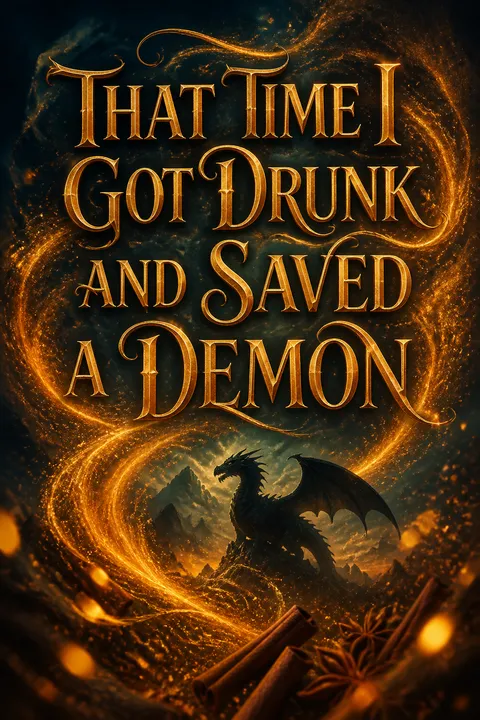
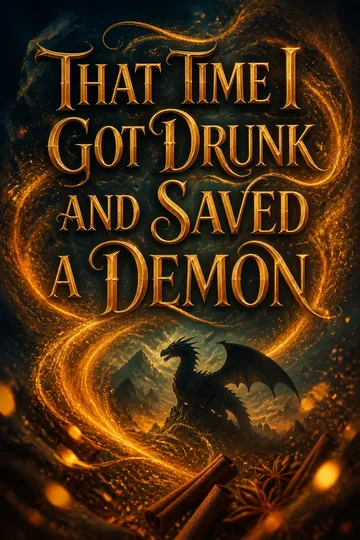
That Time I Got Drunk and Saved a Demon is a fantasy romance that has garnered mixed reviews. Many readers praise its humor, steamy scenes, and fun characters, particularly the sassy heroine Cinnamon. The book is described as a lighthearted, cozy fantasy with plenty of banter and adventure. However, some critics find fault with the modern language, pacing issues, and underdeveloped world-building. Despite these criticisms, many readers enjoy the book's blend of romance, comedy, and fantasy elements, making it a popular choice for those seeking a quick, entertaining read.
People Also Read
Characters
Cinnamon Hotpepper
Cautious spice farmerCinnamon is a twenty-four-year-old farmer and spice trader who prefers good food, familiar work, and the company of her family to heroic quests. Her humor is quick, often functioning as a shield against fear or embarrassment, but it does not make her indifferent to other people’s suffering. She is practical, resourceful, and stubborn about retaining the comforts and choices that make a life feel like her own. Her guardedness comes partly from grief and partly from a clear-eyed understanding that adventure can cost more than it promises. Cinnamon’s central tension is not whether she can be brave, but whether she can risk attachment and change without surrendering her independence.
Fallon Ozul
Possessive demon protectorFallon is a powerful demon from the Frost Mountains, physically imposing, proud, and accustomed to solving danger with force. His blunt confidence makes him appear cruel, yet he is capable of patience, curiosity, and tenderness, especially around Cinnamon and the meals she prepares. Having lived without close family, he is unfamiliar with the limits that make human relationships feel safe rather than controlling. He tends to interpret attraction as a promise of permanence and protection as the right to remove threats. His devotion is sincere, but sincerity does not automatically make it harmless. Fallon’s relationship with Cinnamon asks him to reconcile his immense power with her need to remain a person who can choose.
Myva
Revered village goddessMyva is worshipped by humans as a goddess whose temples protect settlements from demons. Her influence reaches into village rituals, the selection of heroes, and the stories people tell about the world beyond their borders. To ordinary believers, she represents order in a landscape where monsters and violence are real. That public image gives her authority over both civic life and private hope. Myva’s role in the story is felt long before Cinnamon encounters her directly, because the village’s customs have been shaped around her promises. Her presence tests how communities decide what to trust when the institutions offering safety also determine who must bear its costs.
Brie
Cheesemaker confidanteBrie is Cinnamon’s best friend, a cheesemaker with pink hair and a fondness for romance novels. She shares Cinnamon’s preference for safety and ordinary pleasures, but her loyalty keeps her from mistaking caution for cowardice. Brie helps Cinnamon prepare to leave and offers a compassionate counterweight when old grief resurfaces. Her willingness to accompany Cinnamon toward the village boundary shows how friendship can support a risk without pretending the risk is small. Brie’s practical warmth also represents the life Cinnamon fears losing, a world of familiar jokes, food, and people who know her history.
Usha
Courageous tavern keeperUsha owns the Dramatic Hyena, a tavern in Wandermere, and meets strangers with a forceful sales pitch and an irrepressible appetite for argument. Beneath the comic bluster, she is capable of revising her beliefs when evidence exposes the harm they conceal. Once she recognizes that demons are thinking beings, she risks her livelihood to help Cinnamon and Fallon. Her experience with boats makes her a natural organizer, while her directness helps her command a ship full of newly freed captives. Usha’s character links moral recognition with practical responsibility: seeing injustice clearly matters because it changes what she is willing to do.
Felix
Cheerful werewolf captiveFelix is a werewolf Cinnamon rescues from a Wandermere tanner. Wounded and exhausted when they meet, he retains a buoyant, sociable manner that returns as his strength does. He is candid about his anger toward the mages who enslaved him, but he can also read emotional dynamics that Cinnamon would rather avoid. His humor gives the group warmth without making light of the suffering he has endured. Felix’s werewolf nature and beliefs about imprinting offer Cinnamon a different model of attraction from Fallon’s, while his loyalty makes him a reliable companion in danger.
Ambrose
Vengeful lamia captiveAmbrose is a lamia whose captors have left him under a spell that suppresses his agency. When Cinnamon breaks the control, he initially reacts with fear and force, then recognizes that she has freed him and apologizes. His anger toward those who imprisoned him is severe and theatrical, but he can be gentle with Usha and protective of the people he accepts as allies. Ambrose’s striking appearance contrasts with his uncertainty after captivity; he is not simply a monster to be admired or feared. His presence reminds the group that liberation restores choice, but it does not instantly undo trauma.
Rosa
Storytelling family matriarchRosa, Cinnamon’s mother, is a warm and formidable presence whose family meals can absorb even the unexpected arrival of a demon. She comes from the Scarlet Thorn tribe and carries its history in the tattoos on her shaved head. Her stories connect her children to a world larger and older than their village’s religious account of history. Rosa is emotionally perceptive, fiercely protective, and unwilling to let family anxiety erase affection. The embroidered apron she keeps from her children’s youth reflects her attachment to shared memory. Her home provides Cinnamon with a model of belonging based on care rather than obedience.
Cinnamon's father
Quiet family anchorCinnamon’s father is a watchful farmer who speaks less than the rest of his household but responds to danger with practical care. He sends for help when Cinnamon describes the demon attack and checks her bow before she leaves. His caution does not prevent him from recognizing that she may have to face the threat beyond their farm. At family meals, his quiet amusement helps balance Rosa’s energy and the siblings’ teasing. He represents the steady support Cinnamon can return to without being required to explain herself before she is welcomed.
Cumin
Teasing older brotherCumin is Cinnamon’s older brother, a lively traveler in the family spice business who delights in provoking her. His teasing can be exasperating, but it is rooted in the ease of long familiarity rather than contempt. He contributes to the family’s noisy, affectionate rhythm and helps show what Cinnamon stands to lose when she leaves. Cumin’s practical life also makes the village feel connected to places beyond Boohail, even while his stories tend toward mischief rather than deep reflection.
Chili
Protective eldest brotherChili is Cinnamon’s eldest brother, a steady and protective presence who takes her report of a demon seriously despite the family’s teasing. He is quick to stand between danger and his sister, though courage alone cannot match Fallon’s strength. His quiet manner echoes their father’s, and he is already building a life of his own in the village. Chili embodies the family ties that make Cinnamon’s departure emotionally difficult, not because he tries to hold her back, but because their closeness is real.
Priscilla
Chosen village heroinePriscilla is a young woman from Boohail selected by Myva to join the hero’s party. She has long imagined herself as the heroine of an adventure story and takes pride in the role, including the distinctive sword made for her journey. Her confidence can shade into self-importance, but she is also a product of the village’s beliefs about duty and divine protection. Her relationship with Cinnamon begins in the familiar friction of two women who want different kinds of lives. Priscilla’s certainty offers a useful contrast to Cinnamon’s skepticism, without making either woman’s temperament a simple measure of courage.
Glen Dupont
Adventurous former loverGlen is Cinnamon’s former boyfriend, a young man drawn to adventure and heroic recognition. Their relationship faltered after Cinnamon’s sister disappeared, because grief left Cinnamon wary of the very risks Glen wanted to pursue. He represents the future Cinnamon once imagined with someone who shared her love of stories, but not her response to danger. Glen’s charm and confidence help explain why their separation hurt, while his choices reveal that affection alone cannot bridge incompatible ideas about what a worthwhile life should demand.
Dante
Northern captiveDante is a silver-haired captive whose power and endurance make him a formidable figure even after prolonged control by Myva. He speaks with the weight of someone who has lived through losses the younger members of the group cannot fully imagine. His determination comes from personal history, especially the people taken from him by the forces he opposes. Dante is not reckless about the cost of helping; he understands that the journey may leave him unable to fight. His resolve pushes the group to act before Myva can gather more power.
Holly
Direct centaur sailorHolly is a centaur and one of the few women aboard the ship. She is direct, confident, and unembarrassed by subjects that others might avoid, including romance and attraction. Her practical knowledge helps prepare the vessel, and she takes an active role when the crew faces danger. Holly also offers Cinnamon a peer’s perspective, different from Usha’s exuberant advice and Fallon’s intensity. Her calm presence helps make the ship’s unusual crew feel like a functioning community rather than a collection of strangers.
Cherry
Adventurous younger sisterCherry is Cinnamon’s younger sister, remembered as brave, curious, and eager to explore the world beyond the bayou. Her adventurous spirit shaped Cinnamon’s childhood and remains tied to the family’s shared stories. Cinnamon’s memories of Cherry carry affection as well as pain, helping explain why she learned to treat the unknown as a danger rather than an invitation. Cherry’s influence persists even when she is absent from ordinary family life.
Harper Huckabee
Village troublemakerHarper is one of the Huckabee brothers, a mischievous young man who tries to rob Cinnamon while disguised as a bandit. He is more foolish than threatening, and Cinnamon recognizes him before he can make a convincing escape. Harper’s prank creates the chain of events that leads her to find Fallon in the woods.
Tyler Huckabee
Bullying village brotherTyler is Harper’s older brother and the most aggressive of the Huckabee siblings. He tries to intimidate Cinnamon when she is leaving Boohail, assuming she has no one nearby to defend her. His behavior gives Fallon an early chance to show how differently he understands justice and restraint.
Kiki
Laughing tavern hyenaKiki is Usha’s short-faced hyena and the Dramatic Hyena’s beloved mascot. Her odd, expressive laughter makes her an effective distraction, especially among the mages who are not expecting a dancing hyena. She is both a comic presence and a working partner in Usha’s plans.
John
Boohail blacksmithJohn is the village blacksmith who made Priscilla’s specially requested sword. His irritation at the difficult commission is tempered by pride in the finished blade and genuine hope that the heroine will return safely. He gives the opening festival its familiar, communal scale.
Pierce
Staff-bearing heroPierce travels with Priscilla and Glen as a member of the hero’s party. He is suspicious of Cinnamon’s alliance with demons and relies on his staff’s magic to fight. His certainty that the party’s mission is righteous leaves little room for evidence that challenges its assumptions.
Nina
Shield-bearing heroineNina is the quiet member of Priscilla’s party who can create a powerful protective barrier. Her defense stands between Cinnamon’s group and the final temple, making her ability central to the confrontation. Nina’s limited presence keeps her less defined than the heroes she accompanies.
Tyrice
Rival tavern advocateTyrice promotes the Worthless Gazelle, Usha’s rival tavern, and joins their long-running feud with theatrical insults. His loyalty to his establishment and family fuels the comic rivalry, even when the dispute becomes entangled with the city’s larger upheaval.
Plot Devices
Cinnamon
Breaks demonic controlThe spice Cinnamon grows and trades has an unusual effect on Myva’s magic. Contact with it can interrupt the madness imposed on demons, returning clarity to those under the spell. Cinnamon first discovers this by striking Fallon with a branch, then uses the spice to free captives in Wandermere and arm arrows for later confrontations. Its usefulness makes her ordinary work essential to the larger conflict. Cinnamon is not a cure for every danger: it does not automatically destroy Myva’s phylacteries or defeat a dragon carrying one. The device links practical knowledge, local livelihood, and resistance to a powerful system.
Myva's chalices
Anchor Myva's powerThe wooden cups kept at Myva’s temples are treated by humans as sacred objects associated with protection. Fallon identifies them as vessels anchoring the sorcerer’s life and influence. When a cup is disturbed, sludge and bone creatures emerge to defend it; when it is fully broken, Myva’s hold weakens. Each temple therefore becomes a distinct obstacle in Cinnamon’s route, while the vessels reveal how a public religious ritual conceals a source of power. The final cup is carried into battle on a controlled dragon, making the object both a recurring goal and a way for Myva to adapt her defenses.
Demon collars
Make captivity visibleWandermere’s collars and master stones allow humans to control captured demons and identify who claims ownership of them. They turn a person into property through a system that the city treats as normal commerce. The devices complicate the group’s movements because an uncollared demon can attract attention, while a collared demon may remain legible to guards as a captive. Cinnamon first learns how deeply the practice is embedded through Usha, then sees its cost in Felix and Ambrose’s captivity. The collars are not merely restraints; they represent the social assumptions that make enslavement seem acceptable to those who benefit from it.
The mating mark
Shares dragon magicWhen Fallon bites Cinnamon as part of a demonic bond, he transfers magic that changes her senses and links their power. The bond intensifies desire, but it also gives Cinnamon practical access to Fallon’s shadow magic, including the ability to see through his concealment and eventually reach for it herself. Fallon understands the bond as a declaration of permanence; Cinnamon must decide whether to accept its emotional and physical consequences. The device therefore joins romance to the story’s larger question of agency. Magic can deepen intimacy, but it cannot substitute for trust or settle disagreements about how much protection should limit a partner’s freedom.
The Hero's Calling
Legitimizes human authorityAt each opening of Volsog gate, Myva’s temples select a four-person human party to fight the demons. Boohail celebrates Priscilla’s selection as both a high honor and a necessary defense, even though everyone knows chosen heroes may not return. The calling helps explain why villagers accept the separation between protected humans and supposedly monstrous demons. It also brings Priscilla and Glen into conflict with Cinnamon at the final temple: they believe their mission is righteous because the institution that appointed them has shaped what they know. The device shows how a system preserves itself by turning obedience into both civic duty and personal distinction.
Mead Mishaps Series
Download PDF
Download EPUB
.epub digital book format is ideal for reading ebooks on phones, tablets, and e-readers.








