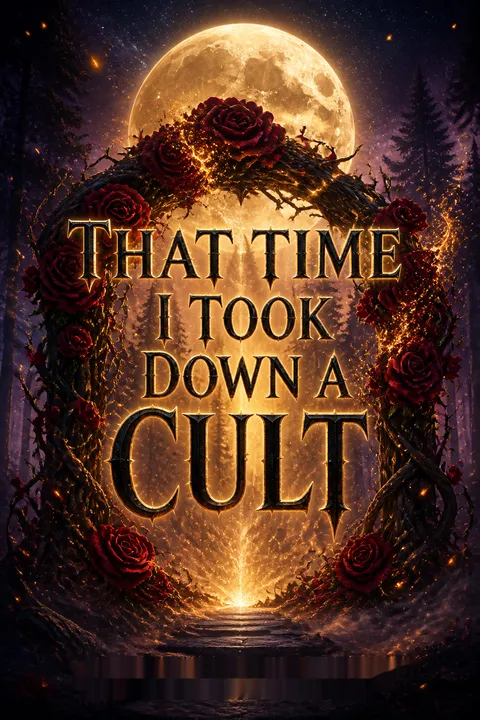


Plot Summary
A Wedding Turns Bloody
Buffy Martinez has spent her life believing the Cult of Wrath will reward her obedience with marriage, a move to the city, and a perfect future beside Callum O’Hare. On her wedding day, the Witch of the Woods warns that the Blossoms will be crushed, but Buffy dismisses her as a meddling eccentric.
At the ceremony, the Founders reveal the real bargain: the brides are sacrifices, and their intended husbands are expected to kill them. A bride falls under Daniel Marsh’s knife as the circle erupts into violence. Buffy sees Callum hesitate, then obey his father’s demand to kill her. When Lylah fights back and Meadow cries for help, Buffy runs toward her friends, only to be seized by Callum’s father.
The ceremony makes coercion visible by turning a familiar courtship ritual into a killing ground. Buffy’s confidence is not stupidity so much as the result of a closed world that has trained her to interpret control as care. Her bright expectations also make the violence harder to dismiss: Callum’s betrayal destroys not only a romance but the future she has been taught to desire. The Witch’s warning matters because Buffy has already encountered an alternative account of reality, yet she cannot recognize it until the Founders’ actions make their private truth public.
Buffy Fights Back
Callum apologizes, then lunges with his knife. Buffy blinds him with dirt, knocks him down, and escapes, stabbing neighbor Victor Marsh when he blocks her path. Callum catches up at the hot springs and nearly kills her; a voice in the steam intervenes, demanding to know who harmed its wife. The speaker is Wrath, the being Sweet Tooth worships as a god.
He carries Callum’s severed head and explains that Buffy’s blood and wedding vows have made them truly married. Wrath is a demon, not a god, and he has never had a human wife before. Buffy’s reverence begins to shift into desire as she discovers that the being she was taught to serve kneels before her and offers to avenge her.
Buffy’s first acts of violence are improvised, bodily, and morally destabilizing. She is not suddenly skilled; she discovers that survival can demand actions her upbringing never permitted her to imagine. Wrath’s entrance reverses the cult’s hierarchy in a single image: the supposed deity kneels, while the bride is asked what justice would mean to her. Their bond begins under extreme danger, so attraction and rescue are braided together, but Wrath’s willingness to honor her wishes gives Buffy a first experience of power that is not simply another person’s command.
The Brides Still Live
The Witch of the Woods, who calls herself Sunday, returns with Nina, the bride Buffy thought Daniel had killed. Nina’s revival proves the Blossoms may still be rescued, though Sunday warns that the remaining girls will be sacrificed when the full moon ends.
Wrath wants to destroy Sweet Tooth at once, but Buffy chooses to return because Meadow and the others are still there. Sunday’s plan is to exploit the cult’s rules: Buffy is now married, so the Founders cannot immediately sacrifice her.
Wrath changes to human form and takes the name Damon, posing as a mage. They face the searching cultists together, and his magical display forces the men to retreat. Buffy enters the town that betrayed her with a husband at her side and a plan to get her friends out.
Nina’s return prevents Buffy’s escape from becoming a private victory. The living and the nearly dead remain linked by the same system, and Buffy chooses responsibility without pretending that she is obliged to forgive the town. Sunday’s plan depends on the legalistic logic the Founders themselves created, turning their rules into temporary cover for resistance. Wrath’s disguise also establishes a tension that will recur: he can protect Buffy through force, but her goal requires them to move among people who still believe they control the terms of her life.
A Smile Becomes Hers
At Wrath’s Embrace, Buffy recognizes how thoroughly Sweet Tooth has shaped her: even her laughter and smiles arrive by habit, not choice. Wrath promises to help her reclaim them, then admits that he spent centuries in service to Lethos, a powerful being who forced him into other people’s schemes.
The Blossom sacrifices helped enrich the town and strengthen the powers behind its founding, though the original bargain has long since served its purpose. Wrath offers Buffy a share of his power so she can defend herself while rescuing the others. Fear tells her to refuse, because saying no has always seemed safer than claiming anything for herself. Buffy chooses yes. The ritual makes her Wrath’s Harbinger, stronger and harder to kill.
This change is not merely a supernatural upgrade. Buffy has been trained to treat her own preferences as unreliable, so accepting power requires her to practice consent in a new direction: she must choose something for herself even when the choice frightens her. Wrath’s account of his own coercion creates an intimacy grounded in recognition rather than rescue alone. Their shared histories do not make them identical, but they let each see how systems can turn a person into an instrument. Buffy’s new strength therefore carries a psychological task: she must learn to act without becoming another ruler who decides for others.
The Rossi Basement
Wrath and Buffy deliver bakery goods to a Rossi gathering, giving them access to the Founders’ home. Buffy sees her parents, Darla and Lorne, dressed in the prosperity they gained by cooperating with the cult. Darla admits the family knew Buffy was meant to die and accepted money for it. In the basement, Buffy and Wrath interrupt a summoning rite and fight the cultists guarding it.
Buffy uses broken railing as weapons; Wrath answers the attackers with magic. The room holds no Blossoms, but the raid leaves the ritual in ruins and brings Elijah, one of the cult’s followers, to Buffy’s side. She spares him when he helps rather than treating every frightened member of Sweet Tooth as equally guilty.
The parents’ admission sharpens betrayal into a material transaction. Buffy’s death was not a tragic misunderstanding but a benefit her family accepted, and the party upstairs displays what that bargain purchased. Yet her response to Elijah complicates revenge: Buffy can recognize the difference between people who designed the system and people who have been shaped to serve it. That distinction is essential to her developing authority. She is becoming dangerous, but she is not simply imitating the Founders’ habit of treating human beings as disposable pieces in a ritual.
The Festival’s Poisoned Game
At the Autumn Harvest Festival, Buffy finds her former teacher Mrs. Landry trapped in a dunk tank with poison being pumped into the water. Wrath sabotages the lever, and Buffy pulls Mrs. Landry free; the teacher reveals that suspicious wedding feast orders made her question the Founders. Later, at the game booths, Buffy and Wrath meet Charlie Vallencourt, a clever outsider within the cult who knows the truth about the Blossoms.
Charlie shows them a hidden video of the girls chained in a basement and identifies Nick Aguirre as their captor. He agrees to help in exchange for a magic book and the coveted shooting booth. Wrath honors the bargain, while Buffy accepts Charlie as an ally despite his self-interest and eccentric enthusiasm.
The festival makes Sweet Tooth’s public charm part of its machinery. Games and food conceal punishment, while the dunk tank turns a teacher’s suffering into entertainment for townspeople and visitors. Mrs. Landry’s intervention shows that kindness can survive within a compromised community, although it has costs. Charlie offers a different kind of resistance: he has information and technical curiosity, but his courage is partial and transactional. Buffy’s willingness to work with him marks a practical change in her leadership. She no longer expects allies to be perfectly virtuous before they can help her accomplish something necessary.
Aguirre’s Hidden Prison
Charlie’s map leads Buffy and Wrath through a concealed entrance into a building that is far larger inside than its modest exterior suggests. A time-warp enchantment has distorted their sense of how long they have been there.
They find no prisoners, only armed cultists and three Founders: Nick Aguirre, Derek Marsh, and Felipe Smith. Buffy and Wrath fight through the guards, and Wrath kills Aguirre after he reveals that Lethos has moved the Blossoms. Buffy defeats the remaining Founders, while Wrath retrieves the enchanted book Charlie wanted.
They leave with the book but not the girls, and the delay means the full moon is now close. Buffy returns the book to Charlie, recruits him to their growing group, and takes a brief ride with Wrath before the town’s remaining cultists surround them.
The empty prison turns a successful raid into a strategic failure: Buffy can punish those directly responsible and still fail to reach the people she came to save. The time distortion makes that failure costly, converting a hidden room into an instrument for exhausting the rescue window. Aguirre’s disclosure expands the conflict beyond the Founders, but it does not provide a clean route to victory. Buffy’s alliance with Charlie grows under pressure, and her brief pleasure with Wrath matters because it shows what she is fighting to preserve: not only the lives of her friends, but the possibility of ordinary joy.
Poppets Close In
As Buffy and Wrath head home, Draven O’Hare leads a crowd of cultists against them. The attackers are poppets, bodies stuffed with sand and straw that can be replaced as quickly as they fall. Wrath gives Buffy more of his power so she can fight through the swarm, but Draven’s magic overwhelms her. He takes her swords, drains her strength, and has her buried alive in a coffin while Wrath is captured.
Buffy wakes in darkness, unable to reach her husband through their weakened bond. Rather than give in, she smashes through the coffin lid and claws upward through the earth. Her desperate escape is the first proof that Wrath’s power remains in her even after the cult believes it has taken everything.
The attack turns Buffy’s power into a liability as well as a defense: the bond that makes her stronger also gives Draven a route to weaken both spouses. The poppets embody the cult’s impersonality, multiplying bodies without individuality, while Buffy is reduced to a name the Founders expect to erase. Her escape from the coffin is therefore more than a physical feat. It rejects the finality the cult assigns to her death and makes her own body, rather than the community’s judgment, the source of her return.
The Grave Gives Way
Buffy digs herself out of her grave and finds Sunday, Nina, and Elijah searching the cemetery. Their efforts to locate her failed because the cultists disturbed dozens of graves, but Elijah’s summoning stone let him sense her faintly. Sunday reveals that Ichabod O’Hare, Sweet Tooth’s legendary founder, has joined Lethos at the Founders’ Circle.
She gives Buffy a sword engraved with a title that turns the cult’s idea of a bride into her own weapon; its ruby is a soulstone. Buffy refuses to let Elijah accompany her, asking him to keep the others safe instead. She runs for the Hall of Worship, where Charlie catches up and uses his enchanted gamebook to give her speed, strength, and new magical abilities.
The cemetery gathers the story’s images of death into a place Buffy can leave under her own force. Sunday’s inability to interfere directly means Buffy must remain the agent of her rescue, even when allies can prepare tools or search for her. The sword converts the language imposed on her into an emblem she can wield, while Charlie’s gamebook adds a deliberately improvised form of power to the older magic. Buffy’s decision to leave Elijah behind is also a form of care: leadership now means assigning a role that protects someone, not demanding proof of loyalty through danger.
Ichabod Burns
At the Hall of Worship, Buffy encounters Ichabod O’Hare, the enormous, decaying founder whose name has shaped Sweet Tooth for five centuries. He tries to weaken her by describing Wrath as a faithless pleasure demon, but Buffy refuses to let his contempt define her marriage. Ichabod attacks her, breaks her sword’s momentum, and hurls her across the hall.
Charlie’s upgrades keep Buffy alive and let her answer with lightning and fire. She grabs Ichabod’s hands and channels power into him until they explode, then cuts through his burning body with the soulstone sword. Ichabod’s soul is drawn into its ruby. Through a window, Buffy sees the Founders’ Circle lit for another ritual, with Wrath bound on the altar.
Ichabod’s attack is physical, but his central tactic is interpretive: he tries to make Buffy doubt the meaning of her bond by reducing Wrath to the role Lethos assigned him. Buffy’s answer is not abstract faith; it is her knowledge of how Wrath treats her. The fight also joins competing kinds of power. Charlie’s invented abilities keep Buffy alive, while the soulstone weapon gives her victory a consequence beyond the founder’s death. Seeing Wrath captive immediately after the fight prevents triumph from becoming closure and carries Buffy’s attention back to the rescue she has not yet completed.
The Circle Breaks
Buffy reaches the Founders’ Circle as Lethos, wearing a beautiful disguise, prepares to claim her and Wrath. He kills Buffy’s parents when she refuses to protect them, then uses his magic to control her. Wrath breaks free of his chains and shatters the power Lethos held over him. Buffy turns to the Blossoms, kills the cultists threatening them, and frees Lylah and Meadow.
Meadow helps fight back, while Buffy kills Victor when he begs for mercy. Wrath binds Lethos with the chains once used to control him; Buffy drives her sword into the ancient being, and Wrath tears him apart. The Blossoms survive the ritual, and Buffy’s sword captures Lethos’s soul.
The final circle reverses the ritual that began the story. The Blossoms are no longer arranged as offerings, and Buffy does not wait for a husband or god to make the rescue on her behalf. Her parents’ deaths close the possibility of reconciliation, but the scene’s moral center is not their punishment; it is her refusal to let their choices dictate what she owes them. Wrath’s defeat of Lethos ends a long coercive relation, while Buffy’s sword completes the fight in her own name. The rescue becomes collective when Meadow and the other brides begin defending themselves.
Wrath Chooses a Throne
The rescued Blossoms gather around Buffy and Wrath, and Meadow confirms that the girls are safe. Charlie reveals that his enchanted book can make Wrath’s new divine status permanent. Buffy accepts the change, believing that a being who has protected rather than sacrificed them is more worthy of power than the men who ruled Sweet Tooth.
Nina rejoins the girls, Elijah returns with the sword, and Sunday’s circle of allies grows around them. Buffy and Wrath embrace as the battle ends, with her finally able to see a future in which she is strong enough to protect the people she loves. Their victory does not erase the town’s damage, but it gives them the chance to decide what should replace it.
The ending refuses a simple return to innocence. Buffy’s friends have survived, but the old structures that organized their lives have collapsed, leaving a community that must decide what authority should mean. Making Wrath a god could seem like a repetition of the cult’s hierarchy; the difference lies in Buffy’s choice and in the reciprocal care that defines their bond. The book’s comic invention, Charlie’s gamebook, becomes part of the resolution rather than a distraction from it. The future remains a shared project, not a promise handed down by another unquestionable power.
Epilogue
One month later, Buffy and Wrath remain in Sweet Tooth because the surviving Founders and Annie Bustos are already angling for power. Buffy believes leaving would let the old order return, so she and the now-divine Wrath begin reshaping the cult into a voluntary community.
Sunday agrees to serve as a consultant and explains that she was Ichabod’s first bride, killed in the original bargain and later brought back by Lethos. The town’s new life is practical as well as supernatural: Charlie helps residents learn to use phones, Elijah courts Sunday, and the former Blossoms share work and meals. Buffy and Wrath finish the day walking through town with time, at last, to choose what comes next.
The epilogue treats liberation as maintenance rather than a single victorious blow. Buffy recognizes that removing the Founders does not automatically remove the habits and ambitions that sustained them, so she stays to help prevent a new hierarchy from taking root. Sunday’s history reveals that the cult’s violence began with a bride’s dispossession, making Buffy’s refusal to repeat its rules a direct answer to the town’s origin. Domestic details such as laundry, meals, and lessons in phone use give the new order texture: freedom is not only escape from danger, but the ability to build ordinary life without coercion.
Analysis
The novel’s central conflict is not simply between a cult and its escaped bride. It is between two accounts of what a relationship permits. Sweet Tooth treats marriage as a public mechanism for transferring women from one set of male authorities to another. Wrath’s bond with Buffy begins inside that same machinery, but it acquires a different meaning because he asks what she wants, accepts her refusal, and gives her power rather than requiring submission. The distinction is tested repeatedly: affection does not make Wrath harmless, and Buffy’s growing strength does not automatically make her just. Her attention to Meadow, Nina, Mrs. Landry, and even Elijah forces her to decide who is responsible and who has merely learned to obey.
The smile motif gives this argument a bodily form. Buffy’s expression has been trained into a public performance so complete that even anger first appears as a smile. Reclaiming the right to frown, grieve, and laugh honestly becomes part of recovering agency. The book’s comic details, from Buffy’s fascination with unfamiliar Outside culture to Wrath’s devotion to baking and festival games, keep that recovery grounded in ordinary pleasures. These are not trivial diversions from the violence. They make visible what the cult’s system has tried to deny its members: a life can contain curiosity, food, friendship, and desire without being earned through obedience.
The ending also refuses to equate killing the Founders with solving the problem. Buffy stays because she sees how quickly surviving men might occupy the empty seats of authority. Her decision to rebuild a voluntary community is therefore the political completion of her personal rebellion. Wrath’s new divinity could recreate the hierarchy she fought, but the epilogue frames the difference as consent, accountability, and shared daily work. Freedom is not a purified world after evil disappears; it is the difficult practice of preventing power from becoming ownership again.
Review Summary
That Time I Took Down A Cult received mixed reviews, with an average rating of 3.39 out of 5. Readers praised its humor, unique premise, and entertaining characters. However, many criticized the writing style as juvenile and the pacing as inconsistent. The insta-love romance between Buffy and Wrath divided opinions. Some enjoyed the comedic elements and found it fun, while others felt it lacked depth. Complaints included plot holes, inconsistencies, and a meandering middle section. Despite its flaws, some readers found it a enjoyable, lighthearted read with potential.
People Also Read




Characters
Buffy Martinez
Cult-raised rebelBuffy is a Blossom raised in Sweet Tooth to regard obedience, marriage, and a permanent smile as the measure of a good life. Her curiosity about the Outside and her attachment to friends already strain against those rules, though she has little practice trusting her own judgment. Buffy’s humor helps her move through fear without pretending it is absent. She is especially attentive to people who are punished or overlooked, and that instinct shapes her ideas about justice as much as anger does. As a protagonist, she must distinguish chosen loyalty from submission and learn that power can be used to protect others without making them obey.
Wrath
Demon husbandWrath is the demon the Cult of Wrath mistakes for a god. He is formidable, possessive, curious about human customs, and unexpectedly domestic, with a genuine delight in baking and caring for Buffy. Centuries of service have left him wary of anyone who assumes authority over him, even as he is quick to offer Buffy protection. Their bond makes his affection difficult to hide, but his strongest distinction is that he treats her choices as meaningful. Wrath’s tenderness does not cancel his capacity for violence; the tension between those traits defines both his appeal and the danger Buffy must navigate beside him.
Meadow Atlier
Best-friend anchorMeadow is Buffy’s closest friend and fellow Blossom. She comes from a respected founding family, but that status does not exempt her from the cult’s rules or the dangers they conceal. More cautious than Buffy, Meadow often sees when her friend is about to ignore an uncomfortable truth. Their closeness is intimate and practical: they prepare for marriage together, share private jokes, and give each other the kind of steadiness the town’s leaders withhold. Meadow represents the life Buffy wants to protect, while her own courage shows that the Blossoms are not merely passive victims.
Sunday
Witch with a historyKnown as the Witch of the Woods, Sunday appears wherever she pleases and speaks in warnings that rarely arrive in a convenient form. Her sharp humor and polished appearance contrast with the frightening reputation Sweet Tooth has assigned her. She distrusts powerful men and keeps her motives guarded, but she is willing to intervene when Buffy’s survival and the Blossoms’ fate are at stake. Sunday’s magic has limits, and her connection to the town is more personal than she initially admits. She functions as both guide and irritant, forcing Buffy to question the difference between warning someone and truly helping them.
Nina
Returned BlossomNina was a shy schoolmate before becoming a Blossom, a role that gave her a new public confidence but also placed her inside the cult’s system. She is quick to feel, openly funny, and unembarrassed by strong opinions, including her devotion to Wrath. Her experience gives her a different perspective from Buffy’s: she notices how Buffy’s emotional honesty and kindness have always set her apart. Nina’s presence links the girls who believe they have failed with the friend who refuses to abandon them. She can be both comic relief and an unexpectedly clear-eyed witness to what Buffy is becoming.
Elijah
Devoted new allyElijah is a tall, earnest member of the cult who is accustomed to serving people he believes have authority. He begins from reverence for Wrath, then transfers much of his loyalty to Buffy after witnessing her courage. His eagerness can become comic, especially when he treats ordinary tasks as sacred duties, but it also comes from a sincere desire to be useful. Buffy recognizes that his devotion could make him vulnerable to another controlling leader, so she tries to give him responsibility without demanding blind obedience. Elijah’s loyalty is strongest when it becomes active care rather than ritual submission.
Charlie Vallencourt
Game-loving informantCharlie is an ambitious game enthusiast with a talent for finding information and a keen interest in earning recognition. The cult keeps him away from the prestigious festival booth he believes he deserves, leaving him resentful but observant. He knows more about Sweet Tooth’s hidden workings than his position suggests, and he uses technology and an enchanted gamebook to help Buffy. Charlie’s bravery arrives alongside self-interest, not in place of it. That makes him a useful, imperfect ally, and Buffy’s willingness to include him shows her growing ability to build cooperation without demanding that every helper share her exact motives.
Callum O’Hare
Chosen groomCallum is the handsome first son of Sweet Tooth’s most powerful family and the man Buffy believes she loves. Their courtship has been carefully supervised, leaving her to fill the gaps with hopeful expectations. Callum’s polished image suits the role of Prince Charming that the town has prepared for him, while his family’s influence gives him little reason to question the system. He is important to Buffy’s emotional world because she has invested a future in him, not because she knows him deeply. His presence tests the difference between being chosen by a powerful family and being genuinely cherished.
Draven O’Hare
Founder patriarchDraven is Callum’s father and one of the central authorities in the Cult of Wrath. He speaks with the confidence of someone accustomed to having his decisions treated as law, especially when women’s lives are involved. His public role as a community leader conceals the coercion on which his power depends. Draven’s relationship with Callum reveals a paternal model built around obedience to the family rather than tenderness or moral reflection. He embodies the way Sweet Tooth makes violence seem respectable when it is delivered through ceremony, tradition, and a familiar face.
Lethos
Ancient powerbrokerLethos is an ancient supernatural force whose bargains and influence reach across worlds. He cultivates an image of beauty and authority, using both to draw others toward dependence. His interest in power is expansive, and he treats people as resources in schemes that can outlast generations. Lethos stands behind the cult’s history even when his role is not yet clear to Buffy. His contrast with Wrath is central: both possess extraordinary power, but Lethos regards control as entitlement, while Wrath’s relationship with Buffy is shaped by mutual choice.
Ichabod O’Hare
Legendary town founderIchabod O’Hare is remembered as the founder of Sweet Tooth and the architect of its religious traditions. His reputation makes the town’s customs appear ancient and inevitable, helping later leaders present their authority as inherited rather than chosen. Ichabod’s legacy is connected to the original bargains that gave Sweet Tooth its prosperity, and his name remains embedded in the community’s stories and institutions. He represents the power of a founder’s myth: a person can continue to govern through the rules and memories that others preserve.
Darla and Lorne Martinez
Compromised parentsBuffy’s parents are a love match in a town that values lineage and conformity. Darla came from Outside, while Lorne’s family lost status after he married her. Their position leaves them caught between affection, social acceptance, and the Founders’ demands. They are emotionally important because Buffy has spent much of her life wanting answers from them, especially about her name and the world beyond Sweet Tooth. Their family illustrates how a community can turn private relationships into instruments of public discipline.
Mrs. Landry
Kind former teacherMrs. Landry taught Buffy cooking and showed her patience when Buffy’s attempts failed. She is practical, warm, and more observant than her gentle manner suggests. Her efforts to ask questions about the Blossoms place her at odds with the Founders, though she has spent years trying to help people without attracting attention. Mrs. Landry’s history with Buffy gives their reunion emotional weight: the kindness Buffy remembers becomes evidence that compassion can persist even within a town organized around punishment.
Ms. Donna
Town bakerMs. Donna runs Sweet Tooth’s bakery and is known for generosity as well as excellent baking. She has helped Buffy through small crises, including a disastrous cake, and her shop gives the town a rare space of everyday comfort. Her warmth does not mean she understands everything happening around her, but she is willing to act when Buffy needs help. Ms. Donna’s loyalty grows from personal kindness rather than rank or ritual, making her an important counterweight to the Founders’ formal authority.
Victor Marsh
Neighbor and schoolmateVictor grew up near Buffy and once comforted her after the loss of her dog. His familiarity makes him part of the ordinary childhood world she remembers, and his family’s influence gives him a place in Sweet Tooth’s social order. Victor represents the difficulty of judging trust in a community where friendship and obedience can coexist.
Nick Aguirre
Founding family leaderNick Aguirre is a patriarch among Sweet Tooth’s Founding Families. He is harsh toward those with less status and accustomed to seeing the cult’s rules as tools for preserving his authority. His family’s influence reaches into the town’s ceremonies and private punishments.
Lylah
Fellow Blossom fighterLylah is one of the Blossoms chosen for the wedding rite. When violence breaks out, she fights back and urges Buffy to escape rather than surrender. Her defiance shows that courage is already present among the girls, even before they can act together.
Plot Devices
The Blossom Reaping
Ceremony hiding sacrificeSweet Tooth raises selected girls as Blossoms and presents marriage to Wrath as their highest honor. The wedding rite is actually a sacrificial system maintained by the Founders, who expect the grooms to kill the brides and claim the deaths as offerings. The town’s rules about virginity, obedience, and public smiles make the girls easier to control and conceal what happens after the ceremony. Once Buffy survives, the same ritual structure becomes the source of her claim to Wrath and the reason the Founders hesitate to kill her openly. The device links social grooming, religious spectacle, and physical violence.
The Marriage Bond
Shared power and feelingBuffy’s blood and vows bind her to Wrath, creating a golden connection that carries emotion between them and allows Wrath to sense her thoughts when she invokes his name. The bond makes their relationship supernatural, but its dramatic importance lies in reciprocity: Buffy can feel Wrath’s tenderness, fear, jealousy, and pain as well as his strength. Wrath can share his power with her, and later Buffy becomes the bearer of it. The bond can steady them under pressure, but it also gives their enemies a way to attack both. It turns marriage from the Founders’ instrument of ownership into a relationship negotiated by its participants.
The Smile Tithe
Visible conditioningWomen and girls in Sweet Tooth are expected to smile as a public sign of virtue and obedience. A broken smile can bring punishment or threaten a girl’s status, so Buffy learns to display happiness even when she is frightened, angry, or grieving. The motif begins as part of the town’s quaint surface and becomes evidence of psychological control. Buffy’s inability to frown is not simply a habit; it shows how thoroughly the cult has trained her body to conceal dissent. As she gains safety and power, choosing when to smile becomes a small but consequential claim over her own expression.
Soulstone and Sword
Capturing supernatural soulsSoulstones contain supernatural power and can let beings travel between worlds or preserve the souls of those they consume. Sunday gives Buffy a sword fitted with a ruby soulstone and engraved with a title that transforms the language used to control her into a weapon. The blade gives Buffy a way to challenge enemies whose power exceeds ordinary human limits, while its stone records the consequence of victory. Lethos’s own soulstone is a source of his power and becomes part of the confrontation with Wrath. The device connects Buffy’s personal revenge to the wider magical economy that has sustained the cult.
Charlie’s Gamebook
Written power upgradesCharlie’s enchanted book makes written game rules real. At first he wants it for tabletop adventures and minor mischief, but he uses it to improve Buffy’s chances against Ichabod by granting abilities such as speed, strength, and elemental attacks. The book introduces a playful, modern kind of magic beside the older bargains and rituals that govern Sweet Tooth. Its influence is not automatically wise or harmless; Buffy has to set limits on what Charlie may write and how he uses it. Eventually, Charlie uses the book to make Wrath’s divine status permanent, turning a game-like device into a tool for remaking the community’s power structure.
FAQ
Synopsis & Basic Details
What is That Time I Took Down A Cult about?
- A Cult's Dark Deception: The story follows Buffy, a young woman raised in the seemingly idyllic town of Sweet Tooth, where she is chosen as a "Blossom" to marry the town's most desirable man, Callum O'Hare, as part of the Cult of Wrath's traditions. Her dreams of a perfect life in the city are shattered when she discovers the true, sinister purpose of the wedding ceremony: human sacrifice to their demon god, Wrath.
- Unexpected Demonic Alliance: As Buffy faces imminent death, the very demon god she was meant to be sacrificed to, Wrath, intervenes, claiming her as his wife and revealing the cult's long history of deceit and his own unwilling servitude. This unexpected alliance forces Buffy to confront the lies of her upbringing and embrace a new, powerful destiny as Wrath's harbinger.
- Fight for Freedom & Justice: Empowered by Wrath's magic and driven by a fierce desire for justice, Buffy embarks on a mission to rescue her friends, dismantle the corrupt Founding Families who control Sweet Tooth, and liberate Wrath from his ancient bond to the malevolent god Lethos, ultimately forging a new, unconventional family and future for herself and the town.
Why should I read That Time I Took Down A Cult?
- Subversive Dark Romance: Readers seeking a unique blend of dark humor, romance, and action will find Buffy's journey from cult victim to demon-empowered harbinger incredibly compelling. The story cleverly subverts traditional damsel-in-distress tropes, offering a protagonist who actively embraces her newfound ruthlessness.
- Deep Emotional Resonance: Beyond the thrilling plot, the novel delves into the psychological impact of brainwashing and betrayal, showcasing Buffy's raw emotional processing as she reclaims her identity and learns to genuinely express herself, making her transformation deeply satisfying.
- Unforgettable Character Dynamics: The dynamic between Buffy and Wrath, evolving from a forced alliance to a passionate, empowering partnership, is a highlight. Their banter, combined with the quirky ensemble of supporting characters like the pragmatic Witch of the Woods and the earnest acolyte Elijah, creates a memorable and engaging cast.
What is the background of That Time I Took Down A Cult?
- Small-Town Cult Setting: The story is set in Sweet Tooth, a seemingly charming, isolated town built upon a sinister cult, the Cult of Wrath. This isolation and the pervasive nature of the cult's influence are central to the narrative, highlighting themes of control and manipulation.
- Ancient Demonic Pacts: The cult's existence is rooted in a 500-year-old deal made by the town's founder, Ichabod O'Hare, with the powerful demon Lethos, trading human sacrifices for prosperity. This historical pact forms the core conflict, revealing a deep-seated corruption that has shaped generations.
- Subversion of 90s Pop Culture: As hinted in the author's note, the book is an "ode to Buffy and the 90s," subtly weaving in elements of that era's pop culture, particularly the "Buffy the Vampire Slayer" aesthetic of a strong female protagonist fighting supernatural evil, while adding a dark romance twist.
What are the most memorable quotes in That Time I Took Down A Cult?
- "Let this book serve as a reminder to never ever join a cult, not even when the demon god is smokin' hot.": This opening line from the dedication immediately sets the irreverent, dark humor, and romantic tone of the novel, foreshadowing the unconventional relationship between Buffy and Wrath. It's a meta-commentary that primes the reader for the unique blend of genres.
- "You bow to no one, wife.": Uttered by Wrath when Buffy attempts to kneel before him, this pivotal line encapsulates his respect for her autonomy and his desire for her liberation, directly contrasting the cult's demands for submission. It signifies the true nature of their bond and Wrath's role as her protector and equal.
- "My husband loves me. But you wouldn't know what love is, even if you had a heart that wasn't halfway decomposed, would you?": This defiant retort from Buffy to Ichabod, after he attempts to undermine her bond with Wrath, showcases her complete transformation. It highlights her newfound strength, her ability to speak truth to power, and the profound, genuine love she has found, contrasting it with the cult's hollow existence.
What writing style, narrative choices, and literary techniques does Rebel Carter use?
- First-Person, Conversational POV: The story is told from Buffy's first-person perspective, characterized by a highly internal, conversational, and often humorous voice. This narrative choice allows readers direct access to Buffy's unfiltered thoughts, anxieties, and evolving understanding of her world, making her transformation deeply personal and relatable.
- Juxtaposition of Horror and Humor: Carter masterfully blends gruesome violence and dark themes with witty banter and comedic observations. Buffy's internal monologue often provides a humorous counterpoint to the horrific events, such as her concern over hitting curbs while escaping murder or her casual observations about decapitated heads, creating a unique tone.
- Symbolism and Motif Repetition: Recurring motifs like Buffy's forced smile, the "Outsider" sayings she collects, and the significance of names (Buffy, Wrath, Sunday, Lethos) are used to underscore themes of identity, liberation, and the subversion of expectations. The breaking of Buffy's smile, in particular, is a powerful symbol of her psychological freedom.
Hidden Details & Subtle Connections
What are some minor details that add significant meaning?
- Buffy's "Outsider" Sayings: Her collection of phrases like "shitting my dick" or "why are men?" are not just comedic quirks; they are subtle acts of rebellion and a yearning for a world beyond Sweet Tooth's rigid control. These seemingly throwaway lines highlight her innate curiosity and dissatisfaction with her confined existence, foreshadowing her eventual break from the cult.
- The "White Claw" Mystery: Buffy's mother's secret longing for "White Claws" and Buffy's inability to find them in Sweet Tooth's baking books subtly hints at the cult's extreme control over information and the outside world. It symbolizes the mundane pleasures and freedoms denied to the cult members, making the eventual reveal of White Claws as an alcoholic beverage a humorous yet poignant moment of liberation.
- The "Mulberries" Euphemism: Buffy's attempt to replace Wrath's name with "mulberries" to avoid his mind-reading is a small but significant detail. It shows her initial struggle with the intimacy of their bond and her desire for personal privacy, even from her demon husband, highlighting her journey towards reclaiming her inner self.
What are some subtle foreshadowing and callbacks?
- The Witch of the Woods' Prophecy: Sunday's initial cryptic warning, "Pretty, foolish, Blossom. You'll see when they pluck your petals off tonight, you smiling fool," is a direct foreshadowing of the sacrificial ceremony. The callback to this line when Buffy realizes the cult's betrayal emphasizes the tragic irony of her initial naivety and the witch's accurate, albeit unhelpful, foresight.
- Callum's "Love" Confessions: Callum's repeated declarations of "I think I love you, Buffy" are subtly undermined by his actions. The callback to these words when he attempts to kill her highlights the superficiality of cult relationships and the deep-seated betrayal, contrasting sharply with Wrath's genuine, protective love.
- Mrs. Landry's Gift Certificate: Mrs. Landry giving Buffy a bakery gift certificate to cover up a failed cake, rather than punishing her, subtly foreshadows her compassionate nature and her eventual role as an ally. It's a quiet act of kindness that stands out against the cult's harshness, hinting at the hidden network of dissenters.
What are some unexpected character connections?
- Sunday and Ichabod's Past: The revelation that Sunday, the Witch of the Woods, was Ichabod O'Hare's first "bride" and blood sacrifice is a profound and unexpected connection. This hidden history explains her deep-seated animosity towards Lethos and the cult, transforming her from a chaotic trickster into a vengeful survivor with a personal stake in the cult's downfall.
- Charlie's "Real Internet" Knowledge: Charlie, the seemingly timid Gamemaster, possesses a hidden connection to the "real internet" and online forums like "Creepy Life 'n Stuff." This unexpected detail reveals a clandestine network of information outside the cult's control, making him a surprisingly vital source of intelligence and a symbol of external influence.
- Ms. Donna and Mrs. Landry's Quiet Rebellion: The seemingly innocuous town baker and home economics teacher are revealed to be quiet dissenters, actively helping Buffy escape and offering support. Their willingness to defy the cult, despite their fear, highlights a hidden undercurrent of resistance within Sweet Tooth, showing that not everyone was complicit in the Founders' schemes.
Who are the most significant supporting characters?
- Sunday, The Witch of the Woods: Beyond her chaotic nature, Sunday is a pivotal figure whose ancient connection to Lethos and Ichabod provides crucial exposition and magical assistance. Her role as a former "bride" and her ability to manipulate time and space make her an unpredictable but invaluable ally, embodying the theme of hidden power and long-held vengeance.
- Elijah, The Zealous Acolyte: Elijah's unwavering loyalty, initially to Wrath and then to Buffy as her "Harbinger," is significant. He represents the potential for redemption and re-direction within the cult's ranks, demonstrating that even deeply indoctrinated individuals can choose a new path when presented with genuine leadership and care. His earnestness provides consistent comic relief and emotional grounding.
- Charlie, The Gamemaster: Charlie's seemingly niche interest in tabletop games and his access to the "real internet" make him an unexpectedly powerful ally. His ability to "power up" Buffy and Wrath through his magical book is a meta-commentary on the power of narrative and imagination, while his resourcefulness provides critical information and a unique form of magical assistance.
Psychological, Emotional, & Relational Analysis
What are some unspoken motivations of the characters?
- Buffy's Desire for Authenticity: Beyond survival, Buffy's deepest unspoken motivation is to reclaim her authentic self, free from the forced smiles and prescribed roles of the cult. Her internal monologues reveal a constant struggle to reconcile her conditioned behavior with her true feelings, culminating in her genuine frowns and laughter. This quest for self-ownership is a core theme in Buffy's character arc.
- Wrath's Longing for Freedom and Connection: While Wrath states his servitude to Lethos, his unspoken motivation is a profound yearning for true freedom and a genuine connection. His immediate claim of Buffy as his wife, and his subsequent devotion, stems from her accidental act of liberation, fulfilling a deep-seated desire for a partner who chooses him, rather than being forced upon him.
- The Founders' Fear of Irrelevance: The Founders' relentless pursuit of the "outdated" sacrifice ritual, even after its true purpose is revealed, is driven by an unspoken fear of losing their power and relevance. Their insistence on tradition, despite its diminishing returns, highlights their desperation to maintain control and status in a world that is evolving beyond their understanding.
What psychological complexities do the characters exhibit?
- Buffy's Conditioned Emotional Repression: Buffy exhibits complex psychological conditioning, where her emotions are physically repressed, manifesting as an inability to frown or cry, only to smile or laugh. This deep-seated trauma makes her journey of emotional liberation a central psychological complexity, as she slowly re-learns how to genuinely express anger, sadness, and joy.
- Wrath's Jaded Benevolence: Wrath, despite his demonic nature and history of forced "pleasure," displays a surprising benevolence and protectiveness towards Buffy. His jaded outlook on humanity ("Humans are deceitful, dirty creatures") is a psychological defense mechanism, which Buffy's genuine nature slowly erodes, revealing a capacity for deep love and loyalty that contradicts his past experiences.
- Elijah's Need for Direction: Elijah's immediate and zealous loyalty to Buffy, even after the cult's collapse, highlights a psychological need for clear direction and purpose. His struggle to adapt to "free will" and his earnest desire to be a "good acolyte" reflect the deep impact of cult indoctrination, even on those who are not malicious.
What are the major emotional turning points?
- The Breaking of Buffy's Smile: The moment Buffy realizes the cult's betrayal and her smile "wobbles" or "breaks" is a critical emotional turning point. This physical manifestation of her internal turmoil signifies the shattering of her conditioning and the beginning of her emotional liberation, allowing her to access genuine anger and defiance.
- Wrath's Confession of Servitude: Wrath's raw confession about his centuries of forced servitude to Lethos, particularly his role as a "pleasure demon," is a major emotional turning point for both characters. It deepens Buffy's empathy and fuels her protective rage, while for Wrath, it's a moment of vulnerability that solidifies his trust in Buffy.
- Buffy's Acceptance of Her Parents' Betrayal: The confrontation with her parents and their casual admission of selling her for status is a devastating emotional turning point. Buffy's realization that their love was conditional and her subsequent lack of emotional reaction to their deaths marks a profound shift, signifying her detachment from past trauma and her focus on self-preservation and justice.
How do relationship dynamics evolve?
- Buffy and Wrath: From Transactional to Transformative Love: Their relationship evolves from a seemingly transactional "marriage" (Buffy's survival for Wrath's freedom) into a deeply transformative love. Wrath's protective instincts and Buffy's genuine affection break down his jaded exterior, while his empowerment of her allows Buffy to shed her conditioning, creating a partnership built on mutual respect and adoration.
- Buffy and Her Friends: From Shared Victimhood to Empowered Sisterhood: Buffy's relationships with Meadow, Nina, Mrs. Landry, and Ms. Donna evolve from shared victimhood under the cult's oppression to a powerful sisterhood. Her decision to rescue them, and their subsequent defiance, transforms their bonds into a network of mutual support and empowerment, highlighting the strength of chosen family.
- Cultists and Founders: From Blind Obedience to Terrified Subservience: The dynamic between the general cult members and the Founders shifts dramatically from one of blind obedience and reverence to terrified subservience. Once Wrath reveals his true nature and Buffy demonstrates her power, the cultists' fear of the Founders is replaced by a primal terror of Wrath and his Harbinger, leading to their rapid capitulation.
Interpretation & Debate
Which parts of the story remain ambiguous or open-ended?
- The Full Extent of Sunday's Powers and Motives: While Sunday's backstory as Ichabod's first bride is revealed, the full scope of her powers and her long-term motivations remain somewhat ambiguous. Her "consultation role" in the new cult and her continued chaotic nature suggest she has plans beyond simply helping Buffy, leaving her future actions open to interpretation.
- The Future of the "New" Cult of Wrath: The epilogue establishes the "Cult of Wrath 2.0" as a benevolent commune, but the long-term sustainability and potential challenges of this new social structure are left open-ended. The question of whether a "nice cult" can truly exist, or if human nature will eventually lead to new forms of control, is implicitly debated.
- The Nature of Lethos's "Unmaking": While Lethos is "unmade" and his soul absorbed by Buffy's sword, the exact nature of this "unmaking" and whether he could ever truly return or be reformed remains ambiguous. This leaves room for debate on the finality of his defeat and the potential for future threats in the broader dimensional landscape.
What are some debatable, controversial scenes or moments in That Time I Took Down A Cult?
- Buffy's Lack of Remorse for Killing: Buffy's immediate and sustained lack of remorse or disgust after killing cult members, particularly Victor Marsh and the men in the basement, can be a controversial point. While framed as a consequence of her trauma and newfound power, it challenges traditional heroic morality, sparking debate on whether her actions are truly "just" or simply a mirror of the violence she experienced.
- Wrath's "Pleasure Demon" Past: The revelation of Wrath's past as a "pleasure demon" forced into carnal servitude by Lethos is a controversial element. While it adds depth to his character and explains his jadedness, it can spark debate about consent, trauma, and the nature of his power, especially in the context of his relationship with Buffy.
- The "Nice Cult" Concept: The transformation of Sweet Tooth into a "nice cult" or commune in the epilogue is inherently debatable. The very idea of a "good cult" challenges societal perceptions and can lead to discussions about the fine line between community and control, and whether true freedom can exist within such a structure.
That Time I Took Down A Cult Ending Explained: How It Ends & What It Means
- Lethos's Defeat and Wrath's Ascension: The climax sees Buffy, empowered by Wrath's transferred divinity and Charlie's magical upgrades, confront Lethos. Wrath, freed from Lethos's control, uses his ancient chains to "unmake" Lethos, absorbing his power. Charlie then permanently elevates Wrath to a "god of infinite power," ensuring Lethos's defeat and Wrath's ultimate liberation. This signifies the triumph of genuine connection and chosen power over ancient, forced servitude.
- The Blossoms' Liberation and Founders' Demise: Buffy, with her newfound strength and the aid of her allies, liberates the remaining Blossoms, who, inspired by her defiance, join the fight against their captors. The remaining Founders, including Draven O'Hare, are systematically eliminated by Buffy, symbolizing the complete dismantling of the old, oppressive regime and the reclamation of agency by its victims.
- A New Era for Sweet Tooth: The "Nice Cult": The story concludes one month later with Sweet Tooth transformed into a benevolent commune, dubbed "Cult of Wrath 2.0" by Charlie. Buffy and Wrath, now a god, lead this new community alongside their "gang" (Elijah, Nina, Sunday, Charlie, Ms. Donna, Mrs. Landry). This ending signifies a radical redefinition of "cult" and "community," emphasizing shared resources, mutual respect, and genuine happiness, a stark contrast to the town's dark past.
Download PDF
Download EPUB
.epub digital book format is ideal for reading ebooks on phones, tablets, and e-readers.








