

Key Takeaways
Make love legible to your spouse, not merely sincere in your own language
Good intentions can miss. Chuck believed his compliments showed Cathy how much he loved her. She experienced his words differently, especially after their baby arrived and she felt that he had stopped noticing her needs. Their problem was not necessarily a lack of affection. It was that the signals he sent did not register as love to her.
Chapman organizes common ways of expressing affection into five love languages: words of affirmation, quality time, receiving gifts, acts of service, and physical touch. People may value all five, but often feel most loved through one or two. The practical point is to notice which expressions matter to a spouse, rather than assume that whatever feels loving to one partner will work for the other.
The framework’s strength is its translation metaphor: it turns a vague complaint, such as feeling unloved, into a question about what specific behavior would communicate care. That can make difficult conversations more concrete. Its categories are best treated as a shared vocabulary, not a complete map of personality. A spouse may value several forms of affection, or respond differently under stress. Asking, observing, and checking the effect matters more than assigning a permanent label.
Treat infatuation as an opening, not a maintenance plan
The high fades. The book distinguishes the intense early phase of romance from durable love. It describes infatuation as an absorbing emotional state that can make a partner seem nearly flawless. Chapman cites psychologist Dorothy Tennov’s estimate that this romantic obsession averages about two years, while emphasizing that its duration varies. Ordinary differences and frustrations become harder to ignore when the initial intensity subsides.
Janice, a longtime client, arrived thrilled to announce an engagement after knowing a military man for only three weeks. Her certainty illustrates how powerful the early rush can feel, not that it guarantees compatibility. Chapman argues that lasting love requires deliberate choices: learning what matters to a partner, acting with their well-being in mind, and continuing after the euphoric feelings have changed.
This distinction helps couples avoid treating a change in intensity as proof that the relationship has failed. It also reframes commitment as a practice rather than a mood. The account is most useful when it does not become an excuse to dismiss real incompatibility or pain. Emotional warmth cannot be commanded, and choosing care is not the same as pretending a harmful pattern is acceptable. The model invites honest effort, not denial.
Plan for deployments to interrupt routines, not the relationship itself
Distance changes the signals. Military couples face separations, sudden schedule changes, moves, and reunions that can disrupt familiar ways of expressing affection. The book recommends adapting rather than assuming love can simply resume where it paused. Letters, calls, planned online dates, small packages, and practical arrangements for the household can carry affection across distance, depending on what each partner values.
Reintegration also takes patience. After deployment, one spouse may crave closeness while the other feels overwhelmed by family demands or struggles to reconnect emotionally. Combat stress, including PTSD, can alter what feels welcome or possible. The book describes couples adjusting their routines, modifying dates to avoid crowded places, and seeking counseling or caregiver support when trauma affects family life.
The military setting makes a general relationship principle unusually visible: circumstances can remove the usual channels of connection without removing the need for connection. Planning small, realistic rituals can reduce the burden of improvising under stress. At the same time, a love-language lens cannot diagnose trauma or replace clinical support. Emotional numbness, withdrawal, or discomfort with touch may need compassionate interpretation and professional care, not simply more effort from a spouse.
Use praise to recognize, not to manage your spouse
Make words specific and kind. Words of affirmation include sincere appreciation, encouragement, and respectful discussion of hurt. The book’s example of a wife repeatedly criticizing her husband for not painting a bedroom shows how complaints can harden into a contest. Chapman instead advises noticing useful actions and thanking him specifically, without using praise as a tactic to make him comply. Encouragement is most loving when it supports an interest the spouse already wants to pursue, rather than pressuring them toward someone else’s ambition.
Tone matters too. A complaint can be expressed as a clear account of hurt, while sarcasm or contempt turns words into an attack. During deployment, written notes and letters can make appreciation tangible. One military wife learned that listening while her husband repeated difficult war stories helped him feel understood and respected.
This chapter distinguishes affirmation from flattery by tying kind words to attention, specificity, and respect for the other person’s agency. That distinction is important: compliments offered as behavioral leverage may be detected as manipulation. The advice to suspend complaints can be useful for interrupting a cycle of criticism, but silence should not become the only route to peace. Durable communication requires room for appreciation and for direct, safe discussion of unmet needs.
Give undivided attention before distance turns into rejection
Presence means focus. Quality time is not merely occupying the same room. It means giving a spouse attentive time, often through conversation or a shared activity, without competing distractions. In the book, Betty Jo had a comfortable home and a hardworking husband, but wanted time together more than material provision. Regular walks, meals, and conversation communicated care more effectively than another achievement at work.
Listening is part of this language. Patrick assumed his wife wanted solutions when she described workplace problems; she wanted him to understand how the problems felt. The military examples add a practical warning: a grand reunion or a single special date cannot store up attention for months apart. Short, predictable moments of connection can matter more than an occasional elaborate gesture.
Focused attention offers a concrete antidote to the feeling of being physically present but emotionally absent. The listening example also exposes a common mismatch between problem-solving and companionship: advice can be accurate and still fail to meet the request. A useful check is to ask whether the speaker wants ideas, empathy, or both. Military obligations may sometimes interrupt plans, so protecting attention means communicating about necessary interruptions rather than promising perfect availability.
Use gifts as visible evidence of attention, not a price tag
A gift says someone remembered. For a person who values receiving gifts, the object matters chiefly as a visible sign that their partner thought of them. The book’s examples range from a found natural object to a handwritten card, a small souvenir, or a care package. Price is not the central measure; the gesture should fit the couple’s circumstances and the recipient’s tastes.
Doug had rarely given his wife Kate gifts, assuming they were wasteful. After learning that gifts mattered to her, he began offering small surprises. She felt seen, and the couple’s emotional climate improved. The book also treats presence as a gift: attending a birth or a funeral may matter more than buying something afterward. During deployment, planned packages and modest tokens can carry that same message across distance.
The chapter separates symbolic value from market value, a distinction that can protect affection from consumerism. A thoughtful note can carry more meaning than an expensive purchase that ignores the recipient’s preferences. The idea of presence as a gift is especially useful because it makes attention, not spending, the core signal. Still, gifts should not substitute for accountability or practical help when those are what a partner actually needs.
Turn household friction into specific, freely chosen acts of care
Service must fit the person. Acts of service are useful actions chosen because a partner values them. In military life, these may include navigating installation systems, handling household responsibilities during deployment, or helping a spouse adjust after a move. Erin felt alone when her newly married husband did not help her learn basic military procedures. His lack of support felt more significant because practical help was one of the ways she recognized love.
Mark and Mary argued over hunting, chores, and expectations learned from their families. When each wrote down a few concrete requests, both could see how ordinary actions might communicate care. The book stresses the difference between a request and a demand: a partner remains free to choose. Serving out of fear, guilt, or resentment is not the same as a loving act.
Specific requests make an abstract conflict observable: instead of arguing about whether someone is considerate, partners can discuss the action that would help. The chapter also challenges inherited assumptions about which spouse should perform which tasks. Its emphasis on choice is essential, since service becomes resentful when treated as an entitlement. In relationships involving intimidation or abuse, however, the language of service must never be used to excuse harm or require submission.
Make touch personal, welcome, and broader than sex
Learn the other person’s boundaries. Physical touch can include holding hands, a brief hug, sitting close, or sexual intimacy. The book argues that these gestures may communicate love strongly to some people and mean much less to others. The same touch can be comforting or unwelcome depending on the person, situation, and timing. A partner’s response is therefore important information, not an obstacle to overcome.
After one service member returned from a dangerous deployment, his wife sat beside him, sometimes holding his hand, without demanding conversation. He later described that quiet companionship as a powerful sign of closeness. For spouses apart, the book suggests tangible reminders such as letters, photos, or clothing that carries a familiar scent. These can offer comfort, though they cannot replace physical presence.
This language is especially important to frame around consent. Chapman’s central instruction is to learn the recipient’s preferred form of touch rather than assume that one’s own preferences are universal. That makes the idea more attentive than a simple call for more affection. During trauma, pregnancy, illness, or conflict, comfort with touch may change. Asking and respecting a no are part of communicating care, not evidence that love has failed.
Test your guesses through requests, feedback, and reciprocal effort
Turn observation into conversation. The book offers three clues for identifying a partner’s primary love language: what they most often request, what hurts them most when absent, and how they tend to express affection themselves. These clues are starting points, not proof. Chapman also proposes a Tank Check: each partner rates how loved they feel from zero to ten, then names one action that would help. Repeating the exchange encourages direct, practical communication.
The book’s profile questionnaire can offer another prompt, but its result should be discussed rather than treated as a verdict. A spouse might ask for help with laundry because practical support matters, or because they are exhausted and need relief. The point is to listen for the need underneath the request and check whether the chosen response actually helps.
The feedback loop is a strong feature of the approach because it prevents mind-reading from masquerading as intimacy. A rating and a concrete request create information that a partner can act on, then revise. The score itself should not become a performance metric or a way to pressure someone into compliance. Relationship needs are context-sensitive; useful conversations leave room for changing circumstances, honest limits, and requests from both partners.
Choose loving acts without pretending you control the outcome
Choice is not a guarantee. Chapman presents lasting love as intentional behavior, not just a feeling. In a counseling example, Ann wanted to save a painful marriage even though her husband was unwilling to seek help. She tried expressing affection in the ways she believed mattered to him, then asked for feedback and made specific requests of her own. Their relationship improved, but the book explicitly recognizes that another person can reject these efforts.
That distinction matters in military marriages, where one partner may already be carrying heavy responsibilities or emotional strain. The book encourages effort without claiming that one spouse can manufacture mutual love alone. If conflict includes danger, coercion, or severe trauma, safety and appropriate professional help take priority over any communication exercise.
The most defensible reading of love as a choice is that a person can choose their own conduct, not dictate another person’s response. That preserves the book’s call to act generously while resisting the fantasy that enough service can repair every relationship. Ann’s story is a hopeful case, not a predictable intervention. Mutual change, safety, and willingness to engage remain outside any single partner’s control.
Analysis
The book’s durable contribution is less the claim that every spouse fits neatly into one of five types than its insistence that affection has to be received, not merely intended. The military setting gives that claim practical urgency. Distance, unpredictable schedules, relocation, combat stress, and reintegration can remove the ordinary cues through which couples recognize one another. A handwritten letter, a call without distractions, help with paperwork, or a calm welcome home can therefore carry unusual weight.
The five categories make a useful conversational scaffold. They help translate a diffuse accusation such as you never care into a potentially answerable question: what action would make care visible to you? But the model risks oversimplifying. People can value several forms of affection, and needs may shift with exhaustion, parenthood, trauma, or separation. A spouse’s complaint is informative, but it is not always a reliable diagnosis of a single primary language. It may also point to inequity, an unresolved conflict, or an unmet practical need.
The most important qualification is agency. Choosing to express love can interrupt retaliation and create conditions for repair, but one person cannot guarantee reciprocity. The stories of renewed marriages show possibility, not proof that consistent affection will change every reluctant partner. That distinction is especially important where abuse, coercion, or untreated trauma is present. Communication tools do not replace boundaries, safety planning, or professional support.
Read as a set of questions rather than a personality test, the book remains practical: What does this person experience as care? What do they ask for? Does the response actually help? What can each partner freely offer? Those questions fit military life because they favor adaptation over assumption. The aim is not flawless performance in a fixed code, but repeated attention to whether love is reaching the person it is meant for.
Review Summary
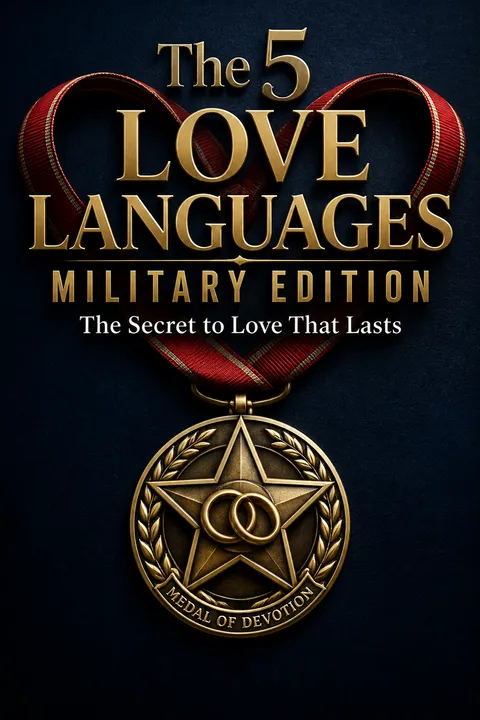
The 5 Love Languages Military Edition receives mostly positive reviews, with readers appreciating its military-specific adaptations and practical advice for maintaining relationships during deployments. Many found the book helpful in understanding their partner's love language and improving communication. Some criticisms include repetitiveness, lack of depth in military understanding, and similarity to the original version. Overall, readers value the book's insights on expressing love in military relationships, though some felt it could have been more tailored to military life.
People Also Read





Glossary
The 5 Love Languages
Five ways to express affectionA framework that groups common expressions of emotional love into words of affirmation, quality time, receiving gifts, acts of service, and physical touch. Chapman argues that people may value all five but often recognize love most readily through one or two. The framework is intended to help partners communicate affection in ways the other person can feel.
emotional love tank
A metaphor for felt loveChapman’s metaphor for a person’s sense of being loved and emotionally secure in a relationship. Expressions of affection that the person recognizes as meaningful are described as filling the tank; neglect or painful treatment can leave it depleted. The metaphor helps couples discuss emotional connection, but it is not a clinical measure.
Tank Check
A relationship check-inA short exercise in which partners rate how loved they feel on a scale from zero to ten, then say what specific action might help. Both partners take a turn. Chapman presents it as a way to make emotional needs easier to identify and respond to, rather than relying on hints or assumptions.
Love Language Scramblers
Military pressures that confuse signalsThe book’s term for conditions that make expressing or interpreting affection more difficult in military marriages. These include military habits of issuing direct instructions, separations, deployment, and reintegration. The term emphasizes that couples may need to adjust how they communicate during demanding transitions rather than assume their usual routines still work.
quality conversation
Attentive, sympathetic dialogueA form of quality time centered on sharing experiences, thoughts, feelings, and desires while listening with genuine interest. It is not simply talking through a problem or offering advice. The listener tries to understand the speaker’s experience, asks questions where helpful, and allows the speaker to finish before responding.
Dead Sea
A quiet, inward-processing styleChapman’s label for a person who takes in experiences and thoughts but does not naturally share much of them aloud. The person may be content with silence, while a more talkative partner may mistake that quiet for distance. Chapman treats this style as a habit that can be adjusted through deliberate sharing, not an unchangeable trait.
Babbling Brook
A talkative, outward-sharing styleChapman’s label for a person who readily verbalizes experiences and thoughts, often as they occur. Paired with a quieter partner, this person may feel that the relationship lacks openness, while the quiet partner may feel overwhelmed by constant conversation. The labels describe contrasting communication habits and are intended to encourage adaptation on both sides.
in love experience
Early romantic intensityChapman’s term for the euphoric, absorbing phase of romantic attachment that often accompanies courtship. He argues that it can make partners overlook differences and feel unusually selfless, but does not provide a dependable foundation by itself for lasting marriage. He contrasts this temporary intensity with deliberate, continuing expressions of care.
FAQ
What's "The 5 Love Languages Military Edition" about?
- Focus on Military Marriages: The book is an adaptation of Gary Chapman's original "The 5 Love Languages," specifically tailored for military couples. It addresses the unique challenges faced by military families, such as deployments and reintegration.
- Five Love Languages: It introduces the concept of five love languages: Words of Affirmation, Quality Time, Receiving Gifts, Acts of Service, and Physical Touch, and explains how understanding these can improve relationships.
- Practical Guidance: The book provides practical advice and real-life stories from military couples to help readers apply the love languages in their own marriages.
- Emotional Resilience: It emphasizes building "emotional love resilience" to maintain a healthy marriage despite the stresses of military life.
Why should I read "The 5 Love Languages Military Edition"?
- Targeted for Military Couples: If you are part of a military family, this book offers insights and strategies specifically designed to address your unique lifestyle and challenges.
- Strengthen Your Marriage: Understanding and speaking your spouse's love language can lead to a more fulfilling and resilient marriage.
- Real-Life Examples: The book includes stories from military couples who have successfully applied the love languages, providing relatable and inspiring examples.
- Expert Advice: Written by Gary Chapman, a renowned marriage counselor, and Jocelyn Green, a former military wife, the book combines professional expertise with personal experience.
What are the key takeaways of "The 5 Love Languages Military Edition"?
- Identify Love Languages: Discover your own and your spouse's primary love language to better meet each other's emotional needs.
- Adapt to Military Life: Learn how to apply the love languages during deployments, reintegration, and other military-specific situations.
- Communication is Crucial: Effective communication, including understanding and speaking each other's love language, is vital for a strong marriage.
- Love is a Choice: Love requires intentional actions and choices, especially during challenging times, to maintain a healthy relationship.
How do the five love languages apply to military couples?
- Words of Affirmation: Encouraging words can be especially meaningful during deployments when physical presence is not possible.
- Quality Time: Despite separations, military couples can maintain quality time through scheduled calls or shared activities like reading the same book.
- Receiving Gifts: Thoughtful gifts, even small ones, can serve as tangible reminders of love during long absences.
- Acts of Service: Helping with tasks or responsibilities can be a significant expression of love, especially when one partner is deployed.
- Physical Touch: While challenging during separations, creative solutions like sending a scented item or a personal letter can help maintain a sense of closeness.
What are the best quotes from "The 5 Love Languages Military Edition" and what do they mean?
- "Love is a choice." This emphasizes that love is not just a feeling but an intentional decision to act in ways that meet your spouse's emotional needs.
- "Keeping the emotional love tank full is as important to a marriage as maintaining the proper oil level is to an automobile." This analogy highlights the necessity of regularly expressing love in a way that your spouse understands to keep the relationship running smoothly.
- "The most essential ingredient in a successful military marriage is to keep emotional love alive in the relationship." This underscores the importance of maintaining emotional connections despite the unique challenges faced by military couples.
How can I discover my spouse's primary love language according to "The 5 Love Languages Military Edition"?
- Observe Behavior: Pay attention to how your spouse expresses love to you and others, as it often reflects their own love language.
- Listen to Complaints: Complaints can reveal unmet emotional needs and indicate what your spouse values most.
- Ask Directly: Have an open conversation with your spouse about what makes them feel most loved and appreciated.
- Experiment: Try speaking different love languages and observe which one elicits the most positive response from your spouse.
What is the "Decoding Deployments" section in "The 5 Love Languages Military Edition"?
- Practical Tips: Each love language chapter includes a "Decoding Deployments" section with specific tips for expressing love during deployments.
- Adaptation for Separation: These tips help couples maintain emotional connections despite physical separations.
- Examples: Suggestions include writing love notes, sending care packages, and scheduling regular communication times.
- Focus on Creativity: Encourages creative ways to express love when traditional methods are not possible due to distance.
How does "The 5 Love Languages Military Edition" address reintegration after deployment?
- Reintegration Challenges: The book acknowledges the difficulties couples face when adjusting to life together after a deployment.
- Patience and Grace: It emphasizes the need for patience and understanding as both partners readjust to being together.
- Continued Love Language Use: Encourages couples to continue speaking each other's love language to ease the transition and rebuild emotional connections.
- Communication and Support: Highlights the importance of open communication and seeking support if needed during this period.
What role does "Love Language Scramblers" play in "The 5 Love Languages Military Edition"?
- Unique Military Challenges: "Love Language Scramblers" are experiences that can disrupt communication and expression of love in military marriages.
- Examples: Includes military training, duty calls, and combat redeployment, which can create mixed signals and misunderstandings.
- Strategies for Overcoming: The book offers strategies to navigate these challenges and maintain a strong emotional connection.
- Focus on Adaptation: Encourages couples to adapt their love language expressions to fit the unique circumstances of military life.
How does "The 5 Love Languages Military Edition" suggest handling a spouse's PTSD?
- Understanding PTSD: Recognizes the impact of PTSD on a marriage and the importance of understanding its effects.
- Love Language Adaptation: Suggests adapting love language expressions to accommodate the needs and limitations of a spouse with PTSD.
- Patience and Support: Emphasizes the need for patience, empathy, and support in helping a spouse cope with PTSD.
- Professional Help: Encourages seeking professional counseling and resources to address PTSD and its impact on the relationship.
What is the "Tank Check" game in "The 5 Love Languages Military Edition"?
- Regular Check-Ins: The "Tank Check" game involves regularly asking your spouse how full their love tank is on a scale from 0 to 10.
- Identify Needs: It helps identify what actions or words would help fill their love tank and meet their emotional needs.
- Encourages Communication: Promotes open communication about feelings and needs in the relationship.
- Builds Connection: Regularly playing the game can strengthen the emotional connection and ensure both partners feel loved.
How can "The 5 Love Languages Military Edition" help couples in crisis?
- Love as a Choice: Emphasizes that love is a choice and encourages couples to choose to love even in difficult times.
- Experiment with Love Languages: Suggests a six-month experiment of consistently speaking your spouse's love language to see if it improves the relationship.
- Focus on Positive Change: Encourages focusing on positive actions and changes rather than dwelling on past hurts.
- Potential for Rebirth: Offers hope that even troubled marriages can be revitalized through understanding and speaking each other's love language.
About the Author
Other books by Gary Chapman










Download PDF
Download EPUB
.epub digital book format is ideal for reading ebooks on phones, tablets, and e-readers.








