

Key Takeaways
Put the woman in the frame, not merely beside the famous man.
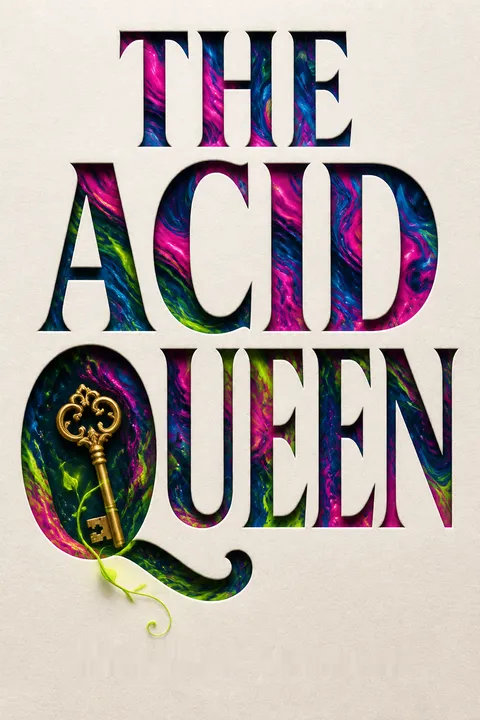
A familiar photograph changes. In the famous image of John Lennon and Yoko Ono’s peace protest, Rosemary sits beside Timothy Leary. He smiles toward the action; she looks directly at the camera. For decades, the public story cast her as his assistant, lover, or decorative hippie wife. Susannah Cahalan rebuilds her life from Rosemary’s letters, diaries, memoir drafts, and interviews, showing that she helped shape the movement and its most celebrated man.
The correction matters. Rosemary’s story is not simply a missing chapter in Leary’s biography. She made choices, took risks, and formed beliefs of her own, even when she later helped construct a mythology that obscured her contributions.
What's striking is how the photograph makes historical memory visible: the person nearest the famous figure can still disappear from the story. Recovering Rosemary does more than add a woman to a familiar cast. It changes the question from who led the psychedelic movement to who sustained it, who paid its costs, and whose account survived. The distinction matters because public histories often confuse visibility with authorship. Still, restoring a neglected figure should not require turning her into a flawless heroine. The biography’s force comes from preserving her contradictions as well as her labor.
Reinvention can open an exit, then become a way to vanish.
She learned to leave. Rosemary grew up in St. Louis, left an abusive first marriage as a teenager, and made a life in New York as a model, stewardess, reader, and regular in jazz clubs. Each new role offered freedom from the last. She also repeatedly attached herself to gifted, troubled men, treating their genius as a reason to set aside her own ambitions. Her first peyote experience sharpened her sense that she needed to change her life, rather than keep mistaking escape for transformation.
The pattern carried a cost. Rosemary embraced the idea of being the goddess beside a genius. Her attraction to that role was real, but so was the chance that self-invention could turn into self-erasure.
Rosemary’s changing names and occupations show reinvention as both agency and adaptation. Leaving an abusive home or relationship can be a necessary act of self-preservation; the same skill can also make it easier to avoid asking what a person wants when no emergency demands escape. Her story resists a neat distinction between choosing a role and being trapped in it. The tension is useful beyond biography: freedom is not merely the ability to become someone new. It also requires enough safety and recognition to remain oneself.
Treat psychedelic revelation as powerful, unpredictable, and dependent on its guide.
The surroundings matter. At Harvard and later at Millbrook, researchers developed the idea of set and setting: set means a participant’s mindset, expectations, and personal history; setting means the physical and social environment around the experience. Rosemary became skilled at creating calm spaces, preparing food, and grounding people through difficult trips. She saw psychedelic use as serious work, not an instant route to wisdom.
Guidance carries power. Early research explored whether psilocybin could affect prison recidivism and produce mystical experiences, but later analysis substantially reduced the headline success claimed for the prison experiment. Leary increasingly promoted broad public use. Rosemary feared that mass enthusiasm without preparation or skilled guides could leave people vulnerable to lasting distress.
The account treats preparation as an ethical practice, not merely a comfort measure. Altered states can make people unusually receptive, which gives a guide influence over how an experience is understood and remembered. That insight connects the trip room to any high-trust setting: therapy, spiritual teaching, and even persuasive leadership. A warm environment cannot guarantee a safe outcome, however, and a charismatic guide can become part of the risk. The story’s lasting value lies in keeping both claims in view rather than presenting either danger or healing as inevitable.
Test countercultural freedom by who works, who consents, and who can refuse.
The commune had chores. At Millbrook, residents imagined that communal life and psychedelic practice could remake society. In daily life, women often cooked, cleaned, cared for children, and managed the crises of people having difficult trips, while men lectured, experimented, and pursued spiritual insight. The familiar question of who would do the dishes exposed the limits of the group’s egalitarian claims.
Some limits were graver. A young Black resident was sexually harassed and punched by an adult visitor. Children at the estate were given psychedelics, and one child later described being dosed repeatedly despite refusing. Rosemary helped create the community’s atmosphere, yet she did not fully confront the harm occurring within it. Shared ideals did not erase unequal power or protect the vulnerable.
Millbrook is a useful test of whether liberating language changes ordinary arrangements of power. A community may reject conventional rules while quietly preserving familiar divisions of labor, authority, and vulnerability. The most revealing evidence is not its manifesto but who can say no without losing belonging, and who is expected to keep the place running. Rosemary’s own participation complicates any simple judgment: she was both a skilled caretaker and a person inside the same culture. The distinction between good intentions and accountable practice is central here.
When legal punishment becomes spectacle, the person beside the defendant pays.
A border arrest became a public drama. In 1965, marijuana in the Learys’ car led to charges against Timothy and his daughter Susan, while Rosemary escaped prosecution in that case. Timothy made the trial a public test of his scientific and religious arguments. The court sentenced him to a combined thirty years, an extreme penalty for the marijuana charges. Susan, whose arrest was widely publicized, struggled badly after the case.
Rosemary paid in another courtroom. When a grand jury sought testimony about Millbrook, she refused to answer after claiming protection for her religious beliefs. A judge found her in contempt and jailed her for thirty days. When summoned again, she left before the hearing concluded. The grand jury did not indict the Millbrook residents.
The public spectacle made Timothy’s case useful to his movement, but spectacle has uneven costs. A person with the strongest platform can turn prosecution into a political narrative; family members and partners may have less control over exposure, punishment, or the meaning assigned to their choices. Rosemary’s refusal was both principled and dangerous, while Susan’s experience shows how a celebrated cause can damage people who never chose to become symbols. The story asks readers to distinguish the publicity value of a legal fight from its human consequences.
The woman who helped Leary escape also chose what the government could learn.
Escape depended on her. After Timothy received a ten-year sentence, he pressed Rosemary to get him out. She coordinated with the Brotherhood of Eternal Love and the Weather Underground, adopted the identity Sylvia McGaffin, and prepared fake documents. In September 1970, Timothy escaped from prison and joined her in hiding. She helped him navigate safe houses and exile, including a period with the Black Panthers in Algeria, where the couple were eventually held against their will.
Her silence mattered. After Timothy began cooperating with federal authorities, Rosemary did not corroborate his account or help expose the people who had assisted them. The book argues that her refusal helped prevent indictments. The woman once treated as a supporting character had become a gatekeeper of other people’s secrets.
The escape turns private loyalty into political leverage. Rosemary’s role was not simply to love or shelter Timothy; she carried information that could endanger an entire network. That makes silence an active decision with consequences, rather than an absence of action. At the same time, secrecy has no automatic moral purity: it can protect vulnerable allies, but it can also shield wrongdoing. The biography grounds Rosemary’s refusal in a specific history of loyalty, risk, and betrayal, rather than treating secrecy as either heroic by definition or inherently suspicious.
A chosen disappearance can protect you and imprison the life you hoped to reclaim.
The fugitive became Sarah. After returning to the United States in 1976, Rosemary lived under the name Sarah Woodruff, working at an inn in Provincetown and avoiding attention. She and John Schewel had spent years moving through South America and the Caribbean, often without valid passports or secure homes. Even on Cape Cod, she kept a bag ready and watched for signs that authorities had found her.
Safety stayed incomplete. She lacked steady access to medical care, remained separated from family, and could not publish her memoir. She eventually sought legal help and, in 1994, had her outstanding California case dismissed. Her freedom restored her name, but it could not return the years spent living as someone else.
Anonymity can be a form of freedom when public identity has become dangerous or exhausting. But this account also shows how concealment can shrink a person’s options: work becomes precarious, relationships remain guarded, and the past cannot be openly integrated. Rosemary’s story complicates the usual celebration of reemergence. Returning to public life is not always the only measure of liberation; privacy can be chosen, yet the conditions that force it may still be coercive. The distinction is between hiding by preference and hiding because no safe alternative exists.
Give the psychedelic revival a warning label, not a miracle story.
The old debate has returned. Psychedelic research, once severely restricted, began to revive, and public interest grew again. The book notes that millions of Americans reported psychedelic use in 2019 and that LSD use rose sharply between 2015 and 2018. Contemporary interest often frames these substances as treatments or tools for self-improvement, but Rosemary’s experience resists the idea that a promising use makes a substance universally safe.
Openness can expose people. Rosemary warned that psychedelic experiences can magnify vulnerability, and that guides bear responsibility for how they shape the setting and interpret what happens. Some users may find meaning or relief; others may encounter fear, disorientation, or lasting problems. In 2024, the FDA rejected MDMA-assisted therapy for PTSD, with concerns that included overconfidence and weak safeguards.
The contemporary lesson is not to reject renewed research, but to keep therapeutic promise distinct from salesmanship. A clinical frame can improve supervision and measurement, yet it does not remove the power imbalance between participant and guide or guarantee that benefits apply broadly. Rosemary’s caution is especially valuable because it resists both prohibitionist panic and commercial certainty. The question is not whether psychedelics are good or bad in the abstract. It is who is exposed, under what conditions, with what evidence, and with what support if the experience goes poorly.
Recover her authorship without mistaking survival for a happy ending.
Her own book waited decades. Rosemary worked on a memoir throughout her life, but publishers rejected it as old news. She died in 2002 without seeing it published. David Phillips later assembled her drafts, and Psychedelic Refugee appeared in 2021. Her papers now sit in a separate New York Public Library collection rather than being absorbed into Timothy’s archive.
Even the origin story was shaped. Rosemary described her father as a magician who drew audiences, but her father corrected her: he had been an assistant. She kept the grander version in her manuscript. The episode captures her talent for making myth, including myth about herself. That self-authorship is part of her legacy, alongside the archive and the years of care and risk she gave to others.
The book ends by refusing a simple rescue narrative. Rosemary’s story survives because other people preserved her papers, but she had also shaped and edited her own past, sometimes to make it grander or safer. That does not make her unreliable in a dismissive sense; it shows how memoir can be both testimony and an act of self-creation. The separate archive matters because preservation is not neutral. Where papers are filed, whose name labels them, and who can interpret them all influence whether a person remains visible.
Analysis
This biography is a counter-history of the psychedelic movement told through the woman most often relegated to its margins. Its central achievement is not simply to recover Rosemary Woodruff Leary’s name, but to show how her obscurity was produced: by media shorthand, gendered expectations, Timothy Leary’s ability to dominate attention, and Rosemary’s own willingness to perform the supporting role. The book’s archive-rich method gives that argument weight. Letters, diaries, photographs, legal records, and competing memoirs allow the narrative to distinguish public mythology from daily labor and private doubt.
Rosemary is not presented as a straightforward feminist heroine. She resists abusive men, refuses a grand jury, coordinates a prison escape, and protects people from prosecution. She also accepts a domestic role, overlooks serious harms at Millbrook, and repeatedly subordinates her desires to a charismatic partner. These tensions are the point. Her agency is real, but it operates within relationships and circumstances that constrain it. Calling her only a victim would erase her decisions; calling her only a hero would turn sacrifice into an uncomplicated virtue.
The book’s account of psychedelic culture is similarly ambivalent. It acknowledges research and spiritual meaning while documenting the dangers of untrained guidance, inflated certainty, and communal power imbalances. This makes Rosemary’s quiet insistence on preparation and humility more than a personal preference. It is an ethical counterweight to the movement’s appetite for grand claims. One tension remains deliberately unresolved: Rosemary sought recognition and repeatedly chose concealment. Her invented identities offered protection and creative control, but also prolonged isolation and delayed authorship. The biography does not convert that history into a neat redemption arc. Instead, it asks what it means to become the hidden support of another person’s public myth, then attempt to reclaim one’s own. The result is a biography about psychedelia, but also about the labor behind movements, the costs of devotion, and the fragile work of making a life legible without simplifying it.
Review Summary
People Also Read


Glossary
set and setting
Mindset plus environmentA term used in psychedelic research to describe two influences on an experience. Set refers to a participant’s mental state, expectations, personality, and personal history. Setting refers to the surrounding physical and social environment, including the people present and the cultural context. At Millbrook, Rosemary helped shape settings intended to support participants through intense or difficult experiences.
League for Spiritual Discovery
Leary’s psychedelic churchA religious organization Timothy Leary established in 1966 to give his psychedelic movement a formal religious identity. Members treated LSD and marijuana as sacraments and claimed a right to alter their own consciousness. Its stated principles included not imposing altered states on other people and not preventing others from changing their consciousness.
the computer
Rosemary’s code identityRosemary’s name for her role as a secure keeper of information during Timothy Leary’s prison escape planning. In coded letters, she described herself as the person who could hold sensitive details while limiting how widely they circulated. The label reflects both her practical importance to the escape and the secrecy required to protect the people involved.
Acid Queen
Rosemary’s public personaA public identity associated with Rosemary during the period when she supported Timothy Leary’s psychedelic activism and defended him while he was imprisoned. The label made her recognizable as a figure in the counterculture, but it also simplified her into a symbolic partner to Leary. Cahalan’s biography recovers the work and independent perspective obscured by that persona.
Folie à deux
Shared delusional beliefA psychiatric term for a delusion shared between two people, used by Rosemary to describe the Learys’ intense mutual belief in their love, exceptional destiny, and psychedelic mission. In the biography, the phrase captures both the intimacy of their shared worldview and the way it could make destructive choices feel meaningful or inevitable.
Concord Prison Experiment
Psilocybin and recidivism studyA 1961 study associated with Timothy Leary’s research group that examined whether psilocybin might affect the behavior and return-to-prison rates of incarcerated men. Early accounts presented strikingly positive results, including a large reduction in recidivism. A later reassessment cited in the book found the difference was much smaller than first claimed, underscoring the importance of scrutinizing celebrated findings.
Download PDF
Download EPUB
.epub digital book format is ideal for reading ebooks on phones, tablets, and e-readers.








