

Key Takeaways
Study your own failure modes before the next market panic.
Stress exposes the weak points. In the 1940s, Younkers department store in Des Moines sold war bonds by appealing to patriotism and emotion, not by presenting a spreadsheet of returns. The episode introduces the book’s central claim: investors’ feelings shape their choices, and those feelings become especially powerful when markets are falling. A bear market, defined as a broad decline of at least 20 percent, is precisely when poor decisions can do the most lasting damage.
Learn before pressure hits. The story of Isaac Newton, who lost much of his fortune in the South Sea bubble, shows that intelligence does not immunize anyone from crowd behavior, regret, or overconfidence. A practical response is to identify likely triggers while calm, then make a plan for how to respond when those triggers arrive.
What's striking is that the book treats self-knowledge as a form of risk management, not as a soft supplement to financial analysis. That is a useful shift: a portfolio is only as sound as the investor's ability to hold it through distress. The analogy to emergency planning is apt. Decisions made in a calm room can constrain choices made in a crisis. Still, knowing a bias by name does not automatically defeat it. A written policy, automatic contributions, or a trusted second opinion can turn insight into a practical safeguard.
Keep investing separate from the thrill of trading.
Excitement has a price. The book describes sensation seeking as pursuing intense or novel experiences, including the emotional charge of a risky trade. A study of hedge fund managers found that those who owned high-performance sports cars took 11 percent more investment risk than minivan-driving peers, without earning higher returns. Another study of Finnish investors found that each speeding ticket was associated with nearly 10 percent more stock trades. These patterns suggest that some market activity serves the desire for stimulation, not the goal of building wealth.
Give the thrill another outlet. When Taiwan introduced lotteries in 2002, stock trading there fell by 25 percent. The book’s point is not that investing must be joyless, but that thrill-seeking can quietly change the game being played. A long-term investor seeking retirement security and a trader seeking excitement have different objectives, even when both call themselves investors.
The connection to reward-seeking behavior helps explain why more information and faster trading tools can intensify activity without improving judgment. Frequent action feels like engagement, and engagement can be mistaken for skill. This is especially relevant when an app makes each trade feel small, reversible, and entertaining. The evidence is suggestive rather than a diagnosis of every active trader: a sports car does not prove a person is reckless, and more trades do not by themselves establish motive. The useful question is whether trading serves a defined plan or supplies emotional stimulation.
Sell from future prospects, not the pleasure of booking a gain.
Wins feel good now. The disposition effect is the tendency to sell investments that have risen while holding those that have fallen. It often comes from the pleasure of making a gain feel real and the discomfort of admitting a loss. In one study, investors were 2.8 times more likely to sell a stock after its price rose than after it fell. A separate brokerage study found that the winning stocks investors sold outperformed the losing stocks they kept by 3.4 percentage points over the following year.
Newton felt the pull. He sold South Sea Company shares during the rise, then bought back in near £770 per share as prices kept climbing. The problem is not that every winner should be held forever, or every loser sold immediately. It is that the purchase price and the emotional satisfaction of realizing a gain are not reliable reasons to make the decision. Future prospects and portfolio needs are more relevant.
This bias is powerful because the transaction itself offers immediate emotional feedback, while the opportunity cost of selling too soon arrives slowly and may never be noticed. That mismatch resembles other choices where people overweight a quick reward and discount a delayed consequence. A useful discipline is to ask whether the investment would be purchased today at its current price, given its prospects and the role it plays in the portfolio. The book's warning should not become a mechanical rule to hold every rising asset. A changed thesis, concentration risk, or a need to rebalance can justify selling.
Do not confuse a compelling story, a rising price, and value.
Stories can overpower arithmetic. In 1720, South Sea Company shares rose from about £128 at the start of the year to £950 at their peak. Yet the company’s regular payment was only £6 per share annually, and it had no detailed plan to justify the explosive valuation. Nearly three centuries later, dot-com investors embraced metrics such as page views and “mind share” while the Nasdaq’s price-to-earnings ratio approached 100. Webvan, which had little revenue and large losses, reached a valuation of $7.9 billion after its IPO.
Novelty can feel personal. The book uses the term phantastic objects for companies or founders that become emotionally captivating. Investors may feel that owning shares connects them to a transformative idea or a celebrated entrepreneur. The internet did change daily life, but that did not make every internet company a sound investment at any price.
A genuinely transformative technology can coexist with terrible investments. That distinction is easy to lose because a true story about social change lends borrowed credibility to an individual company’s financial claims. The same pattern appears whenever a compelling mission is treated as evidence of a durable business model. A useful test is to separate three questions: Is the idea important? Can this company earn money from it? Is the current price reasonable given those prospects? The book’s caution does not imply that innovation is overhyped by definition. It asks investors to avoid paying any price simply to participate in the narrative.
Treat confidence about the next crash as evidence of bias.
The past gets rewritten. Hindsight bias is the tendency to remember an uncertain event as if it had been predictable all along. After the 1987 crash, Robert Shiller surveyed investors. Many said they had anticipated the collapse, although their actual trading did not show that they had acted on such a forecast. The vividness of the crash made the lead-up feel obvious afterward, which could inflate confidence about predicting the next one.
Complexity worsens calibration. Investing offers few rapid, clear lessons: a sound choice can lose money for years, and a poor choice can look brilliant during a boom. That makes it easy to confuse luck with ability. Newton’s return to South Sea shares after selling them illustrates how quickly earlier judgment can give way to confidence in a recent trend. The sensible aim is not to forecast every turn, but to avoid letting confidence in a forecast dictate an otherwise sound plan.
The deeper problem is not simply overconfidence, but poor feedback. In tasks such as weather forecasting, repeated predictions can be checked against clear outcomes. Investing has noisier results and longer delays, so skill is harder to distinguish from favorable conditions. This makes a record of decisions and their original reasons valuable: it helps preserve what was knowable at the time rather than allowing memory to polish the story afterward. Even that record cannot reveal the future. Its purpose is calibration, not a new tool for claiming that the next turning point is obvious.
Choose investments through a process, not through headlines or crowds.
Attention is not analysis. Investors often notice stocks after an unusual price move, heavy trading, a news story, or a memorable name. In 1999, two young men promoted bankrupt printer NEI Webworld in online chat rooms by inventing takeover rumors. Buyers rushed in, and the stock briefly soared despite the company having ceased operations. The episode shows how attention can create activity without creating underlying value.
Crowds feel safer under uncertainty. Herding is copying other investors instead of making an independent judgment. Anchoring is relying too heavily on a conspicuous number, such as the price originally paid for a stock. During the 2008 crisis, officials in Springfield, Massachusetts, bought complex mortgage securities without reading the prospectus, which they received months later. When complexity and information overload make careful analysis difficult, a prewritten investment process can prevent the loudest signal from becoming the decision.
A process is valuable partly because it changes the question from “What is everyone buying?” to “What conditions would make this investment fit?” This resembles checklist use in fields where errors are costly and attention is limited. The challenge is to keep the checklist short enough to use under stress and specific enough to catch predictable mistakes. Headlines are not always irrelevant, and expert consensus can contain useful information. But neither attention nor agreement proves that a price is attractive. A process should test a claim, not simply provide a more respectable way to follow the crowd.
Judge risk across your real horizon, not your latest account balance.
Short views exaggerate danger. Myopic loss aversion combines sensitivity to losses with frequent attention to short-term results. Investors who check performance often may feel compelled to reduce stock exposure even when their money is intended for decades of growth. In the book’s historical Dow data, 52.4 percent of trading days were positive, compared with 66.1 percent of years and 82.6 percent of ten-year periods. The chance of a positive return rose as the holding period lengthened, although losses remained possible.
Match risk to the person. Risk tolerance is the amount of risk an investor is willing to bear; risk capacity is the amount they can financially withstand. A person who would panic-sell a volatile portfolio may need a less risky mix, even if a longer horizon could support more stock exposure. The historical numbers are not a promise. They illustrate why a one-year emotional horizon should not automatically govern money that will not be used for decades.
The distinction between the time horizon on a statement and the time horizon of a real obligation is essential. Frequent evaluation can make long-term assets feel like a sequence of short-term bets, a pattern familiar in decision science as temporal discounting. Yet a long horizon is not a universal license to take more risk. A household facing near-term expenses, unstable income, or limited ability to recover from loss has genuine constraints, not merely emotional weakness. The useful principle is alignment: the portfolio should reflect both when the money is needed and how much volatility the investor can endure without abandoning the plan.
Buy diversification before panic makes it feel urgently necessary.
Protection must come early. Diversification means holding investments that do not all respond in the same way to market events. In the Great Recession, the Dow fell 53.8 percent from peak to bottom, while a portfolio holding 70 percent Dow stocks and 30 percent ten-year Treasury notes fell 33.8 percent. That mixed portfolio recovered by February 2011, more than two years before the Dow regained its previous high. During the 2020 bear market, the same broad idea limited the portfolio’s maximum loss to 12.6 percent, according to the book’s calculations.
There is no crisis-proof mix. Treasury notes rose during several stock-market declines, helping cushion losses, but assets do not always behave as expected. Diversification cannot prevent every decline, and past results do not establish future returns. Its practical value is that a portfolio with multiple sources of risk and return may be easier to hold through turmoil than a concentrated portfolio built from the market’s most fashionable names.
Diversification works both mathematically and behaviorally. Reducing volatility can make it less likely that an investor abandons a plan at the worst moment, which may matter more than a theoretical return advantage that cannot be held in practice. The historical comparisons make the case clearly, but they should not be read as a guarantee that bonds will rise whenever stocks fall. Correlations can shift, and different investors have different liabilities. The deeper lesson is to choose a mix that can survive both market shocks and the investor’s likely response to them, rather than waiting for a crisis to reveal that the portfolio is emotionally unholdable.
Make inaction and routine contributions your default, then inspect exceptions.
“Do no harm” is a strategy. The book’s practical advice is to invest, keep investing, stay invested, and diversify rather than trying to guess the next market move. That does not mean never reviewing a portfolio. It means avoiding gratuitous trades driven by fear, excitement, or a desire to get back to even. Investors withdrew money from stock funds most aggressively during bear markets, including around the 2009 market bottom, when the subsequent recovery made selling especially costly.
Use a cooling-off test. Before acting, ask why the idea is attractive now, whether the decision rests on a recent headline or a remembered purchase price, and whether a change in life circumstances requires a portfolio adjustment. The book suggests waiting thirty days before acting on a new, attention-grabbing investment idea. A checklist can interrupt impulse, while a planned contribution schedule helps keep short-term market emotion from silently rewriting long-term intentions.
Precommitment is a practical response to the gap between a calm self and a stressed self. Automatic contributions and scheduled reviews reduce the number of emotionally charged decisions that must be made in real time. A cooling-off period also gives salience a chance to fade, making it easier to judge an idea on its merits. But inaction should be a default, not a dogma. A change in goals, cash needs, or portfolio concentration can call for action. The checklist is strongest when it distinguishes a reasoned exception from a reaction that merely feels urgent.
Analysis
The book’s strongest contribution is its insistence that investment behavior must be studied in the conditions where it fails: bubbles, crashes, uncertainty, and social pressure. Its historical arc makes that claim memorable. Newton’s South Sea Company losses, the dot-com boom, and the mortgage crisis differ in technology and structure, yet each reveals familiar human tendencies: extrapolating recent gains, confusing attention with evidence, and seeking comfort in consensus. The cases turn biases from classroom vocabulary into recognizable decisions.
The central practical argument is deliberately undramatic. Investors cannot reliably predict the next crash or identify the exact bottom, but they can construct a diversified portfolio, keep contributing, and avoid trades prompted by fear or excitement. This is not a promise of high returns. It is an argument for reducing self-inflicted losses and improving the odds of remaining invested long enough to benefit from market growth.
The evidence is persuasive in showing that biases are common and often costly, though historical examples and studies do not make every finding universally applicable. Many return comparisons rely on US market history, and past asset-class relationships are not guarantees. Nor does a behavioral label explain every sale: an investor may have sound reasons to reduce risk, realize a gain, or hold cash. A bias checklist should sharpen judgment, not replace it.
The book’s deeper lesson is that an investment plan is partly a design for handling the investor. A good portfolio is not merely one with attractive expected returns. It is one the owner can understand, afford to hold through losses, and maintain without constant intervention. The best defense against panic is not a heroic prediction made during a crisis. It is a reasonable structure prepared before the crisis begins.
Review Summary
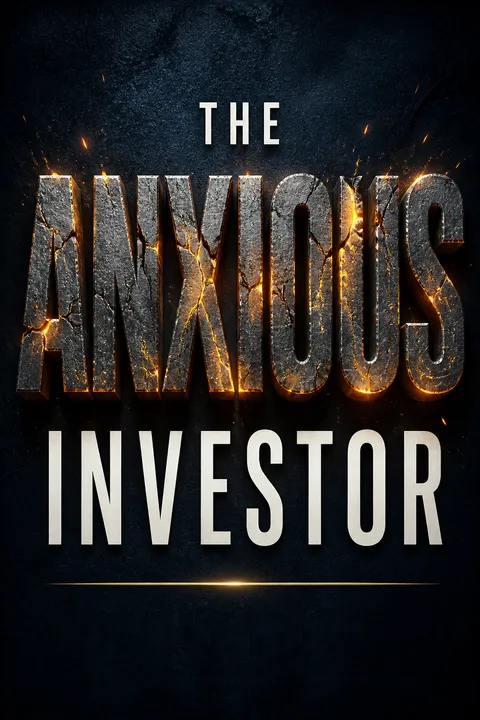
The Anxious Investor receives mixed reviews, with an average rating of 3.54 out of 5. Readers appreciate the historical context of market crashes and psychological insights into investor behavior. However, many find the content repetitive and lacking in specific investment advice. Some praise the book's engaging writing and focus on mental aspects of investing, while others criticize its verbosity on market history. The book is generally seen as more suitable for novice investors, with experienced readers finding little new information. Overall, the book's main message emphasizes diversification and long-term thinking.
People Also Read






Glossary
Disposition effect
Selling winners, keeping losersThe tendency to sell investments that have risen in price while holding those that have fallen. Realizing a gain offers immediate satisfaction, while realizing a loss can feel like admitting failure. The result may be a portfolio that sheds successful investments too soon and retains disappointing ones, even when future prospects do not justify that pattern.
Loss aversion
Losses hurt more than gainsThe tendency to feel the pain of a loss more strongly than the pleasure of an equivalent gain. This asymmetry can make investors avoid reasonable risks, sell during declines, or leave money in cash despite a long investment horizon. The book cites research suggesting people often require a potential gain roughly twice as large as a possible loss to accept a wager.
Myopic loss aversion
Short-term focus magnifies lossesA combination of loss aversion and frequent evaluation of investment results. When investors inspect a portfolio often, they encounter more short-term losses and may become more cautious than their actual time horizon warrants. The term helps explain why people may hold too little stock for long-term goals after treating each year, or shorter period, as the decisive measure.
Hindsight bias
The past seems predictableThe tendency to believe, after an event has occurred, that it was more predictable than it really was. In investing, this can make a crash seem obvious in retrospect and lead investors to overestimate their ability to foresee the next one. It also distorts memory of past decisions, making luck or uncertainty harder to recognize.
Availability bias
Recall substitutes for probabilityThe tendency to estimate how likely an event is by how easily examples come to mind. Recent, vivid events such as a market crash can seem more common than quieter outcomes that occur more often. Investors may then overprepare for dramatic risks while neglecting ordinary factors such as saving consistently, holding an appropriate portfolio, and controlling fees.
Anchoring
A reference point distorts judgmentThe tendency to rely too heavily on an initial or especially noticeable piece of information when making a judgment. Investors often anchor on the price they paid for a stock or its previous high, even though neither number establishes its current value. The anchor can encourage holding a losing investment in the hope of returning to break-even.
Prospect theory
Risk preferences shift with gainsA model of how people make choices involving uncertain gains and losses. People tend to prefer a sure gain over a riskier option with a higher expected value, but may gamble to avoid a sure loss. In investing, this helps explain why people often sell winners too early while holding losers in the hope of recovery.
Herding
Copying other investorsThe tendency to imitate the actions of other investors rather than rely on an independent assessment. Herding can feel safer when markets are uncertain or information is difficult to process. When many people act alike, they can push prices above or below a company’s underlying prospects, making crowd agreement a poor substitute for valuation.
Ostrich effect
Avoiding unpleasant financial informationThe tendency to pay less attention to financial information when markets or personal portfolios are falling. Investors may avoid checking balances because seeing losses is unpleasant, even when attention could help them rebalance or make other considered decisions. Avoidance can leave anxiety intact while delaying useful action or encouraging a later, more impulsive response.
Phantastic objects
Investments become emotional symbolsA term used for companies, products, or founders that investors find so captivating that their emotional appeal can overpower financial analysis. During the dot-com boom, some investors felt that owning shares connected them to the internet’s transformative promise or to celebrated entrepreneurs. That emotional identification could persist even when companies lacked a credible path to profitability.
Affect
Feeling colors risk judgmentA term for the feeling or emotional tone that influences judgments about risk, particularly under uncertainty. Negative news can prime fear and increase estimates of unrelated dangers, while complex choices make people more likely to rely on feelings rather than deliberate probability analysis. In investing, affect can shape whether a person accepts risk before a trade is even made.
FAQ
What's The Anxious Investor about?
- Behavioral Focus: The Anxious Investor by Scott Nations delves into how emotions and behavioral biases impact investment decisions, emphasizing the importance of understanding these biases for better investment outcomes.
- Historical Analysis: The book examines significant financial bubbles and crashes, such as the South Sea Bubble and the Great Recession, to illustrate irrational investor behavior.
- Practical Guidance: Nations provides a checklist of fifteen common behavioral biases, helping readers recognize and mitigate these biases in their investing practices.
Why should I read The Anxious Investor?
- Improve Investment Outcomes: Understanding psychological factors that lead to poor investment decisions can enhance long-term financial results.
- Real-World Examples: Historical examples make the content relatable and applicable, showing how emotional responses can derail rational strategies.
- Actionable Strategies: The book offers practical strategies and checklists to help investors avoid common pitfalls, valuable for both novice and experienced investors.
What are the key takeaways of The Anxious Investor?
- Emotions Matter: Emotions play a crucial role in investing, often leading to irrational decisions that can harm financial outcomes.
- Behavioral Biases: Nations identifies fifteen specific biases, such as loss aversion and the disposition effect, that can negatively impact investment performance.
- Historical Lessons: Analyzing past market bubbles and crashes provides insights into recognizing and avoiding similar mistakes in the future.
What is loss aversion according to The Anxious Investor?
- Definition: Loss aversion is the psychological phenomenon where the pain of losing money is felt more intensely than the pleasure of gaining money.
- Behavioral Consequences: This leads to overly cautious behavior, causing investors to avoid risks that could lead to potential gains.
- Impact on Decision-Making: Nations highlights that loss aversion can cause investors to sell stocks during downturns, locking in losses instead of allowing time for recovery.
How does The Anxious Investor explain the disposition effect?
- Definition: The disposition effect is the tendency for investors to sell winning stocks too early while holding onto losing stocks for too long.
- Emotional Impact: Driven by the desire to realize gains and avoid the pain of losses, this behavior can lead to suboptimal investment decisions.
- Long-Term Consequences: This bias can significantly harm long-term returns, as investors may miss out on potential growth from winning stocks.
What is herding behavior as discussed in The Anxious Investor?
- Definition of Herding: Herding occurs when investors mimic the actions of others, often leading to irrational market movements.
- Psychological Underpinnings: The desire for social acceptance and belief that others are better informed can drive this behavior.
- Consequences: Herding can result in buying overvalued stocks and selling undervalued ones, ultimately harming investment returns.
How does The Anxious Investor address information overload?
- Definition: Information overload occurs when investors are bombarded with too much information, making it difficult to make informed decisions.
- Effects on Decision-Making: During market volatility, reacting to every piece of news can lead to hasty decisions.
- Strategies to Manage: Nations suggests focusing on key metrics and maintaining a disciplined strategy to avoid being overwhelmed.
What role does fear play in investing according to The Anxious Investor?
- Fear as a Driving Force: Fear can lead to irrational decision-making, especially during market downturns, causing investors to panic and sell at the worst times.
- Historical Context: The book examines how fear influenced behavior during significant market crashes, illustrating its detrimental effects.
- Mitigating Fear: Understanding fear's role can help investors develop strategies to remain calm and rational in volatile conditions.
How does The Anxious Investor suggest improving investment decision-making?
- Awareness of Biases: Being aware of one’s own behavioral biases and emotional triggers can lead to more rational decision-making.
- Use of Checklists: The book includes a checklist of biases and strategies to help investors evaluate decisions and avoid pitfalls.
- Long-Term Focus: Nations encourages maintaining a long-term perspective and resisting impulsive reactions to short-term fluctuations.
What role does diversification play according to The Anxious Investor?
- Importance of Diversification: Diversification is key for reducing risk and enhancing returns, spreading investments across various asset classes.
- Risk Management: This strategy helps mitigate the impact of poor performance in any single investment, creating a more stable portfolio.
- Long-Term Benefits: A well-diversified portfolio is more likely to withstand market fluctuations and achieve better long-term results.
What are some common behavioral biases identified in The Anxious Investor?
- List of Biases: Nations identifies fifteen biases, including the disposition effect, loss aversion, overconfidence, and herding behavior.
- Understanding Biases: Recognizing these biases is crucial to avoid making emotional decisions that can lead to poor financial outcomes.
- Practical Application: The book provides a checklist to help investors assess their susceptibility and develop strategies to counteract them.
What are the best quotes from The Anxious Investor and what do they mean?
- “I can calculate the motions of the heavenly bodies, but not the madness of the people.”: Highlights the limitations of rational analysis in the face of human emotions and irrational behavior.
- “The real key to making money in stocks is not to get scared out of them.”: Emphasizes maintaining composure and a long-term perspective during market downturns.
- “Investing is about making money.”: Serves as a foundation for exploring how emotional and psychological factors can derail that goal.
Download PDF
Download EPUB
.epub digital book format is ideal for reading ebooks on phones, tablets, and e-readers.








