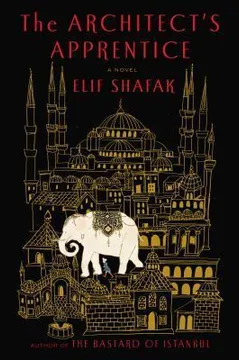


Plot Summary
Prologue
In Agra in 1632, the elderly Jahan looks back on a life spent building with Master Sinan, the Ottoman architect whose works outlasted their makers. He remembers the people and animals he loved, and a secret he buried beneath one of Sinan’s buildings: the centre of the universe. Whether anyone will uncover it, or understand what it means, remains uncertain.
The opening makes architecture both plot and memory: a building can preserve what its makers cannot, but it cannot explain itself. Jahan’s buried secret gives the novel a destination while withholding its meaning, and his old age lends the story its elegiac pressure. The image of a centre hidden under stone also prepares the book’s recurring search for what lies beneath official identities, imperial monuments, and Jahan’s own polished stories. The frame promises no simple recovery of the past. It asks whether love and knowledge can survive as more than traces.
Princes in the Palace
On a winter night in 1574, the animals in the palace menagerie panic, and Jahan follows the commotion through a hidden breach into the harem gardens. In a room where deaf-mute attendants are carrying bodies, he finds four strangled princes beneath their royal clothes. Sinan, the elderly Chief Royal Architect, arrives at the Sultan’s summons and finds Jahan hiding nearby.
Sultan Murad, newly enthroned, admits that his brothers have been killed on his orders and commissions a tomb for them beside his father’s. Sinan accepts the task, knowing the monument must honour the boys without advertising their murder. Jahan is present for the exchange, then the narrative turns back decades to explain how an animal-tamer became Sinan’s apprentice.
The opening reveals the violence that underwrites the palace’s graceful surfaces. Murad needs architecture to honour the dead and soften the political meaning of their deaths, while Jahan sees the bodies before he understands the power that placed them there. His curiosity gets him into danger, but it also makes him a witness. The scene sets up the book’s central tension: buildings can preserve memory, yet rulers commission them to manage what people remember. Jahan’s accidental presence at this intimate crime begins his passage from servant to observer of imperial history.
The White Elephant
As a child, Jahan forms a fierce bond with Chota, a white elephant destined for the Ottoman court. The story he later tells Princess Mihrimah describes a poor Indian home, an abusive stepfather, and his help in bringing the calf into the world. Much later, Jahan admits that this history is invented: he is an Anatolian orphan who has never seen India.
His actual journey begins as a cabin boy aboard Captain Gareth’s ship. When the real mahout dies, Gareth forces Jahan to impersonate him and promises the boy will steal palace valuables once they reach Istanbul. Jahan arrives with Chota, whose exhaustion makes him plead for the animal’s care, and enters the seraglio under a lie that will shape his life.
Jahan’s false origin is more than a practical disguise. It lets a displaced child make himself legible in a world that has already assigned him a role, and his invented account turns hardship into a story of chosen kinship. Chota gives that story emotional truth even when its details are false. Jahan’s instinct to protect the elephant contrasts with Gareth’s view of both boy and animal as tools. The deception begins as coercion, but it becomes a habit of self-protection, complicating the novel’s distinction between lying to survive and lying to control others.
The Princess’s Garden
In the palace gardens, Princess Mihrimah first approaches Chota after a wasp drives her from her hiding place. Jahan helps her touch the elephant, and their difference in rank briefly gives way to a shared sense of loneliness.
Mihrimah returns with delicacies for Chota and asks Jahan to tell her about his life, listening closely to the tale he has invented. Their meetings become a private refuge from the harem’s rules, with nursemaid Hesna Khatun keeping watch. Elsewhere, Jahan is ordered to carry the Grand Mufti to the trial of the Sufi preacher Majnun Shaykh.
When officials sentence the preacher to death beneath Chota’s feet, the elephant refuses to trample him. The court changes the method of execution, but Jahan has witnessed love and conscience condemned as heresy.
Mihrimah and Jahan meet across an unequal social boundary, but their intimacy grows because each recognises the other’s isolation. Chota makes contact possible: the animal is a shared object of care rather than a courtly possession. The trial of Majnun Shaykh gives that tenderness a harsher political context. His refusal to let fear govern devotion unsettles religious authority, just as Chota’s refusal to become an execution instrument frustrates the spectacle. Jahan learns that obedience is not the only response available to a subordinate, though resisting power may carry consequences he cannot yet foresee.
The River Bridge
When Ottoman forces cannot cross the River Pruth, the soldier and builder Sinan promises a bridge within ten days. He studies the site before beginning, then directs Jahan and Chota to help haul timber and stone through the current.
Once the army crosses, Sinan recommends destroying the bridge so the enemy cannot use it. Jahan resents the loss of their labour, but Sinan explains that mastery includes letting go of what one has made. Before the next battle, Jahan sees a prostitute mocked and used by soldiers; his attempt to defend her earns him ridicule.
In combat, Chota attacks enemy fighters and even threatens Ottoman troops. Jahan finds a dying comrade, then collapses from shock. Sinan tends him and gives him a carved wooden elephant with flowers instead of tusks.
The bridge teaches Jahan that construction is not ownership: a structure can serve its purpose and then be deliberately dismantled. The lesson becomes painful when battle turns Chota’s strength into violence Jahan cannot control. His horror at the deaths marks the first fracture between the boy’s romantic ideas and the work of empire. Sinan does not demand that he suppress this response. Instead, the wooden elephant offers a different model of craft, one in which strength can be joined to gentleness. Jahan begins to see Sinan as a teacher not only of building, but of how to live with what one has made.
The Elephant’s Fall
Back in Istanbul, Hurrem Sultana orders Chota sent to war after Jahan exaggerates the elephant’s training. Later, at a public celebration, Chota panics during a staged contest and charges through the Hippodrome, scattering spectators and tearing into the royal seating.
Jahan is struck by an arrow while trying to stop the animal, but Sultan Suleiman’s amusement prevents harsher punishment. While he recovers, Jahan tells Sinan the truth about his family and admits his desire to return home for revenge.
Sinan recognises his draughtsmanship, recommends palace schooling, and offers to train him as a builder. Jahan accepts, though Captain Gareth later returns to demand stolen goods. To keep the threat at bay, Jahan promises to steal from construction accounts instead.
Jahan’s lies and ambition collide in public, where he cannot control either Chota or the audience’s judgment. His injury exposes the limits of performance: the elephant cannot be made into a courtly trick, and Jahan cannot pass indefinitely as a harmless servant. Sinan responds to failure by giving him a different future, grounded in discipline rather than spectacle. Yet the old coercion remains active through Gareth, whose threats keep Jahan divided between apprenticeship and theft. The episode shows development as uneven. Jahan accepts the possibility of learning while still protecting himself through the very habits Sinan hopes he will outgrow.
Rome Without a Letter
As Mihrimah is married to the ambitious Rustem Pasha, Jahan’s hope of a future with her narrows into longing. Sinan sends Jahan and fellow apprentice Davud to Rome to study San Pietro and meet Michelangelo. The two apprentices examine churches and construction methods, but Michelangelo initially refuses them.
When they finally meet, he discusses his architectural work and writes a letter for Sinan. On the journey home, a companion they encountered at an inn steals their drawings, travel instruments, diary, and Michelangelo’s letter.
Years later, Jahan will recognise that traveller as Tommaso, who had been using Yusuf to obtain Sinan’s plans. For now, the lost materials make the mission appear fruitless, and Jahan returns to Istanbul with his knowledge intact but no proof of what he learned.
The Rome journey expands Jahan’s intellectual world while showing how fragile knowledge can be when it depends on objects and institutions. He learns by looking closely, not by securing an audience with a famous master, and the stolen drawings do not erase what he has observed. Yet the loss also plants a mystery that Jahan cannot resolve at the time. Davud’s presence alongside him underscores their intimacy as apprentices, making the later fracture between them more painful. Jahan’s unspoken grief over Mihrimah follows him across borders, revealing how he can travel widely while remaining emotionally fixed on an unattainable life.
The Prisoner’s Petition
Sinan proposes a network of aqueduct repairs and channels to bring fresh water to Istanbul, but Rustem Pasha opposes the expense and fears new migration into the city. Jahan secretly approaches Suleiman while the Sultan is hunting, presenting Sinan’s plans and his own bridge design.
Rustem has Jahan arrested for treachery and confined in the Fortress of Seven Towers. There, Jahan meets the Romany leader Balaban, who intervenes when a prisoner threatens a younger boy and later nurses Jahan through fever.
Mihrimah secures Jahan’s release. At the palace hearing, Sinan defends measurement and paid labour, and Suleiman approves aqueduct repairs while rejecting the new bridge. Jahan apologises to Rustem, though the humiliation deepens his resentment of the Vizier.
The water dispute makes public welfare inseparable from political calculation. Sinan and Jahan treat water as a shared necessity; Rustem treats it as an inducement to population growth and fiscal strain. Jahan’s attempt to reach the Sultan directly shows courage, but it also bypasses the channels that protect powerful men from challenge. Prison strips him of status and reveals competing moral codes: Balaban protects his own people, while Jahan is disturbed by the limits of that loyalty. His pardon restores his freedom, not his innocence in the court’s eyes, and his apology to Rustem demonstrates how survival can require outward submission without inward reconciliation.
Cracks in the Work
Jahan returns to work on the aqueducts, where scaffolding collapses and a later flood destroys weeks of construction. Rumours blame a dead martyr’s anger until the Nightingale Hodja steadies the workers and Sinan completes the repairs.
At other sites, accidents continue: a foreman dies, workers are injured, and Jahan notices that someone has tampered with plans and supports. He grows close to apprentice Yusuf, who hides a private identity and a voice, and learns that Tommaso is pressuring Yusuf for Sinan’s designs.
When Jahan later discovers a weakened rope before it can kill Sinan, he suspects the accidents are connected. Sancha, the person working as Yusuf, is forced to leave the building site after her voice is heard. The evidence remains incomplete, and the saboteur is not exposed.
The repeated accidents turn technical failure into a moral puzzle. In a building project, a weakened rope can look like bad luck until someone recognises the pattern; the same is true of political betrayal. Jahan’s practical attention makes him a better apprentice, but his curiosity also places Sancha at risk when her secret is exposed. The workers’ fear of ghosts offers a socially acceptable explanation for danger, while the real causes remain hidden in human motives. Sinan’s response is adaptive rather than triumphant: he restores trust enough for work to continue, but cannot protect every person whose life intersects with the project.
The Observatory Falls
Sinan entrusts his apprentices with building an observatory for Chief Royal Astronomer Takiyuddin, who hopes to study the heavens and preserve earlier scientific knowledge. The completed institution opens with royal ceremony, but a comet later fails to bring the harvest and victory Takiyuddin predicted.
Drought, war losses, earthquake, and plague follow. Religious leaders turn public misfortune against astronomy, and Sultan Murad orders the observatory destroyed. Jahan accuses Sinan of having exposed them to a doomed project, then agrees to help him save Takiyuddin’s books.
Before dawn, Jahan and Chota carry hundreds of volumes out through a loose window. He cannot find Takiyuddin’s astronomical tables. The next day, the same builders who raised the observatory tear it down under public pressure.
The observatory’s destruction dramatizes a conflict between inquiry and the political need to explain disaster. Takiyuddin’s prediction becomes a liability because people judge scientific knowledge by whether it can guarantee safety, a standard no inquiry can meet. Jahan’s anger at Sinan reflects a deeper fear that careful labour is disposable. Yet he still risks himself to rescue books, choosing imperfect preservation over helpless mourning. His failure to find the astronomical tables matters: knowledge survives in fragments, not as a seamless inheritance. The demolition turns progress into a material cycle, but it cannot make the rescued books or the questions they contain disappear.
The Lion’s Cage
Years of construction carry Jahan through changes of Sultan and repeated service beside Chota. During a palace fire, the animal-tamers evacuate the menagerie before the flames reach them. Jahan returns to help Olev, the lion-tamer, move his animals.
Olev enters the cage to lead out the male lion, but the beast attacks and fatally wounds him. Jahan drags his friend clear and shuts the lion inside. The loss hardens his anger at the rulers and at Sinan’s steady return to work.
Later, Chota’s arrival as an older elephant is challenged by Mahmood and his keeper, Buziba. Jahan secretly gives Mahmood a drug meant to provoke him, and the animal becomes uncontrollable. Olev warns Jahan that using a weapon, even indirectly, changes the person wielding it.
Olev’s death destroys Jahan’s comforting belief that patient intimacy can always master danger. The lion is not a villain; it is an animal acting beyond the human bond imposed on it, and that makes the loss harder to convert into blame. Jahan’s later manipulation of Mahmood shows how grief and insecurity can turn care into control. He wants to protect Chota’s place, but his intervention harms another creature and displaces its keeper. Olev’s warning reframes responsibility: power is not morally neutral just because it serves a private fear. Jahan’s growing skill now carries a capacity for harm as well as creation.
The Master’s Last Will
Sinan’s health finally fails after a lifetime of work, and he tells his apprentices that he has discovered the reason behind the accidents but does not identify the culprit. He asks them to wait forty days before opening his will.
After his death, Davud is appointed Chief Royal Architect. Sancha, freed by Sinan’s wife, prepares to leave for Europe and asks Jahan to go with her. He refuses, unable to leave Chota and the city, though he understands the offer is also a chance at mutual companionship.
Their parting leaves Jahan more isolated. He teaches at the palace school, learns that Nikola has died in a plague outbreak, and returns to find Chota failing. Meanwhile, the official succession has placed Davud above the apprentice who once shared his work and ambitions.
Sinan’s death removes the structure that had held the apprentices together, exposing the difference between formal succession and emotional inheritance. Davud receives the office, while Jahan is left with unresolved questions and the ache of a future refused. Sancha’s invitation is not merely romantic possibility; it offers a life built on shared craft rather than on Jahan’s fixed devotion to Mihrimah. His choice to remain is understandable, but it narrows his world. The dying elephant and dead colleague make the cost of that attachment increasingly visible, while the unanswered will turns personal grief into a question of whether Sinan’s trust was understood or concealed.
Chota’s Last Walk
Chota’s failing teeth and strength leave him unable to eat, and Jahan stays beside him as the elephant dies. The palace refuses a proper funeral and gives the body to a French ambassador for dissection.
Jahan accompanies Chota’s remains through Istanbul, then visits the ambassador and receives one of the elephant’s tusks. After burying it near Mihrimah’s mosque, he makes a small shrine and asks a young goatherd to guard it. Soon afterward, Chief White Eunuch Kamil Agha takes Jahan to the hamam of sorrows.
A drugged concubine resembling Mihrimah falls and dies during their encounter. Jahan escapes, believing he has killed her, and seeks shelter with Davud. Balaban’s Romany companions later find Jahan injured and bound, and nurse him back to health.
Chota’s death strips away Jahan’s most dependable relationship and exposes the limits of imperial regard: the palace can celebrate an animal as spectacle, then treat its body as material for study. Jahan’s shrine answers that erasure with an act of private memorial, though he knows it cannot restore the companion he has lost. The apparent death at the hamam compounds grief with guilt and makes Jahan vulnerable to political manipulation. Balaban’s rescue repeats a pattern of unexpected care, but it also sends Jahan back toward the unresolved danger he tried to escape. His mourning now becomes a search for truth.
The Hidden Saboteurs
Balaban helps Jahan recover and tells him Chota’s mate has borne a calf, Panj. A familiar herbal smell leads Jahan to Hesna Khatun, now living among discarded palace women. She admits that she helped sabotage Sinan’s projects at Mihrimah’s request, hoping to frustrate Suleiman’s attempts to glorify himself.
Davud later continued the sabotage for his own reasons. Hesna says Sinan intended Jahan, not Davud, to succeed him, and that Davud suppressed the will and withheld Sinan’s letters from prison.
She also claims Mihrimah never loved Jahan as he hoped. Jahan burns the stuffed cat Cardamom, a keepsake Hesna treasured, and leaves after she curses him. Her account offers answers, but it comes from a bitter witness whose certainty cannot settle every question.
The revelation makes Jahan’s private history part of a larger contest over memory and power. Mihrimah’s alleged role complicates his idealised love, while Davud’s later actions turn a shared apprenticeship into an instrument of revenge. Hesna’s testimony is persuasive in its details but cannot be treated as transparent truth: she is grieving, resentful, and invested in her own version of events. Jahan’s destruction of Cardamom is a retaliatory choice, not a neutral act of justice. His departure from Hesna’s home closes one investigation while leaving the emotional question unresolved: whether understanding another person’s motive can ever undo the harm they caused.
The Road Beyond Istanbul
Davud’s men capture Jahan after he breaks into the new architect’s house and finds Sinan’s hidden letter and altered construction plans. Davud admits that he arranged accidents and used Tommaso to steal designs, but he frames his actions as vengeance for the massacre of his family under Suleiman.
He also resented Sinan’s work for rulers whose wars funded the monuments. After Davud’s men beat Jahan and leave him to die, Balaban’s people rescue him again.
Balaban learns that the woman supposedly killed at the hamam is still alive, suggesting the event was staged to control Jahan. Before leaving Istanbul, Jahan buries Chota’s tusk as a shrine. Hesna’s curse prevents him from dying, and he spends centuries travelling and building before reaching Agra in 1632.
The ending makes longevity a consequence rather than a reward. Jahan receives the years that artists might envy, but he also loses the ordinary limits that give grief and attachment their shape. His choice to bury Chota’s tusk establishes a different kind of monument, one built from care rather than royal ambition. By reaching Agra, he returns geographically toward the homeland he once claimed, but he does so as a stranger with centuries of Ottoman memory. The curse leaves the question of escape open, while the work ahead gives his survival a purpose he did not choose but can still inhabit.
Epilogue
In Agra, Jahan joins the work on Shah Jahan’s tomb for Mumtaz Mahal, later called the Taj Mahal. He marries Amina, raises her son as his own, and becomes known as the Dome Maker, though he still carries Mihrimah’s memory.
He plans to hide a small sign for her inside the monument and teaches his apprentices what he learned from Sinan: a building can hold many lives beneath one roof. Beneath the dome, Jahan imagines distinctions between ruler and servant, faiths and nations, dissolving into shared human sorrow and love.
The epilogue does not erase Jahan’s lifelong grief; it gives that grief a place within a larger, chosen life. Amina and the child offer forms of intimacy that are reciprocal and present, unlike his idealised attachment to Mihrimah. Yet memory remains active, not as a rival to new love but as one layer of it. The Taj Mahal gathers the novel’s central contradiction: an imperial monument funded and directed by power can still become a vessel for private mourning. Jahan’s hidden tribute turns architecture into a language for feelings he could never safely speak aloud.
Analysis
The novel treats architecture as a public art made from private decisions. Sinan’s buildings require rulers, craftsmen, enslaved labourers, animals, money, and calculation, so their beauty cannot be separated from the political systems that finance them. Jahan learns to read a structure as both design and record: a bridge reveals the choices of its builder, while a damaged rope can disclose deliberate sabotage. Yet monuments also conceal. Murad’s tomb must honour murdered princes without naming the murder, and the observatory’s demolition shows how quickly a public can recast inquiry as impiety when events disappoint its need for certainty.
Jahan’s education is therefore not simply technical. He must learn that attention creates obligations. His care for Chota gives him a practical understanding of dependence, but jealousy leads him to manipulate another elephant, and grief tempts him toward retaliation. His love for Mihrimah likewise begins as recognition between two lonely people, then becomes an ideal he cannot test against ordinary mutual life. The novel does not dismiss that love as foolish; it shows how longing can preserve a person and also prevent him from choosing what is available.
The book’s concern with truth is equally intimate. Jahan’s invented Indian past helps him survive and gives shape to a bond that is genuine. Davud’s grievance against imperial violence is justified by his family’s suffering, yet he turns it into sabotage that costs other workers their lives. Hesna’s version of Mihrimah’s motives may explain events, but it cannot make her an impartial witness. Truth arrives through damaged records, withheld letters, scents, memories, and testimony that carries its own interests.
Against the empire’s appetite for permanence, the novel offers a humbler continuity: craft passed between teachers and apprentices, a rescued book, a remembered animal, a hidden mark inside a dome. Buildings endure, but their meaning depends on people willing to look closely. Jahan’s final inheritance is not mastery over time. It is the choice to keep making things, and to let love leave a trace without pretending it can be made immortal.
Review Summary
The Architect's Apprentice weaves a captivating historical tale set in 16th-century Istanbul, following Jahan, an Indian boy who becomes apprentice to the royal architect Sinan. Readers praise Shafak's vivid prose, rich historical detail, and atmospheric storytelling. Many found the characters engaging, particularly the elephant Chota. Some felt the plot meandered at times, but most appreciated the novel's exploration of love, friendship, and architecture. While some reviewers found it overly long, others were fully immersed in the world Shafak created.
People Also Read




Characters
Jahan
The curious apprenticeJahan is an animal-tamer and draughtsman whose questions repeatedly carry him beyond the boundaries assigned to him. He wants knowledge, security, and the chance to become more than the role the palace gives him, but he often protects himself with inventions and evasions. His bond with Chota teaches him patient care; Sinan’s mentorship gives that care a craft and a discipline. Jahan’s love for Mihrimah remains entangled with his longing for an impossible life, while his later choices show how grief can curdle into jealousy or retaliation. He is observant rather than naturally heroic, and his growth depends on learning that attention creates responsibility as well as insight.
Sinan
The patient master builderSinan is the Chief Royal Architect, a master whose authority comes less from command than from sustained attention to materials, workers, and place. He treats architecture as a discipline of proportion and humility, leaving room for imperfection rather than pretending to rival the divine. As Jahan’s mentor, he recognises talent beneath insecurity and offers education instead of punishment. Sinan’s steadiness can look like indifference to those who want him to resist every injustice openly, and the tension between his service to rulers and his care for individuals remains central to his character. He teaches through work, example, and the belief that a craft must serve more than its maker’s vanity.
Chota
The white elephantChota is a white elephant brought from Hindustan as a diplomatic gift and placed in Jahan’s care. He is powerful but not a simple emblem of power: he can be affectionate, fearful, stubborn, and responsive to the people who treat him with patience. His bond with Jahan develops through daily feeding, work, travel, and danger. The court prizes him as a curiosity and a symbol, while Jahan sees a companion whose needs cannot be reduced to ceremony. Chota’s presence repeatedly tests whether humans will treat animals as living beings or as instruments. His memory, loyalty, and vulnerability shape Jahan’s understanding of love more deeply than any formal lesson.
Mihrimah
The imperial princessMihrimah, daughter of Sultan Suleiman and Hurrem, grows up inside a court that grants her privilege while restricting her freedom. She is curious, intelligent, and drawn to the menagerie because it offers a world less governed by rank and performance. Her friendship with Jahan develops through stories and shared attention to Chota, though their unequal positions shape what either can expect from it. Mihrimah is both a person with private needs and a political figure whose choices affect people around her. Her longing for independence sits beside her attachment to family, making her difficult to reduce to either a romantic ideal or a courtly schemer.
Davud
The gifted rivalDavud is one of Sinan’s apprentices, a brilliant and ambitious builder whose quick judgment is matched by a deep reserve of anger. He and Jahan share years of work and training, but their different responses to injustice gradually pull them apart. Davud’s sense of loyalty is shaped by loss, and he measures events against the harm done to ordinary people by imperial power. His talent earns him advancement, yet ambition and resentment complicate his relationship to both Sinan and his fellow apprentices. He embodies the danger of allowing a genuine grievance to justify actions that injure others.
Sancha, known as Yusuf
The hidden apprenticeKnown at the construction sites as Yusuf, this gifted apprentice works under conditions that require silence, disguise, and constant vigilance. Sancha’s skill with design earns Sinan’s trust, while her history of displacement makes education and craft inseparable from survival. She is disciplined, perceptive, and deeply loyal, but the constraints around her life leave little room for open self-expression. Her relationship with Jahan grows through shared work and the trust of keeping a secret. Sancha’s story illuminates how talent can flourish even when society denies the person who possesses it a public identity.
Hesna Khatun
Mihrimah’s watchful nurseHesna Khatun raises Mihrimah and remains fiercely protective of her long after the princess has grown. Asthmatic, sharp-eyed, and skilled at reading the palace’s unspoken rules, she uses both care and intimidation to preserve her place near the girl she loves. Her attachment can be generous, but it is also possessive, shaped by a life spent serving people with more power than herself. Hesna’s loyalty makes her a formidable guardian and an unreliable interpreter of other people’s motives. She understands that affection can become a form of influence, especially in a court where few relationships are free of consequence.
Balaban
The Romany protectorBalaban is a shrewd Romany leader who survives through nerve, loyalty, and a talent for reading people. He protects his own community fiercely and operates by codes that differ from the palace’s laws. His exchanges with Jahan mix teasing, bargaining, and genuine affection. Balaban is neither a saint nor a simple outlaw; he knows that survival often requires compromise, but he is capable of generosity when someone has earned his regard. His repeated interventions give Jahan practical help while also offering a model of chosen kinship outside the imperial hierarchy.
Captain Gareth
The coercive sailorCaptain Gareth is a foreign-born sailor who serves the Ottoman navy after betraying his original countrymen. He is bold, suspicious, and skilled at turning another person’s dependence into leverage. By forcing Jahan into the role of mahout, he places the boy near palace riches and expects him to steal on command. Gareth’s threats reveal how quickly a child without protection can become useful to adults who claim to have saved him. His opportunism follows him through shifting alliances, making loyalty seem to him no more than a temporary arrangement.
Sultan Suleiman
The conquering sovereignSuleiman is the long-reigning Ottoman ruler whose authority shapes the palace, its wars, and its building commissions. He can reward an architect’s judgment or threaten it, and his grief and ageing gradually alter how he appears to those around him. His relationship with Mihrimah carries warmth but also the limits imposed by a ruler’s fears and political obligations. Suleiman’s patronage makes monumental architecture possible, yet the resources and power behind those monuments are tied to conquest. He represents the difficult overlap between personal feeling and the machinery of empire.
Hurrem Sultana
The formidable queenHurrem is Suleiman’s wife and a powerful presence in the harem, known for collecting unusual gifts and guarding her family’s position. Her intelligence and political reach make others wary, while her affection for her children does not always take the forms they need. She can use praise and threat in the same encounter, keeping dependants uncertain of where they stand. Hurrem’s influence reflects the limited routes to power available to women in the palace: access, alliance, and careful management of the ruler’s attention.
Sultan Selim
The uneasy successorSelim inherits the throne after Suleiman and appears more drawn to pleasure, poetry, and pageantry than to his father’s austere image. He is generous at moments and insecure at others, sensitive to criticism from soldiers, scholars, and subjects who compare him with the former ruler. His patronage of Chota gives Jahan a new relationship with the court, but Selim’s unpredictable moods keep that relationship uncertain. He is a ruler whose appetite for spectacle coexists with a private sadness he cannot easily soothe.
Sultan Murad
The new rulerMurad becomes Sultan amid the violent struggle to secure the throne. He relies on Sinan to make a monument for his murdered brothers, asking architecture to honour them without displaying the political crime behind their deaths. His decisions expose the cost of dynastic succession and the uneasy role of artists who serve rulers.
Rustem Pasha
The calculating vizierRustem Pasha is Mihrimah’s husband and a powerful court official who opposes Sinan’s ambitious waterworks. He weighs projects in terms of cost, population, and political advantage, and expects others to respect his authority. His conflict with Jahan makes the apprentice vulnerable to the court’s machinery. Rustem is pragmatic and ambitious, but his control of access to the Sultan also reveals how bureaucratic power can obstruct public needs.
Takiyuddin
The searching astronomerTakiyuddin is the Chief Royal Astronomer, a passionate scholar who sees astronomy as a way to understand the order of creation. He builds an observatory with Sinan’s apprentices and hopes to preserve knowledge for future generations. His confidence in prediction exposes him to political and religious backlash when events do not match his forecast. He embodies the excitement of inquiry and its vulnerability when rulers or the public demand certainty from knowledge that cannot provide it.
Nikola
The observant apprenticeNikola is a talented, quiet apprentice who can study a building in detail and recreate it from memory. His caution and devotion to Sinan distinguish him from Jahan’s restless curiosity and Davud’s ambition. He is a careful friend, though years of shared labour do not make him easy to know. His presence gives the apprentices’ fellowship a gentler counterweight to rivalry.
Olev
The fearless lion-tamerOlev is the strong, red-haired lion-tamer who takes Jahan under his wing in the menagerie. His courage is matched by a practical affection for animals and a loyalty to the people who work beside him. Olev helps Jahan face dangers he cannot manage alone, but he also understands that bravery can become recklessness. His blunt advice gives Jahan an early warning about the moral cost of using power.
Simeon
The bookseller mentorSimeon is a Jewish bookseller whose crowded house contains works from many languages and traditions. His sharp manner tests Jahan’s confidence, but he recognises the boy’s appetite for learning and gives him a book that opens a path into Italian and architectural thought. Simeon treats books as teachers and knowledge as a responsibility, not a decoration. His shop becomes one of the few places where Jahan can be both a student and an outsider without needing to perform a role.
Peri
The scarred camp followerPeri is a former camp follower whose face bears the violence of a soldier’s rage. She meets Jahan when he is inexperienced and unsettled, and treats his vulnerability without mockery. Her brief kindness gives him a first encounter with intimacy that is compassionate rather than transactional.
Amina
Jahan’s later companionAmina is a kind and thoughtful woman Jahan meets in Agra after centuries of travel. Having survived a devastating loss, she approaches life with warmth and resolve. Her marriage to Jahan offers him companionship grounded in the present, without requiring him to erase the memories he carries from Istanbul.
Plot Devices
The white elephant
A bond beyond rankChota is at once a diplomatic gift, a palace spectacle, a worker on construction sites, and Jahan’s closest companion. His shifting roles expose the difference between how rulers value animals and how caretakers know them. He carries people through war, rescues a baby from a burning house, and links Jahan to the Romany community through his mate and calf. Chota’s physical needs keep the story grounded in care: food, injury, ageing, and grief. His bond with Jahan becomes a measure of whether power can coexist with tenderness.
The centre of the universe
A hidden measure of meaningSinan’s parable distinguishes people who yearn for love from those who seek knowledge, while suggesting that neither path grants complete understanding. The centre later becomes a secret Jahan buries beneath a building, then a way of thinking about how different people and faiths share one world. It connects architecture to inner life: a structure’s unseen centre matters as much as its visible dome. The device remains deliberately elusive, giving Jahan’s story a spiritual question rather than a puzzle with a simple answer.
The hidden flaw
Humility built into stoneSinan leaves a small imperfection in each completed building because perfection belongs to God alone. The practice gives physical form to his refusal to confuse technical mastery with divine authority. It also shapes how Jahan learns to evaluate a design: beauty and function depend on proportion, context, and an awareness of human limits. The flaw becomes a quiet counterweight to the rulers’ desire for monuments that declare their greatness. It matters most to the people trained to look closely, rather than to crowds who see only the finished splendour.
The false Indian story
A life shaped by inventionJahan presents himself as a boy from Hindustan and tells Mihrimah a moving account of his childhood with Chota. The story lets him conceal his actual origins and helps him explain the bond he has formed with the elephant. Its emotional force is real even though its history is not. As Jahan’s career advances, his invented identity becomes both protection and burden, complicating the novel’s treatment of truth, belonging, and self-creation. The revelation reframes earlier scenes without cancelling their emotional meaning.
Hesna’s curse
Longevity as punishmentAfter Jahan confronts Hesna about the sabotage and Mihrimah’s possible role, she condemns him to live beyond the lifespan he expects. The curse reverses the ordinary wish for more time: Jahan’s years allow him to build and learn, but force him to outlast the people who gave his life its shape. It links his story to the opening frame in Agra and makes survival an ethical problem rather than a simple miracle. The device also extends the novel’s question about what memory costs when it cannot fade.
About the Author





Download PDF
Download EPUB
.epub digital book format is ideal for reading ebooks on phones, tablets, and e-readers.








