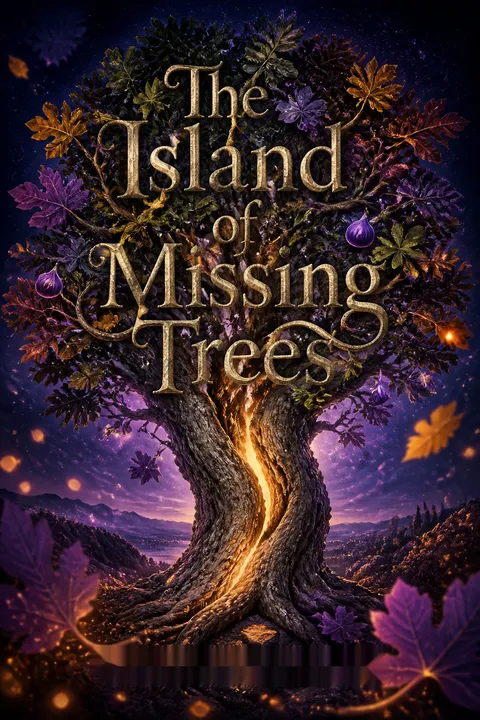


Plot Summary
Prologue
In a ruined well in divided Nicosia, two men lie chained together beneath the water, their bodies hidden with a concrete weight. One still wears a gold pocket watch, engraved with a poem and the initials Y and Y.
The novel’s speaking fig tree5 remembers that they were tavern owners,6 kidnapped and murdered, but it does not yet explain who they were or how the watch came to rest in the well. The tree5 trusts that time will eventually loosen the chains and force the island’s buried history back into view.
The well gives the novel its central image before it gives the reader its history: violence can conceal bodies, but concealment is not the same as erasure. The watch makes private love materially present inside a crime meant to wipe it out. By assigning the opening to a tree, the novel also challenges the human habit of treating land as silent background. The fig remembers what people and official histories have failed to preserve. Its confidence that the secret will surface establishes a moral pressure on the later story: the dead are not finished with the living.
Ada Breaks Her Silence
Sixteen-year-old Ada Kazantzakis1 has spent the first Christmas after her mother’s3 death withdrawn from classmates and increasingly distant from her botanist father,2 Kostas.2 When a history teacher14 asks students to interview relatives, Ada1 realizes she knows almost nothing about her Cypriot family or the island she is named for. Asked what her father2 treasures, she can only mention his fig tree.5
Under the class’s attention, she becomes unable to move and screams until her voice gives out. The school calls Kostas,2 who brings her home and returns to the garden. As Storm Hera approaches, he is burying the fig tree against the cold. Ada1 joins him in covering the trench, and their work makes room for a first, hesitant conversation.
Ada’s outburst is not a calculated rebellion but a bodily failure of the silence that has organized her grief. She cannot explain her family, her mother’s absence, or even her father’s attachment to the tree, so the pressure emerges as sound rather than narrative. The fig burial gives father and daughter a shared task that neither has to interpret immediately. Their small cooperation matters because grief has made each protect the other by retreating. The scene begins the book’s argument that repair may start with attention and practical care, before either person can find language for what hurts.
Aunt Meryem Arrives
The morning after Ada’s1 scream, a phone call from her father’s2 old friend turns out to be from Meryem,4 her Turkish Cypriot aunt.4 Ada1 first suspects that Kostas2 has a new girlfriend, then learns Meryem4 has come from Cyprus and will stay with them. At her arrival, Ada1 recoils from the aunt’s4 affectionate greeting and her claim to have kept photographs and clay impressions of Ada’s1 baby feet.
That night, Meryem4 and Kostas2 perform a ritual for Ada’s dead mother3 beside the buried fig,5 stacking stones and singing. Over breakfast, Meryem4 explains that her own father forbade her to see Defne’s3 family while he lived. Now that her mother has died, Meryem4 is free to visit, but not yet free of the old family hurt.
Meryem’s arrival exposes two kinds of absence at once: Ada’s missing relatives and the history that made those relatives stay away. Ada treats intimacy as a claim she has not authorized, while Meryem’s stored photographs suggest she has cared from a distance without knowing how to cross it. The ritual beside the buried tree is their first shared act of mourning, though Ada watches rather than joins. Her suspicion is psychologically protective: if the adults have concealed the past, she assumes they may conceal motives too. Meryem’s promise-bound silence is not simple indifference, but its consequences have still reached the next generation.
The Scream Goes Online
During the storm, an anonymous message leads Ada1 to a video of her classroom scream, posted online with strangers mocking her. The clip spreads, but other young people begin posting their own cries under a shared hashtag, turning her humiliation into a larger expression of distress she cannot control.
Meryem4 gives Ada1 a cherrywood music box once owned by Defne,3 with butterflies on its lid and an ammonite hidden inside. Ada1 begins to see her aunt4 as more than an intrusive stranger, and tells her about the scream and her fear that she has inherited her mother’s3 illness.
Meryem4 blames djinn and arranges a visit to an exorcist. When the healer tries to transfer Ada’s1 supposed spirit to his daughter Jamila, Ada1 refuses, insisting she will not make another girl suffer for her.
The viral video converts an involuntary private act into a public identity, showing how digital circulation can prolong shame beyond the moment that caused it. Yet the response is not only cruel: other young people use Ada’s image to make their own distress visible. Meryem’s supernatural explanation is mistaken, but it grows from a sincere wish to help and from a culture that gives grief spiritual vocabulary. Ada’s refusal to redirect the supposed affliction onto Jamila is a decisive moral act. She may not understand her crisis, but she will not accept care that depends on sacrificing someone more vulnerable.
Love Beneath the Fig
In 1974, Greek Cypriot Kostas2 and Turkish Cypriot Defne3 meet secretly at night, their families and communities divided by the island’s escalating tensions. When Defne’s3 uncle nearly discovers her, Kostas2 finds a safer meeting place: the Happy Fig, a tavern run by Yiorgos6 and Yusuf,7 one Greek Cypriot and one Turkish Cypriot.
The owners6 welcome the young couple into a storeroom and feed them despite their insistence that they can afford only water. Defne3 and Kostas2 learn that the tavern offers more than shelter.
Its mixed customers share food and music, while its owners6 quietly protect a love that could endanger everyone involved. At the centre of the room, an old fig tree5 grows through the roof, rooted in the place where strangers can briefly become a family.
The tavern makes coexistence concrete rather than idealized. People of different communities do not resolve Cyprus’s political crisis there, but they share a room, a meal, and practical protection. For Defne and Kostas, secrecy is both a response to real danger and a form of intimacy shaped by danger. The tree growing through the roof embodies a belonging that ignores the categories imposed on the island, while the owners’ kindness gives that image social substance. This safe space is fragile: it exists because particular people choose to maintain it, not because the surrounding world has become safe.
The Tavern Explodes
During a heatwave, Kostas2 discovers that Yiorgos6 and Yusuf7 are lovers when he sees them kiss in the tavern’s garden. He understands that their relationship puts them at even greater risk than his own. Later, a homemade bomb is thrown into the Happy Fig, killing five customers and a young waiter. Kostas2 and Defne3 help the injured and escape through the back with the owners.6
At a nearby well, shaken by the dead and the island’s violence, Defne3 asks Kostas2 to make love to her. Soon afterward, a coup and the Turkish invasion intensify the danger. Kostas’s mother,8 already bereaved and afraid of losing her last son,2 sends him to England. He leaves without seeing Defne,3 believing he will return within weeks.
The bombing destroys the couple’s refuge and collapses the distance between political violence and private life. Kostas’s discovery of Yiorgos and Yusuf’s love also widens his understanding of what the island’s divisions threaten: their danger is not incidental, but compounded by hostility toward queer intimacy. Defne’s choice to be with Kostas after the explosion is not a denial of danger. It is a deliberate claim on life when violence has made every future uncertain. His departure, framed by his mother’s protective fear, then reveals how love can be separated not only by enemies, but by decisions made under pressure.
The Baby Left Behind
After Kostas2 leaves, Defne3 discovers she is pregnant. With the island entering war and her family unable to accept a child fathered by a Greek, she tries dangerous methods to end the pregnancy before seeking help from Dr Norman,11 a British physician preparing to leave. He agrees to assist, and Yiorgos6 and Yusuf7 turn the closed tavern into a makeshift clinic.
Before the procedure can proceed, a group of men arrive to attack the place. Defne3 ultimately carries the baby to term. She and Meryem4 tell their parents that Yusuf7 is the father, protecting Kostas’s2 name while implicating a man who has done nothing wrong. An English couple adopts the boy, and Defne3 visits him as his supposed babysitter. Yiorgos6 and Yusuf7 disappear soon afterward.
Defne’s pregnancy forces private choice into the machinery of war, family honour, and ethnic division. Her attempt to control her future takes place in a setting where even medical help is disappearing, and the men who offer shelter must risk themselves to provide it. The false claim that Yusuf fathered the child is protective in intention but ethically costly, showing how people under coercion can harm one another while trying to survive. Defne’s eventual arrangement with an adoptive family preserves her access to the baby, but it cannot erase the separation. The disappearance of the tavern owners leaves the act of protection unresolved for decades.
Kostas Returns to Cyprus
More than twenty-five years after leaving Cyprus, Kostas2 returns to Nicosia as a botanist and meets Defne,3 now an archaeologist working with the Committee on Missing Persons. She helps excavate clandestine graves so families can identify and bury relatives lost in the conflict. Their reunion is guarded; Defne3 has built a life around the missing, while Kostas2 has avoided the island and its memories.
He also discovers that songbirds are being trapped and killed for an illegal trade. When he destroys poachers’ nets, they beat him badly. Defne3 comes to his hotel and tends to him, and the old attachment between them reopens. His return has brought them together, but it also makes the silences surrounding their separation impossible to ignore.
Kostas and Defne embody different responses to displacement. He has made a life studying ecological damage, while she works directly with the human remains the island has tried to hide. Neither response is presented as sufficient by itself. His destruction of the nets gives his ecological concern physical risk, while Defne’s return to him shows that her guardedness has not extinguished attachment. Their reunion is therefore not a simple restoration of romance. It reactivates an unresolved history, including the child and the missing men, and asks whether affection can survive an honest account of what each person endured alone.
A Child’s Hidden Grave
Defne3 finally tells Kostas2 that their son was born and adopted by an English couple, who let her visit him. The child died as a toddler after a mosquito-borne illness, and she never told Kostas2 because they had lost contact and she believed the truth would only deepen the wound.
She also explains that Yiorgos6 and Yusuf7 vanished after defending her and Dr Norman11 during the attack at the tavern. Defne3 had told her parents that Yusuf7 was the baby’s father, although she knew the lie dishonoured his memory.
She takes Kostas2 to the military cemetery, where he finds their son’s grave bearing both men’s names. The burial confirms that the child was loved, but the shared names also reveal how thoroughly Defne’s3 secret has shaped their family’s grief.
The revelation transforms the lovers’ separation from a story of unanswered letters into a history of multiple losses. Defne’s choices were made while isolated, frightened, and constrained by violence; Kostas’s absence was not a choice to abandon a child he knew existed. That distinction does not cancel his grief or her guilt, but it makes blame inadequate. The grave’s naming of the boy after Yusuf and Yiorgos preserves their relationship within a family story that had concealed it. The cemetery gives Kostas evidence where memory had left him with conjecture, and the act of visiting it lets the couple mourn together rather than separately.
The Well Gives Back
As the Committee on Missing Persons continues its work, the collapse of an old well exposes the remains of two men chained together. Laboratory comparisons confirm that they are Yiorgos6 and Yusuf.7 Their gold pocket watch, bearing the initials Y and Y, is recovered with them. Defne3 and Kostas2 learn that the men who had made the Happy Fig a refuge were murdered and hidden in the well.
Before leaving Cyprus, Kostas2 and Defne3 visit the ruined tavern. He finds the old fig tree5 weakened by disease and beetle larvae, cuts a healthy branch, and carries it to England so it can grow there. The couple also visit Saint Hilarion, where Kostas2 asks Defne3 to marry him and gives her an ammonite instead of a ring. She accepts.
The recovery of the bodies answers the prologue’s central question without making justice complete. The watch restores the men’s names and their bond to the historical record, but it cannot return the life they built or undo the years of uncertainty endured by those who loved them. The fig cutting is a practical act of preservation that parallels the exhumation: both rescue what can still be carried forward. Kostas’s proposal does not erase the past; Defne accepts with full knowledge that their histories remain part of their future. The ending of their separation depends on truth, not on pretending that time can be reversed.
Meryem Tells Ada
Back in London, Ada1 asks Meryem4 to help with her school history assignment and then makes clear that her questions are personal too. Meryem4 describes a childhood first shared with Greek neighbours, then altered by violence, partition, and the loss of ordinary trust.
She explains that Defne3 and Kostas2 loved each other as teenagers, separated, and reunited years later. Ada1 learns that her mother3 had once been pregnant during the war and that her parents’ silence was an attempt to spare her inherited pain.
Meryem4 also speaks about her own unhappy marriage, her lost chance to have children, and the shame that shaped her choices. The interview gives Ada1 more than historical facts: it lets her see that the adults’ silence has concealed suffering, not indifference.
The interview makes family history a relationship rather than an archive. Meryem’s memories are partial and emotionally shaped, but that limitation is precisely what Ada needs to understand: no single relative can provide a complete account of a divided past. Ada’s questions challenge the protective logic of silence, while Meryem’s willingness to answer lets her move beyond the role of the colourful, intrusive aunt. The exchange also complicates inherited identity. Ada is not simply handed a finished heritage; she begins assembling it from contradictions, omissions, and the willingness of others to speak.
Roots Beneath Grief
Ada’s mother,3 Defne,3 died after a period of depression, heavy drinking, and medication. Ada1 had been at home when she found her mother3 collapsed, and she has carried anger as well as grief, wondering whether Defne3 chose to leave them. When Ada1 tells Kostas2 she would accept his dating again, she also asks why Defne3 took so many pills.
Kostas2 explains that the coroner did not consider her death suicide, then recalls a chestnut tree whose roots strangled it beneath the soil. He uses the image to describe the pressure of Defne’s3 buried memories, not a lack of love for her family. He and Ada1 make toasties together afterward and sit down to watch television, finding a modest ease they had lost during the long year of mourning.
Kostas’s tree story offers Ada a way to think about death that does not reduce it to a moral verdict. Her anger has protected her from helplessness, but it has also left her feeling that her mother’s death was a choice against her. The image of girdling roots redirects attention toward an invisible condition that can overwhelm a living being without canceling their love. It is not a clinical explanation, nor does it remove uncertainty. Its value lies in making compassion possible without demanding instant forgiveness. The toasties matter because emotional repair becomes visible in an ordinary ritual the two once shared.
A Branch Toward Home
When term begins, Ada1 is still nervous that classmates will treat her as the girl from the viral video. Kostas2 drives her to school and offers a story about blue jays that imitate hawks when frightened. Ada1 gets out of the car, speaks briefly with Zafaar,13 and returns to class despite the whispers.
Later, she tells Meryem4 that her father2 plans to take her to Cyprus after his conference and that she wants to meet the island’s people, not choose one side. Meanwhile, the buried fig5 waits for spring. In the novel’s final magical turn, Defne’s3 voice reveals that after her death she entered the fig tree,5 joining the family’s living memory to the island tree5 Kostas2 carried away. He has not yet unearthed it, but the season is changing.
Ada’s return to school does not mean her shame has vanished; it means she can act while still carrying it. Her decision to visit Cyprus rejects the idea that mixed heritage requires a choice between opposing communities. The fig’s final voice turns the novel’s ecological metaphor into a supernatural possibility: memory can persist through living forms without being identical to ordinary human remembrance. Defne’s presence in the tree gives the ending tenderness, but not a neat cure. The buried tree still needs care, spring still has to arrive, and Ada’s relationship with her past remains a journey rather than a solved inheritance.
Analysis
The novel treats memory as an ecological process rather than a private possession. Human beings inherit stories through family, but the book refuses to make inheritance exclusively human: trees preserve scars, insects carry signals, and migration patterns transmit survival strategies across generations. This perspective unsettles the idea that history belongs only to those who can speak or write it. The fig’s5 account gathers the lives omitted by official narratives, including animals harmed by war and the people whose disappearances remain politically inconvenient.
Its central human conflict is not simply whether Ada1 should learn the past, but whether silence can ever protect a child from it. Defne3 and Kostas2 withhold history because they want Ada1 to have a future unburdened by their pain. Yet their silence becomes another inheritance, leaving her to interpret grief without its causes. Ada’s1 questions do not heal the past by themselves; they make relationships more honest. Meryem’s4 partial memories, Kostas’s2 scientific metaphors, and Defne’s3 testimony remain different accounts rather than a single, seamless truth.
The novel also resists moral simplification. The island’s violence is historically specific, but its harms cross ethnic and political lines, damage ecosystems, and turn neighbours into suspects. The Happy Fig offers a model of coexistence built from meals, shared work, and protection, not abstract harmony. Its destruction shows how vulnerable such a community is when fear becomes a social permission to punish difference.
At the same time, the story does not equate remembrance with remaining trapped. Excavating the missing restores dignity without making the dead present again. Carrying a fig cutting5 to England preserves a connection without pretending that exile is undone. Ada’s1 future visit to Cyprus points toward a form of belonging that can acknowledge several inheritances at once. The book’s hope is therefore modest and demanding: healing begins when people make room for other lives, tell the truth they can, and care for what still grows.
Review Summary
The Island of Missing Trees is a lyrical, poignant novel exploring love, loss, and identity across generations and cultures. Set in Cyprus and London, it interweaves the forbidden romance of Greek Kostas and Turkish Defne with their daughter Ada's journey of self-discovery. The narrative is uniquely enhanced by the perspective of a fig tree, offering insights into nature and human history. While some readers found the tree's voice challenging, many praised Shafak's beautiful prose, atmospheric storytelling, and exploration of war's lasting impacts on families and communities.
People Also Read







Characters
Ada Kazantzakis
The searching daughterAda is a sixteen-year-old London student whose Greek Cypriot father2 and Turkish Cypriot mother3 have given her an inheritance she barely understands. Sensitive to other people’s distress, she is also guarded, self-conscious, and frightened that her mother’s3 illness may be part of her own future. Her history assignment exposes how little her parents have told her, while her classroom crisis and its online circulation intensify her sense of being watched and judged. Ada’s curiosity is more than adolescent defiance: it is her attempt to make a coherent self from silences that adults meant as protection. She learns to ask difficult questions without surrendering her own judgment, and to approach heritage as connection rather than allegiance.
Kostas Kazantzakis
The botanist fatherKostas is a Greek Cypriot botanist who studies plants with the patience and intimacy he often finds difficult with people. Sensitive to animal suffering and ecological damage, he has built a life in England after leaving Cyprus as a young man. He loves Defne3 and Ada1 deeply, but grief and guilt have made him retreat into work and silence. His scientific habits do not make him emotionally detached; rather, they give him a language for processes that cannot be seen directly, from tree memory to pain beneath the soil. As a father, he must learn that protecting Ada1 from history by withholding it can leave her alone with its consequences.
Defne
The restless archaeologistDefne is a Turkish Cypriot archaeologist, artist, and mother whose fierce independence is matched by a persistent vulnerability to depression. As a young woman, she loves Kostas2 across a dangerous communal divide, but the war and its aftermath force her to make choices without reliable support. She is driven by a strong sense of justice, which later leads her to help recover the island’s missing. Her relationship with memory is conflicted: she wants the dead identified and honoured, yet fears that the past can overtake the living. Defne’s anger, humour, and tenderness resist any single portrait of her, and her influence continues through the stories and images her family carries.
Meryem
The storykeeping auntMeryem is Defne’s3 older Turkish Cypriot sister and Ada’s aunt1. She is expressive, hospitable, and quick with proverbs, food, and protective rituals, but her confidence often covers a life shaped by duty and shame. She has spent years separated from Defne’s3 family because of a promise made to their father, and she arrives in London wanting to repair a relationship she never knew how to sustain from afar. Meryem’s beliefs can be comic or misguided, yet they are also practical expressions of a culture that gives fear and grief familiar forms. Her care becomes more meaningful when she listens to Ada1 rather than trying to manage her.
The Fig Tree
The island’s witnessThe fig tree is both a living organism and the novel’s imaginative narrator. A cutting from a tree in the Happy Fig tavern takes root in England, carrying the island’s history into Kostas2 and Defne’s3 garden. The tree observes people, animals, war, migration, and the ordinary work of survival, interpreting these events through its own ecological knowledge and biases. Its long memory contrasts with human efforts to forget or simplify the past. The fig is not merely a symbol of family continuity: it has needs, disease, roots, seasons, and a history of its own. Its voice asks readers to regard the nonhuman world as participant and witness.
Yiorgos
The welcoming tavern ownerYiorgos is a Greek Cypriot co-owner of the Happy Fig, known for his warmth, humour, and ease with customers. He and his Turkish Cypriot partner7, Yusuf7, have built a tavern where people from different communities can gather. Yiorgos helps Kostas2 and Defne3 find privacy and treats their young love with sympathy. His generosity is practical rather than grand: he offers a room, a meal, and discretion when those things matter most.
Yusuf
The quiet tavern keeperYusuf is a Turkish Cypriot co-owner of the Happy Fig and Yiorgos’s partner6. His stammer makes speech with strangers difficult, but he is eloquent with people and plants he trusts. He is attentive, gentle, and quick to offer help, including to Defne3 when she faces a crisis. Yusuf’s quietness should not be mistaken for passivity: he acts when someone needs shelter, even when action carries danger.
Panagiota
Kostas’s resilient motherPanagiota raises her three sons alone after her husband’s death, supporting them through food-making and a fierce commitment to family. Deeply religious and attentive to omens, she tries to make a dangerous world legible through rules and rituals. She loves Kostas2 but worries that his sensitivity to animals and plants leaves him unprepared for Cyprus’s violence. Her fear shapes decisions that protect him while also separating him from Defne3.
Michalis
The idealistic elder brotherMichalis is Kostas’s elder brother2, a reader and political thinker who rejects nationalism and sees Greek and Turkish workers as potential allies. His beliefs make him an outsider in a climate where political loyalties harden. He helps establish the ideological divisions within Kostas’s2 family.
Andreas
The younger nationalist brotherAndreas is Kostas’s youngest brother2, once protected and indulged by the family. As nationalist politics intensify, he becomes drawn to militant ideas and to the promise of action. His choices deepen Panagiota’s8 fear and leave Kostas2 caught between political conviction and the private costs of violence.
Dr Norman
The departing physicianDr Norman is a British physician working in Cyprus as foreign medical staff prepare to leave during the crisis. He is cautious about the limits of his role, but his compassion leads him to listen to Defne3 and consider what help she can safely receive. His later confidentiality reflects an ethical boundary that frustrates Kostas2 but protects the privacy of a former patient.
Chico
The displaced parrotChico is a bright green Amazon parrot kept at the Happy Fig. He imitates human voices and sounds, linking the tavern’s lively past to its later emptiness. Like the island’s human residents, he is displaced by events beyond his control. His attachment to Yiorgos6 and Yusuf7 makes the effects of conflict visible beyond the human characters.
Zafaar
Ada’s uncertain classmateZafaar is Ada’s1 classmate and former science-project partner. His attention matters to Ada1 because she is inexperienced and unsure how others see her. Their awkward exchanges capture the ordinary adolescent hopes and social risks that continue alongside her family’s larger grief.
Mrs Walcott
The history teacherMrs Walcott teaches Ada’s1 history class and assigns an interview with an older relative. She tries to make students connect personal memory with evidence, not realizing how sharply the assignment will expose Ada’s1 isolation. Her classroom becomes the setting where hidden grief first breaks into public view.
Ed
Ada’s loyal school friendEd is Ada’s friend1 at school, interested in music and mixing beats. He is present among the classmates during Ada’s1 crisis, where his awkward withdrawal reflects the discomfort of a teenager unsure how to respond to another person’s distress.
David
Kostas’s research colleagueDavid is a British environmental researcher who knows Defne3 through work connected to Cyprus. He reconnects Kostas2 with her and introduces him to the Committee on Missing Persons’ efforts. His easy social manner helps bridge worlds that Kostas2 has kept apart.
Eleni
The forensic scientistEleni works in the Committee on Missing Persons laboratory, where she helps identify human remains through careful forensic comparison. Her communication with Defne3 connects fieldwork to families waiting for answers. She represents the patient, collaborative labour behind the recovery of the missing.
Plot Devices
The Personified Fig
A witness across generationsThe fig tree5 narrates from a perspective that joins botanical knowledge with remembered human history. Its life links the Happy Fig tavern in Cyprus to Kostas2 and Defne’s3 home in London, while its seasons and damaged roots provide a counterpoint to human attempts to conceal or forget. The device broadens the novel’s account of memory beyond the human record and makes ecological loss part of the same history as displacement and violence.
The Divided Timeline
Past presses on presentThe narrative moves between Ada’s1 late-2010s life in London and the earlier lives of her parents in Cyprus, later extending into Kostas2 and Defne’s3 return to the island. The shifts gradually reveal why the family has kept its history private. The structure makes the reader experience family memory as Ada1 does: in fragments that only become intelligible when connected.
The Pocket Watch
A clue carried through timeThe gold watch, marked with the initials Y and Y, appears first in the well and later connects the missing tavern owners6 to their shared life. It gives the mystery a tangible object that survives where testimony has failed. Its recovery does not undo the crime, but it helps return the men’s names and relationship to the public record.
Migration and Inheritance
Memory travels with bodiesButterflies, birds, people, and the fig cutting5 all migrate across borders and generations. Their journeys help the novel examine how inherited experience shapes those who may never have witnessed the original trauma. Migration is not presented as a clean break: what travels can include skills, grief, language, and the longing for a home that has changed.
Burial and Unburial
Concealment meets renewalThe novel repeatedly places lives and memories underground: the men in the well, the fig buried5 for winter, and the family history withheld from Ada1. Burial can protect or conceal, but it cannot guarantee erasure. Excavation, seasonal return, and conversation each offer different forms of recovery, none of them capable of restoring the past exactly as it was.
FAQ
Synopsis & Basic Details
What is The Island of Missing Trees about?
- Intergenerational Trauma Unveiled: The novel weaves together the past and present, following Ada Kazantzakis, a British-Cypriot teenager in London, as she grapples with inherited trauma and unspoken family secrets stemming from her parents' forbidden love amidst the 1974 conflict in Cyprus.
- Narrative from a Fig Tree: A unique narrative voice, that of a fig tree, offers an arboreal perspective on human history, migration, and the enduring impact of war, providing a lyrical and philosophical commentary on the characters' lives and the island's fate.
- Quest for Identity & Belonging: At its core, the story is a poignant exploration of identity, belonging, and the search for truth, as Ada, her father Kostas, and her aunt Meryem navigate grief, cultural divides, and the profound silences that have shaped their lives.
Why should I read The Island of Missing Trees?
- Unique Narrative Voice: Experience a story told partly from the perspective of a fig tree, offering profound philosophical insights into human nature, memory, and the interconnectedness of all life, a truly distinctive literary device.
- Emotional Depth & Historical Resonance: Delve into a deeply moving narrative that explores the lasting scars of conflict, forbidden love, and inherited trauma, set against the vivid historical backdrop of Cyprus, making it a powerful read for those interested in human resilience.
- Rich Symbolism & Lyrical Prose: Elif Shafak's masterful use of symbolism, particularly the fig tree, and her evocative, poetic language create a rich tapestry of meaning, inviting readers to ponder themes of displacement, identity, and the healing power of nature.
What is the background of The Island of Missing Trees?
- Cyprus Conflict & Division: The novel is deeply rooted in the historical and political context of Cyprus, specifically the 1974 Turkish invasion and the subsequent division of the island into Greek Cypriot South and Turkish Cypriot North, marked by the Green Line. This conflict led to widespread displacement, violence, and unresolved disappearances.
- Intercommunal Relations: It explores the complex and often fraught relationships between Greek Cypriots and Turkish Cypriots, highlighting the societal pressures, familial disapproval, and personal sacrifices made by those who dared to cross ethnic and religious lines.
- Ecological & Cultural Heritage: The story is imbued with the island's rich natural environment and cultural folklore, from its diverse flora and fauna (like carob trees, fruit bats, butterflies) to ancient superstitions and proverbs, emphasizing the deep connection between people, land, and memory.
What are the most memorable quotes in The Island of Missing Trees?
- "Time is a songbird, and just like any other songbird it can be taken captive.": This quote from the Prologue, spoken by the Fig Tree, powerfully introduces the theme of time's manipulation and the enduring nature of memory, suggesting that even time can be held prisoner by trauma and history.
- "The past is a dark, distorted mirror. You look at it, you only see your own pain. There is no room in there for someone else's pain.": Defne's poignant observation to young Ada encapsulates the novel's central conflict regarding inherited trauma and the difficulty of empathy across historical divides, highlighting how collective suffering can become insular.
- "A tree is a memory keeper. Tangled beneath our roots, hidden inside our trunks, are the sinews of history, the ruins of wars nobody came to win, the bones of the missing.": The Fig Tree's profound statement underscores its role as a silent witness and repository of forgotten truths, emphasizing nature's enduring memory in contrast to human forgetfulness or selective remembrance.
What writing style, narrative choices, and literary techniques does Elif Shafak use?
- Dual Narrative Perspective: Shafak employs a unique dual narrative, alternating between a third-person perspective following Ada, Kostas, and Meryem in the present, and a first-person perspective from the sentient fig tree, offering a multi-layered and often philosophical commentary on human events.
- Lyrical and Evocative Prose: The language is highly poetic and sensory, rich with metaphors and similes, particularly in the fig tree's narration, which imbues natural elements with human emotions and wisdom, creating a deeply immersive and contemplative reading experience.
- Non-Linear Storytelling & Foreshadowing: The narrative frequently shifts between different time periods (1974 Cyprus, early 2000s Cyprus, late 2010s London), gradually revealing past events and their consequences, while subtle foreshadowing (like the well in the prologue or Ada's scream) builds suspense and thematic resonance.
Hidden Details & Subtle Connections
What are some minor details that add significant meaning in The Island of Missing Trees?
- Ada's Butterfly Sketch: Ada's initial sketch of a "brittle, easily breakable" butterfly in her notebook subtly foreshadows her own emotional fragility and the eventual viral spread of her scream, which is later mirrored by the mass migration of painted lady butterflies, symbolizing both vulnerability and unexpected resilience.
- The Well's Hidden Secret: The detailed description of the well in the prologue, containing the chained bodies of Yiorgos and Yusuf and a pocket watch stopped at "eight minutes to midnight," is a chilling premonition of their tragic fate, emphasizing the island's buried secrets and the relentless march of time towards revelation.
- Meryem's "Ayip" Concept: Meryem's repeated use of the Turkish word "ayip" (shame) reveals a deep-seated cultural conditioning that has shaped her life choices, from her conservative dress to her reluctance to express personal desires, highlighting the societal pressures that constrained women in Cyprus and contributed to the family's silence.
What are some subtle foreshadowing and callbacks in The Island of Missing Trees?
- The "Crack-Crack-Crack" Sound: The recurring sound of "crack-crack-crack" first appears when Kostas buries the fig tree, symbolizing its roots breaking, and later when Ada screams, feeling her "bones breaking," subtly linking the tree's physical trauma to Ada's inherited psychological pain and the breaking of internal barriers.
- The Music Box Motif: The music box, given by Kostas to Defne in their youth and later by Meryem to Ada, serves as a poignant callback to their forbidden love and the secrets it held, becoming an heirloom that carries both joy and sorrow across generations, symbolizing enduring connection despite separation.
- Butterfly Migration as a Metaphor: The detailed descriptions of butterfly migration, particularly the painted ladies changing their route, subtly foreshadow the unexpected return of Kostas to Cyprus and the eventual reunion of Defne and Kostas, suggesting that life, like nature, finds new paths despite obstacles and past patterns.
What are some unexpected character connections in The Island of Missing Trees?
- Kostas's Grandfather's Deafness: The revelation that Kostas's grandfather was deaf and killed because he couldn't hear orders adds a profound layer to Kostas's own quiet nature and his mother's deep-seated trauma, subtly explaining his family's history of miscommunication and the tragic consequences of unheard voices.
- Defne's Connection to CMP Work: Defne's later career as an archaeologist with the Committee on Missing Persons, actively digging for the disappeared, is a powerful and unexpected connection to her own personal loss (her baby, Yusuf, and Yiorgos), transforming her private grief into a public mission for truth and closure.
- Meryem's Hidden Vulnerability: Despite her boisterous and traditional exterior, Meryem's confession about her failed marriage, childlessness, and her desire to wear colorful clothes she never dared to, reveals a deep vulnerability and a life constrained by societal expectations, unexpectedly mirroring Defne's own hidden sorrows.
Who are the most significant supporting characters in The Island of Missing Trees?
- Panagiota (Kostas's Mother): Her deep-seated superstitions, resilience in widowhood, and tragic loss of two sons profoundly shape Kostas's character and his eventual decision to leave Cyprus, highlighting the immense burden carried by mothers in conflict zones.
- Yiorgos and Yusuf (Tavern Owners): Beyond being a safe haven for the lovers, their secret gay relationship and eventual disappearance underscore the extreme dangers faced by those who defied societal norms in Cyprus, making their fate a poignant symbol of hidden lives lost to hatred.
- Dr. Norman (British Gynecologist): His brief but crucial role in Defne's life, offering help during her secret pregnancy, represents a rare instance of cross-cultural compassion amidst the conflict, and his later contact with Kostas becomes the catalyst for uncovering a major family secret.
Psychological, Emotional, & Relational Analysis
What are some unspoken motivations of the characters in The Island of Missing Trees?
- Defne's Silence on the Past: Defne's fervent desire to shield Ada from the past ("If we want our child to have a good future we have to cut her off from our past") stems from her own profound, unhealed trauma and the belief that forgetting is a form of protection, rather than a lack of love for her daughter.
- Kostas's Retreat into Nature: Kostas's deep immersion in botany and his preference for the company of trees ("He spoke about the impact of deforestation with a passion his counterparts reserved for fluctuations in their personal stock portfolios") is an unspoken coping mechanism, a way to find order and solace in a world where human conflicts are chaotic and painful.
- Meryem's Proverbial Wisdom: Meryem's constant use of proverbs and superstitions is not merely cultural tradition but an unspoken attempt to impose order and meaning on a chaotic world, and to offer comfort and guidance to Ada, reflecting her own need for stability and control in the face of unpredictable loss.
What psychological complexities do the characters exhibit in The Island of Missing Trees?
- Inherited Trauma & Epigenetic Memory: Ada's unexplained scream and her feeling of carrying "a sadness that was not quite her own" exemplify the concept of inherited trauma, suggesting that the psychological wounds of past generations can manifest in the present, even without direct experience.
- Denial as a Coping Mechanism: Both Kostas and Defne exhibit denial regarding their past, particularly the circumstances of their separation and the fate of their first child. This collective silence, while intended to protect, ultimately creates a "pitiful gulf" between them and Ada, highlighting the psychological cost of suppression.
- The Burden of Secrecy: Defne's decision to keep her pregnancy and the baby's adoption a secret, driven by shame and fear, leads to immense psychological strain, manifesting in her later struggles with alcohol and her inability to fully process her grief, illustrating how secrets can fester and cause long-term emotional damage.
What are the major emotional turning points in The Island of Missing Trees?
- Ada's Classroom Scream: Ada's uncontrollable scream in history class is a pivotal emotional release, a manifestation of her inherited, unexpressed grief and anxiety, forcing her family to confront the unspoken traumas that have permeated their lives.
- Kostas's Discovery of Dead Bats: Kostas's profound grief over the dead fruit bats in Cyprus, leading him to sob when he hadn't cried for his murdered brother, marks a turning point where his scientific detachment breaks, revealing his deep empathy for nature and foreshadowing his life's work.
- Defne's Confession of Her First Child: Defne's raw, tearful confession to Kostas about their first child, born and adopted in secret, is a cathartic emotional turning point, finally breaking years of silence and allowing both characters to confront the depth of their shared loss and the sacrifices made for their love.
How do relationship dynamics evolve in The Island of Missing Trees?
- Kostas and Ada's Estrangement to Reconnection: Initially distant and struggling to communicate after Defne's death, their relationship evolves from awkward silence to a tentative reconnection, culminating in Kostas's vulnerable confession about Defne's "girdling" roots, fostering a new level of understanding and empathy.
- Defne and Meryem's Complex Sisterhood: Their bond is characterized by deep love intertwined with resentment and unspoken sacrifices. Meryem's lifelong role as Defne's protector and her "ayip" mentality clash with Defne's rebellious spirit, but their shared grief and Meryem's eventual honesty about the past ultimately strengthen their sisterly connection.
- Kostas and Defne's Rekindled Love: Their reunion in Cyprus, initially marked by Defne's guardedness and Kostas's guilt, gradually re-ignites through shared vulnerability, the uncovering of buried truths, and a mutual desire to heal, culminating in their decision to marry and build a new life together in London, symbolizing hope for reconciliation.
Interpretation & Debate
Which parts of the story remain ambiguous or open-ended?
- The Fig Tree's Sentience: While the fig tree narrates much of the story, its exact nature of consciousness and its ability to "absorb" Defne's soul remains open to interpretation, blurring the lines between literal anthropomorphism, metaphorical representation, and magical realism.
- The Full Extent of Defne's "Madness": The novel hints at Defne's mental health struggles and alcohol use, but the precise nature and severity of her condition, and its direct link to her death, are left somewhat ambiguous, allowing readers to debate the interplay of trauma, choice, and fate.
- The Future of Ada's Healing: While Ada begins to understand her inherited trauma and reconnects with her father, the ending suggests her journey of healing is ongoing, leaving open the question of how she will fully integrate her complex heritage and navigate her future identity.
What are some debatable, controversial scenes or moments in The Island of Missing Trees?
- The Exorcist Scene and Djinn Beliefs: Meryem's insistence on taking Ada to an exorcist to cure her "djinn possession" presents a controversial clash between traditional beliefs and modern scientific understanding, prompting debate on the validity of such practices and their psychological impact.
- The Songbird Hunting and Animal Rights: The detailed depiction of illegal songbird hunting in Cyprus and Kostas's visceral reaction to it raises ethical questions about human cruelty to animals and the prioritization of human suffering over ecological concerns, a point of contention even among the characters.
- The "Inherited Trauma" Concept: The novel's central premise that trauma can be passed down genetically or epigenetically, affecting subsequent generations even without direct experience, is a scientifically debated concept, inviting readers to consider the boundaries between biological inheritance and psychological conditioning.
The Island of Missing Trees Ending Explained: How It Ends & What It Means
- Ada's Acceptance of Her Heritage: The novel concludes with Ada embracing her complex identity, symbolized by her willingness to visit Cyprus and meet "islanders, like myself," signifying a move beyond the shame and silence of her parents' generation towards a more integrated understanding of her roots.
- The Fig Tree as Defne's Reincarnation: The most profound revelation is the fig tree's confession that it is Defne's soul, having "transmuted into a tree in order to hold on to love," suggesting that love and memory can transcend physical death and find new forms of existence, offering a hopeful, cyclical view of life and loss.
- Cyclical Healing and Enduring Love: The final scene, with Kostas preparing to unbury the fig tree (Defne), symbolizes the cyclical nature of healing and renewal. It implies that while pain and loss are inevitable, love, memory, and connection to nature provide a continuous source of life, allowing the past to be acknowledged and integrated rather than buried forever.
About the Author




Download PDF
Download EPUB
.epub digital book format is ideal for reading ebooks on phones, tablets, and e-readers.








