

Key Takeaways
Treat empathy as a learnable craft, not a psychic gift
Empathy in the everyday. McLaren defines empathy as sensing and understanding another’s emotions and circumstances well enough to respond appropriately. It is not a supernatural power, but a human capacity that can be made more deliberate. In one scene, she watches two gym employees talk: Joseph notices Iris’s restrained signals, adjusts his approach, and the pair repair a moment of awkwardness without stopping their conversation. The skill lies not in guessing perfectly, but in attending to small cues and changing course when another person responds.
Notice, then verify. McLaren’s own intense sensitivity once overwhelmed her, and she mistook her ability to read emotional undercurrents for psychic insight. She came to understand that gestures, vocal tone, context, and past experience can make an interaction legible. Empathy becomes more reliable when impressions are treated as possibilities, not facts, and checked with the person concerned.
What's striking is the shift from empathy as a special identity to empathy as attentive practice. That makes the idea more accessible and less mystical: noticing a cue is useful, but interpreting it correctly requires feedback. This resembles good field research, where an observer distinguishes what was seen from what is inferred. The caution matters because confident cue-reading can become projection, especially across cultural or neurotype differences. Curiosity is more dependable than certainty.
Build empathy beyond feeling what someone else feels
A process, not a reflex. McLaren organizes empathy into six connected capacities: catching emotional signals, accurately interpreting them, regulating one’s own response, imagining the other person’s perspective, caring about their welfare, and responding in a way that fits their needs. This map distinguishes emotional contagion from helpful understanding. In a study described in the book, toddlers saw an adult become distressed when a toy broke. A child who simply cried along was sharing distress; one who tried to comfort the adult or repair the toy showed a more developed response.
The other remains distinct. A second example tests whether toddlers understand that another person may want something they themselves dislike: broccoli rather than a favorite cracker. The child’s task is not to offer what feels good to the child, but to notice what the other person prefers. Empathy therefore involves both connection and the ability to tell self from other.
The framework’s strength is that it prevents a common confusion: sharing someone’s distress is not automatically the same as helping them. It also links self-regulation to perspective-taking, a useful corrective to the idea that empathy means dissolving into another person’s feelings. Developmental psychology supports the importance of responsive interaction, though observed helping is not a complete measure of inner concern. People may care deeply while expressing care in unfamiliar or less visible ways.
Ask what an emotion is asking you to notice or do
Emotions carry information. Drawing on neuroscientist Antonio Damasio, McLaren presents emotions as biological programs that help organize thought and action. She recounts a patient who could reason through facts but struggled to make even a simple choice after brain damage impaired his emotions. Facts alone offered no sense of which option mattered more. In McLaren’s practical model, fear helps orient to novelty or danger, anger flags a challenged boundary, sadness helps release what is no longer working, and grief responds to irreversible loss.
Check the signal. An emotion can be meaningful without its interpretation being accurate. Fear may respond to a real hazard, or to a mistaken reading of a situation. McLaren recommends naming the feeling, identifying what may have triggered it, and deciding whether action is warranted. If an emotion keeps returning without relief, overwhelms daily life, or remains stuck despite attempts to address it, she advises seeking professional support.
Treating emotion as information rather than noise fits research showing that affect helps people assign importance and make decisions. The model is especially useful because it asks what response a feeling might support, rather than whether the feeling is good or bad. Its limits should stay visible: emotions do not come with universally fixed instructions, and the same feeling can have several causes. The model works best as a prompt for inquiry, not a diagnostic system.
Give strong feelings a third option besides explosion or suppression
Find a useful response. McLaren argues that people often treat emotional expression and repression as their only choices. She proposes channeling: recognizing the feeling and taking a proportionate action that addresses its concern. If a friend makes a cutting joke, an explosive counterattack may escalate the conflict, while pretending not to care can leave the hurt unresolved. A direct, non-cruel response can mark the boundary and give the friend a chance to respond.
Make room for nuance. Emotions also vary in intensity and can arrive in clusters. Anger may appear alongside fear and shame when someone feels insulted: anger signals a boundary problem, fear scans for risk, and shame can help moderate behavior. McLaren’s approach is to identify each signal instead of collapsing them into a single mood. Suppression or expression can still be appropriate in some situations; the problem is relying on either as the only available strategy.
This middle path has a strong connection to emotion-regulation approaches that create a pause between feeling and action. The pause is not emotional denial; it allows a person to preserve the signal while choosing a response with fewer collateral costs. That distinction is practical in conflict, where unfiltered anger can harm others and habitual silence can enable disrespect. Still, a calm conversation is not always safe or possible. Context, power, and immediate danger must shape the response.
Protect your own boundaries to keep compassion sustainable
Make space to respond. McLaren describes several practices for managing intense sensitivity: grounding through breath and body awareness, imagining a personal boundary roughly an arm’s length around the body, and finding a physical place that feels steady or resourceful. These are ways to focus attention and distinguish one’s own reactions from another person’s. She also recommends expressive activities such as music, art, movement, and time in nature, alongside a home environment that supports rest and recovery.
Care needs replenishment. Her account of childhood overwhelm, and of finding steadier connections with animals and music, illustrates why receptivity without recovery can become exhausting. The point is not to shut out other people, but to choose when to engage and when to step back. A boundary can be a behavioral decision, such as ending a conversation or protecting time for sleep, rather than an invisible force that prevents feelings from reaching someone.
The practical emphasis on recovery complements the ethics of caring: sustained attention depends partly on having resources to give. The body-based exercises may work as attention cues and calming rituals, even when the image of a personal bubble is understood metaphorically rather than as a literal shield. That distinction matters. Sensitivity is not a fixed diagnosis, and boundary imagery cannot substitute for changing an unsafe environment, getting clinical care, or asking others to respect explicit limits.
Choose close relationships that share the emotional work
Care should be reciprocal. McLaren uses sociologist Arlie Hochschild’s term emotion work for the effort of managing feelings and interactions so relationships function. Some people become the household translator, conflict mediator, or calming presence for everyone else. That can be generous, but an unacknowledged, one-sided workload invites burnout. McLaren calls people who pursue emotionally unavailable partners in heroic attempts to win their love “swashbucklers.” The label is playful; the pattern can be costly.
Listen without taking over. In an example, Rosalie fears that her boss will fire her, while also feeling trapped by the job. David does not merely repeat her words. He shares his own reaction, asks a careful question, and leaves room for her to recognize that the situation echoes her relationship with her father. Rosalie reaches her own decision. Empathy here means participating honestly without claiming ownership of another person’s solution.
The idea of emotional labor helps explain why a relationship can feel draining even when no single task seems unusually demanding. Reciprocity is not a minute-by-minute exchange, but enduring imbalance deserves attention. The book’s compatibility lens is useful because affection cannot reliably compensate for contempt, chronic irresponsibility, or danger. Nor should empathy become a reason to diagnose or rescue a partner. In abusive situations, protection and outside support take priority over relational repair.
Teach empathy through responsive play, stories, and naming feelings
Connection teaches regulation. McLaren describes a six-month-old learning through peek-a-boo: a caregiver creates a brief surprise, watches the baby’s reaction, and waits for the child to settle before restarting. The game offers emotional engagement with a reliable rhythm of activation and recovery. The book also draws on research suggesting that toddlers can begin to respond to another person’s distinct preferences by around eighteen months. Warm, repeated interaction gives children practice reading and regulating emotions.
Make emotions discussable. Stories and pretend play let children imagine what characters feel and what different responses might do. Naming emotions gives them language for experiences that might otherwise emerge only as behavior. McLaren also urges adults not to shame ordinary self-soothing movements or impose narrow gender rules about which children may be emotional, active, or nurturing. She argues that screens cannot replace responsive human interaction for very young children, though they may be part of older children’s lives.
The developmental emphasis on responsive back-and-forth is compelling: children learn social timing as much as emotional vocabulary. Stories add a safe rehearsal space for perspectives and consequences. The argument is strongest when it treats play and naming as supports, not guarantees of a particular outcome. Children differ in sensory needs, communication styles, and comfort with eye contact; no single behavior proves either empathy or its absence. Caregivers should adapt interaction to the child rather than demand a standard performance.
Make hidden emotional labor visible at work
The job includes feelings. In Hochschild’s account, flight attendants are expected to remain welcoming even when passengers are rude. Similar unwritten rules shape many workplaces: workers may be expected to soothe customers, smooth conflicts, or keep colleagues upbeat without recognition or compensation. McLaren reports a study in which 85 percent of interviewed employees had chosen not to raise concerns with management at least once. Fear of being labeled a troublemaker can silence information that would improve the work.
Listen to informal signals. McLaren uses “shadow meritocracy” for unofficial groups that keep an organization functioning when its formal structure fails. Gossip can carry information about unfairness, broken processes, or workplace tensions, though it can also harm people when it becomes a substitute for direct communication. Her proposed Ethical Empathic Gossip turns informal talk into a bounded discussion: identify the problem, seek perspective, and return to the situation with a different approach.
This section brings emotional intelligence into organizational design rather than treating every problem as an individual’s attitude defect. It anticipates a familiar management failure: punishing the messenger can make a workplace quieter without making it healthier. Informal networks can reveal what formal reporting systems miss, but gossip is not automatically accurate or fair. Leaders need trustworthy channels for concerns, protection against retaliation, and a way to test reports against evidence before drawing conclusions.
Challenge injustice without turning outsiders into monsters
Empathy can be selective. McLaren argues that groups often intensify care for insiders while reducing concern for outsiders. Stories about heroic rescue or a clear enemy can make a cause emotionally accessible, but they may also simplify complicated crises. She contrasts donations exceeding $700,000 for Baby Jessica, a toddler trapped in a well, with the far less visible Rwandan genocide, in which more than 800,000 people were killed. Emotionally vivid stories can mobilize help, yet visibility is not the same as scale or strategic effectiveness.
Act locally and critically. Social justice, in the book’s account, includes neighborhood care, animal welfare, tutoring, and practical efforts to make communities fairer, not only large campaigns. Before responding to an appeal, notice which feelings it activates, what action it asks for, and whether the proposed action addresses the underlying problem. Empathy should widen attention across group boundaries without requiring approval of harmful behavior.
The central tension is important: empathy can motivate care, but it can also be recruited to strengthen group loyalty and hostility. Social identity research likewise documents how readily people favor an in-group, even when group divisions are arbitrary. Emotional storytelling remains necessary for making distant suffering imaginable, so the answer is not to distrust every appeal. It is to pair emotional attention with context, credible evidence, and a clear account of what an intervention can actually change.
Analysis
McLaren’s central move is to turn empathy from a mysterious gift into a set of observable, improvable practices. That shift gives readers a useful bridge between inner experience and public life: bodily emotion becomes information, self-regulation makes perspective-taking possible, and perceptive action is judged by whether it fits the other person rather than the helper’s preferred script. The progression from a brief gym conversation to family life, childhood, work, and activism preserves a coherent narrative of empathy expanding outward.
The most useful distinction is between feeling with someone and responding well to them. The six-part map discourages both cold interpretation and emotional engulfment. The emphasis on asking rather than declaring what another person feels also guards against a familiar failure of popular body-language advice: turning ambiguous behavior into false certainty. The discussion of emotion work extends this insight beyond individual relationships, showing how care can be demanded invisibly by families and institutions.
The book’s distinctive emotional taxonomy is best read as a practical interpretive lens, not settled neuroscience. Describing each emotion as having a particular task can encourage curiosity, but emotions are shaped by learning, culture, health, and circumstance. A feeling may carry several meanings, and the same action may serve more than one need. The author’s confident generalizations about autism, empathy, and emotional universality also require qualification: autistic people vary widely, and difficulty reading conventional social cues does not establish either unusually high or absent empathy.
A further strength is the insistence that concern does not require self-erasure. Empathy can support boundaries, rest, and the choice not to intervene. Its social justice argument adds an equally important warning: shared feeling can bind a group together while licensing indifference toward outsiders. The framework is most powerful when treated as a disciplined practice of attention, verification, and proportionate action, with professional help sought when distress persists or overwhelms ordinary life.
Review Summary
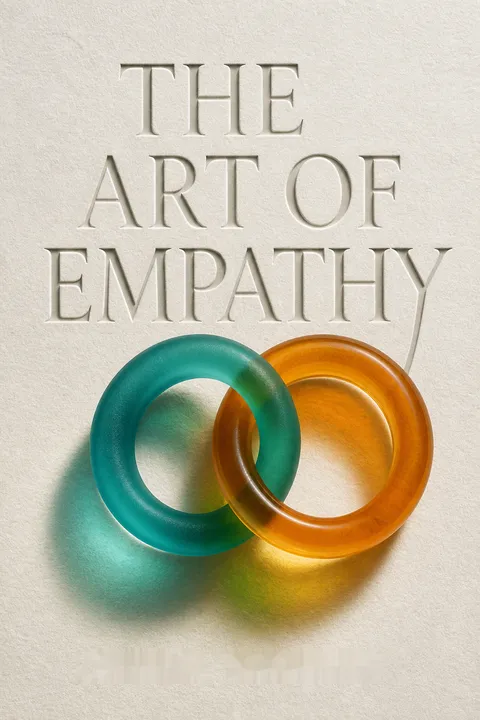
The Art of Empathy receives mixed reviews, with an average rating of 3.89/5. Readers appreciate McLaren's unique insights into emotions and empathy, finding the book life-changing and practical. Many praise the author's approach to understanding and working with emotions. However, some criticize the book for being repetitive, long-winded, and lacking scientific backing. Several reviewers note overlap with McLaren's previous works. The book is particularly helpful for those struggling with hyper-empathy, but may disappoint readers seeking to develop basic empathy skills.
People Also Read







Glossary
Six Essential Aspects of Empathy
A map of empathic skillsMcLaren’s model describes empathy as six connected capacities: sensing emotional signals, accurately interpreting them, regulating one’s own response, taking another person’s perspective, caring about their welfare, and engaging in a way that fits their needs. The model distinguishes emotional resonance from skillful response and is intended to help readers identify where an interaction is breaking down.
Einfühlung
Feeling into another experienceA German term meaning roughly “feeling into,” used by McLaren to broaden empathy beyond relationships with people. It describes an emotionally engaged way of entering into art, music, nature, animals, ideas, or other experiences. The concept supports the book’s claim that people can find meaningful empathic engagement outside human relationships.
Emotion work
Managing feelings for interactionThe effort of managing one’s own emotions, or helping manage someone else’s, so that relationships or work can proceed. Drawing on sociologist Arlie Hochschild, McLaren applies the concept to both paid roles, such as service work, and unpaid tasks in families and friendships. When this labor is invisible or unequal, the person doing it may become depleted.
Burning Contracts
Reconsidering entrenched behaviorA reflective practice in which a person imagines or writes down a troubling attitude, relationship pattern, or behavior as a contract that can be examined and ended. McLaren uses emotional expression and imagery to help people see habitual responses as changeable tendencies rather than fixed identities. The exercise is intended for adults, not young children whose behavior may be closely tied to their developing sense of self.
Conscious Complaining
Giving frustration a safe outletA structured, private practice of voicing frustrations without directing them at another person or demanding an immediate solution. McLaren presents intentional complaining as a way to acknowledge difficult emotions, clarify what is troubling, and regain a sense of movement. In a paired version, one person complains while the other listens supportively, then they switch roles.
Peripersonal space
The space immediately around the bodyThe nearby area around the body that the brain maps for movement and interaction. McLaren describes it as extending roughly an arm’s length in every direction and uses an imagined boundary around this space as a focusing exercise. In the book, this boundary helps readers practice self-definition and notice differences between their own reactions and other people’s.
Shadow meritocracy
Unofficial workers keeping things runningMcLaren’s term for an informal group of employees who compensate for failures in a workplace’s official structure. Such a group may quietly coordinate tasks, share information, or cover for a struggling manager so work can continue. Its existence can reveal useful competence, but also hidden dysfunction and unrecognized labor.
Ethical Empathic Gossip
Bounded talk that leads to repairA deliberate way to use informal discussion about a difficult person or situation to understand the problem and prepare a more constructive response. Participants acknowledge the purpose of the conversation, consider their own part, listen to feedback, and then return to the relationship or situation with a changed approach. The practice aims to reduce gossip that merely disparages or exposes someone.
FAQ
What's The Art of Empathy about?
- Focus on Empathy: The Art of Empathy by Karla McLaren explores empathy as a crucial social and emotional skill that connects individuals. It emphasizes that empathy is an art form that can be cultivated and refined.
- Two-Part Structure: The book is divided into two parts: welcoming empathy into your life and bringing empathy into the world. This structure helps readers first understand their empathic abilities before applying them in broader contexts.
- Practical Tools: McLaren provides practical tools and techniques for developing emotional intelligence, managing emotions, and enhancing empathic skills, aiming to help readers become healthy, happy, and intentional empaths.
Why should I read The Art of Empathy?
- Enhance Relationships: The book can improve your relationships by teaching you how to understand and respond to others' emotions, essential for effective communication and connection.
- Develop Emotional Intelligence: It offers insights into emotional awareness and strategies for managing your emotions, crucial for personal growth and navigating social situations.
- Support for Empaths: If you identify as an empath or struggle with emotional sensitivity, the book provides valuable guidance on thriving in an often overwhelming world.
What are the key takeaways of The Art of Empathy?
- Empathy as a Skill: Empathy is a social and emotional skill that helps us understand others' emotions, circumstances, and needs, essential for healthy relationships.
- Six Aspects of Empathy: McLaren outlines six aspects: Emotion Contagion, Empathic Accuracy, Emotion Regulation, Perspective Taking, Concern for Others, and Perceptive Engagement.
- Emotions as Programs: Emotions are action-requiring neurological programs guiding our responses to stimuli, helping manage emotions effectively.
What is the definition of empathy according to The Art of Empathy?
- Social and Emotional Skill: McLaren defines empathy as a skill that helps us feel and understand others' emotions, circumstances, intentions, thoughts, and needs.
- Action Component: Empathy involves action, allowing us to interact with and support those we empathize with, crucial for effective engagement.
- Empathy as Glue: Described as the social and emotional glue, empathy helps create and maintain relationships, illustrating its foundational role in connections.
What are the six aspects of empathy outlined in The Art of Empathy?
- Emotion Contagion: The ability to sense and share emotions with others, essential for understanding emotional dynamics.
- Empathic Accuracy: Accurately identifying and understanding emotional states, thoughts, and intentions in yourself and others.
- Emotion Regulation: Managing your own emotions effectively, allowing you to function skillfully in the presence of strong feelings.
- Perspective Taking: Imaginatively putting yourself in others' places to understand their feelings and thoughts.
- Concern for Others: Caring about others’ well-being, essential for meaningful empathic engagement.
- Perceptive Engagement: Making perceptive decisions based on empathic understanding, responding to others' needs.
How does McLaren suggest we manage our emotions in The Art of Empathy?
- Channeling Emotions: Emphasizes channeling emotions rather than repressing or expressing them inappropriately, recognizing their purpose and taking necessary actions.
- Grounding Techniques: Provides grounding techniques to calm and focus on emotions, creating a safe space for exploration and regulation.
- Burning Contracts: Introduces “Burning Contracts” to release unhelpful behaviors and attitudes, encouraging emotional honesty and personal growth.
How can I develop my empathy skills using The Art of Empathy?
- Practice Grounding and Resourcing: Emphasizes grounding techniques to stay centered and focused, and resourcing to identify support for managing emotions.
- Engage in Conscious Complaining: Allows safe and constructive expression of frustrations and emotions, releasing tension and gaining clarity.
- Use Ethical Empathic Gossip: Discuss feelings and experiences with trusted friends to gain insights and support, processing emotions and navigating social dynamics.
What is the significance of self-care for empaths in The Art of Empathy?
- Preventing Burnout: Self-care is essential for empaths to avoid emotional exhaustion and burnout, maintaining emotional health to support others.
- Creating a Supportive Environment: Involves creating a nurturing environment for empaths to recharge, including setting boundaries and engaging in creative activities.
- Enhancing Empathic Abilities: Self-care helps empaths develop resilience and emotional regulation, crucial for effective empathic interactions.
How does The Art of Empathy connect empathy to social justice?
- Empathy as a Foundation for Justice: Empathy is essential for understanding and addressing social injustices, making individuals more aware of marginalized communities' needs.
- Encouraging Active Engagement: Encourages participation in social justice work to deepen empathic abilities and contribute to positive change.
- Building Compassionate Communities: Empathy helps create compassionate and equitable communities, addressing systemic inequalities and promoting social well-being.
What are some practical exercises from The Art of Empathy?
- Grounding Practice: Involves deep breathing and focusing on your body to create calm and stability, enhancing emotional awareness.
- Conscious Complaining: Technique for expressing frustrations and emotions safely and constructively, clearing emotional blockages.
- Burning Contracts: Visualizing the release of unhelpful behaviors and attitudes, encouraging emotional honesty and redefining relationships with emotions.
What are the best quotes from The Art of Empathy and what do they mean?
- “Empathy is an art, but you are the artist.”: Emphasizes empathy as a skill to be developed, encouraging ownership of empathic abilities.
- “Emotions are action-requiring neurological programs.”: Highlights emotions' purposes and actions, encouraging a proactive approach to emotional experiences.
- “Empathy is the social and emotional glue that helps us create and maintain our relationships.”: Illustrates empathy's foundational role in building and sustaining connections.
How can I create a supportive environment for empathy in my home or workplace?
- Establish Clear Boundaries: Setting boundaries creates a safe space for emotional expression, defining acceptable behaviors.
- Encourage Open Communication: Foster an atmosphere where emotions can be discussed openly and without judgment, with regular check-ins.
- Incorporate Empathic Practices: Introduce techniques like Conscious Complaining and Ethical Empathic Gossip to express emotions constructively and build stronger connections.
About the Author
Other books by Karla McLaren
Download PDF
Download EPUB
.epub digital book format is ideal for reading ebooks on phones, tablets, and e-readers.








