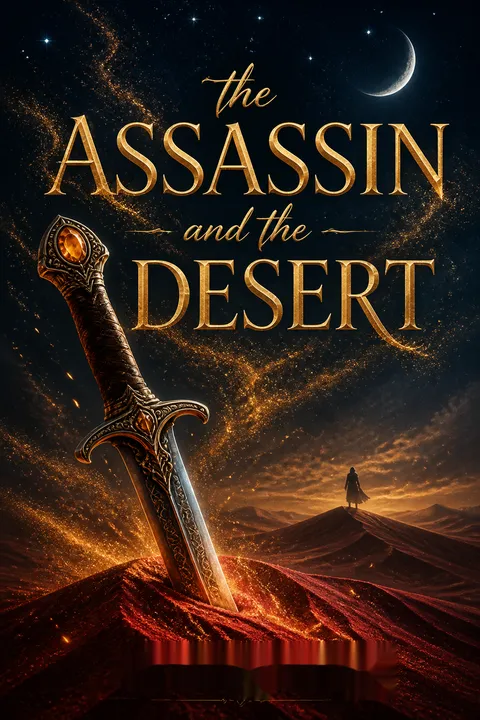


Plot Summary
Sent Into the Red Desert
After Celaena Sardothien and Sam Cortland freed two hundred enslaved people from a trade arranged by their master, Arobynn Hamel punished her and sent her to the Red Desert. Bruises still mark her face, and she does not know what happened to Sam after Arobynn's men restrained him. She must earn the Mute Master's approval within a month or lose her place in Rifthold.
A nomad abandons her two miles from the Silent Assassins' oasis, forcing her to cross the punishing dunes alone. The Master examines her injuries, then sends four fighters at her. She defeats them without weapons, proving she can defend herself. Ansel, a red-haired trainee in wolf armor, becomes her roommate and first guide through this refuge.
Celaena arrives already caught between two kinds of captivity: Arobynn's authority over her livelihood and the desert's physical threat. Her refusal to regret freeing the enslaved people establishes a moral limit she will not trade for comfort, even when that choice costs her safety. The Master tests her body, but her bruises also make the test an encounter with another leader's violence. Winning admission does not settle her anger or fear; it places her among people who may judge her by something other than Arobynn's reputation.
The Silent Assassins' Rules
Ansel shows Celaena the communal baths, crowded dining hall, and a fortress where assassins train alongside children and teach one another. At dinner, Celaena learns that Lord Berick of Xandria wants the Silent Assassins destroyed, partly to win favor with Adarlan after the king's embargo hurt his city.
She also meets Mikhail, who is close to Ansel, and Ilias, the Mute Master's quiet, watchful son. The next morning, Ansel gives Celaena two buckets and sends her on a three-mile desert run. Heat and exhaustion force her to walk much of the way, while other trainees pass her. The Master will not teach her yet. For the first time, her celebrated name earns no special treatment.
The fortress offers a sharp contrast to Arobynn's guild: instruction is shared, discipline is collective, and rank does not guarantee attention. Celaena initially reads this lack of deference as an insult because her identity has been built around being exceptional. The failed run makes that insecurity physical. At the same time, the assassins' quiet habits and mutual care offer a model of belonging that does not depend on domination, though she is not yet ready to trust it.
Fire Across the Battlements
On Celaena's fifth night, Berick's soldiers creep toward the fortress while many assassins escort foreign envoys elsewhere. Ansel and Ilias direct the defenders, who light oil-soaked ropes buried in the sand by firing flaming arrows over the walls. A ring of fire stops the attackers without forcing the assassins into a full battle; enemy arrows still wound several defenders.
The successful defense gives Celaena a place in the group, though she has not won the Master's private attention. Near dawn, Mikhail brings Ansel a sealed message and orders her to carry it to Berick in Xandria. Ansel invites Celaena to come along, suggesting that helping protect the fortress might finally demonstrate her commitment.
The attack turns the fortress's political danger into an immediate test of judgment. Its defenders choose deterrence over slaughter, showing that their skill is not simply a more polished form of Arobynn's brutality. Celaena relishes the danger, but the coordinated response also reveals how much she still has to learn about operating within a group. Ansel's invitation matters because it makes service, not reputation, a possible route to recognition.
The Asterion Escape
On the journey to Xandria, Ansel tells Celaena about the Ironteeth witches and a childhood encounter with one, then refuses to explain the purpose of her meeting with Berick. In the market, Celaena meets a Spidersilk trader who says a witch might restore the twenty years he sacrificed to obtain the rare cloth. He also warns that someone among the Silent Assassins may be working with Berick.
After Ansel's meeting, she leads Celaena into Berick's stables and steals two prized Asterion mares, Hisli and Kasida. Guards pursue them into the Desert Cleaver. Ansel jumps a deep ravine first; Celaena follows, and Kasida lands safely. Their reckless ride carries them beyond the guards, leaving Celaena exhilarated and furious.
The market threads personal cost into political suspicion: the merchant has traded part of his life for wealth, while the fortress may contain someone trading loyalty for another purpose. Celaena notices both warnings but cannot yet connect them to Ansel's secrecy. The horse theft is a burst of shared freedom, and the dangerous jump makes that freedom feel earned by courage and luck. It also shows Ansel's habit of deciding for both of them, a flaw that the exhilaration temporarily conceals.
Ansel's Father's Sword
That night, Ansel admits that her story about being sent to train by her father was false. High King Loch conquered her homeland, killed her father and sister, and forced the twelve-year-old Ansel to flee. She came to the Silent Assassins hoping to grow strong enough to reclaim her home, carrying her father's sword as her last link to them.
Celaena recognizes the shape of grief and promises to stand with her. Back at the fortress, the Master reprimands the pair for stealing the horses. Celaena claims the idea was hers, and Ansel suggests stable duty as their punishment. The Master accepts. He then summons Celaena for lessons, teaching her to study and imitate an asp's movement rather than simply attack it.
Ansel's confession gives her swagger a source: ambition is not vanity alone but a way to keep her family's violent end from becoming the final fact of her life. Celaena's response is shaped by her own unspoken losses, and their bond briefly rests on mutual recognition rather than competition. By taking blame for the horses, Celaena chooses responsibility for someone else. The Master responds not with indulgence but with work and a demanding form of attention that asks her to observe before acting.
A Dance Without Music
The Master trains Celaena through observation: she studies an asp, bats, and jackrabbits until their movements reshape her own. At the silent Midsummer celebration, Ilias dances with her, and later tries to kiss her. She steps away because thoughts of Sam make the kiss feel wrong, though she cannot explain what she feels for him.
The next morning, Ansel resents the Master's attention and the ease with which Celaena seems to receive it. Their argument grows cruel. Ansel says Celaena is favored because she is famous; Celaena retorts that no one will care if Ansel wins back her small homeland. She immediately regrets it, but Ansel leaves her in the stables, ending their friendship for the moment.
The animal lessons challenge Celaena's reliance on force by making attention itself a martial skill. Away from training, her hesitation with Ilias exposes an attachment to Sam that she has not admitted to herself. Ansel's resentment turns the same question of recognition into a wound: she fears that her private cause will always look insignificant beside Celaena's public name. Celaena's response repeats the hierarchy she has been learning to distrust, using notoriety to diminish the person she most wants to understand.
The Blank Recommendation
After Celaena admits to the Master that she fears returning to a life changed by Arobynn's beating, he guides her through the asp's movements until she can mirror them. Ansel and Celaena apologize for their fight and toast their repaired friendship.
The wine is drugged. Celaena wakes alone in the desert beside Kasida, with her belongings and a note saying the Master has released her; the promised recommendation is sealed in the saddlebag. She discovers that the letter is blank.
The next day she sees two hundred of Berick's soldiers marching toward the fortress. Remembering the merchant's warning and Ansel's secret dealings, she realizes the forged letter may conceal a betrayal. Though dismissed and unarmed beyond her daggers, she turns Kasida back toward the assassins.
The false farewell exploits the trust Celaena has just restored, making her friend's betrayal personal before its political purpose is clear. The blank letter is more than a forgery: it exposes how thoroughly Celaena has been treated as a problem to remove, and how vulnerable she remains to authority disguised as care. Yet she does not accept that dismissal as the final word. Her decision to return is a moral choice made without certainty that she is wanted or needed.
The Friend at the Swordpoint
Celaena reaches the fortress during Berick's assault and finds bodies throughout the courtyard. Mikhail is dead, Ilias is bleeding, and the Master lies paralyzed after drinking wine poisoned by Ansel. Ansel raises her father's sword to kill him, explaining that Berick promised troops to help her reclaim the Flatlands.
Celaena throws a dagger into Ansel's arm, then fights her former friend when she tries again. The Master signals Celaena to copy the asp, and she uses the lesson to disarm and pin Ansel. Rather than kill her, Celaena lets her flee with her father's sword, promising to shoot if she remains within range. She fires an arrow just behind Hisli, giving Ansel a narrow escape.
The climax makes Celaena's training inseparable from her ethical decision. Mimicking the asp lets her defeat Ansel, but technique alone cannot answer whether she should kill her. Ansel's bargain with Berick offers a brutal logic: use a tyrant's army to oppose another tyrant. Celaena refuses that logic without pretending the violence is harmless. By returning the sword, she preserves Ansel's last family token; by firing the warning arrow, she makes mercy consequential rather than sentimental.
Gold for the Road
The next morning, the Master tells Celaena he had learned years earlier that Ansel's family was murdered and had waited for her to tell him herself. He believes grief hardened into hatred, but does not excuse what she did. Ilias is recovering, while Berick's soldiers are dead and twenty Silent Assassins have been lost.
The Master gives Celaena the genuine recommendation she came to earn, along with enough gold to help free her from Arobynn's debts. He also explains that his silence is a choice, not a permanent vow, and invites her to return. As she prepares to travel home with an escort, Celaena is no longer afraid of what waits in Rifthold. She intends to face Arobynn on her own terms.
The Master's revelation complicates the idea that understanding someone can prevent harm. He knew Ansel's history and offered time, but compassion could not make her choose differently. His refusal to expose her to the fortress's anger protects the community without erasing the dead. The gold and recommendation address the material constraints that keep Celaena under Arobynn's influence, while her changed resolve signals a shift from merely surviving his control toward confronting it.
Analysis
The novella puts two systems of authority in direct comparison. Arobynn treats training, debt, and violence as instruments for keeping Celaena useful and obedient. The Silent Assassins also demand discipline, but their shared instruction and the Master's patient methods allow skill to develop without making fear the teacher. Celaena's growth is not a clean escape from violence; she remains an assassin, and her decisive act in the climax is still physical. What changes is the question guiding her force. She no longer equates victory with proving superiority, and she refuses both Ansel's revenge and the easy absolution of pretending her friend's betrayal was harmless.
Ansel's story gives the conflict its most difficult moral shape. Her desire to reclaim a home destroyed by conquest is understandable, but her agreement with Berick turns grief into a reason to spend other lives. The Master recognizes that pain can harden into hatred, yet his patience cannot choose for her. Celaena's mercy is therefore neither a cure nor a pardon. Returning the sword acknowledges Ansel's loss; letting her go leaves the consequences of her choice unresolved.
The book also makes material dependence part of character, not background. Celaena's debt to Arobynn restricts where she can live and what she can risk, so the Master's gold matters as much as his approval. By the ending, she has not secured complete freedom, but she has gained resources, a different model of authority, and enough self-knowledge to approach home without surrendering her judgment.
Review Summary
The Assassin and the Desert receives high praise from readers for its action-packed plot, character development, and emotional depth. Many consider it the best novella in the series, highlighting Celaena's growth and the introduction of compelling new characters. Readers appreciate the complex relationships, especially Celaena's friendship with Ansel, and the unexpected plot twists. Some criticize the pacing and Celaena's arrogance, but overall, fans find the novella engaging and essential to understanding the larger Throne of Glass series.
People Also Read








Characters
Celaena Sardothien
The famed young assassinCelaena is a gifted, proud assassin whose reputation often reaches a room before she does. She enjoys fine clothes, books, and being recognized, but beneath that polish is a fierce sense of justice: she risks Arobynn's punishment to free enslaved people. Her training has taught her to treat others as rivals and vulnerability as a danger, so the Silent Assassins' cooperative culture unsettles her as much as it attracts her. She carries grief and anger she rarely names, especially when Sam is absent. Her sharp tongue can wound the people she values, yet she is capable of admitting fault and choosing restraint. In the desert, she begins to measure strength not only by victory, but by what she refuses to do.
Ansel
The wolf-armored traineeAnsel is a charismatic trainee whose red hair, ornate wolf armor, and quick humor make her difficult to overlook. She moves easily through the fortress and enjoys daring acts, but her confidence also masks a fierce hunger to shape her own future. Her friendship with Celaena grows through shared work, dangerous adventure, and confidences about loss. Ansel is ambitious and impatient with the limits others place on her, qualities that can make her both inspiring and unsettling. Her attachment to her father's sword reveals how tightly family, identity, and purpose are bound for her. She pushes Celaena toward risk, while also forcing her to confront the harm that can hide inside righteous ambition.
The Mute Master
The patient desert teacherThe leader of the Silent Assassins is a disciplined teacher who communicates largely through gesture and observation. Rather than rewarding Celaena's fame, he makes her earn his attention through endurance, humility, and close study of the living world. His methods differ sharply from Arobynn's punitive control: he corrects without humiliating and gives his disciples room to choose. He is protective of the people in his care, yet understands that care cannot dictate their decisions. His restraint makes his moments of speech especially meaningful. To Celaena, he becomes evidence that authority can guide without claiming ownership.
Arobynn Hamel
The controlling guildmasterArobynn is Celaena's master and the powerful leader of the northern assassins. He controls her work, debts, and place in the guild, mixing professional authority with personal punishment. His response to Celaena's disobedience shows how he expects loyalty to serve his interests, even when her conscience points elsewhere. He is not present in the desert, but his influence follows her through her bruises, her fear of returning, and her need for the Master's recommendation.
Sam Cortland
Celaena's fellow assassinSam is Celaena's fellow apprentice under Arobynn and her partner in freeing the enslaved people. He intervenes when Arobynn turns on her, but Celaena leaves for the desert without knowing what happened to him afterward. His absence becomes a measure of the life and relationships she has left behind. Memories of Sam also clarify feelings Celaena has been reluctant to examine.
Ilias
The Master's watchful sonIlias is the Mute Master's son, a skilled and self-possessed assassin who communicates through gesture. He watches Celaena partly out of loyalty to his father, then approaches her with warmth and curiosity. His ease within the fortress contrasts with her uncertainty there. Their dance and near-romance offer Celaena a moment of possible intimacy, while her response reveals that her feelings are already complicated.
Mikhail
Ansel's close companionMikhail is an experienced assassin and Ansel's longtime romantic companion. He trains with the acolytes, helps defend the fortress, and shares an easy affection with Ansel. His presence shows how closeness operates in the community, though the different expectations placed on men and women trouble Celaena when she sees how others treat their relationship.
Lord Berick
The desert fortress's enemyBerick rules Xandria and seeks to regain favor with Adarlan after an embargo damages his city. He regards the Silent Assassins as an obstacle and repeatedly tests their defenses. His political calculations create the pressure that draws the fortress's internal tensions into open conflict.
High King Loch
The western conquerorLoch is the ruler who expanded his power across the Flatlands and refused to accept resistance from its local lords. His conquest shapes Ansel's ambitions and gives her a personal reason to seek strength.
The Spidersilk merchant
The costly bargain-makerA traveling merchant sells rare Spidersilk after sacrificing twenty years of his life to obtain it. He knows the risks of the desert and offers Celaena a warning about possible dealings between Berick and the Silent Assassins.
Plot Devices
The recommendation letter
A conditional ticket homeArobynn sends Celaena to earn the Mute Master's written approval, making the letter the stated measure of whether she can return to her old life. Its importance shifts as Celaena finds a place in the fortress and begins to question that life. Ansel later leaves a forged, blank recommendation to make Celaena believe she has been dismissed. The genuine letter arrives only after the siege, alongside gold that may help loosen Arobynn's financial hold.
The Silent Assassins' training
Observation before attackThe Master's lessons ask Celaena to study animals, including an asp, bats, and jackrabbits, then reproduce their movement and attention. This method counters her reflex to rely on speed, reputation, and direct force. The asp's controlled strike becomes especially important when she faces Ansel. Training is therefore both a practical skill and a test of whether Celaena can learn without treating every challenge as a contest of dominance.
The Asterion mares
A stolen route to dangerHisli and Kasida are rare, swift horses that Ansel steals from Berick's stables. Their speed lets the two trainees escape the guards and cross the Desert Cleaver's ravine. The theft also gives Berick a public excuse to attack the fortress, while the mares later carry Celaena back toward the battle. Their beauty first makes the escape feel like an adventure; their political consequences turn that adventure into a dangerous choice.
The oil-soaked perimeter
A ring of controlled fireThe assassins prepare a rope soaked in oil around the fortress and ignite it with flaming arrows when Berick's soldiers approach. The barrier frightens the attackers away without requiring an all-out battle. Its success introduces the fortress's defensive ingenuity, but it cannot protect the community once an insider helps the later assaulting force enter. The device marks the limit of walls and clever planning when trust inside the walls is compromised.
Throne of Glass Series







About the Author
Other books by Sarah J. Maas







Download PDF
Download EPUB
.epub digital book format is ideal for reading ebooks on phones, tablets, and e-readers.








