
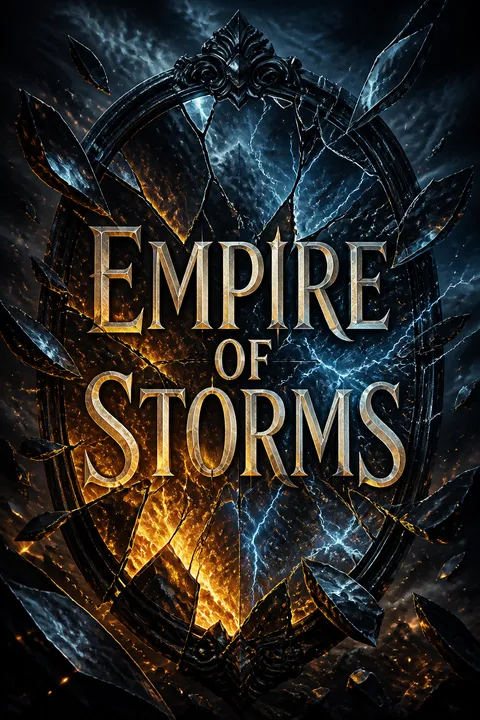


Plot Summary
Prologue
A thousand years before Aelin’s1 return, Princess Elena Galathynius14 and her husband, Gavin, face Erawan’s10 overwhelming army in a mountain valley. Elena14 knows her father’s20 power is fading and that the battle will be lost. Rather than flee, she asks Gavin to help her reach Erawan10 and contain him, buying the future time to find a lasting victory.
Gavin agrees, though the plan may cost their lives and leaves their soldiers to face the coming slaughter. Elena14 understands the bargain as a burden for descendants she cannot yet imagine. Their choice postpones the war, but does not end it.
The prologue gives the saga’s inherited burden a human beginning: Elena does not mistake delay for victory, yet chooses it because annihilation would leave no future at all. Her decision is neither clean heroism nor simple failure. It preserves possibility by transferring danger to people who cannot consent, a moral compromise that the novel gradually exposes as the source of its present crisis. Gavin’s agreement makes love part of the political calculation, not an escape from it. Their intimacy does not soften the cost; it makes the choice harder to bear.
Elide’s Forest Pursuit
Weeks after escaping Morath, Elide Lochan3 limps north through Oakwald with little food, a ruined ankle, and a black stone Kaltain entrusted to her for Celaena Sardothien.1 Ironteeth witches on wyverns pass overhead, then an unseen pursuer closes in. Lorcan Salvaterre,4 a feared Fae warrior fleeing the same region, has been tracking her because her scent resembles that of Morath’s corrupted creatures.
When ilken, monstrous soldiers bred by Erawan,10 drive them together, Elide3 uses the stone and a witch’s manner she has observed to bluff one away. Lorcan4 kills the others, then carries her to safety. Elide3 gives him a false name, Marion, and keeps her mission hidden while he agrees to protect her.
Elide’s first victory is interpretive rather than physical. Unable to outrun or overpower her pursuers, she turns scraps of overheard language and Manon’s intimidating manner into a temporary weapon. The scene makes her vulnerability concrete without making her passive: the damaged ankle limits her options, but attention and nerve create new ones. Lorcan’s rescue complicates the usual protector dynamic because he misreads her as a useful object before learning how much judgment she possesses. The stone is both burden and evidence that Elide’s quiet obligations reach beyond her own survival.
Darrow Bars Orynth
Aelin Galathynius1 enters Terrasen with Rowan,2 her cousin Aedion,7 the shapeshifter Lysandra,8 and the child Evangeline,17 hoping to secure support before reaching Orynth. At a covert meeting, Lord Darrow18 refuses to recognize her as queen, citing the surviving lords’ authority and her youth, past service to Adarlan, and Fae court.
His rejection leaves Aedion’s7 Bane under hostile control and makes a direct return to the capital an act of treason. News then arrives that Ironteeth witches are flying toward Rifthold to seize King Dorian.6 Aelin1 sends Rowan2 to rescue him and redirects herself and Aedion7 toward Skull’s Bay, seeking ships and allies. She leaves Evangeline17 with Lord Murtaugh and binds him by blood to protect the girl.
Darrow’s challenge forces Aelin to confront the distinction between inherited legitimacy and earned trust. She could burn her way into Orynth, but that would confirm the fear that she is an unaccountable weapon rather than a ruler. Her decision to leave the child and seek allies shows a different kind of authority: she accepts painful separation and binds Murtaugh to care through a concrete promise. The political setback also sharpens the story’s central problem. Aelin has extraordinary force but cannot win by force alone; she must build a coalition among people who are entitled to distrust her.
Rifthold Falls
Manon Blackbeak5 arrives over Rifthold after the Ironteeth assault has already begun. In the castle, Dorian6 uses his raw ice magic to kill several attacking witches and wyverns, but a poisoned tail strike weakens him. Manon5 kills a Yellowlegs sentinel who threatens to claim him, then orders Dorian6 to escape rather than join the fight.
Rowan2 reaches the tower, kills the witches blocking their route, and takes Dorian6 through a concealed passage to the river. They flee by boat as the city and Aelin’s1 glass wall collapse behind them. Manon5 returns to Morath and lies about the deaths she caused. Her rival Iskra accuses her, and the three Matrons sentence Manon’s Second,12 Asterin,12 to die in her place.
Rifthold’s fall strips away the difference between royal identity and actual capacity. Dorian acts as king by defending his people, but his first uncontrolled use of power leaves him exposed; escape, not victory, is what preserves him for future resistance. Manon’s intervention begins as a tactical choice, yet its consequences reveal the limits of obedience to Erawan. Her lie buys time but cannot erase the political cost. The city’s shattered glass wall functions as more than a defense lost: it marks the collapse of Aelin’s earlier protection and turns the southern war from distant threat into immediate catastrophe.
Manon Chooses Asterin
At dawn, Manon5 claims the right to execute Asterin12 herself, sparing her Second12 the Matrons’ prolonged punishment. As Asterin12 kneels, the Thirteen honor Manon5 as a queen rather than an obedient heir. Manon5 orders them to flee, then attacks her grandmother and is stripped of her rank. The Matron reveals that Manon’s father5 was a Crochan prince, that she killed both Manon’s parents,5 and that Manon’s dead half sister,5 Rhiannon, had come seeking her.
Manon5 is therefore the last Crochan Queen as well as Blackbeak heir. Wounded, she throws herself from Morath’s heights; Abraxos catches her, and she escapes with help from the Shadows. Her grandmother’s Bloodhound later tracks her, but Manon5 wounds the creature and flies toward the coast.
Manon’s decisive act is not simply rebellion against her grandmother; it is a refusal to let the clan define loyalty as helpless witnessing. Claiming Asterin’s execution gives her a fragment of agency inside a ritual designed to deny it. The revelation of Crochan ancestry then fractures the identity on which her authority has depended. Manon has spent a century enforcing a war whose victims include her own kin. The new knowledge does not instantly make her compassionate or certain. It makes her inherited role impossible to inhabit without question, while survival leaves her with the responsibility to decide what comes next.
The Temple’s Lost Lock
Aelin1 and Aedion7 reach Ilium, where Adarlanian soldiers occupy Brannon’s20 ancient temple. They drive the soldiers out, reclaim the sanctuary, and restore its sacred fires. On the temple’s stone altar, Aelin1 meets the spirit of Brannon,20 who directs her to find the Lock in the drowned Stone Marshes of Eyllwe.
Before she can learn more, Erawan10 confronts her through the Endovier overseer, whose body has been rebuilt around iron and Wyrdstone. Aelin’s1 flame cannot reach the demon king inside him; she destroys the body only after Erawan10 warns that Rowan2 and Dorian6 are being hunted. The revelation makes Skull’s Bay urgent: Aelin1 must find allies and a route south before Erawan’s10 armies close the continent.
Ilium turns the struggle over territory into a struggle over memory and legitimacy. Aelin’s restoration of the temple answers occupation with a visible claim, while Brannon’s message converts that symbolic victory into a new practical obligation. The Endovier overseer makes her past a battlefield Erawan can enter at will. Aelin’s inability to burn through the Wyrdstone body warns her that greater power is not automatically sufficient. The scene links personal trauma to military vulnerability, while its abrupt shift from sacred encounter to demon threat shows how little room Aelin has to process either revelation before acting.
The Carnival’s False Marriage
To evade searches for Elide,3 she persuades Lorcan4 to disguise his weapons and travel with a performing caravan as her husband. She invents a past with Baba Yellowlegs’ Carnival of Mirrors, and the troupe accepts them when their toll money and Lorcan’s4 sword act prove useful.
During the journey, Elide3 gives Lorcan4 detailed information about Morath but withholds the worst of her own history. He notices her distress when she describes the dungeons and offers care without demanding an immediate answer.
Their fragile cover breaks when ilken attack the caravan. Lorcan4 kills the creatures, then learns from one that Elide3 is Lord Vernon’s niece and a target. Elide3 escapes with him, but their partnership is now shaped by her royal identity and his hidden mission for Maeve.9
The marriage disguise lets Elide convert a social threat into a tactical tool: men are less likely to challenge a woman publicly when they believe another man has claimed her. Yet the performance also exposes the intimacy that grows between the pair. Lorcan begins by treating protection as a bargain, while Elide sees that his silences conceal an agenda of his own. Their distrust is reciprocal, not a simple misunderstanding. The caravan provides a temporary community, but its later betrayal confirms Elide’s expectation that safety can be withdrawn when the price of loyalty rises.
Elide Faces Vernon
After the caravan turns on them, Elide3 and Lorcan4 flee by river. Lorcan4 realizes the amulet Elide3 carries is a fake Wyrdkey, but she refuses to surrender Kaltain’s hidden gift. When ilken and Lord Vernon trap Elide3 in a riverside inn, Vernon tries to send her back to Morath in an iron transport box. Elide3 takes his dagger and attacks rather than submit.
Lorcan4 kills the ilken pursuing them, while Elide3 beheads one herself with his axe; Vernon escapes. She then reveals her name, her family’s murder, and her decade of confinement, and shows Lorcan4 the real black stone Kaltain entrusted to her. He explains the Wyrdkeys and promises to keep her safe. They continue toward Aelin1 together.
Elide’s confrontation with Vernon reverses the roles he assigned her: the captive becomes an agent who chooses resistance even when escape is uncertain. Her willingness to risk death rather than be transported again is not treated as fearless triumph; it grows from a history in which survival has repeatedly required self-command. Lorcan’s decision not to seize the stone marks a limit he has not previously acknowledged. He can still be ruthless, but Elide’s refusal to be possessed makes the difference between protection and control newly legible to him.
Skull’s Bay Ignites
At Skull’s Bay, Dorian6 and Rowan2 learn that Pirate Lord Rolfe19 has lost ships to Morath’s sea-wyverns and distrusts any offer of war. Aelin1 arrives disguised as her assassin self and uses Rolfe’s19 fear of a returning Valg attack to force him to negotiate. When eight enemy ships and sea-wyverns attack, she reveals Lysandra’s8 sea-dragon form, while Aedion7 and Dorian6 defend the harbor.
Aelin1 draws deeply on her and Rowan’s2 joined power, but the Wyrdkey lets the goddess Deanna seize her body. Aelin1 regains control just before her moonfire destroys the ship and part of the fleet. Lysandra8 kills the sea-wyverns, and Rolfe19 commits his ships to Aelin’s1 cause. The victory brings allies, but exposes the danger of Aelin’s1 power.
The battle makes alliance a negotiated relationship rather than a reward for noble intent. Aelin understands that Rolfe responds to leverage, not ideals, and she offers political recognition alongside military necessity. Lysandra’s sea-dragon transformation gives a dispossessed community a living emblem of its history, while also placing her body at extraordinary risk. Aelin’s possession by Deanna reveals that power may be inhabited by forces beyond its wielder’s consent. Her recovery prevents catastrophe, but not without damage: the episode changes how her companions must think about both her abilities and their own responsibility to restrain danger.
Aelin Finds Her Equal
After the battle, Aelin1 tells her companions that the amulet contains a Wyrdkey and that Brannon’s20 Lock may be needed to close the gate Erawan10 seeks to open. She summons Elena’s14 spirit, who explains that the Lock lies in a drowned city in the Stone Marshes. Elena14 also reveals that Aelin’s1 fire comes from Mala, the goddess who became mortal to create the Lock.
Aelin1 and Rowan2 finally admit their love and become lovers on the shore. Meanwhile, Rowan’s2 former cadre, Fenrys16 and Gavriel,11 warn that Maeve’s9 fleet is approaching Eyllwe and bargain for a chance to find Lorcan.4 Aelin’s1 court now understands that defeating Erawan10 requires more than armies: the keys and Lock are central to the war.
Aelin’s admission of the key changes the court from a collection of allies into a group trusted with an existential secret. Her relationship with Rowan also shifts from restrained desire to chosen commitment, giving their intimacy political as well as emotional weight after Darrow and Rolfe imply that marriage should be a bargaining instrument. Yet the new closeness does not remove danger. Elena’s explanation ties Aelin’s identity to divine history, and the cadre’s warning adds Maeve as a second strategic threat. Private trust grows precisely as the public conflict becomes less containable.
Manon Returns to the Deck
Manon’s5 wounded wyvern carries her to Aelin’s1 ship, where the queen keeps her chained while she heals. Dorian6 recognizes her and learns that Manon5 believes her Second,12 Asterin,12 died because she refused to obey her grandmother.
He asks Aelin1 to let Manon5 move under guard; she agrees, and the two queens begin exchanging information. A Bloodhound infiltrates the ship disguised as Fenrys16 and tries to seize Manon.5 The real Fenrys16 exposes and wounds it, but the creature escapes long enough to signal Morath that Aelin1 has the Wyrdkey.
The ilken then attack the ship. Aelin1 and her companions fight them off, while Manon5 and Abraxos protect the deck. The attack confirms that Erawan10 can track them and that their journey to Eyllwe is no longer secret.
Manon’s captivity echoes the chains imposed on both her and Elide, but the ship’s arrangement allows negotiation to replace simple domination. Dorian’s request matters because he recognizes a fellow survivor without assuming that shared pain makes them harmless. Aelin’s guarded compromise respects the crew’s safety while permitting new knowledge to emerge. The Bloodhound’s disguise reveals that trust itself has become a tactical vulnerability: the enemy can imitate a familiar ally and exploit routine. The ensuing attack makes the cost of delay visible, pushing the group toward cooperation even as each member retains legitimate reasons for suspicion.
Two Queens in the Marsh
As Aelin’s1 party sails past Eyllwe’s burning villages, she uses what remains of her magic to extinguish fires and is blamed for starting them. In the Stone Marshes, she finds the lost city and its chest, while Manon5 explains the Ironteeth and Crochan curse that has kept her people from returning home. At the same time, Elide3 and Lorcan4 cross the marshes, evading deadly beasts and the ilken army.
Five hundred ilken converge on Aelin’s1 group. Aelin1 unleashes her fire while Rowan2 and Dorian6 add wind and ice, destroying the legion. Elide3 and Lorcan4 reach the survivors; Elide3 gives Aelin1 the black stone from Kaltain. Aelin1 recognizes it as a second Wyrdkey, and Elide3 is reunited with the queen she has sought.1
The reunion makes private survival part of the same political network as divine war. Elide brings no army, but the object she has protected changes the balance around Erawan’s gate. Her arrival also restores the human scale to Aelin’s mission: a girl rescued from Morath stands before the queen whose mother once saved her. The battle demonstrates collective power, but its aftermath reveals a limit. Aelin’s magic can erase an army and still leave her depleted, while the villagers’ suspicion shows that saving people does not guarantee that they will understand who saved them.
The Chest Holds a Mirror
The chest in the drowned city contains no usable Lock, only an ancient mirror marked with the symbol Manon5 identifies as sacred to the witches. Aelin’s1 group carries it to the coast, where Ansel of Briarcliff15 arrives with an army and a seized Melisande fleet. Aelin1 reveals that Ansel15 has been working from her instructions and calls the alliance into being.
The mirror’s purpose remains unclear until Dorian6 connects it to Deanna’s riddle: flame and iron must enter the silver surface to learn what they need. Aelin1 and Manon5 touch it together and vanish. Before the others can stop them, the approaching armada of Maeve’s9 Fae warriors forces Rowan2 to prepare for battle without his queen.
The mirror frustrates the expedition’s literal goal while fulfilling a deeper one: it is not the missing weapon but an archive capable of correcting the history that made the weapon necessary. Aelin’s delayed revelation about Ansel also demonstrates both the usefulness and the cost of secrecy. Her private plans secure a fleet, yet they leave her closest allies unable to judge her choices or prepare alongside her. Dorian’s interpretation of the riddle briefly shifts intellectual authority away from Aelin. The mirror’s activation then makes shared knowledge, rather than solitary force, the next essential resource.
Elena’s Old Betrayal
Inside the mirror, Aelin1 and Manon5 witness Elena14 sealing Erawan10 in an obsidian sarcophagus with the Lock. Elena14 had used it to end the immediate slaughter, unaware that its true purpose was to bind the three Wyrdkeys into the gate and send the gods home with Erawan.10 The gods demand a future bloodline sacrifice, and Elena14 hides the cost from Gavin.
Later memories show Nehemia13 helping Elena14 prepare Aelin,1 Brannon20 concealing the keys, and the mirror preserving this record. Aelin1 learns that she is expected to forge a new Lock with Mala’s power and give her life to seal the gate. Elena14 admits she once rescued Aelin1 from the freezing river rather than let her die as the gods intended.
The past is revealed not as neutral history but as a record of decisions made by people who feared the consequences of their own choices. Elena’s original act saved lives, yet her concealment extended the damage into Aelin’s generation. Nehemia’s involvement reframes her death as part of a deliberate resistance, while Elena’s rescue of the child Aelin shows that even a promised sacrifice can be interrupted by compassion. The revelation places Aelin’s agency under pressure: she understands the debt, but understanding does not make its demand just.
Maeve’s Fleet Advances
While Aelin1 and Manon5 remain inside the mirror, Rowan2 commands the fleet against Maeve’s9 larger armada. He secretly visits his Whitethorn relatives, asking them to attack Maeve9 rather than Terrasen. Each promises only to consider it. At sea, the cousins eventually raise their silver banners and strike Maeve’s9 ships from within her own formation.
Dorian6 and Rowan2 shield the fleet as Aedion7 and Lysandra8 fight aboard the front lines. Meanwhile, Gavriel,11 Fenrys,16 and Lorcan4 are compelled by Maeve’s9 blood oath to leave the battle and go to the coast. The Witch-Queen’s attack has also diverted her from the mirror’s secret. The Whitethorn rebellion gives the beleaguered fleet a chance, but Maeve’s9 real target is Aelin.1
Rowan’s appeal to his family converts kinship from inherited loyalty into a moral choice. He cannot offer them safety or reward, only a cause worth risking their place in Doranelle. Their eventual attack shows that the blood oath’s social power is not absolute, even when its magic remains coercive. At the same time, the episode distinguishes strategic success from personal security. The fleet gains a fighting chance, but Maeve uses the chaos to reach Aelin. Rowan’s gamble saves the coalition from immediate defeat without solving the danger that gave the battle its urgency.
Maeve Takes Aelin
Aelin1 and Manon5 emerge from the mirror onto the coast, where Maeve9 has taken Elide3 hostage. Maeve9 reveals she manipulated Rowan’s2 encounter with Lyria to bind him to her, then planned to use his bond with Aelin1 to obtain the keys. Aelin1 has little magic left after the marsh battle.
Manon5 secretly takes both keys when Aelin1 nudges her, while Aelin1 accepts Maeve’s9 terms to keep Cairn from harming Elide.3 Maeve9 orders Cairn to whip Aelin,1 then locks her, wounded and masked, in an iron coffin. Manon5 escapes with Elide3 and the keys. Maeve9 strips Lorcan4 and Gavriel11 of their blood oaths and titles; Fenrys16 remains bound. Rowan2 reaches the beach too late to stop the capture.
Aelin’s surrender is an act of triage, not submission of belief. She chooses the danger she can bear herself to keep it from reaching Elide, while using the brief contact with Manon to preserve the keys. Maeve’s revelation about Lyria turns Rowan’s grief into evidence of deliberate manipulation, deepening the wound without diminishing his love for Aelin. The iron coffin literalizes the attempt to convert a person into a contained resource. By the end, Aelin has lost freedom and power, but Maeve has not secured the keys or the allegiance she wanted.
The Hunt Begins North
Asterin12 and the surviving Thirteen arrive with Abraxos and help break Maeve’s9 armada. Manon5 commits to finding the Crochans and rebuilding a force around her divided heritage.
Rowan2 learns the full cost of Aelin’s1 plan: Lysandra8 will impersonate her to lead the assembled armies, while Aedion7 is expected to establish a royal line beside the shapeshifter.8 Aedion7 rejects the deception and recoils from Lysandra,8 though she remains resolved to serve Aelin.1 Dorian6 leaves with Manon5 to pursue the remaining Wyrdkey.
Wendlyn’s prince and the Silent Assassins arrive in response to Aelin’s1 old debts. Rowan,2 Lorcan,4 Gavriel,11 and Elide3 set out after Maeve’s9 ship, while Aedion7 and Lysandra8 take the army north. Rowan2 follows a faint pulse in his bond with Aelin.1
The ending replaces a single rescue fantasy with a divided campaign. Each ally must take a different responsibility: political leadership, the hunt for the last key, the rebuilding of witch alliances, or the attempt to reach Aelin. Lysandra’s willingness to wear another woman’s identity is both an act of devotion and a troubling extension of Aelin’s habit of arranging other people’s lives. Aedion’s anger makes that cost visible rather than smoothing it over. Rowan’s faint bond offers hope, but not resolution; the novel ends with a search, not a rescue.
Analysis
Empire of Storms makes coalition a harder achievement than conquest. Aelin1 can destroy a fleet, but every display of power carries political consequences: fear, suspicion, exhaustion, and the possibility that another force will take control of her body. The people she needs are not interchangeable soldiers. Darrow18 fears that she will rule without restraint; Rolfe19 needs a bargain; Manon5 must reconsider an inherited war; Rowan’s2 kin must risk the loss of home; and Elide3 needs to be treated as a person rather than a useful asset. Their differing motives keep alliance from becoming sentimental. It has to be built through promises, evidence, and shared risk.
The novel also treats history as an active source of harm. Elena’s14 attempt to save her generation postpones the conflict and hides its real cost, while Nehemia13 and Brannon20 try to leave clues for descendants who will have to decide whether to accept the burden. The witch mirror makes memory a political instrument: knowing the past does not erase its damage, but it changes what the present can choose. Aelin’s1 fate is especially troubling because the world’s salvation is framed as her willing sacrifice. Her willingness matters, yet it does not make the demand just. The narrative leaves that ethical contradiction unresolved.
Its emotional arc moves from isolation toward a broad, fragile network of care. Elide3 survives by refusing to be owned; Lorcan4 discovers that devotion can mean honoring her choices; Manon5 begins to imagine loyalty beyond clan; Dorian6 learns to approach power without surrendering to it; and Aedion7 and Lysandra8 struggle to separate affection from duty. The ending denies easy triumph. Aelin1 is captured, her friends divide their forces, and Rowan2 follows a faint bond into uncertainty. Hope remains, but it is no longer the promise that the heroes will be spared. It is the work they continue after loss.
Review Summary
Empire of Storms received mixed reviews from readers. Many praised its epic plot twists, intense action scenes, and character development, particularly for Aelin, Manon, and Lysandra. The ending was described as emotional and shocking. However, some criticized the abundance of romantic subplots, explicit content, and pacing issues. Readers were divided on character portrayals, with some feeling they were inconsistent or over-the-top. Despite criticisms, fans eagerly anticipated the next installment, appreciating the series' complex world-building and Maas' ability to weave together intricate plotlines.
People Also Read
Characters
Aelin Galathynius
Fire-bringing queenAelin is Terrasen’s displaced heir, an assassin trained to survive through speed, wit, and performance. She treats swagger as both shield and instrument, often hiding plans from allies until she can make them work. Beneath that self-command, she carries guilt about years spent away from her people and fear that her power may harm those she loves. Her relationships with Rowan2, Aedion7, Lysandra8, and Dorian6 force her to reckon with leadership as something shared, even when she resists sharing decisions. Aelin’s central tension is between immense capacity and the isolation that capacity invites. She wants a future for her people, but struggles to imagine one in which she is not the price.
Rowan Whitethorn
Fae warrior princeRowan is an ancient Fae warrior, tactician, and shape-shifter whose disciplined exterior conceals a history of grief and service to a powerful queen. He values competence, loyalty, and action, and often responds to danger by placing himself between it and the people he loves. His bond with Aelin1 grows through mutual challenge rather than easy reverence; she refuses to be managed, and he learns that protecting her cannot mean controlling her. Rowan is also a commander with a strong sense of collective responsibility, willing to risk his standing among his kin when the cause demands it. His restraint is hard-won, not natural calm.
Elide Lochan
Perranth’s resourceful heirElide is a human noblewoman whose injured ankle, limited resources, and long confinement have taught her to observe before she acts. She cannot rely on physical strength, so she builds leverage through lies, patience, and a precise reading of other people. Her loyalty to Aelin1 begins as a debt to Kaltain and her mother, then becomes a chosen commitment to protect others from Morath. Elide is cautious about trust because men and institutions have repeatedly treated her as property. Yet she does not confuse caution with surrender. Her growing connection with Lorcan4 tests whether protection can exist without ownership, while her loyalty to Manon5 and Aelin1 links private survival to a larger struggle.
Lorcan Salvaterre
Death-gifted warriorLorcan is a demi-Fae warrior of immense strength whose magic is associated with death, destruction, and will. For centuries he has defined himself through usefulness to Maeve9, cultivating a harshness that makes emotional dependence seem like weakness. He is observant, strategic, and capable of frightening violence, but his certainty about human vulnerability blinds him to Elide’s3 intelligence at first. Their uneasy partnership forces him to confront the difference between keeping someone safe and deciding for them. Lorcan’s loyalty to Maeve9 is tangled with devotion, ambition, and habit; his developing care for Elide3 unsettles each. He remains morally dangerous, even as the possibility of a life beyond service begins to reach him.
Manon Blackbeak
Ironteeth Wing LeaderManon is an Ironteeth witch raised to value discipline, fearlessness, and obedience to her clan. Her authority rests on competence rather than warmth, and she has learned to treat affection as a liability. Yet her bond with the Thirteen and her regard for Asterin12 complicate the doctrine that witches cannot love. Manon is a formidable fighter who sees power clearly, including its political uses, but her inherited loyalties are beginning to conflict with what she knows about her people’s history. Her interactions with Aelin1 are marked by rivalry and mutual recognition, while Dorian’s6 candor unsettles her usual control. Manon’s central question is whether identity must dictate allegiance.
Dorian Havilliard
Displaced king of AdarlanDorian is a young king with raw, versatile magic and a sharp political mind. Having survived possession and the destruction of his family’s rule, he carries shame about what his body was made to do and determination not to be helpless again. He approaches power cautiously, seeking instruction and learning that control depends on care for his body as much as force of will. Dorian’s friendship with Aelin1 remains strong even when they disagree about risk, and his connection with Manon5 draws him toward a dangerous form of honesty. He is not simply a gentle contrast to Aelin1: grief can make him imagine devastating choices, and he knows it.
Aedion Ashryver
General of the BaneAedion is Aelin’s cousin1 and the human general who has kept Terrasen’s resistance alive during occupation. He is proud, strategic, and skilled at turning fear into discipline, but he has spent so long serving other people’s causes that he struggles to name what he wants for himself. His love for Aelin1 coexists with frustration at her secrecy and his fear that she will carry every burden alone. Aedion’s relationship with Gavriel11 opens old questions about family and abandonment, while his attraction to Lysandra8 grows alongside a need to respect her autonomy. He measures leadership through the survival of the people beside him, not through titles alone.
Lysandra
Shapeshifting court allyLysandra is a shapeshifter who has endured years of exploitation and learned to use appearance as both disguise and weapon. She is observant, funny, and fiercely loyal, but her power has physical costs and her freedom is still precious to her. Aelin’s1 friendship gives her a place in a court without requiring her to erase her past. Lysandra’s bond with Aedion7 develops through practical trust, teasing, and mutual recognition of trauma, though she resists being treated as fragile. Her ability to become animals, birds, and other forms makes her an unmatched scout and fighter, while the brand that remains across her skin reminds her that transformation cannot simply undo what was done.
Maeve
Queen of the FaeMaeve is an ancient queen whose beauty and courtly composure conceal a calculating appetite for control. She binds powerful warriors to herself through blood oaths and treats loyalty as something to be engineered, tested, and punished. Her intelligence is formidable because she thinks in long arcs, turning affection, grief, and family ties into leverage. Rowan’s2 departure and Lorcan’s4 independent choices challenge the structure she has built around herself. Maeve does not see herself as merely cruel; she regards command as a right and other people’s pain as a cost she can impose. Her rivalry with Aelin1 is therefore political, personal, and bound up with the keys.
Erawan
Valg king of MorathErawan is the surviving Valg king, an ancient invader who has spent centuries rebuilding his forces. He favors corruption, manipulation, and engineered creatures over open confrontation, treating bodies as vessels for power. His threats often target the people his opponents love, because he understands that attachment can be turned into a weapon. Erawan is patient enough to let his enemies gather strength when doing so serves his larger design. He is not simply a monster to be defeated in battle; his possession of the Wyrdkeys and his ability to create new horrors make him a threat to the boundaries between worlds.
Gavriel
Lion of DoranelleGavriel is a seasoned Fae warrior, a member of Maeve’s9 cadre, and a man whose self-restraint has long governed his choices. He carries a deep sense of honor, sometimes to the point of accepting pain rather than challenging the authority that causes it. His connection to Aedion7 gives him a personal stake in the war beyond his oath to Maeve9. Gavriel is perceptive and patient, often acting as a stabilizing presence among more volatile warriors. His quietness can resemble passivity, but he is capable of decisive courage when someone vulnerable is in danger.
Asterin Blackbeak
Manon’s fierce SecondAsterin is Manon’s Second5 and one of the Thirteen, a bold witch whose humor and warmth survive beneath years of brutality. Her loyalty to Manon5 is personal rather than merely hierarchical, and she has endured losses that her clan’s doctrine forbids her to mourn. Asterin often understands Manon’s5 emotional blind spots before Manon5 can name them. She is also a capable leader in her own right, willing to take risks for the coven. Her relationship with Manon5 holds the possibility of a different kind of witch culture, one built on chosen loyalty rather than fear.
Nehemia Ytger
Eyllwe’s determined princessNehemia is a princess of Eyllwe with deep knowledge of Wyrdmarks, political patience, and a fierce commitment to her people. She understands how power operates in hostile courts and is willing to work from within them when open resistance would fail. Her relationship with Aelin1 is founded on affection, intellect, and shared political purpose. Nehemia’s composure should not be mistaken for detachment: she is acutely aware of what her choices may cost, and she acts despite that knowledge. Her history connects Eyllwe’s suffering to the ancient conflict surrounding the keys.
Elena Galathynius
Ancient queen and guideElena is the daughter of Brannon20 and a ruler whose decisive choices shaped the current crisis. She is clever, proud, and capable of acting quickly when lives are at stake, but she has a history of withholding crucial truths from those who inherit her decisions. Her bond with Gavin and her love for her family sit beside the burden of a bargain made with powers beyond her world. Elena’s communications with Aelin1 are brief and incomplete, partly because she is constrained by her nature and partly because she has mistaken secrecy for protection.
Ansel of Briarcliff
Desert queen and allyAnsel is a red-haired ruler and fighter whose irreverence conceals a fierce attachment to the people and promises she has chosen. Her history with Aelin1 is complicated by betrayal, rivalry, and a debt that neither woman treats lightly. Ansel values practical sovereignty, not inherited permission, and has learned to build authority in a harsh land. Her loyalty is rarely soft or unquestioning. She prefers blunt bargains, direct action, and humor sharp enough to test whether an ally can withstand her.
Fenrys
Maeve’s wolf-like warriorFenrys is a fast, irreverent Fae warrior whose teasing manner masks the pressure of a blood oath he despises. He has a gift that lets him cross short distances, making him dangerous in a fight and difficult to contain. His loyalty to his twin and his resentment of Maeve9 pull him in opposite directions. Fenrys often uses humor to keep fear at a distance, but his concern for Rowan2 and Aelin1 is genuine. Beneath the swagger is someone who wants to choose whom he serves.
Evangeline
Young ward of the courtEvangeline is a scarred child whose resilience and quick affection make her a source of warmth within Aelin’s1 traveling court. She is learning how to observe, listen, and protect herself without losing her curiosity. Her bond with Lysandra8 is especially important: Lysandra’s8 care offers a model of chosen family after both have known exploitation. Evangeline’s presence reminds Aelin1 that political victories are measured not only in territory, but in whether vulnerable people can live safely.
Weylan Darrow
Terrasen’s guarded lordDarrow is a calculating Terrasen lord who helped preserve the resistance through years of occupation. His suspicion of Aelin1 is informed by the kingdom’s suffering and his fear that an inexperienced ruler will endanger it. He values law, continuity, and military arithmetic over magic or charisma. His rigidity makes him an obstacle, but not a simple villain: he believes authority must be earned through accountability, even when his methods wound the people he claims to protect.
Captain Rolfe
Pirate Lord of Skull’s BayRolfe is a calculating sea captain who built his authority through risk, commerce, and force. His magical tattoos map waters, threats, and possible treasure, but the gift came at a devastating personal cost. He distrusts grand ideals and prefers agreements that specify what he will gain. Aelin1 understands that his pragmatism can be turned toward the common cause, but their alliance remains a bargain rather than a friendship. Rolfe’s fear of the Valg is rooted in the losses his crew has already suffered.
Brannon
First king of TerrasenBrannon is the ancient fire-bearing king whose choices shaped Terrasen’s royal line and its place in the war. He is remembered as powerful, but the memories and traces he leaves reveal a father struggling against a burden imposed on his descendants. His messages are cryptic, yet they are attempts to guide rather than command. Brannon’s legacy is both inheritance and warning.
Plot Devices
The Wyrdkeys and Gate
Keys to other worldsThree ancient stone keys can open the Wyrdgate, a passage between worlds. Erawan10 already possesses two and seeks the third, while Aelin1 carries one and Elide3 protects another until she can deliver it. The keys turn military conflict into a struggle over who can control the borders between realms. Their power is not simply destructive: they are tied to a plan to send Erawan10 and the gods through the gate, then seal it. Using them without the right means risks catastrophe, as Aelin1 learns when Deanna takes control through her key.
The Eye of Elena
A hidden key carrierThe Amulet of Orynth initially appears to be a royal heirloom, but it conceals a Wyrdkey and contains clues connected to Brannon20 and Elena14. Aelin1 protects it from those who would claim its power, while Lorcan4 is misled with a false version. Its presence links the royal family’s history to the Wyrdgate and makes Aelin’s1 private choices strategically dangerous. The amulet’s symbols also connect to witch traditions, so the object carries several histories at once rather than belonging to one kingdom alone.
The Witch Mirror
A memory passageThe ancient mirror in the Stone Marshes appears to be the promised Lock, but Manon5 recognizes its witch markings and Dorian6 interprets its power as knowledge. When Aelin1 and Manon5 touch it together, it carries them through preserved memories of Elena14, Nehemia13, Brannon20, and the gods’ bargain. The mirror reveals how the present conflict was engineered and what Aelin1 may be asked to sacrifice. Its function is not to provide an easy weapon, but to make buried history visible so the characters can choose with fuller understanding.
Blood Oaths
Loyalty enforced by magicFae blood oaths bind warriors to a ruler, turning service into a magical compulsion that can override personal judgment. Maeve9 uses the oath to control Rowan2, Fenrys16, Gavriel11, and Lorcan4, and to punish disobedience. The story distinguishes the oath Rowan2 shares with Aelin1, which rests on mutual devotion, from Maeve’s9 coercive version. Its constraints create loopholes that the warriors exploit, but even resistance carries physical and political consequences. The oath makes loyalty visible as a contested choice rather than a virtue that can be assumed.
The Crochan Curse
A homeland withheldA curse laid by the last Crochan Queen makes the ancestral Witch Kingdom fail under Ironteeth rule. Crochan land has withered, witchlings have been stillborn, and the Ironteeth clans have been forced into exile. The curse is both a political wound and a historical consequence of the massacre that destroyed the Crochan city. Manon’s5 divided heritage makes the conflict personal, while Aelin’s1 suggestion that the witches share the Wastes offers a possible future beyond revenge. The curse gives the witch storyline a question of reconciliation, not merely victory over an enemy.
FAQ
Synopsis & Basic Details
What is Empire of Storms about?
- Aelin's Journey Continues: The story follows Aelin Galathynius as she navigates political turmoil, personal sacrifices, and the looming threat of Erawan. She seeks to unite allies, reclaim her throne, and find a way to defeat the dark forces threatening her world.
- Complex Alliances: The narrative explores the shifting allegiances and complex relationships between Aelin, her court, and various factions, including witches, pirates, and Fae warriors. These alliances are tested by betrayals, secrets, and the ever-present threat of war.
- Power and Sacrifice: The book delves into the nature of power, the sacrifices required to wield it, and the personal costs of leadership. Characters grapple with their identities, their loyalties, and the burden of their destinies as they prepare for a final confrontation.
Why should I read Empire of Storms?
- Intricate Plot and World-Building: The novel offers a rich and complex world with detailed political intrigue, diverse cultures, and a blend of magic and warfare. Readers will be drawn into the intricate plot and the carefully crafted world of Erilea.
- Character-Driven Narrative: The story is driven by compelling characters with complex motivations and emotional depth. Readers will be invested in their journeys, their relationships, and their struggles as they navigate the challenges of war and personal growth.
- High Stakes and Emotional Impact: The book is filled with high-stakes battles, personal sacrifices, and emotional turning points that will keep readers engaged and invested. The themes of love, loyalty, and redemption add depth and resonance to the narrative.
What is the background of Empire of Storms?
- Political Turmoil: The story is set against a backdrop of political unrest, with various kingdoms vying for power and influence. The threat of Erawan and his dark forces looms large, forcing alliances and betrayals.
- Magical World: The world is rich with magic, with various characters possessing unique abilities and gifts. The use of magic is both a source of power and a potential danger, shaping the characters' destinies and the course of the war.
- Ancient History and Prophecy: The narrative is steeped in ancient history and prophecy, with references to past wars, fallen kingdoms, and the origins of the Wyrdkeys. These elements add depth and complexity to the plot, revealing the long-standing conflict between light and darkness.
What are the most memorable quotes in Empire of Storms?
- "I would sooner die tomorrow than live for a thousand years with a coward's shame.": This quote, spoken by Princess Elena, encapsulates the theme of courage and sacrifice, highlighting the characters' willingness to face death rather than compromise their values.
- "We are not going to win this battle. And we are not going to win this war.": This quote, also from Elena, reveals the characters' awareness of the overwhelming odds they face, emphasizing the need for strategic thinking and sacrifice.
- "This war is but the second movement in a game that has been played since those ancient days across the sea.": This quote, spoken by Elena, highlights the long-standing conflict between light and darkness, suggesting that the current war is part of a larger, ongoing struggle.
What writing style, narrative choices, and literary techniques does Sarah J. Maas use?
- Multiple Perspectives: Maas employs a multi-POV narrative, allowing readers to experience the story through the eyes of various characters. This technique provides a comprehensive view of the events and the characters' inner thoughts and motivations.
- Foreshadowing and Symbolism: Maas uses subtle foreshadowing and recurring symbols to create a sense of unease and anticipation. These elements add depth and complexity to the narrative, hinting at future events and revealing hidden meanings.
- Emotional and Action-Packed Scenes: Maas balances emotional character-driven scenes with high-stakes action sequences. This combination keeps readers engaged and invested in the story, creating a dynamic and compelling reading experience.
Hidden Details & Subtle Connections
What are some minor details that add significant meaning?
- The Amulet of Orynth: The amulet, initially thought to be a mere trinket, is revealed to be a vessel for a Wyrdkey, a powerful artifact that plays a crucial role in the story. This detail adds a layer of complexity to Aelin's journey and highlights the hidden forces at play.
- The Little Folk's Gifts: The gifts left by the Little Folk, such as crowns of violets and a replica of Rowan's hawk form, foreshadow their role as guides and protectors, subtly influencing the characters' paths and decisions.
- The Scars on Aedion's Shield: The dents and scratches on Aedion's shield are not just battle scars but a testament to his loyalty and sacrifice, highlighting his role as a protector and a symbol of Terrasen's resilience.
What are some subtle foreshadowing and callbacks?
- Elena's Prophecy: Elena's words about the war being a "second movement" foreshadow the ongoing nature of the conflict and the need for future generations to continue the fight. This sets the stage for the series' overarching themes and the characters' long-term goals.
- The Glass Wall: The destruction of the glass wall in Rifthold foreshadows the fall of the city and the vulnerability of its people. It also serves as a callback to Aelin's past, highlighting the loss of her former life and the challenges she faces in her new role.
- The Wyvern Effigy: The wyvern effigy left by the Little Folk foreshadows the impending attack on Rifthold and the presence of the Ironteeth witches. It also serves as a reminder of the dangers that lurk in the shadows and the need for vigilance.
What are some unexpected character connections?
- Aelin and Darrow: The revelation that Darrow was Orlon's lover adds a layer of complexity to their relationship, highlighting the personal sacrifices and hidden connections that shape the political landscape of Terrasen.
- Manon and the Crochan Queen: The revelation that Manon is a descendant of Rhiannon Crochan, the last Crochan Queen, creates a parallel between Manon and Aelin, both of whom are heirs to powerful legacies.
- Aedion and Wendlyn: The mention of a past betrothal proposition between Aedion and Aelin, and Wendlyn's rejection of it, reveals the complex political history between Terrasen and Wendlyn, and the potential for future alliances.
Who are the most significant supporting characters?
- Lysandra: As a shape-shifter and a member of Aelin's court, Lysandra plays a crucial role in reconnaissance and combat. Her personal journey and her loyalty to Aelin make her a significant supporting character.
- Fenrys and Gavriel: As former members of Rowan's cadre, Fenrys and Gavriel provide insight into Maeve's court and the Fae world. Their shifting allegiances and their complex relationship with Rowan add depth to the narrative.
- Elide Lochan: As a survivor of Morath and a carrier of a Wyrdkey, Elide's journey is intertwined with Aelin's. Her resilience and her connection to Kaltain Rompier make her a significant supporting character.
Psychological, Emotional, & Relational Analysis
What are some unspoken motivations of the characters?
- Rowan's Need to Protect Aelin: Rowan's fierce protectiveness of Aelin stems from his past loss and his desire to keep her safe. His actions are driven by a deep-seated fear of losing her, which often leads him to make impulsive decisions.
- Manon's Desire for Belonging: Manon's actions are driven by a desire to find a place where she belongs, a place where she is not just a tool of war. Her search for identity and her connection to the Thirteen are central to her motivations.
- Dorian's Struggle for Redemption: Dorian's actions are driven by a need to atone for his past mistakes and to prove himself worthy of his crown. His desire to protect his people and his kingdom is a driving force behind his decisions.
What psychological complexities do the characters exhibit?
- Aelin's Fear of Losing Control: Aelin's struggle with her magic reveals her fear of losing control and the burden of her power. Her past trauma and her responsibilities as queen create a complex psychological landscape.
- Rowan's Guilt and Grief: Rowan's past loss and his guilt over his mate's death drive his need to protect Aelin. His internal conflict between his loyalty to Maeve and his love for Aelin creates a complex psychological dynamic.
- Manon's Internal Conflict: Manon's struggle with her heritage and her identity as a witch creates a complex psychological landscape. Her internal conflict between her Blackbeak training and her Crochan blood is a central theme in her character arc.
What are the major emotional turning points?
- Aelin's Confrontation with the Overseer: This encounter forces Aelin to confront her past trauma and the lingering effects of her enslavement. It is a turning point in her emotional journey, as she grapples with her vulnerability and her power.
- Manon's Discovery of Her Heritage: The revelation of Manon's Crochan blood shatters her identity and forces her to question her loyalties. This is a major emotional turning point, as she grapples with her past and her future.
- Rowan and Aelin's Confession of Love: The moment when Rowan and Aelin confess their love for each other is a major emotional turning point, solidifying their bond and providing a source of strength in the face of overwhelming odds.
How do relationship dynamics evolve?
- Aelin and Rowan's Bond Deepens: Their relationship evolves from a partnership to a deep, unbreakable bond based on love, trust, and mutual respect. Their shared experiences and their willingness to sacrifice for each other strengthen their connection.
- Manon and Dorian's Connection Grows: Their relationship evolves from a wary alliance to a complex dynamic of mutual respect and unspoken desires. Their interactions reveal their shared experiences of loss and their potential for redemption.
- Aedion and Lysandra's Relationship Develops: Their relationship evolves from a professional partnership to a deep bond based on mutual respect and understanding. Their shared experiences and their willingness to protect each other highlight the importance of loyalty and friendship.
Interpretation & Debate
Which parts of the story remain ambiguous or open-ended?
- The Nature of the Wyrdkeys: The true nature and purpose of the Wyrdkeys remain ambiguous, with hints of their power and potential for both creation and destruction. The story leaves open the question of how they will ultimately be used and what their impact will be on the world.
- Maeve's True Motives: Maeve's true motives and long-term goals remain unclear, with hints of her desire for power and control. The story leaves open the question of whether she will ultimately ally with or betray Erawan, and what her role will be in the final battle.
- The Fate of the Crochans: The fate of the Crochan witches and their potential role in the war remains ambiguous, with hints of their power and their connection to Manon. The story leaves open the question of whether they will ultimately join forces with Aelin or remain a separate entity.
What are some debatable, controversial scenes or moments in Empire of Storms?
- Aelin's Treatment of Darrow: Aelin's harsh treatment of Darrow, despite his past sacrifices, raises questions about her leadership style and her willingness to compromise. Some readers may find her actions justified, while others may view them as a sign of her growing arrogance.
- Rowan's Blood Oath: The nature of Rowan's blood oath to Aelin and the extent to which it influences his actions is a source of debate. Some readers may view it as a symbol of his loyalty and devotion, while others may see it as a form of enslavement.
- Manon's Actions in Morath: Manon's actions in Morath, particularly her role in the breeding experiments and her treatment of Asterin, raise questions about her morality and her potential for redemption. Some readers may find her actions unforgivable, while others may see them as a product of her upbringing and her desire for survival.
Empire of Storms Ending Explained: How It Ends & What It Means
- Aelin's Capture and Sacrifice: The ending sees Aelin captured by Maeve, who reveals her plan to use Aelin's power and her connection to Rowan to control her. Aelin's surrender is a sacrifice to protect Elide and her allies, highlighting her selflessness and her willingness to endure any hardship for the sake of others.
- The Gathering of Allies: Despite Aelin's capture, her allies rally to her cause, with unexpected reinforcements arriving from Wendlyn and the Red Desert. This gathering of forces underscores the theme of unity and the power of alliances in the face of overwhelming odds.
- The Unfinished Battle: The ending leaves the battle against Erawan unresolved, with the fate of Terrasen and the world hanging in the balance. The story sets the stage for a final confrontation, emphasizing the long and arduous journey that lies ahead.
Throne of Glass Series

About the Author
Other books by Sarah J. Maas



Download PDF
Download EPUB
.epub digital book format is ideal for reading ebooks on phones, tablets, and e-readers.








