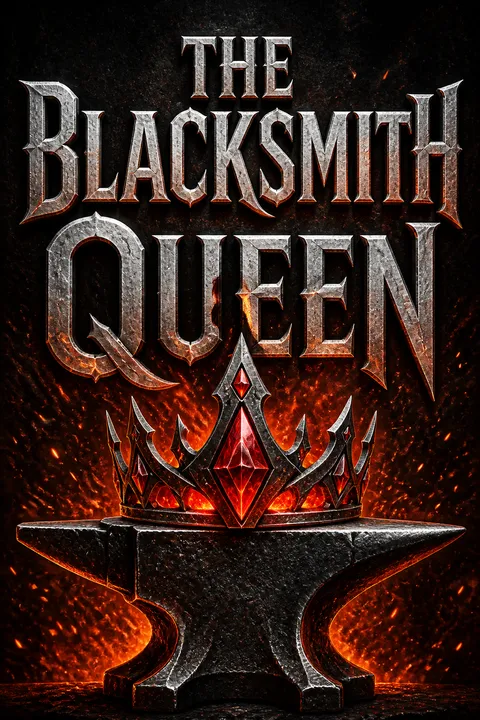


Plot Summary
Prologue
As the Old King dies, his sons turn the palace into a battlefield. The chronicler hides while Marius14 seizes the castle and his mother, Maila,15 reveals that she poisoned soldiers and helped clear his path to the throne. A prophecy from the Witches of Amhuinn names a farmer’s daughter as the next queen.
Maila15 intends to find the girl1 and use her claim to secure Marius’s14 rule. The chronicler escapes, but Maila15 catches him and appoints him keeper of her history. The struggle for the crown has begun before its chosen queen1 even knows her name.
The succession crisis begins as family violence disguised as political necessity. Marius and Maila treat kinship as both a weapon and a resource, while the chronicler survives by recording rather than intervening. His forced appointment signals that history itself will be contested: whoever controls the account can help make a ruler seem inevitable. The prophecy interrupts this brutal inheritance with an unexpected candidate, but Maila immediately translates it into strategy. The opening therefore establishes a world where fate may name a queen, yet people with armies will decide what that name costs.
Keeley Saves the Hanging Boy
Keeley Smythe,1 a farmer’s daughter and working blacksmith, finds mercenaries hanging Samuel9 from a tree in the forest. She attacks with the enormous hammer she made herself, while the wild horses she has befriended charge through the soldiers. Caid2 and his Amichai companions join the fight, and Keeley’s demon-eyed wolf friends emerge from the woods to drive off the remaining attackers.
Samuel9 survives, and Keeley1 invites his rescuers to her shop rather than treating them as frightening strangers. Caid’s2 unit has been sent to protect a future queen,3 but Keeley1 does not yet know that their mission concerns her family. Her instinct to help first has brought the protectors directly into her life.
Keeley’s authority appears first as practical action, not title. She risks herself for Samuel, trusts animals others fear, and welcomes the Amichais without demanding that they explain their appearance or customs. These choices establish a consistent moral reflex: she judges beings by what they do, not by what others say they are. Caid’s protectors arrive with a mission and a hierarchy, but Keeley’s spontaneous hospitality begins to alter their expectations. The rescue makes her strength visible while revealing that her deepest power is relational. People and creatures follow her because she has already treated them as lives worth protecting.
Prophecy at the Forge
At Keeley’s1 forge, her long-absent sister Gemma4 appears in the white robes of a religious order, reopening a family wound that Keeley1 has never stopped carrying. Their argument is interrupted when Caid2 explains why his unit has been shadowing the Smythes: the Witches of Amhuinn have named Beatrix,3 their quiet and bookish younger sister, as the next queen.
Keeley’s1 first concern is not the crown but the danger it will bring to Beatrix3 and the household. She insists on speaking with her parents, then agrees that she will accompany her sister to the witches. Gemma’s4 return complicates the family’s response, but the prophecy makes staying home impossible.
The prophecy converts private family history into public danger. Keeley’s resentment toward Gemma is real, but it does not cancel her obligation to protect her; similarly, Beatrix’s ambition remains difficult for her sisters to read. The family’s habit of loving one another without always liking one another gives the conflict its human texture. Caid brings a political explanation into the forge, a place where Keeley usually shapes metal to clear her mind. From this moment, her work and her kin are no longer separable: the coming struggle will test whether the family can survive being made into a symbol.
The Farm Becomes a Battlefield
Samuel9 returns with warning that Straton’s16 soldiers are approaching the farm. Keeley1 finds the gray stallion mortally wounded by the raiders and ends his suffering, then turns on the men who killed him. Inside the farmhouse, Emma8 and Angus7 fight back while Gemma4 reveals her true calling: she is a War Monk, able to raise the dead for battle.
The family and their allies drive off the attackers, but the farm is no longer safe. Angus7 burns the home and crops, releases the animals, and joins the others on the road. The gray mare19 stays with Keeley,1 offering herself as a mount. Straton,16 furious that the family escaped, orders his men to keep hunting Beatrix.3
The attack destroys the physical center of the Smythes’ life and forces their hidden strengths into view. Keeley’s grief for the stallion does not make her helpless; it gives her a specific reason to fight. Emma and Angus defend their children with the skills of people who have built their own lives, while Gemma’s concealed identity exposes the distance between the sister Keeley remembers and the warrior she has become. Burning the farm is a painful act of agency: the family gives up its home rather than leave it as a weapon for Straton. Their safety now depends on movement and cooperation.
Archie’s Castle Refuge
Angus7 leads the family to his brother Archibald’s13 isolated stone castle, where the siblings resume their old feud over a family axe until Keeley1 destroys it and forces them to stop. The castle provides shelter, but not a lasting solution: Straton’s16 men are still searching, and Beatrix3 must be confirmed by the Witches of Amhuinn.
Emma8 decides that Keeley1 and Gemma4 will accompany Beatrix,3 while Caid2 and Laila5 escort them and two Amichais remain to guard the younger children. Beatrix3 studies routes and prepares for the journey with an assurance that unsettles Gemma.4 The party leaves the family behind, carrying the crown’s promise toward the witches and leaving the household exposed to danger.
Archibald’s castle offers safety only because its builder has prepared for attack; even refuge is an extension of the family’s defensive labor. Keeley’s destruction of the axe ends an inherited argument by refusing to keep its symbol intact. Emma then makes the strategic choice the others struggle to accept: protect the children by dividing the family. Beatrix’s composure contrasts with Keeley’s open worry and Gemma’s suspicion, but none of them yet understands what Beatrix intends. Their departure turns the prophecy into a journey, while the decision to leave loved ones behind creates the vulnerability that will later be exploited.
Two Queens, One Knife
At the mountain fortress, the Witch Queen’s17 seer confirms Beatrix3 as queen, then adds Keeley1 to the prophecy. Before the group can make sense of the claim, the Witch Queen17 reports that Straton16 has destroyed Keeley’s1 town and killed many of its residents. Keeley1 refuses to accept that the disaster makes her queen, but Beatrix3 draws her into a private conversation and stabs her in the abdomen, leaving her bleeding on the floor.
Caid2 finds her and calls for help; the witches begin surgery as Gemma4 and Keran6 try to understand what happened. Samuel9 follows Beatrix3 through a tunnel and sees her calmly enter a carriage bearing Marius’s14 crest. The sisters’ supposed shared destiny has become a murderous struggle.
The prophecy’s double selection creates a crisis of interpretation, but Beatrix resolves it through violence rather than debate. Keeley’s insistence that family cannot become an enemy has protected Beatrix for years; now that trust leaves her physically exposed. The report of the destroyed town gives Keeley an immediate reason to accept responsibility, even as she rejects the crown. Beatrix exploits the gap between Keeley’s care and her own hidden purpose. Samuel’s sighting of the royal carriage supplies evidence, but not yet the full explanation. The scene makes political ambition intimate: the wound is delivered by the sister Keeley has spent her life defending.
The Fortress Burns
While the witches operate on Keeley,1 Gemma4 questions the Witch Queen17 and learns that Delora’s18 prophecy was not an official choice by the order. Delora18 had privately taken Beatrix’s3 name to Maila,15 Marius’s14 mother. Before the conspiracy can be fully contained, fireballs strike the fortress.
The Witch Queen17 evacuates the witches and their books, while Gemma4 kills Delora18 for her part in the scheme. Caid,2 Laila,5 Gemma,4 Keran,6 Samuel,9 the gray mare,19 and Keeley’s demon wolves carry the unconscious Keeley1 toward Amichai lands. There, healers repair her body, but say her spirit has withdrawn from it. Keeley1 cannot yet face the betrayal or the loss of the life she knew.
The witches’ own account dismantles the authority that seemed to support Beatrix’s claim: a private seer’s declaration was mistaken for institutional judgment. But exposing the manipulation does not restore order. The fortress burns, its knowledge must be carried away, and Gemma’s response to Delora shows how quickly protection becomes lethal when her family is threatened. Keeley’s body survives while her spirit retreats, making psychological refusal visible as a crisis rather than weakness. The people around her can move her to safety, but they cannot choose her return for her. That distinction prepares her next decision as an act of will.
Keeley Chooses the Crown
In a liminal place between life and death, Keeley1 meets the centaur war god and a wolf-like deity. The god challenges her to stop hiding from the danger Beatrix3 poses, and Keeley1 returns to her body, furious and alive. She accepts that she must claim the queenship, though she still refuses to promise that she will kill her sister.
Caid2 and Laila5 take her to their mother, Chieftain Gaira,10 who agrees that Keeley1 needs allies. Keeley1 thanks Caid’s2 father, Hearn,11 for saving Angus7 years earlier, and Hearn11 pledges to help protect the family. As Keeley1 and Caid2 grow closer, she sets out to win the mountain peoples’ support, beginning with the dwarves.
Keeley’s return is not a miraculous erasure of injury; it follows a confrontation with the guilt and grief that kept her from waking. The gods do not absolve her of responsibility so much as force her to distinguish responsibility from self-punishment. Her refusal to kill Beatrix remains an ethical boundary, even as she accepts the burden of rule. The alliance with Gaira and Hearn also reframes power as reciprocal care: Hearn once saved Angus, and now his family helps Keeley. Her bond with Caid deepens alongside the political mission, giving her a companion who supports her choices without pretending the danger is small.
The Dwarves Set a Price
The dwarves make the visitors wait and test Keeley’s1 claim to be a blacksmith. She sings the old craft song badly but with complete conviction, and King Mundric21 joins her, turning the trial into a shared celebration. His wife, Queen Vulfegundis,22 recognizes Keeley1 as a fellow smith.
The rulers agree to consider an alliance, but demand the return of Sichar’s gold, a rare divine metal stolen from them and rumored to be in the wood elves’ territory. Keeley1 accepts the task rather than ask them to fight without payment. The offer gives her a possible army, but it sends her into lands where Beatrix3 already has influence and where the elves may not welcome her.
Keeley wins the dwarves’ regard by refusing to perform a polished version of herself. Her awkward song becomes a bridge because it is rooted in the work she loves, and the dwarven rulers recognize a craft identity they share. Yet goodwill does not erase political interest: the alliance has a price, and the gold’s location makes the next step dangerous. Keeley’s promise to retrieve it reflects her conviction that a ruler must keep her word, even when a bargain is inconvenient. The episode also distinguishes genuine fellowship from easy acceptance. The dwarves welcome Keeley, but they still expect her to deliver something tangible.
A Dragon Claims the Gold
The wood elves refuse to meet Keeley’s1 party, and Gemma4 realizes their hostility is connected to Beatrix.3 Keeley’s demon wolves locate a hidden cave containing Sichar’s gold, but the sisters find a chained, starved dragon guarding it. When they fight back, Gemma4 wounds the beast and Keeley1 removes its collar, freeing it.
The dragon reveals that the elves imprisoned him and buried the gold nearby. He retaliates by raising a volcano beneath the elven forest, destroying the city, then escapes underground. The party survives, and Keeley1 keeps the gold for the dwarves. During the journey afterward, she and Caid2 become lovers, even as Keeley1 begins to fear that Beatrix3 may have drawn larger powers into the war.
Keeley’s compassion again complicates a mission built around extraction. She needs the gold, but she cannot leave a chained creature to starve once she understands what the elves have done. Her act releases a force whose grievance is understandable but whose revenge kills indiscriminately. The dragon makes clear that good intentions do not grant control over consequences. Keeley accepts that danger without becoming cynical, while Gemma’s caution provides a necessary counterweight. The intimacy with Caid develops amid uncertainty rather than after it; their attachment offers comfort, not a solution. The episode widens the conflict beyond human succession and exposes the cost of treating other beings as tools.
Beatrix Takes the Throne
While Keeley1 seeks allies, Beatrix3 marries Marius14 and is crowned queen. She quickly reveals how she intends to hold power: she brings the nobles’ children into the castle, presenting their confinement as protection and making rebellion dangerous to their parents. She also learns that Keeley1 may still be alive.
Rather than risk facing her directly, Beatrix3 sends Straton16 information about where the Smythe family is hiding, expecting the attack to distract her sister. Straton’s16 mercenaries assault Archibald’s13 castle. Angus7 is shot, but Hearn11 arrives with centaur fighters and helps the family escape through the tunnels. Beatrix’s3 crown now rests on coercion, while her family survives another attack without knowing who exposed their refuge.
Beatrix treats rule as a problem of leverage. Her apparent concern for noble children masks a method of controlling their parents, and her marriage gives her access to Marius’s army without requiring trust in him. The message to Straton extends the same logic into her own family: relatives become pieces she can move or sacrifice. Against this calculated control, Hearn’s rescue depends on loyalty freely earned years earlier. The contrast clarifies the book’s competing models of authority. Beatrix secures obedience through fear and hostage-taking; Keeley’s growing coalition forms through remembered care, promises, and mutual protection.
Keran Claims the Barbarians
On the route back toward the dwarves, a barbarian war band blocks Keeley’s1 party. Keran,6 a retired pit fighter, recognizes a ritual challenge but cannot recall every detail of what she once learned from a barbarian fighter. She charges their leader and kills him. Instead of attacking, the warriors allow Keeley1 and her companions to pass; Keran6 suspects that the killing has made her their new leader.
When they reach the dwarven stronghold, Hearn’s11 messenger reports that Straton’s16 men attacked Archibald’s13 castle and that Angus7 is wounded. The family escaped with Hearn’s11 help. Keeley’s1 allies now understand that Beatrix3 may have betrayed her own kin, while Gemma4 argues that the threat must be ended by killing her.
Keran’s reckless intervention turns cultural knowledge into an unintended political claim. Her action is dangerous precisely because she remembers enough to act but not enough to predict the consequences. The barbarians’ response gives the party passage and adds a potential force to Keeley’s uncertain coalition. The news from Hearn shifts the conflict from suspicion to near certainty: someone disclosed the family’s hiding place. Gemma’s demand for execution is emotionally and strategically understandable, but Keeley resists allowing Beatrix’s choices to dictate her own. The sisters’ disagreement is no longer only about personality. It concerns whether survival requires matching their enemy’s ruthlessness.
Straton Loses His Town
Rather than charge at Marius14 and Beatrix,3 Keeley1 leads her allies against Straton’s16 occupied town, where the prince has imprisoned local women and a group of witches. Gemma4 and the centaurs fight through the streets; Keran6 and Samuel9 free the women held in a brothel. Keeley1 reaches Straton’s16 quarters and discovers a battered captive chained to his bed.
She unlocks the dwarven cuffs and sends the woman through an escape tunnel, giving up the chance to ambush Straton16 unseen. The freed captive later stabs him, and Keeley1 finishes the fight by beheading him. The demon wolves tear into his reinforcements, leaving the town free and giving Keeley1 a first territory to defend.
Keeley’s priorities become clearest when victory conflicts with immediate advantage. She abandons a clean ambush to free Straton’s captive, accepting the risk that the prince will escape or fight back. That choice is not softness detached from politics; it earns the trust of people who have suffered under his rule and gives the town a reason to join her. The liberation also draws on skills established earlier: Gemma’s combat training, Keran’s fighting experience, Samuel’s loyalty, and Keeley’s blacksmith knowledge of dwarven locks. Straton’s death is a decisive victory, but the story frames it as the recovery of a community, not merely the removal of an enemy.
A Crown Made of Steel
Angus,7 Emma,8 the children, and Archibald13 reach the liberated town, and Keeley’s1 reunion with her wounded father breaks through the discipline she has been forcing on herself. She plans to rebuild the settlement and asks Archibald13 to strengthen its walls, tunnels, and defenses.
While removing Straton’s16 throne, Keeley1 and her allies discover a hidden cache of gold beneath it, giving her resources for the kingdom she has begun assembling. Her mother8 makes her a steel crown set with rubies, then places it on Keeley’s1 head in an informal coronation. Beatrix3 remains alive and powerful, but Keeley1 now has a family around her, a town to protect, and the beginnings of an army and a realm.
The ending answers the book’s opening question of who will rule by showing what Keeley believes a ruler must do: make a place safe enough for people to return. The recovered gold matters, but it is discovered beneath the throne of the tyrant whose occupation Keeley has ended, turning conquest’s symbol into a resource for reconstruction. Emma’s handmade crown also defines legitimacy differently from Marius’s court ceremony. Keeley receives authority through intimate recognition and practical responsibility, not spectacle. The unresolved danger from Beatrix keeps the victory provisional. Keeley has not finished the war, but she has stopped being merely the person others protect.
Analysis
The novel repeatedly asks what makes authority legitimate, then tests each answer against concrete acts. Royal blood offers Marius14 and his brothers a claim, but their succession war turns that inheritance into slaughter. Prophecy offers Beatrix3 and Keeley1 another route to power, yet the witches’ own uncertainty exposes how easily a prediction can be converted into political leverage. Keeley’s1 legitimacy grows differently. She rescues strangers, keeps promises to the dwarves, frees a captive before pursuing her enemy, and thinks about rebuilding the town she has helped liberate. Her rule is still emerging, but it is already measured by what becomes safer because she acted.
Family is the novel’s most durable bond and its most dangerous vulnerability. Keeley1 assumes that kinship obligates care, even when affection has been damaged by Gemma’s4 departure or clouded by Beatrix’s3 distance. That belief gives her courage, but it also leaves her exposed to betrayal. Gemma’s4 suspicion often reads as cruelty until the danger proves real; Keeley’s1 generosity often looks reckless until it creates alliances. Neither response is sufficient alone. The sisters’ survival depends on their ability to combine trust with discernment, without letting injury dictate every future choice.
The book also challenges the habit of equating appearance with moral character. Centaurs, wolves, and dragons are treated as monstrous by people who do not know them, while human rulers commit deliberate atrocities under the shelter of ceremony. Keeley’s1 instinct to see individuals before categories is ethically powerful, but the dragon’s revenge shows that compassion cannot guarantee control over consequences. The story does not resolve that tension by making kindness harmless. Instead, it asks whether a leader can remain humane while learning to anticipate the damage that others may do.
Finally, craft offers a model for leadership. Keeley1 knows that steel must be shaped through attention, pressure, and repeated work. Her emerging kingdom requires the same patience: alliances, defenses, shelter, and trust must be made, not merely claimed. The steel crown her mother8 gives her is therefore less a symbol of arrival than a promise of labor still to come.
Review Summary
The Blacksmith Queen receives an overall positive reception, averaging 4.06 out of 5 stars. Fans praise its humor, strong female characters, action-packed plot, and rich world-building featuring centaurs, dwarves, elves, and dragons. Many love protagonist Keeley's bold personality and her chaotic family dynamics. Critics cite excessive dialogue, modern language feeling out of place, insufficient world-building, and heavy swearing as drawbacks. The romance between Keeley and centaur Caid is noted as slow-burn and secondary to the fantasy plot. Most readers eagerly anticipate future installments in the series.
People Also Read





Characters
Keeley Smythe
Forge-born protectorKeeley is a powerful blacksmith who loves steel, horses, and the sprawling family she helps hold together. She meets danger head-on, but her defining instinct is to protect rather than dominate: she rescues a stranger, befriends feared creatures, and offers shelter to people who have helped her. Her confidence comes from competence and from knowing what work matters to her, not from social rank. That makes political authority uncomfortable, especially when it threatens her ordinary life at the forge. Keeley can be stubborn, impulsive, and slow to accept what others see clearly, yet her loyalty is not blind to consequences. She must learn to turn personal courage into leadership without surrendering the generosity that made others follow her.
Caid
Watchful centaur protectorCaid is a centaur warrior from the Scarred Earth Clan, sent with his sister Laila5 to protect the woman named by prophecy. He is guarded, blunt, and more comfortable in the company of horses than in conversation, partly because he expects most people to irritate or disappoint him. Keeley’s1 directness unsettles his defenses: she accepts what he is without turning him into either a monster or a novelty. His loyalty is disciplined rather than showy, expressed through watchfulness, practical help, and a willingness to stand beside people whose choices he questions. Caid’s growing attachment to Keeley1 challenges his preference for distance, while his knowledge of the mountain peoples helps her understand the political dangers ahead.
Beatrix Smythe
Reserved royal aspirantBeatrix is the quiet, highly intelligent Smythe sister who spends much of her life reading and observing. Her sisters struggle to understand her because she shares little of her inner life, and her elaborate clothes set her apart from a family that values practical work over display. She has a powerful sense of her own potential and does not easily accept limits imposed by others. Her calm can read as poise, distance, or something harder to interpret, leaving even those closest to her uncertain about what she wants. Beatrix’s presence tests the family’s assumption that love and familiarity are enough to know someone. She is ambitious, controlled, and difficult to read.
Gemma Smythe
Warrior sisterGemma is Keeley’s1 estranged younger sister, a trained War Monk whose devotion gives her both discipline and lethal battlefield skill. She left home to follow a calling, but her return cannot erase the hurt her absence caused. Gemma is suspicious, sharp-tongued, and often impatient with Keeley’s1 willingness to trust, especially when family is at risk. Under that severity is a fierce capacity for loyalty and a need to believe that her choices have served a purpose. Her relationship with Keeley1 swings between conflict and solidarity, shaped by years of distance and a shared instinct to defend their kin. Gemma’s faith does not make her gentle; it gives her a code for action.
Laila
Centaur commanderLaila is Caid’s2 sister and an experienced protector of the Scarred Earth Clan. She is decisive, politically alert, and accustomed to taking charge, but she can revise her judgments when people prove themselves. At first she distrusts Keeley’s1 attachment to demon-eyed wolves and worries that the blacksmith will endanger the mission. Keeley’s1 courage and hospitality gradually earn her respect. Laila often acts as the practical bridge between Keeley’s1 impulses and the customs of the centaur clans, negotiating passage and keeping the group moving. Her loyalty includes both tactical judgment and personal affection, and she understands that protecting a future ruler may mean protecting the whole family around her.
Keran
Retired pit fighterKeran is Keeley’s1 scarred cousin, a former champion fighter who now works as an informal guardian at the forge. She is irreverent, physically fearless, and often appears to be asleep or nursing a drink, but she watches more closely than others assume. Keran rejects the expectation that she should return to a conventional family life after leaving the fighting pits. Keeley1 gives her a place because she recognizes her skill and accepts her as kin without demanding reinvention. Her humor can hide poor judgment, but when violence arrives, Keran’s instincts are swift and dependable.
Angus
Devoted farmer fatherAngus is Keeley’s1 affectionate father, a former soldier who has built a farm and a crowded, close-knit household. He believes in helping others and tells his children stories that make the wider world seem less frightening. His gentleness does not mean helplessness; when his family is threatened, he fights with the force of someone who understands what soldiers can do. Angus loves his daughters openly and worries about losing them, sometimes trying to protect them by keeping them close. His old connection to the centaurs becomes a source of help when his family’s safety depends on allies beyond the Hill Lands.
Emma
Formidable family matriarchEmma is Keeley’s1 mother, a former blacksmith with formidable strength and a practical command of her large household. She can be blunt, funny, and impatient with the family’s bickering, but she sees the emotional truth beneath it. Emma understands that keeping her children safe sometimes means making decisions they dislike, and she does not confuse authority with gentleness. Her affection is expressed through work, direct advice, and fierce defense. She expects her daughters to make their own choices, but also expects them to remember that those choices affect the family.
Samuel
Young monk’s squireSamuel is a young traveler and trainee monk who survives a mercenary attack because Keeley1 intervenes. Nervous and often unsure of himself, he nevertheless proves loyal under pressure and repeatedly carries warnings and helps protect the people around him. His uncertainty about his religious path makes him more human than heroic, but he keeps trying to serve where he is needed. Samuel’s connection to Gemma4 gives him a place among warriors while leaving him room to decide what kind of life suits him.
Gaira
Centaurs’ high chieftainGaira leads the centaur clans and is Caid2 and Laila’s5 mother. She is politically astute, warm toward her children, and willing to consider bold alliances when ordinary routes have failed. Her authority carries the weight of responsibility for warriors and civilians alike, so she does not treat Keeley’s1 cause as a private favor. Gaira recognizes that a ruler needs more than courage and pushes Keeley1 to seek allies. Her humor and affection coexist with a clear awareness of risk.
Hearn
Caid’s clan chiefHearn is Caid’s2 father and a respected leader of the Scarred Earth Clan. Years earlier, he saved Angus7 when other centaurs would have left the injured human to die. That act reflects a willingness to trust his judgment over the prejudices of his peers. Hearn is reserved but steadfast, and his loyalty to old friends becomes important when Keeley’s1 family needs protection. He recognizes that compassion can create obligations that last for decades.
Quinn
Volatile centaur warriorQuinn is Caid2 and Laila’s5 brother, a powerful fighter whose unpredictable behavior keeps even his family alert. He is fiercely protective of his kin and quick to punish anyone who threatens them. Quinn’s apparent recklessness often serves a purpose: he wants people to understand that harming his family has consequences. He can be unnerving, funny, and brutally direct, but beneath the volatility is a serious interest in earning leadership through battle experience.
Archibald
Paranoid stonemason uncleArchibald is Angus’s7 brother, a talented stonemason who has built a castle and escape tunnels for himself. He is suspicious, argumentative, and prone to imagining threats, which makes him difficult company but useful in a crisis. His long feud with Angus7 grows from old family grievances and romantic jealousy. Keeley1 loves him while recognizing that his volatility must be managed. He is most reliable when given a concrete task and a reason to protect the people he considers his own.
Prince Marius
Ruthless claimantMarius is the Old King’s eldest surviving son and a contender for the throne. He relies on his mother, Maila15, for counsel and understands the value of military strength and political legitimacy. His ambition is shaped by a violent succession crisis in which hesitation can be fatal. He is capable of listening when a useful opportunity appears, but his pursuit of power leaves little space for trust. Marius represents the royal system Keeley1 must confront, even when he is not the most immediate threat.
Maila
Marius’s political motherMaila is Marius’s14 mother and a former consort of the Old King who has long prepared for her son’s rise. She is elegant, calculating, and comfortable using wealth, family ties, and violence to shape political outcomes. Maila believes she understands what power requires, and she treats marriage and prophecy as tools that can strengthen a claim. Her bond with Marius14 mixes affection with a desire to direct his choices, creating a partnership in which love and control are difficult to separate.
Straton
Mercenary-backed princeStraton, known as the Devourer, is one of the Old King’s sons and commands a mercenary force. He seeks territory and military advantage without regard for the people caught beneath his campaigns. His willingness to use violence against civilians makes him a direct danger to Keeley’s1 family and the towns in his path. Straton’s confidence rests on paid soldiers and fear, not the loyalty of those he rules.
Belinda
Witch Queen and logicianBelinda leads the Witches of Amhuinn and values mathematics, evidence, and careful record keeping over mystical spectacle. She is brisk, skeptical, and intolerant of wasted time, but she takes responsibility for the witches and their knowledge. Belinda’s dry manner can seem cold in moments of crisis, yet her decisions are shaped by practical concern for the order’s survival. Her disputes with Delora18 expose how institutional authority can be undermined by claims that others mistake for truth.
Delora
Unreliable seerDelora is a witch who claims to receive predictions from the gods, though her order doubts her judgment. She is sensitive to status and eager to be taken seriously, especially within a community where her abilities are compared with those of a brilliant mother. Her position gives her access to powerful people even when her reasoning is weak.
Gray Mare
Wild horse allyThe gray mare is the leader of the wild herd Keeley1 has befriended since childhood. She is wary of strangers, fiercely independent, and deeply attached to her offspring. She chooses when to approach Keeley1 and refuses to be treated as property. Her trust is earned through patience, making her companionship a bond of mutual respect rather than ownership.
Demon Wolves
Unruly supernatural alliesThe demon wolves are supernatural, flame-eyed creatures whom Keeley1 treats as friends rather than omens of evil. They answer her presence and protect her companions, but she does not control them like trained animals. Their loyalty is fierce and their violence frightening. The wolves test other characters’ assumptions about appearance, morality, and the difference between companionship and command.
King Mundric
Dwarven ruler and smithMundric rules the Amichai dwarves with his wife, Vulfegundis22. A scarred, formidable king, he tests Keeley’s1 blacksmith identity before considering an alliance. He values craft tradition and expects promises to be backed by useful action.
Queen Vulfegundis
Dwarven smith queenVulfegundis is Mundric’s21 wife and fellow blacksmith. She is direct, proud of dwarven craft, and willing to negotiate hard for her people. Recognizing Keeley1 as a true maker gives the human queen a chance to earn her respect.
Plot Devices
The Queens’ Prophecy
Destabilizes the successionA seer names Beatrix3 as the next queen, then identifies Keeley1 as well. The claim is not an official decision by the Witches of Amhuinn, but it becomes politically powerful because Maila15 hears of it and acts on it. The prophecy draws protectors to the Smythe family, gives Marius14 a possible route to legitimacy, and places the sisters in conflict. Its ambiguity matters as much as its prediction: characters must decide whether prophecy is truth, manipulation, or a claim that becomes real because people organize around it.
Sichar’s Gold
Purchases an army allianceSichar’s gold is a rare metal with which specially skilled smiths can make weapons and armor. The dwarves demand its return before they will commit their army to Keeley1. The gold is hidden in elven territory, where it is guarded by a chained dragon. Its recovery forces Keeley1 to choose between the political value of an alliance and the immediate moral demand to free a suffering creature. It also ties the plot’s political bargaining to Keeley’s1 identity as a blacksmith.
Keeley’s Demon Wolves
Challenge fear and controlThe flame-eyed wolves first appear as uncanny allies during the forest rescue. Keeley1 trusts them because they have never harmed her, while others fear their appearance and suspect their origins. They recur at moments when Keeley1 needs protection, but she cannot command them and does not pretend otherwise. Their presence makes the question of who counts as monstrous concrete: the wolves can be violent, yet they are loyal to Keeley1 and defend her friends, while human princes inflict deliberate cruelty for power.
The Hidden Escape Tunnels
Turn refuge into escapeArchibald’s13 tunnels provide a route out of his castle and toward the docks, giving the family a way to flee if Straton’s16 men find them. The Witches of Amhuinn also have hidden routes that allow them to evacuate their people and books when their fortress is attacked. Such passages are not merely secret shortcuts. They embody the survival work of people who expect power to turn violent and prepare a way out before the walls fall.
About the Author



Download PDF
Download EPUB
.epub digital book format is ideal for reading ebooks on phones, tablets, and e-readers.








