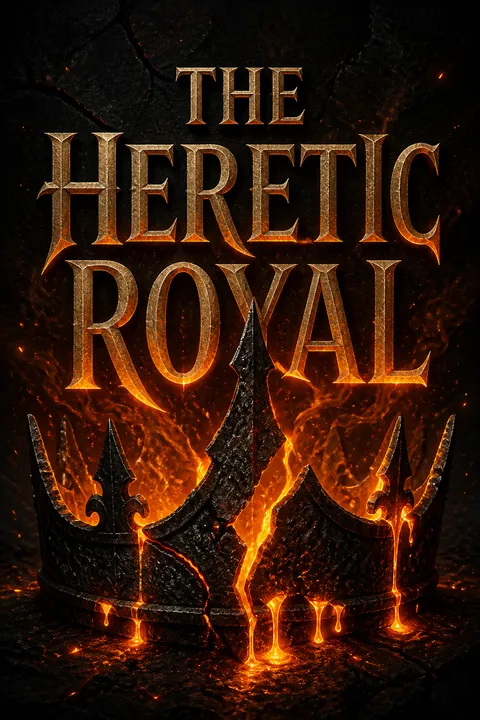


Plot Summary
The Gate Opens in Fire
King Marius sends a battalion to measure the strength of Queen Keeley’s defenses after his forces lose ground elsewhere. The attackers ignore a warning from their wizard and charge the gates, where armored dragons burn most of them to ash. Their commander, Annwyl the Bloody, arrives with the dragons and demands to know which of Keeley’s sisters enslaves children.
Keeley cannot answer at first, and Gemma is equally shaken. Then black-clad war monks provoke Annwyl by accusing her of murdering infants. Annwyl cuts down the attackers until Keeley blocks her path and explains that she is not Beatrix, has no slaves, and rules this town herself. The misunderstanding pauses the slaughter, but the dragons remain inside Keeley’s territory.
The opening makes reputation a weapon that can misfire. Annwyl’s name reaches Keeley before the woman herself does, so a rescue mission initially looks like an invasion. Yet the violence is not arbitrary: Annwyl has made the protection of enslaved children a test of legitimate rule. Keeley’s intervention succeeds because she identifies the fact that matters, not because she can overpower Annwyl. The scene also establishes how quickly certainty becomes dangerous in this world. The monks act on rumor, the soldiers act on appetite, and both groups turn a possible conversation into bloodshed.
A Welcome Made of Chaos
The centaurs, who had been hidden from the danger by powerful magic, finally see dragons circling Keeley’s tower and hurry to defend her. Before they can attack, Keeley calls off their charge.
Her father, Angus, then walks straight among the armed dragons carrying a butchered pig and welcomes them, even offering grazing and hunting grounds. The townspeople are less composed: they flee in panic until the dragon Ghleanna calms them enough to prevent a stampede.
Keeley’s sister Isadora takes charge of lodging the visitors, while Uncle Archie decides the children might be eaten and tries to kill them first. Ainsley, her friends, and Gruff restrain him until he swears to leave the children alone. The visitors stay, but no one mistakes their presence for safety.
Angus’s welcome turns hospitality into a kind of courage, but the chapter refuses to confuse courage with competence. His instinct is to make strangers feel safe, even when they are armed dragons; Archie’s instinct is to protect children by harming them. Both men reveal how care can become absurd or dangerous when fear outruns judgment. Isadora, meanwhile, responds to the crisis by organizing practical needs rather than performing royal authority. These contrasting reactions establish the book’s comic register while keeping the stakes tangible: the town’s survival depends less on grand speeches than on people doing useful work without making the panic worse.
The Centaur Finally Speaks
Ainsley’s sisters keep assigning her menial work while excluding her from decisions, and Gemma’s former lover adds to the humiliation by treating their past encounter as a joke. Gruff’s clan forces the man and his soldiers to clean the battlefield instead. Later, Ainsley retreats to a tree after another argument with Gemma. When Gruff speaks to her in human form, the surprise makes her fall.
She is unhurt, having taught herself how to land after years of climbing, and the two begin an unusually frank conversation. Ainsley admits she feels useless and overlooked; Gruff tells her to stop waiting for her sisters to give her purpose. His bluntness stings, but it also offers her a way forward that does not depend on their approval.
Ainsley’s problem is not a lack of skill. She can shoot, climb, hunt, and survive, but her family keeps treating those capacities as incidental because she occupies the youngest-sister role. Gruff’s value lies in refusing to soothe her with praise. He recognizes the difference between being incapable and being denied room to act. Their first conversation therefore shifts Ainsley’s question from whether her family respects her to what she might do without permission. The tree is both refuge and symptom: it gives her perspective, but it also lets her withdraw whenever the family’s expectations become unbearable.
The Bird That Bites Back
While exploring a swamp with Gruff and Annwyl, Ainsley finds a baby bird and carries it home. The chick bites her with poisonous fangs, and Sarff cuts off the poisoned tip of Ainsley’s finger to keep the venom from spreading. Ainsley refuses to blame Gruff, even when her sisters tease her about the injury, and insists on keeping the bird.
Her father explains that the hatchling survived a nest in which its mother would normally drown all but one chick. It grows quickly, becomes fiercely attached to Ainsley, and settles in her hair. The bird’s loyalty gives her a source of affection outside her family’s squabbles, though its enormous head, poisonous bite, and alarming calls make it a questionable companion.
The bird condenses Ainsley’s character into one choice: she protects what is vulnerable even when doing so costs her. The rescue is not sentimental, since the chick injures her and remains genuinely dangerous. Her affection grows through responsibility rather than an idealized bond. That distinction matters in a story where creatures often arrive with frightening histories and unpredictable appetites. The bird also provides a comic counterweight to Ainsley’s sense of exclusion. Her family may not trust her with major decisions, but the hatchling attaches itself to her without needing her to prove that she deserves a place.
Annwyl Reads the Queen
At a formal meal, Keeley asks Annwyl to judge her defenses. Annwyl answers that Beatrix could destroy the town if she attacked now, then explains the strategy she expects from Keeley’s sister: seize the younger children, use Keeley’s love for them to force an agreement, and attack after Keeley has surrendered her advantage.
Keeley argues that she knows Beatrix is cruel because Beatrix once stabbed her in the stomach. Annwyl replies that knowing cruelty is not the same as being ready to oppose it.
Her own father taught her that rulers can treat their children as instruments of power, and Annwyl survived by becoming willing to answer violence with violence. Keeley recognizes the danger, but Annwyl makes clear that any alliance requires Keeley to be prepared to kill Beatrix.
Annwyl diagnoses the weakness in Keeley’s goodness with unsettling precision. Keeley’s care is not naïveté; she knows what Beatrix has done. Her vulnerability lies in assuming that recognition will protect her from the emotional leverage Beatrix can still use. Annwyl’s history makes this argument more than tactical advice. She learned that a parent or sibling can convert intimacy into control, and she built a violent reputation to make that strategy costly. The scene asks whether moral restraint can survive a conflict with someone who treats affection as a handle. Keeley’s answer remains unresolved, which gives the alliance its central tension.
Ainsley Makes Her Move
Ainsley decides to help secure an alliance after Gwenvael explains that the old boundary between the dragon lands and Keeley’s territories has already been breached by enslaved children and hidden tunnels.
She secretly approaches the dragon prince Unnvar, who brings word that Commander Beaton is negotiating for Beatrix in supposedly neutral territory. Ainsley plans to capture him before her sisters can lose time debating what to do. Her friends Hilda and Sheva agree to join, and Ragna unexpectedly allows them to go under her authority.
Gruff and his clan insist on accompanying the party. Before departure, the undead mare Kriegszorn produces three magically fast-growing foals, which Ainsley and her companions take as mounts. The mission becomes a real test of Ainsley’s judgment, not just a protest against her sisters.
Ainsley’s first independent choice is politically meaningful because she does not merely seek danger to prove herself. She identifies a gap between intelligence and action, then assembles people with complementary strengths. Her willingness to trust Unnvar is practical, while her secrecy reflects how thoroughly Gemma’s protectiveness has taught her to expect obstruction. The impossible foals sharpen the story’s recurring question about what deserves to be called monstrous. Their origin is grotesque, yet they serve as companions and transport. Ainsley’s agency grows through decisions made amid uncertainty, not through sudden mastery of every risk.
The Commander Never Returns
Beatrix’s soldiers find Ainsley’s party on the road and attack before she can reach the nearby town. They had intended to kidnap one of Keeley’s younger siblings, but decide Ainsley will serve the same purpose. Arrows wound Gruff, and the attackers seize Ainsley, pressing her bruised ribs as they carry her away.
She fights free and shoots several men, while Gruff shifts into his antlered battle form and tears through the soldiers. Kriegszorn’s foals join the fight, savaging the men who threaten Ainsley.
The survivors identify Beaton as their commander, but the foals have already killed him. Hilda then kills the remaining captive rather than let him report back to Beatrix. Ainsley returns with proof that her sister is targeting the children, though her secret mission has left her badly bruised.
The ambush confirms that Ainsley’s suspicion about Beatrix was not an exercise in paranoia. The danger is organized, personal, and aimed at the family’s youngest members. Ainsley proves capable under pressure, but the scene does not turn competence into invulnerability: she is hurt, captured briefly, and dependent on the people who came with her. The foals’ violence also unsettles the neat division between protection and monstrosity. They save Ainsley by behaving like predators. Hilda’s execution closes the information leak, but it introduces a moral cost that Ainsley cannot simply fold into her own idea of justice.
Blood and Stone Attack
Before the alliance can settle, a fanatic order of war monks attacks Annwyl while she is alone by the lake. Ragna sees the assault begin and does not intervene. Annwyl kills the attackers with an axe, then strikes Ragna hard enough to injure her jaw for standing by.
The attack exposes Keeley’s failure to restrain the religious groups sheltered in her territory. In the negotiations that follow, Keeley admits she should have secured a promise of nonaggression before allowing Annwyl and her dragons to stay.
The dragon royals question whether Keeley can control her own allies, while Annwyl’s defenders bristle at the insult. Keeley’s admission does not erase the danger, but it gives the visitors a concrete reason to keep negotiating rather than treat the monks’ violence as the policy of her whole queendom.
The attack tests the difference between governing a coalition and merely housing one. Keeley has offered refuge to factions with histories of violence, but she has not yet built the rules needed to make their coexistence reliable. Her public acceptance of responsibility is therefore a political act, not a display of softness. Annwyl’s response to Ragna is equally revealing: she demands accountability from an observer who could have acted, even though the monks were not her own soldiers. The scene’s conflict is not simply between humans and dragons. It is about who bears responsibility when power is distributed among groups that claim incompatible authorities.
A Princess for a Hostage
To make the alliance harder to break, the rulers arrange a royal exchange: one member of each family will live in the other court. Annwyl initially considers taking one of Keeley’s youngest siblings, but Isadora volunteers instead.
She explains that she does not want to spend her life farming, blacksmithing, or raising younger children; she wants to see the world and learn how Annwyl built a durable dynasty. On the other side, Gwenvael assigns his son Unnvar to remain in Keeley’s territory, despite Var’s anger and his mother Dagmar’s absence.
The arrangement gives both courts a personal stake in keeping the alliance intact. It also places two young royals far from the households that have defined their roles, though neither leaves without misgivings.
The exchange makes trust visible by giving it a body and a bed in another household. The arrangement resembles hostage-taking, but Isadora’s choice complicates that interpretation: she is not simply traded, she uses the diplomatic opening to pursue a life beyond family service. Var’s assignment is less voluntary, yet it may offer him room to act without his mother’s constant protection. The parallel is not exact, and the characters know it. The chapter exposes how royal diplomacy can convert affection into leverage while still creating genuine opportunities for younger people who have been confined by inherited roles.
Beatrix Bargains with Hell
Ivan introduces Beatrix to Athanagild, a demon god who offers power and information in exchange for souls. Beatrix refuses to be impressed by promises of beauty or authority, since she already expects to gain power through her own plans.
Athanagild changes the terms by telling her that the Dragon Queen, Rhiannon, is at Keeley’s tower and identifying her as the obstacle Beatrix should remove. Beatrix accepts the offer of intelligence and agrees to provide souls.
When King Marius later confronts her over a destroyed estate, she reveals that she ordered the slaughter and has no intention of letting him control her campaigns. Athanagild seizes Marius and tears away his soul as Beatrix returns to her work, treating the murder as a useful demonstration rather than a loss.
Beatrix does not surrender her ambition to a god; she treats the supernatural as another resource to be negotiated. That distinction makes her more dangerous than a ruler seduced by promises. She wants power on her own terms, and the demon god appeals to her by supplying timely intelligence rather than demanding reverence. Marius’s death marks the collapse of the marriage as a political arrangement, but Beatrix feels no grief because she has already reduced him to an obstacle. Her decision shows how transactional thinking can become total: even the sacred and the intimate are valuable only when they advance the plan.
The Dragon Queen Trapped
Rhiannon arrives at Keeley’s court to see the danger for herself, but a powerful barrier prevents her from opening a way home or contacting her family. The storm that follows is not natural: thunder rolls beneath a clear sky, then tornadoes form around the town. Rhiannon stops pretending the danger is minor and casts a shield over the settlement, drawing on the land’s energy to protect its people and buildings.
Her dragons recognize that the storm may be a trap, while Var warns that the enemy may want to capture her rather than kill her. The shield buys the town time, but Rhiannon remains cut off from her mate and unable to leave. The danger has moved beyond Beatrix’s soldiers into a conflict involving a god’s power.
Rhiannon’s arrival reverses the expected hierarchy. The Dragon Queen can command vast magic, yet she is vulnerable to a force that blocks communication and travel. Her choice to shield the town instead of spending all her strength on escape makes responsibility concrete: power is measured by whom it protects, not merely by what it can destroy. The unnatural storm also changes the scale of the conflict. Beatrix’s politics remain central, but they now operate inside a supernatural contest whose rules are not fully visible. The people sheltering under Rhiannon’s magic become participants whether they chose the alliance or not.
Gemma Is the Real Target
While Ainsley and Gruff set out to deal with Lord Broadwils, a storm separates them from the rest of the traveling party and drives them into a cave. During the wait, Ainsley recognizes that Beatrix would not leave major decisions to chance or alter a plan merely because Rhiannon had appeared. She concludes that the dragon queen and Annwyl are distractions, while Beatrix’s real target is Gemma.
Ainsley and Gruff leave as soon as the weather allows and ride hard toward the town. At the gates, Ainsley forces a former lover among the guards to reveal that Gemma went north. She threatens him with an arrow when she suspects he is delaying her, then turns toward the waterfall where her sister is in danger.
Ainsley’s insight depends on knowledge accumulated through years of being underestimated. She understands Beatrix’s habits because she has watched her closely, and she trusts pattern over the spectacular distraction of a dragon queen and a supernatural storm. The conclusion turns Ainsley’s family knowledge into strategic intelligence. Her urgent confrontation with the guard also marks a change in how she uses her authority: she no longer waits for someone to make room for her. The storm physically divides the party, but it also forces Ainsley to decide what she knows and act before certainty arrives.
Kriegszorn Bites Back
As Var searches for Annwyl, he finds Kriegszorn thrashing in the woods under the grip of something invisible and growling. Annwyl recognizes the attacker as a hell-creature with tentacles, one of the beings she knows from her time in the underworld.
It is trying to drag the half-dead mare down, and Annwyl charges it with both swords rather than waiting for help. The creature knocks her away, but Kriegszorn regains her feet and holds it long enough for Annwyl to strike its eyes.
The creature’s soul is released, and the mare runs free. Annwyl then insists that Fearghus follow Kriegszorn instead of carrying her back to the tower. The attack confirms that a supernatural enemy is loose in Keeley’s lands, just as Beatrix’s larger assault approaches.
Kriegszorn has often been treated as an unsettling burden, but here her loyalty and resilience become decisive. Annwyl does not save the mare alone; the creature and its victim each create the opening the other needs. This reciprocal defense echoes the alliances forming among the humans, centaurs, and dragons. Annwyl’s choice to follow the horse rather than retreat also shows how her instincts prioritize an immediate threat over royal protocol. The hell-creature makes the danger bodily and strange, yet the decisive bond is not magical kinship. It is the relationship between a battered animal and the people who refuse to abandon it.
Fire at the Waterfall
Ainsley reaches Gemma at the waterfall just as Beatrix’s soldiers pin her down with arrows. Ainsley and Gruff shield Gemma while Hilda and Sheva drag her toward cover. The centaurs climb the falls and dive into the lake as dragons sweep overhead, burning the attackers from the exposed ground.
Elsewhere, a host of demons advances on Keeley’s army. Annwyl kills the commanders at its front and drives the soldiers back through their portals, then turns on the human squad Beatrix left behind.
The attackers at the waterfall are defeated, but Gemma has taken arrows through her shoulder and breast. Morfyd removes them and begins healing her while the surviving family gathers inside the tower. The coordinated assault fails, though Beatrix’s reach is now unmistakable.
The climax brings several forms of protection into the same physical space. Ainsley’s shield, the centaurs’ dangerous descent, the dragons’ fire, and Annwyl’s attack on the demon host are not interchangeable displays of strength; each answers a different vulnerability. Gemma survives because her allies coordinate rather than because one champion solves everything. The episode also vindicates Ainsley’s recognition that her sister was in danger, even as the wider assault confirms that Beatrix is willing to use supernatural forces. The family’s survival is collective, but it leaves them with a wounded leader and an enemy who has escalated beyond conventional armies.
A Love Without Permission
After the battle, Morfyd treats Gemma while Rhiannon returns to the hall, and the dragons prepare to leave once communications with their kin reopen. Var tells Ainsley that Ghleanna’s forces have dealt with Lord Broadwils, removing the immediate target of her unfinished mission.
Ainsley, exhausted and still protective of her injured sister, returns to bed with Gruff. Their earlier quarrels give way to an explicit admission of love, though neither can make their relationship simple: Gruff is a centaur with an ancient grievance against Keeley’s ruling clan, and Ainsley is a princess caught between family loyalty and independence.
Their intimacy offers comfort rather than a solution. The alliance holds for now, but Beatrix remains alive, and the family has no reason to mistake survival for peace.
The romance resolves Ainsley’s emotional uncertainty without resolving the political world around her. She and Gruff choose one another after danger has stripped away their usual evasions, yet his clan’s grievance and her royal position remain real pressures. The scene’s tenderness is therefore not an escape from the plot but a small, deliberate refuge within it. Ainsley has moved from seeking permission to making choices, and Gruff has moved from silent protection to honest attachment. Their relationship matters because it asks whether intimacy can cross inherited antagonisms without pretending those histories never existed.
Epilogue
Bercelak the Great leads a dragon army across the Amichai Mountains, believing enemies have taken his mate, Rhiannon. When she finally contacts him and explains that she is safe, he turns his army around. Before they can leave, the mountain splits and begins collapsing beneath a migrating centaur population.
Bercelak orders his dragons to rescue the centaurs, then spots soldiers carrying Beatrix’s colors watching the destruction from a distance. Their attack has damaged the mountain and cleared a path toward Rhiannon’s territory. Bercelak recognizes the act as a declaration of war and promises, through action, that Beatrix will answer for it.
The epilogue converts a comic misunderstanding between mates into a genuine military escalation. Bercelak’s rage has carried an army across the mountains, but Rhiannon’s casual reassurance does not end the danger. The collapsing range reveals that Beatrix’s campaign can damage territory and displace whole populations before her armies even arrive. Bercelak’s immediate choice to rescue the centaurs complicates the image of dragons as indifferent conquerors: he redirects force toward protection even while recognizing the attack as an act of war. The book closes not with victory but with a widened map of responsibility and a threat that can no longer be contained within Keeley’s town.
Analysis
The Heretic Royal treats political power as a test of what a ruler is willing to do with attachment. Keeley’s strength comes from caring for her family and subjects, yet Annwyl warns that Beatrix can turn that care into leverage. The conflict is not simply kindness against cruelty. It is a dispute over whether tenderness can be defended without becoming coercion itself. Annwyl’s violent reputation protects the people she loves, but it also frightens allies who must decide whether her protection can be trusted.
Ainsley’s arc brings that political problem into family life. Her sisters protect her so aggressively that protection becomes a form of exclusion. She does not become capable by proving that she can endure danger; she has always been capable. Her change begins when she stops waiting to be assigned a useful role and acts on her understanding of Beatrix. The fanged bird, the undead mare, and the centaur foals echo this movement: beings dismissed as dangerous or grotesque become sources of loyalty and aid when someone chooses to care for them.
The book also distinguishes alliance from affection. The royal exchange, the dragons’ arrival, and the centaur clans’ ancient grievance all show that cooperation is not created by liking one another. It requires obligations, truthful admissions, and a willingness to bear consequences. Keeley’s public acceptance of fault matters because it makes trust concrete. Rhiannon’s shield does the same through action rather than reassurance.
Finally, the story refuses to let a successful defense become a clean ending. Beatrix’s bargain with Athanagild introduces a power no ordinary treaty can contain, while the collapsing mountain in the epilogue reveals the geographical cost of her campaign. Survival at the waterfall is real, but temporary. The book’s most durable hope lies not in a single champion’s victory, but in imperfect people and creatures learning to protect one another across divisions they did not choose.
Review Summary
The Heretic Royal receives mixed reviews, averaging 4.26/5. Fans of Aiken's Dragon Kin series particularly enjoy the crossover characters, especially Queen Annwyl, finding the book humorous and action-packed. Critics note the romance between Ainsley and Gruffyn feels underdeveloped, with little chemistry or interaction. Several reviewers feel the plot stagnates, consisting mostly of bickering between characters with minimal story progression. The book is unanimously considered unsuitable as a standalone, requiring familiarity with both the Scarred Earth Saga and the Dragon Kin series for full enjoyment.
People Also Read





Characters
Ainsley Smythe
The overlooked royal archerAinsley is the fourth daughter in a large, quarrelsome family ruled by her eldest sister Keeley. An excellent archer and fearless climber, she has learned to rely on herself because her sisters often treat her as a child or leave her out of important decisions. Her humor masks a real hunger to be useful and recognized. She is curious about people whose beliefs differ from hers, impatient with religious certainty, and instinctively protective of vulnerable creatures. Ainsley’s central tension is between wanting distance from her family and wanting to matter to it. She resists being defined by her position in the birth order, even before she has a clear alternative role.
Gruffyn
The Torn Moon grudge holderGruffyn belongs to the Torn Moon Clan, a formidable centaur tribe known for reserve, mountain skill, and long memory. As its Grudge Holder, he is expected to preserve the history of injuries done to his people, especially the ancient loss of their ruling position to the Scarred Earth Clan. He is observant, loyal, and more comfortable with action than conversation. His silence can look like hostility, but it also reflects a refusal to waste words or perform friendliness for strangers. Gruffyn takes protection seriously and distrusts those whose motives seem unclear. Beneath his hard exterior is a careful attention to the people he has chosen to guard.
Keeley
The blacksmith queenKeeley is a former blacksmith who becomes queen because she is willing to protect the people around her. Her strength is practical and physical, but her defining instinct is care: she wants her subjects, siblings, and allies to be safe. She is generous with refuge and inclined to believe that a workable agreement can be found, even with frightening visitors. That openness helps her build coalitions, though it can leave her exposed to people who exploit trust. Keeley’s relationship with her sister Beatrix makes family both her deepest attachment and her greatest political vulnerability. She is a capable ruler still learning how to make compassion durable under pressure.
Gemma
The war monk sisterGemma is a war monk, a necromancer, and the commander of a religious order whose members do not always share her authority. She is disciplined, combative, and deeply attached to her family, especially Keeley and Ainsley. Fear often sharpens her into a strict commander; she tries to keep everyone safe by controlling their movements and choices. Her faith gives her structure and purpose, but Ainsley’s questions expose how quickly religious conviction can become a defense against uncertainty. Gemma’s fierce protectiveness is sincere, yet she can mistake obedience for safety and overlook the ways her younger sister is capable of acting independently.
Annwyl
The scarred blood queenAnnwyl rules Dark Plains and is feared across distant territories for her battlefield violence. Her scars and reputation come from a life shaped by political brutality, and she has little patience for ceremony or rulers who use the powerless as tools. Annwyl is impulsive, blunt, and fiercely loyal to her mate, her adopted family, and the people under her protection. Her anger is not random: slavery and threats to children reach a particular moral nerve. She distrusts easy assurances because she knows how affection can be turned into leverage. Her startling mixture of brutality, humor, and tenderness unsettles people who expect a ruler to be only one thing.
Beatrix
The calculating elder sisterBeatrix is Keeley’s older sister and the queen of the Old Kingdom, married to King Marius. She is ambitious, patient, and contemptuous of the limits others assume should govern her. Because she has never relied on beauty or charm, she has cultivated strategy, information, and an ability to make powerful men serve her aims. Beatrix regards attachment as a vulnerability to be managed, especially where her family is concerned. Her rule is marked by a willingness to use force and political manipulation to expand her control. She is not simply a rival for Keeley’s crown; she represents a different answer to what power is for.
Rhiannon
The Dragon Queen witchRhiannon is the powerful Dragon Queen of Dark Plains and mother to Morfyd, Fearghus, and Gwenvael. She is confident in her magic, accustomed to command, and difficult to persuade to follow anyone else’s timetable. Her playful irreverence often masks a serious concern for her family and the durability of alliances. Rhiannon has lived long enough to distrust easy assumptions about human weakness, yet she is still learning how much responsibility an alliance requires. She can be generous and protective, but she is also selfish, theatrical, and prone to making a difficult situation more complicated than it needs to be.
Isadora
The restless royal organizerIsadora is a younger Smythe sister with a gift for practical organization and a sharp dislike of being given a life by default. She manages visiting dragons, household needs, and financial details more competently than her age leads others to expect. Unlike Ainsley, she is not drawn to animals or combat for their own sake; she values what people and creatures can do. Her family’s constant need for help has made her feel useful but confined. Isadora wants to travel, meet other cultures, and develop an identity beyond farming, smithing, and raising younger siblings.
Angus Farmerson
The fearless royal fatherAngus is the father of Keeley, Gemma, Ainsley, and their many siblings. A farmer and former soldier, he combines a warm, trusting nature with startling obliviousness to danger. He welcomes dragons with offers of food and shelter and treats his children with affection even when they exasperate him. Angus’s faith in people is not strategic, but it gives his family a model of care that Beatrix’s cruelty cannot explain away. He worries about all his children, including those who are difficult to protect, and tries to meet terror with hospitality.
Emma Smythe
The forge-working matriarchEmma is a blacksmith, mother, and formidable presence in the Farmerson-Smythe household. She works alongside master smiths and apprentices while raising a large family, often expecting the older children to help with the younger ones. Her affection is plain, but she is not a soft or endlessly patient parent. Emma worries fiercely when one of her children faces danger and can become hilariously disorganized when the family’s plans change without warning. Her forge and her household both reflect her practical approach: useful work matters, and no one is above being told to get on with it.
Gwenvael
The handsome gold dragonGwenvael is a royal gold dragon, son of Queen Rhiannon, brother to Morfyd and Fearghus, and father to Unnvar. He enjoys teasing his relatives and can turn almost any tense meeting into a source of entertainment. Beneath the performance, he is protective of his family and attentive to the political stakes around them. His charm can obscure how seriously he takes danger, while his habit of provoking his son makes their affection look like an argument. Gwenvael is comfortable crossing social boundaries, though he sometimes mistakes his amusement for a contribution.
Unnvar Reinholdt
The watchful dragon princeUnnvar, often called Var, is Gwenvael’s son and a prince of the dragon royal house. He is intelligent, well informed, and more interested in preventing crises than winning praise for solving them. His spectacles and measured manner distinguish him from the flamboyant dragons around him, but his temper can surface when his father needles him. Var values his mother’s judgment and is accustomed to being protected by a large family. He is interested in practical outcomes, intelligence networks, and plans that reduce the chance of a preventable disaster.
Morfyd
The white dragon healerMorfyd is a white dragon, daughter of Rhiannon, sister to Fearghus and Gwenvael, and a skilled healer. She is thoughtful, composed, and unusually good at making others feel responsible even when they have done nothing wrong. Her calmness helps contain her family’s arguments and Annwyl’s volatility, though her patience has limits. Morfyd cares for her siblings and chosen family without pretending they are easy to manage. She often functions as the person who restores order after a crisis, whether by tending wounds or insisting that others stop escalating a disagreement.
Fearghus
The black dragon protectorFearghus is a black dragon, Rhiannon’s son, Morfyd and Gwenvael’s brother, and Annwyl’s mate. He is imposing, direct, and intensely protective of Annwyl. His distrust of humans comes from a long history of violence, and he is quick to judge a group by the harm it allows. Yet he recognizes loyalty and does not treat family as a matter of blood alone. Fearghus’s restraint is often tested by his brothers’ antics and the danger surrounding Annwyl, but his central priority remains keeping her alive and standing beside her.
Bram the Merciful
The patient alliance makerBram is an older silver dragon, mate to Ghleanna, and a trusted peacemaker for the dragon royal family. He reads, negotiates, and tries to keep his relatives from turning every disagreement into a fight. Bram is patient with people who are less experienced than he is, including the new human rulers, and understands that an agreement must account for fear as well as advantage. His calm manner does not mean he underestimates danger. He believes negotiation is worth the effort because rulers and their people have to live with the consequences after the battle ends.
Hilda
The unyielding battle nunHilda is a novice battle nun who refuses to mistake prayer for inaction. She is physically imposing, dislikes being touched, and has little patience for religious superiors who keep her from protecting others. Her confidence can turn frighteningly physical when someone tries to control her, but she is also perceptive and loyal to Ainsley and Sheva. Hilda’s private spiritual life is intense, though she does not soften herself to make it palatable to other people. She sees duty as something that must be enacted, not merely contemplated.
Sheva
The cautious war monkSheva is a long-serving novice in the Order of Righteous Valor, a capable fighter who prefers survival to religious grandstanding. She is pragmatic, dryly funny, and wary of plans that ask people to die for the appearance of devotion. Her friendship with Ainsley lets her speak candidly without trying to manage the princess. Sheva is more comfortable with a sword than with dogma, but she understands the social power religion holds over soldiers and civilians. Her caution is not cowardice; it is an insistence that courage should have a purpose.
Sarff
The battle witch centaurSarff is a member of the Torn Moon Clan and a powerful battle witch who trains Gruffyn in magic and violence. She is blunt, capable, and unsentimental about pain, as Ainsley discovers when Sarff treats her poisoned finger. Her healing methods can be harsh, but she is attentive to what survival requires. Sarff understands the clan’s history and does not pretend its grudges are harmless. She is a formidable presence whose practical knowledge often cuts through the confusion created by the humans and royals around her.
Briallen
Gruffyn’s fierce clan sisterBriallen is Gruffyn’s sister and fellow member of the Torn Moon Clan. She is outspoken, fiercely protective, and more willing than Gruffyn to explain what she thinks of the Scarred Earth royals. Her loyalty is expressed through action, including stepping between her brother and anyone who might insult or manipulate him. Briallen has a blunt sense of humor and a competitive streak, but she is also a capable warrior who understands the responsibilities of clan. She wants Gruffyn safe, even when her ideas about how to help him are intrusive.
Ragna
The feared monk commanderRagna is a Master General of the Order of Righteous Valor and commands an army of war monks. She is a formidable battlefield leader whose authority rests on skill, experience, and devotion to her gods. Ragna is blunt and difficult to please, especially when she believes a decision endangers her order. Her faith gives her certainty, but that certainty can narrow her attention to what she believes her gods require. She has a complicated relationship with Gemma, whose rise in the order changes the authority Ragna expected to hold.
Ivan the Mystic
Beatrix’s occult adviserIvan is Beatrix’s adviser, a former monk who turned from religious discipline toward witchcraft and political influence. He gathers intelligence through his relationships and has a direct connection to the supernatural powers that approach Beatrix. Ivan values power and novelty, and he respects Beatrix because she is difficult to frighten or impress. His loyalty is not sentimental: he wants influence over the world just as she wants authority over it. He is willing to approach dangerous forces if he believes they can provide an advantage.
Athanagild
The demon god informantAthanagild is a demon god whose power is linked to information and the collection of souls. He approaches Beatrix as a potential partner rather than a worshipper, offering knowledge in exchange for a price. His presence changes political conflict into a supernatural bargain, but he does not present himself as benevolent. Athanagild understands that information can be more useful than brute force when a ruler is planning an expansion. His method is to make a dangerous offer sound like an efficient transaction.
Laila
The Scarred Earth princessLaila is a centaur princess of the Scarred Earth Clan and a relative of Gruffyn through the clans’ shared ancestry. She is composed, politically aware, and more diplomatic than her brothers. Laila wants to protect her people without reigniting the ancient conflict with the Torn Moon Clan. Her patience is tested by the dragons’ arrival and by her relatives’ suspicion of one another. She understands that a royal decision affects more than the people in the room, especially when armies and vulnerable young are involved.
Marius
The weak-willed kingMarius is Beatrix’s husband and the nominal king of the Old Kingdom. He inherited authority but lacks his wife’s strategic patience and political imagination. He travels with soldiers and uses force to intimidate those who challenge him, while remaining unable to control Beatrix. Marius mistakes physical dominance for command and expects others to treat his impulses as policy. His marriage is a political arrangement, not a partnership of equals.
Bercelak
The Dragon Queen’s war consortBercelak is Rhiannon’s mate, a senior dragon warrior, and a commander of the Dragon Queen’s armies. He is formidable, decisive, and intensely devoted to Rhiannon. When he believes she is in danger, his first instinct is to mobilize force rather than wait for explanations. He is also capable of redirecting that force toward people in immediate peril, even when they are not dragons. Bercelak’s loyalty makes him a powerful ally, but his anger can set large military consequences in motion.
Plot Devices
The Amichai boundary
A treaty turned fault lineThe Amichai Mountains have long divided dragon territories from the lands of humans, dwarves, elves, and centaurs. The boundary is more than geography: old alliances and grudges shape who is expected to stay on which side. Beatrix’s tunnels, the movement of enslaved children, and Annwyl’s crossing make the old arrangement impossible to preserve. The boundary gives the story a political map while exposing the weakness of treaties that depend on everyone honoring them. It also links Gruffyn’s clan’s ancestral resentment to the present alliance, making cooperation necessary but never uncomplicated.
Centaurs in battle form
Hidden power made visibleCentaurs can shift between human and natural forms, while the Torn Moon Clan has a more fearsome battle form marked by antlers, claws, fangs, and unusual size. Their enchanted chainmail changes with them, allowing them to move among humans without revealing their full nature. The ability explains why the clans can serve as guards and warriors in different settings, and why Gruffyn’s transformation changes the balance of a fight. It also gives physical form to the story’s interest in concealed identity: the centaurs are present long before most people understand what they are.
Kriegszorn and her foals
Unholy transport and protectionGemma’s horse, Kriegszorn, is half-dead and has been revived through necromancy. The mare is loyal to Gemma and Ainsley, can move beyond ordinary fences, and gives birth to three foals that grow to full size with unnatural speed. The foals become mounts for Ainsley and her friends, then defend her when Beatrix’s soldiers attack. Their grotesque origins make other characters wary, but their actions complicate the assumption that the undead are simply threats. The horse family turns a comic household oddity into a practical and emotional part of the conflict.
The royal exchange
Kinship made diplomatic collateralBram proposes that each court send a royal to live with the other, an old method of making an alliance costly to betray. Isadora volunteers to go to Annwyl’s court, while Gwenvael assigns Unnvar to stay with Keeley. The exchange gives both sides a personal stake in maintaining peace, but it also resembles hostage-taking and raises questions about consent, family duty, and political control. Isadora’s choice turns the device into an opportunity for independence, while Var’s assignment puts him far from his mother’s protection. The arrangement makes the alliance tangible without guaranteeing that it will hold.
Athanagild’s bargain
Information purchased with soulsAthanagild offers Beatrix timely intelligence and assistance in exchange for souls. Unlike a conventional patron demanding worship, he presents his power as useful information that can alter the timing and direction of a campaign. Beatrix’s willingness to bargain with him escalates the struggle beyond armies and royal politics. The contract also creates a dangerous ambiguity: Beatrix believes she can use the god without surrendering her own goals, while the god’s price brings supernatural violence into the conflict. Its effect is visible in Marius’s fate and in the demonic forces appearing near Keeley’s territory.
About the Author



Download PDF
Download EPUB
.epub digital book format is ideal for reading ebooks on phones, tablets, and e-readers.








