

Plot Summary
Prologue
After returning from battle, war monk Gemma Smythe is denied promotion when Brother Sprenger objects. Her mentor, Grand Master Joshua, then reveals a seer’s warning: Gemma’s younger sister Beatrix is destined to rule, but may lack a soul. The elders plan to kill Beatrix before she can take power.
Joshua secretly sends Gemma home to protect her family, disguising the escape as an order and giving her squire Samuel the choice to come. Gemma leaves the brotherhood she loves rather than let it murder her sister, unaware that the decision will leave her divided between family, faith, and duty.
The opening makes Gemma’s central conflict an ethical fracture, not a simple choice between good and evil. She disobeys the institution that formed her, but does so under the authority of the mentor who taught her to serve it. Her family loyalty is not presented as softness: it demands that she oppose the violence of her own order. The prophecy also converts an intimate sibling conflict into a political crisis, while its claim that Beatrix may be soulless remains uncertain. That ambiguity matters. Gemma is asked to act on a prediction, yet must live with the human consequences of treating it as fact.
The Sanctuary Runs Red
Two years after leaving the brotherhood, Gemma fights beside her sister Keeley, queen of the western Hill Lands, against forces supporting their rival sister Beatrix. Centaur Quinn is assigned to guard Gemma, though she would rather he protect Keeley. Searching the enemy duke’s deserted castle, Gemma finds correspondence linking him to King Marius.
Quinn then hears a monk fleeing a mounted attacker and kills the rider with an arrow. Gemma carries the frightened pacifist to his monastery, where the monks lie tortured and dead. She kneels among them in prayer, but initially dismisses the killings as a robbery. Quinn challenges her judgment, and Keeley confirms the violence bears the marks of soldiers, not thieves.
The first crisis exposes Gemma’s altered relationship to her own code. She still recognizes a sanctuary as sacred, and her prayer shows that her devotion has not disappeared, but her first response is to contain the horror rather than investigate it. Quinn’s insistence matters because he sees the discrepancy between the warrior Gemma once was and the guarded, emotionally dulled woman she has become. Keeley’s intervention supplies a competing moral style: empathy becomes a form of evidence. The murdered pacifists are not simply victims who raise the stakes. Their deaths reveal that a conflict over crowns is reaching into the institutions that shelter people outside the battlefield.
The Gods Are Targeted
Gemma realizes the attackers took the monastery’s religious artifacts, not merely its valuables. A messenger network confirms that other temples, churches, and monasteries have also been destroyed, while a coven has fled underground. The surviving monk, Emmanuel, explains that the attacks aim to erase rival faiths and clear a path for one god to rule.
Keeley offers sanctuary to threatened sects and puts Emmanuel in charge of helping them coexist. Gemma’s suspicion falls on Beatrix, but her father doubts his daughter would act without a hidden bargain. A royal adviser identifies the likely culprit as Cyrus the Honored, Marius’s half-brother, whose religious fanaticism makes the stolen artifacts more dangerous than ordinary war spoils.
The stolen relics turn religious difference into a material struggle over who may exist. Cyrus’s project is not only conquest; it seeks to remove the objects and communities through which alternative beliefs are sustained. Keeley’s sanctuary therefore becomes a political act with theological consequences. Her willingness to protect groups that may distrust one another contrasts with the attackers’ demand for a single authorized faith. Gemma’s suspicion of Beatrix also shows how intimate history can distort political judgment: she knows her sister’s ruthlessness, but not the purpose behind it. The episode replaces a family-centered prophecy with a wider threat, without resolving whether Beatrix is involved.
A Sister Falls Home
At home, Gemma trains obsessively, but prayer no longer gives her the closeness to the war god Morthwyl she once felt. She is irritable with Keeley, who notices the change, and dismissive of the hell-born wolves her sister protects. During a run in the mountains, a wolf defending its pups frightens Gemma over a cliff.
She survives the fall into the river, forcing her to wonder whether her god still protects her. A vivid dream later leaves her convinced she may be betraying her order by staying away while it faces danger. She slips out with Samuel, intending to warn the brotherhood and offer it Keeley’s protection, though she expects her return may put her life at risk.
Gemma’s crisis is not a straightforward loss of faith. She continues to pray and practice, but experiences divine silence as abandonment, a distinction that keeps her spiritual life active even while it hurts. The wolf encounter sharpens her rigidity: she judges an animal’s defense of its young as evil, while Keeley understands behavior through need and circumstance. Gemma’s survival complicates her belief that Morthwyl has turned away. Her secret departure is driven by a familiar reflex, taking responsibility before anyone asks her to. The choice brings her back toward the brotherhood, but also carries the danger that loyalty to an institution can become another way to punish herself.
Joshua Is Gone
Gemma’s party reaches the fortified monastery, where guards call her a traitor even as they admit her under its laws. Her battle-cohorts, Katla, Kir, and Shona, greet her with anger and relief; Kir clings to her, grieving the years she vanished. Then Gemma learns that Joshua died a year earlier, defeated by Sprenger in the ritual Challenge for grand master.
The elders withheld the news, and Sprenger’s allies blocked messages meant to reach her. Gemma confronts the past that made Joshua her protector: as a teenager, she fought off Sprenger’s sexual assault in the stables, badly injuring him. Joshua saved her from execution and devoted himself to preventing Sprenger from abusing trainees again.
Joshua’s death removes the person who had made Gemma’s defiance survivable. The news reaches her through a community she abandoned for understandable reasons, forcing grief and resentment into the same room. Her cohorts’ embrace gives the return a bodily reality: she has been missed, but the damage of leaving cannot be erased by affection. The revelation of Sprenger’s abuse reframes Gemma’s history of violence. Her attack on him was not a bid for rank but a desperate act of self-defense, and Joshua’s intervention was an attempt to challenge a culture that protected powerful offenders. The concealed messages show how institutional control works through information as well as force.
The Dead Mare Returns
As Gemma struggles with Joshua’s death, Master General Ragna reveals that Gemma’s former warhorse, Kriegszorn, has survived in a half-decayed state. Gemma had raised the mare after she was killed in battle, expecting the spell to last minutes, but Kriegszorn came back and traveled across the country to find her.
The horse recognizes Gemma and rests her head against her, despite her missing flesh and fangs. At the monastery, Sprenger tries to strip Gemma of her place in the order, claiming her royal family ties make her allegiance incompatible. The elders urge her to accept, but Gemma refuses and challenges him to a formal duel, turning their conflict into a test of the brotherhood’s own laws.
Kriegszorn makes Gemma’s magical power inseparable from love and guilt. Her necromancy is not an abstract skill: it has altered a creature that trusted her, and she cannot dismiss that cost as justified simply because the horse returned. Yet Kriegszorn’s recognition also resists the idea that the spell reduced her to a monster. Ragna’s disclosure positions her as an observer who knows more than she admits, while Sprenger’s attempt to expel Gemma turns the private past into a public contest over legitimacy. Gemma’s challenge is both defiance and a demand that the order apply its rules consistently, even when doing so threatens its leadership.
The Challenge Breaks Open
Before the duel, Gemma’s allies try to calm her, while Quinn deliberately needles her into focusing her anger. Sprenger mocks her and strikes her after she names his abuse. Gemma chooses a short sword, provokes his fury, then uses his reckless attack to stab him repeatedly and cut his throat.
His followers immediately attack her, and the Chamber of Valor erupts into a fight between the monks who back Sprenger and those loyal to Joshua’s elders. Quinn, his sister Laila, and centaurs Farlan and Cadell seize weapons to defend Gemma and the elders. Ainsley, who has been scouting nearby, enters the chamber and shoots down Millie, Sprenger’s leading supporter, before the divided brotherhood can overwhelm them.
The duel resolves one injustice while making visible the institution that allowed it to persist. Gemma’s accusation breaks the silence around Sprenger, but naming his abuse does not automatically persuade his loyalists; violence follows because the order has organized identity around competing allegiances. Her victory is therefore morally incomplete. She kills the man who harmed her, yet cannot restore the unity Joshua hoped to preserve. Quinn’s irritation functions as tactical care, redirecting Gemma’s attention toward the fight she must survive. Ainsley’s decisive intervention also challenges the family’s habit of overlooking her. She is not a passive younger sister but a skilled participant whose perception and aim alter the battle.
The Monastery Burns
Cyrus’s army attacks the monastery before the internal fighting can settle. The elders tell Gemma that the remaining monks will hold the enemy back and die buying time for survivors to escape. Joshua’s plan is for Gemma to lead Ragna, the librarians, and her cohorts to Keeley’s territory, where the order can begin again.
Thomassin names Gemma a general, but she refuses to abandon the elders until Quinn carries her toward the escape tunnel. Ragna forces Gemma to accept command. In a side passage, the half-dead Kriegszorn attacks Cyrus’s soldiers and saves Thomassin from capture, then releases his soul with fire. The monastery burns behind the survivors. Gemma lets herself grieve only after Ragna gives her Joshua’s white general’s tunic.
The escape turns survival into an unwanted duty. Gemma believes honor means dying beside the people she loves, while the elders insist that preserving the order requires her to live and lead elsewhere. Quinn’s physical intervention makes that disagreement painfully concrete: he saves her by overriding her choice, and she experiences the rescue as another loss of agency. Ragna’s harsh command does not comfort Gemma, but it gives her a task when grief threatens to immobilize her. Kriegszorn’s intervention links the personal cost of Gemma’s magic to the brotherhood’s survival, while Thomassin’s death denies any easy victory. The tunic is not a reward. It is the weight of those who trusted her to continue.
Enemies Share the Road
Gemma and Quinn gather surviving religious groups, including war priests, temple virgins, witches, divine assassins, and the Abbess, a nun trained to fight. Their histories include burning, betrayal, and attempted slaughter, so their journey toward Keeley’s territory is tense from the start.
Gemma threatens any faction that attacks the others, while the truce vicar Ferdinand tries to keep the peace. The Abbess accepts Quinn’s horse, then reveals she once disemboweled a centaur who attacked her.
At the queendom, Keeley welcomes the refugees, though Ragna’s contempt for the hell-born wolves brings her close to a fight with the queen. A blood warlock named Ludolf offers Keeley his allegiance after she refuses to condemn him for his appearance or his unusual powers.
The coalition is held together less by shared belief than by a shared need to survive Cyrus. That makes its fragile cooperation more credible and more demanding: the characters must keep acting together without pretending their histories have been reconciled. Gemma’s threats create temporary order, but Keeley’s hospitality offers a different basis for alliance, one that does not require people to become alike first. The Abbess’s disclosure about Quinn punctures the fantasy that religious labels reliably predict innocence or danger. Ludolf’s allegiance follows the same pattern: Keeley earns trust by withholding judgment, not by testing his conformity. Ragna’s hostility shows that the coalition can reproduce the exclusions it opposes.
The Lost Wolf Pup
As Gemma and Quinn grow closer during the dangerous journey, they spend a night together after both admit their attraction. The next morning, Keeley discovers that one of her hell-wolf puppies is missing. The truce vicar traces the theft to Adela, a witch who wants to exploit the pups’ power. Gemma leads the travelers into the woods, where Adela traps them behind a magical barrier and tortures the puppy.
Ima, one of Adela’s own coven, helps Gemma breach the protection. Ferdinand kills Adela from behind, revealing that his peacekeeping role has limits. Keeley arrives in time to reclaim the unharmed puppy. Then its mother appears, drags Adela’s soul from her corpse, and consumes it while the witnesses can only stand aside.
The puppy’s theft converts Keeley’s compassion into a vulnerability others hope to exploit. Adela sees the animal as stored power; Keeley sees an individual dependent on her care. The conflict also forces the coalition’s members to choose between their formal loyalties and their immediate moral judgment. Ima’s betrayal of her leader is an act of protection, while Ferdinand’s killing of Adela exposes the violence concealed inside his peacekeeping function. The mother wolf’s punishment is not presented as a clean moral victory. Its terror leaves the witnesses shaken, and the scene refuses to make retribution gentle just because its target was cruel. Gemma and Quinn’s growing intimacy, by contrast, offers a chosen bond amid accumulated loss.
A Hammer Takes Shape
Keeley orders a mission to uncover what Beatrix is hiding and sends Gemma toward the Old King’s castle, while she rides against Cyrus. Before the groups separate, witches partially restore Kriegszorn’s decayed hide, though the mare remains fierce and difficult to control.
Keeley also asks the dwarves to strengthen her hammer without making it magical, since Cyrus is shielded from magic. Queen Vulfegundis reforges it with dwarven metal, reducing its weight and allowing it to absorb magical attacks.
Keeley discovers that the improved weapon magnifies her own strength when it shatters an ancient stone block. Meanwhile, Gemma’s team rides toward the castle with Agathon’s maps, and Gemma and Quinn acknowledge their relationship without resolving how it will fit into her life as a war monk.
The two missions express different forms of power. Gemma’s depends on reading people and institutions; Keeley’s depends on craft, physical skill, and the ability to make something useful from what others have built. The hammer is not a divine weapon bestowed from outside. The dwarves refine Keeley’s work, but its force comes from her own practiced strength. This preserves her identity as a blacksmith even as she becomes a battlefield leader. Kriegszorn’s partial restoration similarly offers care without erasing consequences: the mare is not returned to her former state, and Gemma must keep loving what her magic changed. The romantic bond develops alongside, not in place of, their separate duties.
Beatrix Builds Below
At the Old King’s castle, Gemma and Quinn use Agathon, Beatrix’s frightened Follower of Her Word, to find evidence of a hidden tunnel. He helps them reach the children’s schoolroom, where they take maps and escape after guards discover them. Gemma briefly reaches Beatrix in the main hall, but cannot kill her before the fight forces them apart.
Agathon confirms that Beatrix’s tunnel was dug with children enslaved after raids on barbarian tribes. Its far end has been completed, suggesting Beatrix intends to move people or troops through it without Marius’s knowledge. Gemma’s team escapes the castle with the information, while the revelation leaves her devastated: her sister has not merely plotted for power, she has made children pay for it.
The tunnel turns Beatrix’s secrecy into a concrete moral fact. Gemma has long regarded her sister as dangerous, but the discovery of enslaved children removes the remaining possibility that this is only a struggle over crowns. The children are hidden inside infrastructure, treated as an invisible cost of political ambition. Agathon’s terror also complicates the idea of collaboration: he has served Beatrix, but his obedience is shaped by fear and his own wish to survive. Gemma’s inability to kill Beatrix is not proof of trust or forgiveness. It is a limit she confronts in the middle of action, leaving her with evidence and responsibility rather than the clean finality she wanted.
The Mountain Gives Way
Cyrus’s army threatens the water supply feeding Keeley’s lands, and his stolen religious artifacts form magical totems that protect his camp. Keeley’s forces cannot approach them, and even Ainsley’s arrows are deflected.
Keeley uses her dwarven-reforged hammer against the mountainside, triggering a collapse that crushes part of Cyrus’s camp and destroys two totems. With the barrier weakened, she rides from one remaining totem to the next and smashes them.
Cyrus confronts her after the last falls, but before he can take her, the newly freed religious orders arrive through restored magical doorways. Morthwyl appears, claims Cyrus’s soul for the war gods, and leaves his living body behind. Ragna then kills the prince, ending his campaign to erase rival faiths.
Keeley defeats Cyrus by refusing the terms his power imposes. His protection makes conventional magic useless, so she brings down the landscape itself, turning a craft-enhanced tool and practical knowledge into a strategic answer. The collapse is forceful and dangerous, but it opens a path for others rather than making Keeley a solitary savior. The restored doorways show that the rescue of the children and the survival of diverse religious communities have material consequences for the war. Morthwyl’s appearance also unsettles Gemma’s expectation that spiritual recognition belongs to the most devout warrior. The god thanks Keeley, the blacksmith, suggesting that service can take forms the brotherhood does not control.
The Tunnel Takes Them
While the battle rages, Gemma’s party reaches the tunnel entrance and finds Beatrix’s child captives guarded by soldiers. The children’s safety prevents the rescuers from simply attacking, so the temple virgins, witches, and Abbess work together to open magical doorways and send the children to safety.
Once the children are clear, the allies trap the soldiers inside and Ima splits the earth, burying the tunnel and Beatrix’s route. A farmer later discovers the displaced children and sends for Queen Annwyl to help protect them.
Gemma’s horse Kriegszorn, badly injured during the fighting, transforms into a towering, fire-breathing creature and destroys the soldiers pursuing the group. Gemma escapes with the evidence of Beatrix’s crime, but not with her sister’s life.
The tunnel’s destruction is a collective act rather than a triumph of Gemma’s sword. The rescuers succeed only after they treat the children as the priority and coordinate powers that once served hostile traditions. Their sequence matters: first the captives are removed, then the soldiers are trapped. This reverses Beatrix’s logic, in which vulnerable people become tools for a larger plan. Kriegszorn’s transformation likewise gives Gemma’s magic a consequence beyond guilt or horror. The mare acts with overwhelming force, but the rescue does not make her ordinary again. The children’s arrival at a farmer’s home opens a new obligation, while their appeal to another queen hints that the consequences of Beatrix’s scheme will travel beyond Keeley’s lands.
A Crown Is Not Enough
Gemma returns to Keeley alive and reports that Beatrix enslaved children to build the tunnel. The sisters sit together with their youngest brother, recognizing that their father must never hear what was done to the children.
Keeley keeps the refugees in her territory, and the surviving war monks begin rebuilding their order. Ragna’s conduct has made her an increasingly poor candidate to lead it, while Joshua’s delayed letter urges Gemma to take the grand master’s position.
Gemma accepts that she must serve both her order and her family, though Beatrix remains queen beside Marius and continues to scheme. Quinn stands openly beside Gemma as her lover. Meanwhile, children rescued from the tunnel reach another household, prompting a new ruler to set out for Keeley’s lands.
The resolution offers continuity rather than closure. Gemma returns with evidence but no easy solution to the danger posed by Beatrix, whose political position remains intact. Her silence with Keeley and the baby preserves a painful family boundary: their father’s love might become another instrument of violence if he learns what happened. Accepting Joshua’s instruction to lead the order lets Gemma reclaim a role she once thought she had abandoned, but on new terms shaped by the family she chose to protect. Quinn’s relationship with her is no longer merely private teasing. It accompanies a life that will demand difficult loyalties, not rescue her from them.
Epilogue
As Keeley, Gemma, and Ainsley prepare to train, a scarred woman arrives demanding the queen responsible for enslaving children. Keeley has not enslaved anyone, but before she can explain, dragons land around the training grounds.
The woman identifies herself as Annwyl, and her armed dragons destroy the soldiers who invade from Marius’s territory. Annwyl insists that Keeley answer for the children. The dragons recognize her as volatile and warn her to calm down, while Keeley realizes the rescued children’s story has reached a power far beyond her borders.
The epilogue converts the rescue into a new political consequence. The children are safe from Beatrix’s tunnel, but their suffering does not end when the immediate perpetrators fall. Their story draws Annwyl and an armed dragon force into Keeley’s territory, where mistaken identity threatens to turn moral outrage into war. Keeley’s position as a ruler is tested by an accusation she can answer truthfully but cannot dismiss: someone did enslave children, and the evidence points toward her realm. The scene ends not with another battle resolved, but with the danger of being held responsible for what one’s allies, enemies, or neighbors have done.
Analysis
The novel tests three competing ideas of duty. Gemma’s war-monk formation teaches her to honor the gods through battle, but her family forces her to ask whether obedience remains virtuous when an institution plans to murder a child or shelters an abuser. Keeley offers a rival model of authority: she protects people and animals without demanding that they share her beliefs. Neither sister is simply correct in every circumstance. Keeley’s openness can expose her to manipulation, while Gemma’s vigilance can harden into suspicion and self-punishment. Their conflict is therefore not a choice between compassion and strength. It is a struggle over how strength should be governed.
Religious plurality is treated as a political condition with material stakes. Cyrus attacks not only believers but the buildings, relics, and communities that make belief durable. His combined artifacts turn theology into military infrastructure. In response, groups with long histories of violence against one another must cooperate without pretending those histories never happened. Their alliance is imperfect, comic, and sometimes frightening, but it works because they accept practical obligations before achieving emotional reconciliation. The novel suggests that pluralism is not a state of effortless tolerance. It is the repeated decision to restrain one’s own certainty and protect people one may distrust. The story’s strongest symbol is craft. Keeley’s hammer gains power through skilled revision, not divine enchantment, and its force comes from the labor she already knows how to do. Gemma’s magic offers the opposite lesson: power can achieve its immediate purpose while leaving damage that love cannot erase. Kriegszorn embodies this cost, remaining both a friend and a consequence. By the end, Gemma is asked to lead the order she once left, while Keeley continues to rule through practical judgment. Neither woman is freed from responsibility. The distinction is that Gemma begins to share it, rather than carrying every danger alone.
Review Summary
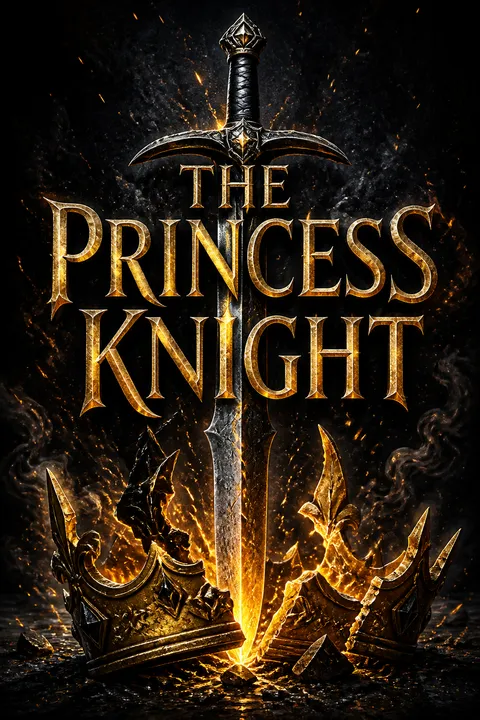
The Princess Knight is the second book in The Scarred Earth Saga, focusing on war monk Gemma Smythe rather than her sister Queen Keeley. Reviewers consistently praise the book's humor, strong female characters, action-packed battles, and entertaining banter. Most note the romance between Gemma and Quinn takes a backseat to fantasy elements and world-building. While some found Gemma less immediately lovable than Keeley, many warmed to her throughout the story. The epilogue received particular excitement from fans of the connected Dragon Kin series.
People Also Read





Characters
Gemma Smythe
The reluctant war monkGemma is a battle-trained monk, a general, and the younger sister of Queen Keeley and Queen Beatrix. Her loyalties are unusually demanding: she loves her family, reveres Morthwyl, and remains attached to the brotherhood that raised her. She is blunt, watchful, and quick to turn fear into action, but her confidence in violence masks uncertainty about whether her god still hears her. Her protective instincts often become self-punishment, leading her to shoulder dangers alone and confuse sacrifice with duty. Humor and affection emerge most clearly around people who challenge her without asking her to become gentler than she is. Her deepest struggle is learning that loyalty can require living, trusting others, and leading rather than simply dying well.
Quinn of the Scarred Earth Clan
The irreverent centaurQuinn is a centaur warrior and a member of Keeley’s council, with a gift for archery, provocation, and seeing when Gemma is hiding pain behind aggression. His humor is a deliberate social tool: he uses it to puncture self-importance, defuse tension, and force Gemma to think when rage threatens to take over. He is loyal to his family and comrades, but resists being treated as a solemn protector or a convenient weapon. His attraction to Gemma grows through conflict rather than easy agreement; he respects her competence even when he challenges her choices. Beneath his teasing confidence, Quinn values consent, friendship, and the living future he imagines with his people.
Keeley Smythe
The blacksmith queenKeeley is Gemma’s elder sister and queen of the western Hill Lands. Before ruling, she built a reputation as a blacksmith, and she still understands leadership through practical work, material needs, and care for people and animals. Her immense physical strength sits beside a generous, sometimes startlingly open nature. She gives sanctuary to religious groups that distrust one another and treats hell-born wolves as animals rather than symbols of evil. Keeley can be impatient, impulsive, and difficult to read, especially when she is worried about family. She wants to protect her people without becoming a ruler who mistakes authority for ownership, though war continually tests how much force that principle can withstand.
Beatrix Smythe
The unreadable queenBeatrix is Gemma and Keeley’s younger sister, now queen beside King Marius. She is exceptionally intelligent, controlled, and difficult to surprise. Unlike her sisters, she does not appear to draw comfort from family, faith, or ordinary companionship; power and the preservation of her position dominate her attention. Her calm can make her more unsettling than open anger, because it gives little indication of what she values or fears. Beatrix is neither an obvious caricature nor an easily understood villain. Her family knows enough to distrust her, but their knowledge is complicated by affection, shared history, and the fact that she is capable of concealing her plans even from her husband.
Ainsley Smythe
The overlooked archerAinsley is Gemma and Keeley’s younger sister, a patient observer whose skill with a bow far exceeds her family’s expectations. She often feels invisible among louder, more powerful relatives and has learned to find her own place in trees, forests, and the margins of family life. Her reserve can be mistaken for passivity, but she is brave, precise, and capable of acting without permission when danger comes. Ainsley wants recognition without being treated as helpless. Her confidence grows through practice and direct participation, though she remains sensitive to being forgotten or excluded by the people she loves.
Master General Ragna
The feared commanderRagna is a powerful war monk and commander of a handpicked army. She is disciplined, tactically gifted, and intimidating enough to unsettle nearly everyone around her. Her contemptuous manner makes care difficult to distinguish from cruelty, and she prefers blunt pressure to emotional reassurance. Ragna values the order’s survival and strength, but her loyalty to war can place her at odds with those who prioritize sanctuary or restraint. She recognizes Gemma’s potential while refusing to flatter her, and she treats authority as something proven through action. Her complicated ties to other religious leaders remain obscured even from people who have served beside her.
Grand Master Joshua
Gemma’s steadfast mentorJoshua is Gemma’s mentor and the leader who gives her both discipline and room to question the brotherhood. He understands the danger of Sprenger’s influence and works to protect trainees from abuses that others would rather ignore. His bond with Gemma is unusually intimate and trusting, built through years of guidance rather than formal rank alone. Joshua values directness, strategic patience, and the survival of the people entrusted to him. He knows Gemma’s stubbornness well enough to anticipate her resistance, but he does not mistake her defiance for disloyalty.
Samuel
Gemma’s steadfast squireSamuel is Gemma’s former squire and trusted companion. He is anxious by temperament but dependable when a decision has to be made, and he chooses proximity to Gemma even when a safer life is offered to him. His care for horses gives him a practical role beyond combat, and he is often braver than his own self-image suggests. Samuel’s loyalty is not blind obedience: he understands the risks of following Gemma and chooses them with open eyes.
Katla
The fierce battle-cohortKatla is one of Gemma’s closest battle-cohorts and a high-ranking war monk. She and her twin brother Kir survived childhood hardship before finding discipline and community in the monastery. Katla is forceful, perceptive, and protective, particularly when she senses that someone is withholding danger from her. Her loyalty to Gemma is deep but not uncritical; she expects honesty and considers silence a breach of trust. She often acts before a dispute can become a disaster.
Kir
The tender giant monkKir is Katla’s twin and one of Gemma’s lifelong battle-cohorts. Physically imposing and emotionally open, he is known for crying readily, especially when grief or affection overwhelms him. His softness is not weakness: he is a formidable fighter who values bonds with the same seriousness as his martial vows. Kir’s capacity for tenderness offers a striking counterpoint to the order’s harsh public image.
Shona
The quiet battle-cohortShona is a high-ranking war monk who trained and fought alongside Gemma, Katla, and Kir. She speaks sparingly and tends to express care through preparation, observation, and clear tactical advice. Her calmness can look detached, but it comes from discipline rather than indifference. Shona understands the group’s history and recognizes when Gemma’s anger is hiding grief.
Laila
The centaur strategistLaila is Quinn and Caid’s sister, a centaur with a sharp sense of danger and a practical command of her family’s forces. She is blunt, logical, and protective, often stepping between volatile people before they can turn an argument into a fight. Laila understands that Keeley’s compassion requires military support and that Gemma’s courage can become recklessness. She is a steady counterweight in a council full of strong personalities.
Caid
Keeley’s centaur partnerCaid is Quinn’s brother, a centaur warrior and Keeley’s partner. He is gruff, thoughtful, and quietly dependable, with a strong protective instinct toward the queen and her family. He does not seek attention, but his judgment often helps identify the danger beneath a confused situation. Caid’s affection is expressed through loyalty and action rather than elaborate reassurance.
King Marius
Beatrix’s wary husbandMarius is the eastern king and Beatrix’s husband, a brutal ruler accustomed to command and violence. His confidence falters around Beatrix, whose intelligence and composure make him uncertain of his own control. He has a history of treating people as instruments of power, though he is also wary of the danger posed by his half-brothers. His marriage is political and deeply distrustful.
Cyrus the Honored
The conquering fanaticCyrus is Marius’s half-brother and a religious zealot who believes one god should rule over all others. His disciplined public reputation conceals a campaign against the people and objects that sustain rival faiths. Unlike a ruler seeking power only for himself, Cyrus frames conquest as service to his god, making compromise especially difficult. He treats spiritual difference as a threat to be erased.
Agathon
The frightened royal adviserAgathon serves Beatrix as her Follower of Her Word, a role that places him close to royal decisions while leaving him vulnerable to both Beatrix and Marius. He is cautious, observant, and deeply frightened of punishment. His fear has trained him to anticipate danger before speaking, but he remains capable of helping others when the risk becomes unavoidable. Agathon’s position reveals how power is maintained through dependence as well as command.
Ludolf
The guarded blood warlockLudolf is a blood warlock whose body bears the cost of acquiring power. He approaches Keeley because he believes she may offer a useful and principled allegiance. His face remains concealed, and his presence unsettles people who judge magic by its appearance or reputation. Ludolf is pragmatic, guarded, and attentive to how rulers treat those they do not understand.
The Abbess
The convent's hidden bladeKnown among religious orders as the Abbess, Hurik is a nun trained to defend her convent with devastating skill. She is restrained in manner, observant, and capable of sudden violence when danger demands it. Her peaceful clothing conceals a seasoned combatant, challenging assumptions that spiritual devotion requires helplessness. She can read Ragna’s weaknesses and is unafraid to confront her.
Balla
The temple's sharp-tongued leaderBalla leads the temple virgins, a religious order whose members wield powerful magic and maintain strict commitments. She is proud, impatient, and quick to criticize people she finds foolish, but she is also a capable leader who protects her assistant and her community. Her judgments are shaped by doctrine, yet necessity pushes her to work beside groups her order once considered enemies.
Ferdinand
The dangerous peacekeeperFerdinand is a truce vicar who tries to mediate between hostile religious factions. His cheerfulness and sociability make him easy to underestimate, especially among people who expect peacekeepers to be harmless. He is committed to preventing needless conflict, but he can act decisively when negotiation would only permit further cruelty. His warmth is real, though it does not tell the whole story.
Ima
The witch who defectsIma is a witch within Adela’s coven, initially overshadowed by its leader. She is cautious and watchful, weighing the cost of disobedience against the harm she sees around her. Her magic is tied to the earth, and her choices show that loyalty to a leader can be separated from loyalty to a community.
Wassa
The practical coven witchWassa is Ima’s coven-sister, a practical witch who studies the consequences of Gemma’s spell on Kriegszorn. She is curious about magic but cautious about promising a cure, and she helps where her skills can make a real difference.
Archie Smythe
The alarming family engineerArchie is Gemma’s eccentric uncle, an inventive engineer responsible for transforming Keeley’s settlement into a fortified town. He loves his family but expresses concern in unsettling, often extreme ways. His ingenuity is undeniable; his judgment around the children is less reliable.
Emma Smythe
The formidable motherEmma is Gemma and Keeley’s mother, a blacksmith who equips the family’s soldiers and refuses to treat her daughters as fragile. Her affection is direct and practical, often arriving as training, armor, food, or a clear warning.
Angus Smythe
The protective farmer fatherAngus is the Smythe family’s father, a farmer who loves his children and takes pride in the family’s work. His protectiveness is especially visible around Emma and the younger children, and his temper can be as formidable as his devotion.
Keran
The scarred fighting cousinKeran is Gemma and Keeley’s cousin, a retired fighter whose body and memory bear the costs of years in a fighting guild. She is fearless, sociable, and fond of ale, but her injury can interrupt her train of thought. Her blunt humor makes her both a loyal ally and an unpredictable presence.
Emmanuel
The surviving pacifist monkEmmanuel is the pacifist monk who survives the attack on his monastery. Grief-stricken and frightened at first, he nevertheless becomes a bridge among religious groups and welcomes the chance to help them live together.
Kriegszorn
Gemma’s altered warhorseKriegszorn is Gemma’s beloved warhorse, a loyal animal whose bond with her survives a spell that leaves her partly decayed and changed. She is fierce, jealous, and dangerous, but her attachment to Gemma remains unmistakable. Her condition embodies both the cost of Gemma’s magic and the limits of her control.
Plot Devices
The Seer’s Prediction
Turns sisters into rivalsA seer predicts that Beatrix will rule and may be missing a soul. The prophecy prompts the Order of Righteous Valor to plan her death, forcing Joshua to send Gemma home. It establishes the story’s central uncertainty: whether a prediction reveals an inevitable danger or creates one by encouraging people to act against it. The prophecy motivates Gemma’s original departure and shadows her later efforts to judge Beatrix by evidence rather than fear.
Stolen Religious Artifacts
Disables rival faithsCyrus’s forces steal and combine sacred objects from religious groups they destroy. The artifacts form protective totems that prevent magical attacks from reaching Cyrus. Their theft makes the conflict about more than territory: it threatens the survival of religious communities and creates a practical obstacle that ordinary spellcasters cannot overcome. Keeley’s solution depends on physically destroying the totems, while the rescued religious orders regain the magical access needed to join her forces.
Gemma’s Necromancy
Power with a priceGemma can raise the dead through magic taught within the war-monk tradition. The spell normally produces temporary undead servants, but raising her beloved horse Kriegszorn has a lasting and unpredictable result. The act damages the horse’s soul and leaves her part alive, part decayed. This device makes Gemma’s power morally consequential: even when used to save lives, it can injure the being she is trying to protect. Kriegszorn’s later changes remain tied to Gemma’s guilt, affection, and need to accept that she cannot simply undo what she has done.
Keeley’s Reforged Hammer
Turns craft into strategyKeeley asks the dwarves to strengthen her hammer without making it magical, because Cyrus’s protection prevents magic from reaching him. Queen Vulfegundis uses dwarven metal to lighten it and allow it to absorb magical attacks. The work does not create Keeley’s strength; it lets her use more of it. The hammer becomes central to her battlefield strategy, allowing her to break Cyrus’s totems and bring down part of the mountainside. Its power also preserves Keeley’s identity as a blacksmith inside her new role as queen.
The Hidden Tunnel
Conceals Beatrix’s campaignBeatrix secretly builds a tunnel using children taken from barbarian communities. It appears to be a hidden route for an eventual military operation, but it also reveals the human cost of her political ambition. Agathon’s information and the maps allow Gemma’s party to find the route. The tunnel’s existence draws the religious allies into a rescue, and its destruction frees the children while cutting off Beatrix’s concealed plan. The children’s arrival elsewhere creates the misunderstanding that drives the epilogue.
About the Author


Download PDF
Download EPUB
.epub digital book format is ideal for reading ebooks on phones, tablets, and e-readers.








