

Plot Summary
The Last Bar Fight
On the eve of Commencement, nineteen-year-old Ikenna Amari drinks to blunt the loss of Verne, her grandfather and Mareen’s late Legatus Commander. When a Praetorian insults Verne and uses a racial slur, Ikenna beats him despite her friends Selene and Zayne trying to restrain her. Darius Reed, a Gamma Praetorian, stops the fight from becoming a deadly brawl.
At Verne’s apartments, the spymaster Rudyard Brock reveals that he suspects Verne was assassinated, perhaps by Tribune Generals, and that Reed is his leading suspect. Ikenna abandons her plan to take a year off. She declares for the Praetorian trials, telling Brock she wants to help investigate, while privately deciding she will kill Reed if he murdered Verne.
Ikenna’s first decisive act grows out of grief, but it is not yet a considered form of mourning. She turns pain into violence, then turns the violence into a purpose that feels easier to bear than helplessness. The Republic’s racial hierarchy makes her inheritance double-edged: Verne is her beloved guardian and a public symbol whose status remains contested. Brock’s revelation converts private loss into political suspicion, but his identification of Reed gives Ikenna a target before she has evidence. Her declaration is therefore both an act of self-recovery and the beginning of a dangerous confusion between justice and revenge.
A Welcome Made Violent
Ikenna enters the Praetorian compound with Selene and Zayne, expecting the trials that separate confirmed cadets from full Praetorians. A lavish-looking welcome reception proves to be a trap: toxic gas fills the room, then masked senior officers attack in the dark.
Ikenna recognizes Reed among them and fights him, but neither gains the advantage before the assault ends. The officers reveal that hundreds of aspirants have been marked off the class roster and threaten more lethal tests.
They inject the survivors with a serum that imitates a biochip’s benefits. Soon afterward, Ikenna collapses with chest pain and paralysis. Selene and Zayne report that their injections felt different from hers, sharpening Ikenna’s suspicion that someone has tampered with her dose.
The initiation immediately makes institutional authority feel indistinguishable from hostile force. The officers call the attack a test, but their secrecy and the aspirants’ injuries leave them no reliable way to distinguish discipline from abuse. Ikenna’s unusual reaction to the serum adds another layer: her body is an uncertain witness, and survival depends on interpreting sensations others cannot share. Her friends’ confirmation matters because it briefly turns private fear into evidence. The compound’s polished exterior and brutal underground quarters also echo the Republic’s central contradiction: a society that praises military order while treating its future soldiers as expendable.
Torin on the Lawn
The next day, the transition officers drive the aspirants through hundreds of burpees in a storm, with Praetorians pressing boots into their backs to force them down. When Torin, a Southern Isles cadet, can no longer hold the required position, Nero kills him with a small explosive weapon in front of the class.
The officers then order the exhausted survivors to run, and more aspirants die during the exercise. At dinner, the updated Death Board makes the losses impossible to ignore.
Zayne admits he entered the trials to lift his labourii parents out of poverty; Enzo fears his family’s Praetorian line will break; Selene refuses to surrender her own choices to her father’s war house. Ikenna urges them to keep going, though the deaths have shaken her too.
Torin’s death exposes the moral gap between a dangerous test and a punitive spectacle. The officers do not simply measure endurance; they make a death public, then demand that its witnesses continue performing. That demand trains emotional suppression as much as physical resilience. The dinner conversation restores individual motives to the people reduced to names on the board: Zayne’s family need, Enzo’s inherited obligation, and Selene’s fear of being confined to a dynastic role. Ikenna’s encouragement is genuine, but it also reveals her emerging burden: she tries to hold the group together before she has learned how little control she has over who survives.
The Missing Medic
Using a shoulder injury as cover, Ikenna asks the base medical tower for Terese Akkhad, the medic who injected her. She learns Akkhad has taken unexplained leave, then searches public records and finds that she married into the Rhysien family. At Terese’s empty home in Hyacinth, her housekeeper confirms she has left with her husband.
The connection is not proof, but Sutton Rhysien leads a powerful war house, so Ikenna saves the address and plans to search the medic’s files. At Verne’s apartments, she also finds his matching blue-steel dagger missing from its usual place. Since Reed took Ikenna’s own blade during the ambush, she suspects he may have taken Verne’s as well, making him seem more deeply implicated.
Ikenna begins to investigate like a soldier but with an incomplete toolkit. She follows small records and physical absences, trying to make a pattern out of the medic’s disappearance and the missing dagger. The clues seem to reinforce Brock’s suspicion of Reed, but their force comes partly from Ikenna’s desire for a clear enemy. Her discovery of Terese’s marriage link is suggestive rather than conclusive, and the story keeps that uncertainty alive. The search also shows how grief alters attention: every object Verne left behind can become evidence, while the lack of proof invites Ikenna to mistake proximity for guilt.
The Bloodlink Breaks
Caiman Rossi and his follower Greysen break into Ikenna’s room, insult her heritage and threaten her over her mother’s murder. Caiman stabs her repeatedly, leaving her bleeding and trapped.
With both their blood on her skin, Ikenna uses an ability she has hidden all her life: she links Caiman’s blood to her will, leaving him briefly without control of his body. She orders him to leave with Greysen and plant a false memory of having lost the fight. Ikenna then collapses from blood loss.
Selene finds her, treats her wounds, and learns that Ikenna carries a blood-gift associated with the hated Accacian enemy. Selene is frightened by the revelation but chooses to remain her friend, becoming the first person besides Verne to know Ikenna’s secret.
The attack forces Ikenna to choose between concealment and survival. Her power protects her, but using it makes her resemble the enemy Mareen has taught her to fear, so the victory brings shame and exposure along with relief. The bloodlink is especially revealing because it converts bodily contact into control over another person, turning intimacy into a potential instrument of domination. Selene’s response offers a fragile counterexample to the Republic’s reflexive suspicion: fear does not automatically become rejection. Yet the moment also gives Selene knowledge that could endanger Ikenna, making trust both necessary and perilous.
Onei’s Forest Eats
For the survival trial, Chance drops Ikenna’s group into Onei’s Expanse and orders them to last four days and return with an Accursed’s head. Caiman ignores Ikenna’s warnings, starts a fire, and leads the group into danger. Four divine sabines attack; Dex, a Southern Isles aspirant, draws one away from Ikenna and is killed. Ikenna is gravely wounded.
Caiman, Greysen, and two others carry her to a cliff and throw her into the river, believing she will die. The current sweeps her away, but she claws herself to shore. Badly injured and separated from her friends, Ikenna finds the forest’s monstrous Accursed waiting on the bank. Her hidden power has failed, leaving her at their mercy.
The forest tests more than physical endurance: it punishes overconfidence and makes leadership consequential. Caiman treats Ikenna’s knowledge as a challenge to his authority, and his refusal to listen costs lives. Dex’s sacrifice gives the trial a more intimate cost, turning Ikenna’s survival into something she cannot celebrate without remembering who paid for it. The betrayal afterward strips away the comforting idea that shared danger guarantees solidarity. Caiman’s group decides her life is expendable, exposing the hierarchy beneath their military language. By the time Ikenna reaches the riverbank, she is fighting not only the forest but the belief that anyone will choose to help her.
Blood Moons Answer
The Accursed imprison Ikenna in a crude pen and roast another aspirant before her. Her blood-gift remains dormant until the red Blood Moons rise and her own bleeding palm sparks it awake. She breaks the wooden bars, tracks a lone Accursed, kills it with hardened blood, and takes its head.
Enzo, Bex, and Dasaun find her in a tree; after learning Caiman’s crew abandoned her, they welcome her into their group and accept the head as proof for their team. They survive the remaining days by traveling quietly and sleeping in trees. When Ikenna returns to the jet, she confronts Chance, accusing him of ordering her death. Reed backs her claim that the trial’s rules were broken, while Chance’s hostility becomes openly personal.
Ikenna’s escape joins physical survival to a more complicated inheritance. The Blood Moons restore her power, but the moment does not make her invulnerable: she has to act alone, risk another fight, and rely on careful observation. The Accursed’s head turns survival into a credential the officers cannot easily dismiss. More important, Enzo, Bex, and Dasaun offer a model of belonging based on conduct rather than pedigree. Their acceptance contrasts sharply with Caiman’s betrayal. Ikenna returns with proof and allies, but her public accusation also raises the stakes, making the officers’ prejudice a direct threat rather than a background condition.
Chance Enters the Cage
During the strength trial, Chance changes Ikenna’s scheduled match and enters the cage himself. He breaks her knee and shoulder, stabs her, and shoots her with explosive bullets. Ikenna survives by turning the fight around and forcing him to yield, using a sliver of her blood-gift to compel the surrender.
Reed removes the bullets in a common room rather than send her to a medical team she distrusts. Under the influence of the Blood Moons, Ikenna and Reed share an impulsive sexual encounter, then both struggle with what it means. Selene and Zayne are alarmed by how badly Ikenna is hurt, while Ikenna notices her eyes briefly turn red. The experience leaves her uncertain whether her power is changing.
The cage fight makes Ikenna’s strength visible while exposing the price of her self-control. She needs enough power to survive Chance, but not so much that she reveals the secret that could make her a target. Her compelled victory is effective and morally unsettling, a glimpse of what her ability can do when fear overrides caution. Reed’s treatment complicates Ikenna’s certainty that he wants her dead; his care does not erase his role in the trials, but it disrupts a simple accusation. The sexual encounter follows the same pattern of unstable boundaries, intensified by a power surge neither character understands. Attraction becomes another source of vulnerability.
The Poisoned File
While recovering, Ikenna breaks into Terese Rhysien’s home and decrypts a file showing that a Rhysien War House serum can cause cardiac arrest in an overdose. The recorded doses match both her own size and Verne’s, strengthening her belief that the same substance was used to kill them.
She also interrogates Chance with her blood-gift; he admits ordering Caiman’s attempt to kill her in the forest, but denies knowing who killed Verne. Ikenna cannot enter Reed’s protected apartment and begins to doubt the evidence against him.
Her secrecy strains her friendship with Zayne, who feels shut out, and her suspicion of Selene complicates their reconciliation. When the final strategy trial begins, Ikenna is carrying evidence, grief, and no settled answer about whom to trust.
The file gives Ikenna her first material evidence, but it does not deliver a complete explanation. A matching chemical and a missing medic point toward a network, not necessarily its full membership. Chance’s answers narrow one branch of suspicion while leaving the central murder unresolved. Ikenna’s investigation also has an interpersonal cost: she withholds information from Zayne to protect him, but that protection deprives him of agency and damages their trust. Her growing reliance on coercive bloodlinks mirrors her investigative method. She wants truth, yet increasingly obtains it by overriding other people’s choices, raising the question of what justice becomes when the investigator treats consent as expendable.
The Mountain Takes Zayne
The final team exercise sends the aspirants into Hasani’s Wrath to seize a fortress and rescue Selene. Caiman is named team leader, but fails to check the weather data before the group climbs. Ikenna argues for the quicker eastern route, and the team votes to follow it. An unexpected storm brings an avalanche that scatters them.
Ikenna finds Zayne badly injured, but the ground opens beneath them and Enzo, Caiman, Zayne, and Ikenna fall into a crevasse. Zayne is dead when Ikenna reaches him. Enzo persuades her to leave his body so the living can climb out. Bex is also lost in the mountain’s deaths. Ikenna survives with crushing guilt, convinced her route and decisions helped destroy the people she meant to protect.
This trial turns leadership from an abstract status into a question of responsibility under incomplete information. Ikenna’s route is defensible, but it exposes the group to an avalanche; Caiman’s failure to verify the forecast compounds the risk. The losses resist a simple assignment of blame, yet Ikenna internalizes all of it, as if love could have made her omniscient. Zayne’s death is especially devastating because their friendship was already strained by secrecy. She cannot repair that rupture before losing him. Enzo’s insistence that she keep climbing is practical, but it also forces Ikenna to accept the painful distinction between honoring the dead and dying beside them.
The Fortress Under Ice
The survivors reach a cave, find the hidden rebreathers, and regroup before the final ascent. Caiman proposes a bold frontal diversion while Greysen slips into the fortress to extract Selene.
The officers detonate buried explosives and capture the advancing team, including Enzo; they place the injured Selene and Greysen outside the cell as leverage. When Chance aims a weapon at Greysen, Ikenna takes the blast, and the shot tears open the cell bars. Caiman leads the prisoners against the officers while Reed reins in Chance and allows the aspirants to leave.
They return to the compound with the class intact, though wounded and grieving. The trial proves that Ikenna’s willingness to risk herself can save people, but it cannot undo the losses on the mountain.
The fortress exercise finally gives the aspirants a problem that demands collective intelligence rather than endurance alone. Caiman changes from self-protective aristocrat to a leader willing to solicit agreement, while Ikenna accepts the risk of helping someone who once betrayed her. Her decision to take the shot for Greysen is neither absolution nor forgetfulness; it reflects the temporary obligations of a team trying to survive. The escape also distinguishes the officers’ cruelty from their limits: Reed continues to resist Chance’s excesses, and the aspirants are permitted to complete the exercise. Yet success cannot be mistaken for restoration. The group returns alive, but not whole.
Gamma’s Unlikely Pact
During her Crossing, Dannica uses a neuroserum to make Ikenna experience the effects of a lethal toxin and demands a secret. Ikenna endures visions of Verne and the goddess Amaka without revealing her blood-gift, so Dannica declares her worthy.
At the compound, Ikenna discovers that Reed’s blue-steel dagger is not Verne’s missing blade. Reed explains that Verne gave it to him, that he is half-Khanaian, and that Verne was his mentor. He also reveals that he, Dannica, and Haynes had been investigating Tribunal support for a new war before Verne died.
Ikenna tells Reed what she has learned about the murder, and they agree to investigate together. She pledges Gamma, with Enzo beside her; Selene joins Epsilon. The class becomes Praetorian, but war arrives almost immediately.
The Crossing tests whether Ikenna can protect a secret under pressure, but it also reframes secrecy as something more complicated than shame. Her blood-gift has kept her alive, yet hiding it has shaped every relationship and left her isolated. The revelation of Reed’s Khanaian heritage and genuine bond with Verne dismantles Ikenna’s premature certainty without instantly restoring trust. Their alliance becomes possible because she chooses to test evidence against feeling. Pledging Gamma gives her a community linked to Verne’s values, while Selene’s different cohort marks a new distance between them. The ceremonial success is deliberately unstable: Ikenna earns institutional standing just as the Republic enters a crisis that will test her allegiance.
The Summit’s False Proof
Accacia’s renewed invasion sends Ikenna and Gamma to Khanai for a war summit. She reunites with Enoch Gyidi and his family, who welcomed her as a childhood friend, then accepts Grand Monarch Mustaph’s request to observe Mareen’s conduct. At the summit, Rossi and Caan insult the Khanaians and Lythe’s leaders; the Hearth Mothers walk out, leaving the alliance in danger.
The Tribunal later presents authenticated messages that appear to show Mustaph helping Accacia cross Khanai and orders Ikenna to kill him with an Accacian blood-spike. She checks the secure royal seal herself and finds it genuine. Believing the evidence, and believing thousands may die if Khanai joins the enemy, Ikenna follows Enoch to speak privately with his father.
The summit makes diplomacy a physical test of the Republic’s prejudices. Mareen needs allies, yet its leaders reproduce the contempt that Verne spent his life trying to counter. Ikenna is positioned between institutional duty and personal attachment, but the evidence presented to her appears to resolve the conflict: the royal seal is authentic, and the threat of an alliance with Accacia is immense. Her choice is not made lightly; she seeks verification and weighs the likely cost of inaction. The tragedy lies in how the Tribunal exploits those virtues. By giving Ikenna apparently reliable proof and a sanctioned target, it turns her loyalty and competence into instruments of deception.
Blood Paid in the Palace
The Mustaph Ikenna kills transforms into Ajani, an Accacian warlord who explains that Khanai’s Elders Senate, not Mustaph, enabled the invasion as part of a trap meant to prove Mareen would betray its ally. Ajani reveals that the Tribunal knew Ikenna was blood-gifted and used her Praetorian trials to test iridium, hidden in Selene’s legacy medallion.
After compelling the leaders to confess, Ikenna kills Rossi, Caan, and Brock for Verne’s murder and her own exploitation. She accepts Ajani’s oath to spare her imprisoned squad, then uses her newly amplified power to free them.
Though her friends fear and distrust her, Dannica, Haynes, Reed, Caiman, and Greysen stay to help her fight both Accacia and Mareen’s remaining rulers. Ikenna leaves the palace no longer serving the Republic, but still determined to shape what comes after it.
The palace revelation overturns Ikenna’s investigation and her understanding of loyalty at once. Mustaph was not the traitor she believed him to be; the Tribunal manipulated her into killing a decoy and exposed her to iridium as a test subject. Her revenge against the three leaders is therefore both personal and political, but it does not free her from complicity in the larger conflict. The bargain with Ajani saves her squad while placing her under the authority of another power that intends to use her. Her final choice is provisional rather than clean: she rejects the Republic’s claim to her, yet refuses to become a simple weapon for Accacia. The book ends with her assembling allies while both empires remain threats.
Analysis
The novel’s central conflict is not simply whether Ikenna can survive the trials, but whether she can distinguish service from obedience in a state that has made those ideas seem identical. Mareen praises merit while preserving war-house privilege, and it celebrates loyalty while withholding protection from people it marks as racially or religiously suspect. Ikenna begins by treating her grandfather’s death as a private wound; the investigation reveals that the Republic can convert both her grief and her body into political resources.
Her blood-gift sharpens this problem. It gives Ikenna a means to survive a world built to exclude her, but compulsion lets her impose her will on others in ways that echo the institutions she condemns. The story does not make power morally pure merely because its wielder has suffered. Ikenna’s choices repeatedly ask whether necessity excuses coercion, especially when she keeps information from friends or uses bloodlinks to obtain answers. Her growing capacity creates agency, but it also increases the burden of choosing what kind of authority she will become.
Relationships offer competing models of loyalty. Selene’s friendship makes room for fear without immediate rejection, while Zayne’s hurt shows that protection can become another form of exclusion when it denies someone the right to know. Reed begins as a convenient target for Ikenna’s suspicion, then becomes a difficult ally whose commitment to procedure can restrain cruelty but can also leave injustice intact. Caiman’s changing conduct suggests that inherited privilege does not make change impossible, though it does not erase the harm he has done.
The ending refuses an easy return to the Republic or a simple embrace of its enemy. Ikenna kills leaders who exploited her, accepts a bargain to save her squad, and then rejects the role of obedient weapon. She leaves the palace with allies but without a secure home or settled identity. Her next struggle is therefore not only against empires and rulers. It is to build a form of power that can oppose oppression without reproducing its logic.
People Also Read




Characters
Ikenna Amari
Grieving gifted cadetIkenna is a brilliant, physically gifted cadet raised by Verne Amari, Mareen’s celebrated Legatus Commander. Mixed Khanaian heritage makes her a target in a society that prizes lineage and pale skin, while her fierce temper often answers contempt before strategy can. She wants to become a Praetorian partly because Verne trained her for it and partly because she wants the Amari name to endure. Her hidden blood-gift gives her extraordinary abilities, but secrecy has taught her to distrust exposure and to equate vulnerability with danger. Ikenna’s central tension is between the loyalty she feels toward her country and her insistence that loyalty must be earned through reciprocal protection and respect.
Darius Reed
Gamma’s guarded commanderReed is a formidable Gamma Praetorian who helps lead the new aspirants through their trials. He is disciplined, observant, and skilled at commanding a room, though his restraint can look like coldness and his attachment to protocol frustrates Ikenna. He values Verne’s principles and carries himself as someone who takes the Republic’s safety seriously, even when its institutions behave brutally. Reed’s guarded manner conceals personal history and loyalties that Ikenna cannot initially read. Their constant friction carries both professional and emotional charge, forcing each to confront the difference between judging someone by their actions and judging them by the role they occupy.
Selene Rhysien
Defiant war-house heirSelene is Ikenna’s closest friend, a sharp-witted cadet and daughter of the powerful Rhysien War House. She combines polished confidence with serious combat skill, using flirtation and humor to control how others approach her. Her inherited title carries expectations she resists, especially the pressure to become a wife and mother for the sake of her family’s political future. Selene is fiercely protective of Ikenna and refuses to treat her friend’s heritage as a reason for shame. Their closeness rests on years of loyalty, but both have secrets and competing obligations that test how much friendship can withstand.
Zayne Drake
Steadfast southern friendZayne is Ikenna and Selene’s longtime friend, a gifted fighter from the Southern Isles whose parents belong to the labourii class. He is diplomatic, warm, and more cautious than Ikenna, often trying to keep their trio from turning every insult into a fight. His ambition is rooted in family responsibility: Praetorian service could give his parents a more secure life. Zayne’s steadiness makes him an emotional anchor, but he is not merely a caretaker for Ikenna. He wants honesty and mutual trust, and being excluded from important decisions wounds him because he has always believed their friendship works as a shared commitment.
Verne Amari
The absent warrior-grandfatherVerne raised Ikenna from birth and became both her parent and her demanding combat mentor. As Legatus Commander, he was a war hero whose victory over Accacia helped preserve Mareen, yet his mixed Khanaian heritage made his authority unwelcome to many powerful citizens. He believed a soldier’s strength should protect ordinary people, not merely secure the privilege of the elite. Verne taught Ikenna discipline, strategy, and pride in her family’s heritage, while trying to prepare her for a country that might never fully accept her. His absence shapes nearly every choice Ikenna makes, because she measures her future against both his expectations and his example.
Caiman Rossi
Privileged cadet heirCaiman is the top cadet of his class and heir to the powerful Rossi War House. His confidence is reinforced by his father’s position, his family’s military legacy, and a society that rewards his status. He resents Ikenna’s place in the Praetorian trials and sees her heritage as a challenge to the order he was raised to inherit. Caiman is capable and ambitious, but he often mistakes rank for sound judgment and obedience for virtue. His relationship with Ikenna is combative because each recognizes the other as a rival, while the trials repeatedly force him to confront what leadership demands beyond winning and being obeyed.
Rudyard Brock
The spymaster Verne trustedBrock is the Tribunal Council’s Spymaster and Verne’s longtime friend and brother-in-arms. He has known Ikenna since childhood and tries to guide her after Verne’s death, combining genuine concern with the habits of a powerful official accustomed to managing information. Brock believes caution is necessary when political enemies may be watching, but his instinct to withhold details collides with Ikenna’s need to act for herself. His role places him at the intersection of personal loyalty and state power, making his advice influential even when Ikenna doubts whether she is being told the whole truth.
Corbin Enzo
Brawny loyal strategistEnzo is a muscular, easygoing Krashen cadet who befriends Ikenna and has a complicated flirtation with Selene. Beneath his jokes and appetite for card games, he is observant about group dynamics and good at planning under pressure. Enzo values loyalty, but his protectiveness can become presumptuous, especially when he tries to decide what risks Selene should accept. He must learn to take her independence seriously rather than treating concern as permission to overrule her.
Enoch Gyidi
Khanaian prince and commanderEnoch is the Crown Prince of Khanai and commander of its armies. He grew up alongside Ikenna during her visits with Verne, so their friendship predates his heavy royal responsibilities. He is warm and playful with people he trusts, but his military role has made him more formal and decisive. Enoch’s loyalty to family and kingdom is deep, and he expects the same seriousness from those around him. His bond with Ikenna is shaped by shared childhood memories and the question of where she can truly belong.
Mustaph Gyidi
Trusted neighboring monarchMustaph is Khanai’s Grand Monarch and a close ally of Verne. He and Verne built a friendship across national suspicion by finding common ground in politics, trade, and humanitarian concerns. Mustaph treats Ikenna as part of the family and understands the cost of remaining loyal to a country that may not return her loyalty. His decisions are shaped by the survival of Khanai, the memory of past aggression, and the burden of protecting millions of people.
Ajani
Accacian elite commanderAjani is a high-ranking Accacian warlord whose command of blood-magic makes him a formidable figure. He is controlled, politically shrewd, and accustomed to treating people as pieces in a larger campaign. His interest in Ikenna is bound up with the rare power she possesses and with the strategic value of her choices. Ajani offers the certainty of force where Mareen offers exclusion, but his confidence and calculated generosity make it difficult to mistake him for a disinterested ally.
Sutton Rhysien
Powerful war-house patriarchSutton is Selene’s father and the head of Rhysien War House, one of the Republic’s most influential families. He is accustomed to power and to managing his daughter’s choices as part of the house’s political future. Selene loves him but understands his capacity for control, which makes their relationship both intimate and unequal. Sutton’s influence reaches into military, medical, and political institutions.
Haymus Rossi
Rossi house patriarchHaymus is Caiman’s father and the Legatus Commander who succeeds Verne. He leads an immensely powerful war house and carries himself with the confidence of a man accustomed to having his policy shape the Republic. His ambition and military credentials give his decisions weight beyond the family home. Caiman’s expectations of power are formed in his father’s shadow.
Chance
Cruel Alpha transition leadChance is an Alpha Praetorian assigned to lead Ikenna’s transition class. He treats the trials as a chance to impose fear and repeatedly targets aspirants he considers unworthy, especially Ikenna. His contempt for her heritage is overt, and he uses rank to make personal hostility look like military discipline. Chance represents the danger of a system that gives unchecked authority to people who confuse cruelty with strength.
Dannica
Battle-hardened Gamma officerDannica is a Gamma Praetorian and one of the senior officers overseeing the aspirants. She is a skilled fighter who understands the pressures women face in a military culture that doubts their strength. Her manner is direct and sometimes teasing, but she takes the cohort’s code seriously. Dannica is close to Reed and willing to challenge authority when she believes a line has been crossed.
Haynes
Gamma’s irreverent veteranHaynes is an experienced Gamma Praetorian with a relaxed manner and a sharp eye for strategy. He uses humor to puncture tension but understands the political stakes behind the cohort’s duties. His loyalty to Reed and Gamma rests on shared principles rather than blind obedience, and he is willing to question decisions that conflict with those principles.
Bex Dulsiner
Southern Isles aspirantBex is a capable aspirant from the Southern Isles and Dex’s twin. She brings knowledge of Pantheon-era stories that many Mareenians dismiss, along with a practical instinct for survival. Bex is grieving and determined, but does not let grief erase her judgment. She is among the first cadets to treat Ikenna as a useful teammate rather than a political problem.
Dasaun
Eastern academy allyDasaun is an aspirant from Rykos in eastern Mareen. He is thoughtful, respectful, and shaped by a community less hostile toward Khanaians than the northern elite. During the trials he contributes knowledge and steadiness, valuing cooperation over inherited rank. His willingness to stand beside Ikenna reflects a different possibility for Mareenian identity.
Greysen Hunt
Caiman’s loyal companionGreysen is Caiman’s longtime friend and a Praetorian legacy cadet. He tends to follow Caiman’s lead and echoes the assumptions of the privileged circle in which they were raised. Yet Greysen is more capable and observant than his deferential posture suggests. His family’s loyalty to the Rossi household complicates his ability to act independently.
Dex Dulsiner
Southern Isles aspirantDex is Bex’s twin brother, a confident Southern Isles cadet who admires Verne and is eager to test himself. His easy charm first makes him seem vain, but he is capable of courage and quick action when another aspirant is in danger.
Torin
Admiring new cadetTorin is an aspirant from another academy who approaches Ikenna after hearing about her combat skill. Nervous but sincere, he admires Verne and wants to understand how Ikenna was trained. His brief connection with her makes the trials feel personal beyond the circle of her longtime friends.
Plot Devices
Praetorian Trials
Turns rank into survivalThe six-week transition process determines which confirmed cadets are accepted into the elite Praetorian Guard. Its tests include combat, survival in dangerous Pantheon-created environments, strength, strategic operations, and a final Crossing. The officers use a Death Board to track aspirants removed from the class, creating constant pressure and making attrition visible. The trials also expose the Republic’s contradictions: aspirants are told that merit matters, while inherited status shapes who is protected, trusted, or targeted. For Ikenna, the trials are both a path to the rank Verne wanted for her and an opportunity to investigate his death.
Ikenna’s Blood-Gift
Power with a hidden costIkenna can shape and use her blood as a weapon, heal severe injuries, and create bloodlinks that compel other people. Verne taught her to conceal the ability because Mareen rejects Pantheon-blessed citizens and associates the gift with Accacia. Her power is not reliably available: injury, exhaustion, and the magic of certain places can suppress or drain it. During the trials, using it helps Ikenna survive, but each visible or detectable use risks exposure. Its strongest manifestations eventually make coercion possible on a much larger scale, forcing Ikenna to confront both the physical cost of power and the harm of overriding another person’s will.
The Blood Moons
Amplify the hidden giftIludu’s three Blood Moons are an uncommon celestial event associated with Amaka, the goddess of blood rites. When they appear, Ikenna feels a surge in her blood-gift and heals more quickly. Their effect is not simply a convenient source of strength: the first major surge helps her escape captivity in Onei’s Expanse, while later surges overwhelm her senses and contribute to frightening changes in her eyes and body. The moons connect Ikenna’s secret to a religious history that Mareen has tried to erase, making her power a personal danger and a challenge to the Republic’s account of its own past.
The Legacy Medallion
A gift becomes a shackleSelene gives Ikenna a silver Praetorian medallion meant to replace the family gift Verne can no longer give her. It comforts Ikenna and symbolizes her place among people who care for her. Later, the medallion is revealed to contain iridium, a substance whose vapors can suppress Pantheon-linked abilities. The object therefore carries two meanings at once: a mark of affection and an instrument used against Ikenna without her knowledge. Its role turns a familiar gift into evidence of how the political conspiracy penetrated even her closest relationships.
The Death Board
Makes attrition impossible to ignoreThe transition officers project a roster of aspirants in the compound’s halls and shared rooms, crossing out names after trials. At first the board is a psychological weapon, turning the aspirants’ future into a public countdown. As people die or disappear, it becomes a record of the cost of each test and a reminder that the officers measure success in survivors rather than fairness. The board also changes how Ikenna understands leadership: the names represent individuals she should know, not merely numbers she must help keep alive.
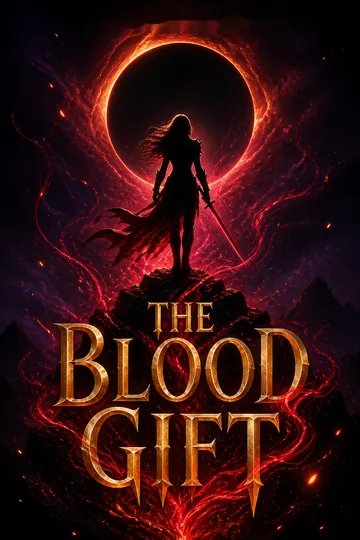
The Blood Gift Duology Series Series
Download PDF
Download EPUB
.epub digital book format is ideal for reading ebooks on phones, tablets, and e-readers.








