


Plot Summary
Gar Nasim’s Warning
On Gar Nasim, Deka searches the ruins for her mother while hiding from the gods who want her power. Her body is breaking down: the golden sores spread whenever she uses her abilities, because her kelai, the source of her divinity, was severed from her. Inside Ixa, her blue, shape-shifting companion, she can escape the pain, but returning to her own skin brings it rushing back.
Britta sees that Deka’s sharp temper conceals a deeper fear: finding her mother may restore Deka’s power, but becoming a god could separate her from the friends who have become her family. Before Deka can answer that fear, a divine mist surrounds the ruins. It lures Keita, Li, and Lamin away, then snatches the whole group into darkness.
The opening makes bodily pain a force that shapes Deka’s choices, not merely a symptom of her past. Entering Ixa gives her relief, but the escape also lets her postpone the future her quest demands. Britta names the emotional cost Deka cannot face: the same discovery that might save her could take her away from everyone she loves. The mist interrupts their intimate argument with a threat that exposes the limit of private refuge. Deka’s body, her friends, and the wider crisis are now bound together.
The Vale’s Sacrifice
The mist drops Deka and her companions into a red-sand world littered with the remains of those it has enticed. As the stars dim, the group finds a gathering of young girls prepared for sacrifice and discovers a hidden exit in a black stone column.
Four enormous vale wraiths emerge from the mountains, their glowing chests revealing their weak points, while the Idugu speak through one creature and confirm that a death would let them enter the realm. Deka and her friends rush the girls toward the gate, despite Palitz resisting rescue because she believes her death will save her village.
The group gets through with her, but Melanis, a once-beautiful alaki now transformed into a winged monster, ambushes them beyond the exit. She wounds Deka badly before a colossal stranger named Myter drives her off and heals Deka.
The girls’ ritual repeats the structure that once trapped Deka: religious authority persuades the vulnerable that obedience is a choice, then calls their destruction a virtue. Palitz’s resistance makes rescue psychologically harder than simply defeating the wraiths, because Deka must challenge a belief system as well as a monster. The Idugu’s use of the wraith as a speaking vessel reveals that divine power works through proxies and human institutions. Myter’s intervention offers a different model of power, though Deka has every reason to distrust another miraculous rescuer.
The Pathway Stranger
Myter identifies themself as a godsworn of Bala, a deity from the supposedly unreachable land of Maiwuri, and summons the god to escort the group through the pathways. The children they rescued choose to travel with their families rather than return to villages where their lives may still be in danger.
On the journey, Myter explains that a godsworn serves as a mortal intermediary for a deity, and that Ixa is Deka’s own bonded companion. Then Lamin removes the false face he has worn for years.
He admits he is a godsworn of Sarla, sent to watch Deka and guide her toward the truth about Otera’s gods. Covenants prevented him from explaining himself, but that does not soften the betrayal for Deka or her friends. Lamin’s silence had been both protection and surveillance.
The revelation complicates the group’s understanding of trust without making betrayal a simple matter of villainy. Lamin’s covenant explains why he could not speak, but his friends still bore the consequences of being watched without consent. The distinction matters: an imposed duty can account for an action without erasing its harm. Myter’s definition of godsworn also unsettles the hierarchy Deka knows, presenting divine service as a relationship rather than ownership. Ixa’s bond becomes more than comfort; it is evidence that companionship may be part of how power is shared.
The Ebiki Answer
The pathways bring Deka’s party to the ocean below Laba, Maiwuri’s floating capital. As they travel, Ixa transforms into a tiny winged creature and recognizes a vast group of ebiki beneath the water. Their queen, Ayo, rises to meet Deka and calls her name with the others.
Their collective invocation draws the gold from Deka’s wounds and fills the emptiness left by her severed kelai, granting her roughly two weeks before her strength begins to fail again. In Laba, the group receives food, clean clothes, and a day of rest.
Deka’s new finery makes her feel conspicuously honored, while Keita’s affectionate touch reminds them both that her eventual transformation may end their mortal relationship. They decide to see Deka’s mother before the next step of the quest forces that future into view.
The ebiki’s healing is relational rather than transactional: they answer Deka because Ixa belongs to them, and their recognition gives her a temporary sense of wholeness. That relief is real, but its limited duration prevents it from becoming an easy solution. The new clothes and rest likewise offer care without erasing the urgency of her mission. Meanwhile, the prospect of reunion sharpens Deka and Keita’s fear of separation. The scene makes healing feel like a borrowed interval in which the characters can experience tenderness before duty resumes.
A Mother’s Wraith
At the Hall of the Gods, Deka finally embraces Umu, the mother she has crossed Otera to find. Their reunion is interrupted by the Maiwurian pantheon’s account of the crisis: the Oteran gods’ corruption is spreading through shadow vales, threatening all twelve continents.
Umu then reveals that her spirit survives only as a wraith bound to the Hall. Myter rescued her spirit from Otera, but her body remained behind, while Deka’s kelai is still hidden somewhere in the empire. Umu believes the location of her body can lead Deka to it.
The gods say Deka must reclaim her kelai and willingly choose death to become the Singular again. Deka hears both a path to saving the world and a demand to surrender her mortal life, her friends, and the future she hoped to share with them.
The reunion replaces the fantasy of restoration with a more difficult truth: love can endure when a person’s body and life cannot be recovered. Umu’s condition makes the cost of intervention tangible, while the gods’ prophecy turns Deka’s future into a decision rather than an accident. Their demand echoes the sacrificial doctrines that once harmed her, even though they frame it as necessary for the world. Deka’s suspicion is therefore ethically grounded. She must determine whether she can act without accepting the gods’ authority over what her life should mean.
A Barrier Breached
Before Deka leaves Maiwuri, Queen Ayo gives her armor made from shed ebiki scales, which can protect her failing body as long as she avoids exhausting her own power. The respite ends when White Hands contacts the group through her gauntlets, disrupting Maiwuri’s protective barrier.
Melanis follows the disturbance into the capital, carrying Etzli’s power, and attacks Deka and her companions. Deka forces Melanis to the ground, but using her remaining strength makes golden sores reappear.
Etzli nearly captures her before the Maiwurian gods intervene under the rules governing contact between pantheons. Their action drives Etzli back, but their own realm is destabilized by the breach. Myter takes Deka into the pathways, where they promise to teach her how to use power without drawing on her dwindling life force.
Ayo’s armor protects Deka without pretending to cure her, a meaningful contrast with the gods’ larger promises. The breach shows that even benevolent intervention has consequences: White Hands’s attempt to reach Deka gives Etzli a route into a world the Maiwurians have carefully shielded. Deka’s brief victory over Melanis confirms that she retains agency, but the returning sores define its price. The new training is therefore not a convenient upgrade. It answers a specific failure, the belief that every act of power must be paid for from Deka’s already depleted body.
The Lesson of Space
In the pathways, Myter teaches Deka to draw on the Greater Divinity rather than spend her own remaining energy. Deka learns to perceive space as something she can bend, though her first attempt pulls Myter toward her and leaves her injured.
With practice, she opens a pathway without worsening her wounds. The group returns to Irfut, where Deka finds her childhood village burned and covered in strange vale sand. Elder Durkas is preaching that girls must sacrifice themselves to appease the gods, so Deka enters the temple, stops him, and throws him into the lake where he once drowned her.
Her childhood home has been ransacked, leaving no keepsake of Umu to follow. As Deka grieves, Okot appears and admits he has erased Umu’s memories from the house.
Myter’s teaching shifts power from an individual resource to a shared condition of existence. Deka’s first mistake shows that understanding is not the same as mastery, while her successful pathway gives her a tool she can use without repeating the old pattern of self-destruction. At Irfut, that new capacity meets the beliefs that shaped her early suffering. Durkas’s sermon confirms that the village still turns girls into offerings. Deka’s retaliation ends his authority, but the destroyed home makes clear that defeating an abuser cannot restore the life that abuse took.
Okot’s False Bargain
Okot offers to lead Deka to her kelai in exchange for amnesty for himself and Anok, but she refuses to spare gods who have harmed her friends. He strands the group inside a shadow vale, where a scent-producing wraith drugs them and begins pulling them toward its jaws.
Deka cuts herself with her blade to resist Okot’s hypnotic gaze, then uses her voice to wake Li and the others. Their combined attacks weaken the wraith, and Deka opens a pathway to the jungle grove where White Hands and her allies have gathered.
Adwapa and Asha help the group escape the creature. Deka reunites with White Hands, who has assembled resistance fighters across Otera, and learns that her friends’ cooperation, not a bargain with Okot, is what gets them through the trap.
Okot’s proposal exploits Deka’s longing for her mother and her exhaustion with searching, offering speed in exchange for moral compromise. The vale makes the danger of that bargain physical: her friends become prey while she is isolated and sedated. Deka’s voice, once tied to dangerous power, becomes a means of restoring other people’s agency. That distinction foreshadows her later understanding of power as shared rather than hoarded. The rescue also renews the emotional foundation Okot underestimated: Deka is not alone, and her allies act for one another without needing a god to command them.
Ilarong Chooses War
White Hands brings the resistance to Ilarong, the aviax capital, where the birdlike people have refused to join a war they consider someone else’s concern. During negotiations, White Hands asks Deka to open a pathway to the vale they escaped.
A vale wraith reaches through and attacks the assembly, making the threat impossible to dismiss. The aviax monarchs agree to provide troops, and their general joins White Hands’s growing coalition. Deka reunites with Adwapa, Asha, Katya, Rian, and other friends who have been gathering allies across the Southern provinces.
The respite at Ilarong lets the group share food, hot springs, and affection before the next mission. When Sayuri’s spies locate Deka’s kelai at Gar Fatu, however, the reunion becomes a farewell rehearsal: Keita’s family’s former summer home is their next destination.
The aviax do not join because White Hands wins an argument; they join after the danger crosses the boundary of their own protected space. The demonstration exposes the weakness of neutrality when a crisis can travel through a door. At the same time, the group’s rest is not ornamental. These ordinary acts of care restore the capacity to choose and fight after weeks of pursuit. Gar Fatu threatens that fragile reprieve because it combines Deka’s possible ascension with Keita’s most painful memories. The coming mission places collective survival beside deeply personal grief.
Gar Fatu’s Empty Box
At Gar Fatu, Keita guides the group through caves beneath the summer home where his family was killed. He struggles to enter the preserved house, and Deka stays beside him until he can face the room containing their bodies.
The estate is intact because remnants of Deka’s kelai have preserved it, but the obsidian box that once held her power is empty. Keita lays his family together and burns the house as a funeral pyre, accepting that his childhood did not cause their deaths.
An indolo then carries a message from Anok, who warns that the goddesses are hunting Deka. Using the sensation of her kelai, Deka tracks it to Oyomo’s Eye, the imperial palace. Melanis overhears the discovery, so White Hands prepares an assault on Hemaira before the gods can move the kelai again.
The preserved house links Deka’s unconscious divine influence to Keita’s unresolved grief: her love has kept his family from remaining only as a scene of violence. Keita’s decision to arrange and burn their bodies gives him a ritual of his own, rather than leaving the last account of their deaths to the gods or the emperor who engineered them. Deka’s empty box turns that intimate release into renewed danger. She leaves Gar Fatu with a clearer sense of what she seeks, while Keita leaves the house having faced the place he once could not enter.
Hemaira’s Open Wound
White Hands assembles a vast coalition of humans, alaki, jatu, aviax, equus, and deathshrieks outside Hemaira. To reach the city quickly, Deka draws on the Greater Divinity and opens one enormous pathway across the plain. White Hands destroys the city walls, revealing the gods and their armies already fighting inside.
Deka alone can see hundreds of vale entrances spreading through Hemaira, where civilians and soldiers are being killed to feed both pantheons. She uses her voice to halt the advancing coalition and order a retreat, nearly exhausting her body in the process.
While the armies pull back, Melanis hunts for Deka by sensing her unusual radiance. Deka realizes she shines more brightly than anyone else in the combat state and dims that light, hiding herself in the crowd before leading her friends toward Oyomo’s Eye.
Deka’s power creates both the army’s route and the danger that could destroy it. Her decision to stop the advance sacrifices the appearance of a flawless plan in order to protect people who do not know they are walking into a slaughter. The act also reveals the tension between leadership and visibility: to save the coalition she must expose her voice, but to reach the kelai she must conceal her divine signature. Learning to dim herself is not self-erasure; it is a tactical refusal to let the gods define her as a beacon they can track.
The Gates Around Oyomo
The entrance to Oyomo’s Eye is ringed with nearly invisible vale gates designed to capture anyone who approaches. Keita tests them by throwing a violent jatu into their reach, discovering that each gate vanishes after taking a victim.
Britta, Belcalis, Li, and Kweku help clear enough space for the group to cross. Inside the emptied palace, Okot waits with jatu and Forsworn guards. Rather than alert his brothers, he kills the guards and holds the other Idugu back long enough for Deka’s party to enter the kelai chamber.
Okot admits that Anok has shown him how their pantheons are corrupting the world, and that he intends to return with her to the Great Circle. In the chamber, Umu appears to offer Deka the box, but Deka recognizes Etzli inside her mother’s body and refuses to trust the apparent reunion.
The trap outside the palace turns the Idugu’s cruelty into a tactical weakness: their gates are effective but expendable, and Keita uses that cost against them. Okot’s decision to help Deka complicates the enemy category without absolving his earlier manipulation. His change rests on a renewed relationship with Anok and recognition of shared responsibility, not sudden innocence. Etzli’s disguise then attacks Deka at her most vulnerable point, borrowing the face of the mother she has already lost. Deka’s refusal marks a hard-won distinction between longing and evidence.
The Singular Reborn
Etzli reveals herself and turns Umu’s body into a weapon, restraining Deka and her companions while fighting for the kelai. She kills Katya, Rian, Kweku, and Asha, then breaks Deka’s ebiki armor and drives her toward death.
Deka bargains for the survivors’ release and orders them to leave, but Britta destroys the arcane jewel that blocks pathways. Deka reaches across the world to summon Queen Ayo and the ebiki, who attack Etzli. White Hands and Sayuri kill Melanis. As Deka dies, her kelai opens and reunites her with the Greater Divinity.
Reborn as the Singular, she frees Anok and Okot; the former pair reunite and disperse together. Deka then sings the remaining six Oteran gods out of existence, closes the vales, returns their human victims, and sends the creatures they created to a world where they can live without preying on Otera.
The climax refuses the easy fantasy that restored power can undo every loss. Deka cannot save the friends Etzli kills, and she must accept that grief even as she becomes capable of ending the gods’ violence. Her final transformation is not a victory over mortality so much as a change in how she understands connection: the power she feared as a solitary burden is part of a living whole. She also distinguishes judgment from vengeance by preserving the victims and relocating the created monsters rather than destroying them. Her new divinity is defined by restraint and care, not dominion.
A Chosen Afterlife
After the battle, Deka carries Umu’s spirit to the Blissful Lands, where Umu joins her husband and the childhood version of Deka she lost. Deka returns to her grieving companions and cannot bring back Asha, Katya, Rian, or Kweku, but she shows their loved ones a path to the Afterlands so they can accompany them for a time.
She then asks each survivor whether they want to become divine. Britta and Li choose mortal lives together; Adwapa declines after losing her twin; Acalan plans to visit Maiwuri; Belcalis remains to lead Otera. Keita and White Hands choose to join Deka, and the three leave together. Deka’s new order does not force immortality on those she loves. It makes their choices possible.
Deka’s first acts as a god are acts of accompaniment, not rule. She walks with Umu into rest, acknowledges the dead without pretending to reverse their deaths, and gives the living access to a meaningful farewell. Her offer of ascension is deliberately not a command. That choice corrects the old gods’ central failure: they treated other beings as instruments of their own purposes. Belcalis’s political future and Britta and Li’s chosen marriage also show that repairing the world requires mortal institutions and relationships, not only divine intervention.
Epilogue
Nearly a decade later, Deka watches Britta and Li marry in a newly united Otera. The old divine wars have ended, the barrier between Maiwuri and Otera has fallen, and Belcalis governs as empress. In the market afterward, Adwapa meets a child named Asha, a reborn version of her lost twin, who dreams of becoming a warrior and may one day train at the Warthu Bera.
The child’s freedom to choose her life gives the survivors a glimpse of the world they fought to create. Deka, Keita, and White Hands remain divine, but they walk beside their mortal friends when they can.
The epilogue measures victory through ordinary freedoms rather than divine spectacle. Britta and Li’s marriage joins traditions without ranking one partner above the other, while Belcalis’s rule suggests that political power can pass to someone once excluded from it. Asha’s rebirth does not erase Adwapa’s grief; it lets grief coexist with new possibility. The child’s ambition matters because it is hers, not a role assigned by priests or gods. Deka’s distance from mortality remains, but her presence beside her friends keeps divinity from becoming another form of separation.
Analysis
The novel’s central conflict is not simply between a god-killer and a pantheon. It is between two models of power. Otera’s gods treat worship as entitlement and sacrifice as fuel; the Maiwurian account of the Greater Divinity imagines every being as part of a shared order. The distinction matters because Deka has been shaped by institutions that taught her to confuse obedience with goodness and suffering with moral worth. Her ultimate task is therefore both political and psychological: destroy the gods without inheriting their assumption that strength grants the right to decide other people’s lives.
The story tests this question through intimate relationships. Britta calls Deka back from self-isolation; Keita exposes how trauma can turn protection into withdrawal; Ixa embodies care that is mutual rather than possessive. Even Lamin’s secrecy asks whether a protective purpose can justify withholding the truth. These relationships prevent Deka’s mission from becoming an abstract rescue of the world. She must act for people whose choices and grief remain real, not treat them as the price of victory.
The book also refuses a clean equation between death and failure. Deka cannot undo the losses Etzli causes, and she cannot restore her mother to mortal life. Instead, she learns to honor the dead, make room for chosen afterlives, and offer the living a future that is not compulsory. Her final refusal to impose divinity on her friends is the clearest proof that she has not become the tyrant she feared. The epilogue extends that principle into civic life: the new world matters because Britta and Li can marry as equals, Belcalis can govern, and a child can choose to become a warrior. Deka’s victory is not that she controls the future. It is that she helps make choice possible.
Review Summary
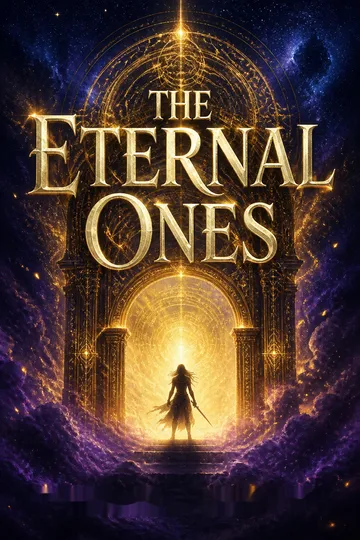
The Eternal Ones concludes Namina Forna's Deathless trilogy with mixed reviews. Many readers praise the diverse characters, complex world-building, and themes of empowerment. They appreciate Deka's character growth and the emotional depth of relationships. However, some found the pacing inconsistent and plot developments convenient. Critics noted a lack of character development for secondary characters and confusion about the magic system. Despite these criticisms, most readers found it a satisfying conclusion to the series, with its exploration of power, friendship, and identity.
People Also Read


Characters
Deka
The reluctant god-killerDeka is a young warrior whose golden blood and supernatural abilities have made her a target of Otera’s gods. Her body is failing, her history is scarred by religious abuse, and her search for her mother is also a search for the source of her own power. She is fiercely protective, often so focused on other people’s survival that she hides her fear and lashes out at those trying to help. Her deepest struggle is not simply whether she can defeat the gods, but whether power inevitably turns its bearer into an oppressor. Her bond with her friends and Ixa anchors her to ordinary forms of love, even as her identity reaches beyond the mortal world.
Britta
Deka’s steadfast heartBritta is Deka’s closest friend, a powerful fighter who manipulates earth and meets crises with blunt affection. Her humor and physical confidence can make her seem invulnerable, but she is deeply affected by watching Deka suffer and by the constant danger facing their group. Britta is willing to challenge Deka when pain turns into isolation, and her loyalty is practical rather than merely reassuring: she fights, plans, and keeps insisting that Deka is not alone. Her relationship with Li gives her a source of intimacy beyond Deka, while her friendship with Deka remains central to the family they have built.
Keita
The fierce, tender warriorKeita is Deka’s sweetheart, a disciplined jatu warrior whose fire responds to his emotions. He learned to survive through combat and self-control after losing his family as a child, so he often hides grief behind competence and silence. With Deka, he is protective without trying to diminish her strength, though fear of losing her can make him retreat into himself. His tenderness is especially visible in the small moments he creates for her, while his history at Gar Fatu reveals the cost of the violence that shaped him. He wants to remain beside Deka, but he also has to confront what that desire could ask of both of them.
Ixa
Deka’s shape-shifting bondIxa is Deka’s blue, shape-shifting companion and the creature she trusts most completely. He can carry her, ease her pain, and communicate with her through their shared mental bond. His directness and eager affection offer Deka a relationship without the guarded silences that complicate her ties to people. Ixa is not a tool or mount, despite how often others rely on his abilities; he has his own needs, instincts, and connection to the ebiki. His bond with Deka gives the story a model of companionship in which care moves both ways.
White Hands
The veteran spymasterWhite Hands is an ancient alaki, strategist, and former mentor to Deka. Her bone-white gauntlets allow her to project herself over great distances, and her skill at gathering intelligence makes her a crucial organizer of resistance. She rarely displays vulnerability, preferring preparation and dry judgment to reassurance, but her fierce investment in Deka and Otera is unmistakable. She understands that defeating the gods will not automatically repair the societies built to serve them. Her complicated ties to the Gilded Ones, Anok, and her fellow Firstborn give her a long view of power’s damage, as well as a personal stake in changing its course.
Umu
Deka’s missing motherUmu is Deka’s mother, a former Shadow trained in secrecy and combat. Her love for Deka led her to hide the truth of her child’s origins and risk herself to prevent the gods from claiming her. Umu is resourceful and protective, but her efforts unfold within a world where even a skilled assassin cannot control the powers arrayed against her. Her reunion with Deka is shaped by tenderness, guilt, and the difficulty of telling a child the truth without asking her to carry a parent’s regrets. Umu represents both Deka’s human ties and the limits of rescue.
Myter
Bala’s pathway guideMyter is a towering godsworn of Bala, impatient, incisive, and more compassionate than their sharp manner first suggests. They travel between Maiwuri and Otera under strict divine covenants and know how to manipulate pathways and time. Myter challenges Deka’s assumptions, sometimes harshly, because the crisis leaves little room for comforting ignorance. Their own history gives them sympathy for children caught in divine conflict, and their loyalty to Bala is grounded in partnership rather than submission.
Lamin
The silent watcherLamin is a quiet, gentle giant who has fought beside Deka’s group while concealing his identity as a godsworn of Sarla. His silence comes partly from divine covenants, but it also makes him an unobtrusive observer, a quality that lets him gather information without drawing attention. He is thoughtful and loyal to the larger purpose he was given, yet his secrecy damages the trust of the people he calls friends. His relationship with Deka’s group raises difficult questions about whether good intentions can excuse surveillance.
Anok
The dissenting goddessAnok is the wisest of Otera’s goddesses and the one deity who tries to aid Deka. She is connected to White Hands as a divine mother and to Okot as her counterpart within the old pantheon. Anok’s history carries both compassion and grave mistakes; she has tried to restrain her kin without always succeeding. She communicates in fragments and visions, but her underlying concern is clear: the gods have forgotten their purpose and are endangering the world they were meant to serve.
Okot
The divided IduguOkot is one of the male gods known as the Idugu, a powerful and secretive figure whose anger is tied to an old wound involving Anok. He is capable of manipulating minds and creating traps, and he treats mortals as pieces in a divine contest. Yet his attachment to Anok complicates his understanding of himself and the choices he makes. Okot embodies the way grievance can harden into cruelty while leaving a person capable of recognizing, too late, that the injury has become part of a larger corruption.
Etzli
The hungry goddessEtzli is a Gilded One associated with growing things, though her vines and flowers can become instruments of predation. She once presents herself as a maternal figure to Deka, making her betrayal especially personal. Etzli believes divine power entitles its holder to rule and feed on others, a conviction that shapes her treatment of both mortals and fellow gods. Her polished, nurturing appearance masks a possessive hunger for control.
Melanis
The fallen FirstbornMelanis is an ancient alaki and one of the Gilded Ones’ Firstborn daughters. Once admired for her beauty and power, she is now a feared warrior who serves as a vessel and instrument for the goddesses. Pride, loyalty, and a taste for domination shape her conduct. Her long history with White Hands and Sayuri makes her more than a recurring enemy: she is part of a family whose affection and rivalry have been distorted by divine power.
Belcalis
The guarded tacticianBelcalis is a sharp-eyed fighter who manipulates her own golden blood and rarely trusts a situation at first glance. Her caution comes from surviving severe harm, and she protects herself through discipline, observation, and a fierce refusal to appear vulnerable. Beneath that reserve is a deep capacity for loyalty and care, especially toward Deka and the group they have chosen as family. Belcalis often sees practical risks others overlook, but she also learns to offer tenderness without surrendering her independence. She is one of Deka’s clearest mirrors: wary of power, but unwilling to let fear dictate every choice.
Adwapa
The sharp-tongued spyAdwapa is one of the twin spies trained by White Hands. She is quick-witted, bold, and able to read danger with the instincts of someone who has spent centuries moving through hostile territory. Her humor keeps fear from taking over, though it can conceal how deeply she values her closest relationships. Her bond with her twin sister Asha is central to her sense of self.
Asha
Adwapa’s observant twinAsha is Adwapa’s twin and fellow spy, a perceptive fighter who balances her sister’s daring with careful attention. She is loyal to the group and sensitive to the emotional costs of their choices, including the complicated place Lamin occupies in her life. Asha is not simply one half of a pair; her own judgment and courage shape how the twins respond to danger.
Li
Britta’s devoted sweetheartLi is Britta’s sweetheart, a quick-witted fighter whose earth abilities grow as he discovers what he can do. He often uses teasing to defuse tension, which can make him seem less serious than he is. His loyalty becomes clearest when danger reaches Britta or the rest of the group. Li’s relationship with her is affectionate and playful, but it is also a partnership in which each can challenge the other.
Katya
The towering deathshriekKatya is a red-spiked deathshriek, a powerful and unusual being whose size contrasts with her gentle manner. She is Deka’s bloodsister and Rian’s beloved, and she communicates through the battle language used by the group. Her warmth is direct, but she is also a formidable fighter whose loyalty does not depend on being treated as human.
Rian
Katya’s loyal partnerRian is Katya’s human partner, a gentle man with no warrior’s training but a fierce determination to remain at her side. He learns the group’s battle language so he can communicate with her, showing how devotion becomes practical effort.
Kweku
The irrepressible fighterKweku is Adwapa’s partner and a fighter whose humor and appetite often puncture the group’s tension. He is brave, sociable, and more capable than his joking manner initially suggests.
Acalan
The studious uruniAcalan is Belcalis’s uruni, a thoughtful scholar who is drawn to history, strategy, and the recovery of knowledge. His curiosity helps the group make sense of unfamiliar places and customs.
Sayuri
The lucid war queenSayuri is an ancient Firstborn and former war queen whose body has become that of a deathshriek. She has a fierce, unsettling manner and a mind that sees through the stories others tell themselves. Her long history with White Hands mixes resentment with hard-earned respect, and her insight helps Deka question what leadership and divine power should mean.
Palitz
The devoted chosen girlPalitz is a young girl raised to believe that sacrificing herself will save her village. Her conviction is sincere, not foolishness, which makes her a vivid example of how authority can make self-destruction feel like agency.
Nevra
The questioning survivorNevra is one of the girls marked for sacrifice. More willing than Palitz to question the priests, she helps the others consider escape and speaks up for her family’s safety.
Lord Kamanda
The genial ambassadorLord Kamanda is a wealthy Hemairan noble who uses charm, money, and social intelligence to build alliances. His cheerful manners conceal a practical understanding of risk and responsibility.
Karmoko Thandiwe
The trusted battle mentorKarmoko Thandiwe is Deka’s former instructor in battle strategy and a yandau who lives outside the gender roles imposed by Otera. They are perceptive, measured, and willing to remind Deka that becoming powerful does not require surrendering the right to choose who she will be.
Plot Devices
The Kelai
The stolen source of divinityDeka’s kelai is the divine substance that connects her mortal body to her original power. Its severance causes the golden sores and gradual bodily collapse that govern the urgency of her quest. Because the Oteran gods also want to seize it, finding the kelai becomes both a race against Deka’s death and a struggle over who controls divine power. The search leads from Umu’s spirit to Gar Fatu and finally to Oyomo’s Eye. It is not merely a magical object to retrieve: it is Deka’s own power, and reclaiming it forces her to decide what kind of being she will become.
The Combat State
A vision through divine essenceDeka’s combat state strips away ordinary appearances and lets her perceive the strengths, weaknesses, and deeper essences of beings around her. It is essential in fights against creatures with hidden vulnerabilities, but it also lets her track the nature of her kelai and eventually conceal her own radiance. The state is not simply a battle technique: it connects Deka to forms of perception she does not yet understand. Its costs change as she learns to draw power from beyond her own failing body.
The Pathways
Routes through space and timeThe pathways are Bala’s supernatural roads, where space and time can be altered. They carry Deka’s group between distant realms and later become the setting where Myter teaches Deka to open her own doors. The pathways also make clear that movement is tied to choice: each traveler must walk an individual road before joining others. Their fading as the Oteran corruption spreads turns them from a convenient route into evidence that the wider world is coming apart.
The Greater Divinity
The power shared by all lifeThe Greater Divinity is the connective force Myter teaches Deka to use in place of her depleted personal energy. It allows her to bend space, strengthen her abilities, and eventually understand that gods and mortals are not separate kinds of existence. The force is initially frightening to Deka because every powerful gift she has known came with manipulation or pain. Her growing ability to trust it marks a shift from imagining power as private possession to recognizing it as a shared responsibility.
Shadow Vales
Sacrifice converted into powerShadow vales are artificial pockets of hostile reality created by the Oteran gods. They lure victims, hold them for sacrifice, and let the gods feed on their deaths. Their monsters and shifting entrances make them both physical dangers and visible proof that the pantheons’ conflict is damaging the world itself. As the vales spread from hidden prisons into cities and across realms, they force Deka’s allies to abandon the idea that the war can remain contained.
Deathless Series
Download PDF
Download EPUB
.epub digital book format is ideal for reading ebooks on phones, tablets, and e-readers.








