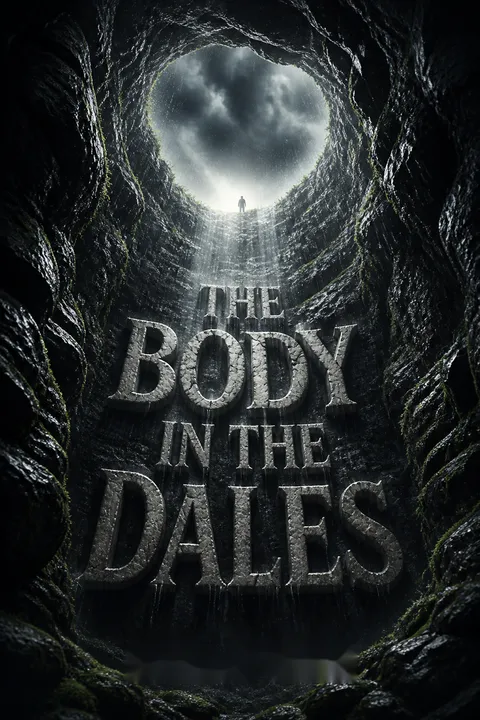


Plot Summary
Prologue
A caving party follows a stream through the dark passages beneath the Yorkshire Dales. Their leader expects a difficult but ordinary journey until he trips over something soft in the water.
His lamp falls on a dead man in everyday clothes, his skull crushed. The body is out of place in a cave, and the discovery becomes more disturbing when the caver recognizes him.
The opening makes the cave a practical danger before it becomes a mystery. Water, darkness, and difficult passages explain why a body underground would be alarming, but the dead man's ordinary clothes make the scene feel deliberately wrong. The discoverer's recognition turns an anonymous body into a local rupture: this is not an accident involving a stranger, but violence carried into a close-knit community. The cave also creates a useful tension between what can be seen and what remains concealed. Its darkness is physical, but it will soon become a problem of knowledge and evidence.
The Body in Jingling Pot
Detective Sergeant Andrew Carter arrives from the Metropolitan Police for his first day under Chief Inspector Jim Oldroyd, only to be driven straight into the Dales to investigate the dead man. David Atkins, a local caver, has been found far inside Jingling Pot wearing jeans and a T-shirt, with a crushed skull and no equipment.
Experienced cavers insist he could not have entered that deep passage unprepared. More troubling, two rescuers say they crossed the same passage three days earlier and saw no body, though its damp condition suggests it had been there for days. A rusty iron hook lies nearby. Oldroyd sends Carter to question locals while he begins studying the caves.
Carter's abrupt transfer from city policing to a landscape shaped by underground routes gives the case its first mismatch: his familiar methods meet evidence that seems to defy ordinary movement. Yet Oldroyd does not treat the cave as supernatural. He notices that the hook, the body's condition, and the cavers' account are material clues, even if their meaning is not yet clear. The apparent contradiction about when the body arrived becomes the investigation's engine. It also introduces Oldroyd's characteristic patience: he resists a quick suspect and asks how the crime physically happened before deciding who committed it.
A Village Full of Motives
Carter's first interviews turn Burnthwaite into a map of old grievances. Mechanic Sam Cartwright says Atkins owed him for repairing a car, while Red Horse landlord Trevor Booth recalls a recent argument between Atkins and chef Geoff Whitaker, who had also lent him money. The neighbours report that married shopkeeper Anne Watson had visited Atkins secretly, confirming an affair Booth already suspected.
At Atkins's cottage, Carter finds a locked bedroom used as an office, packed with files on property and investments. Whitaker admits the unpaid loan but becomes evasive when asked about the body and his last night with Atkins. Every lead adds a plausible motive, but none explains why anyone would drag a body so far underground.
The village's intimacy works as both investigative advantage and pressure cooker. Booth, neighbours, and acquaintances can quickly connect private encounters, unpaid debts, and public grudges, yet gossip does not distinguish a serious motive from everyday resentment. Atkins's locked files sharpen that uncertainty: his charm and sexual exploits are only part of his reach into other people's lives. Whitaker's discomfort matters because his position as finder seems to contradict suspicion, but it cannot clear him. The case asks the detectives to resist moral arithmetic. A long list of people who disliked Atkins is not the same thing as an explanation for his particular murder.
Baxter Dies Before Speaking
John Baxter, a quiet caver who helped bring Atkins's body to the surface, telephones Oldroyd with a claim that he knows how the body reached its passage and who was responsible. He will not explain over the phone, so Oldroyd drives to meet him. Before he arrives, an intruder lures Baxter into his darkened workshop by scattering tools, then strikes him on the head with a hammer.
Oldroyd reaches the house to find the second murder scene and understands that someone knew Baxter was about to talk. The timing turns a baffling cave death into a deliberate effort to silence a witness. Baxter's computer is still open to local weather records, an unexplained detail Oldroyd preserves for later.
Baxter's death changes the case from a puzzle about concealment into a contest over knowledge. His call shows that someone has reconstructed the route or the method, while his murder demonstrates that the culprit can monitor, anticipate, and silence people. The weather records are easy to dismiss as irrelevant, but their presence gives the crime scene a second layer: Baxter was not simply frightened, he was testing a theory. Oldroyd's restraint is important. He does not pretend to know what Baxter discovered, and he treats the open computer as a question rather than a solution. The investigation now carries the cost of delay in stark human terms.
The Suspect Net Widens
As police interview the caving club, Atkins's ex-wife Sylvia, and the people around the Red Horse, the suspects multiply. Sylvia describes years of infidelity and financial opportunism; Susan Tinsley admits that she once had an affair with Atkins, while her estranged husband Stuart is now involved with Sylvia.
Carter's examination of Atkins's computer uncovers coded evidence of illegal property and share schemes involving two other people. Bill Watson, whose wife Anne was one of Atkins's lovers, disappears after the body is found.
Oldroyd and Carter also spot a watcher on the limestone fells, and officers later find a recently used shelter in a cave. Each discovery links someone to Atkins, but some links concern secrets and money rather than murder.
The investigation broadens because Atkins's conduct created overlapping forms of exposure. Affairs, money, and caving are not separate circles in this village; the same people meet in the pub, share expeditions, and conceal different kinds of shame from their spouses. That density makes circumstantial evidence unusually seductive. Watson's disappearance looks incriminating, while the coded files point toward fraud, but neither fact establishes murder. Carter's growing frustration contrasts with Oldroyd's insistence on separating suspicious behavior from proof. Their partnership is also developing: Carter brings financial-investigation experience, while Oldroyd reads the local terrain. The case rewards synthesis, not simply the accumulation of suspects.
Haverthwaite's Lost Passage
Oldroyd takes the rusty hook to Simon Hardiman, an outdoor-pursuits centre owner who knows the local cave systems, but Hardiman cannot identify it. A visit to antiquarian Gilbert Ramsden yields a rare Victorian book about early explorations by Sir William Ingleby and the local caver Joseph Haverthwaite.
In the book, Oldroyd finds a reference to iron rope anchors and a cryptic account of a dangerous route called the Devil's Passage, linking Winter's Gill Hole with Jingling Pot. Modern cavers believe the systems are unconnected, but the old account suggests otherwise. The hook may be one of Haverthwaite's anchors. Oldroyd now has a physical clue and a possible route that could explain how a body reached Sump Passage.
The Victorian book does more than supply local color. It challenges the authority of contemporary maps and expert certainty by preserving knowledge that the caving community has lost. The hook becomes legible only when Oldroyd connects it to a practice from another era, demonstrating how an object can carry history without announcing its meaning. The forgotten passage also changes the central question. The body no longer needs to have been dragged through the entire known system, but any proposed route must still be physically verified. Haverthwaite's warning of danger makes the solution inseparable from risk: solving the case requires the detectives to enter the very environment that hid the evidence.
Watson at the Village Fair
Police learn that the missing Bill Watson has been seen living rough near Burnthwaite. On the day of the village fair, Oldroyd and Carter suspect he may risk returning to watch his daughter Alice compete. They find Anne and Alice near an ice-cream van and realize Bill is concealed inside when the girl quietly engages someone beyond the vendor's view.
Watson briefly reveals himself to watch the race, then escapes the van in running gear and blends into the fell-race crowd. Carter pursues him through the spectators and collides with Morris dancers, while Inspector Craven corners Watson in a lane. Watson is arrested, but he gives a flimsy account of hiding because of marital tension and offers no evidence connecting himself to either murder.
The fair makes private fear visible without making Watson the answer. His return is driven, at least in part, by his attachment to his daughter, and the ice-cream van lets him approach family life while remaining hidden from the village. Oldroyd reads that contradiction as a clue, but the arrest produces only suspicion, not proof. The crowded pursuit also punctures the solemnity of the investigation: Carter's collision with the dancers is comic, yet the scene underscores how difficult it is to seize one person in a community performing its ordinary rituals. Watson's release preserves the distinction between a guilty secret and a murderer's guilt.
Water Moves the Dead
Oldroyd brings Carter, Detective Sergeant Stephanie Johnson, and cave-rescue leader Alan Williams into Winter's Gill Hole to test Haverthwaite's clue. In a chamber, they hear rushing water through the rock and locate a concealed passage toward Jingling Pot. The route is hazardous and partly blocked. Inside, Carter discovers the remains of an old caver beneath a boulder, and Steph narrowly escapes when a section of passage collapses.
At the far side, a flooded torrent fills the area beneath Sump Passage. Oldroyd deduces that heavy rain raised the water high enough to carry Atkins's body from the hidden route into the known passage; when the water fell, the body was left where Whitaker found it. Baxter's weather records support the theory.
The cave expedition resolves the story's impossible timing through geology rather than coincidence. Rain is not background atmosphere: it is an active force that changes the route, moves a body, and briefly conceals the murderers' method. The discovery also revises what counts as evidence. A branch caught high in the passage, the rusted hook, and Baxter's weather data become parts of one causal account. At the same time, the old remains and Steph's near fall expose the cost of treating the cave as a puzzle box. Human plans operate inside a system that can shift without regard for intention, making the murderers' apparent control both ingenious and fragile.
The Women Compare Notes
After Watson returns, Anne presses him about the investments he shared with Whitaker and Atkins; he admits Whitaker is involved but still hides the details. Helen Whitaker separately confronts Anne, fearing the men may have lost family savings or committed a crime.
Their conversation exposes a financial secret without yet proving murder. Meanwhile, Steph finally finds an old newspaper report about two schoolgirls swept downstream during an outdoor-pursuits trip at Garthwaite Hall. She recognizes why the incident matters and gives the clipping to Oldroyd.
The investigation also catches neighbours Gary Shaw and Carol Anderson breaking into Atkins's cottage to retrieve a hidden cocaine stash, while Cartwright had separately searched there for money. Atkins's criminal life has generated more than one kind of trespass.
The women make progress where the men have relied on concealment. Anne and Helen compare observations about evasive phone calls and hidden financial dealings, turning household unease into a usable lead. Steph's archival breakthrough supplies the missing context: the school accident threatened the outdoor centre's reputation, making Atkins's knowledge potentially more valuable than his romantic history. The cocaine discovery is a deliberate complication, showing that the investigation's apparent web of crime includes unrelated offenses as well as the central murders. By keeping these strands distinct, the detectives can avoid treating every secret as part of a single conspiracy. The chapter's movement is from rumor toward a specific, testable form of leverage.
The Scheme Comes Apart
With Atkins's coded computer files decoded and Steph's clipping in hand, Oldroyd's team prepares arrests. Before the operation reaches them, Bill Watson and Geoff Whitaker turn themselves in at Skipton. They admit they invested in Atkins's illegal schemes and lost heavily, but deny killing him or Baxter.
Their financial panic explains why both men concealed their dealings and why Watson fled, not who committed the murders. At Garthwaite Hall, police confront Simon and Caroline Hardiman.
Caroline stays behind and admits that Atkins discovered an inadequately qualified worker had helped supervise the school outing, then threatened to expose the centre. She and Simon lured Atkins to a van, where Simon struck him with a hammer, then hid his body through the forgotten passage.
The confessions separate motive from method and prevent the mystery from collapsing into a convenient collective conspiracy. Watson and Whitaker are guilty of fraud, but their guilt is not the same as responsibility for murder. Caroline's account identifies a more specific pressure: Atkins could destroy the business and the life she and Simon had built. Their crime grows from a real institutional failure, yet the choice to silence him is theirs. The setting matters psychologically. The Hardimans are not defending wealth in the abstract; they are defending a fragile enterprise and a chosen life. That attachment helps explain their desperation without turning it into justification.
Alum Pot's Final Choice
Caroline explains that after the flood carried Atkins into Sump Passage, Simon realized Baxter could expose the hidden route. Simon went alone to Baxter's home and killed him; Caroline says she refused to take part in that second murder. As she is arrested, Simon flees in a van. Carter pursues him across the fells and finds him at the edge of Alum Pot, a deep limestone shaft.
Carter tries to bring him back, but Simon steps backward into the drop and dies. The police recover the murder weapon at Garthwaite Hall and find Atkins's blood in the van. In the aftermath, Carter and Steph acknowledge their growing affection, while Oldroyd's attempt to reconnect with his estranged wife Julia still meets uncertainty.
The climax distinguishes the couple's shared first crime from Simon's solitary second one. Baxter is not collateral damage in the original plan; he is deliberately killed because he can expose it, and Caroline's refusal gives her guilt a different shape from Simon's. At Alum Pot, Carter cannot convert understanding into rescue. Simon's choice leaves the law with evidence and a surviving accomplice, but no trial can question the man who designed the murders. The ending also distributes consequence beyond the case: Carter's emotional openness grows after danger, while Oldroyd remains unable to solve his private relationship as cleanly as a criminal puzzle.
Epilogue
Weeks later, Oldroyd takes Carter walking in the fells. Carter now wears walking boots and feels at home in a landscape he once regarded as alien. A call from his London friend Jason briefly reconnects him with his old life, but Carter prefers the hills and the possibility of a relationship with Steph.
Oldroyd shows him a memorial to cavers drowned in an earlier flood and shares a Victorian poem about the peril and wonder of underground exploration. Carter understands why people keep returning to caves, even as he chooses the open air above them.
The final walk measures Carter's change through a concrete choice of place and company. He does not reject London as bad or the Dales as virtuous; he simply finds that the quiet landscape, his new work, and Steph matter more than the old routines Jason represents. The memorial prevents that affection from becoming romantic innocence. The hills are beautiful, but their caves have taken lives, and the flood that solved Atkins's murder belongs to the same natural power. Oldroyd's poem offers an explanation for continued exploration, not a defense of recklessness: wonder and danger remain joined. Carter can appreciate the fascination without surrendering his own judgment.
Analysis
The novel builds its mystery around a conflict between local certainty and physical reality. Cavers know the systems they have explored, the villagers know one another's affairs, and the suspects know which secrets they can hide. Yet each form of knowledge has a limit. A forgotten Victorian route escapes the modern maps; a familiar body appears in a passage where it was not seen days before; witnesses conceal financial and sexual histories that distort their testimony. Oldroyd solves the case by treating these limits as evidence rather than inconvenience. He joins the hook, the weather records, the old book, and the flood into one causal account.
The caves make the book's moral psychology concrete. The murderers try to turn a hidden passage into a controllable space, but water changes their plan and exposes the body. Their confidence in concealment is undone by the landscape they believe they understand. In parallel, the human suspects mistake secrecy for control. Atkins uses charm and financial promises to make other people dependent on him; the Hardimans respond to blackmail by committing a worse crime; Watson and Whitaker hide fraud and become plausible murder suspects. The story does not erase individual responsibility, but it shows how pressure and self-deception can make disastrous choices feel temporarily necessary.
The Dales community is neither idyllic nor corrupt by nature. Its closeness enables witnesses to notice affairs, debts, and absences, while the same closeness makes shame and gossip hard to escape. Carter's transition mirrors the investigation's movement from quick judgment toward contextual attention. He learns that country life is not a simpler version of city life, and that people cannot be understood by the first motive attached to them. Oldroyd, meanwhile, can solve the cave's physical puzzle but cannot force Julia to return. The contrast leaves a pointed distinction: evidence may establish what happened, but restoring trust requires another person to choose it.
Review Summary
The Body in the Dales receives mixed reviews. Many praise its engaging characters, atmospheric Yorkshire setting, and intriguing cave murder mystery. Readers appreciate the traditional police procedural style and DCI Oldroyd's character. However, some find the pacing slow, characters underdeveloped, and dialogue stilted. The book's descriptions of caving and the Yorkshire landscape are generally well-received. While some readers eagerly anticipate continuing the series, others express disappointment and frustration with the writing style and plot development.
Characters
Jim Oldroyd
Yorkshire puzzle-solving detectiveOldroyd is a sharp, unconventional chief inspector whose attachment to Yorkshire is as deep as his appetite for difficult cases. He teases colleagues, studies small physical details, and often withholds a developing theory until they have had a chance to think for themselves. His confidence in police work is tempered by a humane awareness of grief and consequence. Outside the station, he is less certain: his separation from Julia leaves him questioning whether he can change the habits that damaged their marriage. Music, books, and conversations with his sister Alison offer him other ways of thinking, but his work remains both his talent and his refuge.
Andrew Carter
Ambitious London investigatorCarter is a capable detective newly transferred from the Metropolitan Police, confident in city work but unfamiliar with the Dales and its caving culture. His father's unsolved killing helped draw him toward policing, and he takes the duty to solve crimes personally. Carter's directness sometimes outruns his judgment, especially when local knowledge or women's experiences challenge his assumptions. He is also at a point of reassessing the laddish habits and urban identity he once treated as permanent. Oldroyd's mentorship and Steph's candor give him room to become more patient without losing his energy.
Stephanie Johnson
Guarded local detectiveSteph is an experienced detective sergeant from the area, confident in her work and perceptive about people, but cautious in her private relationships. Her family history has made trust difficult, particularly with men who resemble her father, and this complicates her early connection with Carter. She is not defined by that fear: she can confront suspects directly, challenge Carter's assumptions, and follow an elusive memory until it yields a crucial newspaper report. She respects Oldroyd while retaining her own judgment, and her emotional guardedness coexists with warmth, humor, and a strong capacity for loyalty.
David Atkins
Charming local caverAtkins is an experienced caver who moves easily among the people of Burnthwaite, but his charm conceals a pattern of infidelity, unpaid debts, and risky financial dealings. He has a talent for noticing what others want and presenting himself as a route toward pleasure or profit. That talent makes him socially magnetic and morally unreliable at once. His relationships connect people who might otherwise have little in common, from cavers and spouses to business partners. The investigation must look beyond the many people who resent him to understand which particular secret gives someone a reason to act.
Simon Hardiman
Strained outdoor-centre ownerSimon co-runs Garthwaite Hall's outdoor-pursuits centre with his wife, Caroline. Strong, practical, and deeply invested in their life in the Dales, he has made a career from his expertise in caving and outdoor instruction. Financial pressures weigh on the centre, and he is protective of the future he and Caroline have built there. His professional knowledge gives him authority in the caving community, while his marriage is a central source of support. He is also proud and controlled, traits that can make it difficult for others to see how much strain he is carrying.
Caroline Hardiman
Practical centre co-ownerCaroline helps run Garthwaite Hall and carries much of the daily labor of keeping a struggling outdoor centre afloat. Capable and physically fit, she is also tired by the constant work, paperwork, and financial uncertainty that come with the business. Her partnership with Simon is close, shaped by shared effort and the hope that their chosen life in the countryside will succeed. Caroline tends to meet problems practically, but pressure can narrow her sense of available choices. She is perceptive about other people's motives and understands how a fragile livelihood can become emotionally inseparable from a sense of home.
Geoff Whitaker
Chef and experienced caverGeoff is the Red Horse's chef and an experienced member of the local caving community. He is married to Helen and is a familiar presence in the village, but money worries and private decisions have made him increasingly tense. His work gives him a steady role even as his finances feel precarious. Geoff is not naturally forthcoming under pressure, and his hesitation makes him difficult for Carter to read. His caving knowledge, connection to Atkins, and position as the man who finds the body place him at the center of the investigation's early suspicions.
Helen Whitaker
Protective, grieving sisterHelen is Geoff's wife and a part-time worker at the Wharfedale Gift Shop. She is protective of her family and quick to intervene when she thinks her husband is being unfairly accused. A loss from her youth has left her with painful associations with caving, even though Geoff continues to pursue it. Helen is controlled in public but carries unresolved anger and grief beneath that composure. She notices changes in Geoff's behavior and does not accept every explanation he gives, making her both emotionally invested in the investigation and capable of seeing what others overlook.
Bill Watson
Restless caver and shopkeeperBill runs the Wharfedale Gift Shop with Anne and shares a passion for caving and speculative investments. Restless and often evasive, he has difficulty facing financial or marital conflict directly. His affair with Atkins intensifies the strain at home, while his attachment to his daughter Alice pulls him back toward ordinary family life. Bill's tendency to retreat rather than explain himself makes his behavior look more sinister than it may be. His history with Atkins connects romance, money, and the caving club in ways that complicate the police inquiry.
Anne Watson
City-minded shopkeeperAnne manages the gift shop and feels constrained by the rural life she and Bill chose. Trained in interior design, she had hoped for a more creative future and resents being left with the daily work while Bill pursues his interests. Her affair with Atkins brought excitement into a life she experienced as narrow, but it also deepened the distance between her and her husband. Anne is sharp, self-possessed, and willing to ask direct questions when secrecy threatens her family. Her perspective helps expose the financial tensions hidden beneath the village's romantic gossip.
John Baxter
Quiet cave explorerBaxter is a solitary but respected caver, skilled in joinery and especially drawn to the risks of underground diving. He is not a conspicuous figure in the village, and his private nature means that few people know the details of his friendships. His work and his place in the caving club connect him to several of the people closest to Atkins. Baxter's caution about what he knows suggests a man who understands the consequences of speaking without proof. His attention to evidence makes him important to the investigation even before the detectives understand what he has discovered.
Stuart Tinsley
Wounded farmhand and caverStuart works with the dairy herd at Fell Farm and belongs to the local caving community. His marriage to Susan has been damaged by infidelity, and his affair with Sylvia Atkins grows from hurt as much as attraction. He is diligent but increasingly strained, caught between the demanding farm work and the emotional disorder around him. Stuart dislikes being made a fool of and can speak with anger when he feels exposed, yet he is also capable of acknowledging his own feelings. His connection to Atkins creates a plausible suspicion that does not automatically define his character.
Susan Tinsley
Barmaid seeking belongingSusan works behind the bar at the Red Horse and knows the private currents of village life. Her marriage to Stuart has left her lonely, and her past affair with Atkins has made her vulnerable to gossip and resentment. She is more perceptive than her position might suggest, noticing who meets whom and when. Susan struggles between protecting herself and disclosing information that could hurt someone she still cares about. Her decisions are shaped by a desire to be seen and valued, as well as by fear of what others may have done.
Sylvia Atkins
Self-reliant former wifeSylvia is Atkins's former wife and a nurse living in Burnley. She raised her children after a marriage marked by his affairs and financial unreliability, eventually training for a profession of her own. Her bluntness protects a hard-won independence, but memories of her marriage still carry bitterness. Sylvia is alert to the ways people can use charm and money to exploit others, and she has little patience for village politeness. Her history with Atkins places her among those with reasons to resent him, while her life beyond the marriage gives her another identity.
Bob Craven
Local police allyInspector Craven leads the local police presence in Skipton and knows the people and customs of the Dales. His practical manner and long experience help him work with cave rescuers without disrupting their expertise. Craven gathers witness accounts, follows leads into Burnley, and keeps Oldroyd informed as the suspect list grows. He can be skeptical of city detectives, but he respects Oldroyd's commitment to the region. His role is crucial to the investigation's breadth: he handles the patient local work that turns rumor into usable testimony.
Alan Williams
Cave-rescue leaderWilliams leads the Wharfedale Cave Rescue team and runs a cavers' cafe. He knows the underground systems intimately and treats their dangers with a mixture of expertise and respect. Williams helps recover Atkins's body, advises the police about the effort required to move it, and later guides the detectives underground. He can be superstitious in the face of dangerous conditions, but his caution comes from experience rather than fantasy. His knowledge gives Oldroyd access to the physical world of the caves, while his loyalty to the caving community makes the murders personally painful.
Sam Cartwright
Volatile village mechanicCartwright runs a ramshackle garage and is known for his temper, blunt speech, and practical knowledge of cars and caves. Atkins's unpaid repair bill gives him an obvious grievance, and his size and strength make him an easy suspect. Beneath his rough manner, he is a familiar figure in the Red Horse and has a grudging sense of loyalty to people he considers friends. Cartwright's habit of acting first and explaining later keeps the police wary, but his presence also supplies an important witness to the night Atkins disappeared.
Alison Oldroyd
Principled clerical sisterAlison is Jim Oldroyd's older sister, an Anglican priest with a strong social conscience and a formidable mind. She offers him spiritual and personal counsel without sparing him criticism, particularly about the way his devotion to police work has harmed his marriage. Alison understands how fear, pressure, and attachment can narrow a person's moral choices. Her perspective helps Oldroyd consider the human vulnerabilities behind a crime without excusing its consequences. She is both a refuge for her brother and an independent thinker with her own convictions about faith and social responsibility.
Julia Oldroyd
Estranged history lecturerJulia is Jim Oldroyd's separated wife and a history lecturer in Leeds. She has built an independent life after years in which Jim's work repeatedly took priority over their marriage and family. Their meetings remain warm enough to preserve possibility, but she does not make reconciliation easy or assume that affection alone repairs neglect. Julia's presence exposes a weakness in Oldroyd's usual confidence: he can pursue a difficult case with persistence, yet cannot dictate the terms of another person's trust.
Jason Harris
London life-long friendJason is Carter's old friend from Croydon, a buoyant and pleasure-seeking City worker who represents the fast social life Carter is leaving behind. He teases Carter about moving north and assumes that drinking, money, and sexual conquests remain the measures of a good time. Their affection survives the growing distance between them, but Jason's calls let Carter hear how his own priorities are changing.
Alice Watson
Young daughter seeking her fatherAlice is Bill and Anne Watson's daughter. Her longing to see her father draws him back to Burnthwaite during the fair, creating the opportunity for police to find him. She represents the family consequences of adult secrets without knowing their full shape.
Gary Shaw
Intrusive local neighborGary lives next door to Atkins with Carol Anderson. He and Carol observe the comings and goings around Atkins's cottage, supplying the police with information about his visitors and arguments. Their own illegal activity makes their testimony useful but not entirely disinterested.
Carol Anderson
Watchful local neighborCarol lives beside Atkins and notices his late-night visitors, including Anne Watson. She is willing to tell police what she has seen, but she and Gary also have secrets of their own. Her account helps confirm a romantic connection while adding another strand of criminal activity to the case.
Plot Devices
The Devil's Passage
The forgotten routeAn old connection between Winter's Gill Hole and Jingling Pot was recorded by Victorian cave explorer Joseph Haverthwaite, then lost from modern knowledge. Oldroyd links the rusted hook to the book's account of early rope anchors and uses the route to explain how the murderers could hide Atkins without dragging him through the full known system. Its dangerous, concealed character also gives Simon a way to control who can discover the body and creates the secret that makes Baxter a threat.
The Floodwater
Nature moves evidenceHeavy rain raises the underground stream until it can carry Atkins's body from the concealed passage into Sump Passage. Once the water recedes, the body remains in a place cavers can reach, creating the false impression that someone moved it after hiding it. Baxter's weather searches and the branch lodged high in the cave help Oldroyd reconstruct the flood's reach. Water is therefore both a physical hazard and the mechanism that exposes a crime the murderers thought they had concealed.
Haverthwaite's Book
History unlocks geographyA rare Victorian account of Yorkshire cave exploration contains descriptions of early equipment and a cryptic reference to a route between the two cave systems. Modern cavers dismiss the connection as impossible because it is absent from their maps. Oldroyd reads the book alongside the iron hook and the crime-scene facts, treating local history as evidence rather than decoration. The book gives the detectives a specific place to investigate and establishes that expertise can fail when it assumes that forgotten knowledge is nonexistent.
Atkins's Computer Files
Money reveals hidden tiesAtkins keeps coded records of questionable investments on a computer in his locked bedroom. A technical team deciphers the files and identifies other people involved in his financial schemes, expanding the investigation beyond affairs and cave-club grudges. The records explain why some witnesses hid their dealings and why two men fear police scrutiny, while also pointing toward the blackmail pressure at Garthwaite Hall. The files do not identify the murderers by themselves; they help the detectives distinguish financial guilt from responsibility for the killings.
The School Accident Clipping
Blackmail gains its leverageA local newspaper report describes two schoolgirls swept downstream during an outdoor-pursuits trip run by Garthwaite Hall. Steph remembers seeing the story and searches newspaper archives until she finds it under the centre's former name. The accident was survivable, but an inadequately qualified temporary worker had helped supervise the group, giving Atkins leverage over Simon and Caroline. The clipping turns a vague suspicion about the Hardimans into a concrete motive and helps explain why they feared exposure would destroy the business they had built.
Yorkshire Murder Mysteries Series
Download PDF
Download EPUB
.epub digital book format is ideal for reading ebooks on phones, tablets, and e-readers.








