

Plot Summary
The Rituals Fail
Twelve-year-old David tries to hold his mother’s worsening illness at bay with rules: he touches door handles an even number of times, arranges his books just so, and counts every breath beside her bed. The rituals give him a child’s sense of influence over a disease he cannot understand. His mother dies while he is at school.
At her funeral, he kisses her cold face, then hides beneath his bed to imagine the suffocation of death. His father grieves too, but David is left with guilt, anger at God, and the conviction that he must have counted wrongly. He turns to the fairy tales his mother loved, though now every story recalls the person he has lost.
David’s counting is not simply a quirk. It is an attempt to convert helplessness into a procedure, as though correct behavior could bargain with illness. When his mother dies, grief immediately recruits that belief into self-blame: if the ritual failed, David must have failed. The tales his mother shared offer a rival model of order, where courage and goodness can change outcomes. Their later power over him grows from this contradiction. Stories comfort him, but they also sharpen his disappointment with a reality that refuses to reward virtue.
Rose at Trafalgar Square
Five months after the funeral, David’s father introduces Rose, the administrator who cared for his mother in her final illness. David resents her closeness with his father, and after seeing them kiss in Trafalgar Square, he faints. He wakes with flashes of a forest and unfamiliar voices, while the books at home begin to whisper.
Further attacks send him to doctors and then to psychiatrist Dr. Moberley. The adults treat the episodes as blackouts, but David remembers fragments of another landscape and a hunched figure. At his final appointment, grief overwhelms him, his nose bleeds, and he collapses. A crooked stranger emerges in the darkness, turning David’s private visions into a presence he can no longer dismiss.
The episodes begin at the point where David’s family arrangement changes, linking supernatural disturbance to emotional displacement without reducing one to the other. Rose is not a replacement for his mother, but David experiences her as evidence that the old family can be rearranged without his consent. His fainting and visions expose how little language he has for jealousy, grief, or fear; the doctors’ focus on symptoms leaves the central experience unrecognized. The Crooked Man’s arrival exploits that gap. He appears first as an image David cannot explain, making the boundary between psychic distress and fantasy deliberately unstable.
A Room Full of Ghosts
Rose is pregnant, and David’s father announces that she will have his child. Six months later David moves with them to Rose’s old family house, where his father explains that he now deciphers German codes for the government. David’s new bedroom is crowded with old books, including strange, altered fairy tales once owned by Jonathan Tulvey, Rose’s missing uncle.
Rose tells him that Jonathan vanished as a boy with a younger girl named Anna. David feels a reluctant kinship with the absent reader, whose fears included speaking wolves. The books seem to speak more distinctly, while the Crooked Man enters David’s dreams and calls him a king. Rose’s baby, Georgie, arrives, and David feels pushed further outside his father’s new household.
The move gives David physical distance from his former home while placing him inside another family’s accumulated losses. Jonathan’s untouched bedroom makes disappearance intimate: a missing child has left behind the very books through which David tries to understand himself. Their altered tales suggest that inherited stories are not fixed, innocent objects; someone has revised them, and their revisions carry fear. David’s father’s secret work also mirrors the act of reading beneath a surface, though David has not yet learned how to interpret what he sees. Georgie intensifies the central wound by making replacement feel literal to David.
The Sunken Garden Opens
After David glimpses a strange intruder in his bedroom, his father finds only a magpie and dismisses the alarm. The next day Rose confronts David over his rudeness, and he answers with the resentment he has stored since his mother’s death. Rose slaps him, then apologizes; his father hears only David’s outburst and confines him to his room.
As David cries, the books murmur and his mother’s voice seems to call from a distant tower. Later, believing she is trapped and alive, David climbs from his window and races to the sunken garden. A German bomber burns across the night sky and crashes toward the garden. David squeezes through a gap in its wall just as the explosion engulfs the world he leaves behind.
The crossing follows a real domestic rupture, not a sudden appetite for adventure. David’s anger at Rose is unfair in its absolutes, but it comes from a child who cannot yet separate his stepmother’s presence from the loss that preceded it. His father’s punishment compounds the isolation by refusing to hear the slap as part of the conflict. The mother’s voice then offers exactly what David longs for: a way to undo death. The bomber’s collision with the portal fuses private crisis with wartime violence, carrying the historical threat of his world into the imagined one.
The Woodsman’s Forest
David emerges inside a tree in a twilight forest, where the bomber’s wreckage arrives behind him and a dead, headless creature lies nearby. When he wounds the tree trying to reopen the passage, the Woodsman appears and tends it.
He carries David to a fortified cottage as wolves and humanlike Loups pursue them. Their leader, Leroi, claims the boy as prey, but the forest’s ivy attacks the pack and lets them reach shelter. The Woodsman explains that the kingdom is failing under an old king, while new monsters and the Loups threaten its people.
He advises David to return home, but the Crooked Man has marked every tree in the clearing, erasing the way back. The Woodsman therefore sets out with David for the king’s castle and its legendary book.
The Woodsman offers David a kind of care unlike the care he has lost: practical, unsentimental, and directed toward the living. His attention to the wounded tree also establishes that the forest is not scenery but an ethical presence, capable of resisting predation. Leroi’s pack makes appetite political, seeking not merely to eat but to govern. David’s first instinct is still to pursue his mother, while the Woodsman sees that the voice may be dangerous. Once the portal disappears, however, the journey becomes less a chosen quest than a consequence of the Crooked Man’s interference.
Snow White’s Cottage
The Woodsman’s trail leads David across the forest toward the king, but at a dangerous bridge he stays behind to hold off the wolves. David solves a truth-and-lies riddle, crosses the safe span, and cuts its ropes to stop the pursuing pack. Alone on the road, he meets seven politically minded dwarfs who bring him to their cottage for shelter.
Their housemate, Snow White, is not the gentle figure from David’s familiar tales: she is demanding, enormous, and resented by the dwarfs, who once tried to poison her. They explain their strained arrangement and send David onward the next morning, warning him to stay on the road. Their battered version of fairy-tale life leaves him amused, unsettled, and still alone.
This encounter turns David’s reading habits into a practical skill and a source of disorientation. He recognizes the logic of the bridge riddle because he has encountered its structure before, yet the dwarfs’ account of Snow White refuses the comforting closure he expects from familiar stories. Their domestic grievances are comic, but the comedy has teeth: even the supposedly safe tale contains coercion, resentment, and a failed murder. David learns that inherited plots cannot be trusted as moral guarantees. The bridge’s destruction also marks a shift from receiving protection to taking decisive action himself, though the victory leaves him without a guide.
The Huntress’s Trophies
Hungry and exhausted, David leaves the road to gather apples and witnesses a blond girl with a deer’s body flee from a hunter. The hunter kills her, then captures David and carries him to a house lined with mounted heads, including those of children.
She reveals that she has been joining children to animal bodies with a miraculous salve, creating prey clever enough to make her hunts more challenging. David is chained to an operating table and marked for transformation into a fox.
Rather than wait, he persuades the huntress that she should become a centaur, joining her own body to her horse’s. When she prepares the operation, David cuts her free of her control and escapes. The other surviving hybrids close around their creator, leaving David a route back to the road.
The huntress makes the fairy-tale transformation literal and grotesque: she treats children as raw material for an aesthetic experiment, then calls their suffering a form of play. David’s refusal to eat the offered venison keeps the murdered deer-girl from becoming an abstraction or meal. His escape depends not on superior strength but on understanding the hunter’s vanity and desire to surpass ordinary limits. That tactical intelligence is a moral turning point as well as a survival tactic. He learns to use another person’s self-image against her, though the escape leaves him carrying the knowledge of what happens when power turns living beings into trophies.
Roland and the Crooked Man
Back on the road, David meets Roland, a silver-armored soldier searching for Raphael, the close companion who disappeared while pursuing a moving fortress. Roland agrees to escort David to the king in return for help on the journey.
Near a battlefield where a tank from David’s world has appeared, the Crooked Man disguises himself as an old traveler and shows David visions of his father’s new family happily living without him. David, enraged, wounds the stranger and learns that this is the figure from his dreams.
The Crooked Man claims he can restore David’s home, while Roland warns him that the promise conceals a price. Roland’s locket and private grief suggest how deeply he is bound to the missing Raphael, even as David begins to trust him.
The Crooked Man’s vision attacks David at his most vulnerable point, turning an ordinary fear of being displaced into apparent evidence that he has already been forgotten. David’s strike is both understandable and dangerous: it gives his anger a physical outlet, but it also demonstrates how easily pain can be steered into violence. Roland counters the trickster through disciplined caution rather than reassurance. His own grief over Raphael establishes a parallel with David’s longing for his mother, though Roland can speak of loss with greater restraint. Their companionship begins in an exchange of practical need and becomes a test of whether trust can survive deliberate humiliation.
The Village Burns
Roland and David reach a village losing hunters to an unseen creature. Roland urges the villagers to evacuate their families and use the empty settlement as a trap, but they compromise by keeping defenders behind the walls.
During a snowstorm, a towering wormlike Beast erupts from the ground, climbs the defenses, and kills men as it pursues David through the streets. Roland’s plan draws it toward the central square, where oil channels have been laid. The Beast gives birth to smaller, equally ravenous creatures before the defenders can ignite the trap.
Roland and David fire an oil-soaked arrow into the square, setting off the stored barrels and burning the brood. Afterward, villagers blame David for attracting the monster. Beneath the snow, the Crooked Man abducts him and demands Georgie’s name, but Roland digs him free before he answers.
The village sequence makes responsibility more complicated than courage alone. Roland offers a defensible plan, but the residents choose a compromise that leaves them exposed; their choice is understandable because their homes are also their livelihood and history. David’s role as bait saves others while making him appear culpable for the destruction. The Beast’s sudden birth transforms the threat from a single predator into a future population, so the fire must prevent recurrence, not simply avenge the dead. The Crooked Man’s demand for Georgie’s name converts David’s jealousy into a possible act of betrayal. Roland’s rescue interrupts that temptation before fear can become consent.
The Fortress of Thorns
After David and Roland reconcile their trust, they reach the moving Fortress of Thorns, where the walls are buried beneath living vines and lethal spikes. Roland searches the battlements for signs of Raphael, then passes through an opening in the thorns and enters the tower alone.
David waits as instructed, but his mother’s voice calls from inside, and he cannot abandon the possibility that she is there. Within the fortress, he finds a sleeping woman who first appears to be his mother, while Roland and Raphael hang drained upon the thorned walls.
The woman reveals herself as a predator wearing Rose’s face. David uses a claw from the Beast to wound her, then lets her charge him until the fortress thorns pierce her. Her death releases the bodies trapped in the tower, but Roland is already gone.
The fortress combines the emotional danger of false hope with the physical danger of a trap. David enters because the voice seems to confirm the story he most needs to believe, not because he has forgotten the Woodsman’s warnings. The enchantress’s use of Rose’s face folds his resentment of his stepmother into the larger test: will he treat a woman’s appearance as proof of her identity? Roland’s death sharpens the cost of David’s choice, yet his final warning redirects David from illusion toward perception. The Beast’s claw, acquired through an earlier act of survival, becomes the means by which David turns the fortress’s own violence against its ruler.
Two Men in Snow
Riding Scylla alone, David leaves the fortress and faces two bandits who try to take the horse. He orders them away, but when they attack, Scylla strikes one down and David’s sword kills the other. He vomits afterward, shaken by how quickly he acted and by the blood on his blade. The Crooked Man appears again as wolves close in, cuts down a scout, and directs David toward the king’s castle.
There, guards escort the exhausted boy to the throne room, where the aged king receives him with unusual familiarity. David asks for the Book of Lost Things and a way home, but the king postpones the answer and gives him food and a room. That night, unable to sleep, David hears the king and Crooked Man arguing below.
David’s violence against the bandits differs from his earlier victories over storybook monsters because these opponents are recognizably human. His nausea registers the moral cost of self-defense, not simply fear of punishment. The Crooked Man’s timely intervention complicates David’s judgment: the trickster may be dangerous, yet he also prevents immediate death and advances David toward the promised destination. The king’s welcome briefly offers safety, but his deferral leaves David dependent on an authority he does not understand. Hearing the private argument turns hospitality into suspicion and prompts David to investigate rather than accept the official story.
Anna in the Jar
David sneaks into the throne room and opens the book the king guards. Its pages hold the keepsakes and diary of Jonathan Tulvey, the boy who once owned David’s books, including his jealous wish to be rid of the younger girl in his family. David follows a hidden passage into the Crooked Man’s underground rooms and finds Anna, a ghost trapped inside a glass jar.
She tells him Jonathan lured her through the sunken garden and gave her to the trickster, who killed her and preserved her spirit. The king is Jonathan, now old and remorseful but still bound to the bargain. David carries Anna back toward the castle as the wolf army gathers outside, choosing to protect the child Jonathan betrayed rather than use her as leverage.
The book’s meaning reverses when David discovers that it is not a manual of magic but a record of a boy’s life and moral failure. Jonathan’s wish resembles David’s resentment of Georgie, making the discovery a warning grounded in emotional recognition rather than distant judgment. Anna’s account restores the missing child from a family anecdote to a person with fear, memory, and a claim on care. David’s decision to carry her out is significant because he acts without knowing whether the rescue will benefit him. The story moves from interpreting loss to accepting responsibility for someone else’s vulnerability.
A Name Refused
The king tries to make David his successor, claiming the throne will give him power to return home if he brings Georgie into the other world. The Crooked Man makes the threat explicit: David must name his half brother so the trickster can take him.
As Leroi’s wolf army breaks into the castle, David refuses to give Georgie’s name and identifies him instead as his brother. That refusal ends the Crooked Man’s remaining life; the king’s death at Leroi’s jaws also destroys the Loups, who were born from the king’s fears.
The packs scatter, and the Crooked Man collapses into the crawling creatures that sustained him. The Woodsman, alive despite David’s earlier belief, reaches the castle after the battle and leads David toward the returning passage home.
The climax hinges on a small linguistic choice with enormous ethical weight. The Crooked Man treats names as handles for possession, while David answers with a relationship that obligates him to protect Georgie. Calling the infant his brother does not erase jealousy; it changes what David is willing to do with it. Leroi’s defeat follows the same logic at a larger scale: a creature sustained by Jonathan’s fear collapses when the king dies. The Woodsman’s return restores guidance without undoing the losses that made David grow. Victory here means refusing a bargain, not acquiring the throne or mastering the kingdom.
Back Through the Tree
The Woodsman brings David to the marked tree and tells him to leave the other world’s clothes and weapons behind. David steps into the hollow, loses the doorway, and believes he is trapped until light draws him upward. He wakes in a hospital with his head bandaged and Rose asleep beside him.
In his own world, rescuers had found him buried in the rubble behind the sunken garden after the bomber crashed; doctors explain his absence as a coma following a seizure. Rose has spent days at his bedside. David takes her hand and apologizes. His return does not restore his mother or erase the family changes he resented, but he emerges quieter, more attentive to Rose, and protective of Georgie, accepting the people who remain.
The return refuses the fantasy that emotional maturity can reverse loss. David comes back to the same family structure that prompted his anger, but his relation to it has changed. Rose’s vigil gives him evidence of care he had been unable to perceive while interpreting her chiefly as a rival. The hospital’s medical explanation preserves ambiguity rather than confirming the other world as objective fact; what matters is that the journey has altered how David lives. Leaving the sword and borrowed clothes behind marks a transition from survival in a mythic landscape to responsibility within ordinary life.
Epilogue
David grows into adulthood amid further bereavements. His father dies, Georgie is killed in another war, and David’s wife, Alyson, dies giving birth to their son, who does not survive. David becomes a writer, names his book The Book of Lost Things, and later cares for Rose in the old house.
As his own life ends, he returns to the library and enters the sunken garden’s hidden passage. The Woodsman waits in a gentler forest, where David finds Scylla, Alyson, and their baby. His final passage turns the story’s losses into a reunion, while leaving intact the truth that love cannot prevent every death.
The epilogue tests the Crooked Man’s bleakest claim against David’s lived experience. Loss does continue: David cannot save his father, Georgie, Alyson, or their child. Yet the prediction that grief makes life worthless proves false. David loves, writes, cares for Rose, and preserves stories for children. His final return to the forest does not cancel those years or make death a simple reward; it gives his imagination a form for reunion after a life fully spent. The Woodsman’s presence links the ending to David’s childhood journey, while the baby and Scylla restore companionship without pretending that earthly grief never happened.
Analysis
The novel begins with a child trying to manage death as if it were a problem of procedure. David’s counting rituals give grief a temporary structure, but they also show how readily a child converts helplessness into responsibility: when his mother dies, he assumes the failure belongs to him. The fantasy journey enlarges that psychological predicament rather than offering escape from it. Its creatures make fear visible, but they remain dangerous in their own right. David must learn to act within uncertainty, not dismiss danger as imaginary or treat every image as truth.
Stories are the book’s most ambivalent inheritance. David’s mother teaches him that tales live through their readers, and the kingdom confirms that imagination can shape a world. Yet its fairy-tale transformations expose the violence concealed by familiar plots: children are abandoned, women are reduced to prizes or prey, and the promise of a happy ending can disguise coercion. David’s growing literacy is therefore ethical as well as practical. He learns to read a riddle, but more importantly he learns to question who benefits from a story and whose suffering it omits.
The Crooked Man’s bargains exploit the same vulnerability that drives David’s resentment of Rose and Georgie. He offers restoration by asking for a betrayal, presenting another person as the price of relief. David’s decisive refusal does not erase jealousy; it changes jealousy’s authority over him. By naming Georgie as his brother rather than surrendering his name, David chooses relation over possession. The conclusion does not promise a life without grief. David loses people he loves, but he also forms attachments, writes, and cares for others. The novel’s hope lies not in defeating mortality, but in refusing to let loss become permission to abandon the living.
Review Summary
Reviews of The Book of Lost Things are largely positive, averaging 3.96/5. Readers praise its dark reimagining of classic fairy tales, rich world-building, and compelling protagonist David. Many note it is deceptively adult despite its child hero and fairy tale framework. Standout elements include the terrifying Crooked Man villain, twisted retellings, and a moving exploration of grief, loss, and coming-of-age. Some critics cite pacing issues, weak female characters, and overly simplistic writing. The bittersweet ending is widely acclaimed.
People Also Read



Characters
David
The grieving bookish boyDavid is an only child whose world is shaped by books, his mother’s illness, and elaborate routines meant to keep danger at bay. He is observant and imaginative, but grief makes him jealous, defensive, and prone to treating change as a threat. His stories provide both comfort and a vocabulary for fears he cannot yet name. As he faces creatures drawn from those stories, he must distinguish courage from impulsiveness and protectiveness from possessiveness. David’s central struggle is not to become fearless, but to act responsibly while afraid and to recognize that the people who enter his family do not erase the people he has lost.
The Crooked Man
The bargain-making tricksterThe Crooked Man is a shape-shifting manipulator who moves between dreams, stories, and the strange kingdom. He studies vulnerable children, finds the fear or resentment they hide, and offers apparently simple bargains that carry consequences they cannot foresee. His charm is inseparable from menace: he can offer genuine help while concealing the price, and he treats other people’s names and desires as tools. He represents the temptation to solve grief through control, revenge, or escape. His presence forces David to ask whether a promised return to happiness is worth harming someone weaker, especially when the bargain seems to answer the child’s most private wish.
David’s mother
The first keeper of storiesDavid’s mother is a loving reader with a deep affection for myths, legends, and fairy tales. She teaches David to think of stories as living things that gain force through reading, and their shared books remain central to his memories of her. Her illness gradually narrows their ordinary pleasures, leaving David to watch over her and invent routines that he believes might protect her. She is important not only as the person David mourns, but as the source of the imaginative language he carries into crisis.
David’s father
A grieving, dutiful fatherDavid’s father is a university-trained mathematician who works secretly deciphering German codes during the war. After his wife’s death, he keeps the household functioning through work, school, meals, and long visits to the hospital, though fatigue often limits his attention to David. He loves his son but expects him to adjust to Rose and the new baby more quickly than he can. His practical nature contrasts with David’s immersion in books, yet his devotion to family remains real even when grief and wartime pressure make him difficult to reach.
Rose
The uneasy new stepmotherRose is David’s father’s partner and the mother of Georgie. Thin, stylish, and eager to build a household, she approaches David with genuine hopes for a relationship, but her efforts often arrive when he is least able to accept them. She is also connected to the old family house and its history of missing children. Sleep deprivation and the strains of new motherhood make her less patient, while David’s hostility makes every attempt at closeness feel loaded. Rose’s role complicates David’s grief by showing that a new attachment can coexist with, rather than replace, an earlier love.
Georgie
David’s infant half brotherGeorgie is the baby born to Rose and David’s father. He cries, needs constant care, and draws much of his parents’ attention, making him a focus for David’s jealousy even though he has done nothing to cause the family’s changes. His vulnerability gives David a concrete choice between treating him as a rival and recognizing him as a child who needs protection.
The Woodsman
The forest’s stern guardianThe Woodsman protects a stretch of dangerous forest and carries an ax for the creatures that threaten it. He is practical, watchful, and sparing with words, but his care appears in what he does: tending wounded trees, sheltering David, and teaching him to replace empty rituals with useful acts. He distrusts false comfort and recognizes that David’s mother is dead, even while allowing that the kingdom holds mysteries he cannot explain. His advice gives David a model of strength rooted in stewardship rather than domination.
Roland
The soldier seeking RaphaelRoland is a capable soldier traveling through the failing kingdom to learn what happened to Raphael, the companion he loves and misses. He is disciplined, guarded about his past, and skeptical of easy heroics, yet he gives David food, instruction, and protection. His stories and counsel challenge the boy’s assumptions about punishment, courage, and the value of risking one’s life. Roland’s grief parallels David’s, but he has learned that attachment can make a person cherish someone while still fearing the possibility of loss.
Anna
The forgotten little girlAnna is a young girl connected to Rose’s family history, and her disappearance is one of the unanswered mysteries surrounding Jonathan Tulvey. She is trusting, affectionate, and eager for the security of a family, qualities that make her especially vulnerable to the person who should have protected her. Even in isolation, she retains a capacity for compassion that contrasts with the bitterness of the adults around her.
Jonathan Tulvey
Rose’s missing great-uncleJonathan Tulvey was a quiet boy who loved books and frightening fairy tales, especially stories involving wolves. He disappeared from Rose’s family home as a child, leaving his bedroom and books preserved in the hope that he might return. His history links David’s room to the kingdom’s older mysteries and gives the old books a personal rather than merely decorative past.
The King
The kingdom’s failing rulerThe king is an ancient ruler whose declining strength mirrors the disorder spreading through his realm. He is associated with a mysterious book that he guards closely, and stories about him reach travelers long before David arrives at his castle. His isolation and reluctance to act have left the kingdom vulnerable, while his attachment to the book suggests a private history more complicated than his public authority.
Leroi
The ambitious Loup leaderLeroi leads the Loups, wolf-human creatures who seek to replace the human order with one of their own. Intelligent, hungry, and politically ambitious, he understands that an army needs discipline as well as strength. He wears stolen finery and speaks of kingship, but the struggle between his humanlike aspiration and predatory instincts remains visible. His ambition makes him more dangerous than the ordinary wolves he commands.
The huntress
The maker of hybrid preyThe huntress is an expert tracker who grows bored with ordinary animals and turns children into hybrid prey for her private sport. She is patient, technically skilled, and convinced that intelligence makes a hunt more satisfying. Her experiments reveal how easily curiosity can become cruelty when another person’s pain is treated as material for an achievement. She prizes control and mastery, yet her appetite for novelty makes her vulnerable to David’s understanding of her vanity.
Snow White
The dwarfs’ unruly housemateSnow White lives with seven dwarfs who resent the demands she places on their household. She is loud, self-indulgent, and uninterested in the dutiful sweetness David expects from the familiar story. Her comic presence exposes the unromantic arrangements and grievances hidden behind fairy-tale endings, while her dependence on the dwarfs makes their relationship more complicated than either friendship or simple hospitality.
The seven dwarfs
The quarrelsome mining comradesThe seven dwarfs speak in the language of political struggle, argue over a brother who left their group, and work a mine whose real value they conceal from Snow White. They offer David a night of shelter and a warning about the road. Their humor and petty disputes give the familiar fairy-tale household a history shaped by labor, resentment, and uneasy obligation.
Dr. Moberley
The puzzled psychiatristDr. Moberley examines David after his attacks begin, asking about grief, family life, and the blackouts. He treats the episodes as psychological symptoms but fails to hear the experiences David most wants to explain.
Fletcher
The village’s cautious leaderFletcher leads the village hunters and tries to balance Roland’s warnings with the residents’ determination to defend their homes. He offers David and Roland food, shelter, and practical help.
Duncan
The king’s guard captainDuncan commands the king’s guards and escorts David through the castle. He is disciplined and alert, enforcing the rules of a court that is preparing for a threat outside its walls.
Scylla
Roland’s steadfast horseScylla is Roland’s strong, intelligent horse, accustomed to difficult roads and danger. She carries David through the kingdom and becomes a source of steadiness when he is far from home.
Alyson
David’s later wifeAlyson is the dark-haired, green-eyed woman David marries as an adult. Together they hope to build a family, and their relationship becomes one of the great loves of his later life.
Mr. Briggs
The house’s gardenerMr. Briggs tends Rose’s gardens and teaches David practical tasks outdoors. His work connects the house to the surrounding land, including the neglected sunken garden.
Mrs. Briggs
The household’s busy housekeeperMrs. Briggs helps run Rose’s large house and keeps David at a polite distance when he offers assistance. She represents the busy adult household David often experiences as closed to him.
Plot Devices
The whispering books
Stories cross into lifeDavid hears books speaking as his grief deepens, beginning with the old fairy tales associated with his mother. The books make the border between reading and experience feel permeable, and the inherited stories supply the images and dangers that shape the kingdom. They are not simply a magical library: they embody the idea that stories become active through readers, carrying fears and desires into new forms. The device also keeps David’s private emotional life connected to the external plot, since the stories he reads help him recognize riddles, anticipate danger, and question the tidy endings he once trusted.
The sunken garden
A threshold between worldsThe neglected garden and its broken wall conceal a passage into the twilight kingdom. David reaches it while following what seems to be his mother’s voice, and the bomber’s crash carries the violence of wartime London through the same crossing. The passage gives the journey a physical origin in the family house and makes the other world feel close enough to touch. Its obstruction after David arrives prevents an easy return, forcing him to move through the kingdom rather than treating fantasy as a temporary escape. The tree passage also frames the later return and David’s final passage at the end of his life.
Bargains and names
Desire becomes a trapThe Crooked Man offers vulnerable children outcomes they long for, then binds them through a betrayal that seems small at the time. Names give his bargains their grip, turning identity into something that can be claimed or consumed. David’s jealousy toward Georgie makes the trickster’s demand especially effective: saying the child’s name appears to be the price of a way home. The device links Jonathan’s past to David’s present and tests whether pain will be repeated as harm to someone weaker. It also reveals the difference between possessing a person and recognizing a relationship of care.
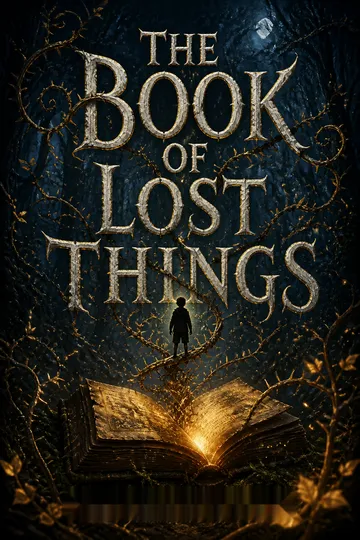
The Book of Lost Things
A life kept in fragmentsThe king’s guarded book seems to promise hidden knowledge capable of restoring order, but its pages preserve the personal record of a child’s life: drawings, keepsakes, poems, and diary entries. Its contents let David connect Jonathan’s preserved bedroom to the kingdom’s history and understand the emotional origin of an old bargain. The book is not a spellbook that solves the plot; it is evidence, memory made tangible. It changes David’s understanding by replacing rumors with a child’s own traces, and its title gathers the novel’s lost people, childhood objects, and abandoned hopes into one image.
Fear-made creatures
Inner fears take bodiesThe kingdom’s monsters emerge from stories, fears, and fantasies carried into it by children from David’s world. Wolves become Loups, the Beast reflects David’s dark imaginings, and familiar figures such as Snow White return in distorted forms. This mechanism makes the fantasy landscape psychologically responsive without making its dangers unreal: once embodied, the creatures can kill. The device also explains why David’s choices matter beyond his survival. The kingdom is altered by what its visitors fear and desire, so confronting a monster requires more than recognizing its source. The characters must also decide what to do with the impulses that gave it shape.
The Book of Lost Things Series
Download PDF
Download EPUB
.epub digital book format is ideal for reading ebooks on phones, tablets, and e-readers.








