

Key Takeaways
Treat rental management as the investment, not the chore
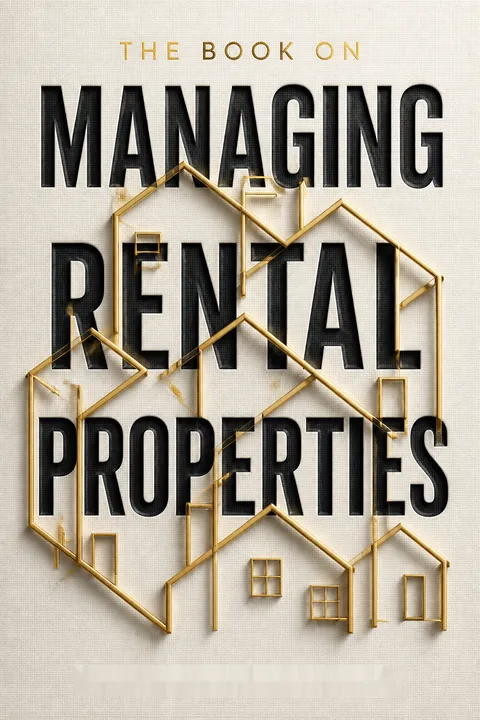
Management shapes returns. The book defines landlording as the business of protecting and growing a real estate investment by selecting tenants and overseeing their tenancy. The authors' first duplex taught them that a promising purchase can still become a losing investment when management is improvised. Their contrast between two landlords is ultimately a contrast between the same owners before and after they built reliable routines: one loses sleep and misses tasks, the other handles predictable problems with less drama.
Choose how to operate. A professional manager can take on leasing, rent collection, and tenant calls, but fees cited in the book commonly include 8 to 12 percent of monthly rent and a separate leasing charge. Hiring out work may free an owner to pursue more valuable tasks, but does not remove the need to oversee the manager.
What's important here is the shift from viewing a rental as a passive asset to seeing it as a service operation with ongoing decisions. Operations research calls attention to variation: repeated tasks become more reliable when people use consistent procedures instead of improvising each time. Outsourcing changes who performs the work, not who bears the investment risk. The owner's calculation should therefore include both direct fees and the value of time reclaimed, while recognizing that a manager's incentives may not perfectly match the owner's.
Build the operating manual before the first tenant arrives
Prepare the essentials. Before leasing, the authors recommend arranging suitable insurance, separate business banking, bookkeeping, required forms, and a written policy binder. That binder records how the business handles screening, rent, deposits, pets, and move-outs, so decisions do not depend on memory or mood. Asset-protection entities such as LLCs are not magic shields: improper setup or maintenance can weaken their protection, and transferring a mortgaged property may create complications.
Audit inherited tenants. Inherited tenants are occupants who remain when a property changes owners. Review their leases against the seller's financial claims, then use an Estoppel Agreement, a tenant-signed confirmation of lease terms, deposits, rent, utilities, and known issues. One of the authors' examples is a seller quoting hoped-for market rent rather than the lower amount actually written into leases.
A written operating manual is a form of organizational memory. It reduces dependence on one person's recollection and makes a small rental operation easier to inspect, improve, or hand off. The inherited-tenant example also shows why diligence must test claims against independent records, not just a seller's spreadsheet. Preparation cannot eliminate uncertainty, though. Insurance, entity structures, lease rules, and deposit handling vary by location, so a binder should be a living reference reviewed against current professional and legal guidance.
Price against nearby rentals, then track which ads produce applicants
Let the market answer. Fair market rent is what comparable renters will actually pay, not what an owner hopes to charge. Compare homes by location, size, bedrooms, condition, and amenities, using listings, local landlords, property managers, and rental signs. A polished but unnecessary renovation can consume money without earning higher rent. If a well-marketed unit sits empty, test a lower price rather than treating the asking rent as sacred.
Measure the channels. The authors recommend using relevant local advertising, clear property descriptions, and bright, orderly photos. They also track where each inquiry originated, so repeated results can show whether signs, online listings, newspapers, or referrals are worth the effort. Their example referral reward is $100 for a tenant whose referral leads to a lease. These are examples, not timeless rules: platforms and local habits change.
This is practical market testing, not branding for its own sake. A vacant unit has a real cost, so the useful question is which combination of price, presentation, and distribution produces a qualified renter promptly. Tracking inquiry sources turns advertising from guesswork into a modest experiment. The caution is that raw inquiries are not the same as successful tenancies. Owners should compare channels by qualified applications and eventual occupancy, while keeping advertisements factual and compliant with housing rules.
Make equal treatment a written process, not a good intention
Know the boundaries. The book describes federal Fair Housing protections involving race, color, religion, sex, national origin, familial status, and disability, and notes that state and local rules may cover additional groups. Discrimination can occur through advertising, unequal terms, steering people toward certain homes, or refusing a reasonable accommodation. In one example, an apartment complex's ban on children playing on a common lawn led to a costly discrimination settlement; a rule applied only to families created unequal treatment.
Make decisions consistent. Predetermine lawful qualification standards, use the same process with every applicant, keep records of contacts and decisions, and avoid assumptions about what a person wants or can manage. The book's 2015 legal discussion is not current legal advice. Owners should check today's federal, state, and local requirements before advertising, screening, or responding to accommodation requests.
Written standards help prevent arbitrary decisions, but consistency alone does not make a policy lawful or fair. A neutral-looking rule can still burden some groups disproportionately, and disability accommodations may require an individualized response rather than a simple script. Procedural fairness matters because people are more likely to regard decisions as legitimate when the criteria are clear and applied transparently. The strongest process combines consistent documentation with periodic review of whether each criterion is genuinely related to operating the property.
Verify a tenant's record, not their performance during a showing
Use a screening funnel. Pre-screening is the early stage of tenant selection that filters prospects before the more time-consuming application review. The authors suggest sharing the property's terms and qualification standards up front, then verifying an applicant's income, credit, background, and landlord references. Their own thresholds include income of at least three times rent and a credit score of 600 or higher. These are the authors' business standards, not universal measures or legal requirements. A prior eviction cost them nearly $5,000 after they took a chance on an applicant.
Prefer evidence to impressions. Applications can contain omissions or false claims, so verify addresses, employment, and references rather than relying on charm or intuition. The authors call the expected burden of managing a tenant the Stress Quotient. A low-stress tenancy is a useful aim, but subjective cues such as clothing, eye contact, or car condition are weak evidence and can invite bias.
The strongest part of this method is its emphasis on corroboration: claims become more informative when checked against independent records and prior rental experience. The risk lies in treating a credit score, an eviction, or an impression as a complete portrait of a person. Nontraditional income and thin credit files can reflect circumstance rather than unreliability. A defensible screening system uses relevant, lawful criteria, applies them consistently, and avoids personal proxies that do not predict lease performance.
A signed lease works only when expectations are explained and enforced
Put the terms in writing. A lease records the responsibilities both parties accept, including rent, utilities, occupants, guests, pets, smoking, access, and what happens when rules are broken. The authors recommend using a lease tailored to local law, ideally reviewed by a local attorney, rather than copying an unverified form. A move-in condition report, supported by photos, establishes the property's starting condition and helps resolve later disputes about damage.
Explain the operating rules. The authors' New Tenant Orientation is a short onboarding conversation covering rent, maintenance requests, tenant responsibilities, and house rules. It gives residents a chance to ask questions before taking possession. Their broader standard is firm but fair: disclose expectations in advance, treat residents respectfully, and enforce the same agreement consistently rather than granting favors unpredictably.
A lease is both a legal record and a coordination tool. In contract theory, ambiguity creates room for conflict because each party may carry a different understanding of the deal. Clear onboarding reduces that gap before a disagreement becomes expensive. Still, formality is not a substitute for fairness: an agreement must comply with local law, and rules should protect legitimate property interests rather than merely maximize control. A respectful explanation makes enforcement more predictable without turning the relationship into a contest.
Make rent easy to pay, but never improvise exceptions
Remove payment friction. The authors tested mail, a property drop box, online payments, and a service that let tenants pay cash at participating retailers. Each option had tradeoffs: mailed checks could arrive late or go missing, while an unsecured drop box created theft concerns. Their larger lesson is to offer practical payment routes, set one consistent due date, and keep personal and business boundaries intact by not collecting rent at home or in person.
Apply the written rule. A grace period, late fee, or extension should be spelled out in the lease and allowed by local law. The authors describe one tenant who communicated and paid on a specific late date, and another who went silent and proposed paying much later. They were more willing to accommodate the first case. Any exception should be documented, bounded, and consistent with legal notice requirements.
Payment design can reduce missed transactions: people are more likely to complete a task when the route is clear and convenient. Yet convenience does not solve inability to pay, and a late fee can become a burden rather than a useful reminder. The distinction between a planned extension and an open-ended promise is operationally valuable, but owners should not confuse strictness with effectiveness. Fees and notices must be lawful, proportionate, and applied without retaliation or favoritism.
Inspect regularly before small maintenance issues become expensive damage
Look before damage spreads. The authors discovered a long-unreported roof leak that left a bedroom ceiling covered in mold. The repair and remediation cost about $5,000, while an earlier fix might have cost only a few hundred dollars. They responded by scheduling inspections roughly every six months. Inspections can reveal leaks, mold, broken safety devices, unauthorized occupants, and neglected housekeeping before small problems compound.
Record and repair. A work order captures when a tenant reported an issue, what was found, who repaired it, when the work finished, and whether the tenant confirmed the result. The authors also recommend promptly vetting contractors: check licensing and insurance, speak to references, use a small initial job, define the work in a contract, stage payments, and verify completion before final payment.
This is preventive maintenance as information management. Tenants and owners observe different parts of a building, so an inspection and a usable reporting channel help close that information gap. A documented repair history can also expose recurring failures that a one-off invoice hides. Inspections should not become intrusive surveillance, however. Proper notice, privacy, and prompt responses to reports are part of responsible oversight, not optional courtesies.
End failed tenancies lawfully, then document every cost of turnover
Choose the least costly lawful exit. When a tenancy repeatedly harms the property or business, the authors consider not renewing an expiring agreement, negotiating a voluntary departure, or pursuing an eviction. Cash for Keys means offering a tenant money to leave by an agreed date, often for less than the expected cost of court, lost rent, and repairs. It must be voluntary and documented. The authors warn against self-help tactics such as changing locks or removing belongings, and recommend legal counsel for eviction procedures.
Close the file carefully. A written move-out notice, detailed inspection, photos, invoices, and itemized deposit statement create a record of what happened. The security deposit is not a substitute for rent, and deadlines for returning it or explaining deductions vary by jurisdiction. Turnover also means preparing the unit quickly for its next renter, without charging a former tenant for ordinary wear or unsupported costs.
The financial comparison between a negotiated departure and an eviction is a useful form of expected-cost analysis: the cheapest path is not necessarily the one that feels most satisfying in the moment. But an incentive to leave can be coercive if a tenant does not understand the agreement or faces unsafe alternatives. Clear written terms and compliance with local procedure protect both parties. Meticulous move-out evidence also turns a deposit dispute from a contest of memories into a review of records.
Separate the money, receipts, and records before growth makes them chaos
Keep the books usable. The authors recommend separating business and personal funds, saving receipts, categorizing income and expenses, reconciling bank statements, and producing regular profit-and-loss reports. A small owner may begin with a spreadsheet, then move to accounting software or hire a bookkeeper as transactions multiply. Their practical test is whether the books match the bank and whether each expense can be tied to a property and purpose.
Build for handoff. A central file system, tenant directory, contractor list, maintenance tracker, and dedicated business phone keep tasks from living only in the owner's head. The authors treat organization as a route to freedom, legal compliance, and better financial decisions. Delegation works best when processes are clear enough for someone else to follow, and when the owner still checks that the work is being done.
Accurate records form a feedback loop: they show which expenses recur, which properties underperform, and whether a change actually improves results. This is more than tax preparation; it is a basic management information system. The case for documentation strengthens as a portfolio grows, because memory does not scale with transaction volume. At the same time, software cannot correct bad categories or missing records on its own. The useful system is the simplest one that gets updated reliably and reviewed regularly.
Analysis
The book's governing idea is that rental ownership is not passive investing. A property is a small operating system: residents generate income, buildings need maintenance, law constrains decisions, and every handoff creates opportunities for error. The authors' examples, from a lost rent check to an unreported leak, illustrate how a minor process weakness can become a vacancy, repair bill, or dispute. Their answer is standardization: documented criteria, repeatable communication, written agreements, inspections, and financial records. This makes the book less a theory of real estate than an operations manual for reducing avoidable variation.
Its strongest contribution is the full lifecycle view. Tenant selection, onboarding, rent collection, maintenance, contractor oversight, eviction, and deposit accounting are treated as connected stages rather than isolated chores. That connection matters: a careful move-in record supports a fair deposit decision, while consistent screening and clear lease terms reduce later ambiguity. The book also argues persuasively that management quality affects the value and cash flow of an asset, and that outsourcing is a tradeoff rather than an escape from responsibility.
Its limitations are significant. The text dates to 2015, names services and platforms that may no longer exist, and includes legal summaries that cannot safely substitute for current local advice. Its screening advice sometimes leans on subjective impressions, such as appearance or a person's vehicle, which can be unreliable and may reinforce bias. Even apparently neutral thresholds need justification, local review, and consistent application. The book's strict approach to fees and enforcement can protect a business from indefinite arrears, but it can also mistake hardship for unwillingness and escalate conflict if used mechanically.
The durable lesson is therefore not to copy every policy or form. It is to build a documented, lawful operating process, measure its results, and revise it when evidence or circumstances change. A landlord should aim for predictability without confusing control with professionalism: tenants are customers with rights, properties are physical assets with failure modes, and the business must account for both.
Review Summary
The Book on Managing Rental Properties receives overwhelmingly positive reviews, with readers praising its comprehensive content, practical advice, and valuable resources for landlords. Many find it essential for both new and experienced property managers, offering detailed guidance on tenant screening, legal compliance, and business operations. Readers appreciate the clear writing style, real-life examples, and included forms. Some note it's dense with information and may require multiple readings. A few criticize the author's approach to tenant relationships, but most find it an indispensable guide for successful property management.
People Also Read









Glossary
Landlording
Rental property managementThe book uses landlording to mean the business of protecting and growing a real estate investment through selecting tenants and overseeing their tenancy. It includes more than collecting rent and fixing things: it also covers marketing, screening, contracts, maintenance, legal compliance, records, and turnover.
Inherited tenants
Tenants retained after purchaseInherited tenants are residents already living in a rental property when a new owner buys it. Their existing leases generally continue with the property, so the buyer should verify the lease terms, actual rent, deposits, utility responsibilities, and known repair issues before closing.
Estoppel Agreement
Tenant-verified lease summaryAn Estoppel Agreement is a written statement signed by an existing tenant confirming key facts about their tenancy, such as rent, lease dates, deposit, utilities, occupants, pets, and repair concerns. The buyer can compare this account with the seller's documents to identify discrepancies before purchasing.
Pre-screening
Early applicant filteringPre-screening is the early part of tenant selection, before a full application and background review. It gives prospects the property's terms and qualification standards, checks whether the rental fits their needs, and helps both sides avoid spending time on an unsuitable match.
Stress Quotient
Expected management burdenThe authors use Stress Quotient as an informal label for how much time, attention, and frustration a tenant may demand from a landlord. It includes repeated disputes, frequent unnecessary requests, and failure to follow lease terms. It is a subjective judgment, so it should not replace objective, lawful screening criteria.
New Tenant Orientation
Move-in expectations briefingNew Tenant Orientation is the authors' brief onboarding process for explaining the lease and common operating rules before a tenant takes possession. It covers topics such as rent, maintenance reporting, tenant responsibilities, and property policies, while giving the tenant an opportunity to ask questions.
Cash for Keys
Payment for voluntary move-outCash for Keys is an arrangement in which a landlord offers a tenant money in exchange for leaving by an agreed date and returning the property as specified. The authors present it as a possible alternative to eviction costs. It should be voluntary, documented, and compliant with local law.
FAQ
What's The Book on Managing Rental Properties about?
- Comprehensive Guide: The book serves as a detailed manual for landlords, covering everything from finding and screening tenants to managing properties effectively.
- Focus on Systems: It emphasizes creating systems and repeatable processes to streamline property management, helping landlords maintain organization and efficiency.
- Real-Life Examples: Includes real-life examples and case studies that illustrate the principles discussed, providing practical insights into the challenges and solutions faced by landlords.
Why should I read The Book on Managing Rental Properties?
- Expert Insights: Written by experienced landlords Brandon and Heather Turner, offering insights based on years of practical experience in managing rental properties.
- Actionable Strategies: Filled with strategies that landlords can implement immediately to enhance their property management skills.
- Avoid Common Pitfalls: Helps landlords learn how to avoid common mistakes and pitfalls that can lead to financial loss or tenant disputes.
What are the key takeaways of The Book on Managing Rental Properties?
- Effective Management: Successful landlording is about treating it as a business rather than a hobby, leading to better outcomes.
- Importance of Screening: Emphasizes thorough tenant screening to find reliable tenants and avoid costly evictions.
- Legal Compliance: Covers essential legal aspects, including Fair Housing Laws, to help landlords avoid discrimination and legal issues.
What are the best quotes from The Book on Managing Rental Properties and what do they mean?
- "Landlording is an integral part of the investment and the driving force behind success.": Highlights the importance of effective property management in achieving financial success in real estate.
- "A happy tenant is a long-term, paying tenant.": Emphasizes the value of good customer service and tenant relations in maintaining occupancy and profitability.
- "The more strict you are, the easier it becomes.": Suggests that maintaining firm policies and boundaries leads to smoother operations.
How does The Book on Managing Rental Properties suggest finding good tenants?
- Effective Marketing: Discusses various marketing techniques to attract potential tenants, such as online platforms and traditional advertising methods.
- Pre-Screening Techniques: Recommends pre-screening potential tenants through initial phone calls or questionnaires to filter out unsuitable candidates.
- Thorough Application Process: Outlines the importance of a comprehensive rental application that includes background checks, credit history, and rental references.
How do I effectively screen tenants according to The Book on Managing Rental Properties?
- Pre-Screening: Start with a pre-screening process during initial contact to gauge the applicant's suitability based on your qualification standards.
- Background and Credit Checks: Conduct thorough background and credit checks to verify the applicant's financial responsibility and history.
- References from Previous Landlords: Obtain references from past landlords to gain insight into the applicant's behavior and reliability as a tenant.
What are the recommended methods for collecting rent in The Book on Managing Rental Properties?
- Multiple Payment Options: Offer various payment methods, such as online payments, checks, and cash, to accommodate tenant preferences.
- Automated Payment Systems: Utilize automated payment systems to streamline the rent collection process, ensuring timely payments.
- Clear Payment Policies: Establish clear policies regarding rent due dates, late fees, and acceptable payment methods to set expectations and minimize confusion.
How does The Book on Managing Rental Properties address tenant maintenance and repairs?
- Work Order System: Implement a work order system to track maintenance requests from tenants, ensuring issues are documented and addressed promptly.
- Regular Inspections: Advocate for periodic inspections to identify maintenance issues before they escalate, maintaining the property’s condition.
- Communication with Contractors: Stress the importance of maintaining good relationships with reliable contractors for efficient and high-standard repairs.
What should I do if a tenant doesn’t pay rent according to The Book on Managing Rental Properties?
- Immediate Communication: Contact tenants as soon as a rent payment is missed to resolve the issue quickly.
- Implement Late Fees: Enforce late fees as outlined in the lease agreement to deter future late payments.
- Consider Eviction as a Last Resort: If the tenant continues to miss payments, follow the eviction process as a last resort, ensuring legal procedures are followed.
How does The Book on Managing Rental Properties recommend handling tenant disputes?
- Open Communication: Maintain open lines of communication with tenants to address disputes promptly and prevent escalation.
- Document Everything: Keep detailed records of all interactions with tenants, including complaints and resolutions, for evidence if disputes lead to legal action.
- Follow Lease Agreements: Adhere strictly to the terms of the lease agreement to ensure accountability and maintain a fair resolution process.
How can I ensure my rental properties are legally compliant as per The Book on Managing Rental Properties?
- Understand Local Laws: Familiarize yourself with local landlord-tenant laws and regulations to avoid legal pitfalls.
- Use Proper Documentation: Utilize legally sound lease agreements and documentation to protect both the landlord and tenant.
- Regular Training and Education: Continue education on legal matters related to property management to stay informed about changes in laws and best practices.
What are the common mistakes landlords make when managing properties according to The Book on Managing Rental Properties?
- Neglecting Tenant Screening: Failing to properly screen tenants can lead to costly evictions and property damage.
- Inconsistent Policies: Not having clear, consistent policies for rent collection, maintenance requests, and tenant behavior can create confusion and disputes.
- Ignoring Legal Obligations: Landlords who are unaware of or ignore local, state, and federal laws risk legal issues and financial penalties.
About the Author

Download PDF
Download EPUB
.epub digital book format is ideal for reading ebooks on phones, tablets, and e-readers.








