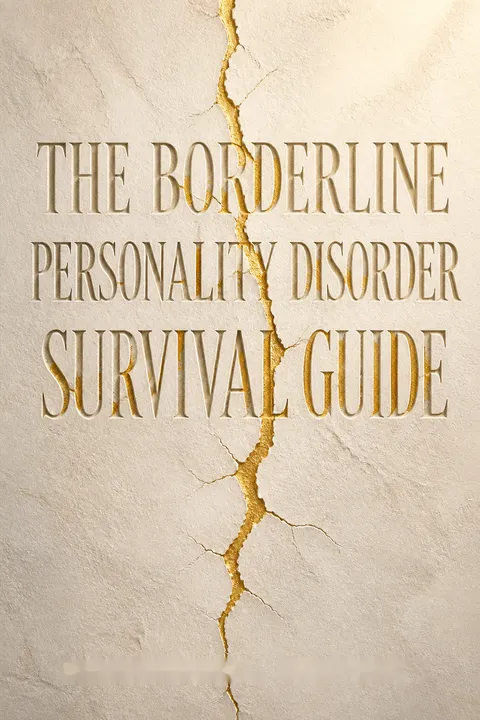


Key Takeaways
Treat BPD as a changeable pattern, not a verdict on character
A pattern, not a flaw. Borderline personality disorder, or BPD, involves difficulties across emotions, relationships, behavior, identity, and thinking. The book argues that the diagnosis describes problems that disrupt life, not a defective personality or a moral failing. It also warns against diagnosing yourself: depression, bipolar disorder, and post-traumatic stress disorder can resemble some BPD symptoms, so assessment belongs with a trained professional.
One label, many experiences. Under the diagnostic system used in the book, a person must show at least five of nine symptoms. That creates 151 possible combinations. One person may chiefly struggle with self-harm and mood shifts, another with identity and relationships. Understanding an individual matters more than assuming everyone with the label is alike.
What's useful here is the distinction between naming a pattern and defining a person. In other areas of medicine, a diagnosis can guide care without becoming a complete account of someone's character; the same discipline helps reduce stigma here. The 151 combinations also caution against treating a diagnosis as a single, uniform experience. At the same time, a nonjudgmental label should not become a reason to minimize distress. A careful assessment can validate real difficulties while checking for other explanations and identifying what support fits.
Understand BPD through interacting sensitivities and experiences, not blame
Multiple influences interact. The book describes BPD as developing through a combination of inherited vulnerability, emotional temperament, brain and stress responses, and life experiences. One small twin study reported BPD in 35 percent of identical co-twins of people with BPD, compared with 7 percent of fraternal co-twins. The authors discuss heritability as roughly 50 percent, while emphasizing that genes alone do not cause the disorder.
Context matters, without a single culprit. Childhood abuse can increase risk, but it is neither necessary nor sufficient: many people with BPD report no abuse, and many people who experience abuse do not develop BPD. An invalidating environment, where feelings are dismissed, punished, or misunderstood, may also contribute. The proposed biosocial theory combines emotional vulnerability with these social experiences.
This account is strongest when read as an interaction model, not a formula for tracing one person's diagnosis to one cause. It avoids two common errors: blaming caregivers for every difficulty, and treating biology as destiny. That is consistent with a broader principle in developmental science: traits and surroundings can shape one another over time. The evidence described in this 2007 book is suggestive rather than conclusive, especially where based on small twin studies. A useful causal model should guide compassionate questions, not be mistaken for a retrospective verdict about a family.
Ask what a harmful behavior does before deciding what it means
Relief can reinforce risk. The book explains that self-harm, substance use, binge eating, and other impulsive actions may reduce emotional pain or create a temporary sense of calm. Reinforcement is a consequence that makes a behavior more likely to recur. When an action removes something unpleasant, such as distress, psychologists call this negative reinforcement. The immediate relief can strengthen the behavior even when its longer-term costs are severe.
Map the cycle. A rejection or conflict may trigger shame, panic, or anger. A person acts impulsively, feels brief relief, then faces new problems and more distress. That loop helps explain why a behavior can persist without being a calculated attempt to control others. The authors urge readers and helpers to investigate what need the behavior serves and seek safer ways to meet it.
A functional explanation is not an excuse or an endorsement. It shifts the question from whether a behavior looks reasonable to what consequence keeps it going, a distinction also central to behavioral science. That change can make support more practical: if a behavior offers relief, alternatives must address the same distress rather than simply demand that it stop. The analysis should also include consequences for other people and the environment. Understanding a behavior's function is a starting point for change, not proof that every action is harmless or inevitable.
Build skills for intense feelings without demanding that feelings vanish
DBT pairs acceptance with change. Dialectical behavior therapy, or DBT, was developed for chronically suicidal clients and became a treatment for BPD. It combines validation and acceptance of a person's experience with practical efforts to change harmful behavior and solve problems. The book describes a comprehensive format involving individual therapy, skills groups, between-session consultation, and a therapist support team.
Practice, then apply. Skills training covers mindfulness, relationship effectiveness, emotion regulation, and tolerating distress without making a crisis worse. In individual sessions, therapist and client prioritize life-threatening behavior first, then actions that interfere with therapy, then problems affecting quality of life. The book reports that controlled trials found DBT reduced self-harm and suicide attempts and improved functioning compared with usual care or expert comparison treatments.
The balance is more than a pleasant therapeutic style. Validation can lower the threat of being misunderstood, making difficult change easier to attempt; structured priorities keep urgent safety concerns from getting lost in a long list of problems. The skills format also treats coping as something practiced in daily life, not merely discussed in a session. Still, a named therapy is not automatically a good fit or equally available to everyone. Training, continuity, and a workable relationship with the clinician matter alongside the treatment label.
Stay curious about mental states instead of guessing what others mean
Mentalization connects minds and actions. Mentalization-based treatment, or MBT, aims to help people understand that their own and other people's behavior is related to thoughts, feelings, and intentions. Under stress, someone may lose sight of this connection and treat an interpretation as certain. A partner's silence, for example, may be taken as proof of rejection, even though several explanations remain possible.
Curiosity replaces certainty. MBT therapists encourage clients to explore what they or another person might be thinking and feeling without assuming they already know. The book contrasts this balanced approach with two extremes: experiencing others as if they must feel exactly as oneself, or feeling detached from one's own emotions and reality. At the time of publication, the authors describe MBT as promising, with less research behind it than DBT.
This approach has a subtle strength: it treats uncertainty about another person's mind as a condition to investigate, not a gap to fill with the most frightening story. That stance can interrupt escalation in close relationships, where emotion often makes interpretations feel like facts. It also asks therapists to remain curious about their own reactions, making the relationship collaborative rather than all-knowing. Curiosity has limits, however. It should not be used to dismiss clear evidence of harm or to pressure someone to reinterpret unsafe behavior as benign.
Measure recovery by changed behavior, not by the disappearance of emotion
The diagnosis can remit. The book rejects the idea that BPD is necessarily lifelong. In one six-year study of hospitalized patients, 35 percent no longer met diagnostic criteria after two years, 49 percent after four years, and 69 percent after six years. Among those who stopped meeting criteria, 94 percent did not meet them again during the study. These findings offer hope, but they describe a particular patient group and a specific period of research.
Symptoms move at different speeds. Risky behavior, self-harm, and unstable relationships tended to improve more quickly than intense emotions, emptiness, negative self-beliefs, or fears of abandonment. This distinction matters: a person can make substantial progress while still having powerful feelings. The authors recommend working on how feelings are handled and how life problems are addressed, rather than treating emotional intensity itself as proof of failure.
The distinction between symptom remission and complete emotional ease is crucial. It gives progress a more realistic measure: fewer dangerous actions, steadier relationships, and greater ability to pursue daily goals can matter even when distress still occurs. The reported remission rates counter older pessimism, but they should not be presented as a forecast for every reader. The study involved hospitalized patients, and meeting fewer diagnostic criteria is not identical to feeling fully well. Hope is most credible when it leaves room for varied timelines and individualized outcomes.
Take self-harm seriously while asking what need it is serving
Intent distinguishes the terms. A suicide attempt involves self-injury with an intention to die. Deliberate self-harm refers to intentional injury without that intention. Some people feel ambivalent, wanting both to die and not to die. The authors warn against dismissive labels such as “gesture” or “cry for help,” because they can obscure genuine danger and emotional pain.
The behavior may serve several functions. People may self-harm or attempt suicide to escape emotional pain, punish themselves, feel something when numb, reduce a perceived burden on others, or communicate distress. In one study of women with BPD, 96 percent said they self-harmed for emotional relief, and 86 percent reported that motive for suicide attempts. These figures describe one study, not every individual. Ask about intent and immediate safety directly, without assuming a motive.
The insistence on distinguishing intent is clinically and ethically important: different behaviors can look similar from the outside while carrying different risks. Rejecting stigma does not mean overlooking danger. It means responding to the person rather than relying on a label that guesses at intent. The book's study also shows why a single explanation is inadequate. Relief, communication, and self-punishment can overlap. No checklist can replace an individual assessment, and any report of possible suicidal intent deserves a serious, timely response.
In a suicidal crisis, create distance from danger and bring in support
Make the next step safer. The book recommends moving away from anything that could be used for self-harm, changing the immediate setting, and reaching out to a trusted person or clinician. It also suggests asking what the suicidal thought is trying to solve: sometimes the immediate wish is to escape pain, feel less alone, or find relief, rather than to be dead.
Use short-term coping deliberately. The authors describe recalling personal reasons to stay alive, taking a small action that supports hope, and allowing thoughts to pass without treating them as instructions. Distraction or grounding can help a person ride out intense distress, but should not become the only response to problems that need attention. If danger is immediate, contact local emergency or crisis services and do not manage the situation alone.
The practical emphasis is valuable because acute distress can narrow attention until one option appears to be the only option. Reducing immediate access to danger and recruiting another person can create time for that narrowed perspective to widen. Coping skills are supports, not guarantees, and the presence of a crisis should not be treated as a test of willpower. The book was written in 2007, so readers should use current local crisis resources and work with qualified professionals on an individualized safety plan.
Choose specialized care through careful assessment, clear questions, and personal fit
Start with a real assessment. The book advises seeking a professional familiar with BPD who can distinguish it from conditions with overlapping symptoms. A diagnosis may require multiple appointments and a history of how difficulties have developed, not just a quick checklist. Ask about the clinician's training, experience, treatment approach, emergency policies, and what happens if symptoms worsen.
Match care to the need. Options described include outpatient therapy, group treatment, partial hospitalization, and brief inpatient care for acute crises. The authors generally favor the least intensive level that can meet a person's needs, so treatment remains connected to everyday life. Their guide also encourages people to ask about evidence, duration, cost, and expectations, and to discuss whether the proposed approach feels workable rather than accepting a referral without questions.
This is a useful consumer framework for a field where the person seeking care may already feel powerless. Asking direct questions can reveal whether a clinician has a plan for risk, how goals will be set, and whether the format fits practical constraints. Evidence matters, but so do access and collaboration: the most studied program is not helpful if it is unavailable or impossible to sustain. A good fit does not mean treatment will always feel comfortable. It means concerns can be discussed openly and care remains organized around meaningful goals.
Use medication as a monitored aid, not a stand-alone cure for BPD
Treat specific symptoms, not the label. The authors explain that antidepressants, mood stabilizers, and antipsychotic medications may help some people with particular problems, such as depression, anxiety, irritability, or unusual thoughts. They report no single medication that treats BPD as a whole. The book recommends combining medication, when appropriate, with psychological treatment rather than relying on medication alone.
Track benefits and costs. Readers are encouraged to ask a prescriber what evidence supports a medication, how long effects may take, what side effects to watch for, and how progress will be evaluated. A daily log of symptoms, medication use, and side effects can make follow-up conversations more concrete. The medication evidence and recommendations in this 2007 guide are historical; current options and risks require discussion with a qualified prescriber.
The book's cautious framing resists the idea that one prescription can resolve a complex pattern of distress. Monitoring also improves decision quality: people and clinicians can compare intended benefits with side effects and decide whether a treatment is helping. This is especially important because medication effects vary, and some symptoms may arise from more than one condition. The chapter's drug information is dated, however. Readers should not use its medication lists or risk estimates as current prescribing guidance, and should never start, stop, or change medication without professional advice.
Analysis
This guide combines accessible psychoeducation with practical advice, moving from what BPD is, through possible causes and associated problems, toward treatment and coping. Its deepest contribution is a shift in moral interpretation: intense or risky behavior can be understood as an attempt to manage distress, even when that strategy creates further harm. That explanation supports compassion without requiring denial of consequences. The book also counters an older assumption that BPD is untreatable, and shows why improvement may involve behavior and relationships changing before emotional intensity does.
The authors present two treatment lenses. DBT emphasizes emotion vulnerability, validation, skills, and an active balance of acceptance and change. MBT focuses on understanding the mental states connected to one's own behavior and the behavior of others. These are useful, distinct accounts rather than interchangeable labels. Together, they highlight that treatment can address both immediate actions and the meanings people assign to relationships.
Several cautions matter for contemporary readers. The book was published in 2007 and uses DSM-IV-TR diagnostic criteria. Its statistics, medication discussion, and descriptions of the evidence base should be read as historical, not current clinical guidance. A remission study showing that participants no longer meet diagnostic criteria does not mean every symptom has disappeared or that all people recover on the same timetable. Likewise, associations among trauma, biology, and BPD do not establish a single cause for an individual. The guide is most valuable as an empathetic orientation and a prompt to seek appropriate assessment, not as a tool for self-diagnosis or a substitute for treatment. Its central practical message is to understand the function of distress-driven behavior, build safer alternatives, and pursue care that treats the person as more than a diagnosis.
Review Summary
The Borderline Personality Disorder Survival Guide receives generally positive reviews for its compassionate approach and informative content. Readers appreciate its accessible language, practical advice, and focus on empowering those with BPD. The book is praised for addressing myths, explaining treatments like DBT, and providing coping strategies. Some criticize its simplicity and repetitiveness, while others find it invaluable for understanding BPD. Many recommend it as a starting point for those newly diagnosed or seeking to support loved ones with BPD.
People Also Read





Glossary
Emotion vulnerability
Heightened emotional sensitivityIn the book's account, emotion vulnerability involves three features: reacting to more events than other people do, experiencing reactions with unusual intensity, and taking longer to return to an ordinary emotional state. It is presented as one biological contribution to BPD, not as a complete explanation or an inevitable path to the disorder.
Invalidating environment
Dismissed or punished feelingsAn invalidating environment repeatedly communicates that a person's thoughts or feelings are unreasonable, untrue, or unacceptable. This may happen through criticism, punishment, ignoring distress, or inaccurate responses to a person's experience. In the book's developmental account, such an environment can make it harder to understand and manage emotions, particularly when paired with emotional vulnerability.
Biosocial theory
Vulnerability plus environmentThe biosocial theory, associated in the book with Marsha Linehan, proposes that BPD develops through the interaction of emotional vulnerability and an invalidating social environment. A person may react intensely while caregivers or others fail to help identify and manage those reactions. Each side can amplify the other over time. Neither factor alone is presented as sufficient to cause BPD.
Reinforcement
A consequence strengthens behaviorIn behavioral psychology, reinforcement is a consequence that increases the likelihood that a behavior will happen again in a similar situation. The book describes self-harm or substance use as potentially reinforced when it temporarily reduces distress or produces a pleasurable state. This immediate effect can help explain repetition, even when later consequences are harmful.
Dialectical behavior therapy
Acceptance and change treatmentDialectical behavior therapy, or DBT, is a structured psychological treatment developed by Marsha Linehan, initially for chronically suicidal clients. It combines validation and acceptance with problem solving and behavior change. The comprehensive form described in the book includes individual therapy, skills training, between-session consultation, and a therapist consultation team.
Mentalization
Linking behavior to mental statesMentalization is the ability to understand that one's own behavior and other people's behavior are connected to internal mental states, including thoughts, feelings, and desires. It also involves recognizing that mental states are related to, but not identical with, observable actions. Mentalization-based treatment aims to strengthen this ability, especially during emotional stress.
Psychic equivalence
Treating inner experience as factIn the book's account of mentalization, psychic equivalence is a way of interpreting experience in which a person's own feelings or beliefs seem to match the external world exactly. Someone may assume another person feels as they do, or treat a feared interpretation as unquestionably true. The result can be an intense, overly personal reading of events.
Pretend mode
Inner thoughts feel disconnectedPretend mode describes an experience in which thoughts and feelings seem detached from the external world and from one another. A person may talk about an emotion without feeling connected to it, or experience life as unreal. The book presents it as an early, unbalanced way of understanding mental states, in contrast to integrated mentalization.
Alien self
Self-image shaped by misreadingIn the theory discussed in the book, the alien self is a part of a person's sense of identity formed from inaccurate or negative reflections by caregivers. Because this self-image may not match the person's own experience, it can feel disturbing or foreign. The theory suggests that attempts to reject or project it can contribute to distress and conflict.
Diary Card
Weekly therapy tracking formA Diary Card is a form used in DBT individual therapy to record experiences between sessions. The version described in the book tracks mood, distress, urges and actions related to self-harm or suicide, and medication use. Therapist and client review it together to identify patterns and decide which problems deserve priority in treatment.
Treatment hierarchy
Order for therapy prioritiesIn DBT, the treatment hierarchy is a way to decide which problem to address first when a client faces many difficulties. The book describes prioritizing life-threatening behavior, then behavior that disrupts therapy, then problems that interfere with quality of life. The hierarchy helps sessions stay focused on the most urgent barriers to safety and progress.
Unrelenting crisis
Repeated, overlapping life stressUnrelenting crisis is the book's term for a pattern of frequent, highly stressful events that leave little time to recover before another problem arrives. Interpersonal conflict, rejection, failure, and being alone are described as common sources of distress. Repeated stress can drain coping resources and make impulsive or harmful responses more likely.
FAQ
1. What is The Borderline Personality Disorder Survival Guide by Alexander L. Chapman about?
- Comprehensive BPD overview: The book offers a clear, research-based explanation of borderline personality disorder (BPD), including its symptoms, causes, and treatment options.
- Two-part structure: Part 1 focuses on understanding BPD—diagnosis, myths, causes, and associated problems—while Part 2 provides guidance on finding help, treatment, and coping skills.
- Accessible and practical: Written in a conversational style, it blends scientific knowledge with clinical experience to empower people with BPD, their families, and clinicians.
- Resource-rich guide: The book also highlights organizations and websites for further support and education.
2. Why should I read The Borderline Personality Disorder Survival Guide by Alexander L. Chapman?
- Stigma-reducing information: The book challenges common myths about BPD, helping to reduce misunderstanding and stigma.
- Hope and recovery focus: It emphasizes that BPD is treatable and that many people recover, countering outdated beliefs about the disorder.
- Practical, actionable advice: Readers learn how to seek professional help, understand treatment options, and develop coping skills for managing emotions and suicidal thoughts.
- Evidence-based guidance: The content is grounded in scientific research and clinical expertise, making it trustworthy and reliable.
3. What are the key takeaways from The Borderline Personality Disorder Survival Guide by Alexander L. Chapman?
- BPD is treatable: Effective therapies like dialectical behavior therapy (DBT) and mentalization-based treatment (MBT) can help people build fulfilling lives.
- Active participation matters: Patients are encouraged to seek thorough assessments, ask questions, and be involved in treatment decisions, including medication choices.
- Coping skills are crucial: Learning to accept emotions, distract oneself, relax, and manage suicidal thoughts are essential steps toward recovery.
- Support and resources: The book provides information on reputable organizations and resources for ongoing support.
4. What are the main symptoms and features of Borderline Personality Disorder according to The Borderline Personality Disorder Survival Guide?
- Five dysregulation categories: BPD involves emotion, interpersonal, behavioral, identity/self, and cognitive dysregulation, each with specific symptoms.
- Nine DSM-IV-TR criteria: At least five of nine official symptoms are required for diagnosis, reflecting the disorder’s complexity and variability.
- Emotional intensity: People with BPD experience emotions like shame, sadness, and anger very intensely and have difficulty managing them.
- Impulsive and self-destructive behaviors: These often result from struggles with emotional regulation and unstable self-image.
5. How does The Borderline Personality Disorder Survival Guide explain the causes of BPD?
- Combination of factors: BPD arises from genetics, brain differences, personality traits, and environmental stressors such as childhood trauma.
- Biological aspects: The book discusses the roles of the amygdala, prefrontal cortex, neurotransmitters, and the stress response system.
- Environmental influences: Childhood maltreatment, invalidating environments, and attachment issues contribute, but no single cause is necessary or sufficient.
- Multifactorial development: The interplay of biological and environmental factors leads to the development of BPD.
6. What common myths about Borderline Personality Disorder does The Borderline Personality Disorder Survival Guide challenge?
- Myth of manipulation: The book clarifies that self-harm and suicide attempts are not manipulative but are desperate attempts to cope.
- Violence misconception: People with BPD are more likely to direct anger inward and are not typically violent toward others.
- Recovery and treatability: BPD is not a life sentence; it is treatable, and many people recover, especially with specialized therapies.
- Gender and parenting myths: BPD is not exclusive to women, and while childhood abuse can increase risk, most people with BPD do not have abusive backgrounds.
7. What problems often co-occur with Borderline Personality Disorder as described in The Borderline Personality Disorder Survival Guide?
- Substance use disorders: Up to two-thirds of people with BPD struggle with substance abuse, often to escape emotional pain.
- Eating disorders: About half of those with BPD have eating disorders, linked to emotional regulation difficulties and body dissatisfaction.
- Mood and anxiety disorders: Depression, bipolar disorder, social anxiety, panic disorder, and PTSD frequently co-occur, complicating recovery.
- Misdiagnosis issues: BPD is sometimes confused with bipolar disorder due to overlapping symptoms, leading to inappropriate treatment.
8. How does The Borderline Personality Disorder Survival Guide define and differentiate suicidal behavior and deliberate self-harm in BPD?
- Suicide attempts: These involve clear intent to end one’s life and are acts of deliberate self-injury aimed at death.
- Deliberate self-harm: This is intentional self-injury without the desire to die, often used to relieve emotional pain or communicate distress.
- Ambivalent suicide attempts: Some behaviors reflect mixed feelings about dying, showing the complexity of intent.
- Problematic terminology: The book discourages terms like “suicide gesture” or “manipulative,” as they minimize the seriousness of these behaviors.
9. What reasons does The Borderline Personality Disorder Survival Guide give for why people with BPD engage in self-harm and suicidal behaviors?
- Escape from emotional pain: The most common reason is to get relief from overwhelming, intolerable emotions.
- Self-punishment: Some individuals harm themselves to punish perceived personal failings, often due to internalized invalidation.
- Generating feelings: Self-harm can be a way to counteract numbness or dissociation by feeling something real.
- Communication and burden: It may serve as a way to express distress or, mistakenly, to reduce the perceived burden on others.
10. What are the main psychological treatments for BPD discussed in The Borderline Personality Disorder Survival Guide?
- Dialectical Behavior Therapy (DBT): DBT combines acceptance and change strategies, focusing on emotion regulation, mindfulness, interpersonal effectiveness, and distress tolerance.
- Mentalization-Based Treatment (MBT): MBT helps clients understand the connection between thoughts, feelings, and behaviors, improving self-understanding and relationships.
- Other therapies: Cognitive behavioral therapy (CBT) and psychodynamic therapy are also mentioned, though DBT and MBT have the strongest evidence base.
- Structured treatment formats: Both DBT and MBT involve individual and group sessions, with DBT also including telephone coaching and therapist consultation teams.
11. How does Dialectical Behavior Therapy (DBT) work according to The Borderline Personality Disorder Survival Guide?
- Biosocial theory foundation: DBT is based on the idea that BPD results from emotional vulnerability and invalidating environments.
- Balance of acceptance and change: Therapists validate clients’ experiences while encouraging meaningful life changes using a dialectical approach.
- Skills training: Clients learn mindfulness, emotion regulation, distress tolerance, and interpersonal skills in structured group sessions.
- Treatment hierarchy: Therapy targets life-threatening behaviors first, then therapy-interfering behaviors, and finally quality-of-life issues.
12. What coping skills for managing emotions does The Borderline Personality Disorder Survival Guide recommend?
- Acceptance: Practice accepting emotions and situations as they are, which reduces emotional suffering and reactivity.
- Distraction: Engage in activities that shift focus away from distressing emotions, such as puzzles, music, or physical activity.
- Relaxation techniques: Use progressive muscle relaxation, diaphragmatic breathing, and slow breathing to reduce tension and anxiety.
- Coping with suicidal thoughts: Remove lethal means, clarify true desires, seek support, and focus on reasons to stay alive as immediate strategies.
About the Author
Download PDF
Download EPUB
.epub digital book format is ideal for reading ebooks on phones, tablets, and e-readers.








