

Key Takeaways
Treat anger as an alarm to interpret, not an order to obey.
Anger carries information. Anger is a temporary body-and-brain response to something perceived as threatening, unfair, painful, or obstructive. It can signal a problem that needs attention and provide energy to protect yourself, defend someone, or pursue a goal. Its intensity can range from mild irritation to rage, and it often arrives before deliberate reasoning has caught up.
Feeling is not acting. Anger and aggression are different: anger is an emotion, while aggression is behavior that can harm someone or something. The book contrasts violent sports, where aggression need not involve anger, with a hockey-related riot, where some participants appeared to be enjoying themselves. Anger may be useful, but its first impulse is not automatically the best response.
What's valuable here is the separation of signal from command. In decision science, a feeling can be treated as evidence about what matters without being mistaken for a complete account of reality. Anger may flag a boundary violation, but it can also reflect a mistaken interpretation or a blocked preference. The useful question is not whether anger is justified in the abstract, but what information it contains and what action serves the situation. This distinction avoids two common errors: condemning the emotion itself, or treating its presence as permission to harm.
Accept that anger is present while changing the actions that cause harm.
Hold two truths together. Dialectical behavior therapy, or DBT, balances acceptance with change. Acceptance means acknowledging an emotion and the problem it signals, rather than denying or shaming yourself for having it. Change means learning practical ways to respond differently. Accepting anger is not the same as approving every action it urges.
Skills make change possible. DBT developed for people experiencing intense emotional distress, and the book applies its skills to anger. Mindfulness helps notice experience; distress tolerance helps get through a crisis without escalating it; emotion regulation helps understand and reduce emotional intensity; interpersonal effectiveness helps communicate needs. The workbook invites readers to use these skills without needing a particular diagnosis, while recognizing that therapy can be useful for serious or persistent problems.
The acceptance-and-change balance avoids the trap of making self-respect conditional on perfect behavior. Emotion-focused therapies similarly distinguish an experience from the strategies used to manage it: a person can acknowledge anger while refusing to intimidate or lash out. This is also a practical learning principle. Shame tends to narrow attention toward self-condemnation, while nonjudgmental acknowledgement leaves more room to examine choices. Acceptance should not be confused with passivity, however. When anger points to genuine mistreatment, the goal is not simply to feel better, but to respond effectively and safely.
Map your anger before it peaks: track cues, body, thoughts, and urges.
Look for the sequence. Anger rarely appears without a cue, even when its source is initially unclear. Common triggers include threats, blocked goals, pain, and perceived disrespect. The book recommends describing events as observable facts rather than conclusions. For instance, record what someone said instead of labeling them rude; the distinction can reduce added fuel and clarify what actually happened.
Notice the early signals. Anger has physical, cognitive, and behavioral components: sensations such as a tight jaw, thoughts about unfairness, and urges to yell or confront. An action urge is a pull toward a behavior, not the behavior itself. Keeping a brief record of the situation, sensations, thoughts, urges, and actions can reveal patterns. Thomas, who thought rage came from nowhere, learned to recognize tension in his body before he began shouting.
This is a compact form of functional analysis, a method used in behavioral psychology to identify what happens before and after a behavior. It turns a vague label, such as having a temper, into a sequence that can be interrupted. Early signals matter because choices tend to narrow as arousal rises. One caution: recording should illuminate patterns, not become a new occasion for rehearsing grievances. Neutral description is not a demand to deny harm; it is a way to distinguish what was observed from what was inferred.
Build motivation around your values, because the urge to change will fluctuate.
Ambivalence is expected. People can want to change their anger and still value some of its effects, such as feeling powerful or standing up for themselves. The transtheoretical model of change describes movement from not considering change, through considering and preparing, to taking action and maintaining it. These stages are a guide, not a test of character; motivation can rise or fall with stress, mood, and circumstances.
Make the next step concrete. The workbook suggests listing the benefits and costs of current anger-related behavior, then comparing them with the benefits and difficulties of changing. Sam, who had yelled at her partner about unemployment, saved reminders of why a different response mattered. When the topic arose again, she explained her embarrassment and anger, apologized, and worked with him on a practical plan. Small goals, accountability, encouragement, and rewards help sustain effort.
Motivational interviewing also treats ambivalence as ordinary rather than as evidence of resistance. Exploring both sides can make change feel chosen, not imposed, and connecting it to relationships or other values gives practice a reason beyond avoiding criticism. The staged model is useful as a map, but real change is less orderly than a staircase: people can act, relapse, reconsider, and recommit. That does not invalidate the approach. It makes realistic goals and renewed practice more useful than expecting steady motivation.
Protect your emotional bandwidth with sleep, food, movement, and fewer avoidable triggers.
Lower the baseline strain. Illness, hunger, poor sleep, substance use, and exhaustion can make anger harder to manage. The authors frame physical care as a way to preserve capacity for emotional regulation. Their suggestions include regular meals, adequate sleep, treating illness, limiting alcohol and drugs, and routine activity. They cite thirty minutes of moderate physical activity on five days a week as one workable exercise target, while encouraging flexible ways to move.
Change what can be changed. Some triggers can be avoided or reduced; others can be made less stressful. A person angered by rush-hour traffic might adjust a route or schedule if possible, or make the commute more tolerable with music or breathing practice. Doing manageable tasks that build a sense of competence can also reduce the feeling of being powerless that sometimes feeds anger.
This section usefully shifts attention from willpower to conditions. Sleep and physical discomfort affect attention and impulse control, so anger management is not purely a matter of having the right attitude. Environmental changes can prevent repeated exposure to predictable stressors. At the same time, self-care advice must remain practical rather than moralizing: shift work, caregiving, illness, disability, and limited resources can constrain sleep, diet, and exercise. The framework works best when readers adapt it to their actual circumstances and treat physical care as support, not as a prerequisite for deserving help.
Buy time before acting: leave, distract, or take a deliberate mental pause.
Interrupt the escalation. When anger is intense and the right response is unclear, leaving the situation can prevent an impulsive remark or action and give the emotion time to subside. If leaving is possible, plan a simple way to step away, especially with people who know you are practicing. Once away, turn attention toward an activity rather than replaying the provocation. Dave, frustrated by noise at home, focused on his anger and managed not to storm into the room and yell.
Pause when you cannot leave. Stop speaking or moving for a moment, take a breath, notice what is happening, and consider the consequences of acting versus waiting. Distraction can involve a demanding task, exercise, or another absorbing activity. The purpose is not to pretend the problem does not exist. It is to avoid adding damage while you regain enough steadiness to choose what to do.
The pause creates a small but consequential gap between impulse and action. In high-arousal situations, delaying a decision can be more realistic than trying to reason your way out of anger immediately. A time-out works best when it is not used as punishment or indefinite withdrawal. In close relationships, agreeing in advance on how to pause and when to return to the conversation can protect both people from escalation and from the uncertainty of being abruptly left.
Calm the body and unhook from thoughts to lower anger's volume.
Work with physical arousal. Anger often brings faster breathing, muscle tension, heat, and a surge of energy. The book recommends slow breathing with a longer exhale, progressive muscle relaxation, cooling the body, or vigorous activity suited to the person and setting. Progressive muscle relaxation involves briefly tensing muscle groups and then releasing them, so the contrast makes relaxation easier to notice.
Change your relationship to thoughts. Rumination means repeatedly turning over an upsetting event; it can keep anger active without solving the problem. Other common patterns include blame, harsh judgments, assumptions about another person's motives, and all-or-nothing conclusions. Mindfully notice thoughts as thoughts, describe the observable facts, and generate alternative explanations. This does not require deciding that the other person was right. It helps separate a plausible interpretation from a known fact.
The book's body-first and thought-focused tools offer different entry points into the same feedback loop. Slower breathing may reduce arousal enough to make reflection possible; stepping back from a thought may prevent renewed arousal. Research on affect labeling suggests that putting feelings into words can help people gain some distance from them, though the effect is not a guarantee of calm. A crucial limit is that reframing should not become reflexive self-doubt. Sometimes an interpretation of unfairness is accurate, and the task is to address it without rumination or aggression.
When anger is ineffective, do the opposite of its destructive urge.
Choose the skill selectively. Opposite action means deliberately acting against an emotion's action urge when that emotion or urge is ineffective. First identify the emotion, decide whether it is helping, name the urge, and choose a contrasting behavior. If anger is pushing someone to shout, the alternative might be to lower their voice, unclench their hands, or step away calmly. Jeff used a relaxed posture and stopped trying to force his way through traffic, and found that the drive became less aggravating.
Do it with attention. Opposite action is not pretending to feel fine. The aim is to interrupt behavior that keeps anger going or makes circumstances worse. Compassion, respectful speech, and considering another person's perspective can also counter hostile impulses. The book stresses doing the alternative fully and mindfully, rather than performing a polite gesture while continuing to fuel resentment internally.
This technique has an important parallel with exposure-based treatment: new behavior can give the brain experience that contradicts an automatic expectation. It also resembles behavioral activation, where action can shift an emotional state rather than waiting for motivation to arrive first. The decision rule matters. Anger that protects a boundary or prompts needed action may be useful; suppressing it indiscriminately could preserve an unjust situation. Opposite action is strongest when directed at ineffective urges, not at the mere fact of feeling anger.
Turn anger into a specific request, not a verdict on someone's character.
Say what happened and what is needed. Effective expression begins with an objective description, followed by a clear account of feelings and a specific request. A calm tone and nonthreatening body language make it more likely that someone can hear the message. Rather than debating whether a person is inconsiderate, describe the behavior and explain its effect. Then state what change, apology, or solution is being requested.
Prepare for a real conversation. Identify what matters most, consider compromises, and practice the wording in advance. The request should be direct, and it can help to explain how meeting it benefits the relationship or resolves the problem. Dave, annoyed by a coworker's loud personal calls, waited until he was calm and raised the effect on his work without accusing her of bad intentions. She explained her own difficulties and changed the behavior.
This approach combines assertiveness with perspective-taking. Specific requests are easier to negotiate than global accusations, which often invite argument over character and intent. Stating an impact also gives the other person information that may not have been available to them. Calm delivery should not mean diluting a serious concern or making the affected person responsible for the listener's comfort. The measure of effective communication is not whether conflict disappears, but whether the message is clear, respectful, and connected to a workable goal.
After an outburst, repair the harm without turning guilt into self-hatred.
Recover before reacting again. Intense anger can leave someone depleted and on edge. Gentle self-soothing through comforting touch, tastes, sounds, sights, or smells can help restore calm. After harmful behavior, distinguish guilt, which concerns an action, from shame, which condemns the whole self. Guilt can prompt accountability; shame can encourage hiding and make repair harder.
Make amends, then move forward. A useful response is to acknowledge the impact, apologize, and take steps to repair or strengthen the relationship. If shame is driving withdrawal, approach the people affected rather than isolating yourself. Self-compassion does not erase responsibility: it supports learning without turning one bad response into a permanent identity. Once guilt has helped motivate repair and a better plan, continuing to punish yourself adds little.
The distinction between guilt and shame is clinically useful because it separates a revisable behavior from a fixed identity. Restorative approaches to conflict make a similar move: name the harm, hear its effects, and take concrete steps toward repair. An apology cannot guarantee forgiveness, and a harmed person is not obliged to resume closeness. Still, taking responsibility without self-erasure preserves the possibility of future change. Compassion is not an exemption from accountability; it can be what makes accountability sustainable.
Analysis
This workbook treats anger as a coordination problem among body, thought, impulse, and relationship, rather than as a defect of character. Its strongest practical insight is that regulation begins before the dramatic moment: a tight jaw, a recurring interpretation of unfairness, or a familiar trigger can provide an earlier point of intervention than an outburst. The book then offers a sequence of options that match different levels of intensity, from reducing vulnerability to pausing, altering arousal, reconsidering interpretations, communicating needs, and repairing harm.
The DBT stance gives this sequence moral as well as behavioral clarity. Anger is neither forbidden nor sovereign. A person can validate an emotion, question the story attached to it, and remain responsible for conduct. This is especially valuable because simplistic anger advice often oscillates between suppression and catharsis. The workbook rejects both, presenting anger as potentially useful energy whose consequences depend on how it is understood and directed. Its examples also show that a skilled response can uncover information that accusation might have concealed.
The model is most persuasive when it distinguishes effectiveness from mere emotional relief. Yelling may feel relieving in the moment while worsening trust, work, or safety. Conversely, a pause may feel unsatisfying but preserve choices. Still, personal regulation is not a complete solution to every anger-provoking situation. Some anger reflects real exploitation, discrimination, or unsafe conditions. Reframing thoughts should not become a technique for persuading people to tolerate harm, and calming skills cannot substitute for changing conditions or seeking protection.
The workbook is a skills resource, not a diagnostic manual or a replacement for individualized care. Severe aggression, danger to self or others, trauma, or persistent impairment may require professional support. Its broader contribution is a usable map: notice the signal, interrupt the escalation, choose an action aligned with goals, and take responsibility for its effects. Progress is best understood as increased choice and faster repair, not as never feeling anger again.
Review Summary
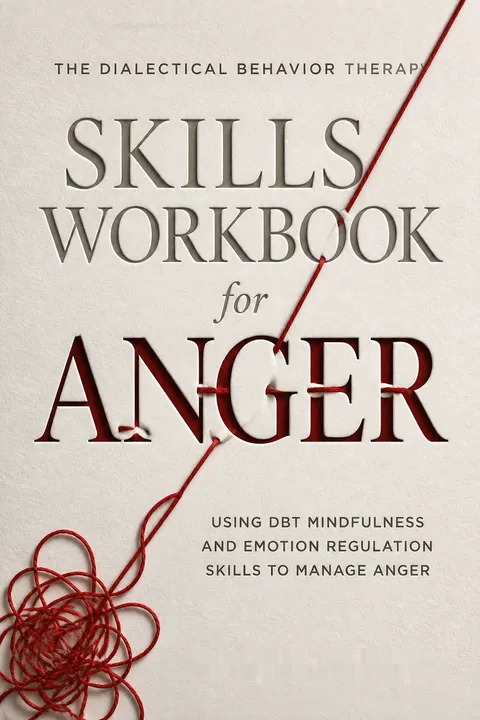
The Dialectical Behavior Therapy Skills Workbook for Anger receives positive reviews, with an average rating of 4.20/5. Readers find it helpful for understanding and managing anger, especially through exercises on identifying triggers, developing scripts, and practicing self-restraint. The book is praised for its accessible content and practical strategies, including mindfulness and distress tolerance skills. Some reviewers note its usefulness in therapy settings, while others appreciate its insights on rumination and anger's underlying messages. Overall, it's considered a valuable resource for both personal use and professional application.
People Also Read




Glossary
Dialectical behavior therapy (DBT)
Acceptance plus changeA skills-oriented therapy developed by Marsha Linehan for people experiencing intense emotional distress. DBT combines acceptance of present experience with efforts to change harmful behaviors and solve problems. Its main skill areas include mindfulness, distress tolerance, emotion regulation, and interpersonal effectiveness.
Action urge
An emotion-driven impulseAn action urge is the pull to behave in a particular way when an emotion occurs. Anger may produce urges to confront, yell, retaliate, or assert a need. The urge is part of the emotional experience, but it is not the same as carrying out the behavior.
Opposite action
Act against an ineffective urgeA DBT skill for changing an emotion by deliberately behaving in a way that conflicts with its action urge, when that urge is ineffective. For anger, this might mean speaking calmly instead of shouting or responding with respectful curiosity instead of hostility. The skill involves identifying the emotion, judging its effectiveness, choosing an alternative, and carrying it out mindfully.
Rumination
Repeated problem-focused thinkingRumination is repeatedly thinking about an upsetting event, asking why it happened, or replaying what someone did. It can feel like problem-solving, but often keeps anger active without producing a solution. Mindfulness, distraction, and describing observable facts can help a person disengage from the loop.
Progressive muscle relaxation
Tense, then release musclesA relaxation technique in which a person briefly tenses a muscle group and then releases it while noticing the difference. The contrast can make tension easier to recognize and relaxation easier to access. The workbook presents it as one option for reducing physical arousal associated with anger.
Transtheoretical model of change
Stages of behavior changeA model describing common stages in changing behavior: precontemplation, contemplation, preparation, action, and maintenance. In this workbook, it helps readers identify their current readiness to work on anger. The stages are not a strict sequence; motivation may fluctuate, and people may revisit earlier stages.
Self-soothing skills
Comfort through the sensesDBT strategies that use gentle, comforting sensory experiences to help someone settle and recover from distress. Examples include warm water, soft clothing, pleasant scents, calming music, or familiar foods. Their purpose differs from intense sensory distraction, which is used to capture attention during a crisis.
Mindfulness
Attend without judgingIn DBT, mindfulness means paying attention to present experience, including sensations, thoughts, emotions, and urges, without automatically judging or acting on them. It also includes describing observable facts and returning attention when the mind wanders. For anger, mindfulness can help a person notice escalation early and create room to choose a response.
About the Author
Download PDF
Download EPUB
.epub digital book format is ideal for reading ebooks on phones, tablets, and e-readers.








